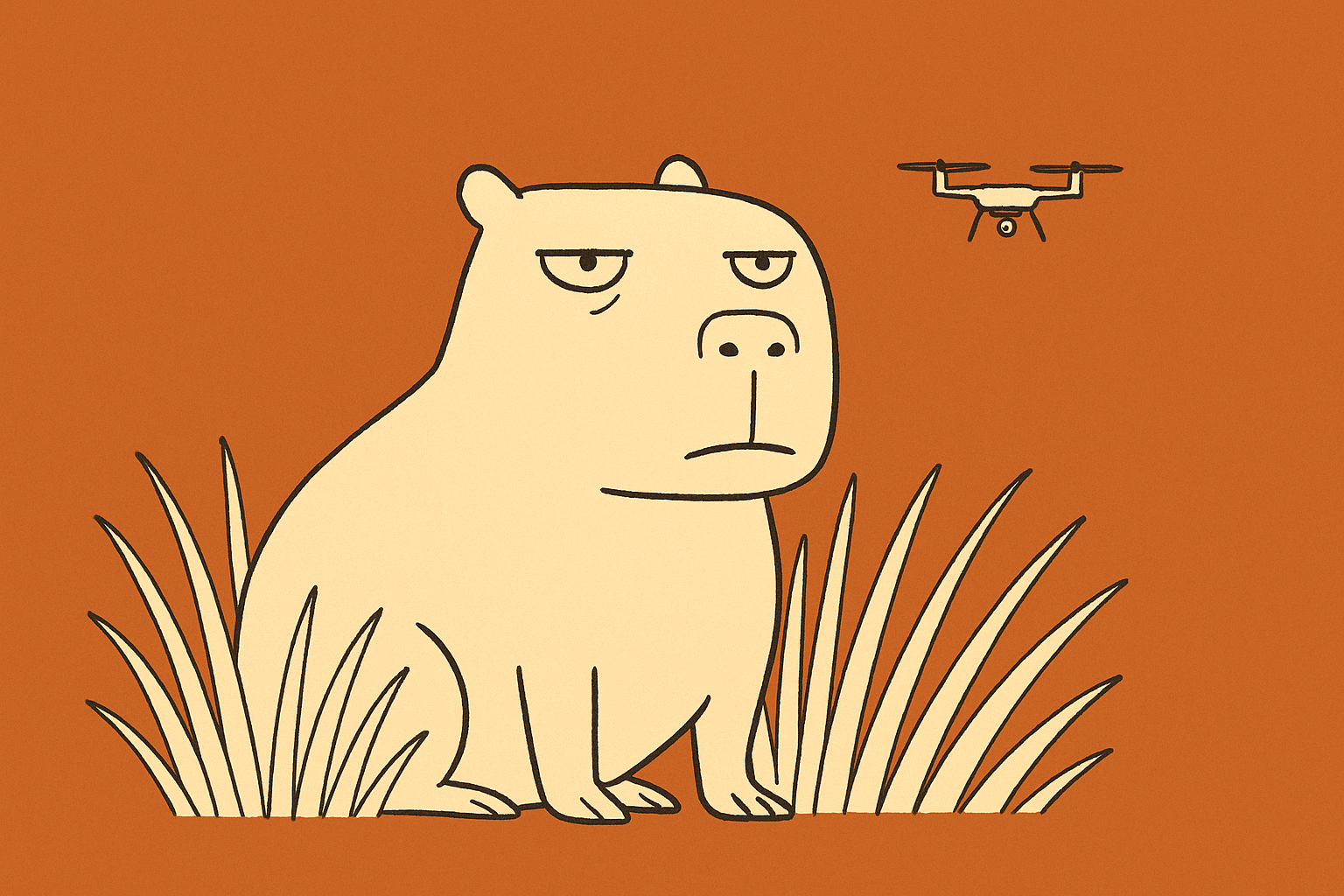
On April 5, 2026, a capybara named Samba left Marwell Zoo in Hampshire, England. Not dramatically. Not in a blaze of chaos. Just — left. Five days later, nobody had found it.
Marwell Zoo responded with what can only be described as a serious operation: specialist dog teams on the ground, thermal drones in the air, and a public appeal for sightings. The full weight of modern search technology, pointed at an animal that looks like a very large guinea pig and wants nothing more than a patch of long grass near water.
Why thermal drones cannot find a capybara
Here's the thing about capybaras that makes Samba's disappearance make complete sense: they are quietly, structurally good at this. Their natural instincts pull them toward dense vegetation, water sources, and nighttime activity. Not because they're trying to evade anyone. That's just what a capybara does.
The habitat Samba would seek out is, by design, the exact habitat that makes thermal imaging and dog tracking difficult.
Samba isn't outsmarting anyone. Samba is just being a capybara.
The zoo, the drones, the dogs — all of it built around retrieving an animal that isn't hiding. It's just living. And it turns out those two things look identical from the outside.
The line between managed and wild
Zoos operate on a kind of agreement we rarely examine: the animals stay, the humans visit, everyone goes home. Samba declined that arrangement, and the result has been five days of genuine community captivation. Neighbors are looking. People who had never thought about capybaras are now thinking about capybaras.
Capybaras are known for being calm, social, and — as the zoo noted — intelligent. They're the animal that gets along with everyone, the one you see in videos sharing a hot spring with a family of ducks or napping next to a dog three times their size. Every animal seems to trust them. Which makes the image of one simply wandering into the English countryside, unbothered, somehow very on-brand.
The zoo has asked the public to keep reporting sightings and is working to retrieve Samba safely. This is a search-and-care operation, not a hunt.
But there's something worth pausing on in how quickly a single escaped capybara became a local story, a community effort, a thing people are following. Not a predator. Not a danger. Just a large, gentle rodent who found a gap and walked through it.
"We must work together to ensure Samba's safe return. The public's assistance is crucial in this effort." — Marwell Zoo spokesperson
Somewhere in Hampshire, there is a capybara sitting in tall grass near water, doing exactly what capybaras do. The drones hum overhead. The dogs follow trails.
Samba, presumably, has not looked up once.
Originally reported by National Today. Read the source article