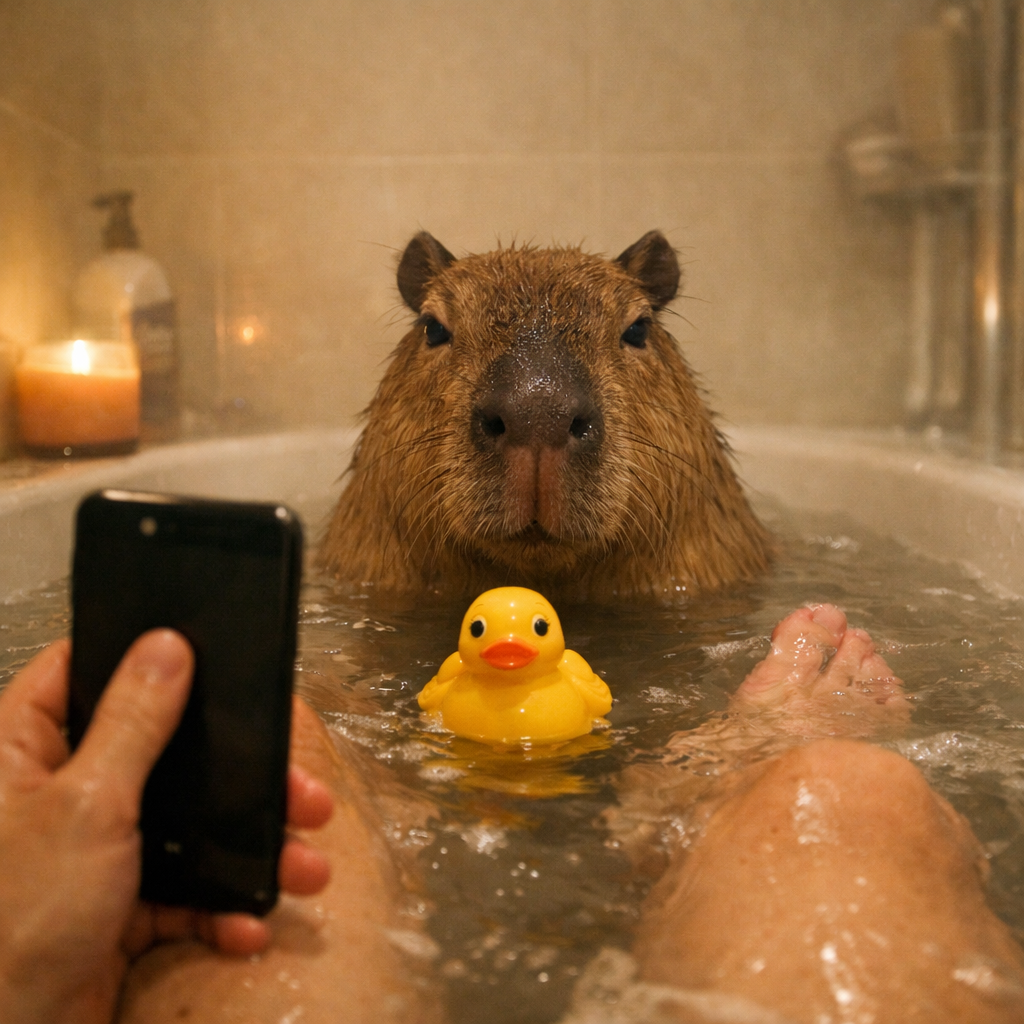
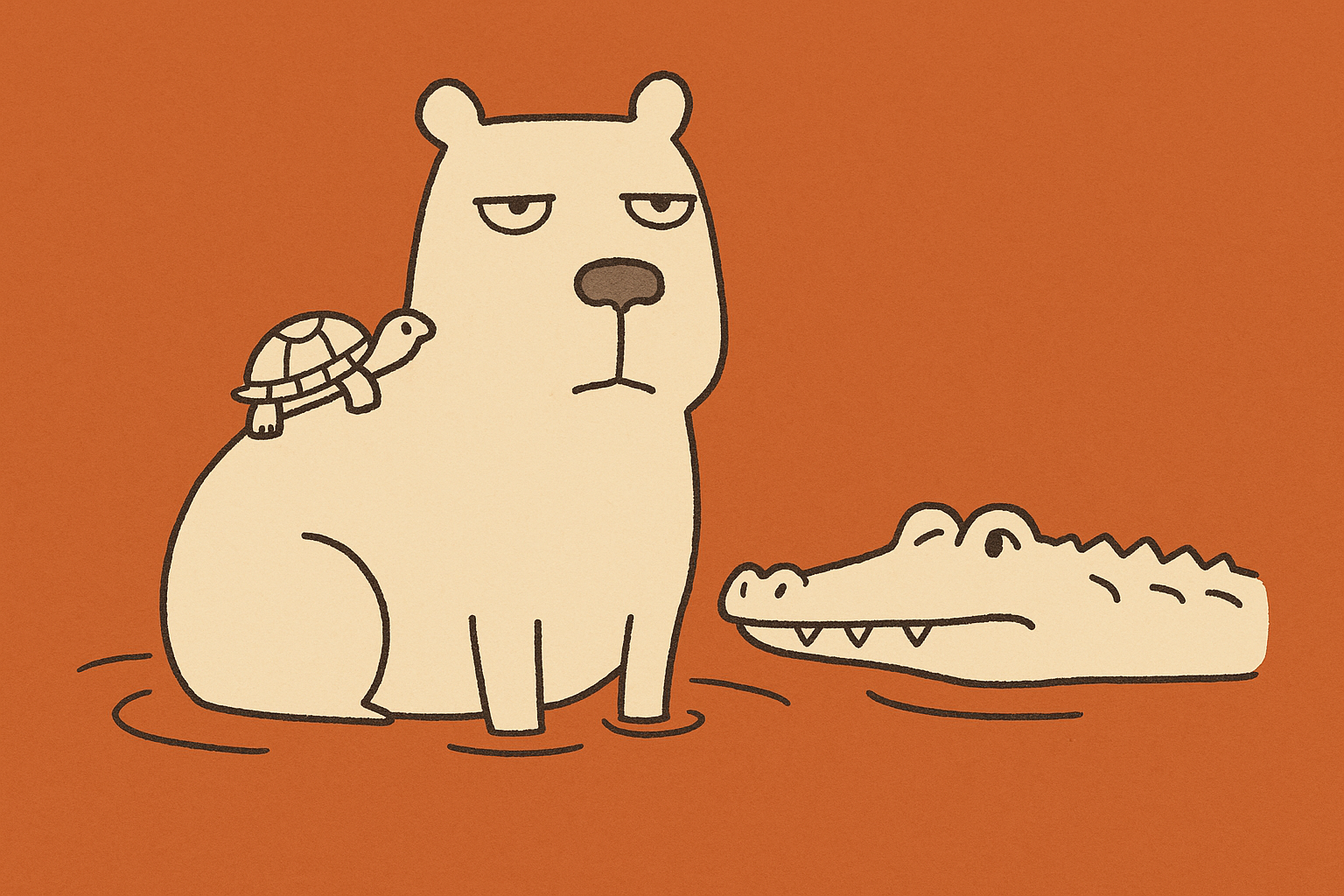
Picture a South American river at midday. A caiman — ancient, armored, built for violence — is lying in the shallows. Next to it, close enough to touch, a capybara is asleep. Nobody is alarmed. Nobody is running. The capybara looks like it has been there for hours and plans to stay a few more.
This scene plays out regularly across the wetlands and swamps of South America. And it raises an obvious question: what exactly is going on here?
Not worth the trouble
Dr Elizabeth Congdon, a capybara expert and assistant professor at Bethune-Cookman University in Florida, has spent time watching this dynamic in the field. Her answer is less mystical than the internet tends to make it. Caimans — the crocodilians that actually share territory with capybaras in South America — simply find them more trouble than they're worth. When fish and easier prey are available, a large rodent with an attitude is a poor trade-off.
The attitude part matters. Capybaras carry a set of front teeth that most animals would rather not find out about. Combined with a body that can weigh as much as 65 kilograms, they are not the passive lump they appear to be. According to Dr Congdon, the size and the teeth together are probably what keeps caimans from making a serious attempt. The risk of injury is real.
Dr Congdon told IFLScience she has seen capybaras and caimans sleeping beside each other in the wild. Not coexisting warily from a distance — actually next to each other. The exception, she noted, is the young. Baby capybaras are a different matter entirely, and make easy meals for a wide range of predators, including birds of prey.
Everyone's favorite neighbor
The caiman situation is just one part of a broader pattern. Capybaras are herbivores with no territorial aggression and apparently very little ego. That combination makes them unusually easy to be around. Dr Congdon has photographs of birds perched on their backs, and turtles using sleeping capybaras as sunbathing platforms. In zoos and in the wild, the dynamic repeats: other animals tolerate them, and capybaras tolerate everything back.
There's something almost structural about it. An animal that poses no threat, doesn't chase, doesn't compete for food, and stays near water — which everybody needs anyway — becomes a kind of neutral territory on legs. Other animals stop registering them as a threat, and the capybara, for its part, doesn't seem to register much of anything as a threat either.
Mostly.
The biggest actual threat to capybaras isn't caimans or jaguars or anacondas — all of which do occasionally prey on them — it's humans. Wild capybaras are hunted across South America, despite bans in certain areas. And while the capybara's reputation is one of supreme calm, it does have a limit. Media reports and videos from Argentina have documented capybaras turning on pets and people when pushed. The teeth that discourage caimans are the same ones that discourage everyone else.
The capybara didn't evolve to be everyone's favorite animal. It just happened — as a side effect of being large, unbothered, armed with surprisingly good teeth, and profoundly uninterested in starting anything.
That's usually enough.
"It is rare, especially when there are plenty of fish and easier prey to handle than a capybara. I have seen them in the wild sleeping next to each other." — Dr Elizabeth Congdon, Bethune-Cookman University
Originally reported by IFLScience.
https://www.iflscience.com/why-do-capybaras-not-get-eaten-by-crocodiles-83100