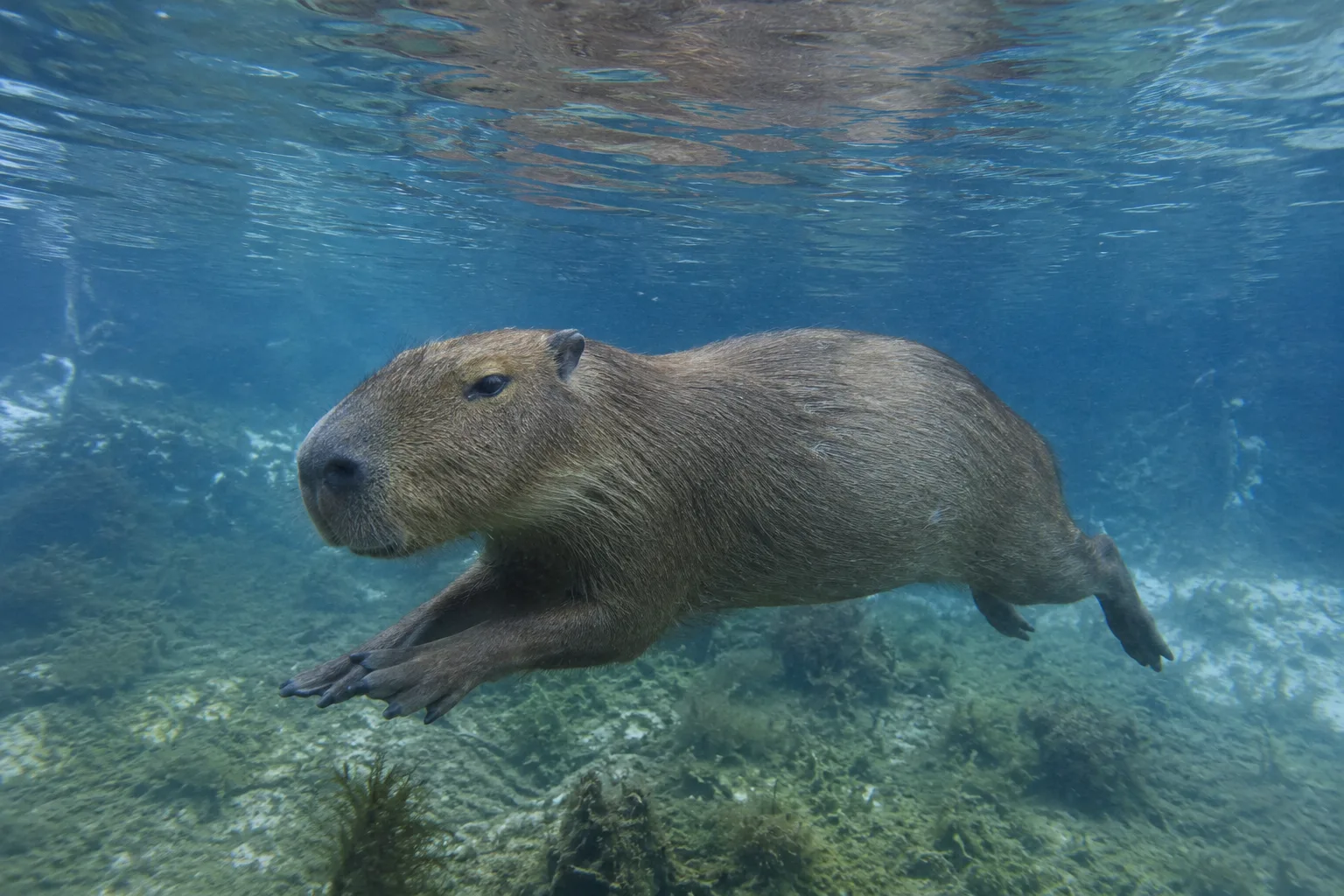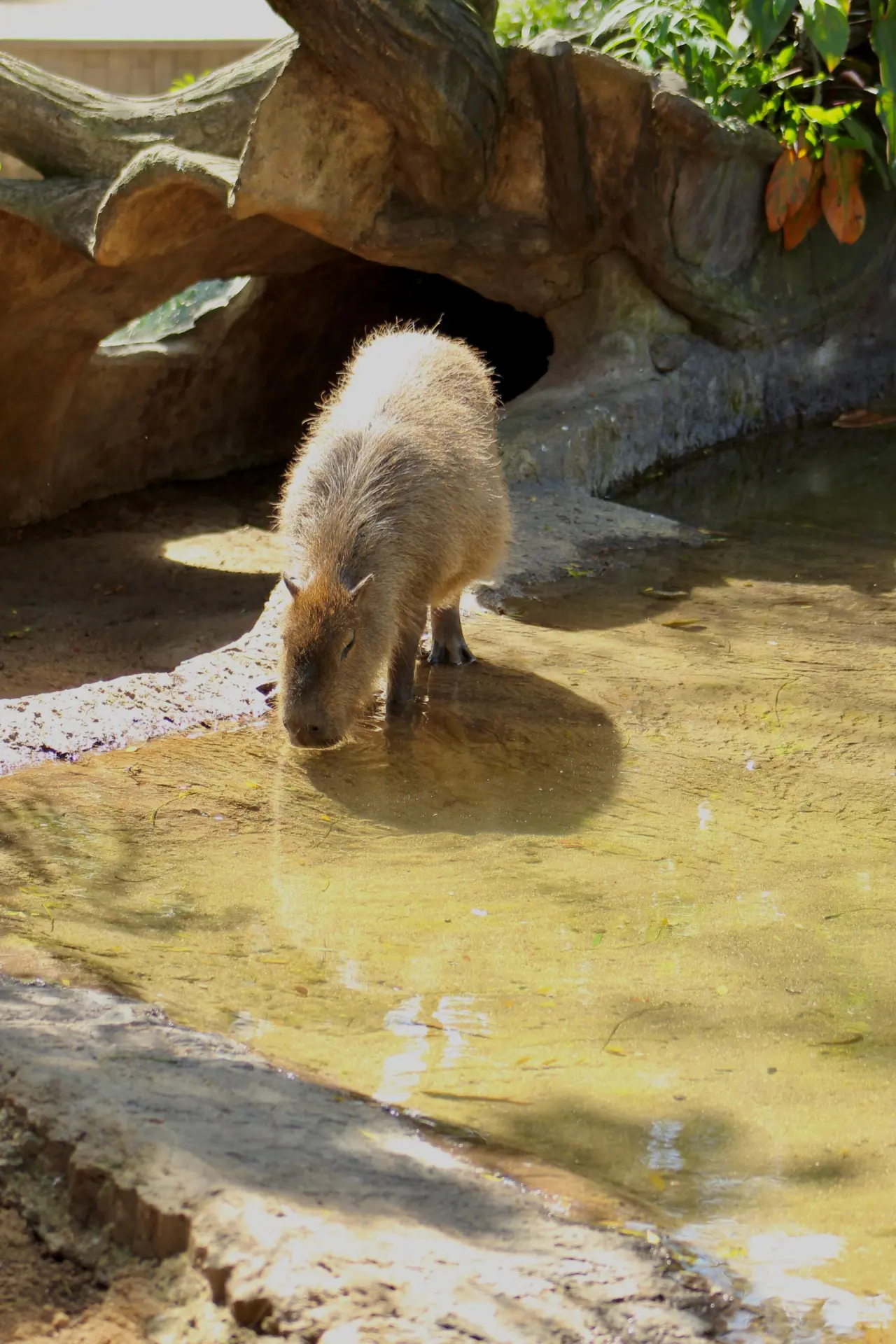

The shortest useful answer is this: maybe, depending on where you live, but almost certainly not in the way people imagine after watching one capybara sit in a bath with an orange on its head.
A capybara is not a giant guinea pig with better branding. It is a semi-aquatic, social, tropical rodent that wants space, water, other capybaras, steady veterinary care, and a legal situation that does not begin with “I saw a TikTok.” This is where the dream gets expensive and starts asking for drainage.
This guide is U.S.-leaning and current to May 2026. It is not legal advice. It is a firm little nudge toward checking your state wildlife agency, your county, your city, your insurer, a real exotic-animal vet, and your own tolerance for mud before you do anything with hooves, teeth, and zoning implications.
The Legal Answer Is Local, Which Is Annoying Because It Is True
There is no single U.S. federal law that says every private person may or may not keep a capybara as a pet. Instead, the answer is built from layers: state wildlife rules, local ordinances, import rules, permit systems, animal welfare laws, zoning, and sometimes the quiet wrath of a homeowners association.
This is why those “legal in these states” lists are so flimsy. They flatten the exact part that matters: your address. California’s restricted species rules, for example, list capybaras under the genus Hydrochoerus, and California Department of Fish and Wildlife permits for restricted species are not casual pet paperwork. Florida uses a captive wildlife permitting system, with Class III wildlife rules covering many species not listed as Class I or II. New York City bans many wild and exotic animals under its health code structure. The practical message is not “move to the right state and become swamp royalty.” The message is: the law is fragmented and usually less amused than the internet.
Even if your state does not clearly ban capybaras, the local layer can still say no. A county can restrict exotic livestock. A city can have nuisance or enclosure rules. A landlord can decline the entire concept with one email. If money has changed hands before the legal check, congratulations: you bought a problem with whiskers.

Federal Rules Still Matter If Money Or Public Display Is Involved
Private pet ownership is mostly state and local, but federal rules can enter the chat. The U.S. Department of Agriculture’s Animal Welfare Act program regulates certain commercial activities involving animals, including dealers, exhibitors, and some breeders. If someone is selling, exhibiting, transporting commercially, or using animals in public-facing encounters, federal licensing may be relevant.
For a person asking “can I have one in my backyard,” that does not magically create permission. It just means there may be more doors to knock on. The capybara, as usual, has not volunteered to help with paperwork.
A useful U.S. pre-check looks boring on purpose: state wildlife agency, county animal control, city code office, zoning, HOA or landlord rules, seller documentation, transport rules, and an exotic vet who will actually see a capybara. If the plan depends on a forum comment from 2018, the plan has already slipped into the pond.
Do Capybaras Make Good Pets?
For most households: no, and the longer answer does not get cheerier.
That is not because capybaras are villains. It is because their basic needs are large, wet, social, and expensive. The Association of Zoos and Aquariums capybara care manual treats them like the serious managed wildlife they are, with attention to group housing, pools, barriers, temperature, nutrition, substrate, sanitation, and veterinary care. None of that resembles a cute corner setup near the laundry room.
The AZA manual gets very specific, which is where the daydream usually starts looking at its shoes. It says capybaras should have frequent access to bodies of water because feeding, mating, escape, and hiding revolve around water. In AZA capybara exhibits, the reported median pool size was 88 square meters, or about 950 square feet; even the reported minimum was 14 square meters, or about 150 square feet. Pools may be as shallow as 3.5 feet, but the norm is at least 6 feet with a gradual incline. That is no longer a kiddie pool situation. That is a construction conversation.
San Diego Zoo Wildlife Alliance adds another reality check: adults can reach 60 to 174 pounds, eat 6 to 8 pounds of grass per day, and live up to 12 years in expert care. A bad capybara plan is not a weekend inconvenience. It is potentially a decade-plus commitment with plumbing, fencing, diet, veterinary care, and a deeply judgmental water filter.
Capybaras are herd animals. A lone capybara is not the clean, minimalist version. It is an animal being asked to live outside its social design. They also need water deep enough for normal swimming and soaking behavior, outdoor access, secure fencing, shade, warm shelter in cold climates, and a veterinarian comfortable with large exotic rodents. In much of the U.S., winter is not a cute seasonal obstacle. It is a facility-design problem with heating bills.
They also chew. This should not surprise anyone. They are rodents. Their teeth grow continuously, and chewing is not a bad habit so much as a maintenance plan.
A capybara is not a vibe. It is a wetland mammal with social needs, sharp teeth, and a lifestyle that comes with plumbing.
The Cost Is Not The Purchase Price
People love asking what a capybara costs, as if the animal is the expensive part. The animal is the opening scene. The real cost is everything around it.
A realistic budget has to include a legally compliant enclosure, serious fencing, a pool or pond system, drainage, heated shelter where winters are cold, safe pasture or browse, produce and hay, enrichment, permit applications, transport, emergency veterinary care, parasite management, and at least one other compatible capybara. Then add the cost of correcting the first design, because almost every first design by a normal person is quietly ridiculous.
There are no clean national numbers because the laws, climate, land, veterinary access, and construction costs vary wildly. But the useful framing is this: do not ask whether you can buy a capybara. Ask whether you can build a small, legal, sanitary wetland that your neighbors and your state wildlife agency will tolerate.

The Welfare Check Nobody Wants To Put In The Caption
The central question is not “can I make this legal?” It is “can I make this good for the animal?”
Capybaras are native to South America and adapted to warm, water-rich environments. In the wild they graze, swim, rest in groups, communicate, flee to water, and manage a social life that looks simple only because they do not post about it. A private home has to replace enough of that world to avoid turning an animal into a content prop with a food bowl.

A good welfare checklist starts with boring questions. Can you house at least a pair or stable group? Can they swim daily? Can they get out of water safely? Is the fencing strong and dig-resistant? Is there shade? Is there heat? Is the ground sanitary? Is there a vet nearby? What happens if the capybara bites someone, escapes, or gets sick? What happens if the law changes? What happens when a neighbor, reasonably, asks why your yard now has the humidity profile of a managed marsh?
If any answer is “I will figure it out,” the answer is no. The capybara will not be impressed by optimism and a tarp.
Where The Internet Misleads People
Social media clips compress animal care into the cute five seconds when nothing is going wrong. You see a calm capybara being scratched, eating fruit, or sitting in warm water. You do not see the permit emails, fecal cleanup, pool maintenance, social introductions, enclosure repairs, vet calls, or the part where a large rodent decides your fence is conceptually weak.
You also rarely see the difference between a licensed facility, a sanctuary, a zoo, a breeder, and a private household. A video from a managed setting does not mean the animal belongs in a suburban yard. That is not cynicism. That is the difference between content and care.
The Ownership Reality Check
If the capybara question still has a little sparkle, put it through a table before you put it through your bank account. This is the part where the animal keeps the same face and the humans discover spreadsheets.
Pet Fantasy Vs. Managed-Care Reality
| The Cute Idea | The Practical Reality | Authority Clue |
|---|---|---|
| A capybara can soak in a backyard tub. | Normal behavior needs serious water access, safe entry and exit, filtration, cleaning, and enough depth for swimming. | AZA reports a median exhibit pool size around 950 square feet and a typical pool depth of at least 6 feet. |
| One capybara is simpler than two. | Social isolation is the simpler setup for the owner, not the animal. Group housing is part of the welfare question. | Animal Diversity Web describes capybaras as strongly social, with typical groups around 10 adults. |
| If it is legal in the state, it is fine. | City, county, zoning, HOA, permit, transport, and seller rules can still block the plan. | California, Florida, and New York City all show how differently local exotic-animal systems can work. |
| They are calm, so they are safe. | They are usually docile, but they are large, fast, and have serious incisors if scared or mishandled. | AZA notes capybaras can move about 22 mph and have incisors about 3 inches long. |
The table is not there to ruin the mood. It is there to protect the animal from becoming a lifestyle purchase. If you read the right column and still feel excited, the next step is not a breeder. It is a call to the state wildlife agency and an exotic vet who is willing to be very honest with you.
Better Options For Normal People
If you love capybaras, the least dramatic option is often the best one: visit a reputable zoo, wildlife park, or licensed facility with transparent animal welfare standards. Support habitat conservation. Read actual care resources. Buy the mug, if you must. The mug will not require a permit, a pool filter, or a conversation with municipal code enforcement.
The capybara’s whole public appeal is that it seems to refuse unnecessary effort. It would be deeply on-brand to admire one without turning your property into a regulatory wetland.
So, can you own a capybara in 2026? In some places, maybe, with permits and proper facilities. Should most people do it? No. Sit with the longing. Let it pass through you like a warm breeze over a very expensive pool you did not have to build.