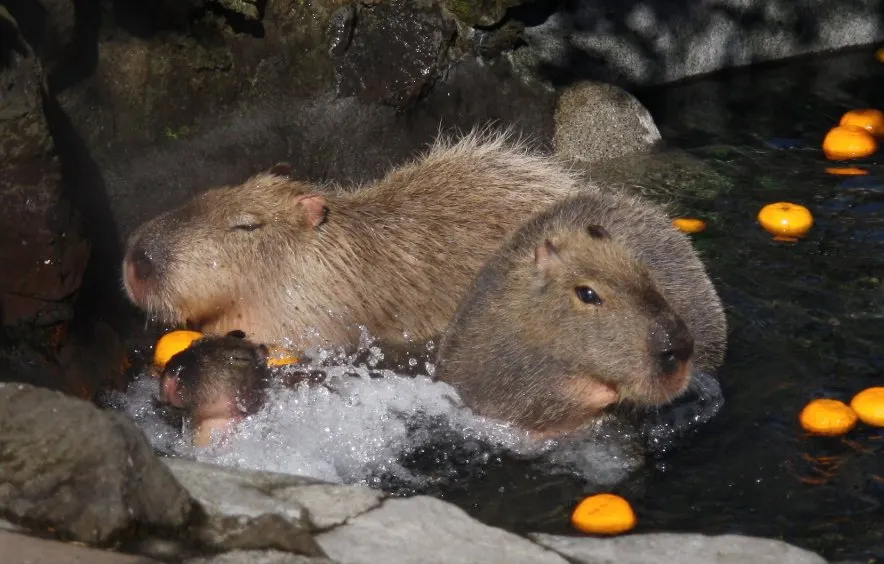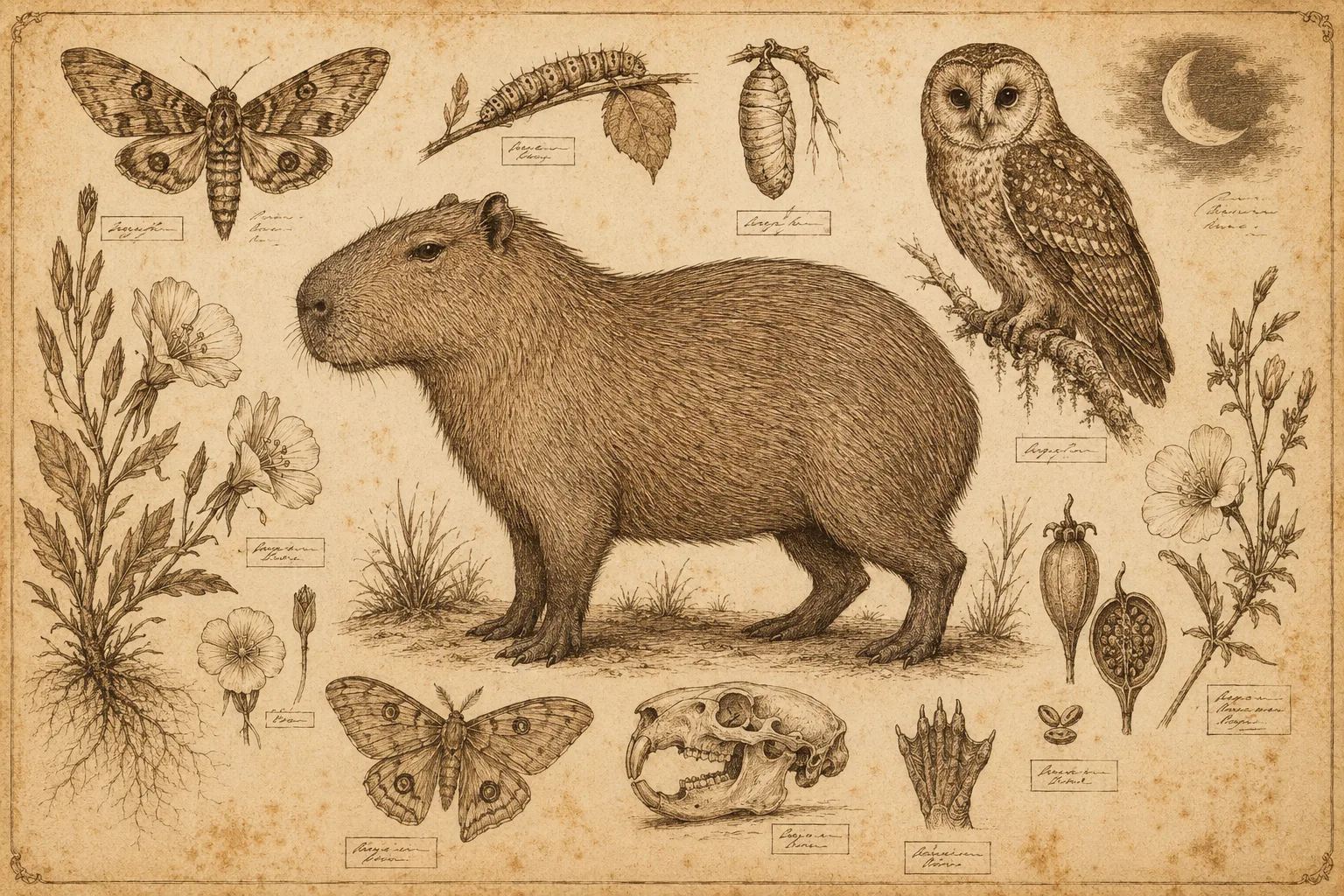

Capybaras have been promoted by the internet to the role of universal friend: riverbank diplomat, bathhouse philosopher, emotional support log with legs. Birds stand on them. Monkeys sit near them. Caimans sometimes share a riverbank with them. Humans, predictably, turned this into a personality test.
If you’re in the U.S., you have probably met capybaras through zoo visits, wildlife parks, or a phone screen at 1:13 a.m. That distance matters. A relaxed capybara in a managed setting is not proof that the species is domesticated. It is proof that a serious wetland mammal can look extremely employable as a life coach.
The real explanation is better than the meme because it is less magical and more useful. Capybaras are not friendly in the golden-retriever sense. They are social, predictable, herbivorous, and usually uninterested in drama unless drama steps on their toes. That combination makes them unusually tolerable company.
So yes, the vibe is real. The explanation just has more teeth.
Friendly, Not Saintly
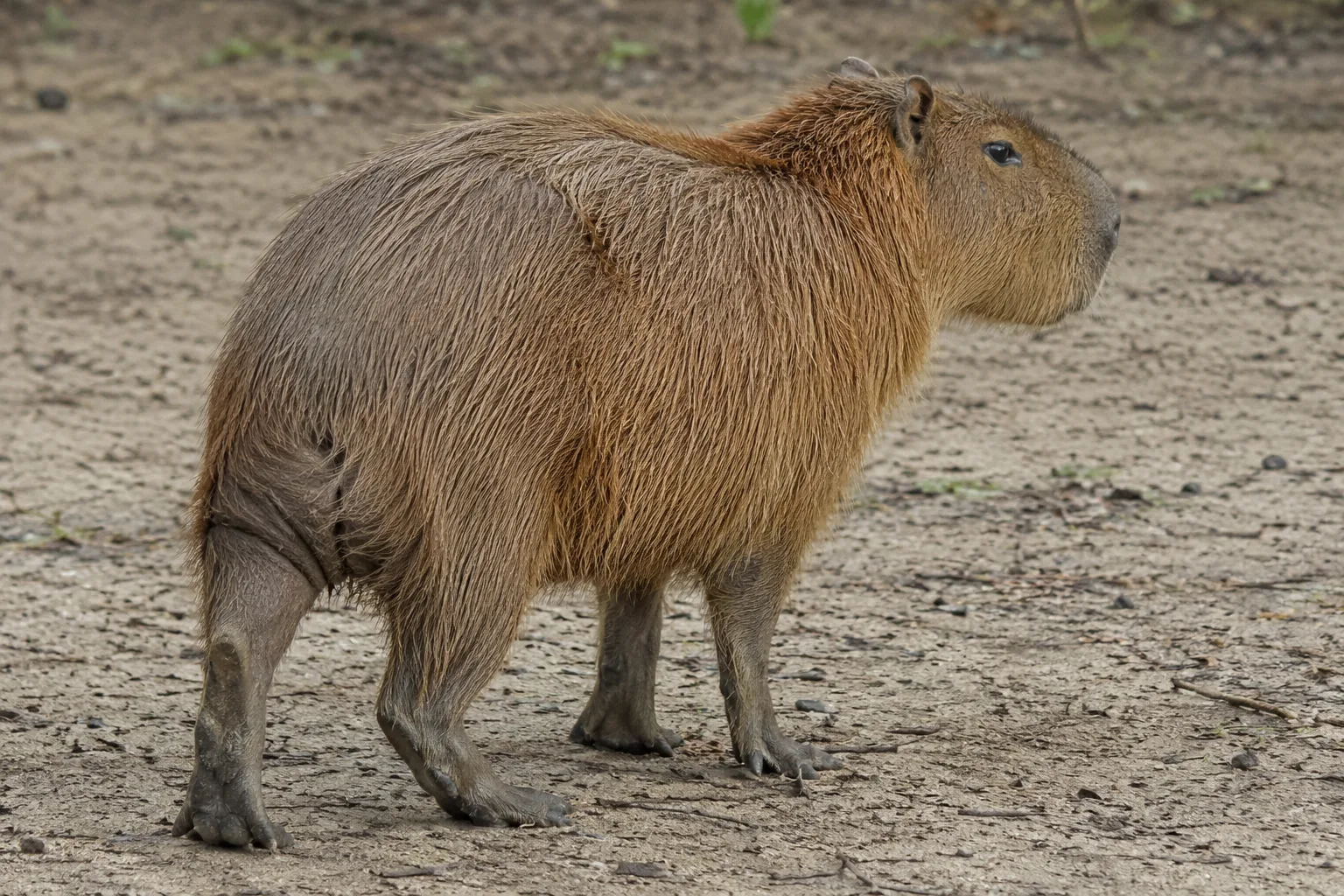
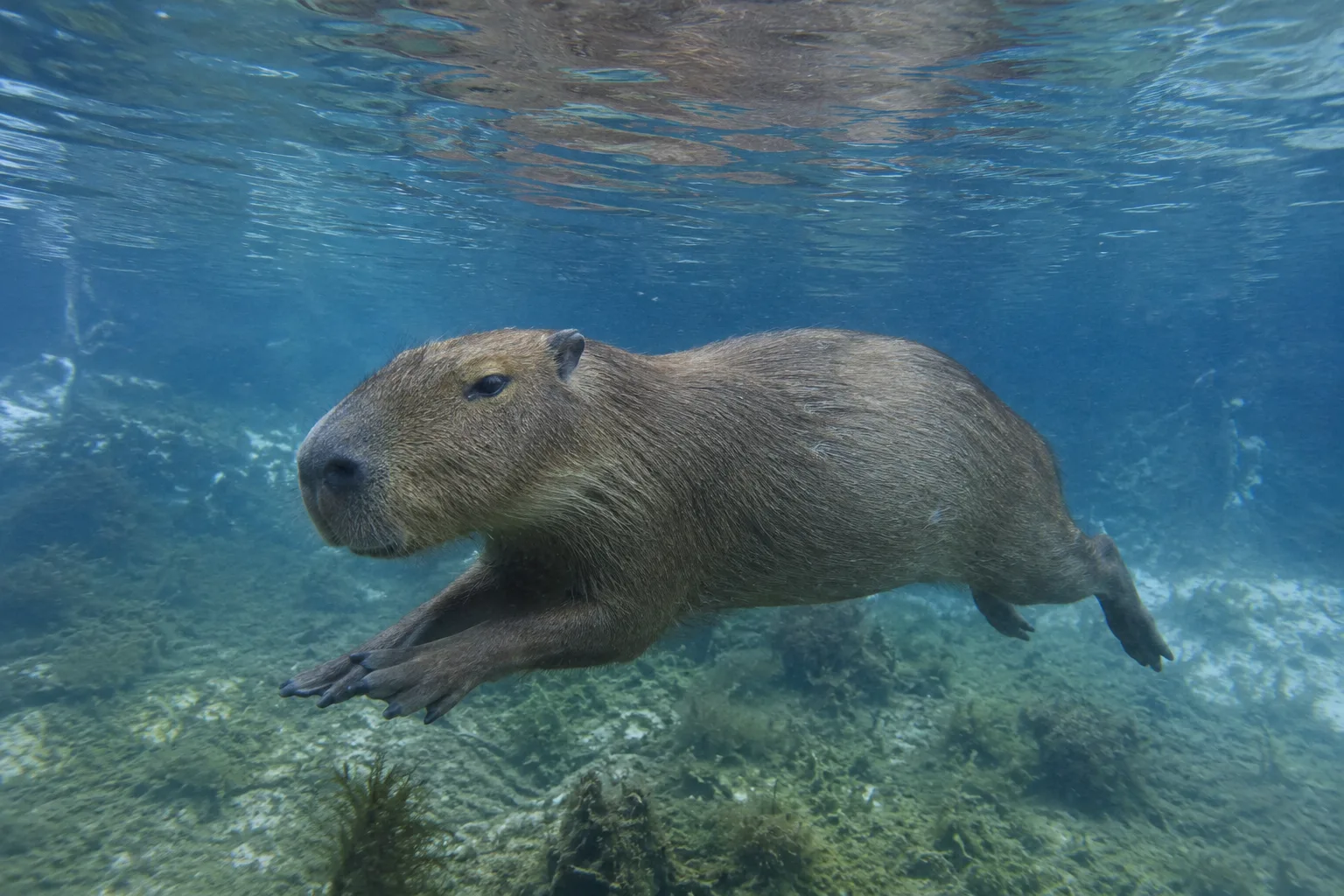
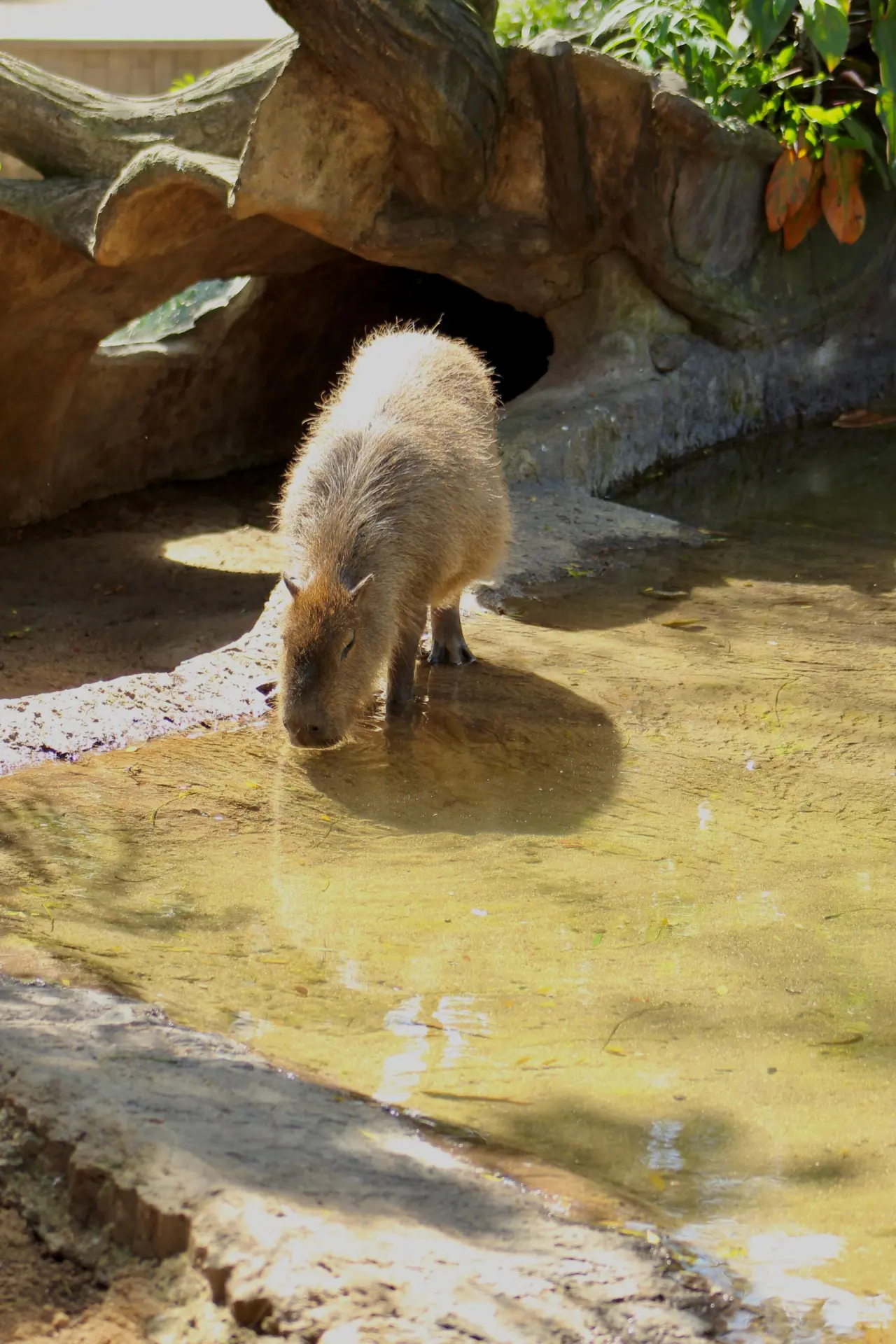
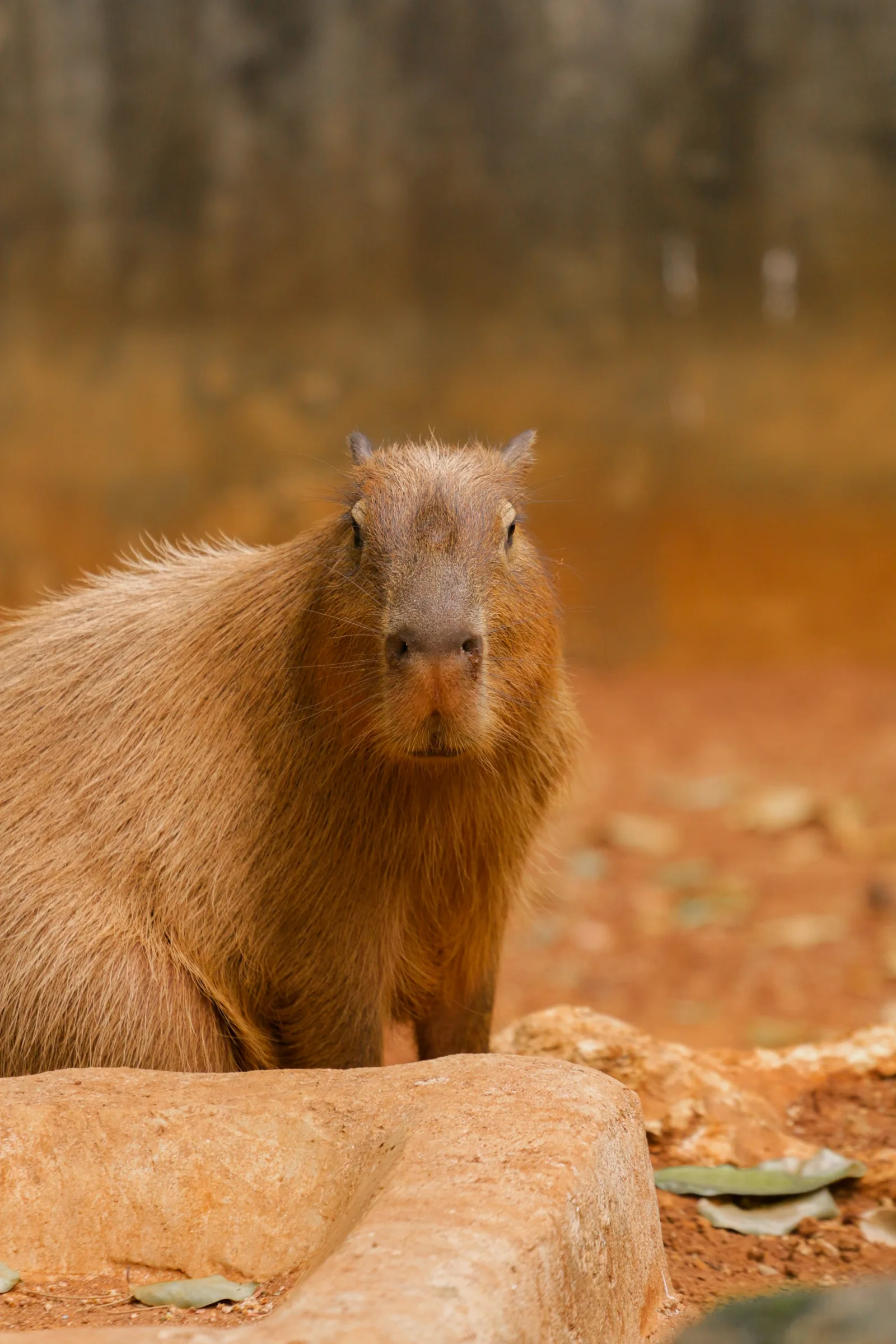
A capybara is the world’s largest living rodent, not a woodland therapist. Adults can weigh more than 100 pounds, spend much of their lives near water, and carry strong incisors that grow continuously. San Diego Zoo Wildlife Alliance describes them as semi-aquatic grazers with slightly webbed feet, a swimming-hole lifestyle, and the ability to stay underwater for up to five minutes. The face says “fine.” The anatomy says “exit plan.”
The numbers are a useful antidote to the plush-toy illusion. San Diego Zoo Wildlife Alliance lists adult capybaras at 3.2 to 4.2 feet long and 60 to 174 pounds, depending on sex. Animal Diversity Web gives a typical group size of about 10 adults, with groups ranging from 3 to 30 and larger dry-season gatherings around water. That means the animal in the meme is not a tiny bean of calm. It is a labrador-sized social grazer standing in the middle of a very organized neighborhood watch.
The other half is a serious social mammal with rules.
Capybaras usually live in groups, often with a dominant male, several females, young, and subordinate males. Animal Diversity Web notes that groups can range from a few animals to much larger dry-season aggregations around water. The little ones may nurse from several related females, and adults share some of the danger-watching. Capybara calm is not a blank stare. It is a group project with mud on it.
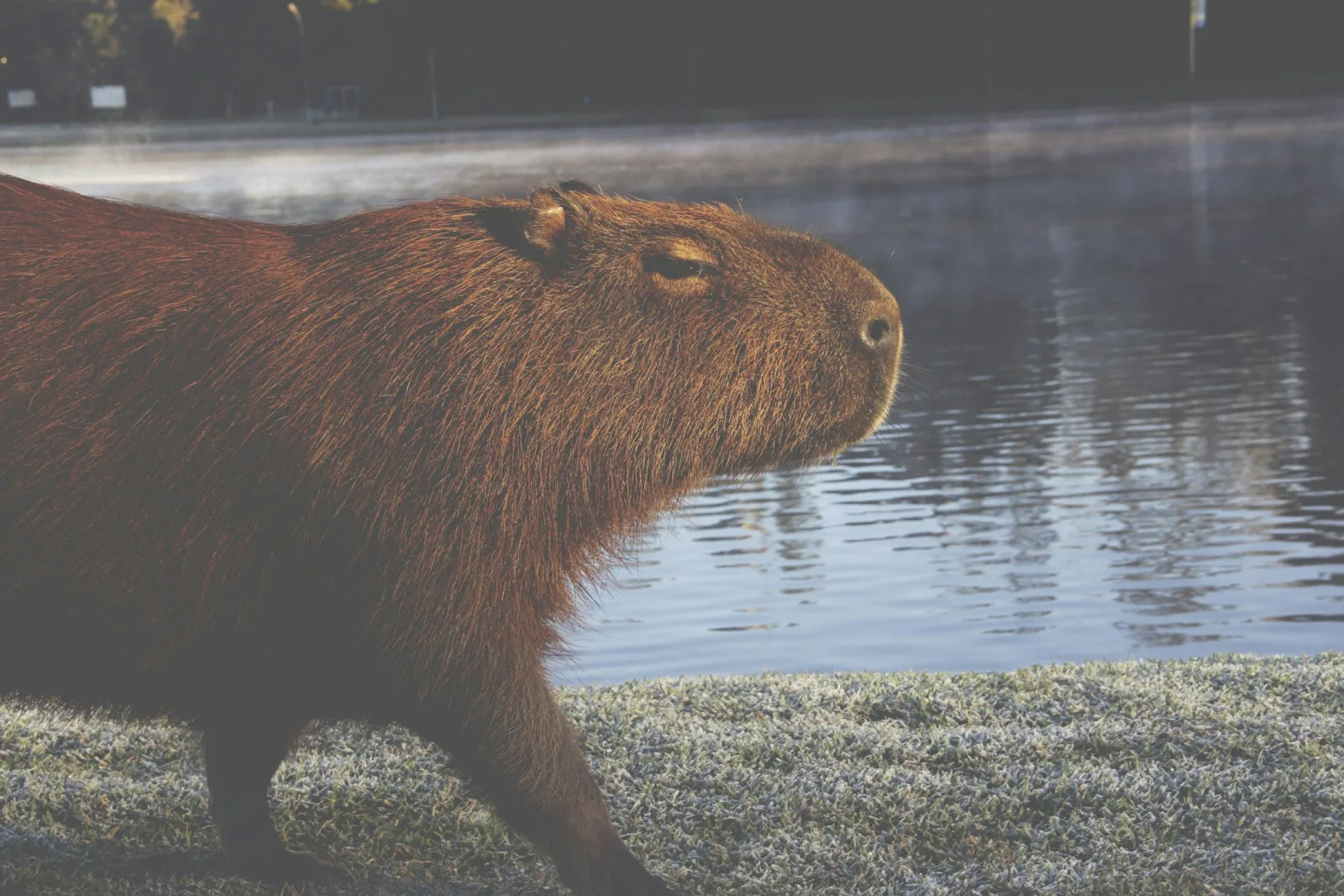
That group life rewards animals that can read each other, keep the peace, and not waste energy turning every afternoon into a territorial shareholder meeting. Field studies of capybara populations have described stable social groups, dominance relationships, scent marking, vigilance, and coordinated use of habitat. None of that says “soft little plush.” It says social machinery.
Which is more impressive. Being chill by accident is easy. Staying chill inside a group of large rodents with opinions requires systems.
The Low-Threat Neighbor Effect
The reason other animals seem comfortable around capybaras is not that every species received a memo titled The Capybara Is Nice. It is that capybaras are usually low-conflict neighbors.
They are herbivores. They do not hunt birds. They do not steal fish from caimans. They are not competing with monkeys for fruit in the canopy or with turtles for sunning rocks in any serious way. Much of their diet is grasses and aquatic plants, which means they can share a landscape without turning every meeting into a food argument.
This is the quiet genius of the capybara: it is large enough that many small animals do not treat it like prey, peaceful enough that they do not treat it like a predator, and boring enough that they eventually treat it like furniture with a pulse.
That is how you get birds on backs. Not because the bird and the capybara have a tiny cross-species friendship bracelet. More likely, the bird gets a perch, a better view, or access to insects stirred up by a grazing mammal. The capybara, if it gets any benefit at all, may get some insect removal or early warning from nervous birds. Sometimes coexistence is beautiful. Sometimes it is just practical and nobody has scheduled a press conference.
The capybara’s gift is not universal kindness. It is low-conflict presence, which the internet has mistaken for enlightenment.
They Talk More Than They Look Like They Do
The deadpan face is misleading. Capybaras are vocal animals. A study on captive capybara vocal behavior described a varied repertoire used in different contexts, including contact, alarm, and social interactions. Animal Diversity Web also notes that young capybaras vocalize almost constantly. The face says “nothing is happening” while the soundscape suggests several committee meetings.
That communication matters. Social animals need signals. A warning call can move the group before a predator arrives. Contact calls help individuals stay coordinated. Young capybaras call, adults answer, and the herd remains a herd instead of becoming a scattered collection of damp potatoes.
This is one reason the friendliness myth is slightly backwards. Capybaras are not calm because they are empty-headed. They are calm because they are highly tuned to group life and their environment. They have categories. They know when to graze, when to move, when to slide into the water, and when to stop pretending the situation is casual.
Water Makes Them Harder To Bully
The water habit is not decorative. It is escape infrastructure.
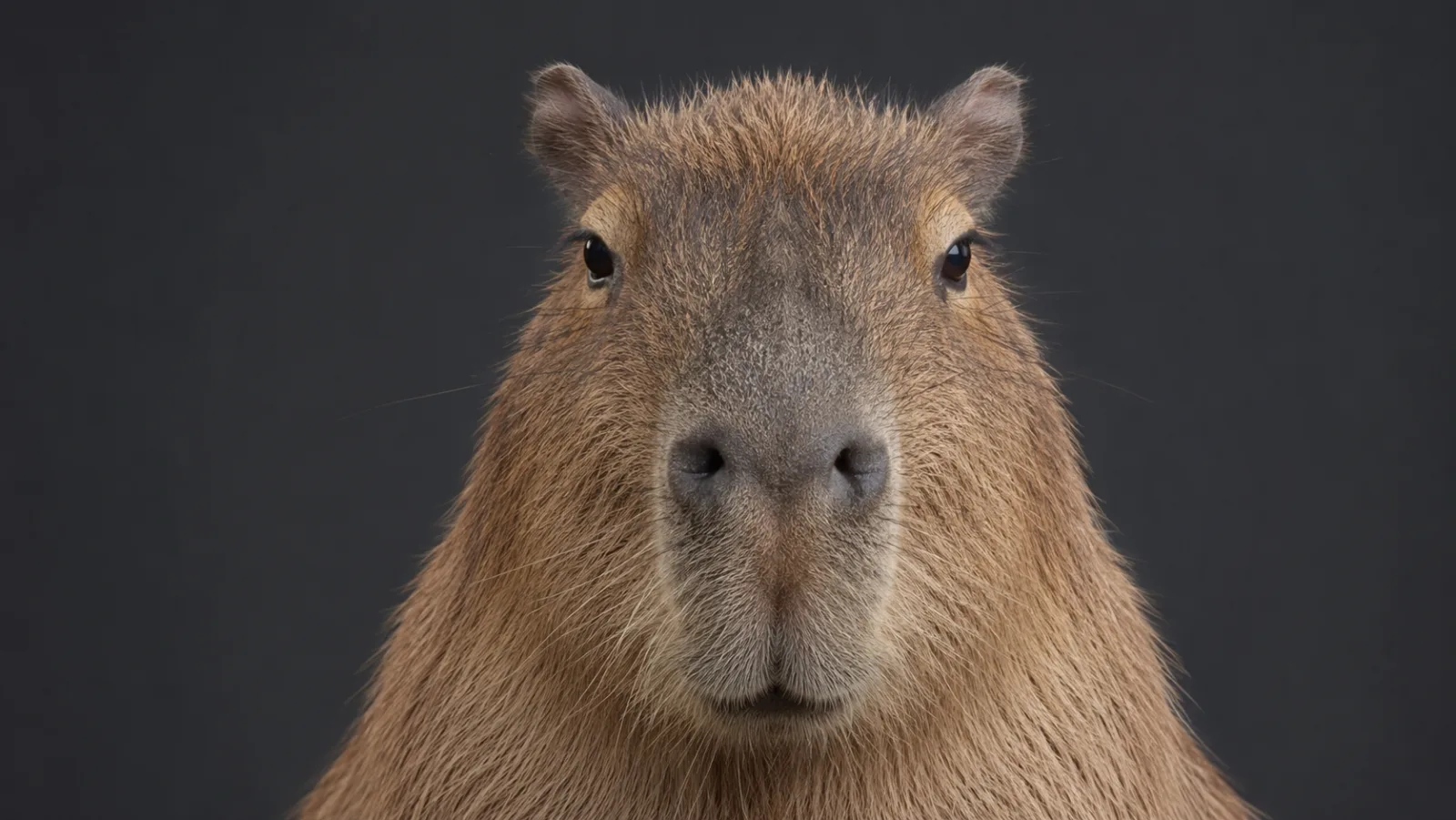
Capybaras can swim well, hide in water, and use aquatic edges as cover. Their eyes, ears, and nostrils sit high on the head, which lets them stay mostly submerged while still watching the room. The room, in this case, may include jaguars, caimans, anacondas, feral dogs, and humans. Nobody said the wetland was a gentle coworking space.
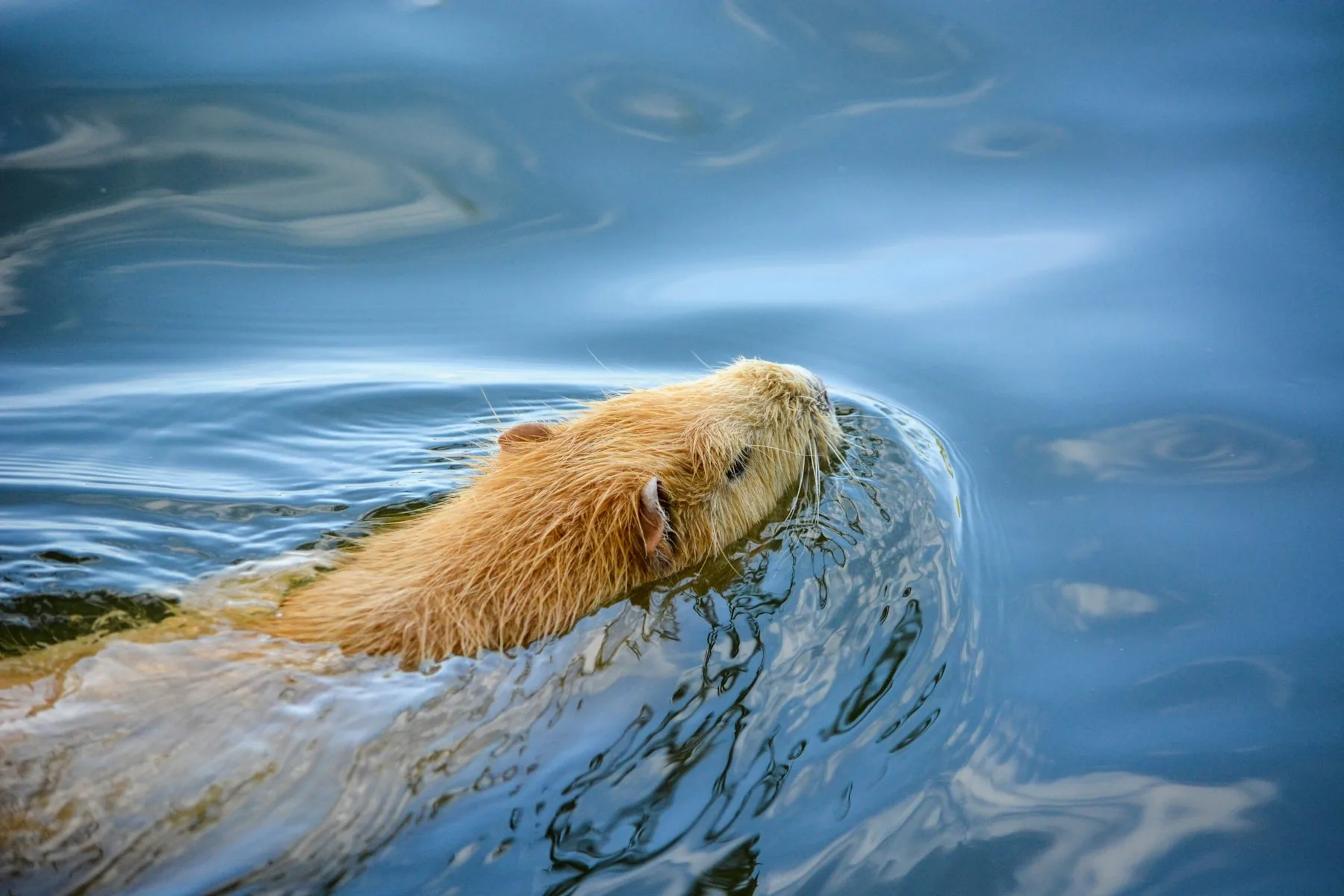
That semi-aquatic life changes the social math. A capybara resting near another species is not defenseless. It is often near its exit. It can move from land to water fast, and a large adult with sharp teeth is not the easiest meal on the menu. Existing Grumpy Capy readers already know the caiman version of this: adult capybaras are not immune to predators, but they are often more trouble than they look.
The Internet Added The Halo
The internet did what the internet does: it took a real trait and gave it a job in culture. Capybaras became shorthand for being unbothered. Not fake positive. Not aggressively wholesome. Just present, damp, and apparently done with everyone’s nonsense.
That symbolism works because it has biological grounding. They really are social. They really do tolerate proximity. They really are seen around other animals more often than many species would be. But the meme version edits out the caveats: young capybaras are vulnerable, adults can bite, dominant males can fight, and wild animals do not exist to validate anyone’s desire for a low-stress lifestyle brand.
The more accurate version is better for readers and, frankly, funnier. Capybaras are not nice because they love everyone. They are nice because most things are not worth escalating.
The Capybara Calm Index
If you want to share the science without killing the joke, this is the cleaner translation. The meme is not wrong; it is just skipping the footnotes, probably because the footnotes were damp.
Meme Version Vs. Biology Version
| What People Notice | What Is Probably Happening | Why Capybara Lovers Should Care |
|---|---|---|
| Birds standing on capybaras | Low-threat herbivore plus convenient moving perch; birds may gain height, insects, or early-warning value. | It is still adorable, but it is not proof every animal has signed a friendship treaty. |
| Capybaras sitting near caimans | Shared habitat, low immediate payoff for conflict, and a large adult animal that is not always worth the effort. | Coexistence is not invincibility. Young capybaras are much more vulnerable. |
| The permanent unbothered face | High-set eyes, ears, and nostrils help them monitor surroundings while staying close to water. | The face is calm because the body has a plan. |
| Group lounging | Stable social groups, alarm calls, scent marking, and shared vigilance reduce unnecessary drama. | The vibe is social intelligence, not laziness with better PR. |
The key statistic hiding under all of this is group size. A wild capybara is usually not trying to be a solo wellness influencer. It is part of a social unit, often around 10 adults according to Animal Diversity Web, where survival depends on signals, spacing, rank, water access, and a reasonable amount of not making things weird.
That is the piece worth remembering when a clip makes a capybara look like a one-animal peace treaty. The animal is calm inside a setting full of cues. Remove the group, remove the water, remove the escape route, and the famous calm starts losing its supporting cast.
What To Take Away Before You Start A Personality Cult
If you want the short scientific answer: capybaras seem friendly because they are social herbivores with a low-threat ecological role, strong group behavior, good communication, and a semi-aquatic escape plan. They have very little incentive to start fights, and plenty of reasons to stay calm until calm stops working.
If you want the human answer: the capybara became famous because it models something people badly want in 2026. Not happiness. Not productivity. Just the ability to sit in the same world as chaos without immediately becoming chaos.
That is not enlightenment. It is biology with excellent public relations.