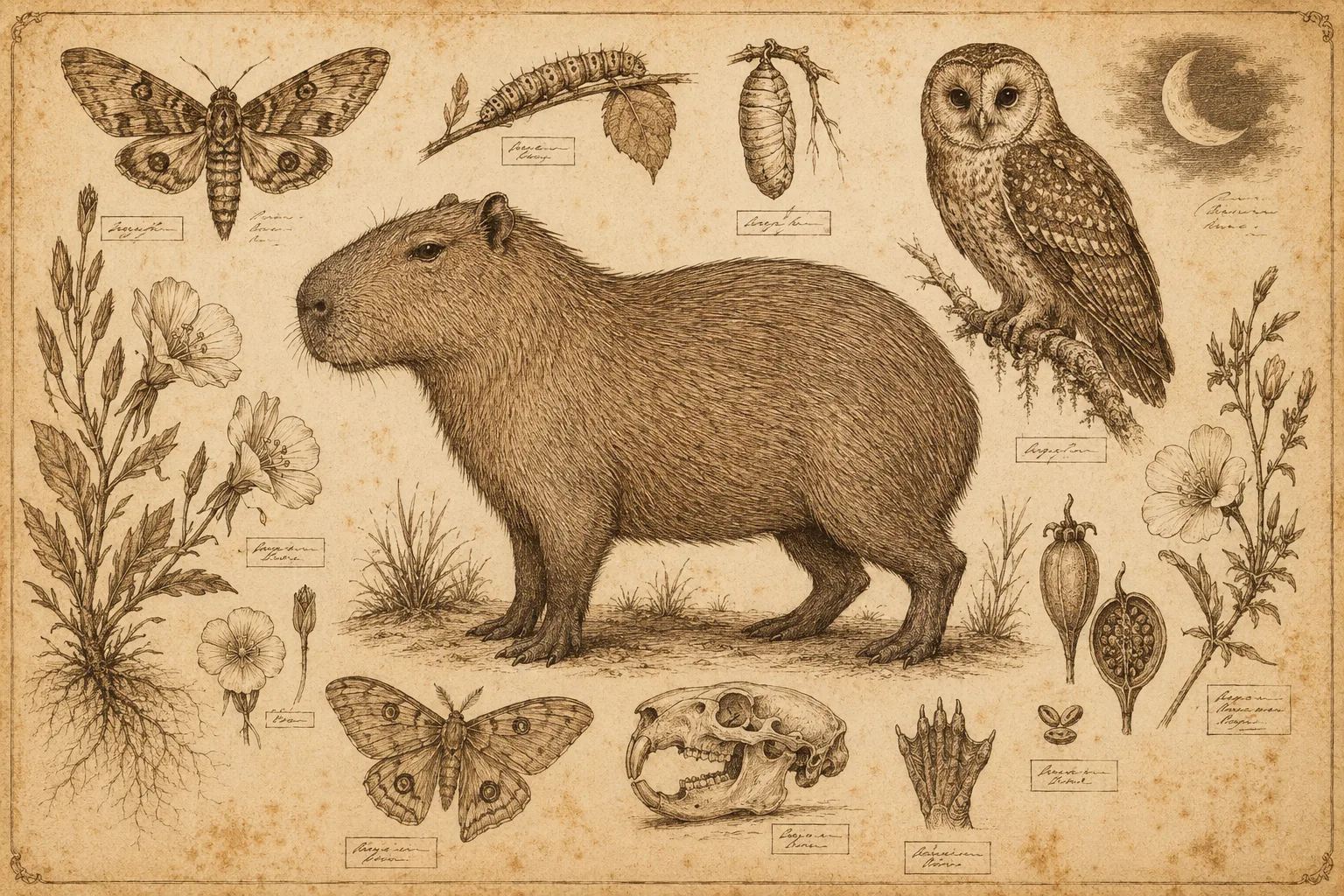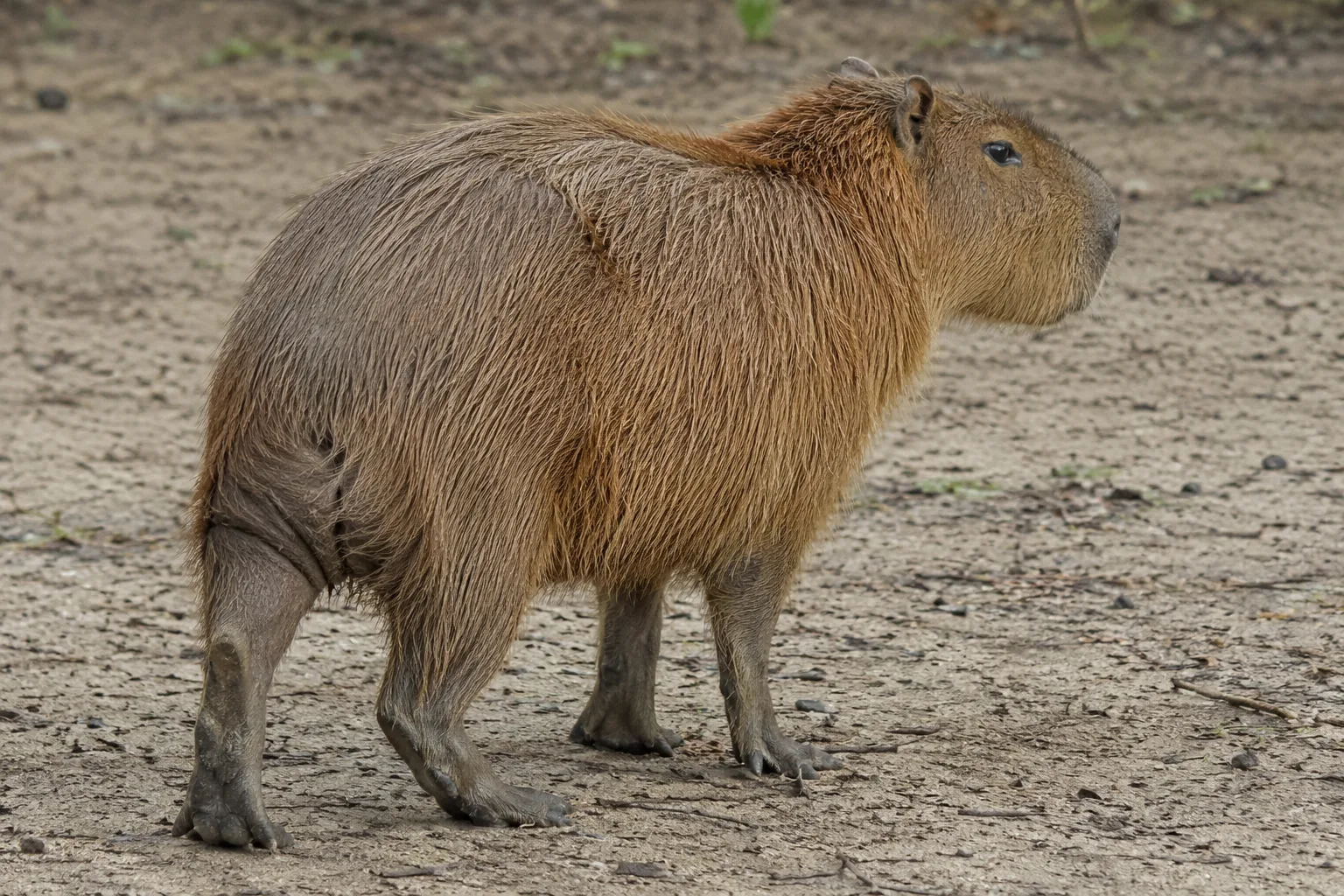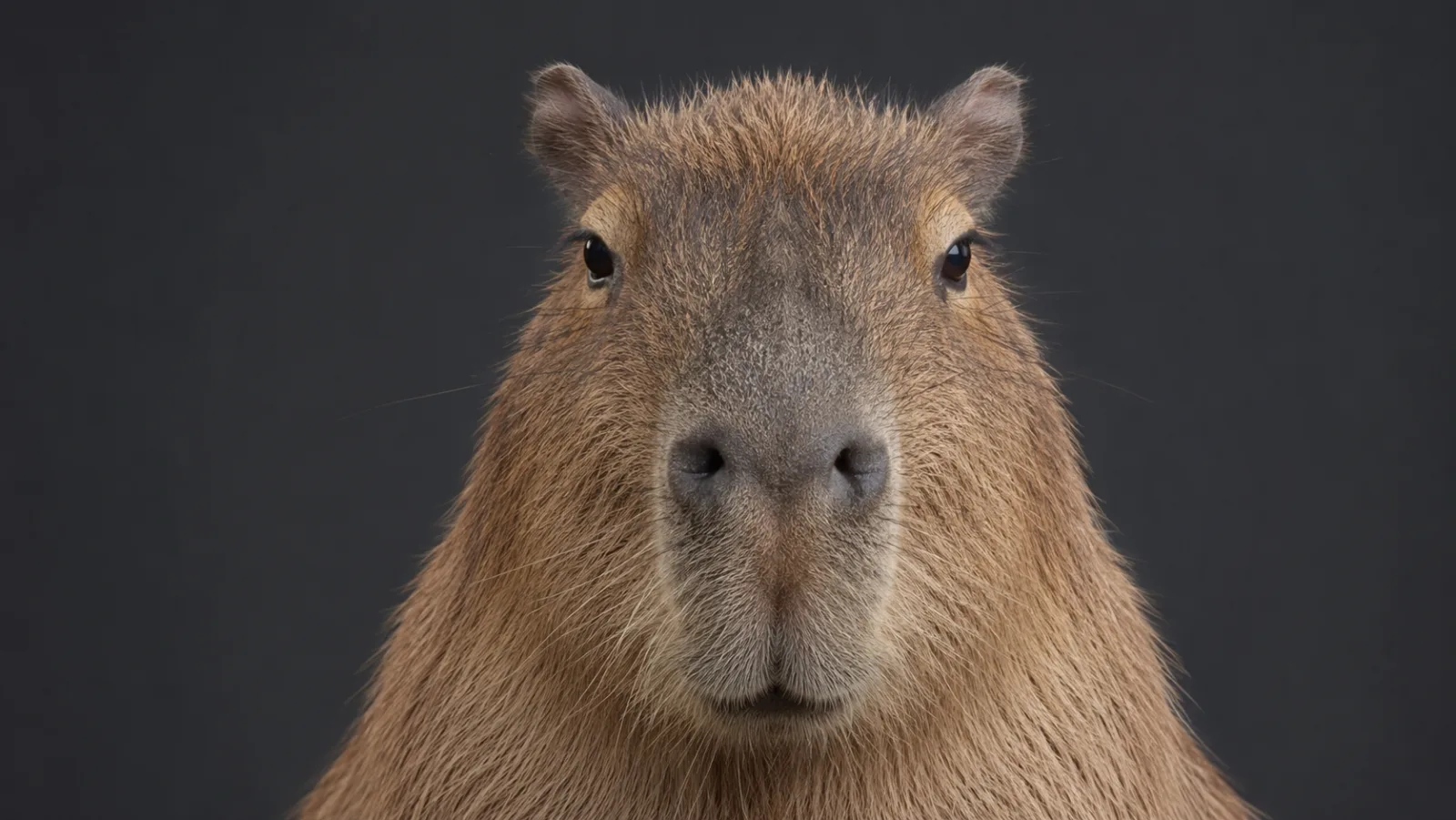
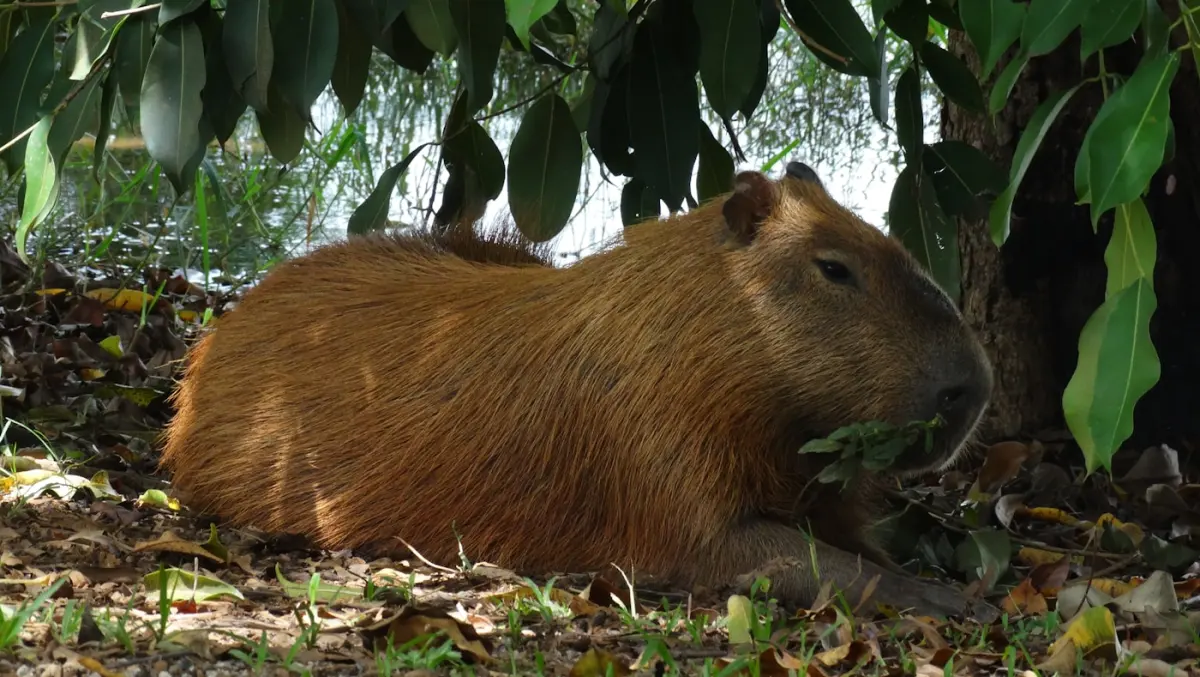
A capybara does not wake up thinking, “Today I shall become a citrus influencer.” It wakes up, if that slow democratic blinking counts as waking up, and starts looking for plants.
Grass and water plants, in a volume that embarrasses the fruit
San Diego Zoo Wildlife Alliance puts an adult at about 6 to 8 pounds of grass a day, with roughly 75% of the diet coming from only three to six plant types. Managed diets keep the same shape: the AZA Capybara Care Manual wants at least half the diet by weight from forage, and caps fruits and vegetables together at under 5%.
So the orange is real as enrichment, real as a vitamin C clue, and wildly overpromoted as food. It has received too much credit. Very American of it.
Most U.S. readers meet capybaras through zoos, wildlife parks, animal cafes, short videos, or exotic-pet discourse, which is exactly where the confusion starts. A clip of a capybara eating fruit does not tell you what a capybara should eat every day. It tells you that a large rodent enjoys sugar, which is not exactly shocking. I also enjoy snacks and should not be allowed to build a food pyramid around them.
Wild Diet: Grass Is The Main Character
Capybaras are not picky in the way a toddler is picky. They are selective in the way an animal with a complicated gut, seasonal wetlands, and predator pressure is selective. They feed where food, water, escape cover, and group safety overlap. Their favorite restaurant is basically “near the pond, with an exit.”
Animal Diversity Web gives the clean baseline: grasses and aquatic plants first, bark and fruit occasionally. San Diego Zoo Wildlife Alliance ties the water plants and grasses to the capybara’s water-edge life. Columbus Zoo reports the same pattern and adds that during the dry season, when fresh grasses and water plants get harder to find, capybaras may eat reeds, grains, and fruit. Sacramento Zoo broadens the seasonal picture with roots, squashes, and melons when capybaras spend more time on land.
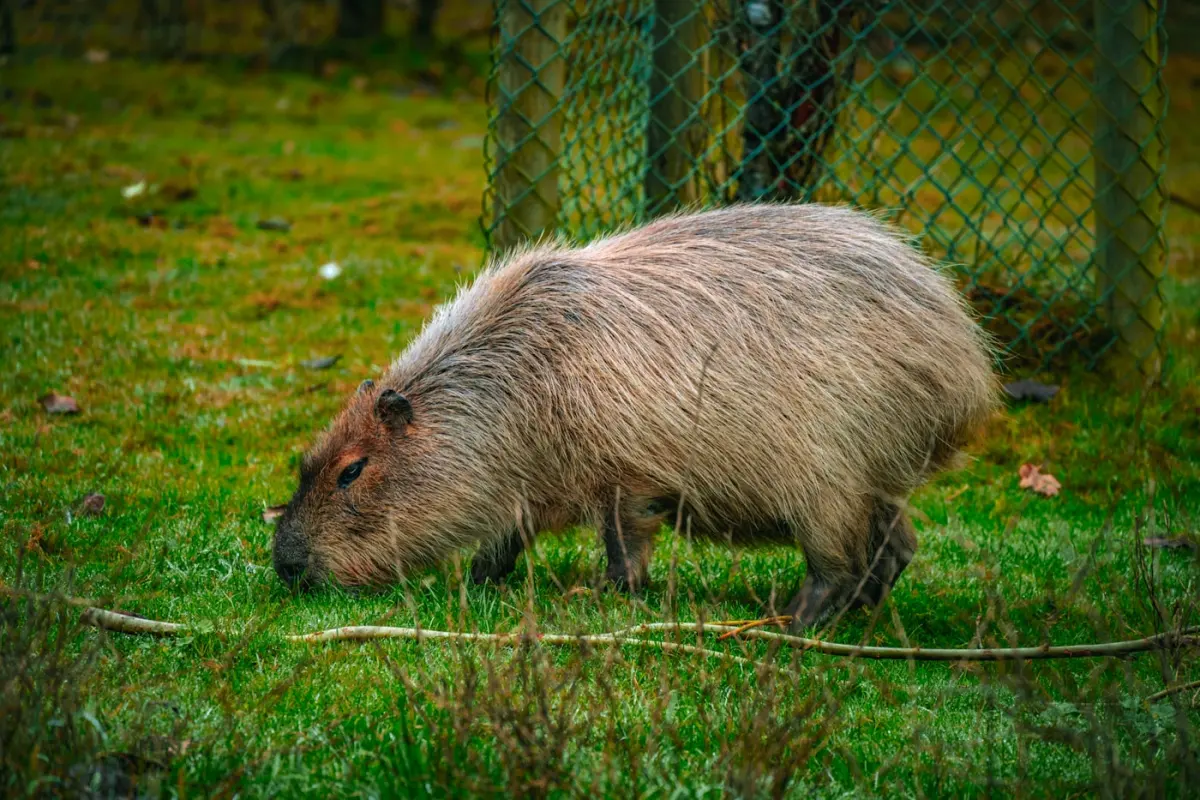
The research gets more interesting than the zoo summaries. A Journal of Tropical Ecology study on foraging patterns in a seasonally flooded Venezuelan savanna found capybaras changed what they ate across seasons. In the rainy season they fed mainly on Hymenachne amplexicaulis, a grass with higher energy and protein. During the dry season they spent similar time in reed and grass patches even though plant quality differed. In normal-person language: when the wetland buffet is open, capybaras pick better plants. When the dry season gets rude, they broaden the spreadsheet.
CONICET’s record for a Paraná River Delta study pushes back on oversimplified diet advice. The study describes the capybara as a selective herbivore, but found that diet selection was only partially explained by nutritional quality. Plant structure, chemistry, and the animal’s own physiology likely matter too. Capybara food choice is not just “highest protein wins.” The body has opinions. The wetland has constraints. Nobody has asked the influencer holding an orange.
Aquatic Plants Are Not Decor
Living close to freshwater puts aquatic plants on the menu, but this does not mean every capybara spends the day eating water lilies like a dramatic salad poet. It means capybaras work wetland edges, where grasses, reeds, sedges, and aquatic vegetation shift with flooding, drying, trampling, regrowth, and grazing pressure.
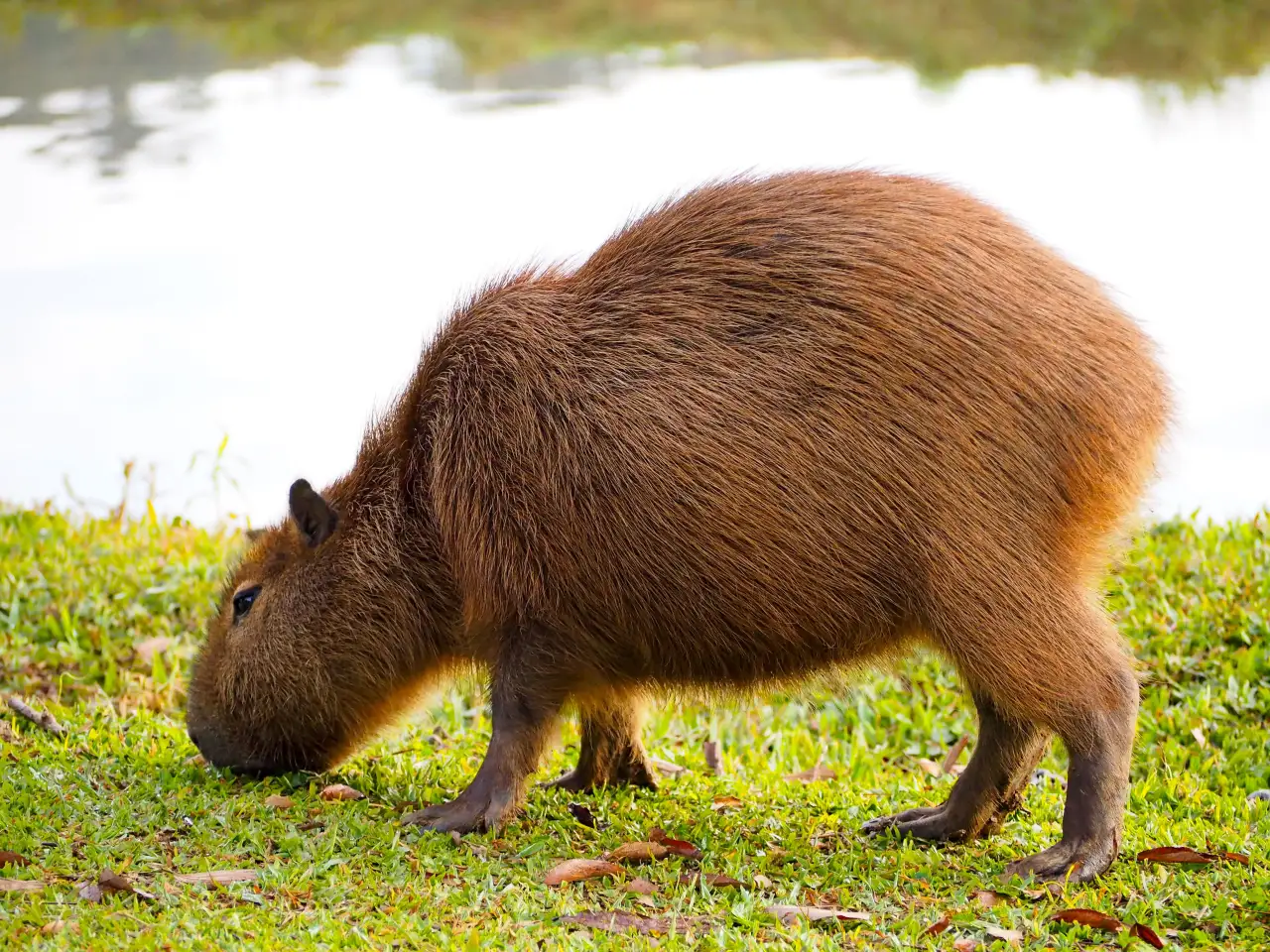
The International Environment Library Consortium fact sheet hosted by the San Diego Zoo Wildlife Alliance library notes that estimates for the aquatic-plant share of capybara diets vary widely by place and season. That variability is the answer, not a gap in it. “What do capybaras eat?” does not resolve into one perfect list. It resolves into habitat, season, plant availability, group movement, and whether the dry season has decided to be difficult.
Water gives capybaras drinking access, escape cover, cooling, travel routes, and edible plants at the same time. Remove it and you have not removed the aesthetic. You have removed the kitchen, the hallway, the emergency exit, and the air conditioning.
The Digestive System Is Doing More Than The Face Suggests
Capybaras have the classic rodent problem scaled up to a suspicious sofa: tough plant material is everywhere, and cellulose is hard to digest. Their solution is not to become a cow. It is to become a capybara, which is weirder and therefore better.
San Diego Zoo Wildlife Alliance says capybaras may regurgitate food to chew it again, and that they chew side to side to process tough plant material. Columbus Zoo notes the double chewing too, plus the habit of eating some of their own droppings to recover the bacteria that break down fiber. Animal Diversity Web calls them coprophagous and says they spend part of each morning re-ingesting the previous day’s food.
The dropping capybaras re-ingest in the morning is soft and fermented, not the regular pellet. It is a second pass at nutrients the hindgut already worked on. Rabbits run the same system, and nobody calls them disgusting for it.
Capybaras are hindgut fermenters. Microbes process fibrous food after it moves through the front end of the digestive system, so re-ingesting certain soft fecal material recovers nutrients and microbial products that would otherwise be lost. The AZA Capybara Care Manual explains that gastrointestinal microorganisms in herbivores, capybaras included, produce B vitamins, and ties capybara health to high-fiber diets that keep that microbial population working. There is more on the mechanics in the guide to why capybaras eat their own poop.
The face is blank because the capybara has no interest in explaining this at brunch.
Zoo Diet: Hay, Browse, Pellets, And Very Managed Treats
A good zoo diet does not try to recreate a wild marsh one leaf at a time. It respects the animal’s biology with safe, consistent nutrition: fiber first, controlled starch and sugar, vitamin C coverage, safe browse, and enough eating time to keep the animal occupied like a damp little lawn department.
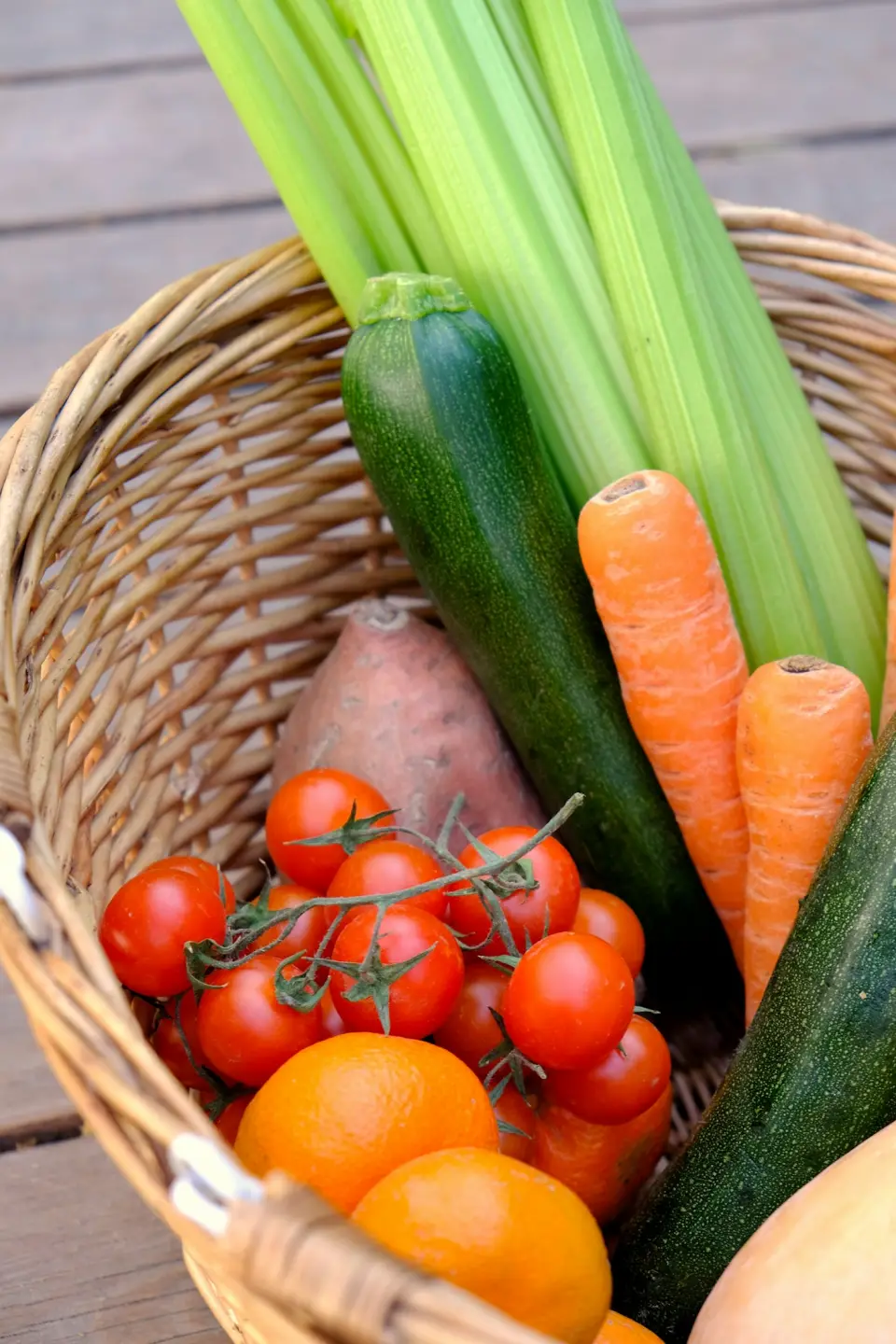
San Diego Zoo Wildlife Alliance says its capybaras get low-starch, high-fiber biscuits, assorted vegetables and greens, and Bermuda grass hay. Columbus Zoo lists specially formulated rodent biscuits with vegetables and greens, and says produce is not a staple because of sugar content, used instead as a training reward. The AZA Capybara Care Manual is firmer than either: fruits and vegetables should comprise less than 5% of the diet, vegetables emphasized over fruit, low-sugar choices preferred.
That AZA line is worth bolding because it corrects half the internet. Fruit is not evil and it is not magic. It is a small managed item inside a diet built on forage and appropriate pellets. The manual also puts at least 50% of the diet by weight in forage such as fresh browse or hay, and caps pelleted feed at 50% by weight. A managed capybara diet is not “one orange, one dream, one viral video.”
Stand at an enclosure around a scheduled feed and the pacing gives it away. Keepers do not set down a bowl and walk off. Forage gets scattered, hung, or tucked into places that make the animals work through it, because chewing time is husbandry, not a bonus. The crowd waits for the fruit moment. Usually there isn’t one. Somebody’s kid asks where the oranges are, and the honest answer is that the oranges, if they turn up at all, are a training reward roughly the size of a thumb. What you actually watch is a large rodent methodically dismantling a pile of hay for twenty minutes while three phones lose interest and drift toward the otters. That is the diet. The internet version is the ten seconds nobody filmed the setup for.
The Orange Myth: Cute, Useful, Overpromoted
The orange myth has two parents: vitamin C and Japanese bath culture.
First, vitamin C. The AZA Capybara Care Manual says capybaras require a dietary source of it and can develop scurvy if the diet is deficient. A PubMed-indexed study on scurvy in captive capybaras in Argentina tested exactly that, comparing young capybaras fed pellets without ascorbic acid against animals given supplemental ascorbic acid. The answer, from the title alone, is not subtle. The vitamin C requirement is real and it needs planning.
Second, oranges are rich in vitamin C. FDA’s raw fruit nutrition poster lists a medium orange at 80 calories, 14 grams of sugars, and 130% Daily Value vitamin C for humans. That makes oranges a useful citrus reference point. It does not make them capybara hay.

The AZA manual is blunt about the shortcut: fruit should not be the sole means of providing vitamin C, because sugars can disrupt the gut microbial population. It notes vitamin C can be supplemented in powder or liquid form, or supplied through vegetables such as broccoli, or through guinea pig pellets. The vitamin C lesson is real. The “feed them oranges all the time” conclusion is not.
Then there is the bath. Izu Shaboten Zoo’s own page describes itself as the birthplace of the capybara outdoor bath, a winter fixture that started in 1982 after keepers cleaning the exhibit with hot water noticed the capybaras settling into the puddles. Yuzu floating in the water came later, borrowed from a Japanese winter solstice custom. It is delightful, and it explains why citrus follows capybaras around the internet wearing a little towel.
Bathwater citrus is still not a food group. A capybara may nibble a piece. A capybara may also become visually iconic in a warm tub surrounded by floating fruit. Neither means your mental model of capybara nutrition should be a spa menu.
Myth vs. what the sources actually say
| Myth | Better answer |
|---|---|
| Capybaras live on oranges | Oranges are a treat. AZA caps fruits and vegetables together at under 5% of the diet. |
| Fruit is how they get vitamin C | AZA says fruit should not be the sole source; sugar disrupts gut microbes. Powder, liquid, vegetables, or guinea pig pellets do the job. |
| The yuzu baths are feeding time | The citrus floats in the water. It is a winter bathing custom at Japanese zoos, not a meal plan. |
| Visitors can hand a capybara a snack | Only where staff supply the food and say yes. Diets are planned by nutrition staff, and outside food undoes that. |
Seasonal Foods: Reeds, Squash, Melons, And Compromise
Wild capybaras are steady grazers, but wetlands are not steady. Rainy seasons flood, dry seasons shrink water, plant quality drops, groups crowd near what is left. Food choices follow.
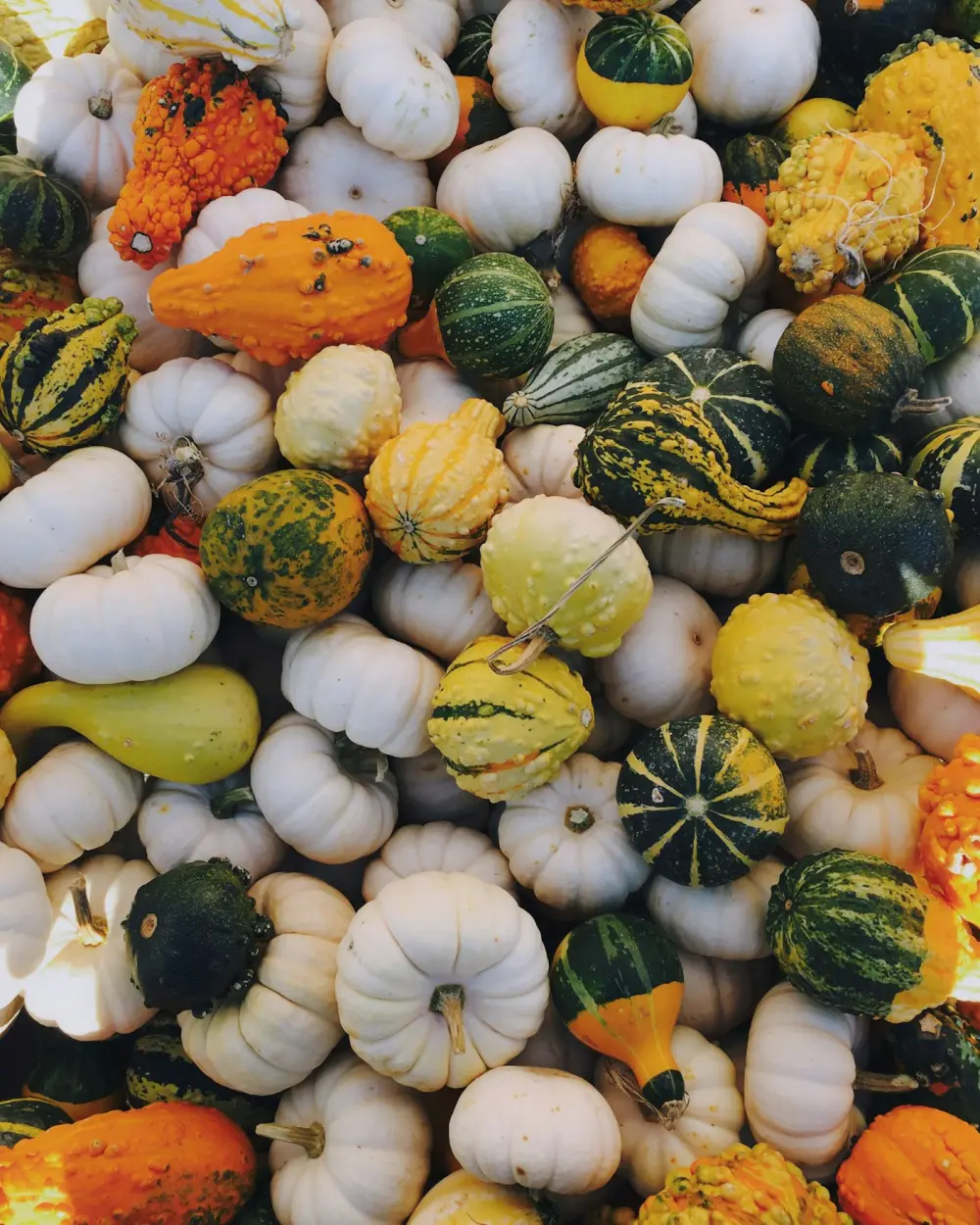
Sacramento Zoo notes the shift from grasses and water plants in the wet season to roots, squashes, and melons in the dry. San Diego Zoo Wildlife Alliance mentions reeds, grains, melons, and squashes during dry periods. Columbus Zoo lists reeds, grains, and fruit. Animal Diversity Web keeps bark and fruit in the occasional column.
This is also where capybaras become agricultural troublemakers. The San Diego Zoo Wildlife Alliance library fact sheet notes crop raids for grains, melons, squashes, bananas, sweet potatoes, manioc leaves, and corn. That does not define the species. It means a large herbivore living near people may notice that the people built a buffet and failed to install a capybara-proof moral framework.
Occasional food is not the same as ideal daily food. Tape that to every viral clip. A capybara can eat a fruit treat, raid a field, and enjoy enrichment without any of it erasing the high-fiber baseline.
Capybara Diet Table: What Belongs Where
Not a pet-care plan, not veterinary advice, and definitely not permission to hand a capybara your grocery cart. A field guide for understanding what you are looking at.
| Food Type | Wild Role | Zoo / Managed Role | Reader Takeaway |
|---|---|---|---|
| Grasses | Main diet; San Diego Zoo notes adults may eat 6-8 lb per day. | Matched with hay or forage to keep fiber high. | This is the real staple. |
| Aquatic plants, reeds, sedges | Important near freshwater; varies by season and habitat. | Approximated through safe browse, forage, and greens. | Water-edge plants explain the habitat obsession. |
| Hay / browse | Not a wild category exactly, but functionally replaces fibrous forage. | AZA recommends at least 50% of managed diet by weight from forage such as browse or hay. | Good managed diets respect chewing time and fermentation. |
| Pellets / biscuits | No wild equivalent; this is human-managed nutrition. | Controlled nutrients; AZA says pellets should be low sugar, low starch, and not exceed 50% by weight. | Useful tool, not the whole diet. |
| Vegetables and greens | Some wild analogs in leaves, stems, roots, and crop plants. | Small amounts, with vegetables preferred over fruit. | Better treat category than sugary fruit. |
| Fruit and oranges | Occasional fruit or crop foods, not the base diet. | AZA says fruits and vegetables should be under 5% of diet; fruit should not be the sole vitamin C plan. | The orange is a treat and meme prop, not a staple. |
The Safe List And The Never-Feed List
Everything above is about proportion. This section is about the small number of foods where proportion stops mattering, because the answer is zero.
Safe, in the right proportion
- Grass hay and fresh browse, the bulk of it
- Low-starch, low-sugar herbivore or rodent pellets
- Romaine, green leaf, and red leaf lettuce
- Vegetables in small amounts, preferred over fruit
- Fruit as a treat only, inside the 5% ceiling
Never
- Chocolate, coffee grounds, tea, soda
- Onion, garlic, leeks, chives
- Avocado
- Dairy, meat, fish, cheese
- Bread, pastries, processed grain
- Anything moldy, plus clippings from treated lawns
The reasoning behind the never column is mostly shared with other mammals: theobromine in chocolate, the red-blood-cell damage from allium vegetables, persin in avocado, lactose the adult gut cannot handle, mycotoxins in moldy hay, and lawn chemicals nobody meant the animal to eat. Citrus and apple seeds carry trace amygdalin, which is not a realistic hazard at snack scale but is trivially easy to remove, so remove it. The longer version, with the reasoning per item, sits in the guide to foods capybaras can’t eat.
Sugar and starch are the quiet ones. AZA links poor capybara diets to dental caries, gastritis, malocclusion, obesity, colitis, cecitis, Type II diabetes, and scurvy. None of that announces itself at the moment the treat goes in.
The deeper safety principle is a decent gut check for anything not on either list: if it did not exist on the Pantanal floodplain in some form, it probably does not belong in the bowl.
The foods capybaras can't eat, with the reason for each one
Why chocolate, allium, avocado and mouldy hay are on the never column, and which of the internet's other warnings do not survive a read of the sources.
Specific Foods, By Question
The questions people actually type, answered short. Anchor links, so you can deep-link straight to a food.
Can capybaras eat lettuce?
Romaine and other dark leafy lettuces, yes. Low sugar, decent fiber, a bit of vitamin C, and a useful supplemental green. Iceberg is technically safe and nutritionally pointless: roughly 96% water, almost no fiber, no real reason to bowl it. The “is iceberg dangerous” panic on capybara forums is overstated. It is not a poison, it is a waste of stomach space.
Can capybaras eat watermelon?
Yes, occasionally. Mostly water with some sugar, so a small slice on a hot day is fine. The risk is not toxicity, it is the same sugar problem all fruit has: regular fruit feeding pulls the diet away from the hay and grass base that capybara teeth and guts are built for. The viral photos are usually one slice handed over by a keeper, not a daily bowl. More detail in the guide to capybaras and watermelon.
Can capybaras eat apples?
Yes, sparingly, seeds removed. The seeds are a minor concern; the sugar is the real one, at roughly 10 grams per 100 grams, which is high relative to anything in the wild diet. A slice as an occasional treat is fine. A bowl of apples daily is the wrong shape of diet.
Can capybaras eat carrots?
Yes, sparingly. Carrots run higher in sugar than most root vegetables and lower in fiber than ideal. A small piece as a training reward is fine. Carrots as a vegetable staple is not. The viral “capybara with carrot” content badly overrepresents how often carrots show up in a well-managed diet.
Can capybaras eat meat?
No. Capybaras are strict herbivores with a large cecum built for fermenting plant fiber, and meat does not fit that physiology. Occasional reports of capybaras chewing carrion are misidentification or rare mineral-seeking behavior, not carnivory. AZA-recommended pellet formulations are plant-protein based, which quietly settles the supplemental-meat-protein question too.
What grass do wild capybaras eat?
In the Pantanal and Llanos, the staples are genera like Hymenachne, Paspalum, Panicum, and Echinochloa, plus assorted aquatic and semi-aquatic grasses. They graze in two daily cycles, dawn and dusk-into-night, working through roughly 6 to 8 pounds of green forage. The full breakdown is in the guide to which grasses capybaras actually eat, and the intake makes more sense once you know how big capybaras get.
Notes For U.S. Capybara Fans
The safest practical advice is boring and correct: enjoy capybaras at reputable zoos and sanctuaries, and do not feed them unless staff explicitly says you can and hands you the food. Many facilities use food for enrichment or training. That is not an invitation to improvise.
Good zoos treat diet as animal care, not audience participation. AZA, San Diego Zoo, Columbus Zoo, and Sacramento Zoo describe the same thing in slightly different words: fiber-heavy, carefully managed, not powered by viral fruit.
Capybaras are also not native U.S. wildlife. If you see one outside a facility, that is an exotic-animal question, not a cue to offer produce. The right response to a surprise capybara is distance, photos, and local authorities if needed. The right response is not “I have an orange in the car.” Please do not become a footnote.
Bottom Line
Mostly grass and aquatic plants, with seasonal flexibility and a gut built around fiber. In expert care, carefully managed high-fiber diets with hay, browse, pellets, greens, small amounts of vegetables, and planned vitamin C. Oranges are in the story. They are not the story.
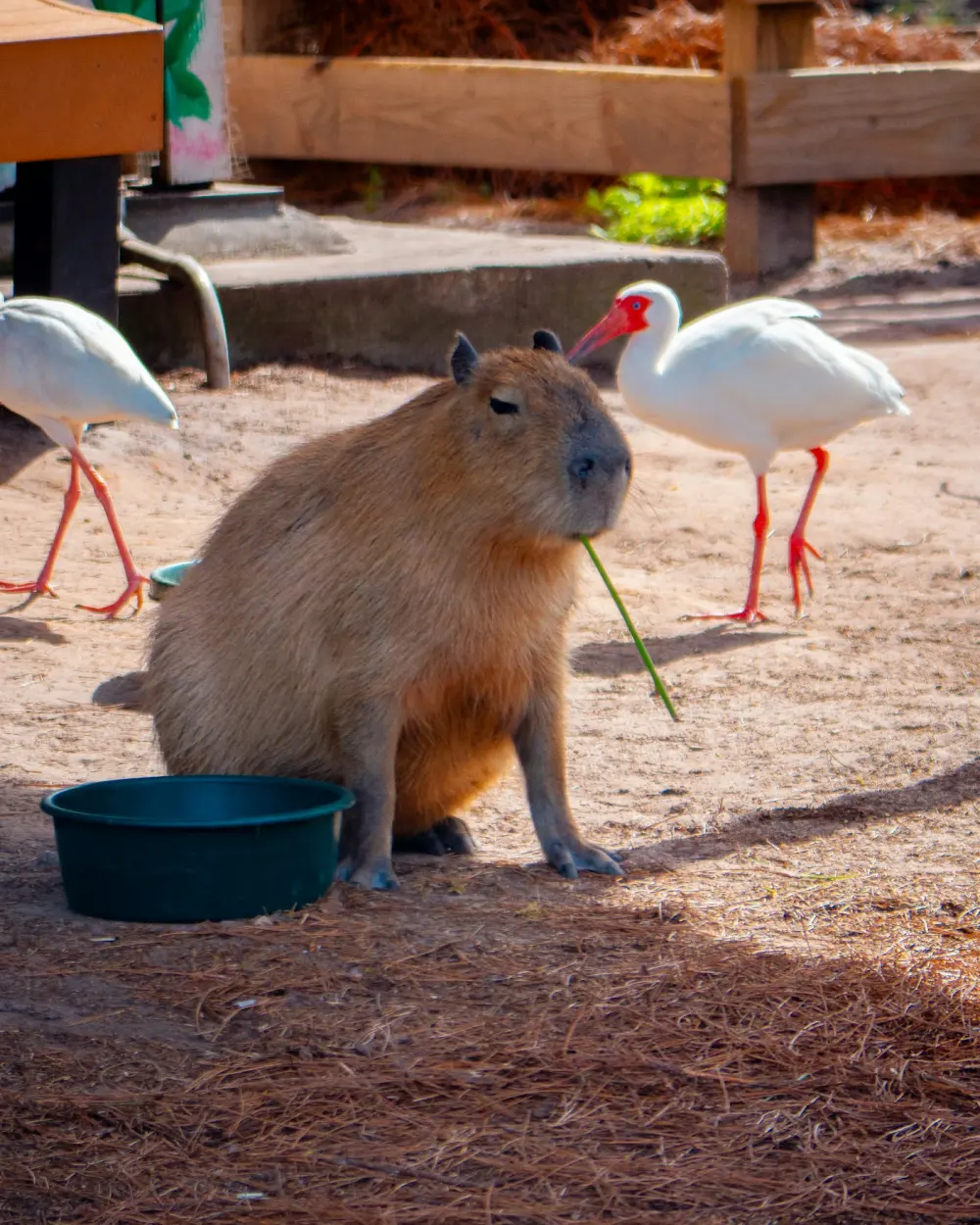
The capybara is not an orange-powered spa potato. It is a wetland grazer with serious teeth, a fermentation-heavy gut, and a daily calendar that reads: graze, chew, digest, re-chew, swim, judge, repeat.