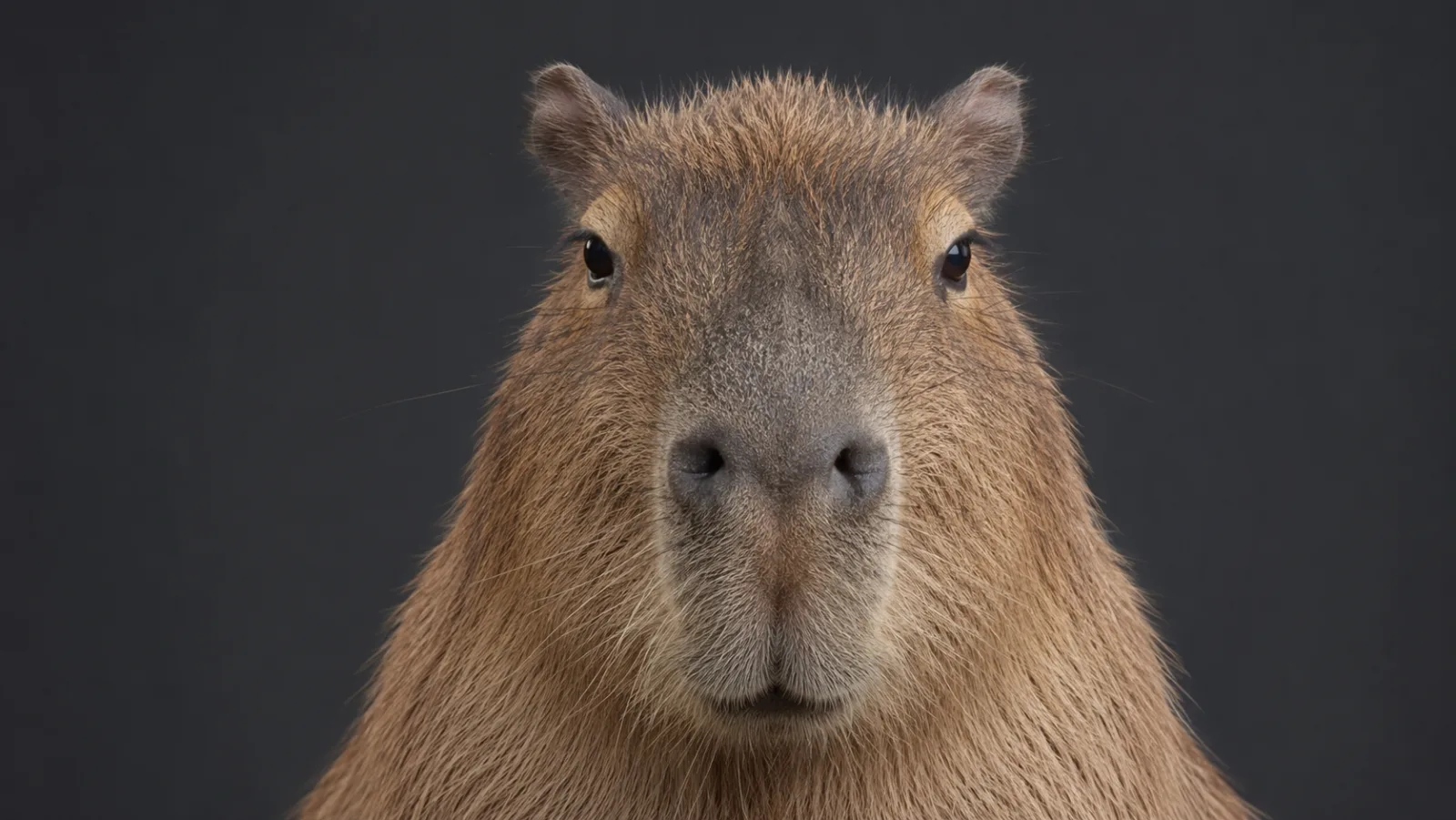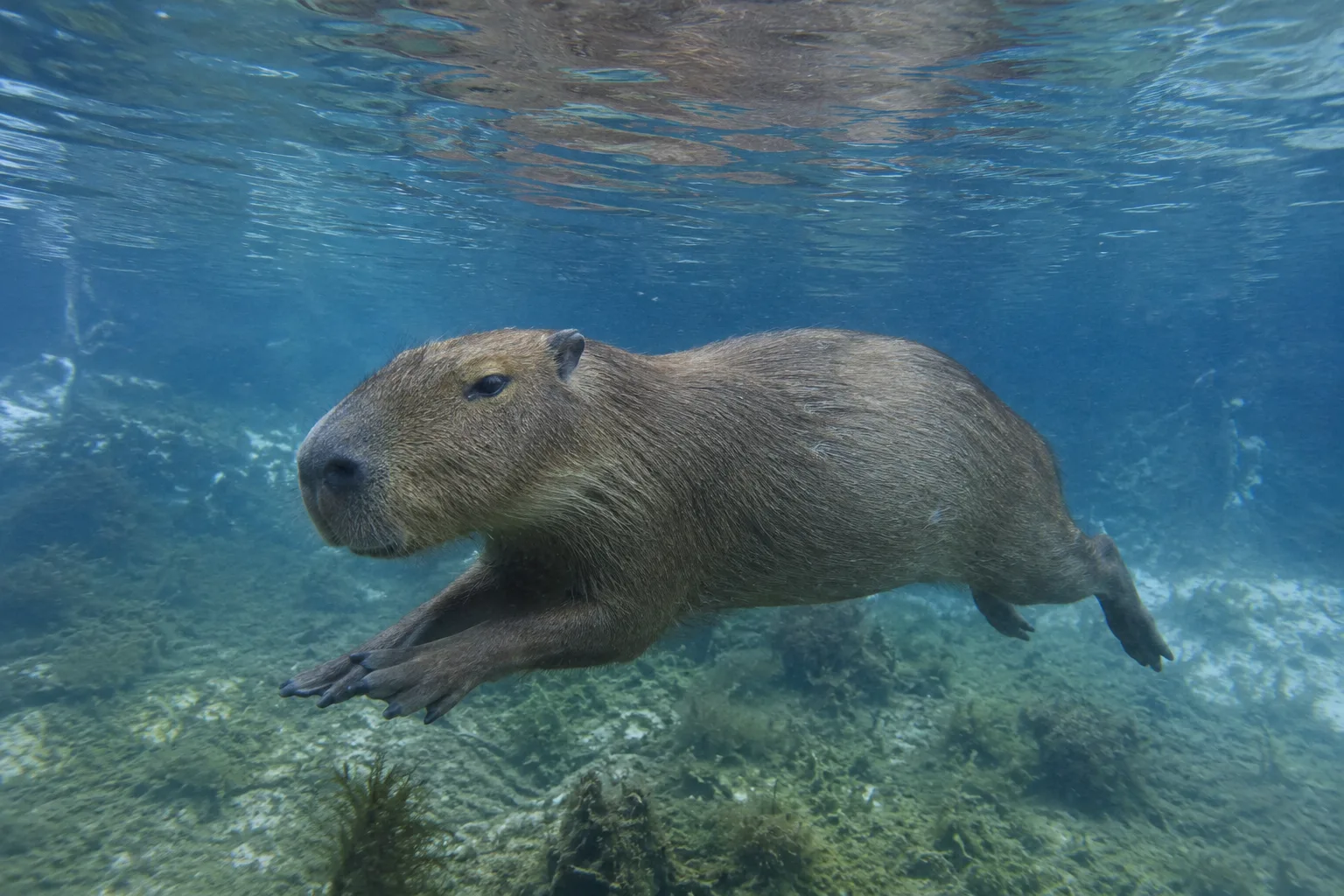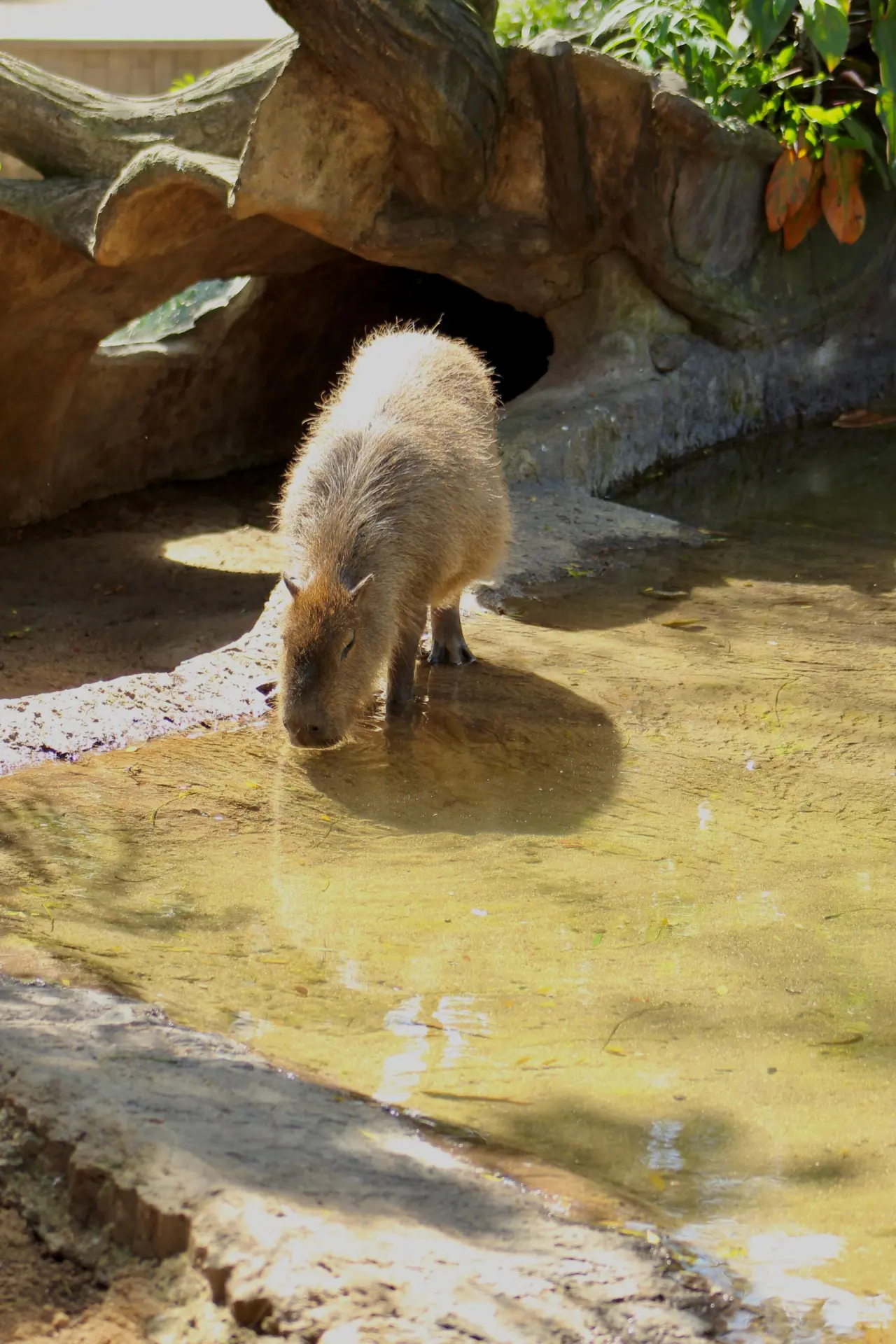
Capybaras live where the land gives them three things at once: water close enough to vanish into, grass close enough to eat without making a whole production of it, and enough cover or company that the day does not become a jaguar documentary.
If you are reading from the U.S., the important correction is this: capybaras are not native to Florida, Texas, a roadside zoo, or that suspiciously confident TikTok caption. The common capybara, Hydrochoerus hydrochaeris, is a South American animal. When one turns up in the United States, it is an exotic or nonindigenous animal, not a secret local marsh resident who has been waiting politely for better branding.
The short answer is simple. Capybaras live across much of South America, mostly east of the Andes, in lowland places where rivers, ponds, lakes, marshes, flooded grasslands, swamp edges, and grazing areas overlap. The longer answer is better, because it explains why the water is not decoration. It is the floor plan.
The Native Range
Animal Diversity Web describes the common capybara as a strictly South American rodent, with a range through much of Brazil, Uruguay, Venezuela, and Colombia, south into the Argentinian pampas, and west to the Andes. The U.S. Geological Survey gives the broad version as most of South America, except for mountainous areas in the west. That last clause matters. The Andes are not a capybara lifestyle choice. The animal is built for lowland wet edges, not scenic altitude with a hiking boot sponsorship.
San Diego Zoo Wildlife Alliance puts it in everyday geography: capybaras live in Central and South America along swampy, grassy regions bordering rivers, ponds, streams, and lakes. You can hear the habitat checklist in that sentence. Water. Grass. Edges. Repeat until capybara appears.
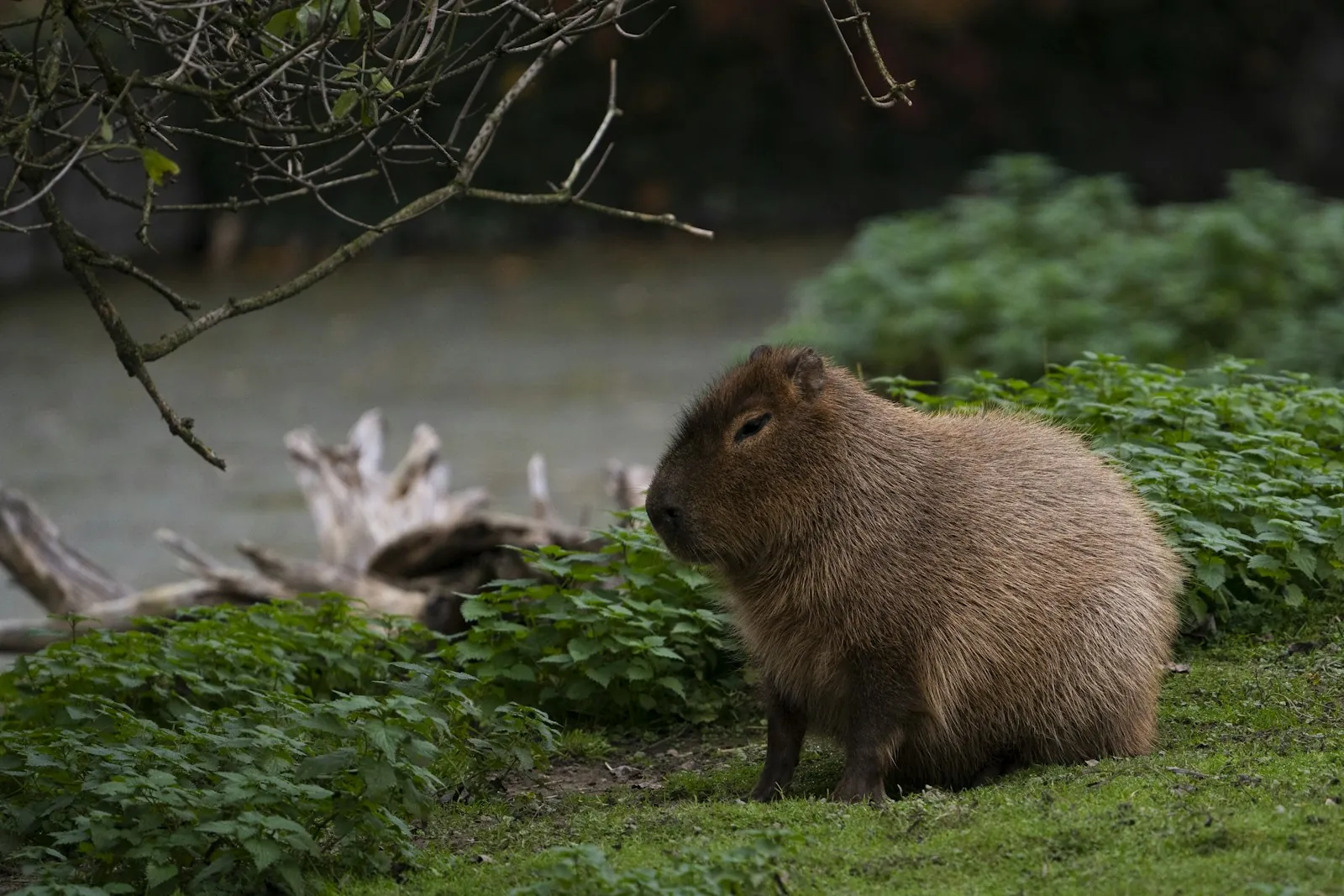
The common capybara is the one most people mean when they say capybara. There is also a lesser capybara, Hydrochoerus isthmius, found farther north in parts of Panama, Colombia, and Venezuela. For this guide, we are focusing on the common capybara, because that is the big internet celebrity with the wet feet and the suspiciously calm public image.
The Habitat Checklist
Capybaras can use several habitat types, which is why a one-word answer like “rainforest” is too tidy. Animal Diversity Web lists flooded grasslands, marsh edges, and lowland forests as favored habitat where grazing is good and water is available year-round. It also notes that they can occupy dry forest, scrub, and grasslands across South America. The trick is not the label on the biome. The trick is whether the place can support the capybara triangle: drink, graze, escape.
That is why they show up around rivers, lakes, ponds, marshes, swamps, floodplains, and riparian corridors. A capybara does not need a luxury infinity pool. It needs reliable freshwater, nearby forage, dry resting ground, and enough cover or group structure to reduce the odds of becoming someone else’s afternoon.
The U.S. Geological Survey phrases the requirement neatly: capybaras need water for drinking, dry land for resting, and grazing land for foraging. That is the whole animal in one sentence. Half spa guest, half lawn equipment, fully committed to leaving through the nearest water feature if the vibe changes.
Notice the order of needs, because it is quietly useful. Water alone is not enough. A capybara stranded beside a clean pond with no grazing is just a hungry mammal with excellent bath access. Grass alone is not enough either. A capybara on an open dry lawn with no water nearby is missing the thing that makes its whole body plan make sense. The habitat works when those pieces touch.
Why Water Is Non-Negotiable
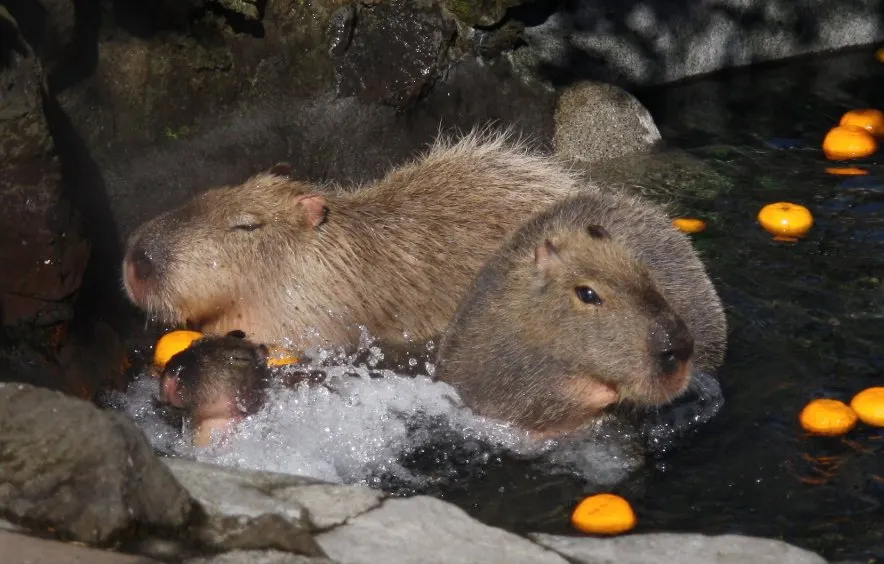
Water is not just where capybaras look photogenic. Water is how they regulate heat, avoid predators, move through habitat, mate, hide, cool down, and generally avoid having a terrible day.
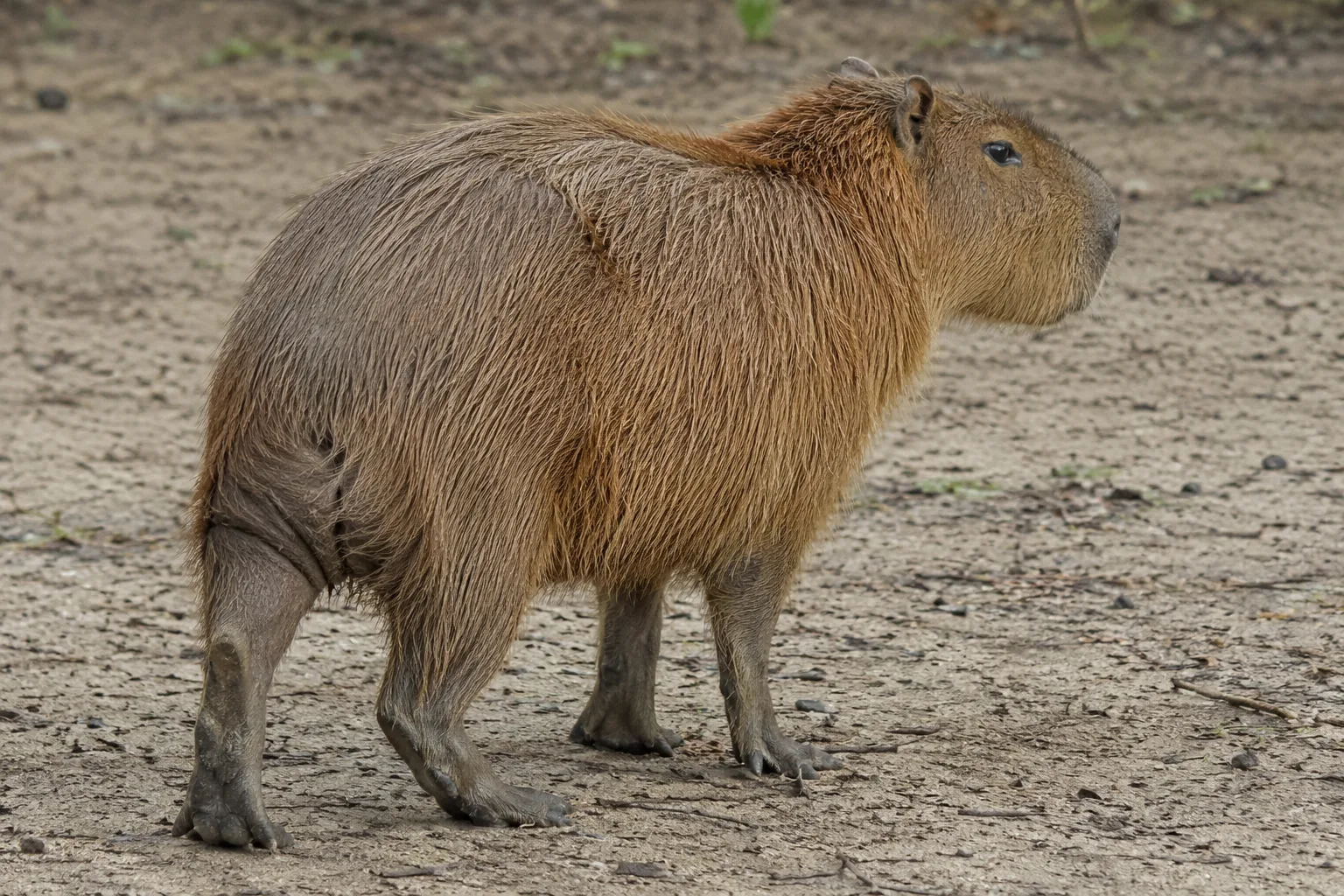
Capybaras have partially webbed feet, and their eyes, ears, and nostrils sit high on the head. Animal Diversity Web notes that those features make them well suited to semi-aquatic life. In practical terms, a capybara can sit low in the water with the important surveillance equipment still above the surface, giving the strong impression of a floating loaf that has read the room.
They are also vulnerable to heat stress because of their large body size. Animal Diversity Web describes them spending the hottest part of the day in water, and San Diego Zoo Wildlife Alliance notes that adults can weigh 60 to 174 pounds. That is a lot of warm mammal to carry around under a South American sun. Water is not optional ambiance. It is climate control with ripples.
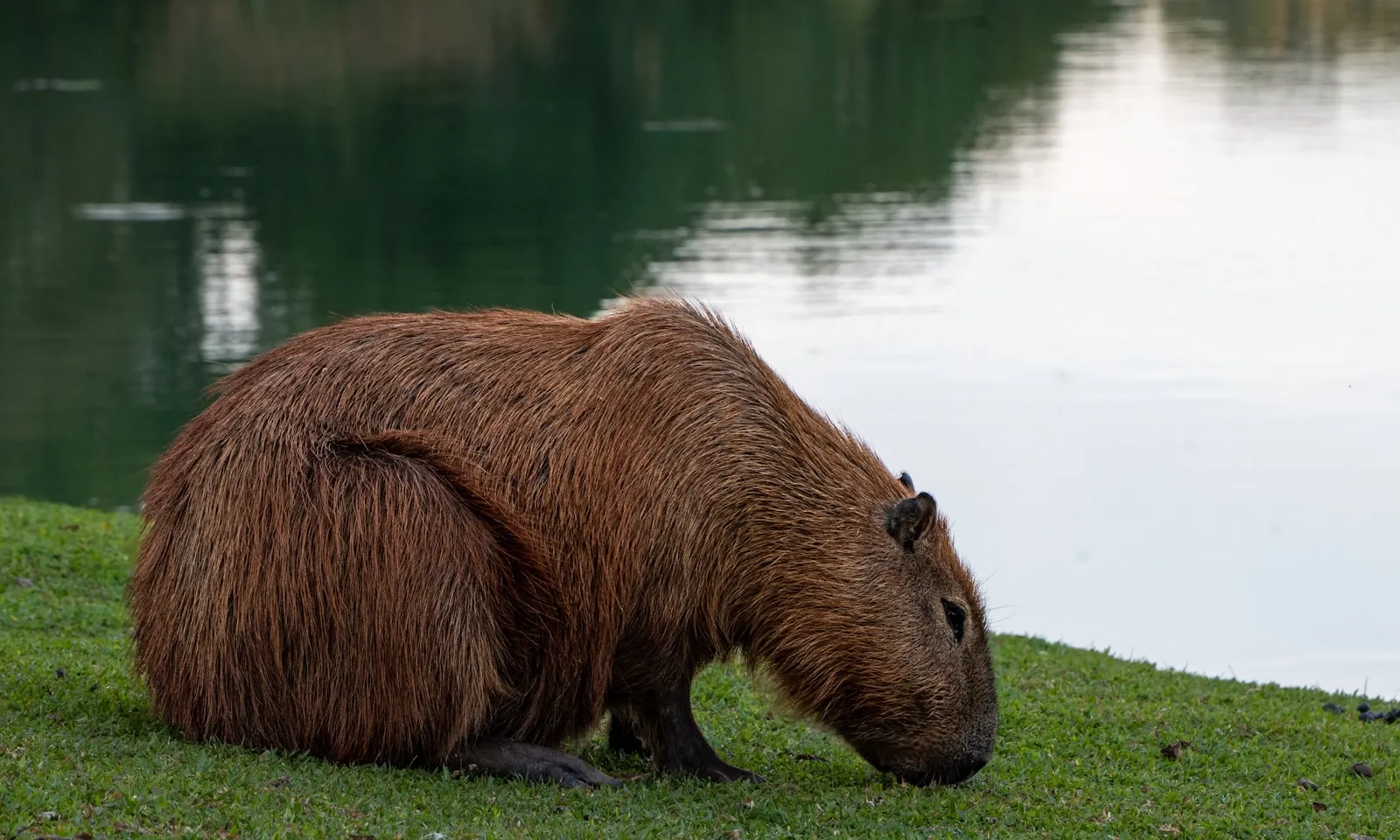
Water is also the panic room. When a threat appears, capybaras often move toward water and may hide with only their eyes and nostrils showing. They can stay submerged for up to five minutes, which is exactly the sort of fact that makes the calm face less mysterious. The capybara is calm because the exit is wet and nearby.
The Dry Season Changes Everything
Capybara habitat is not static. It stretches and shrinks with water. During wetter periods, animals can spread across more grazing areas, flooded edges, and grassy patches. During dry periods, the remaining water becomes the social center, the grocery aisle, and the emergency exit all at once.
Animal Diversity Web reports that capybara groups often range from 3 to 30 individuals, with larger aggregations forming around water resources during the dry season. San Diego Zoo Wildlife Alliance gives a similar social clue, noting small groups of about 10 and wet-season gatherings that can reach around 40 animals. The exact number depends on habitat, season, and local conditions, but the pattern is wonderfully unglamorous: when water concentrates, capybaras concentrate.
This is why a capybara scene can look crowded without being a festival. Sometimes the whole neighborhood has simply discovered that the pond is the only sensible place left.
Are Capybaras Native To The U.S.?
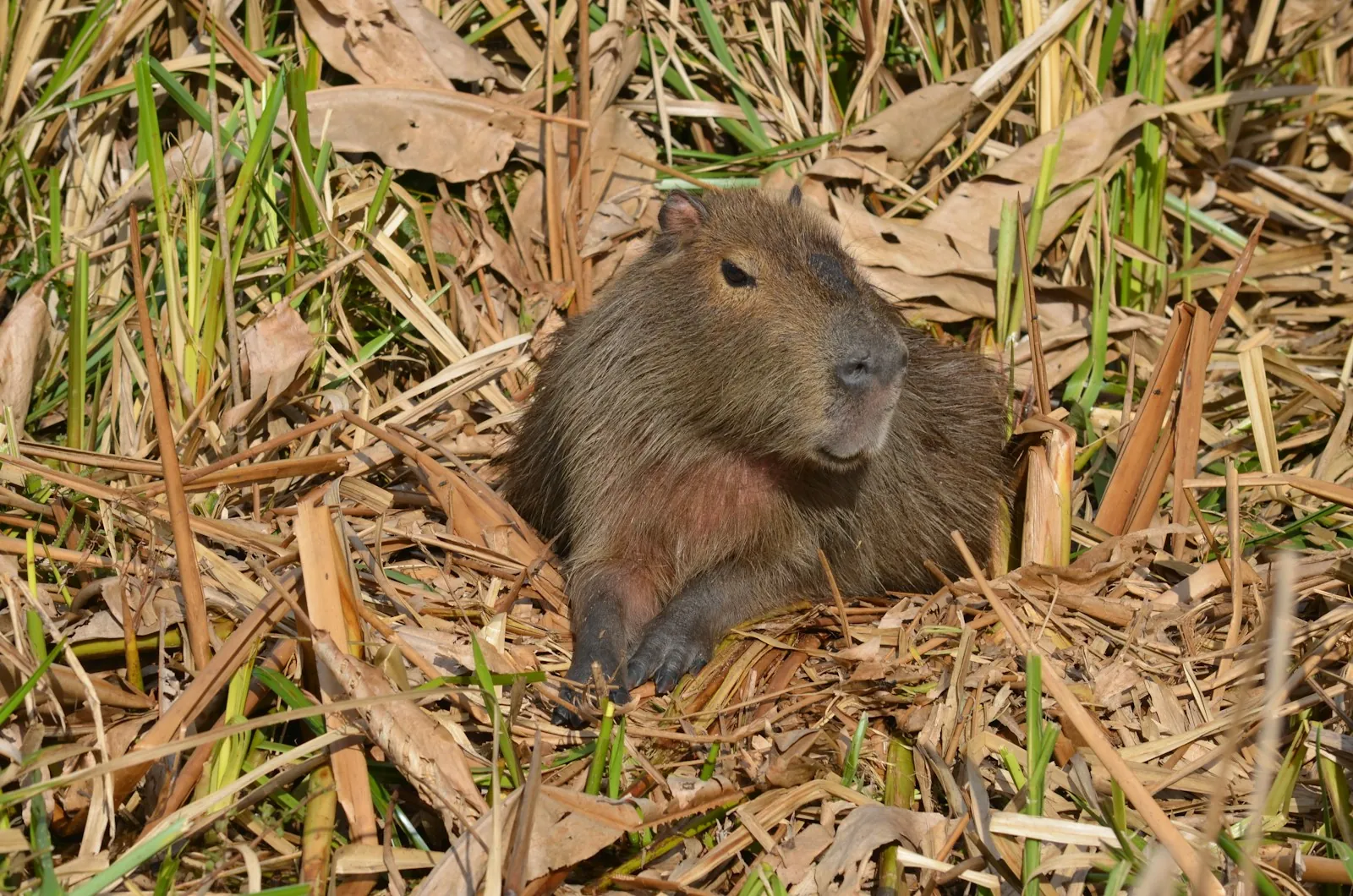
No. Capybaras are not native to the United States.
That said, U.S. readers are not imagining every headline. The U.S. Geological Survey’s Nonindigenous Aquatic Species database lists capybara occurrences in Florida, and isolated records in Illinois, Mississippi, and Texas. Its Florida table spans observations from 1990 to 2023 across 16 hydrologic units, with an important caveat: populations may not currently be present. The agency notes that a Florida population may have been established in the Santa Fe River drainage, but none had been seen there since 2011.
Translated out of database voice: if you see a capybara in the U.S., do not update the field guide in your head. Think escaped pet, exotic animal, old population report, or a managed facility before you think “native wildlife.” The animal may be very chill. The paperwork around it is not.
Capybara Habitat, Decoded
Here is the clean version to share when someone says capybaras live “in the jungle” and then looks proud of themselves. Jungle is not totally impossible, but it is not the useful answer. The useful answer is edge habitat with water and grass.
Where Capybaras Actually Fit
| Habitat Type | Why It Works | Capybara Translation |
|---|---|---|
| Flooded Grasslands | Good grazing, shallow water, and seasonal movement space. | Buffet with emergency exits. |
| Marshes And Swamps | Freshwater, cover, aquatic plants, and mud-edge resting spots. | The office, the cafeteria, and the panic room. |
| Riverbanks And Riparian Edges | Reliable water beside grasses, shrubs, and dry resting ground. | Capybara suburbia, but wetter. |
| Lowland Forest Edges | Shade and cover near water, as long as grazing is still available. | Good for avoiding heat and looking mysterious. |
| Dry Forest, Scrub, Or Grassland | Usable when water remains accessible nearby. | Acceptable, if the pond has not ghosted everyone. |
The table is also a good way to understand why pet ownership gets complicated so quickly. If an animal’s natural life is built around freshwater, grazing, dry resting areas, heat management, group living, and seasonal movement, a backyard with vibes is not habitat. It is decor with consequences.
Why This Matters For Capybara Lovers
Knowing where capybaras live makes the animal funnier, not less fun. The famous calm is easier to respect when you understand the infrastructure behind it. The capybara is not floating through life on pure emotional balance. It is standing in the exact kind of place that lets a large social herbivore eat, cool off, hear the alarm call, and disappear into water without making eye contact.
It also makes good content easier to spot. A real capybara habitat clue is usually visible: water nearby, grass underfoot, group members somewhere in the scene, and a lowland wet-edge feeling. A capybara in a bathtub may be cute. A capybara in a marsh is the animal with its full operating system installed.
That is the little field-mark for readers: do not just look for the capybara. Look for what the capybara is trusting. If the photo shows water, grazeable edges, shade, and a route back to cover, you are probably seeing the animal closer to its natural logic. If the photo shows tile, a leash, or a lonely animal in a novelty setting, enjoy the moment carefully and keep the welfare questions awake.
So where do capybaras live? Mostly in South American lowlands where water and grazing meet. More poetically: in the narrow treaty zone between lunch and escape.