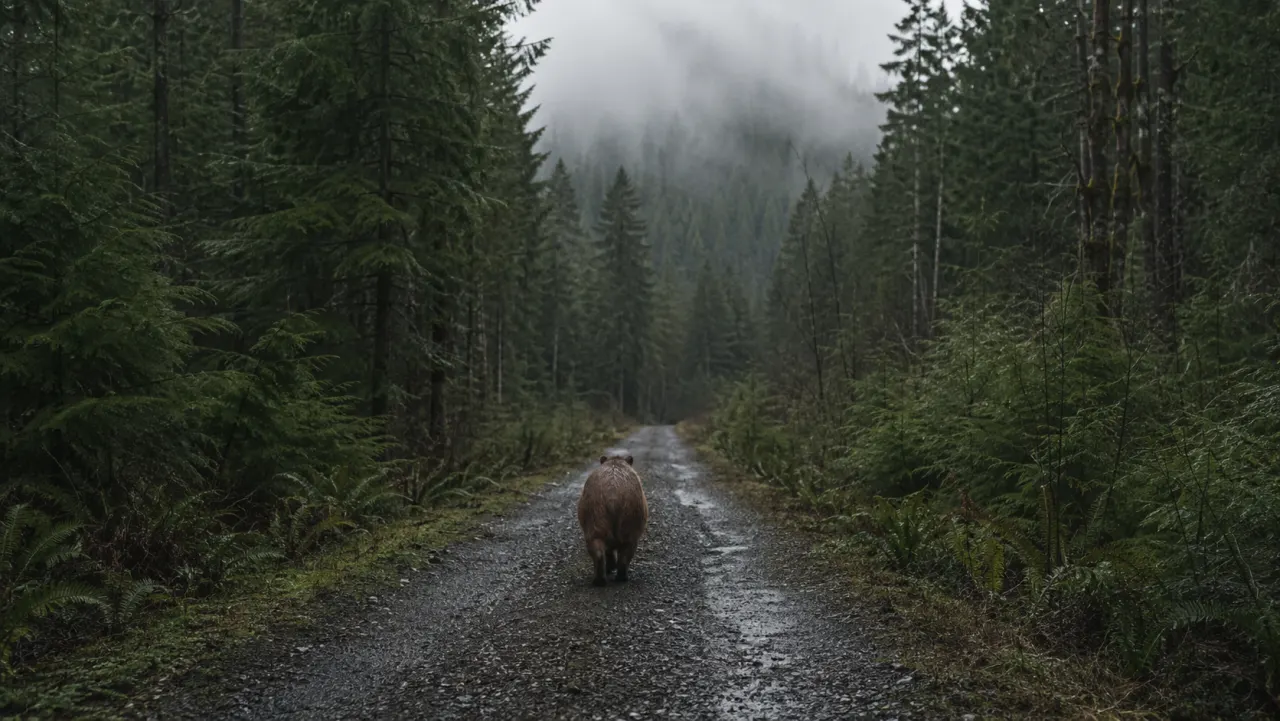
HOW MANY CAPYBARAS FIT IN YOUR APARTMENT?
For almost every apartment the honest answer is none. The smallest capybara enclosure ever recorded holds one pair in 1,023 sq ft, and the median zoo exhibit is five and a half times that. Put in your floor area and see how far off it is.
Measured against
 grumpycapy.com/tools
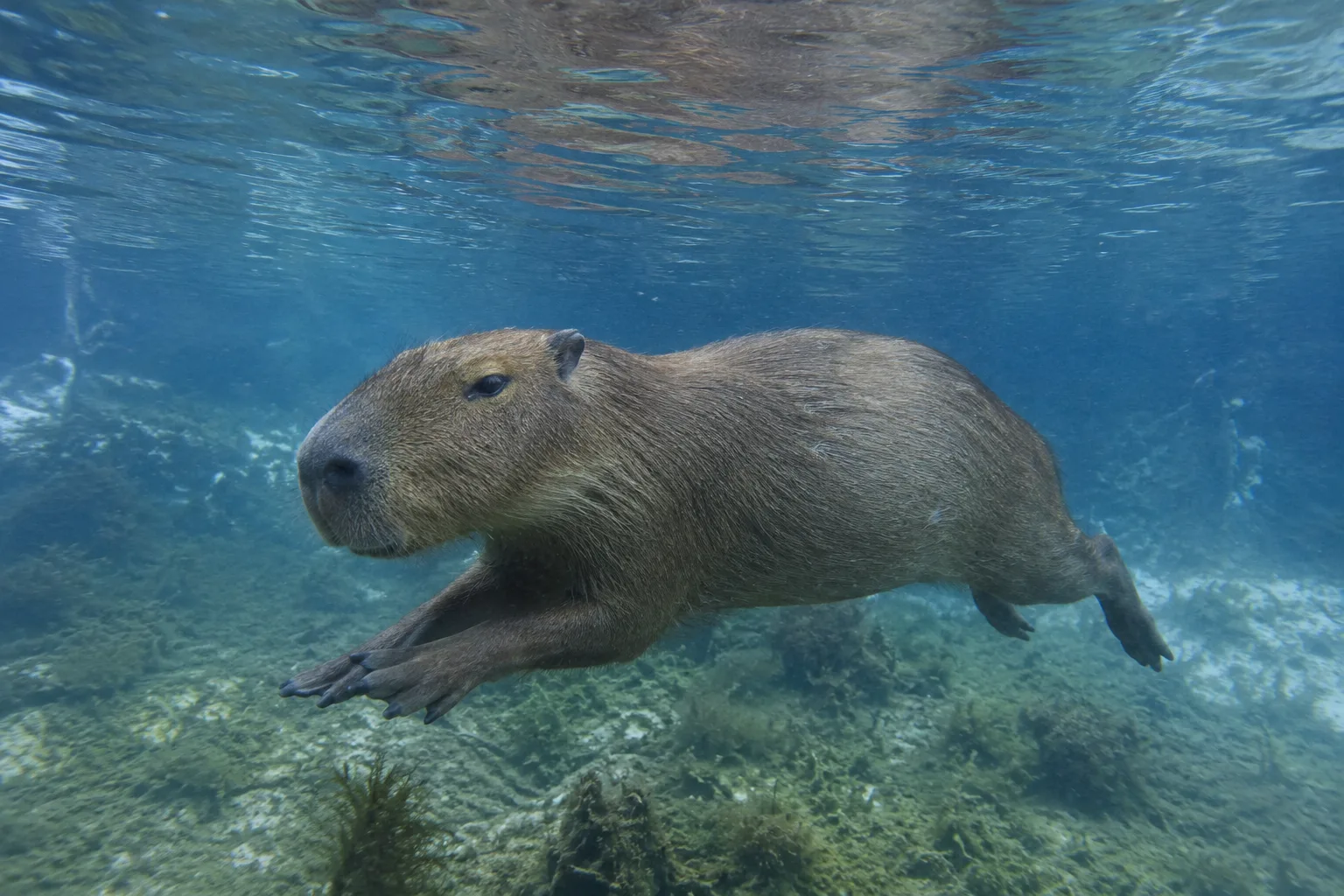
- The water. AZA collections report a median pool of about 950 sq ft, usually at least 6 feet deep, with a gradual incline for entry and exit. A bathtub is not a scaled-down version of that. It is a different object. What the enclosure actually needs.
- The law. Floor area is rarely what stops this. Toronto and Montreal cap pet rodents at 1.5 kg and an adult capybara is 27 to 79 kg, which ends the conversation before square footage comes up. Check your jurisdiction.
- The smell. Capybaras defecate in water, which is fine in a pond and a plumbing event indoors. They also practice coprophagy, and adult males carry a scent gland for marking. None of it responds to training the way housebreaking a dog does. Why potty training does not transfer.
- Never one. Capybaras are socially obligate and decline when housed alone, so the smallest honest unit is two. That is why this calculator will never return a one. Can a capybara live indoors.
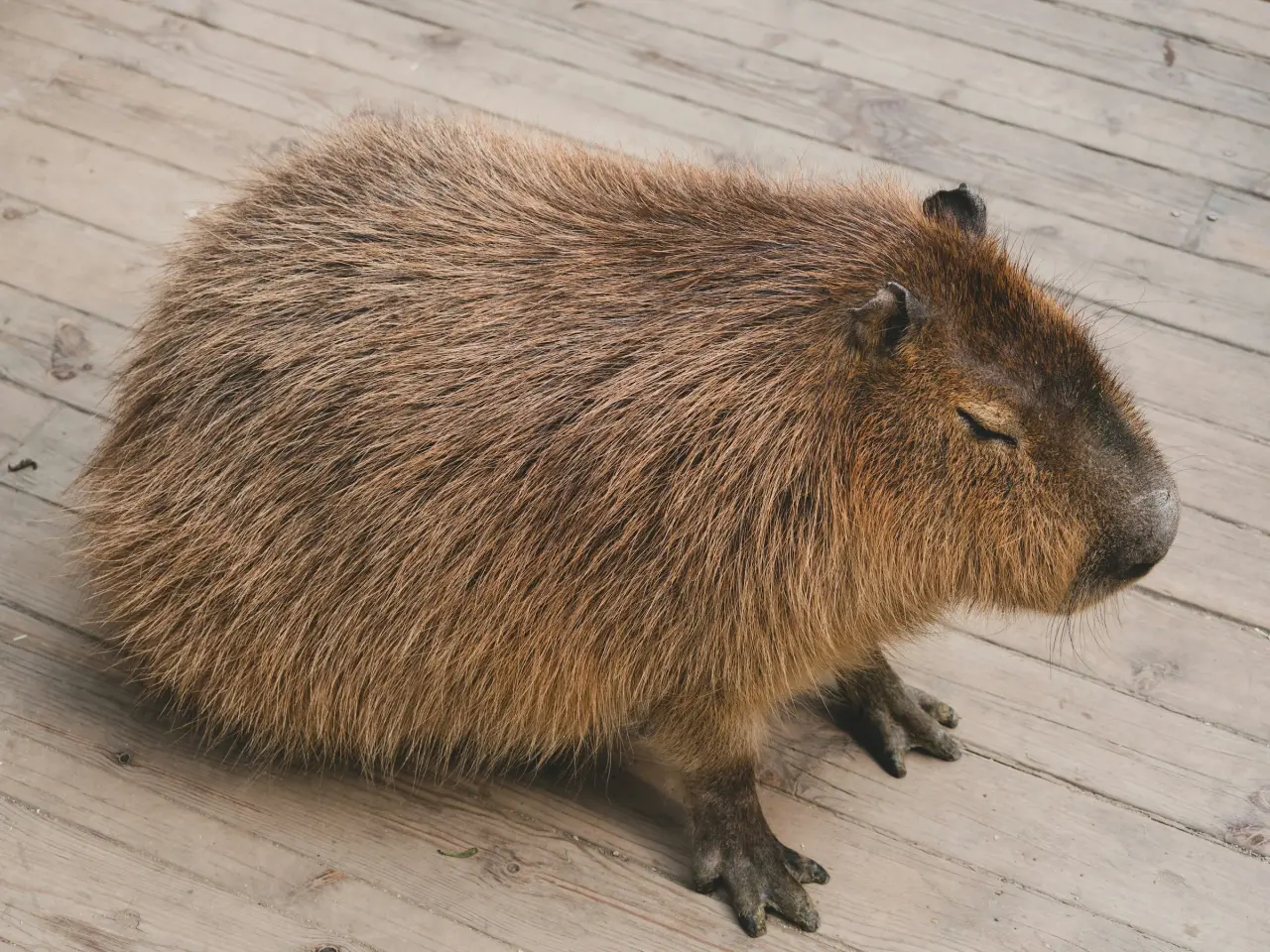
Enclosure figures come from an unpublished 2014 survey of AZA-accredited institutions reported in the AZA Capybara Care Manual: smallest recorded exhibit 95 m² (1,023 sq ft) for one non-breeding pair, median 523 m² (5,630 sq ft), median pool 88 m² (about 950 sq ft). They are zoo standards, not legal minimums. The standing-room number is ours, from a body length of 3.2 to 4.2 feet: see how big capybaras actually get.
The answer for ordinary homes
Round, illustrative sizes rather than a housing dataset: the point is the ladder. Every figure is measured against the smallest capybara enclosure ever recorded by an AZA-accredited institution, 1,023 sq ft for one non-breeding pair. The median exhibit in the same survey was 5,630 sq ft.
| Home | Floor area | Share of the smallest enclosure | Capybaras |
|---|---|---|---|
| A studio | 400 sq ft | 39% | None |
| A one-bedroom apartment | 750 sq ft | 73% | None |
| A two-bedroom apartment | 1,100 sq ft | 108% | 2 |
| A three-bedroom house | 1,800 sq ft | 176% | 2 |
| A half-acre back garden | 21,780 sq ft | 2129% | 42 |
A half-acre garden clears the floor-area test and still has no pool, no permit and no exotics vet attached to it. Floor area is the easiest of the four constraints to satisfy and the only one a calculator can measure.