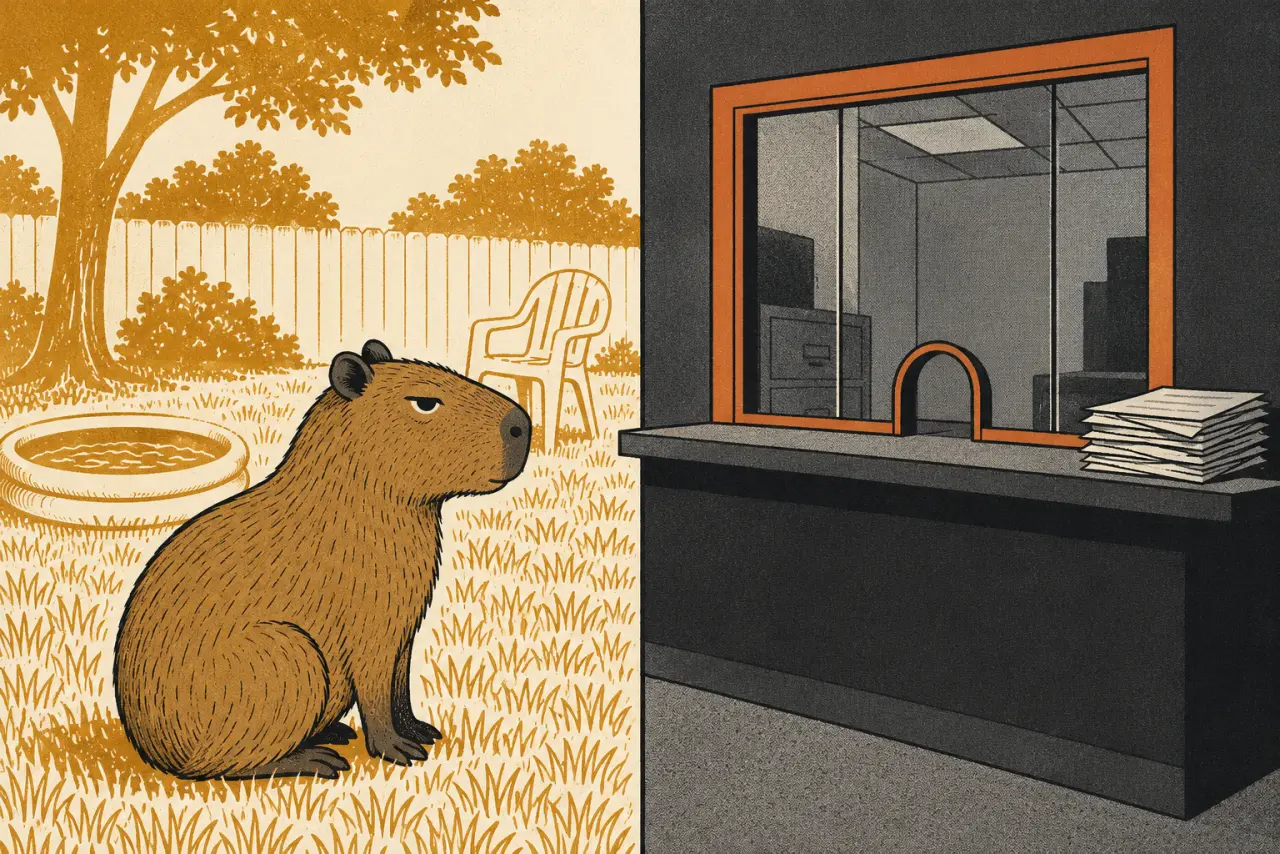
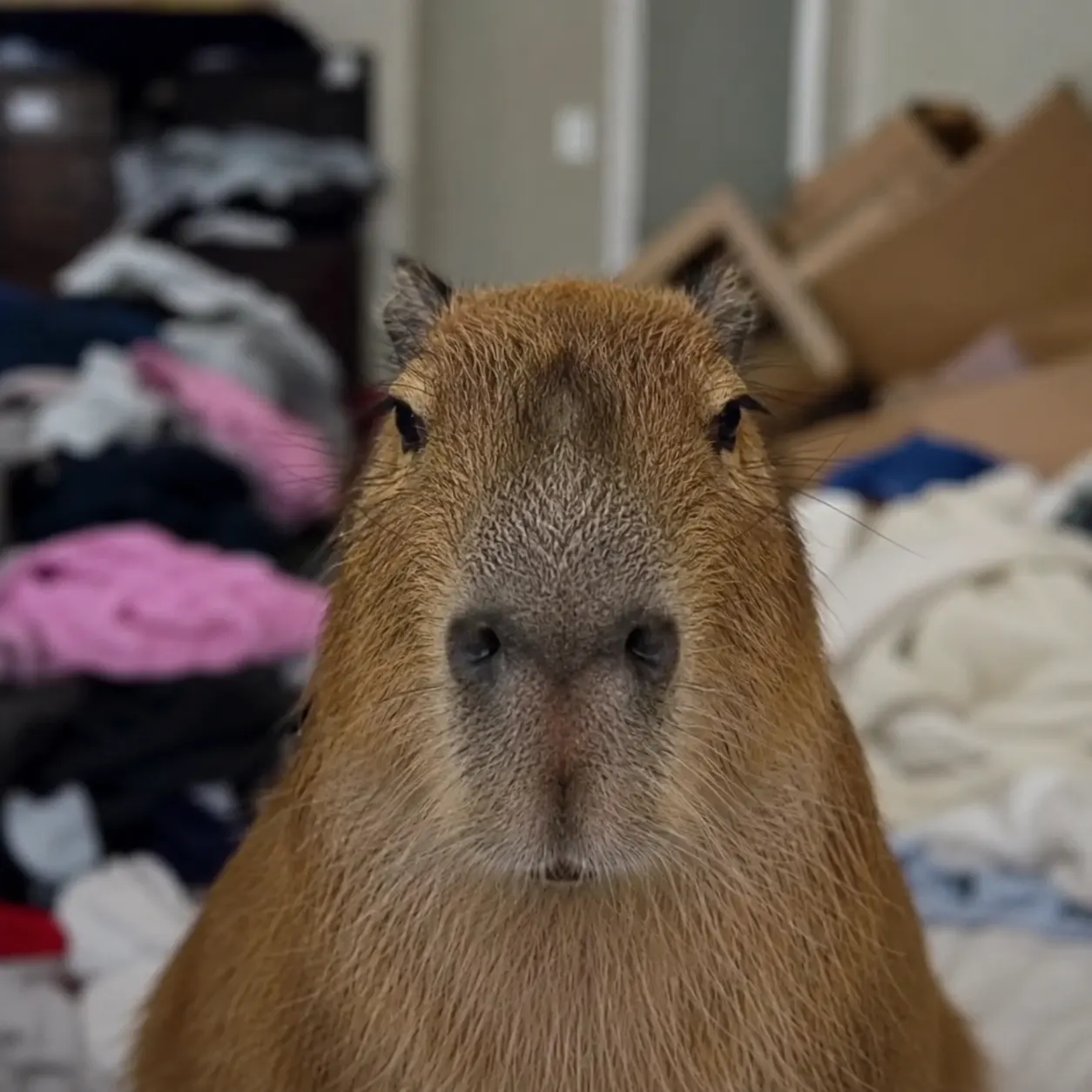
Can capybaras be potty trained? Technically, some captive animals may develop routines. Spiritually, no, not in the way people mean when they picture a polite giant guinea pig using one tidy corner.
The real answer: do not build a capybara care plan around reliable house training. Capybaras need water, outdoor space, social housing, high-fiber diets, sanitation systems, and cleaning routines. The capybara did not fail apartment life. Apartment life failed the capybara.
The Realistic Answer
Some animals can learn patterns around feeding, resting, and where they tend to eliminate. Keepers can sometimes encourage habits through enclosure design, substrate, cleaning, and routine. That is different from a household potty-trained pet.
Capybaras are not cats. They are large semi-aquatic rodents. Their biology is not trying to meet your flooring goals.
| Claim | Reality check |
|---|---|
| They can be fully house trained | Unreliable and not a serious welfare plan |
| They only need one indoor corner | Water, grazing, and movement complicate waste |
| A diaper solves it | Not a humane long-term care strategy |
| Mess means bad animal | Mess often means wrong setup |
Why Water Complicates Everything
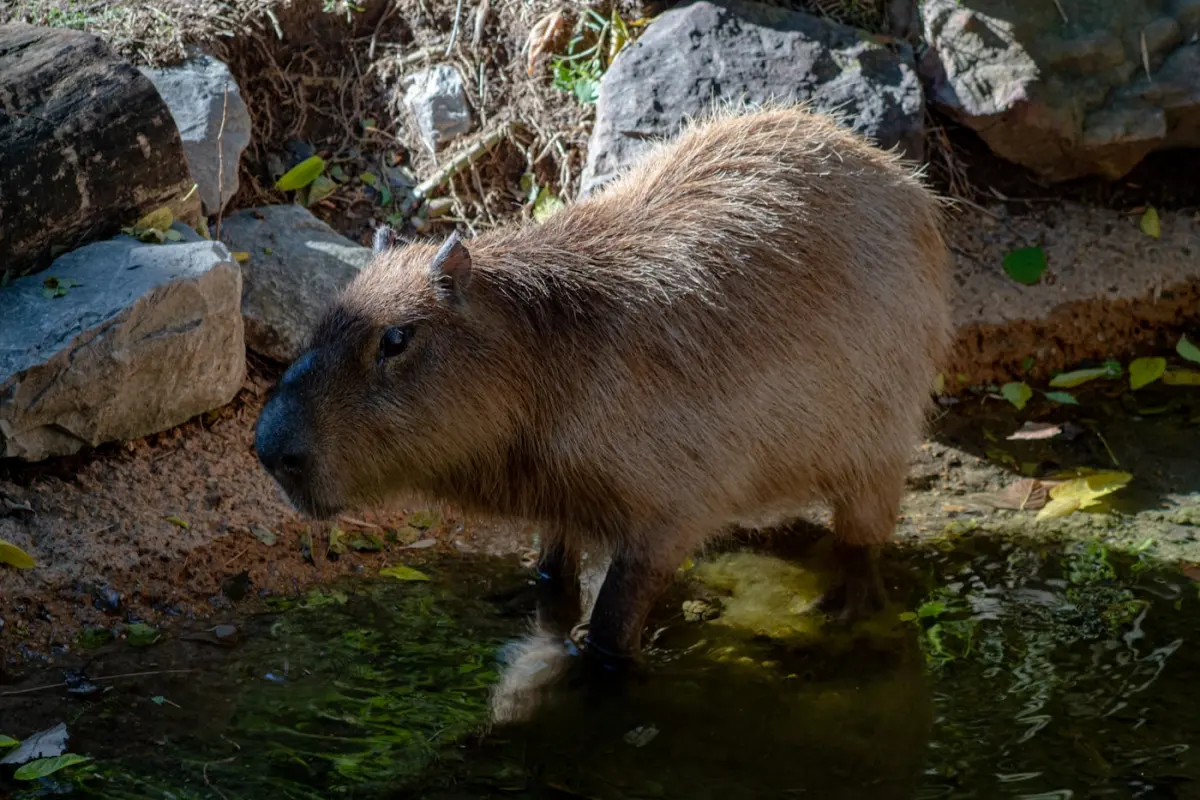
San Diego Zoo Wildlife Alliance says capybaras need a swimming hole and use water for cooling, feeding, and escape. The AZA manual says pools should be provided in indoor and outdoor enclosures. Water is not optional, and water plus waste means filtration, drainage, cleaning, and odor control.
A capybara that spends real time in water will not fit neatly into the dry-house-pet model. The moment you add a pool, you have moved from potty training to habitat management.
What Captive Care Can Encourage
Better setups can make cleanup more manageable. Outdoor substrate, drainage, designated resting spaces, water filtration, predictable feeding, and frequent waste removal can all help. Professional care focuses on managing the habitat, not pretending the animal is a tidy roommate.
The AZA Capybara Care Manual treats sanitation, enclosure design, water, diet, and welfare as connected. That is the mindset: design the space so normal capybara behavior does not become a household crisis.
Why The Body Itself Resists The Plan
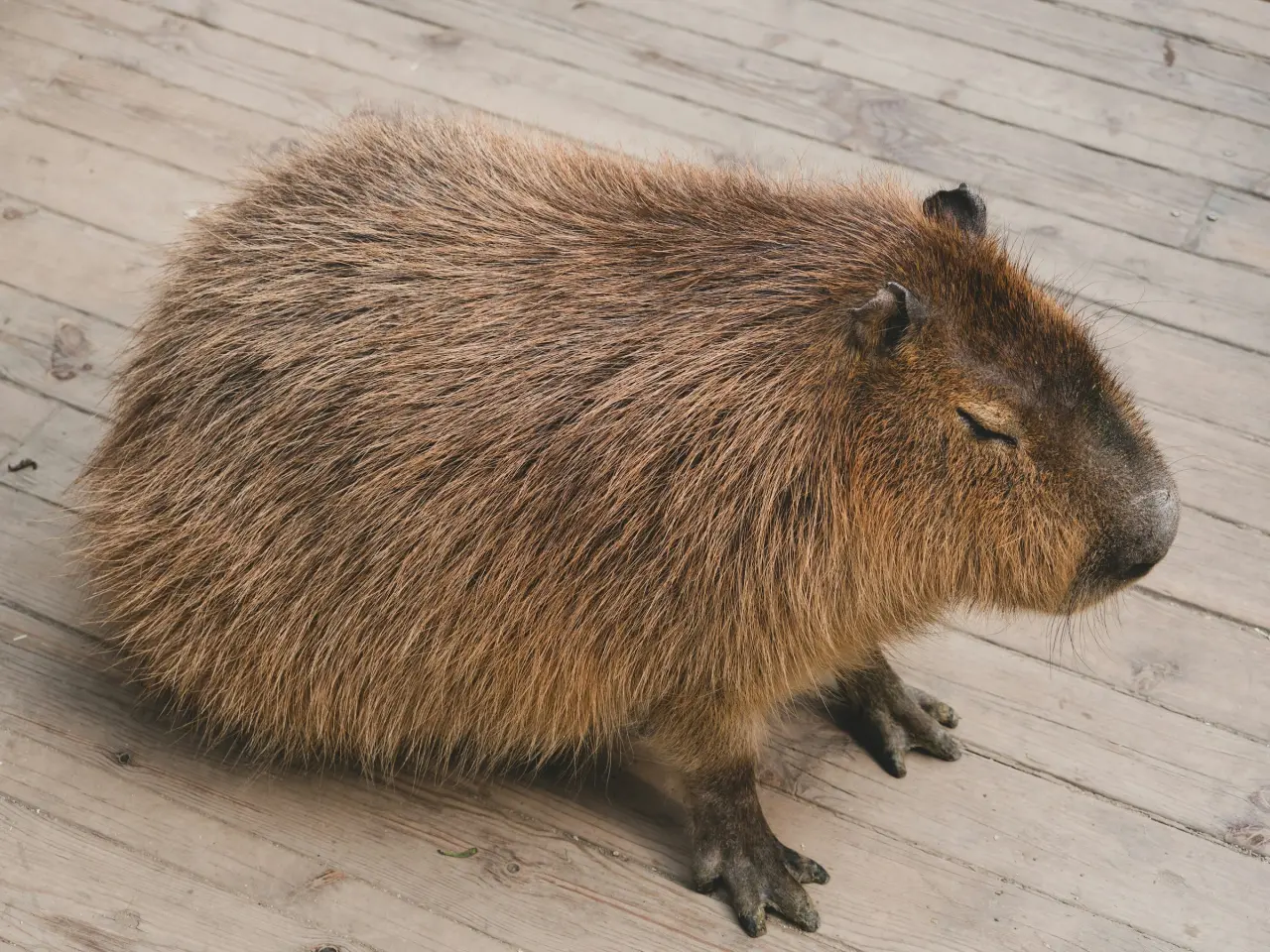
It helps to look at what a capybara actually is before deciding it can be filed into a litter routine. This is the world’s largest rodent, with adults landing somewhere around 35 to 66 kg (roughly 77 to 145 lb). That is a lot of animal producing a lot of output. The Animal Diversity Web profile and San Diego Zoo Wildlife Alliance both describe a semi-aquatic grazer that processes large volumes of grasses and aquatic plants every day. Grazers do not eat one neat meal and then wait politely. They process fiber more or less continuously, which means they also eliminate more or less continuously.
Then there is the gut. Capybaras are hindgut fermenters, and like their guinea pig relatives in family Caviidae, they cannot make their own vitamin C, so diet has to supply it. The fermentation strategy is why they practice coprophagy, re-ingesting soft morning feces to pull out nutrients and gut microbes the first pass missed. None of this is a defect. It is an efficient digestive system doing exactly what it evolved to do. It is just not a system that pairs well with a single corner and a roll of paper towels.
| Capybara trait | What it means for indoor cleanliness |
|---|---|
| Adult body mass ~35 to 66 kg | High daily food intake, high daily waste volume |
| Continuous grazing | No tidy meal-then-rest elimination window |
| Hindgut fermentation + coprophagy | Re-ingests feces; not a “remove and forget” cycle |
| Semi-webbed feet, water-bound | Tracks moisture and waste out of the pool |
| Highly social herd animal | One animal is a welfare problem, several multiply the mess |
Social Housing Makes It Bigger, Not Cleaner
People picturing a single tidy capybara have usually skipped the most important welfare fact. These are herd animals. Animal Diversity Web and the AZA manual are clear that capybaras live in social groups and that isolated housing is a recognized stressor, not a convenience. So the honest version of capybara ownership is rarely one animal. It is two or more.
Here is the opinion part, stated plainly: a solo capybara kept indoors for human tidiness is the worst of both worlds. You get an animal under social stress and a home under sanitation stress at the same time. Solving the welfare problem by adding companions only multiplies the water, grazing, and waste you were already failing to manage. The math does not move in your favor.
Why Indoor Life Gets Messy
Capybaras eat large amounts of fibrous plant material and also practice coprophagy, re-ingesting some fecal material as part of digestion. Animal Diversity Web notes this behavior. Humans may find it horrifying. The gut finds it practical.
Add chewing, wet feet, shedding hair, scent, food debris, and the need for social housing. Now your living room is not a living room. It is an underbuilt exhibit with a couch in it.
What Pet Dreamers Should Know
If someone says their capybara is perfectly potty trained, treat it as one story, not a care standard. Even where ownership may be legal, capybaras require specialized housing, water systems, secure space, social care, and exotic veterinary support.
The practical takeaway is not “try harder.” It is “design for the animal you have, not the pet you imagined.” For most people, that means visiting one somewhere reputable and returning home to a bathroom situation that does not require a pool skimmer.