Short answer: yes, ethical capybara encounters exist in the US — but “there’s an encounter near me” and “it’s good for the animal” are two different questions. Real venues run supervised, welfare-first sessions. Others treat a 145-pound rodent like a photo booth. This is how to tell them apart, with actual places to start from.
A good encounter is calm, supervised, and a little boring in the right places. If the animal looks like it has a shift manager and a quota, close the tab.
Real US Places That Run Capybara Encounters
You do not have to guess whether these exist. They do, and they publish their rules. The point is not “these five are perfect” — it’s that real options exist, and the good ones tell you up front how the session works.
On the cafe side, The Capybara Cafe in St. Augustine, Florida is one of the longest-running, and newer spots include Capy Hour in Coeur d’Alene, Idaho (reservation-only, ages 5+), Wild Encounters in Panama City Beach, and Capyfriends in Helen, Georgia. You can browse the full set in our capybara cafes directory.
On the wildlife-park side, encounters tend to come with clearer, stricter rules — which is usually a good sign. Brandywine Zoo in Delaware posts a minimum age of 6, small capacity, and required adult accompaniment. North Georgia Wildlife Park sets a minimum age of 8. Busy B Ranch Wildlife Park lists ages 7 and up, African Safari Wildlife Park in Ohio requires a paying adult for ages 3 to 15, and Jungle Island in Miami requires an adult for guests 16 and under. For zoos and sanctuaries where you can also just watch capybaras, the zoo directory is the calmer starting point.
The spread in those age rules — 5, 6, 7, 8, or older — is itself the lesson. “Family friendly” and “hands-on” are not promises of quality. The rules are.
The One Screen: Good vs Bad
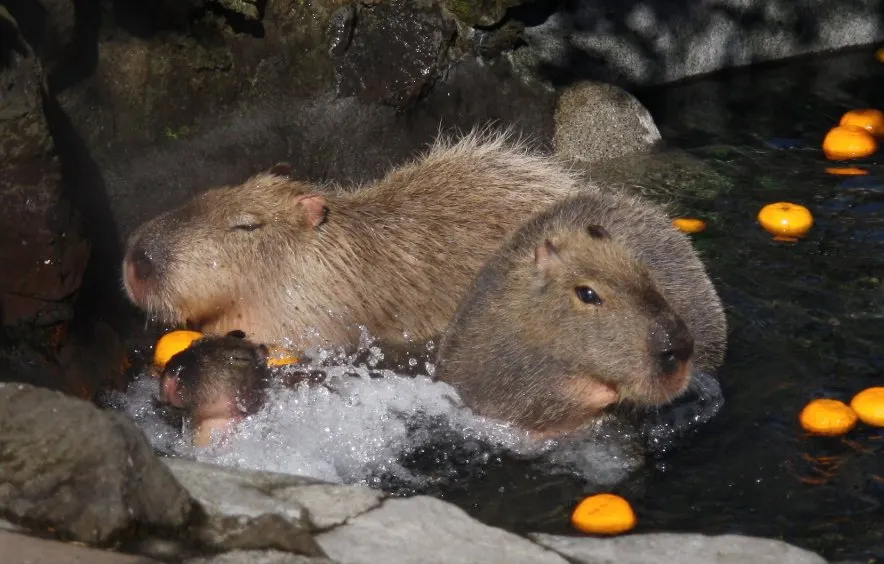
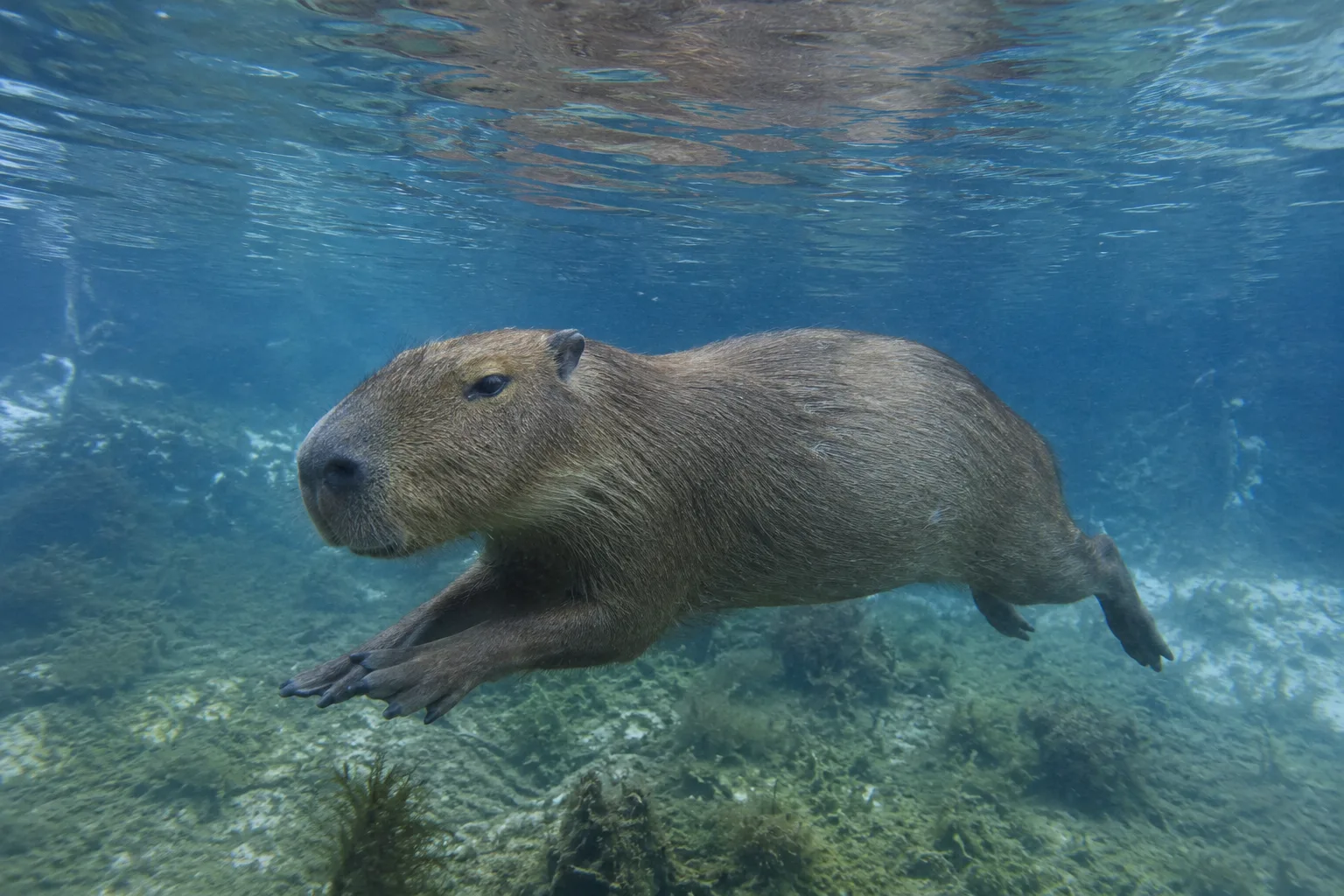
You do not need six checklists. You need one, and it comes down to whether the setup serves the animal or the camera. The AZA Capybara Care Manual spells out the care basics behind all of this: capybaras are social, semi-aquatic herbivores that need water, space, companions, and rest.
| What you want | The red-flag version |
|---|---|
| Real water access, on site, outside sessions | A dry room with photo props |
| Multiple compatible capybaras | One lonely animal on display |
| The animal can leave the guests | Contact is guaranteed for every ticket |
| Staff run and supervise the whole session | Guests manage the animal themselves |
| Limited, capped, timed sessions | An all-day handling line |
| Posted hygiene and food rules | Guests bring random snacks |
If a venue clearly explains where the capybaras live, how they rest, who supervises contact, how sessions are capped, and what happens when an animal opts out, you are in good territory. If the whole pitch is “great for selfies,” that is the answer.
On the legal side: public animal exhibitors in the US may need USDA licensing under the Animal Welfare Act. Treat that as a floor, not a gold star — it is the minimum, and plenty of licensed venues still run mediocre encounters.
Look The Place Up Before You Book
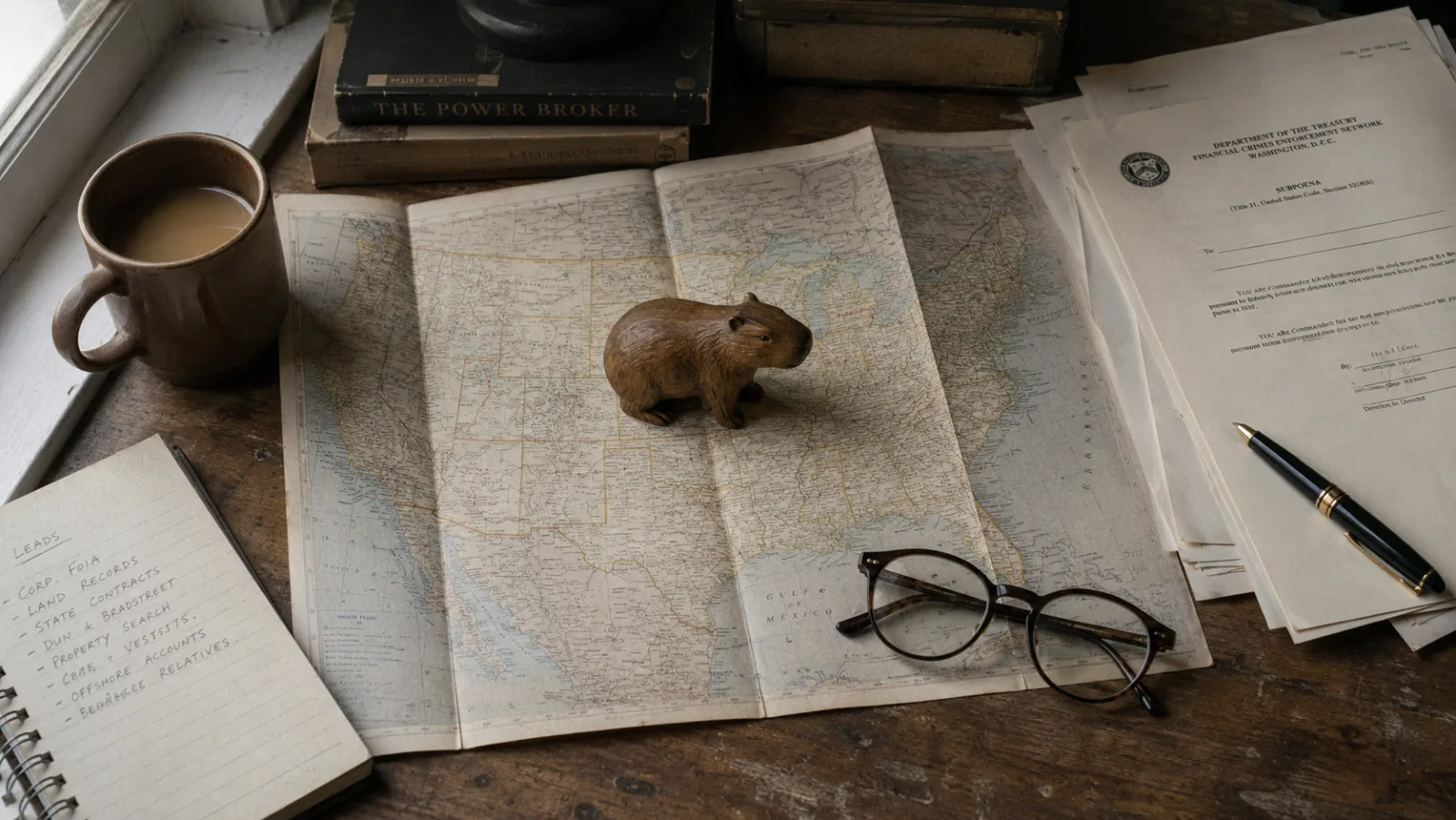
Most advice about choosing an ethical encounter ends at “do your research,” which is not research, it is a feeling. There is an actual public record, it is free, and almost nobody uses it.
Any US facility exhibiting animals to the public needs a Class C exhibitor licence under the Animal Welfare Act — and every licence, and every inspection report written against it, is searchable through the USDA Animal Care Public Search Tool. It carries the list of persons licensed and registered under the AWA, the inspection reports themselves, enforcement actions, and annual reports.
-
Search the facility's legal name, not its brand
The petting-zoo name on the website is often not the name on the licence. Try the business name from the booking confirmation, and the town.
-
Confirm a current licence exists
No record at all, for a place charging the public to meet an animal, is the finding. It either operates under someone else's licence — ask whose — or it should not be selling the session.
-
Open the inspection reports, not just the licence
An inspection report records the inspector's observations and assessment of compliance. A clean history is a real signal. So is a pattern.
-
Read what the citations are actually about
A paperwork lapse is not the same as a repeated finding on housing, veterinary care or handling. Read the text; the categories matter more than the count.
A Class C licence is a floor, not a recommendation — it means the facility is inspected against minimum standards, not that its capybara husbandry is good. Everything else on this page still applies. But an unlicensed operator selling public contact with a capybara has failed the floor, and that is worth ninety seconds of searching before you pay a deposit.
This is also the honest answer to the mobile “animal experience” that turns up at a fair or a children’s party: ask for the licence, then check it. The directory entries here carry a confidence flag for exactly this reason — some venues we list are marked unverified, and that word is doing real work.
The Red Flags That Mean Walk Away
Some signals are bad enough on their own. If you see these, book something else:
- Guaranteed handling or “you will hold one.” A capybara is a large prey animal. Guaranteed contact means the animal has no way out.
- No visible water or retreat space. For a semi-aquatic animal, this is a welfare failure, not a room-design choice.
- No staff briefing before contact. If nobody explains the rules, nobody is enforcing them.
- Marketing built entirely around crowding the animal for photos. The camera should not outrank the capybara.
- Defensiveness when you ask basic welfare questions. A good venue answers them easily, because it already thought about them.
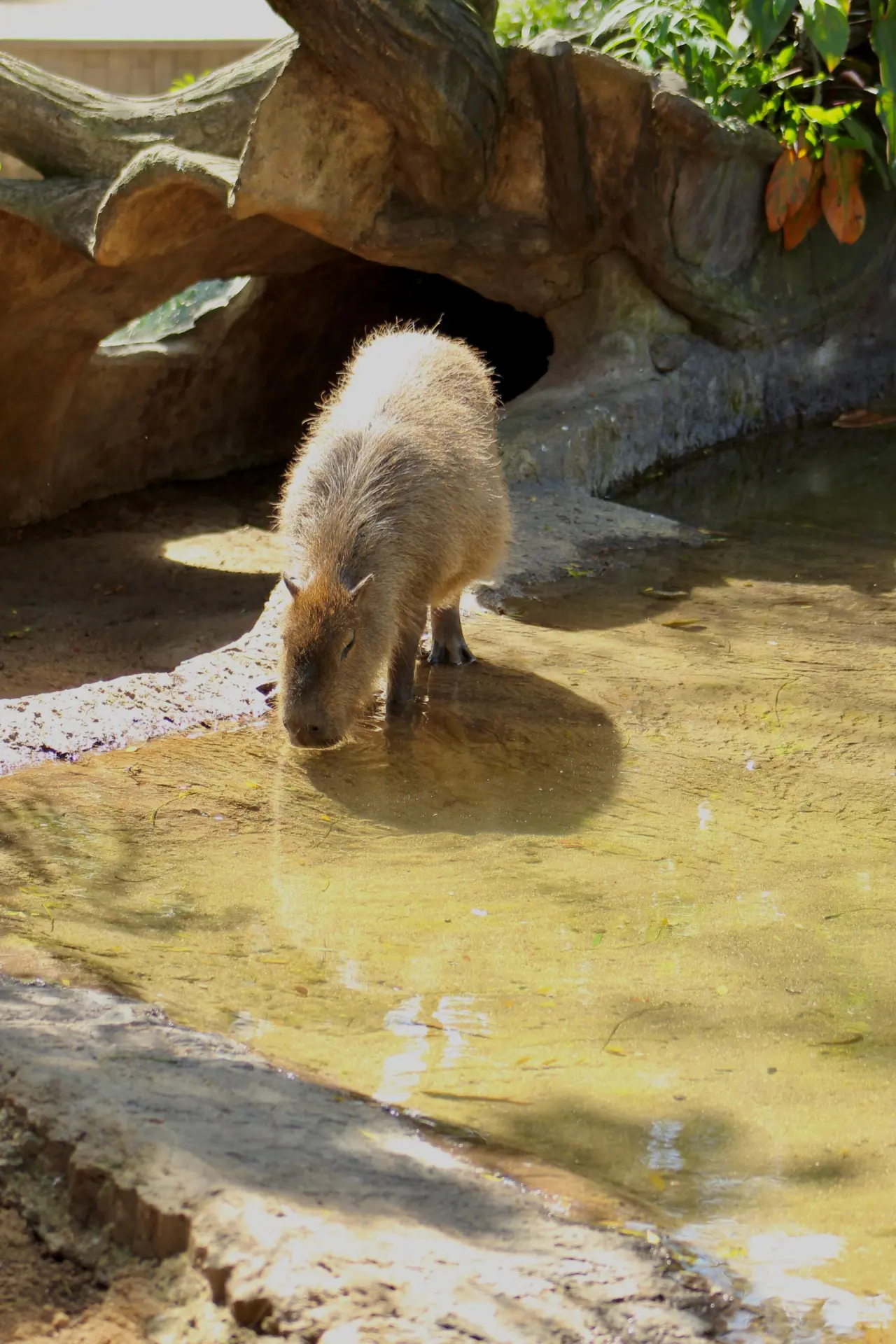
Follow the CDC’s basic hygiene guidance at any encounter too: wash hands after contact, keep food and drink away from the animals, and supervise kids the whole time.
The Takeaway
Ethical capybara encounters in the US are real and findable — cafes in Florida, Idaho, and Georgia, wildlife parks with clear age rules, and zoos where you can simply watch. The difference between a good one and a bad one is not the animal; it’s whether the setup gives the capybara water, companions, rest, and the right to walk away. Pick the venue that serves the animal first, and the photo takes care of itself.