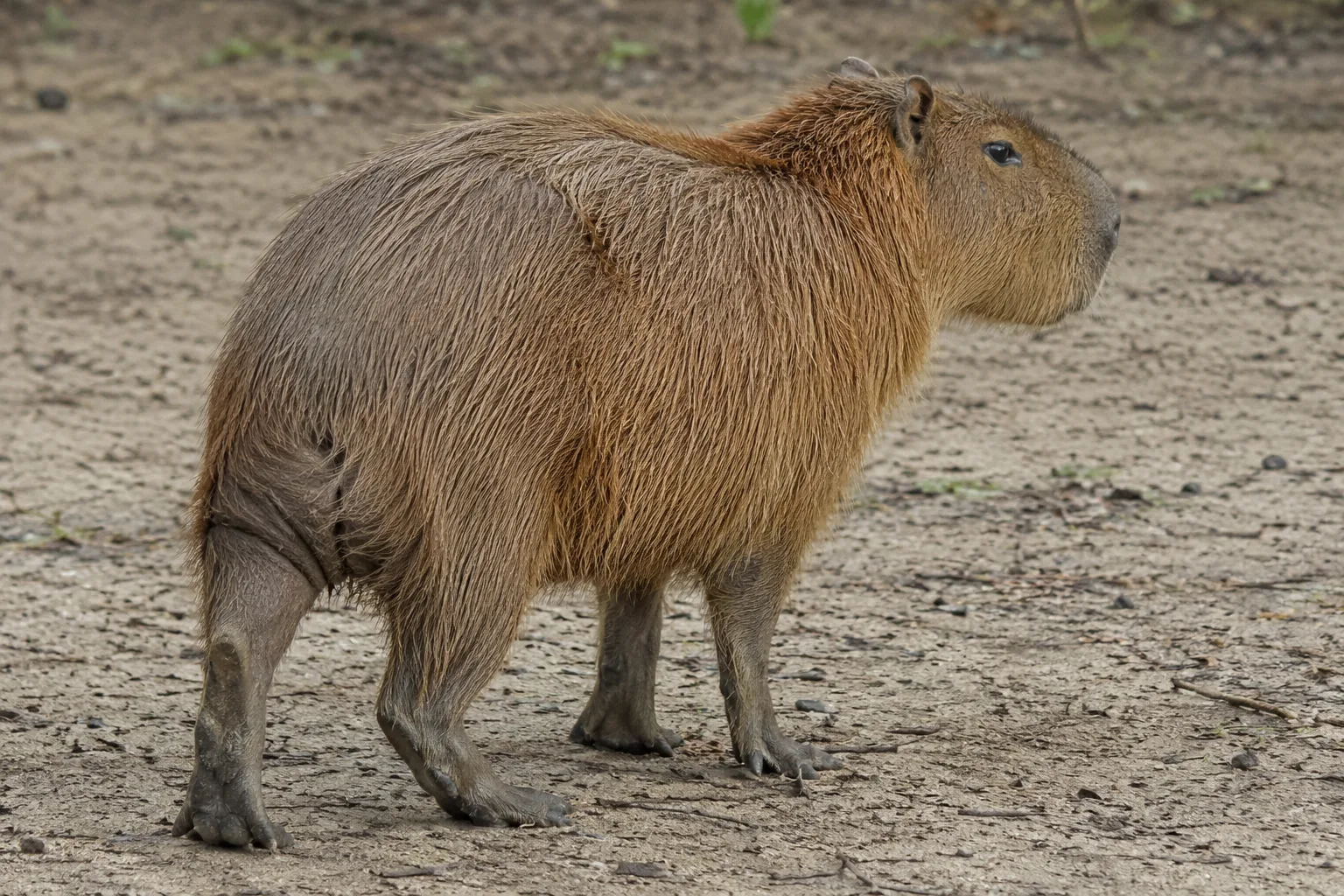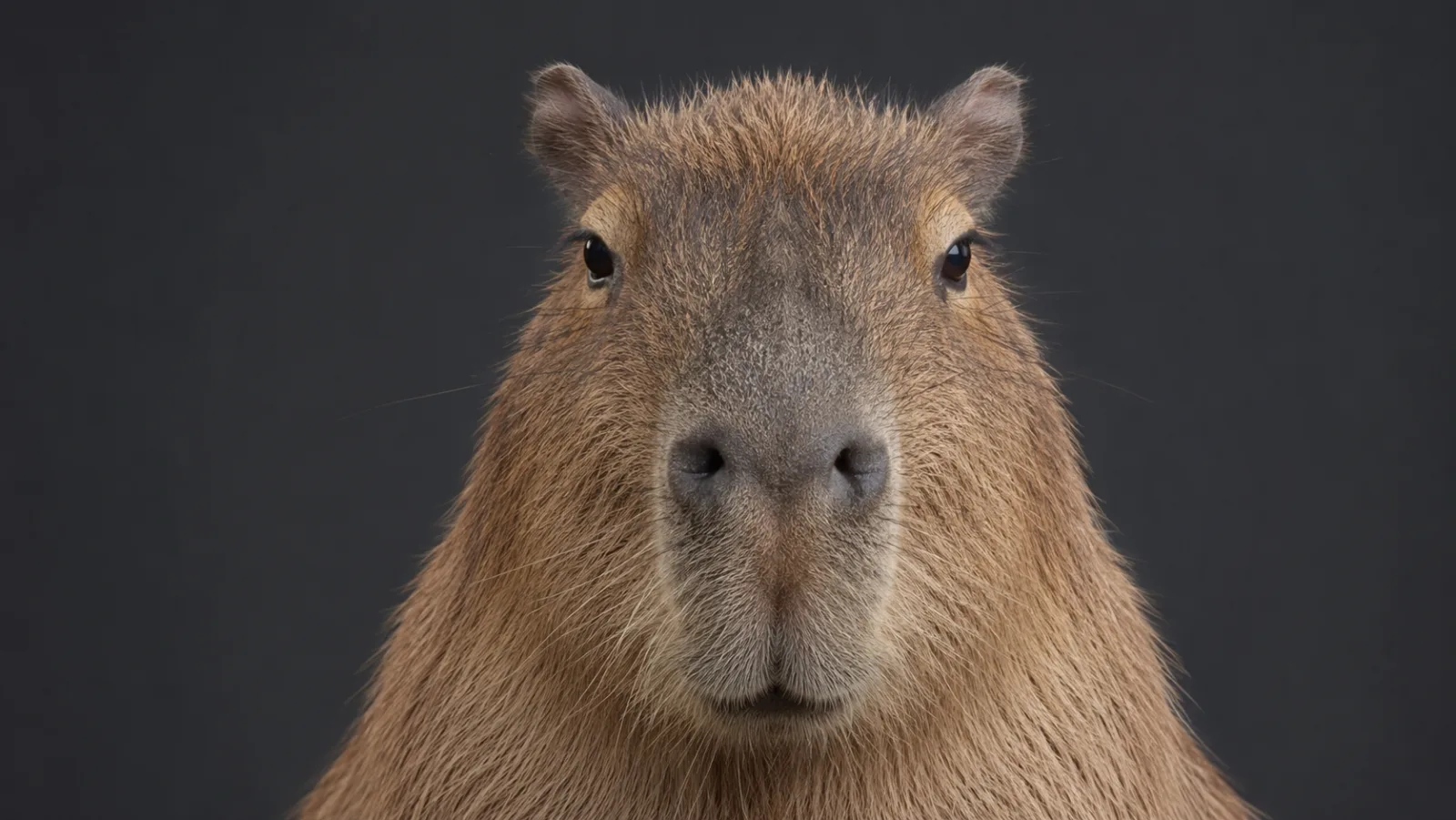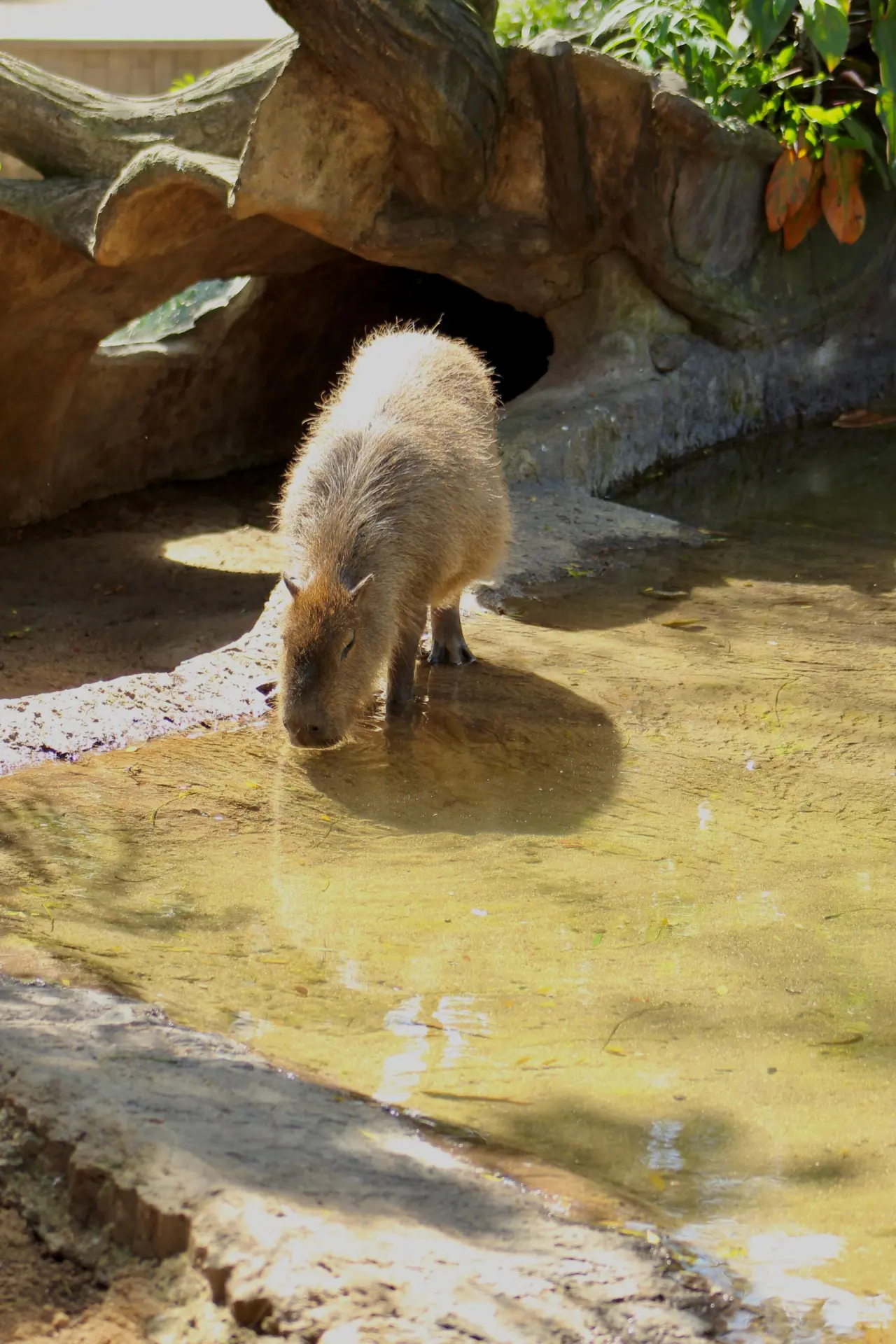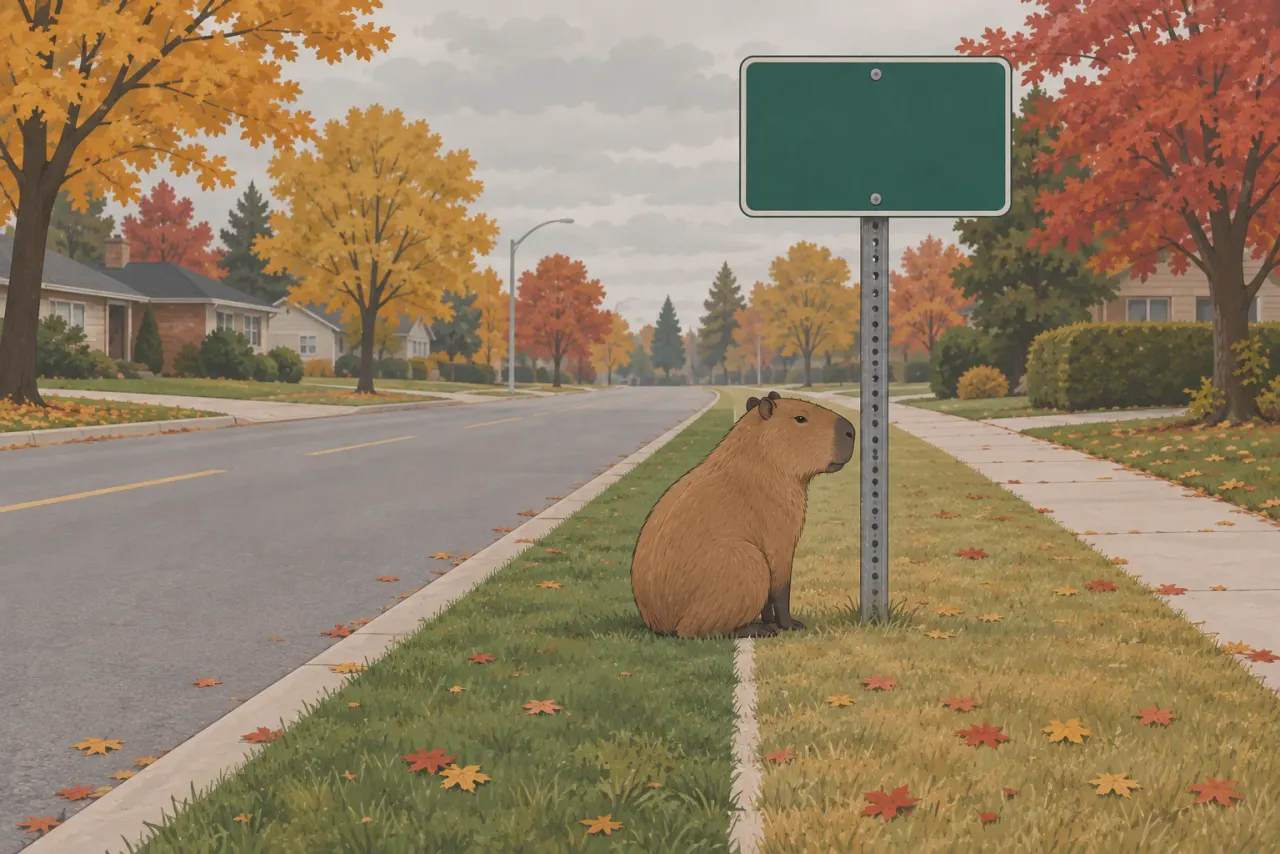
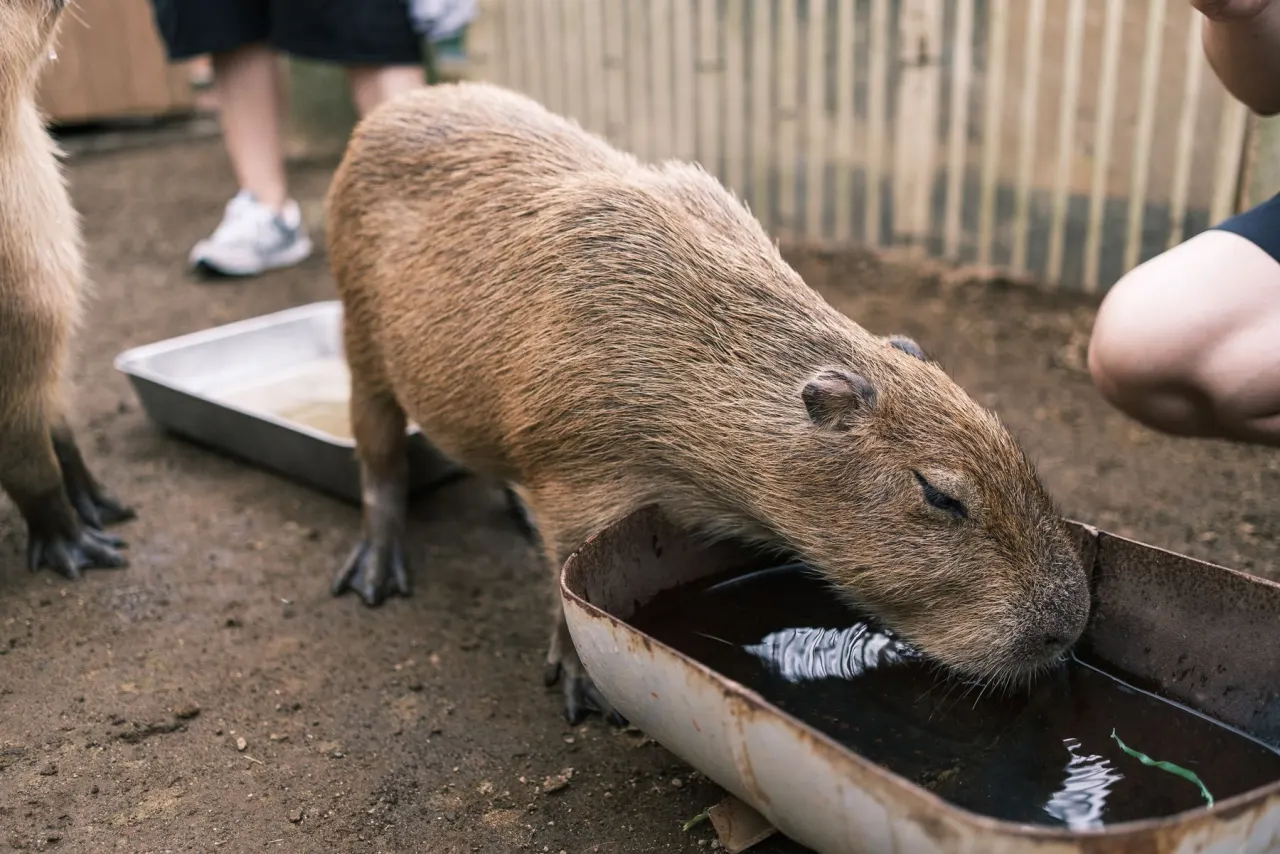
The best capybara kid is curious, quiet-ish, and not currently offering snacks through a fence.
That is the whole parent guide in one sentence. The rest is just what to say before the child sees a large calm rodent and briefly loses access to judgment.
The Car-Ride Speech That Actually Helps
Try this before you reach the exhibit: “We are going to watch what the capybara chooses to do. It might swim, eat, rest, hide, or ignore us. All of those count.”
That sets the right expectation. The capybara is not scheduled entertainment. It is an animal having a day, and sometimes the day is mostly wet chewing.
Hands Stay On Your Side Of The Barrier
Hands are where zoo visits go wrong. Reaching through rails, tapping glass, waving snacks, and trying to pet an animal because it came close are all normal kid impulses. They are also exactly why adults exist.
CDC guidance for animal exhibits tells visitors to supervise children, follow staff rules, keep food away from animal areas, and wash hands after touching animals or anything in areas where animals live, roam, or eat.
Quiet Watching Gets Better Capybaras
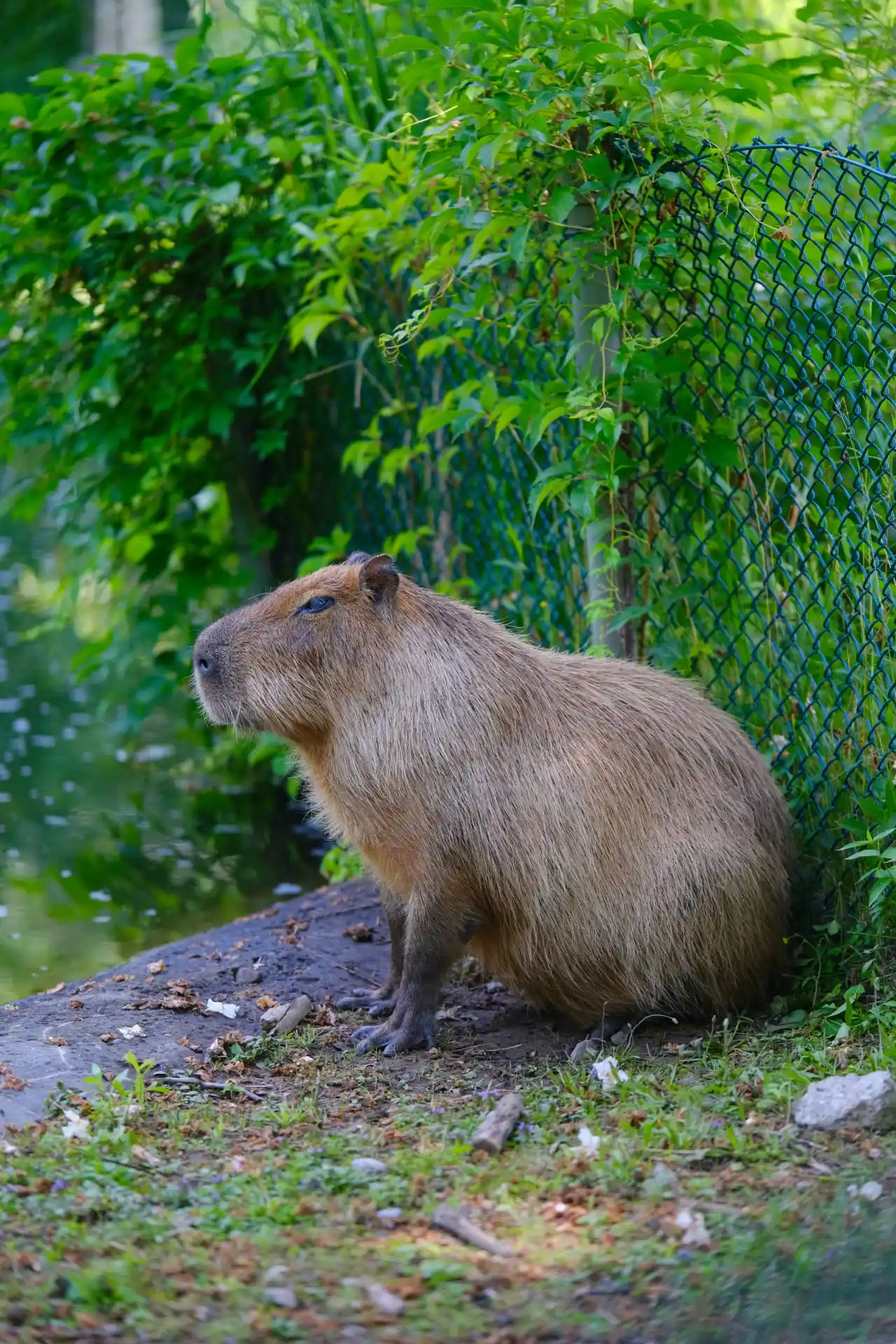
Capybaras are prey animals. Loud noises and sudden movement can startle them. The AZA care manual even notes that presentations can teach people how loud noises and sudden movements may scare prey animals.
So give kids a better challenge than “get its attention.” Ask them to spot behavior: ears, eyes, water, chewing, group spacing, resting, feet, or whether another animal is nearby.
| Kid impulse | Parent translation |
|---|---|
| Make it look at me | Let’s watch what it is already doing |
| Can I feed it? | Only staff feed zoo animals |
| Why is it sleeping? | Rest can mean it feels safe |
| Can I touch it? | Only if staff say yes in a special encounter |
| It walked away | That means it picked distance |
Snacks Are Staff Business
Outside food is never the move. Capybara diets are managed, and visitor snacks create choking, digestion, disease, and behavior problems. Even during official encounters, food should come from staff.
Also keep your own food out of animal areas. A child eating crackers near a contact zone is basically a crumb cannon with shoes.
Give Kids A Better Job Than Grabbing
Good zoo kids are not silent statues. They can ask excellent questions. Why do capybaras need water? What do they eat? How many live together? Why are their eyes so high? Do they make sounds?
That turns the visit from “I want to touch it” into “I want to understand it.” The capybara, who wanted neither job, benefits anyway.
A Few Facts To Hand Your Kid
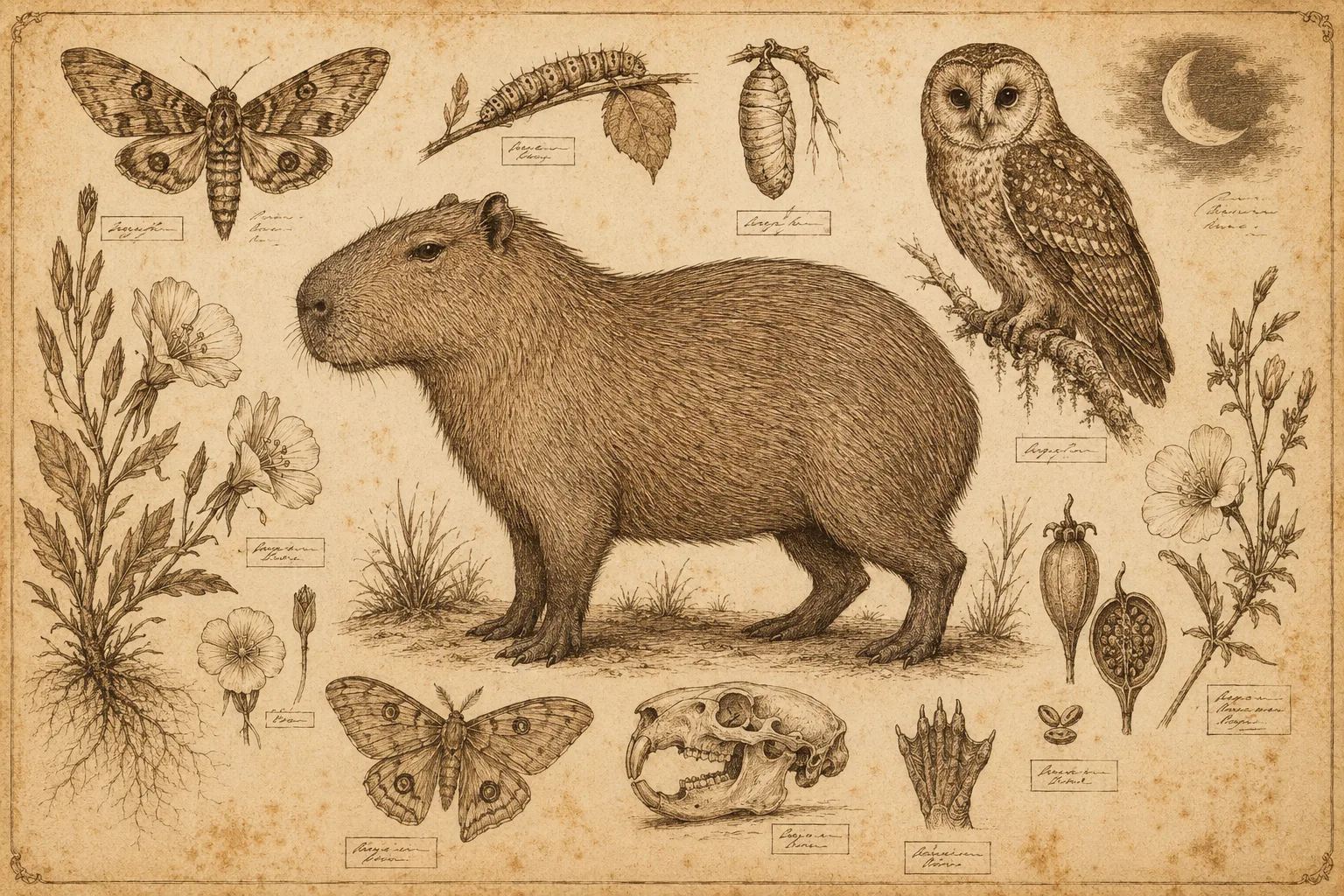
Kids ask better questions when they already know a little. A capybara is the world’s largest rodent, the same family (Caviidae) as a guinea pig, just scaled up to roughly the size of a medium dog. The San Diego Zoo Wildlife Alliance and Animal Diversity Web put adults somewhere in the 35 to 66 kilogram range, which is about 77 to 145 pounds. That number alone usually settles a kid down. It is hard to want to scoop up something that weighs as much as you do.
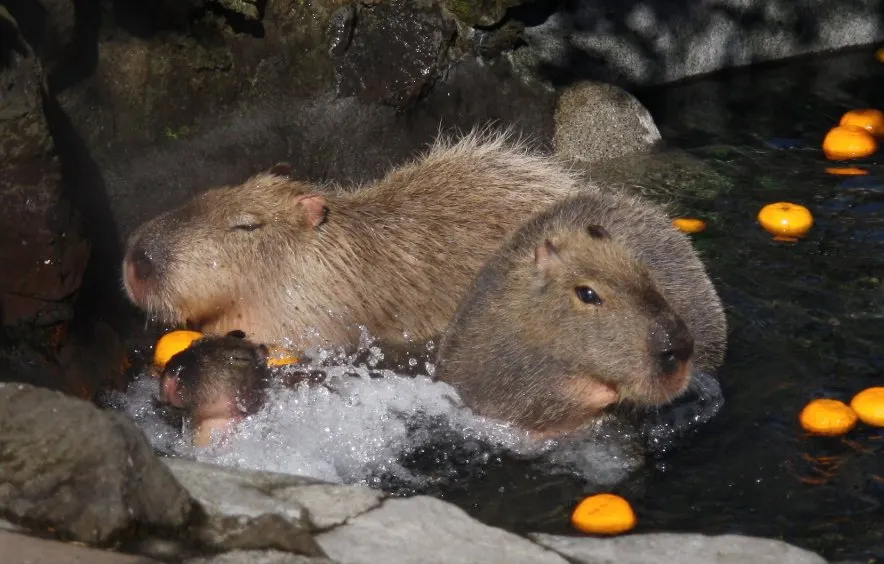
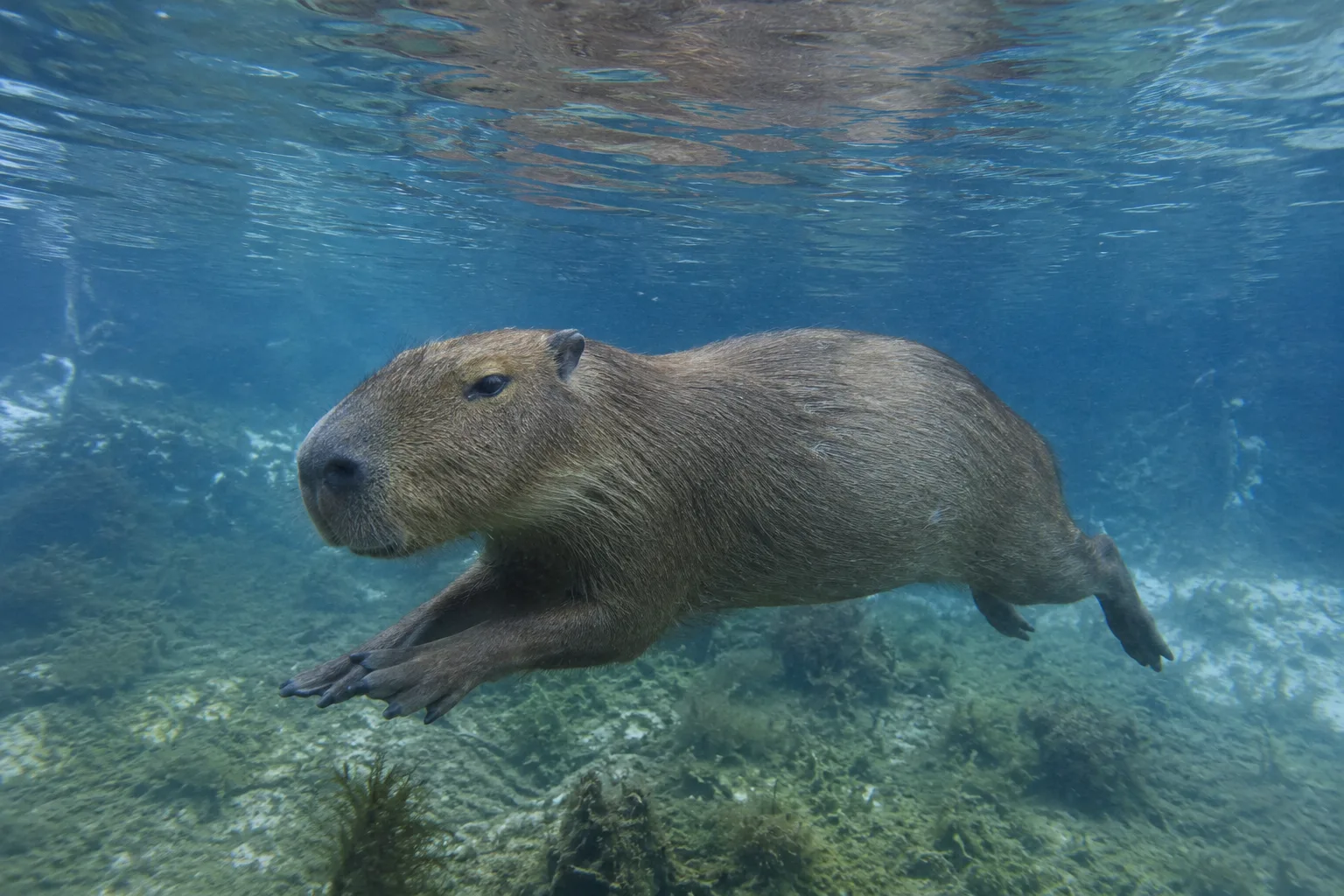
They are native to South America and semi-aquatic, which is the part children find most useful at the rail. The high-set eyes, ears, and nostrils are not random face design. They let a capybara stay almost fully submerged and still watch the world, the way a hippo does. The semi-webbed feet are for the same job. So when a kid asks “why is it just sitting in the water,” the honest answer is that water is where a capybara feels safest, and a hot afternoon is a good reason to soak.
| Kid question | Short true answer |
|---|---|
| How big do they get? | Up to about 145 pounds, the biggest rodent there is |
| Why are they in the water? | They are semi-aquatic and cool off and hide there |
| What do they eat? | Grasses and water plants, all day, a true grazer |
| Why so many together? | They live in herds; being alone stresses them |
| Why do their teeth look like that? | Rodent teeth never stop growing, so grazing wears them down |
The diet point is worth lingering on. Capybaras are grazers, built to chew grasses and aquatic plants for hours. They are hindgut fermenters, which is the polite way of saying their gut does slow work on tough plants, and like guinea pigs they cannot make their own vitamin C, so the zoo’s diet is planned around that. None of this is something a granola bar through a fence improves. It is, if anything, the opposite.
When The Capybara Is “Boring,” That’s The Win
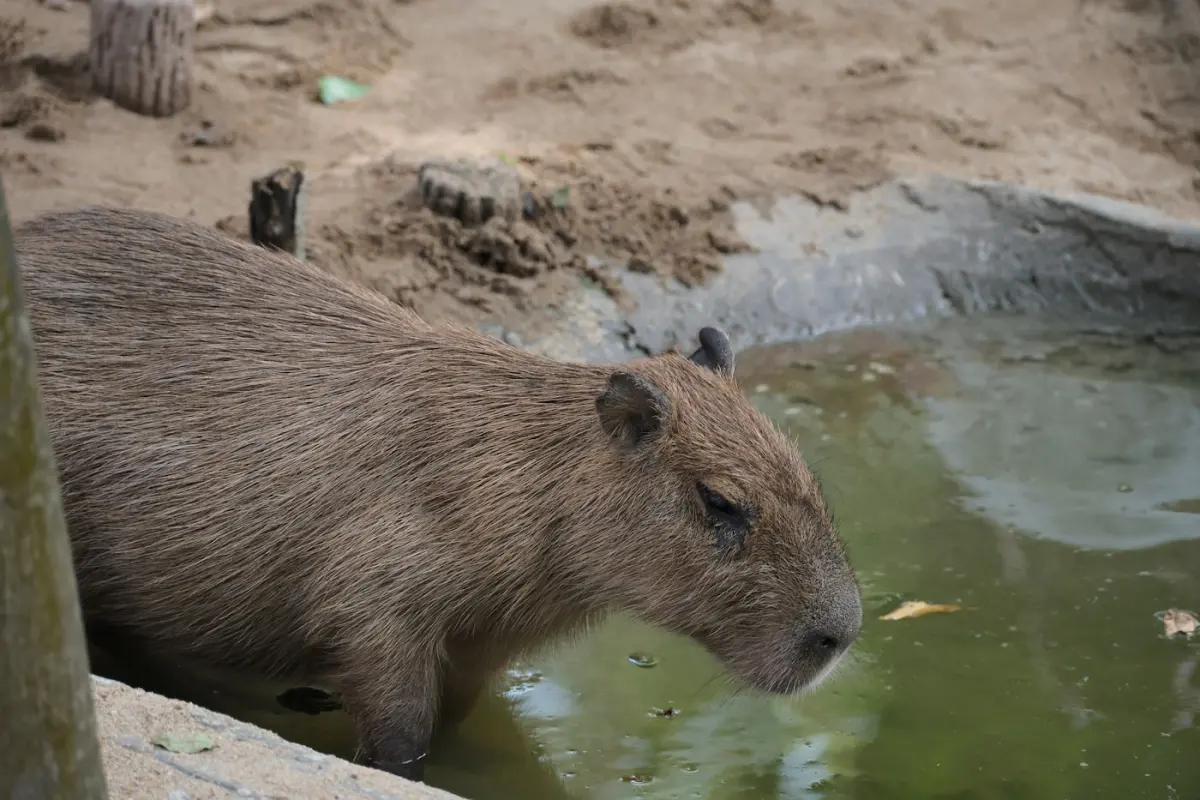
Here is the one honest opinion in this guide: a capybara that ignores your child is a sign the exhibit is doing its job. A wild prey animal that feels safe enough to rest, soak, and chew in front of a crowd of loud small humans is not bored, it is calm. The disappointment kids feel when an animal “does nothing” is worth naming out loud, because the alternative, an animal that paces, hides, or reacts to every noise, is the version nobody should be rooting for.
So if the visit’s highlight is a large rodent dozing at the waterline with its nose just above the surface, treat that as the good outcome. You watched an animal feel safe. That is rarer than it sounds.
Clearing Up The Usual Mix-Ups
Kids arrive with ideas, often from videos where someone is feeding or hugging a capybara at a sanctuary or a private setup. Those clips set a bad expectation for a public zoo. A quick correction before the rail saves a lot of “but the video” arguments.
| Myth | Better answer |
|---|---|
| Capybaras are basically big friendly pets | They are wild herd animals; the calm ones still set their own limits |
| If it comes close, it wants to be petted | Coming close is curiosity, not consent; hands still stay back |
| Feeding it is being nice | Outside food can make it sick; the zoo plans every meal |
| It’s alone, so it must be lonely on purpose | A solo capybara is usually a welfare concern, not a choice |
| Sleeping means it’s sick or sad | Resting often means it feels safe enough to rest |
The One-Minute Version For The Walk Over
If you only remember one block of this, make it the script. Quiet voice. Hands on your side. No food from us, ever. Watch what it chooses to do, and call that the show. Wash hands after, because the CDC asks visitors to wash up after animal areas, and capybara enclosures count.
Everything else is detail. The capybara would like you to know it did not request a guide, has no notes, and would prefer you watch from there.