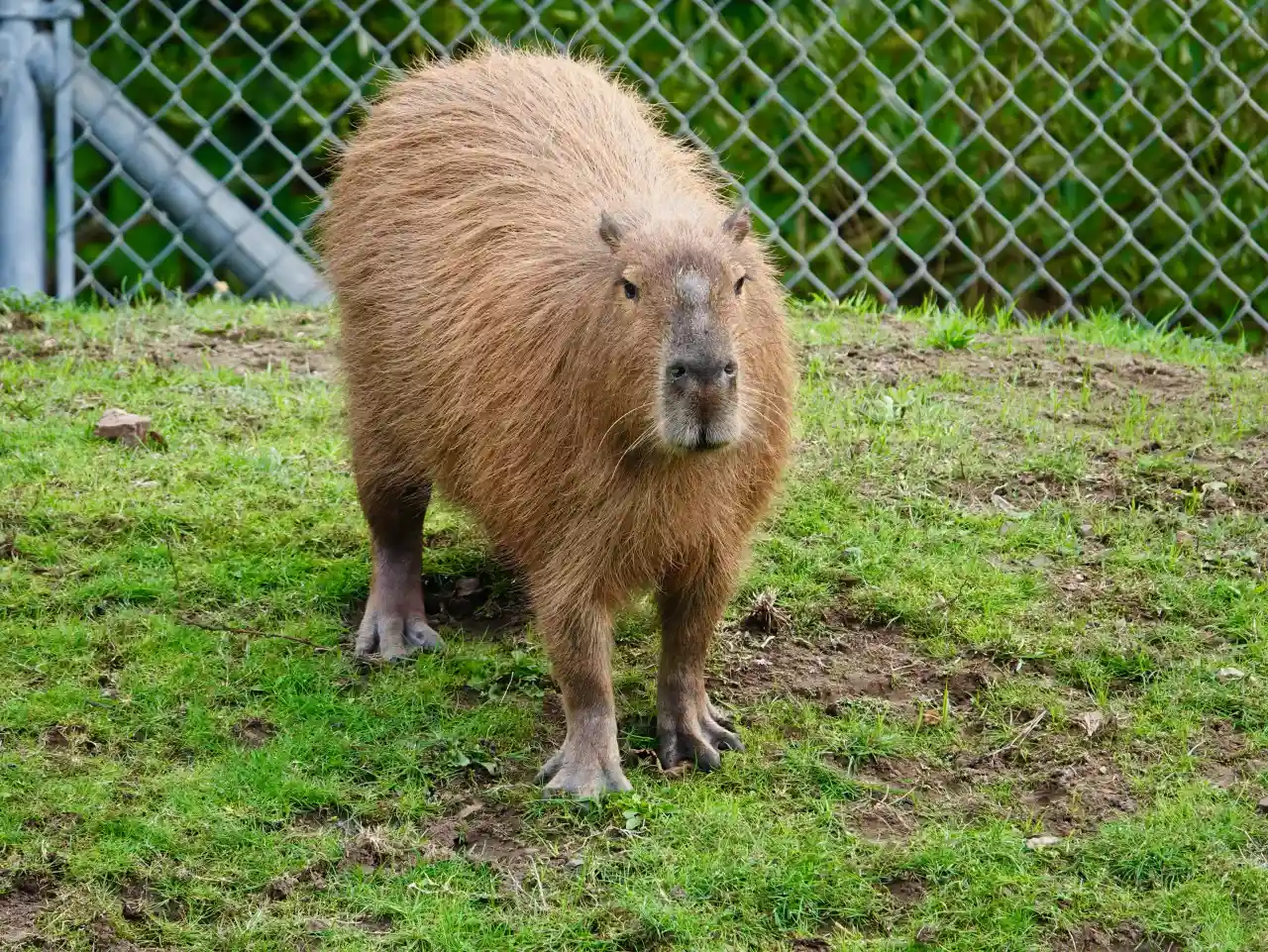
Britain is not an obvious capybara country. It is cold, damp, and roughly 6,000 miles from the Pantanal. And yet a surprising number of UK collections keep them, and a few will let you feed one by hand.
Animal holdings change without announcement, and capybaras move between collections. Every site below has kept them recently, but the only reliable check is the collection's own animal page or a phone call on the day.
The Short List
| Where | Region | What you get |
|---|---|---|
| London Zoo | Central London | General viewing, plus a bookable meet-the-capybara experience |
| Hertfordshire Zoo | Hertfordshire | Keeper-led encounter, hand-feeding and scratching |
| Hobbledown Heath | Hounslow, west London | One of the few explicit hand-feeding sessions |
| Drusillas Park | East Sussex | General viewing, strong for younger children |
| Hoo Zoo and Dinosaur World | Shropshire | Encounters, smaller site |
| Twycross Zoo | Leicestershire | General viewing |
| Blackpool Zoo | Lancashire | General viewing |
| Longleat | Wiltshire | Drive-through safari, African Village section |
| Jersey Zoo (Durrell) | Jersey | General viewing, repeat breeding |
That is not exhaustive. Northumberland Zoo, Noah’s Ark Zoo Farm, Lotherton and others have kept them too. The list moves.
Where You Can Actually Get Close
Most of the sites above give you a capybara across a fence. Three or four sell a booked, keeper-supervised session where the animal comes to you.
The common shape is: fifteen to thirty minutes, a small group, a keeper doing the talking, a bowl of vegetables, and firm rules about where your hands go. They are age-restricted, they cost meaningfully more than admission, and they sell out weeks ahead in summer.
Worth being clear-eyed about what that is. A good encounter is one where the animal can walk away and sometimes does. If the capybara has no exit and the session is built around guaranteed contact, that is a worse experience for the animal and, honestly, a worse one for you. The AZA’s capybara care manual is the standard worth measuring against, even for collections outside its accreditation system.
Longleat And Jersey: The Breeding Stories
Two UK sites have produced the capybara news most people have actually seen.
Longleat recorded its first capybara birth — two pups, to parents Bart and Mildred — in the African Village section of the Drive-Through Safari, sharing the area with Brazilian tapirs and maned wolves. Coverage at the time noted the pups were in a nursery area with a private pool. Capybara pups are precocial: born with fur and open eyes, swimming almost immediately, nibbling grass within a week.
Jersey Zoo, run by the Durrell Wildlife Conservation Trust, has had repeat capybara births, reported by the BBC among others, and has run public naming votes for the pups.
Both are worth knowing about for the same practical reason: pups are only obviously pups for a few months. If a birth is announced somewhere you can reach, that is the visit worth moving your plans for.
The Winter Problem Nobody Mentions
Capybaras are South American semi-aquatic grazers. A British February is not their weather.
Most UK collections give them indoor housing and heated shelter, which is correct husbandry and also means that on a cold wet Tuesday you may be looking at an empty paddock and a closed door. Some sites keep them viewable indoors; some do not.
This is the single most common way a UK capybara trip disappoints, and it is entirely avoidable by asking first. Late spring to early autumn is the reliable window.
What To Confirm Before You Drive
- Are the capybaras currently on site? Animals move between collections more than people assume.
- Will they be outdoors or visible today? Especially October to March.
- Is the encounter bookable in advance, and is there an age limit? Most are, and most have one.
- Is hand-feeding actually included, or is it a talk at the fence? Both are fine. They are not the same purchase.
- What is the refund policy if the animals are off-show? Ask before, not after.
The UK Bottom Line
Britain does capybaras better than it has any geographic right to. London Zoo and Hertfordshire are the easiest for most people, Hobbledown is the one to book if hand-feeding is the point, Longleat is the one to do as a full day, and Jersey is the one to watch for pups.
Just ring ahead between October and March, unless you specifically enjoy looking at a well-maintained empty enclosure in the rain.