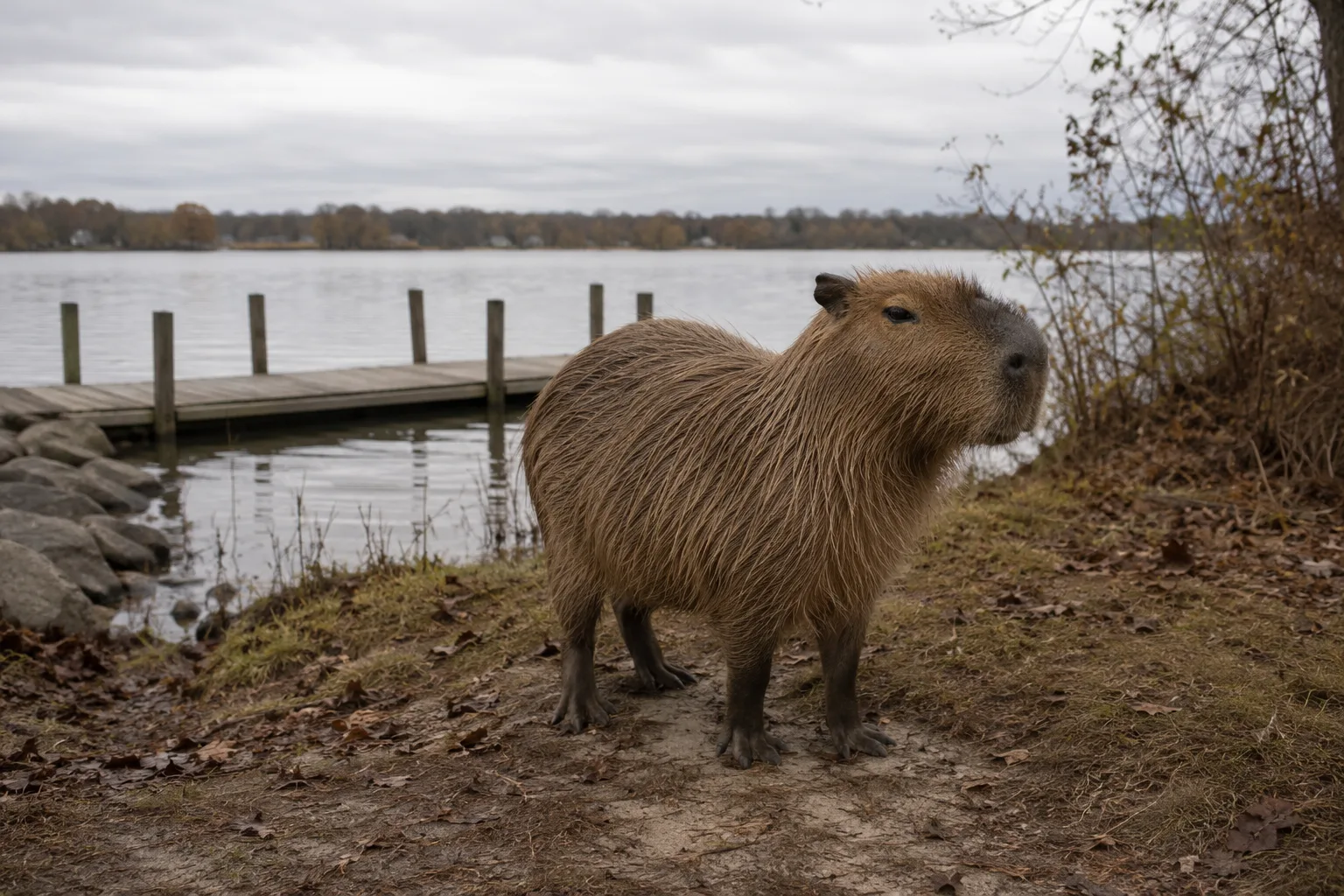
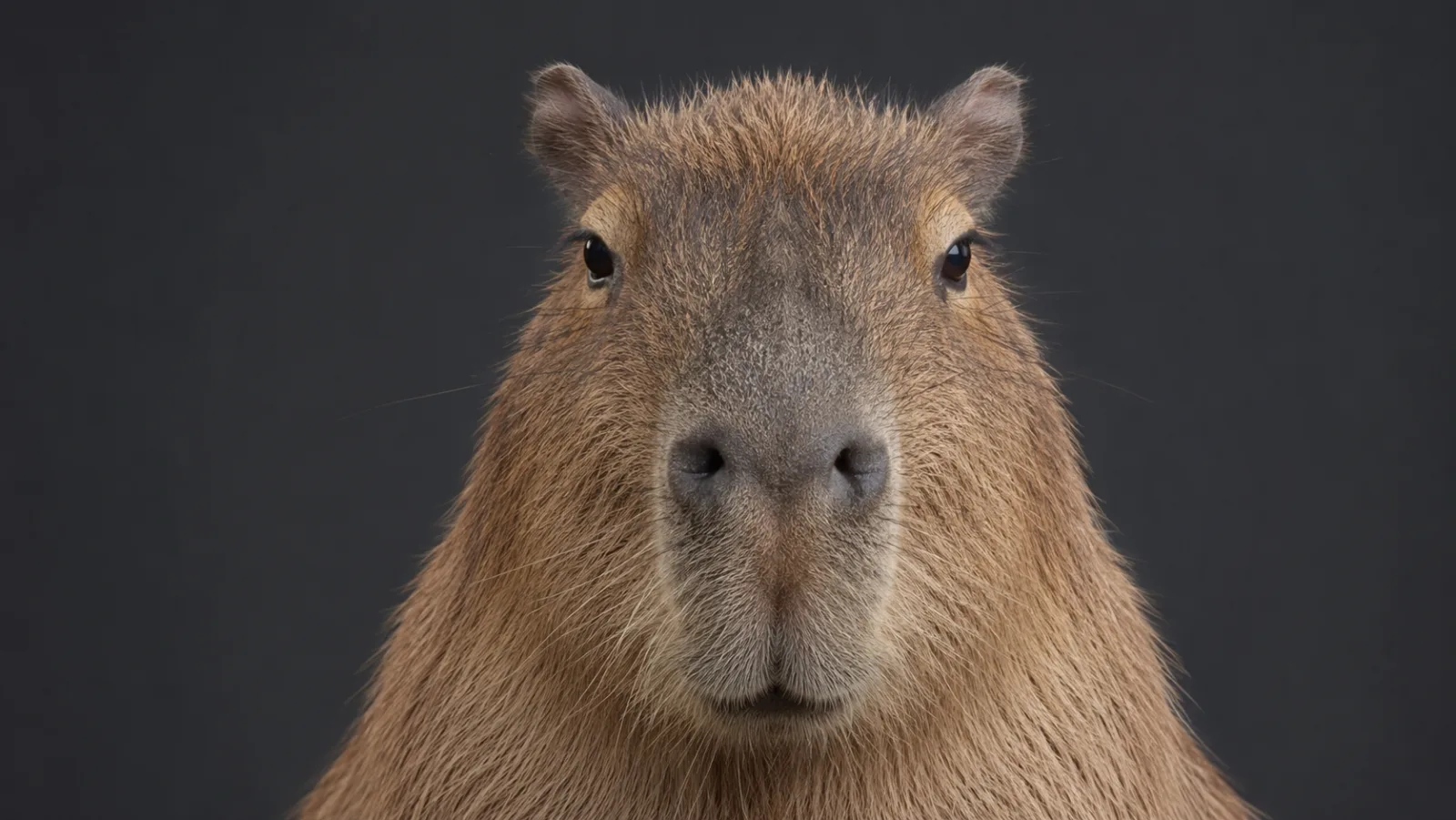
The internet runs a small industry of “is that a capybara or a [X]” confusion. Some of it is fair — nutria and capybaras are actual cousins, and at distance they look similar. Most of it is taxonomically nonsensical. Wombat is a marsupial. Hippo is an even-toed ungulate closer to whales than to anything in this list. Beaver is a rodent but a completely different lineage.
This is the visual ID guide plus the actual evolutionary tree, with all the “is the capybara basically a [thing]” claims sorted into “yes, sort of,” “no, not even close,” and “this comparison is purely a vibe.”
The 30-second ID rule
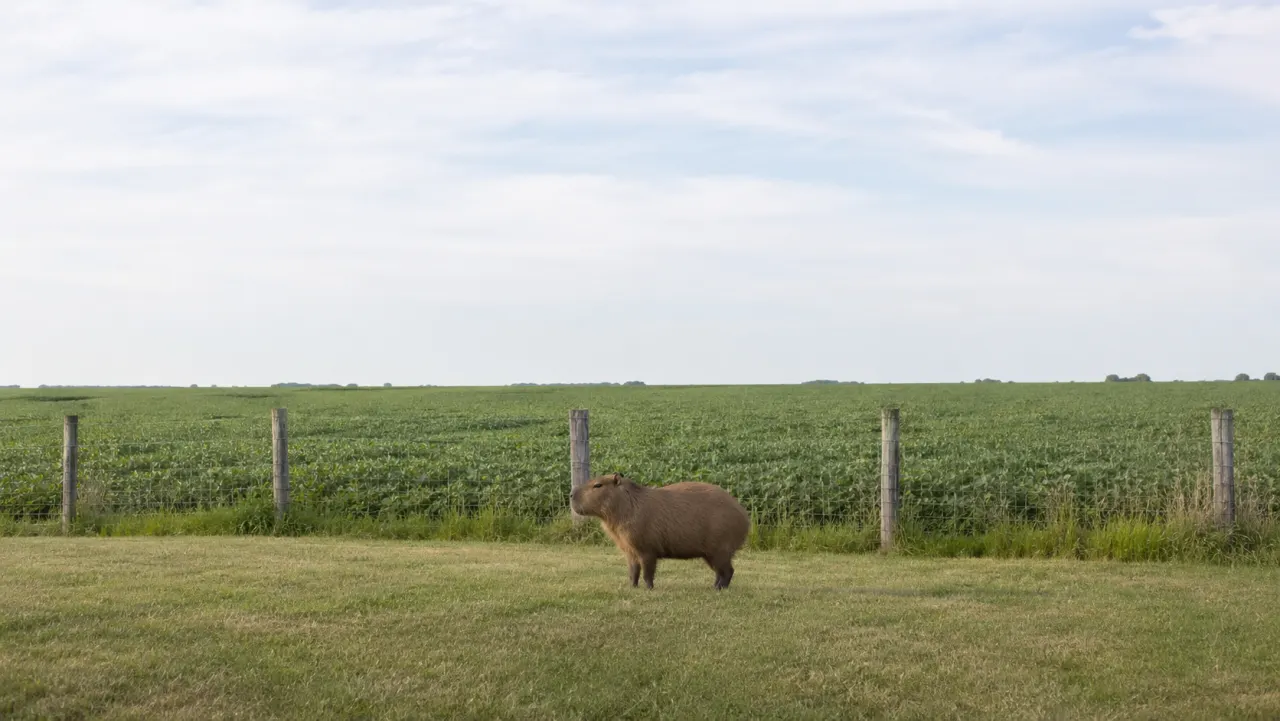
If the animal has a long tail, it is not a capybara. Capybaras have a vestigial tail — basically a nub. You won’t see it in any photo.
If the animal has a flat paddle tail, it is a beaver.
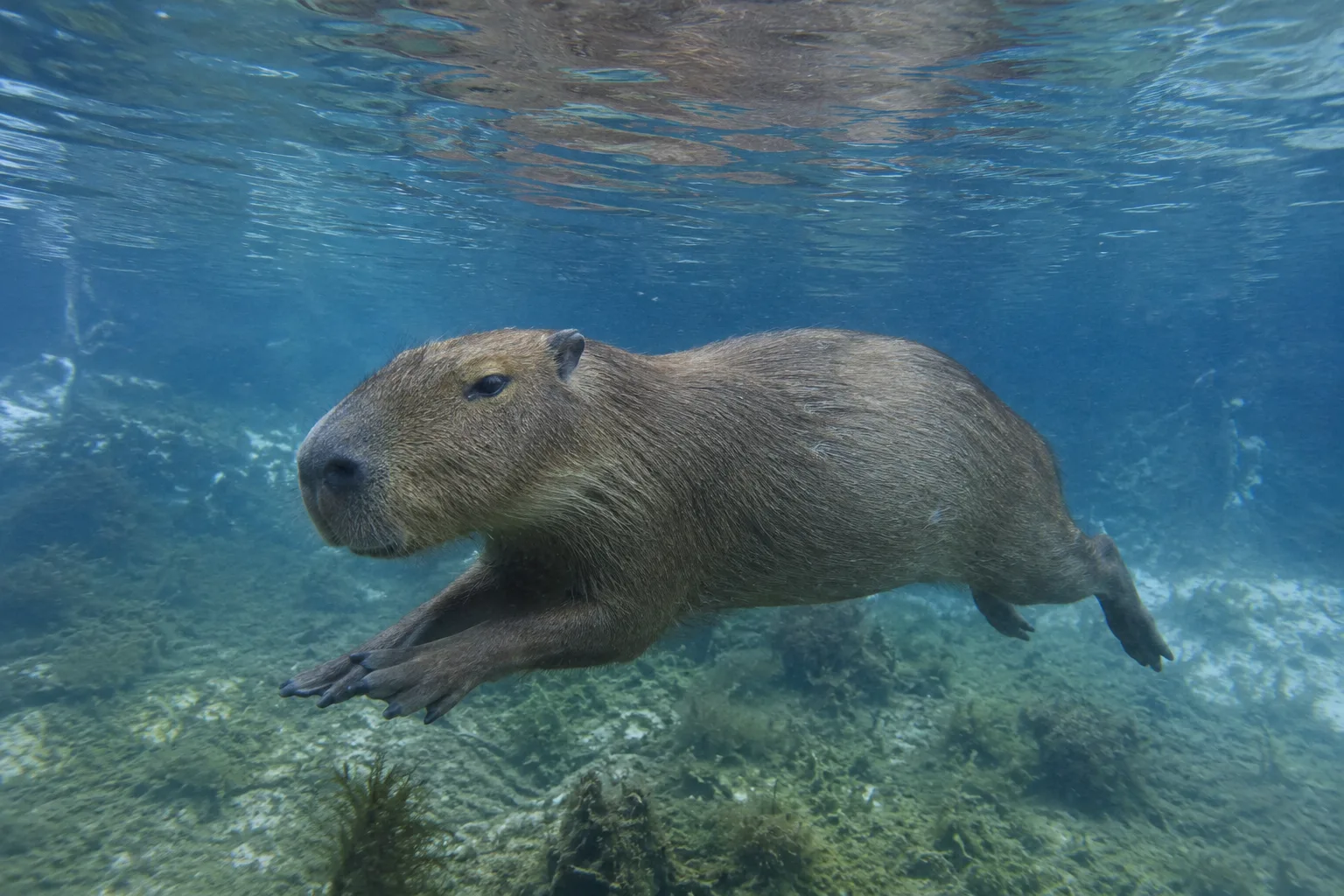
If the animal is in a body of water in South America and looks like a giant guinea pig, it’s almost certainly a capybara. Adult capybaras are 60-130 lb (27-66 kg). That’s bigger than every animal on this list except hippos.
If the animal has visible orange front teeth, it’s a nutria.
That’s the 30-second version. The rest of this page is for when you actually need to be sure.
Full comparison table
| Animal | Order | Family | Size (adult) | Tail | Habitat | Aquatic? | Native to |
|---|---|---|---|---|---|---|---|
| Capybara | Rodentia | Caviidae | 60-130 lb / 27-66 kg | Vestigial nub | Wetlands, grasslands | Strongly | South America |
| Guinea pig | Rodentia | Caviidae | 1.5-2.6 lb / 0.7-1.2 kg | None visible | Domesticated; ancestor in Andes | Not at all | South America (Andes) |
| Nutria | Rodentia | Echimyidae | 11-37 lb / 5-17 kg | Long, round, rat-like | Wetlands | Strongly | South America (invasive worldwide) |
| Beaver (American) | Rodentia | Castoridae | 35-66 lb / 16-30 kg | Wide flat paddle | Rivers, ponds | Strongly | North America |
| Otter (North American river) | Carnivora | Mustelidae | 11-31 lb / 5-14 kg | Long muscular | Rivers, coasts | Strongly | North America |
| Hippopotamus | Artiodactyla | Hippopotamidae | 2,400-9,900 lb / 1,100-4,500 kg | Short with bristles | Rivers, wetlands | Strongly | Sub-Saharan Africa |
| Groundhog | Rodentia | Sciuridae | 4-15 lb / 2-7 kg | Short bushy | Pastures, woodland edges | Not at all | North America |
| Prairie dog | Rodentia | Sciuridae | 1.5-4 lb / 0.7-1.8 kg | Short | Grasslands | Not at all | North America |
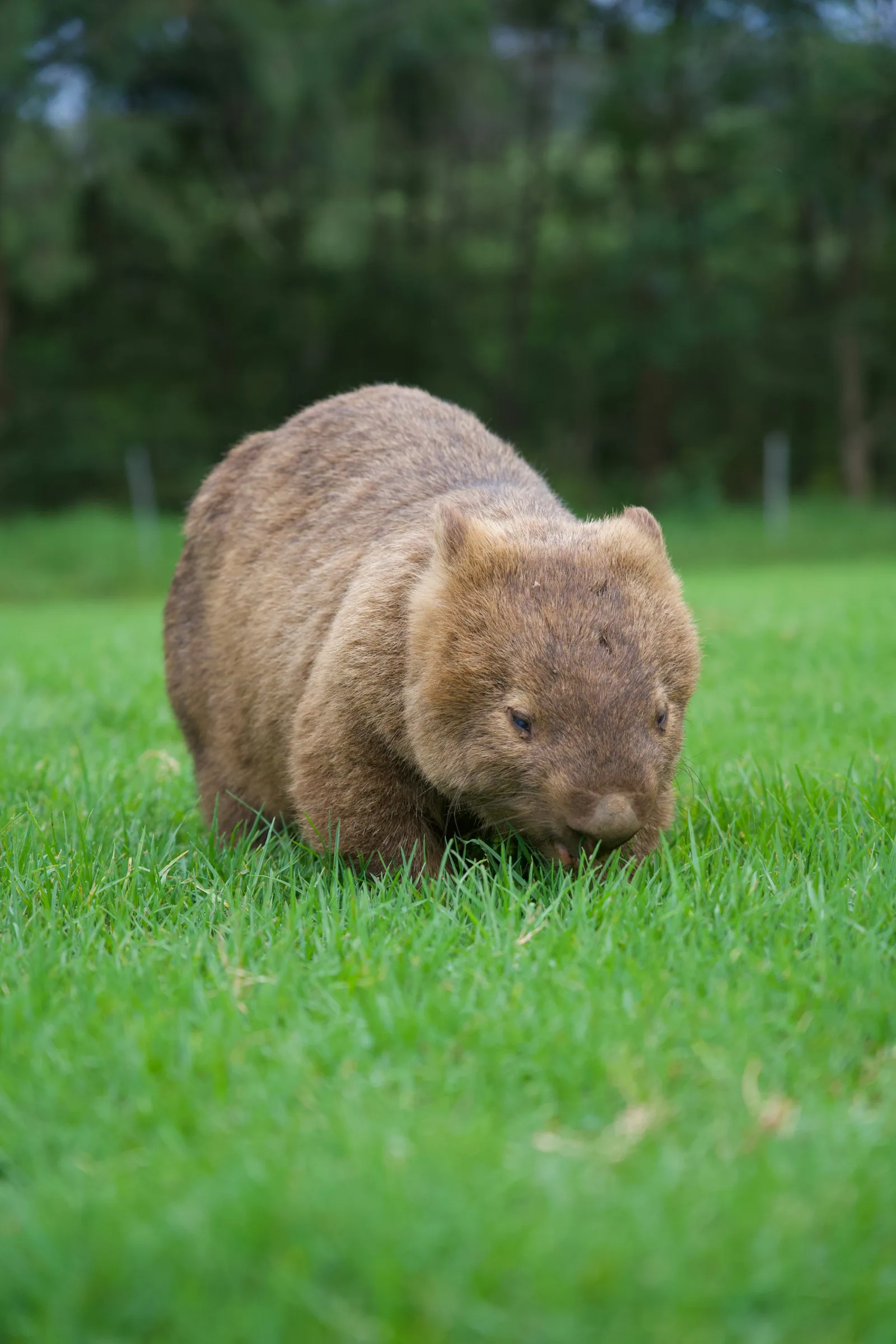
| Wombat (common) | Diprotodontia | Vombatidae | 44-77 lb / 20-35 kg | Vestigial stub | Eucalyptus forest, grassland | Not at all | Australia |
A few patterns worth catching:
- Three of the eight animals are in family Caviidae (capybara, guinea pig) or the closely related Echimyidae (nutria, technically) — these are the actual cousins. Beavers are also Rodentia but from a different rodent suborder.
- Otters and hippos are not rodents. Wombats are not even placental mammals.
- Size is one of the cleanest disambiguators: capybaras are the largest of the animals on this list excluding hippos, and they’re a different class of large.
Capybara vs nutria: the closest real confusion
Of all the comparisons in this guide, capybara-vs-nutria is the only one where the confusion is reasonable. Both are South American semi-aquatic rodents, both have similar coloring (brown to grey-brown fur), both swim well, both live in groups, and at internet-photo distance they look alike.
The differences are obvious in person:
- Tail. Nutria have a long, round, sparsely-haired tail similar to a rat’s. Capybaras have a nub. This is the single fastest ID.
- Teeth. Nutria show bright orange front incisors. Capybaras’ incisors are pale or yellowish.
- Size. Nutria max out around 17 kg (37 lb). Capybaras start where nutria end and go up to ~66 kg.
- Build. Capybaras stand more like a stocky ungulate — high at the shoulder, blunt face. Nutria are more rat-shaped: lower-slung, longer in the snout.
Range-wise, nutria are originally South American but have established invasive populations across North America, Europe, and Asia. Most “is this a capybara in [non-South-American country]” sightings are actually nutria. (In North America especially — Louisiana, Oregon, parts of the UK, and Italy all have nutria.) The deep-dive lives in our capybara vs nutria spoke.

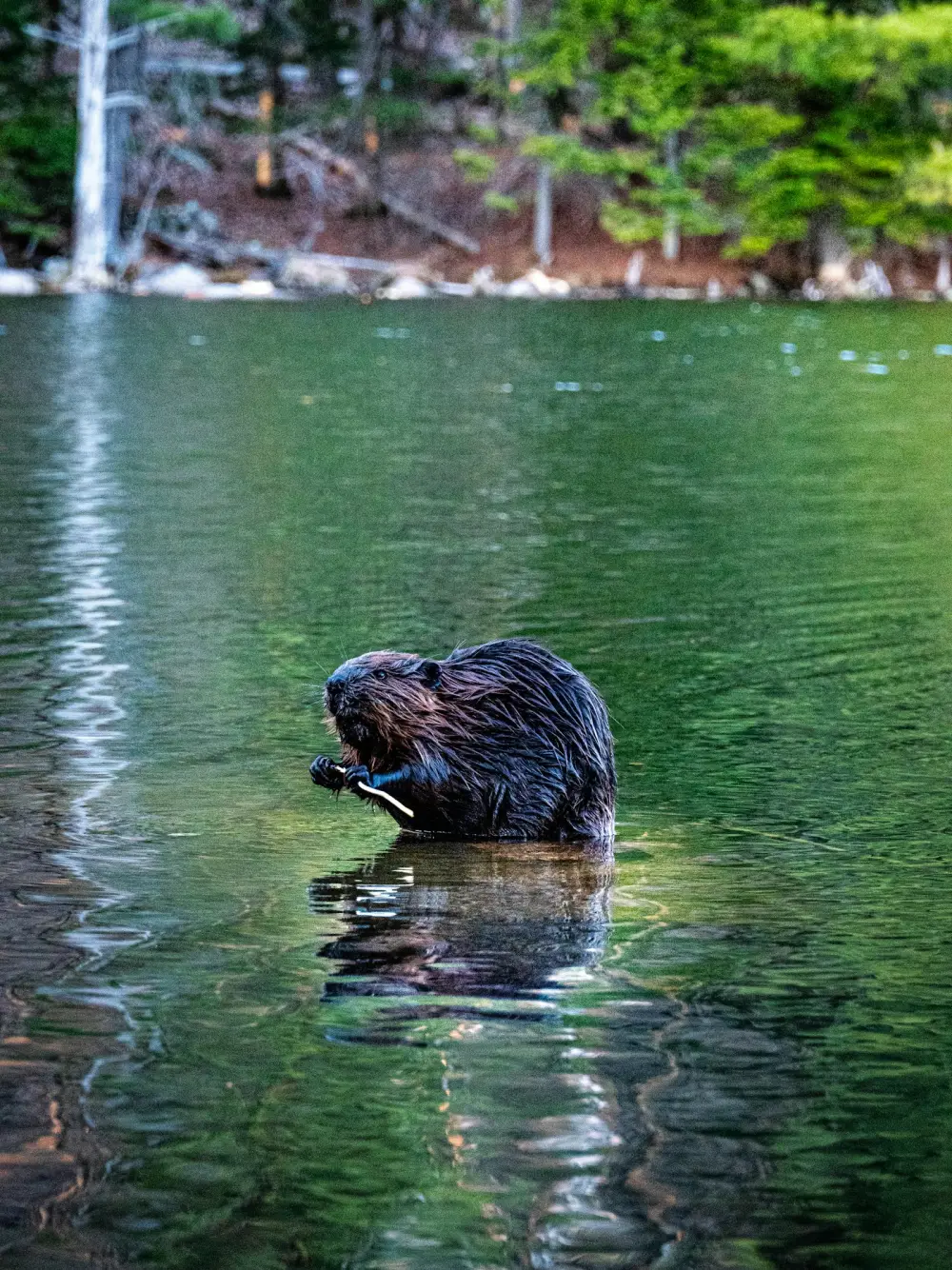
Capybara vs beaver: different rodent lineages
Both are large, both are semi-aquatic, both are herbivorous rodents. That’s where the similarity ends.
- Beavers belong to family Castoridae, in suborder Castorimorpha (a Northern Hemisphere rodent lineage). Capybaras are Caviidae, Hystricomorpha (a South American lineage). Most recent common ancestor: roughly 50 million years back.
- Beavers have a wide flat paddle tail. Capybaras have a nub. (Repeating this because it’s the easiest ID for the entire page.)
- Beavers build dams and lodges. Capybaras do not — they don’t modify their environment structurally. They graze and they swim.
- Beaver incisors are bright orange (iron-strengthened). Capybara incisors are pale.
The “small beaver without the tail” framing you see online is the wrong shape entirely. Capybaras are stockier, less aquatic-engineered, and have a much more ungulate-like body plan.
Capybara vs guinea pig: the actual cousin
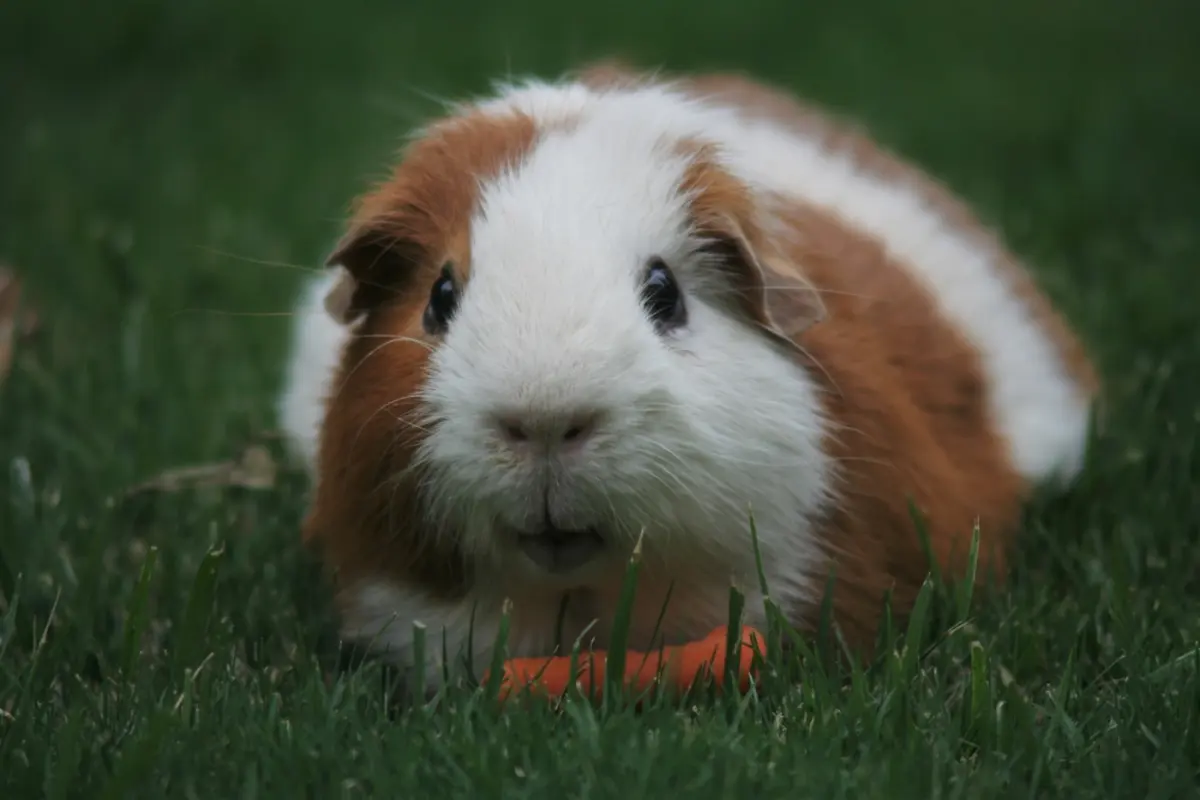
This is the comparison that most accurately reflects the biology. Capybaras and guinea pigs are both in family Caviidae. Domestic guinea pigs (Cavia porcellus) are descended from a wild Andean species (Cavia tschudii). Capybaras share the same family, same suborder, same general body plan — just scaled up roughly 50x in mass.
The closest living relative of the capybara isn’t actually the guinea pig — it’s the rock cavy (genus Kerodon), found in northeastern Brazil. Rock cavies are the missing link in the family tree: smaller than capybaras, larger than guinea pigs, less aquatic than both. If you’ve ever seen a Kerodon photo and thought “small capybara that climbs rocks,” that’s exactly what’s happening.
This is also why guinea pigs and capybaras share certain behavioral tells: vocalization repertoire, group living, grass-grazing, the same general “calm, alert, slightly twitchy” mode of being in the world.
Capybara vs otter: rodent vs carnivore
This comparison only exists because both animals are aquatic and the internet groups all wet brown mammals into one category. Otters are in order Carnivora, family Mustelidae — closer relatives of weasels, badgers, and wolverines than of any rodent.
- Otters have a long muscular tail used for propulsion. Capybaras swim with leg-paddling and have no tail to speak of.
- Otters are obligate carnivores (fish, crustaceans). Capybaras are strict herbivores.
- Otter dentition is carnassial — designed for shearing meat. Capybara dentition is dual-curved incisors for cropping grass plus hypsodont molars for grinding.
- Otters are sleek and torpedo-shaped for active swimming. Capybaras are buoyant, slower swimmers that mostly wade and float.
Different orders, different diets, different swimming mechanics. The only overlap is “lives in water.”
Capybara vs hippo: the internet favorite
“Capybara is just a small hippo” is one of the most-repeated and least-accurate comparisons online. The two animals are in completely different orders. Hippos belong to order Artiodactyla — even-toed ungulates — and their closest living relatives are whales and dolphins. Cetaceans evolved from artiodactyls roughly 50 million years ago, which means hippos are actually more closely related to dolphins than to anything in this guide.
What the meme is actually pointing at is convergent ecology:
- Both spend significant time in water
- Both are stocky, big-bodied herbivores
- Both look weirdly relaxed for most of the day
- Both have nose, eyes, and ears positioned high on the skull so they can stay mostly submerged
Convergent traits because the “lounge in water, eat plants, occasionally stomp things” niche selects for similar body plans. Not because of relatedness.
Size difference is the practical reminder of how unrelated they are: an adult male hippo is roughly 70x the mass of a large capybara. Hippos can sprint at 30 km/h on land and are responsible for more human fatalities annually than most large African mammals. Capybaras run at about 35 km/h when motivated and rarely commit violence against anything.
Capybara vs wombat: rodent vs marsupial
Wombats are marsupials. Capybaras are placental mammals. The lineages diverged in the Cretaceous, around 160 million years ago — basically the deepest mammalian split you can make between two living animals that aren’t monotremes.
Visually:
- Wombats have a stockier, more bear-like build with stubby legs. Capybaras are leggier and taller at the shoulder relative to body mass.
- Wombat tail is a tiny stub (also vestigial — true). Capybara tail is also vestigial. This is the only thing they have in common physically.
- Wombats are nocturnal burrowers. Capybaras are crepuscular grazers that don’t dig substantial burrows.
- Wombat poop is famously cube-shaped. Capybara poop is not.
The “wombat looks like a small capybara” thing is real at thumbnail size and falls apart immediately at any closer look.
Capybara vs groundhog and prairie dog
Both are North American rodents in family Sciuridae — the squirrel family. They are technically distant rodent cousins to capybaras (same order, totally different family and suborder).
- Groundhogs (Marmota monax) are bulky terrestrial rodents that hibernate, burrow, and live mostly solitary lives. Capybaras don’t hibernate and live in groups of 10-30.
- Prairie dogs are small social rodents that live in massive underground colonies (“towns”). Capybaras don’t burrow significantly and are aquatic.
- Both groundhogs and prairie dogs are 5-15% the size of an adult capybara.
The relationship between capybara and groundhog is roughly equivalent to the relationship between a human and a lemur — same order, but separated by tens of millions of years and very different ecological niches.
Why these comparisons keep happening
A few patterns explain most of the confusion:
- Distance compresses detail. At a thumbnail or a low-resolution wildlife video, a lot of medium-sized brown mammals look alike. Tail and size differences disappear.
- English-language wildlife shorthand groups animals by habitat, not lineage. “River animals” and “wetland animals” become categories in casual speech even though they cut across multiple orders.
- The capybara meme amplifies casual reach. Most people seeing capybara content online have never seen any of the lookalike animals in person, so visual ID skills aren’t well-trained.
- South American mammal taxonomy is its own weird universe. The caviomorph rodents (capybaras, guinea pigs, agoutis, pacas, chinchillas) diverged from other rodents long enough ago that they look unusual to people raised on Northern Hemisphere wildlife.
Knowing the taxonomy doesn’t make the meme less funny. It just means that when someone says “capybaras are basically small hippos,” you can quietly note that hippos are more closely related to dolphins, and continue on with your day.