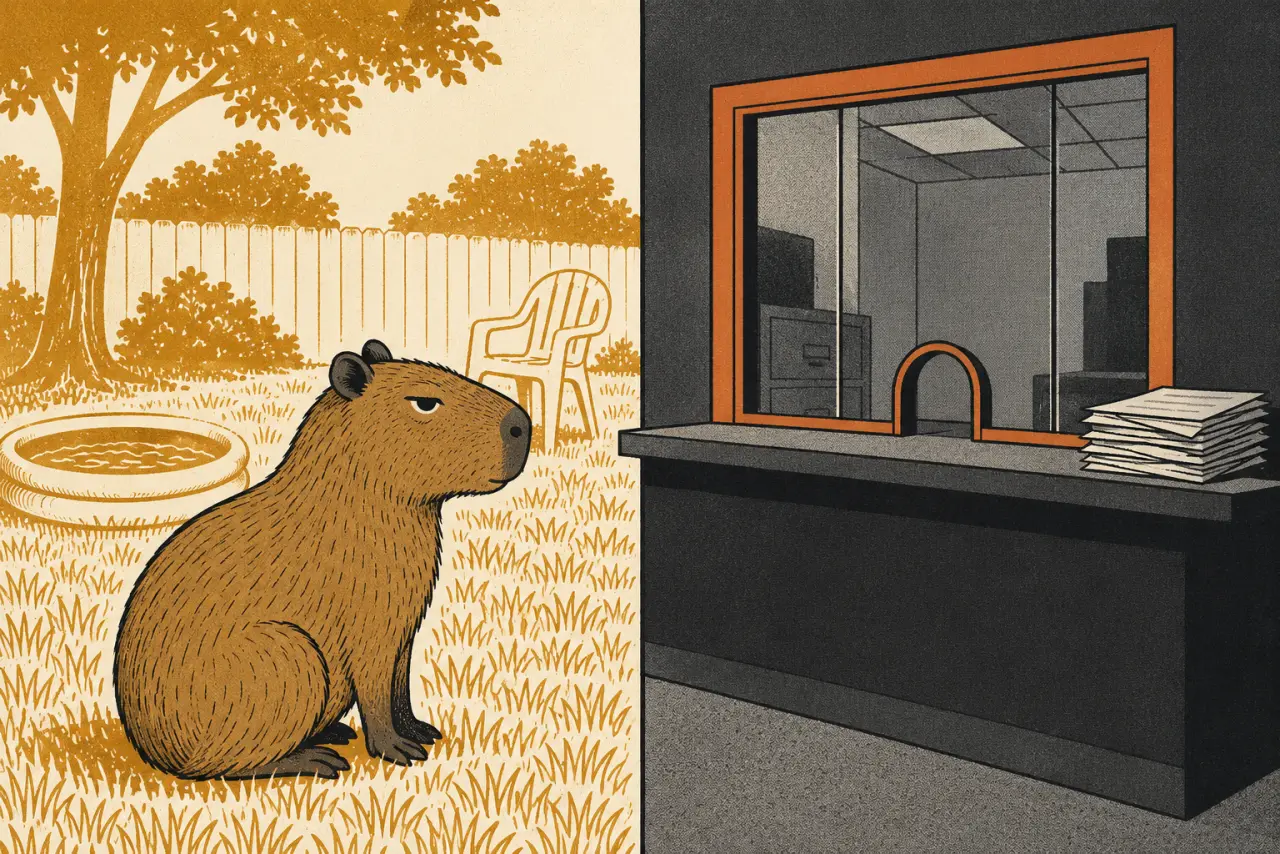

Prime Day moves every year, and so does every other sale event with a countdown on it. What does not move is the question underneath: is this actually cheaper than it was last month, or does it just say so? That has a legal answer, and almost nobody writing about capybara merch has looked it up.
A calmer shopping rule: buy capybara stuff only if you would have wanted it at a normal price. Plush, mugs, stickers, dorm decor, coloring books, and small desk items can be good gifts. Random “limited time” capybara chaos with no clear size, weird reviews, or a price that jumped yesterday should sit quietly in the cart until it learns manners.
What A “Was” Price Is Legally Allowed To Mean
The FTC’s Guides Against Deceptive Pricing are from 1967 and they describe the modern sale banner with uncomfortable precision.
16 CFR § 233.1(a) sets the test. A former price is a legitimate basis for comparison only where it “is the actual, bona fide price at which the article was offered to the public on a regular basis for a reasonably substantial period of time.” Where the former price is “not bona fide but fictitious — for example, where an artificial, inflated price was established for the purpose of enabling the subsequent offer of a large reduction — the ‘bargain’ being advertised is a false one.”
The Guides then give their own example, and it is the whole game:
A retailer's usual price is $7.50. He raises it to $10, holds it there "for only a few days" knowing he will sell almost none, then cuts it back to $7.50 and advertises "Terrific Bargain: X Pens, Were $10, Now Only $7.50!" The Guides call this "obviously a false claim." Swap the pen for a capybara plush and you have most of what a sale week looks like.
Two more lines worth knowing, because they cover the other half of the tricks:
- A bare “Sale” with no number still has to mean something. § 233.1(e) says where no former price or percentage is stated, the advertiser “must take care that the amount of reduction is not so insignificant as to be meaningless.” Reduced from $10 to $9.99 is given as the bad example.
- “Retail value $15, our price $7.50” has to reflect the real market. § 233.2 says the compared price must not “appreciably exceed the price at which substantial sales of the article are being made in the area” — quoting one unrepresentative outlet is deceptive.
None of this makes a sale bad. It tells you which number on the listing is load-bearing: the price you pay, not the one with a line through it.
Checking It Yourself In Thirty Seconds
The rule is federal; the enforcement is not going to arrive before your basket expires. The practical version is a price history, which strips the “was” claim out entirely.
Consumer Reports recommends comparing prices, using price-history tools such as Keepa or CamelCamelCamel, and checking whether a discount is actually better than ordinary sale pricing. Those tools plot the real selling price over months, which is precisely the “regular basis for a reasonably substantial period” that § 233.1(a) asks about — so a chart that sat flat until three days ago has answered the question.
That check matters most on novelty gifts, where the emotional argument is usually “look at his face” and the product details are doing community theater.
What Capybara Stuff Is Actually Worth Checking?
The best capybara buys are boring in the useful way. They have clear photos, real dimensions, readable materials, sane reviews, and no promise that owning them will turn your life into a soft-focus yuzu bath.
| Category | Why it can work | What to check first |
|---|---|---|
| Plush | Easy gift, low technical risk | Height in inches, fabric, washable notes |
| Mug | Useful, cheap, very hard to overthink | Capacity, dishwasher notes, print placement |
| Dorm decor | Good for back-to-school searches | Size, hanging method, whether it looks childish in person |
| Stickers | Low cost and shareable | Quantity, waterproof claim, original art style |
| Coloring book | Works for kids and stressed adults | Page count, print quality, sample interiors |
The capybara standard is simple: if the item would make a friend laugh and still be useful after the joke, it has a chance. If it only exists because someone typed “capybara” into a product generator and went to lunch, release it back into the algorithm.
The No-Regrets Capybara Deal Filter
Before you buy, ask four rude questions.
First, did the price actually drop? A “40% off” badge means less than a price history. Second, are the dimensions obvious? Online plush listings love making a 7-inch animal look like a couch companion. Third, is the design stolen-looking, blurry, or oddly cropped? Fourth, would you still buy it if the sale ended?
That last one is the teeth of the whole thing. The FTC also expects affiliate relationships and paid endorsements to be clear, so any Grumpy Capy post with monetized links should disclose that plainly. Cute commerce is still commerce. The capybara does not launder the relationship.
What To Skip Even If The Rodent Is Smiling
Skip clothing without measurements, mystery bundles with no real product photos, suspicious “last chance” listings, and anything where the capybara looks like a melted guinea pig with legal concerns. Skip live-animal gifts entirely. A capybara is not a birthday flourish, a dorm idea, or a surprise for someone who once said “aww” in a group chat.
For animal-themed decor, the risk is usually clutter. For animal ownership fantasies, the risk is reality. San Diego Zoo describes capybaras as semi-aquatic animals that depend on water, group life, and grazing. They are not a shopping aesthetic with nostrils.

Buy The Bit, Skip The Panic
Capybara Prime Day shopping is best treated like a small joy budget, not a command from the internet. Make a short list, verify the price, read the dimensions, and buy the thing that will still feel funny and useful in September.
The most honest deal is not always the lowest price. Sometimes it is the mug that makes someone snort once and then holds coffee for three years. That is a respectable career for a printed rodent.