Long before a cartoon capybara took over your feed wearing a tiny hat, there was a real one in central Texas with a blog, a swimming pool, and a name borrowed from a movie about swamp monsters.
His name was Caplin Rous. If the capybara fandom has a patron saint, it is probably him.
Caplin was a pet capybara born July 10, 2007, raised by Melanie Typaldos near Buda, Texas. Through his blog and YouTube videos he became the first internet-famous capybara, and the reason July 10 is now marked as National Capybara Day. He died young, in early 2011, but the holiday and a veterinary foundation both grew out of his short life.
Who was Caplin Rous, and why the funny name?
The “Rous” is an acronym: Rodent Of Unusual Size. It comes straight from “The Princess Bride,” where the heroes slog through a swamp full of giant rodents called R.O.U.S.s. For a capybara, the joke writes itself. They are the largest rodent on Earth, so calling one a Rodent Of Unusual Size is just accurate paperwork with a wink.
Typaldos brought Caplin home when he was 11 days old and, by her own account, took him to work every day for the first three months because he was too young to leave alone. That is the texture of the whole story. This was not a polished influencer pet. It was a person learning a very strange animal in real time and writing it all down.
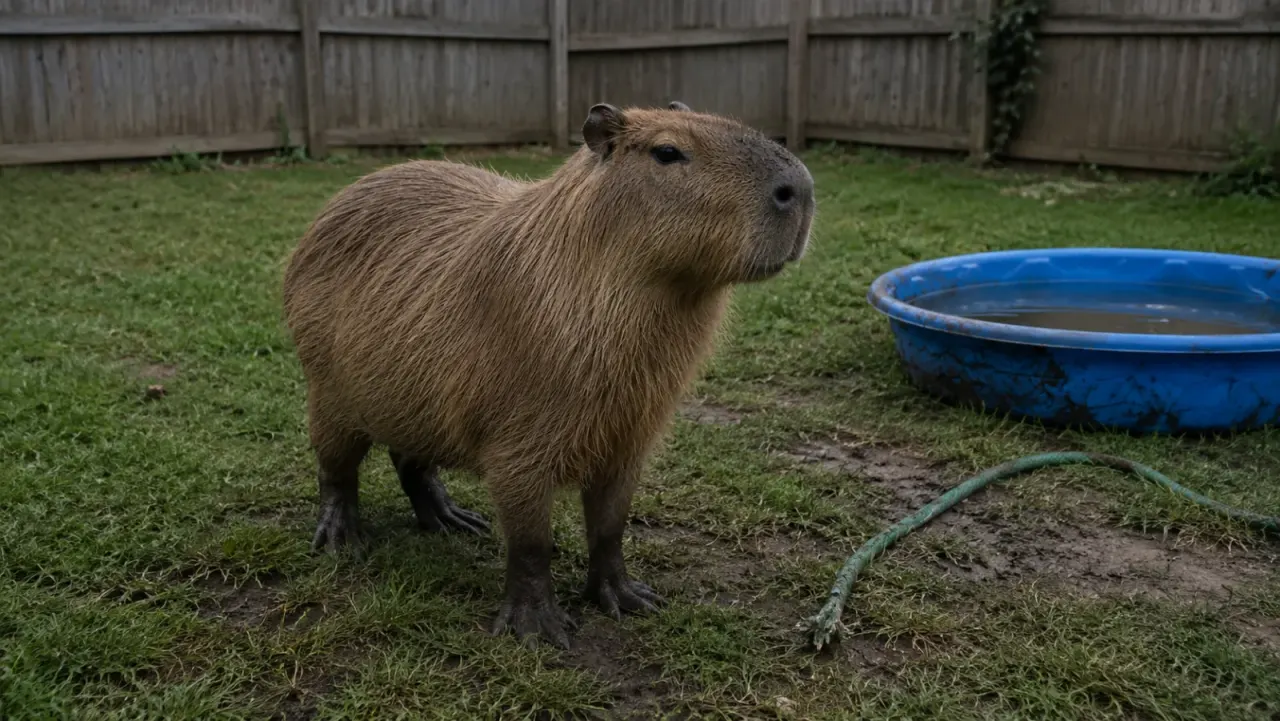
How a Texas backyard capybara got internet-famous
Caplin’s fame ran through a blog called Capybara Madness and a steady stream of YouTube clips. This was the late-2000s internet, years before the meme wave, so there was almost nothing online about living with a capybara. Typaldos basically wrote the field notes herself.
The details are what people remembered. Caplin did tricks — he would sit and shake for treats like a very large, very damp dog. He loved the water, with a favorite inner tube that had to be stuffed with pool noodles so his teeth wouldn’t puncture it. He slept in the bed. He went along on trips to the pet store. None of it was staged for clicks, which is exactly why it landed.
The reporting from that era backs it up. A TODAY segment and later a Washington Times feature both captured the same thing: a capybara treated as family, in a house clearly rearranged around his need to swim.
The short, full life of Caplin Rous
| Year | What happened |
|---|---|
| 2007 | Born July 10 in Texas; Melanie Typaldos brings him home at 11 days old |
| 2008-2010 | Capybara Madness blog and YouTube clips make him the best-known pet capybara online |
| 2011 | Dies January 3 at about three and a half; the first Caplin Day is held July 10 |
| 2012 onward | The ROUS Foundation begins funding capybara veterinary care at Texas A&M |
| Today | July 10 is National Capybara Day, marked by fans worldwide |
Caplin died on January 3, 2011, of an illness that was never fully pinned down. He was about three and a half. By any measure that is too short, and his people felt it.
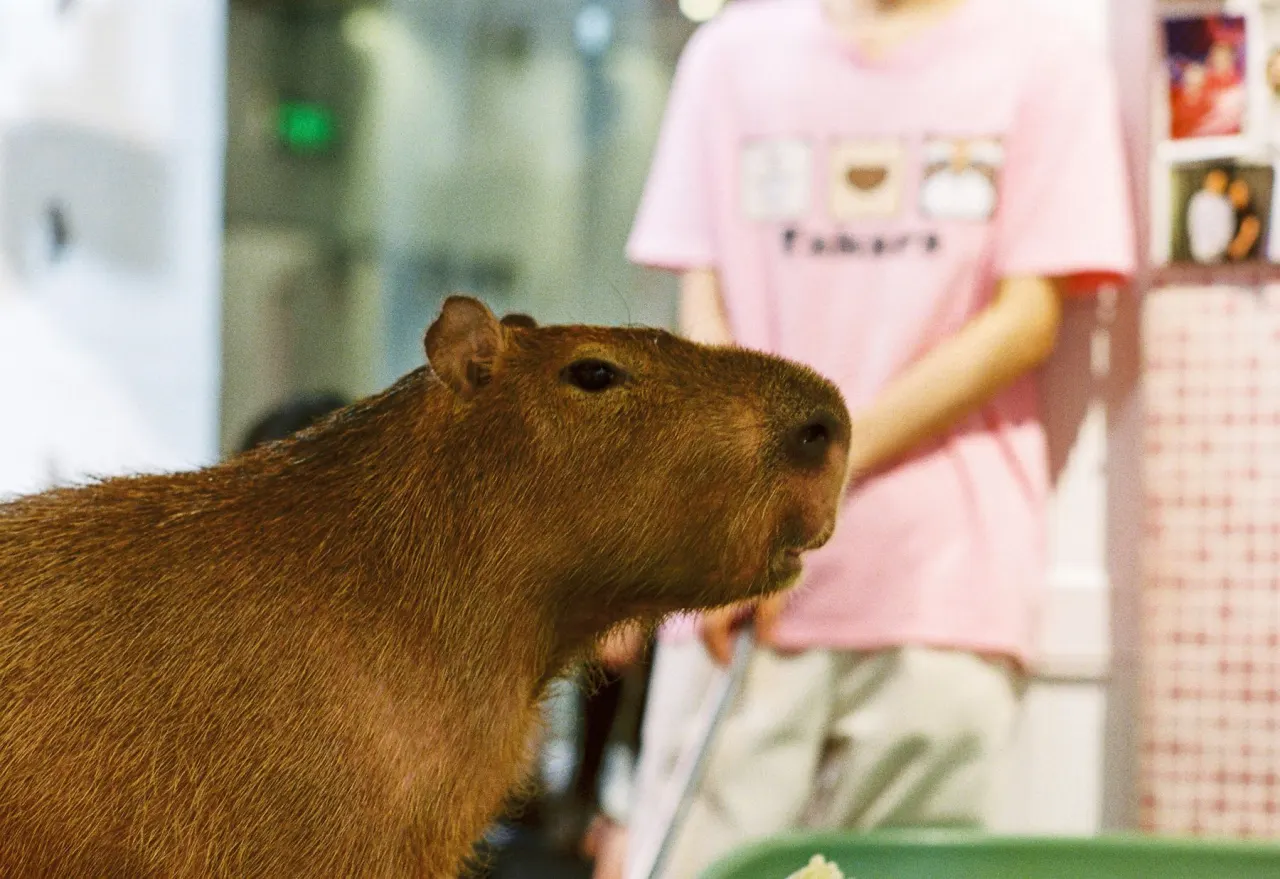
Why July 10 became National Capybara Day
Months after Caplin died, Typaldos held the first Caplin Day on July 10, 2011, his birthday. It started as a small memorial and grew, year by year, into what the wider internet now calls National Capybara Day.
She also turned the grief into something durable. The ROUS Foundation, named for Caplin, raises money for capybara veterinary care through Texas A&M’s College of Veterinary Medicine, including the kind of necropsy and health research that barely existed when she first went looking for answers. If you have ever wondered why there is now decent information about capybara health online, part of the trail leads back to one Texas backyard.
What Caplin’s story still says about capybaras as pets
Here is the part the cute clips skip. Typaldos, the person who loved Caplin most, was also one of the clearest voices about how hard capybaras are to keep. She lost a second capybara, Garibaldi, in 2014 to dental and bone problems rooted in early-life care he had before she got him.
That honesty is the real inheritance. Caplin made people fall for capybaras, and his story also carries the warning label: water, space, company, a high-fiber diet, and an exotic vet who actually knows the species. Most homes can’t clear that bar. Before anyone romanticizes a backyard capybara, it is worth reading whether they make good pets with clear eyes — which is, fittingly, exactly what Caplin’s blog spent years trying to teach.
He was the first famous one. Fourteen years later, the fandom still meets up on his birthday. Not a bad legacy for a rodent of unusual size.
What a capybara actually needs, the parts the blog kept hammering
Caplin’s whole story makes more sense once you understand the animal under the cute. A capybara is the largest rodent on Earth, an adult running roughly 35 to 66 kg (about 77 to 145 lb) by most species references, including Animal Diversity Web and Britannica. That is a body the size of a medium dog, but wired like a grazing herd animal from the wetlands of South America. You cannot file the wild parts down, no matter how friendly the individual is.
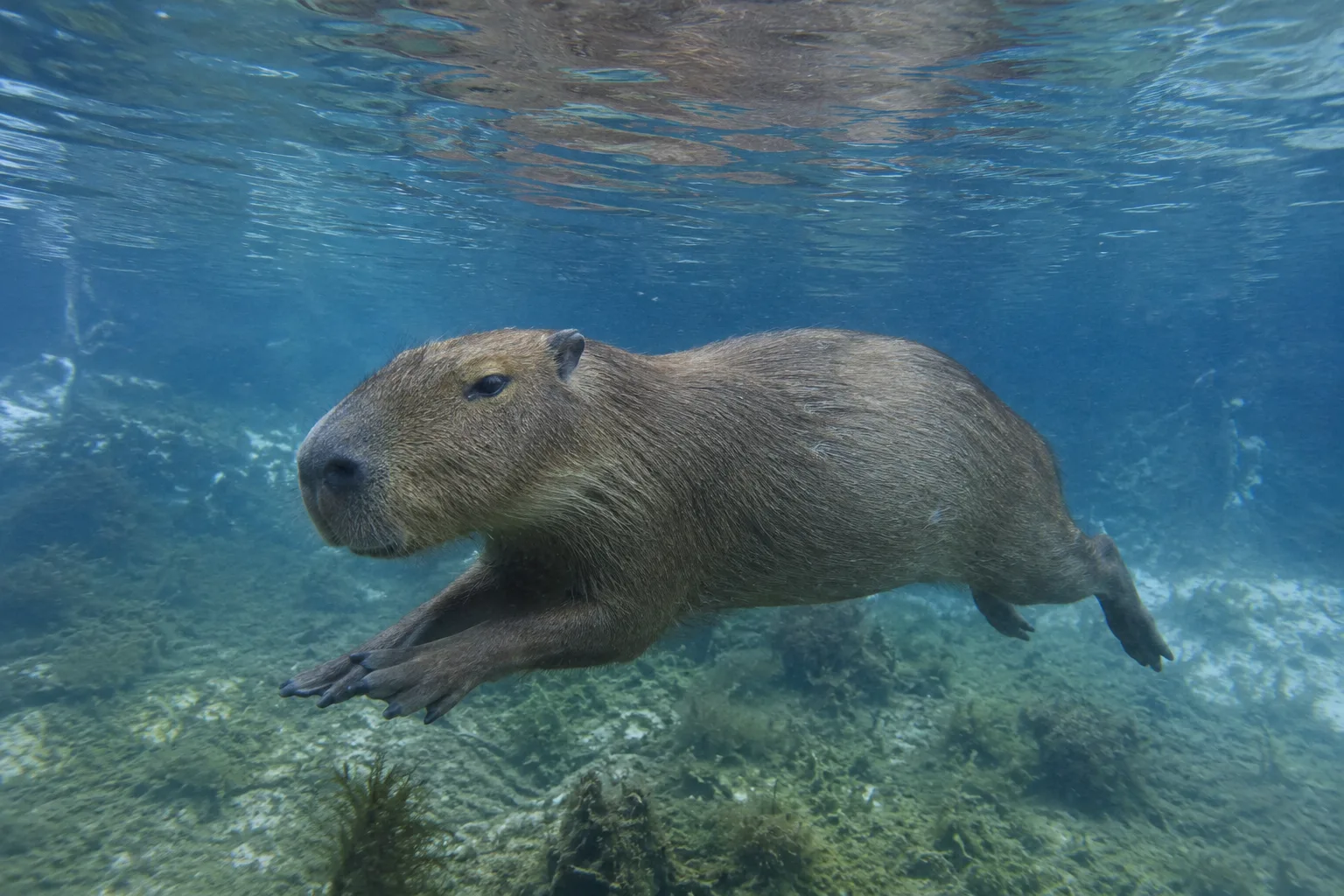
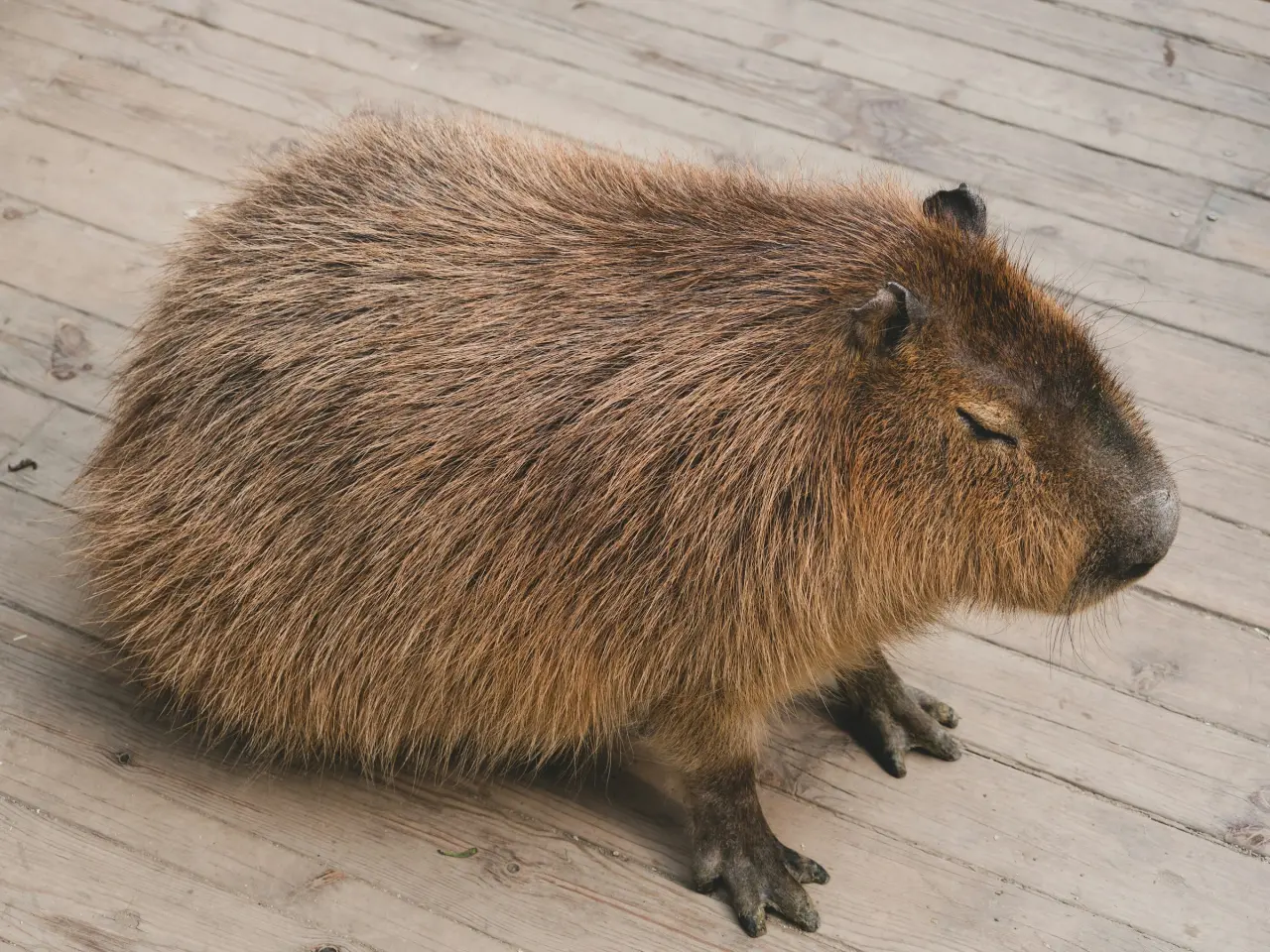
The needs are specific, and most of them are non-negotiable. Capybaras are semi-aquatic, with semi-webbed feet built for water, and according to the San Diego Zoo Wildlife Alliance and the Smithsonian National Zoo they rely on it to cool off, escape threats, and simply feel safe. They are committed grazers, hindgut fermenters that live on grasses and aquatic plants, and they practice coprophagy, re-ingesting soft morning feces to pull more nutrients out of a high-fiber diet. Their teeth are hypsodont, growing continuously, so the diet has to keep them ground down. And like guinea pigs, their close relatives in the family Caviidae, they cannot make their own vitamin C, so it has to come from food.
| What Caplin’s life showed | The biology behind it |
|---|---|
| The pool, the tub, the inner tube | Semi-aquatic animal; water is for cooling, safety, and calm, not a treat |
| Constant grazing, hay, fresh greens | Hindgut fermenter built for grass; continuous chewing keeps ever-growing teeth in check |
| Eating soft morning droppings | Normal coprophagy; how the gut re-extracts nutrients and vitamins |
| Vitamin C in the diet | Cannot synthesize it, same as guinea pigs; deficiency causes real disease |
| Never kept truly alone | Highly social herd animal; isolation is a documented welfare stressor |
That last row is the one people skip. Capybaras are intensely social, and the AZA Capybara Care Manual treats group living as a core welfare standard, not a nice-to-have. A single capybara in a quiet house is a herd animal with no herd. Caplin had a household rearranged around him and, eventually, other capybaras around him. Most would-be owners offer neither.
The misconceptions Caplin accidentally created
Fame has side effects. A few clips of a capybara shaking hands and napping on a bed convinced a lot of people of things that are not quite true. Here is the cleaner version.
| Common belief | Better answer |
|---|---|
| Caplin proved capybaras make easy pets | His own owner spent years saying the opposite; the ease was hers, hard-won |
| A bathtub or a kiddie pool is enough water | They need real, swimmable water they can submerge in, reliably |
| One friendly capybara is a happy capybara | They are herd animals; solitary housing is a known stressor |
| Capybaras live as long as dogs | In captivity they reach roughly 8 to 10 or so years, often less without specialist care |
| Any vet can treat one | They need an exotics vet who knows the species, which is exactly what the ROUS Foundation set out to fund |
My honest take: the most useful thing Caplin ever did was not the tricks. It was that Typaldos wrote down the failures and the costs alongside the charm, and then put money behind the veterinary gap when her second capybara died. The internet remembers the swimming pool. The part worth keeping is the warning label she stapled to it.