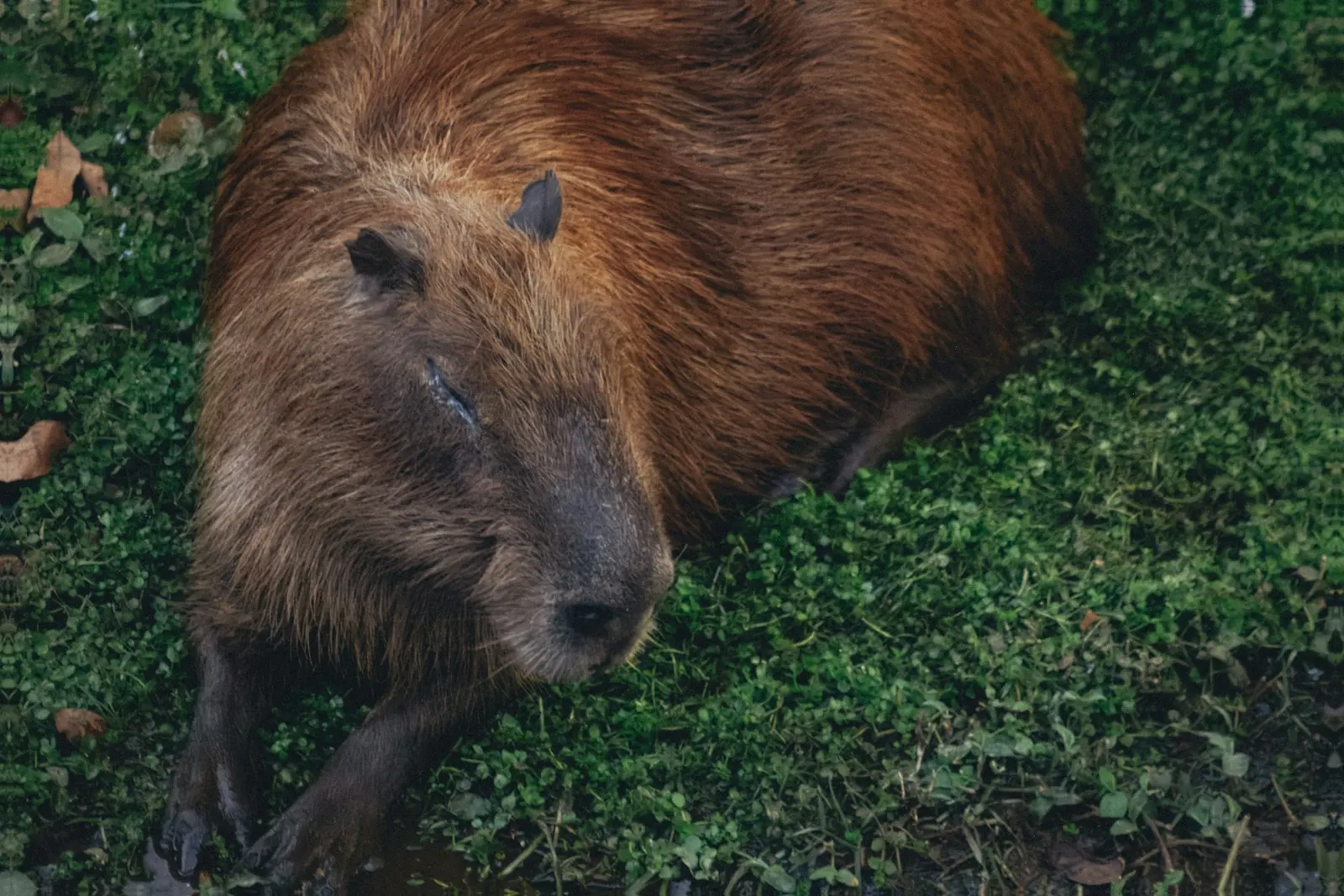
For almost every household, capybaras do not make good pets. They are calm, social, photogenic, and very specific about what their day needs to contain. None of that is the same as easy. The cute version online is the part the algorithm shows you. The drainage plan, vet search, fencing invoice, second capybara, and “we should not have done this” are the parts it hides.
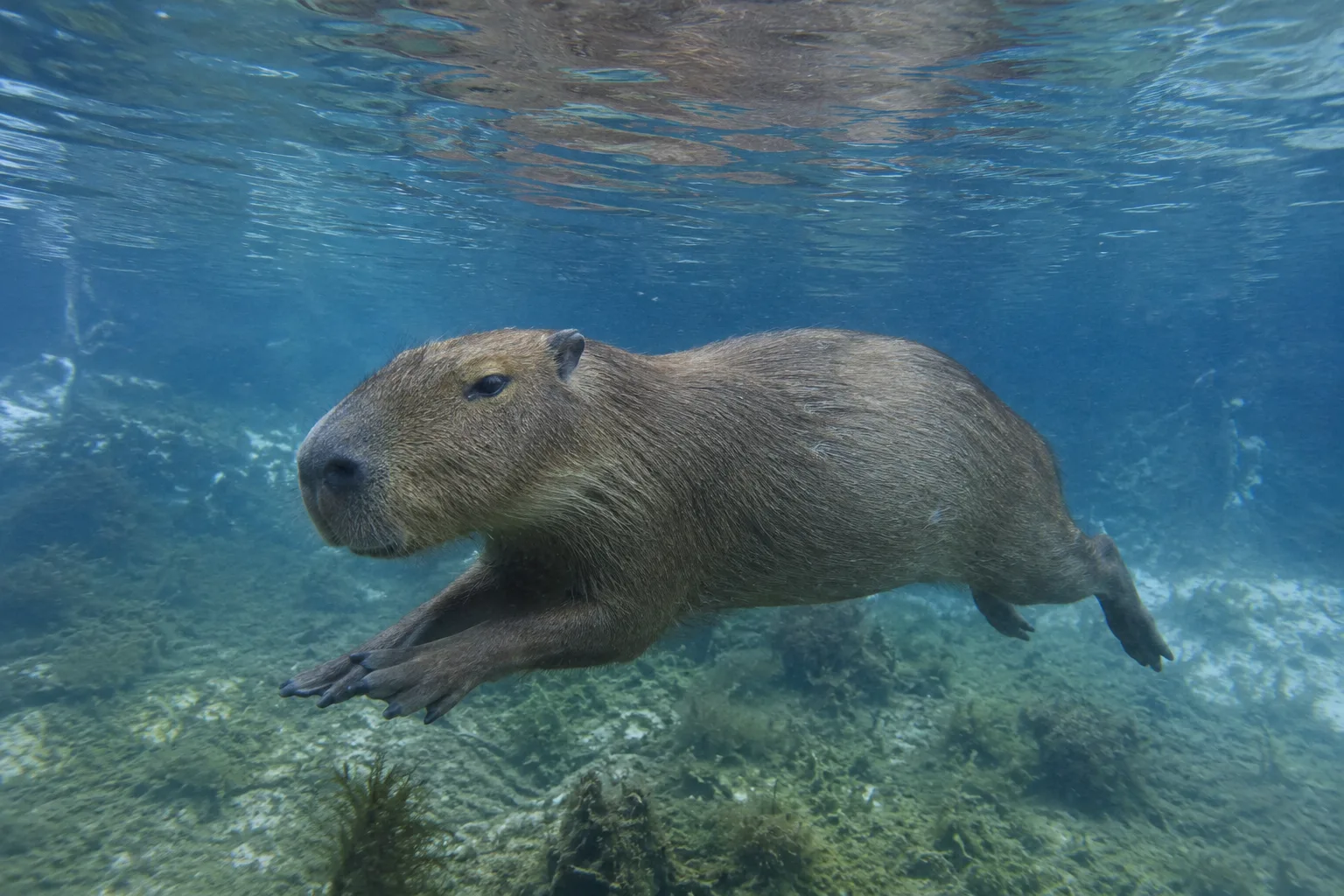
San Diego Zoo Wildlife Alliance lists adult capybaras at roughly 77–145 lb. That is the weight of a Labrador with rodent teeth, a swimming pool requirement, and a strong opinion about being alone.
Why The Online Version Lies
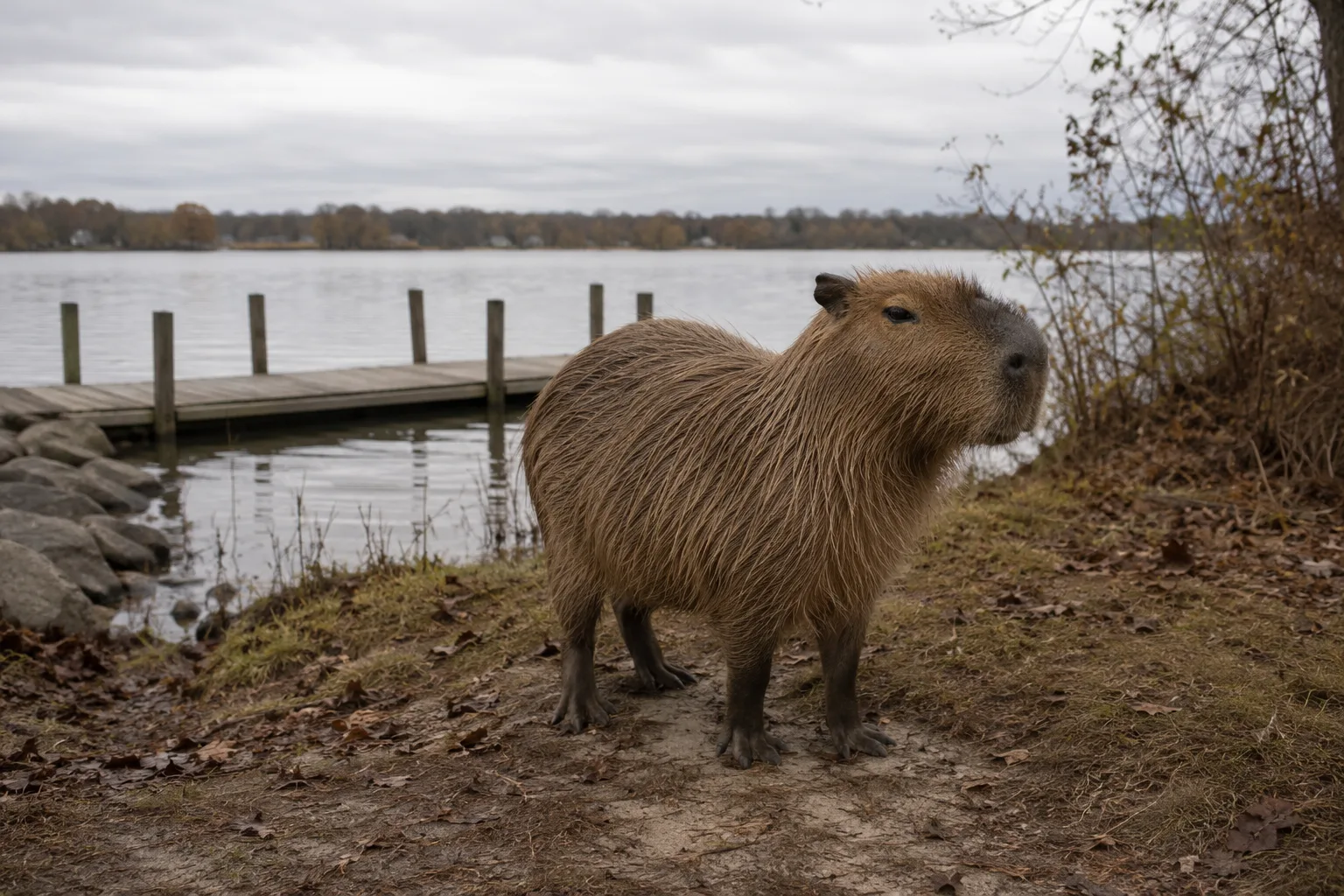
The capybara feed is curated. You see calm sitting, bathtubs full of oranges, friendly birds, and the rare unicorn living a movie life with a sanctuary owner who has a hundred acres and a vet on call. You do not see the routine.
Animal Diversity Web describes capybaras as social, semi-aquatic herbivores that live in groups of around 10–20 in the wild. Smithsonian’s National Zoo notes their need for water access for both behavior and skin health. The AZA Capybara Care Manual treats clean water, companion animals, and high-fiber forage as non-negotiable rather than nice-to-have. Three serious sources, one consistent picture, none of it cute.
the “capybara is the perfect pet” framing online is mostly survivorship bias. We see the ones working in unusually permissive conditions. We do not see the ones being rehomed quietly after the family realized this animal does not belong in a den.
What Capybaras Actually Need To Be Okay
A capybara plan is really a small zoo plan in a trench coat. Strip out any one of these and the welfare picture cracks.
| Need | What it looks like done right | What it looks like skipped |
|---|---|---|
| Companionship | At least one other capybara, kept long term | A single capybara alone “because we love him” |
| Water access | Clean, filtered, drained, deep enough to submerge | A kiddie pool that turns green by July |
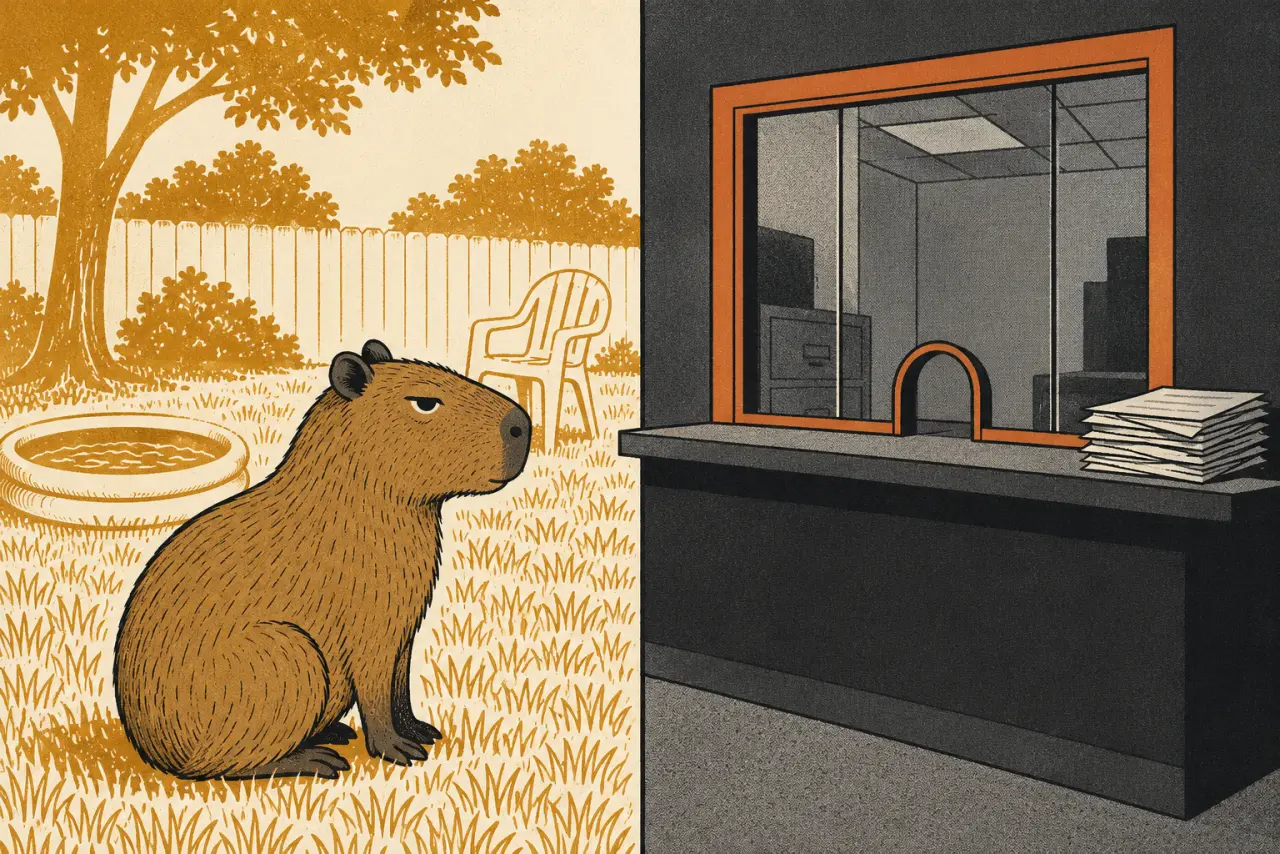
| Outdoor space | Secure fenced area with grazing, shade, dry rest zones | A small yard with decorative fencing and optimism |
| Diet | High-fiber forage, hay, fresh grasses, limited fruit | ”Pellets and treats” for the camera |
| Veterinary access | Exotic-animal vet and a documented backup | The nearest dog and cat practice and a hopeful tone |
| Legal basis | Confirmed state license + local rules + HOA | A seller saying “it’s fine” |
The bathroom math alone is unromantic. A 100-pound semi-aquatic rodent produces a corresponding output. A capybara that lives indoors is a capybara whose habitat the household is constantly cleaning, and a capybara whose welfare is quietly compromised the longer the indoor experiment lasts.
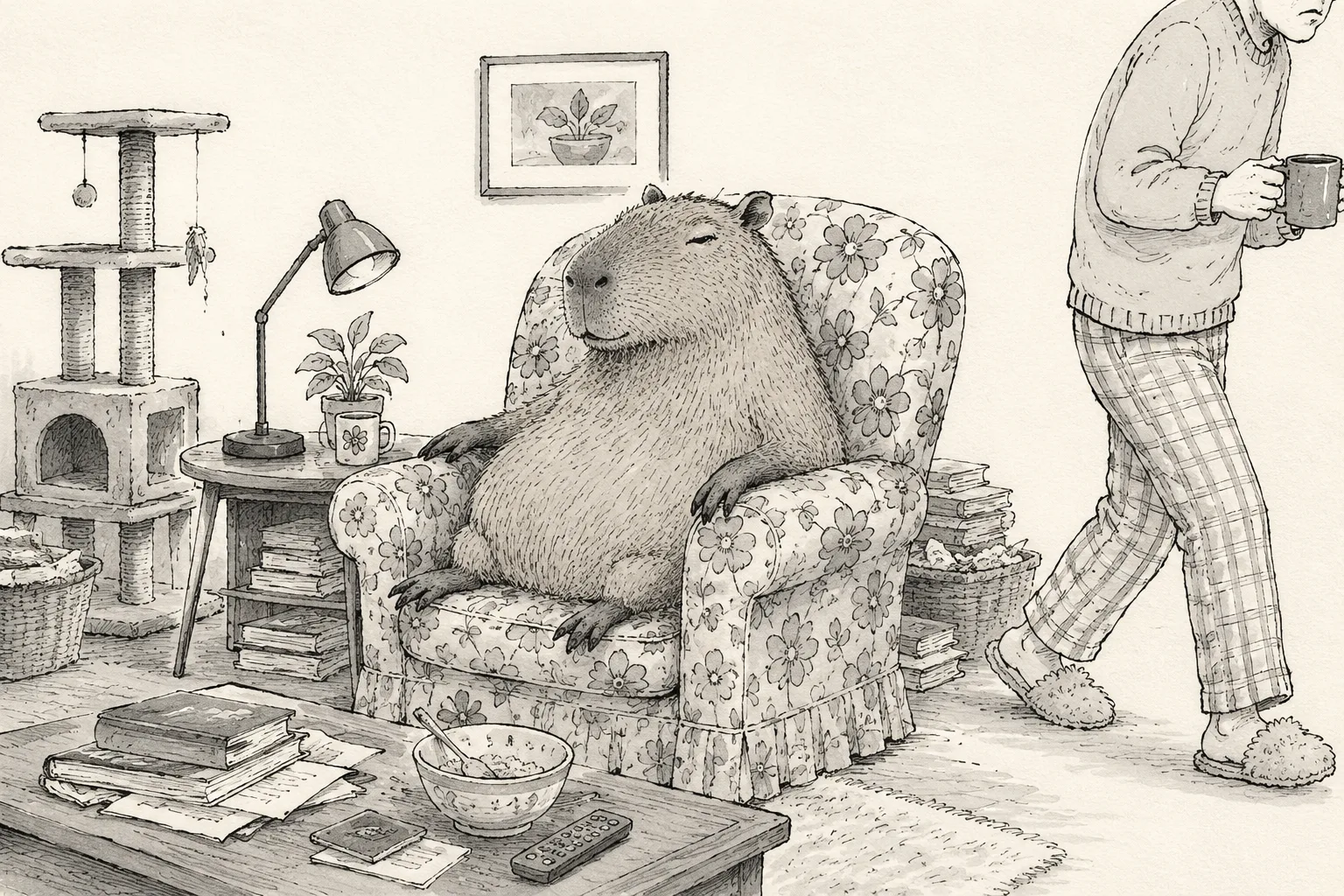
You Can’t Just Get One
The single most common capybara mistake starts with the word “one.”
Animal Diversity Web describes capybaras living in groups of around 10 to 20 animals, organized around a dominant male, several females, young, and subordinate males. They are built for company. They use contact calls to keep the group together and lean on the herd for predator watch, grooming, and basic emotional regulation. A solitary capybara is not a calmer capybara. It is an animal missing half its operating system.
The AZA Capybara Care Manual treats social housing as a welfare requirement, not a preference. So the honest minimum is two, and two is not “twice the cuteness.” It is twice the food, twice the waste, a bigger pool, more fencing, and the gamble that the pair actually gets along, because forced pairings can fail. Capybaras are social group animals, and the lone “house capybara” you see online is usually a welfare story with a filter on it.
The real question is not “can I look after a capybara.” It is “can I look after a small herd, for years.” Most people answer the first one and quietly skip the second.
The Cost Wall Most Owners Hit
Purchase price is the cheap part. Build cost is where the budget shifts from “fun project” to “this is a different life.” A real capybara setup is closer to small livestock infrastructure than to a dog crate.
A reasonable first-year budget for a single pair includes secure fencing built to push and dig pressure, a managed water feature with drainage, shelter sized for two adults, hay supply, vet examinations, parasite work, dental check, transport carriers, and the boring stuff like enrichment, lighting in shelters, and storm planning if you are in a state that has weather. We cover the full cost picture in the dedicated guide, but the punchline is: people who report quitting capybara ownership almost always cite cost and isolation, not the animals being difficult.
A Decade Is A Long Time To Be Wrong
Capybaras are not a short project. San Diego Zoo Wildlife Alliance puts their lifespan at roughly 8 to 10 years in managed care, and some individuals live past 12. That is a dog-length commitment to an animal that never becomes a dog.
The enthusiasm rarely lasts as long as the animal does. The pool still needs draining in year four. The exotic vet is still a two-hour drive in year six. The winter heating bill arrives every single year, whether or not the novelty did.
And the exit is brutal. Accredited zoos do not take surrendered backyard pets. The handful of sanctuaries that handle capybaras are usually full, underfunded, and wary of adult animals with unknown histories. “I’ll just rehome it” is the plan that almost never has a landing.
I asked a small-sanctuary volunteer about this once, and she described the same call arriving every few months. Someone bought a capybara, the setup did not work, the second one was never bought, and now there is a half-tame adult rodent that nobody trained, nobody can place, and nobody wants to put down. The animal did nothing wrong. It just outlived the idea.
Misconceptions TikTok Keeps Spreading
“They are basically big guinea pigs.” No. They are the world’s largest rodent, but their care, social structure, and water needs have nothing in common with the guinea pig setup at the pet store. Compare the two species directly here.
“You can train them like a dog.” Some capybaras tolerate handling and basic routines. None of them have 15,000 years of selective breeding behind them. They are still wild animals doing their best in a domestic frame.
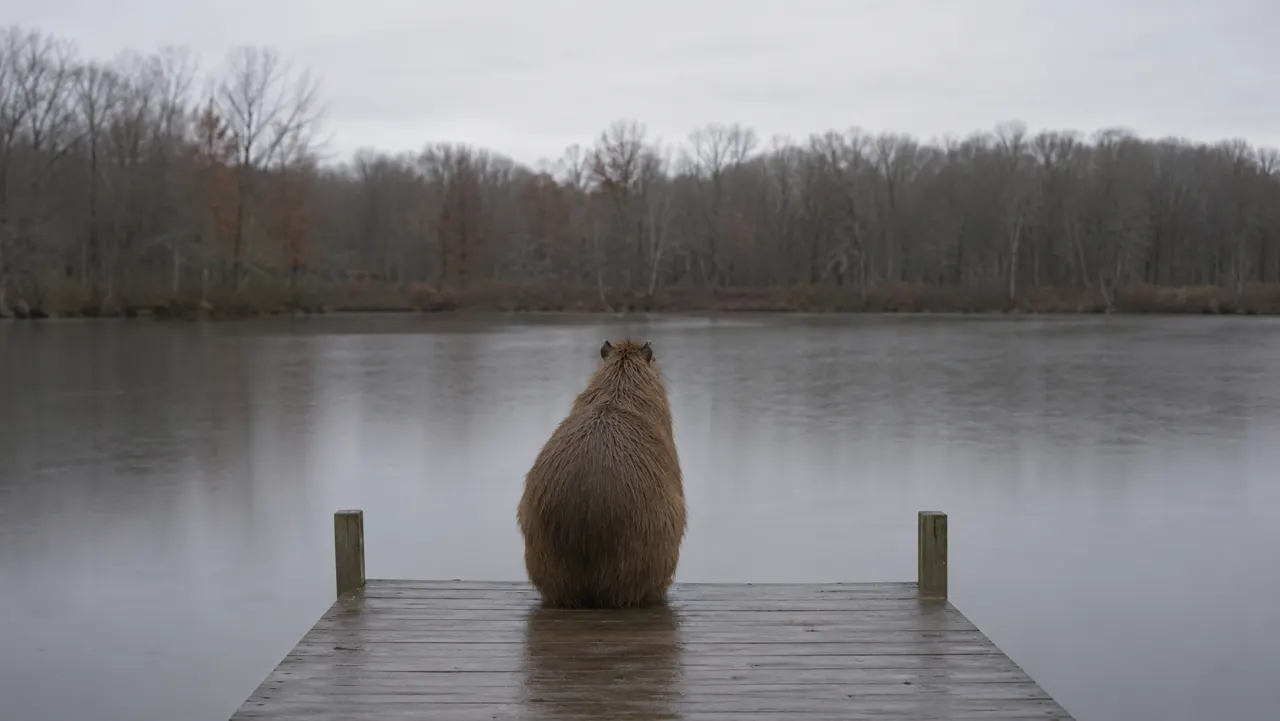
“They are quiet.” Not really. Capybaras vocalize across a wide range of contexts — alarm barks, contact whistles, group calls. The “silent zen capybara” thing is half meme, half optical illusion. They use sound when sound is what the moment calls for.
“My state allows them, so it’s a normal pet.” State permission is not pet status. It is a license to take on a complicated welfare responsibility. Texas, Florida, and California all show the gap between “legal” and “good idea.”
The Good Owner Test
A serious capybara owner should be able to name, without checking notes, the following: their exotic-animal vet, their backup vet, the legal basis for ownership in their county, the winter plan, the heat plan, the water-cleaning schedule, the companion animal, the fencing spec, and the emergency transport vehicle. If any of those answers is “we will figure it out,” the plan is not ready, regardless of how much someone loves capybaras.
This is not gatekeeping. It is respect. A capybara can be calm and still be completely unsuitable for ordinary pet life. Loving an animal is not the same as being the right environment for it.
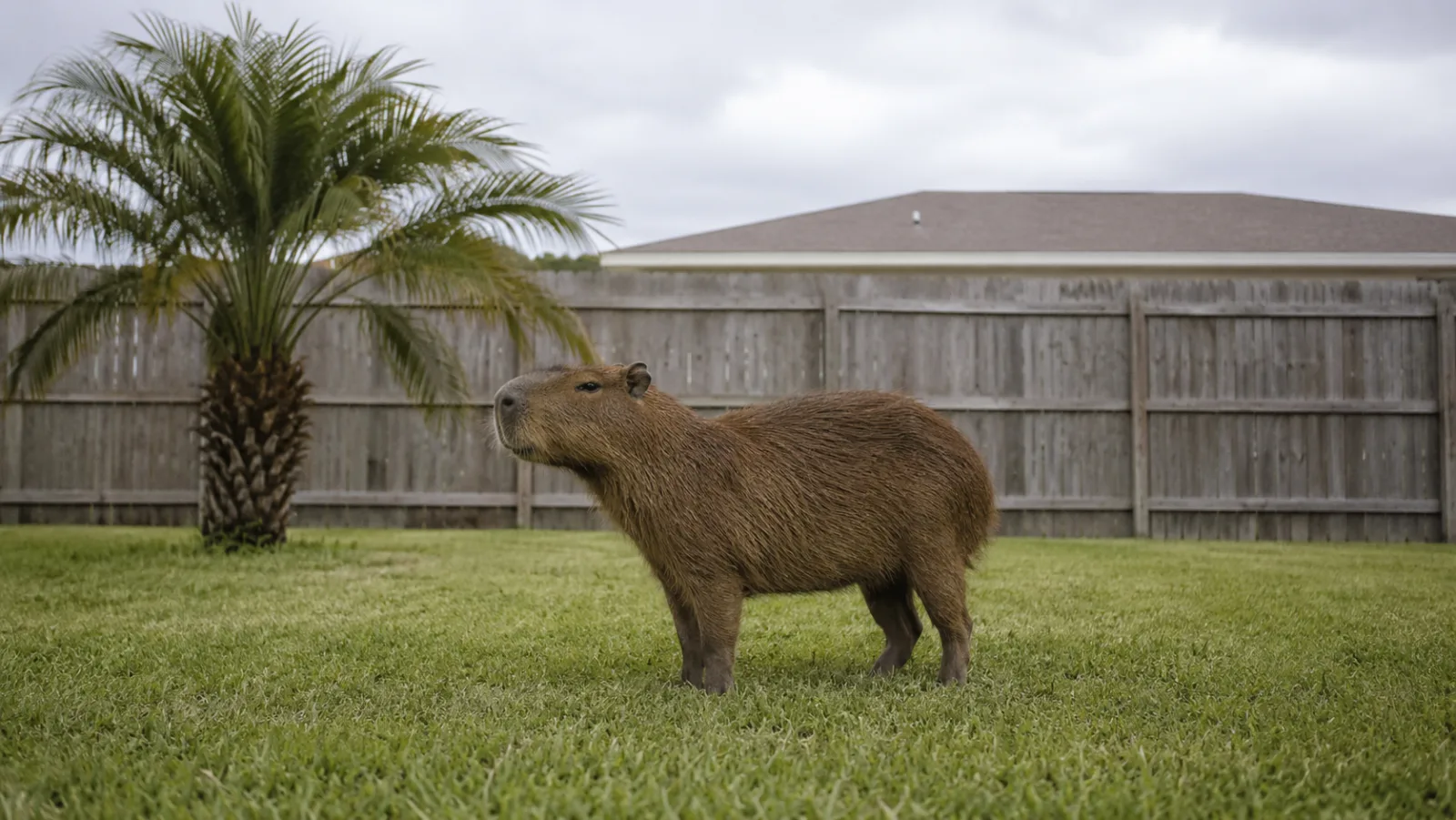
Better Alternatives
If the goal is being near capybaras, the smarter move is not ownership. Accredited zoos and reputable wildlife parks already do the heavy infrastructure, social management, and veterinary work. You get the animal, with welfare intact, without the part where your weekend becomes pool maintenance.
For most people the right capybara plan is a thoughtful zoo visit, a planned encounter at a vetted facility, a regular livestream habit, or a meaningful donation to a sanctuary doing the actual work. None of those require a state permit, an exotic vet, or a small wetland behind the garage. See the U.S. viewing guide for places that are doing this well.
The respectful version of capybara love is to let them keep being wild animals. The internet wants them to be props. The animals would prefer to be capybaras. Most of the time, those two outcomes do not survive the same household.