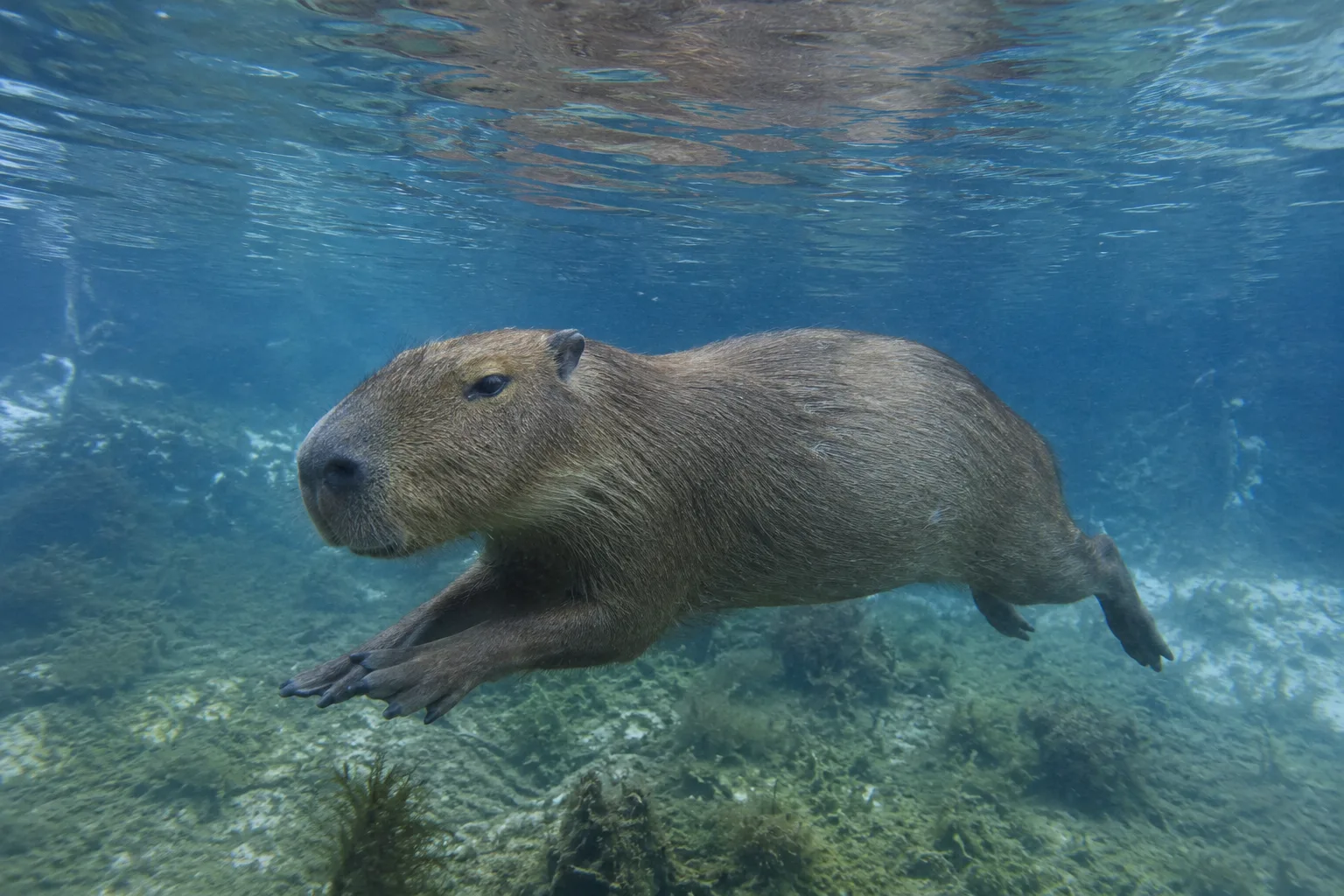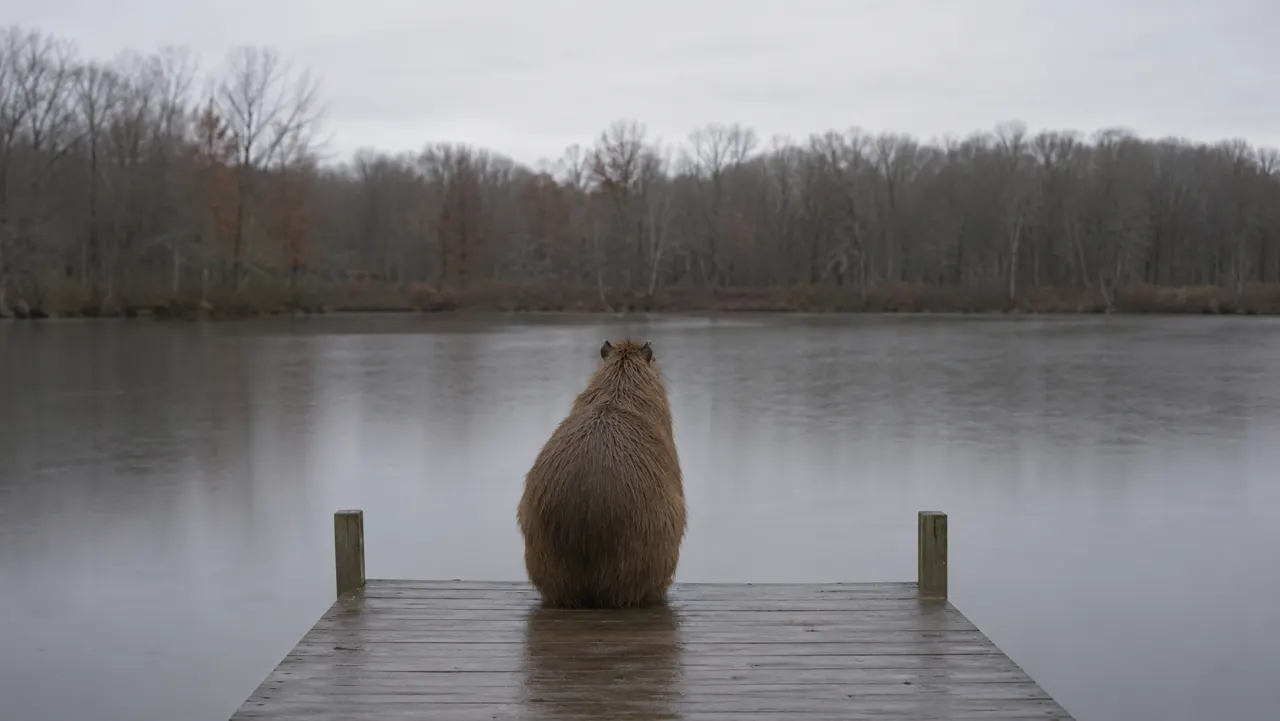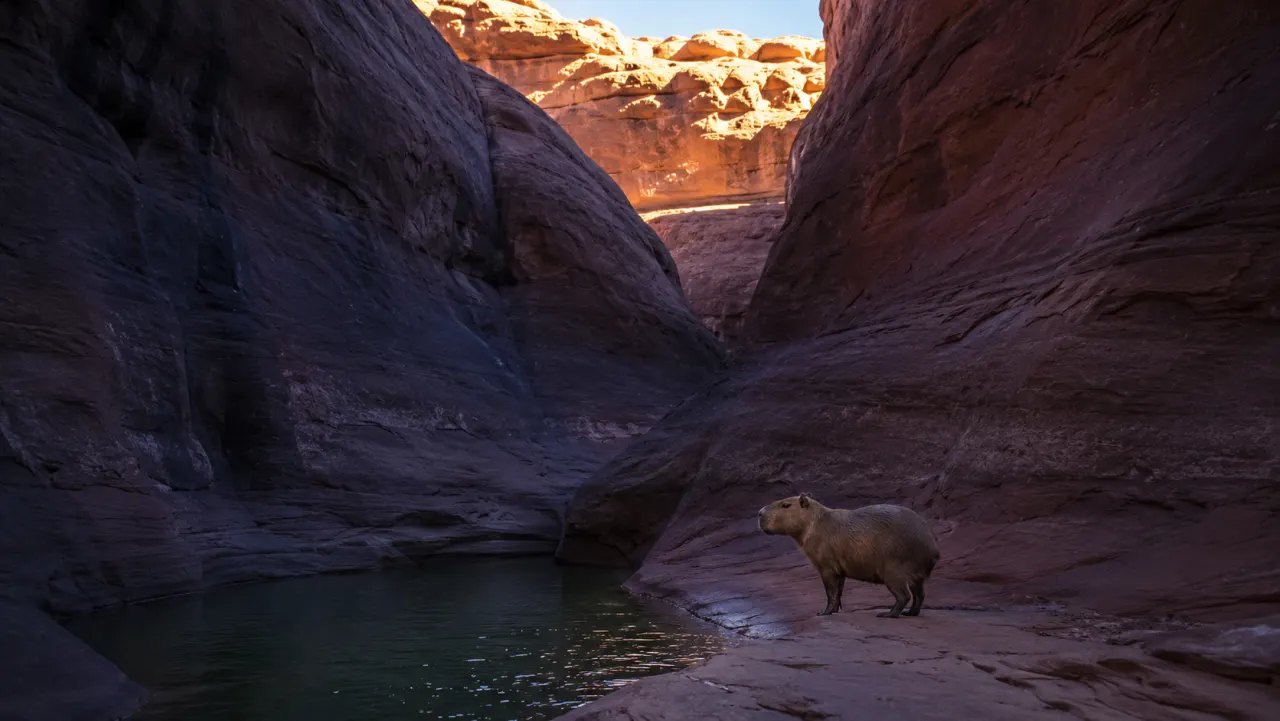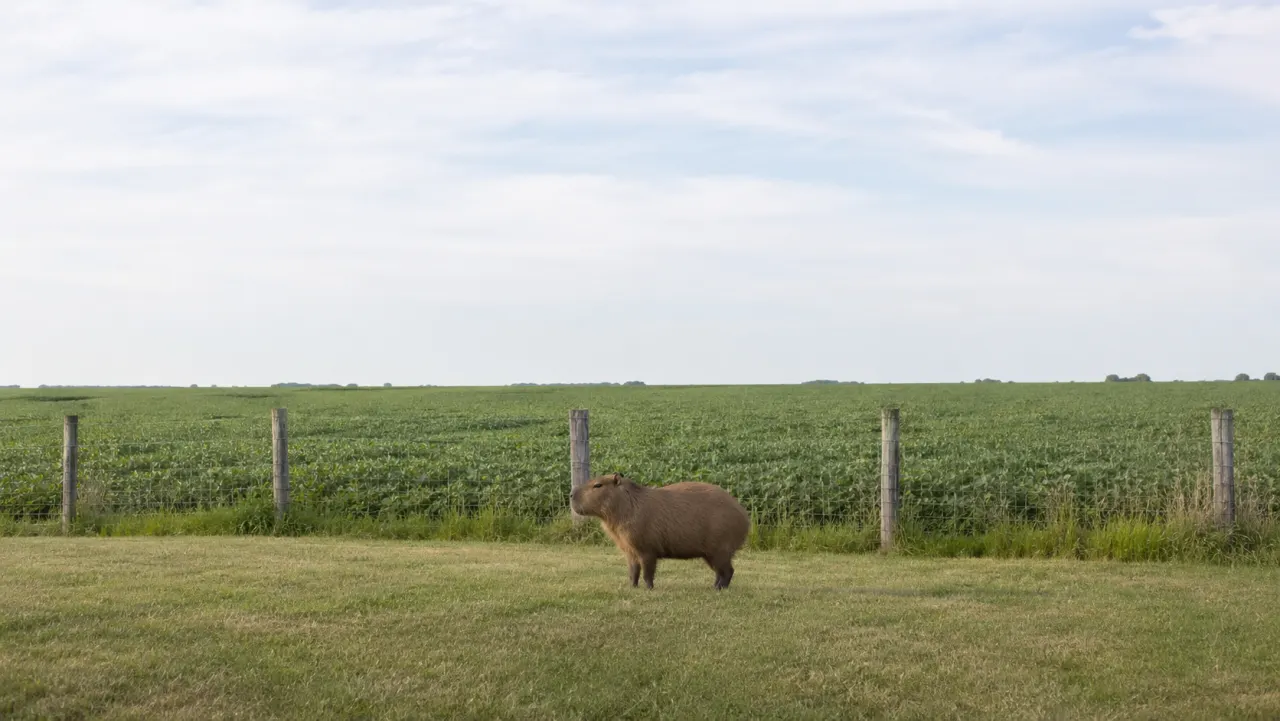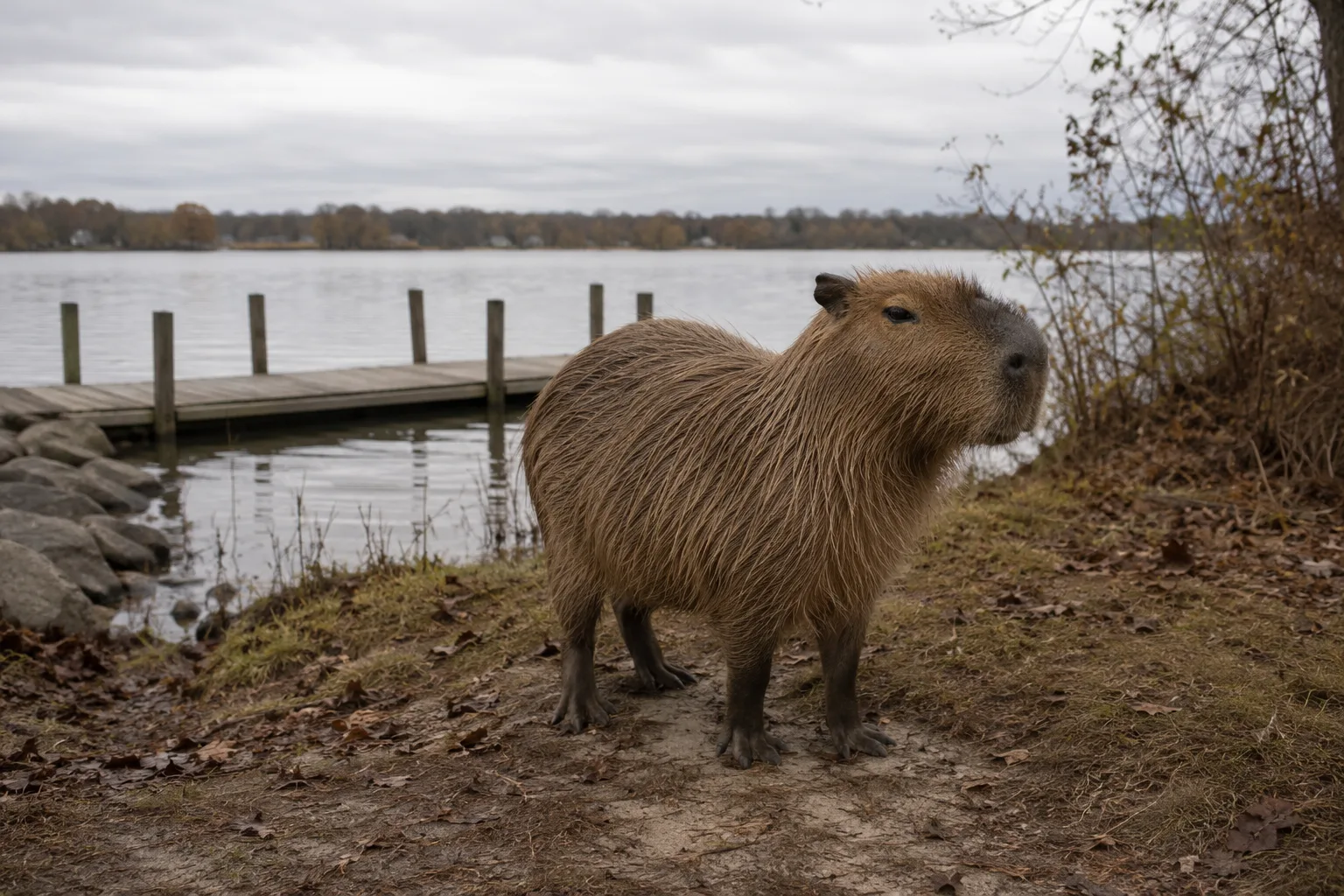

In Florida, capybara ownership is not a simple yes. State wildlife rules sit on top of county zoning, city ordinances, HOA covenants, and the slightly less glamorous reality of Florida itself: hurricanes, flooding, mosquito control, and a real shortage of exotic-animal vets outside the major metros.
Florida warmth solves the cold problem and creates new ones. The internet skips that part. So does most of the seller copy. The honest answer for most Floridians is: maybe, but the real gating step is your county and city, not Tallahassee.
Not a simple yes
Florida wildlife rules sit on top of county zoning, city ordinances and HOA covenants — and then on top of Florida itself: hurricanes, flooding, mosquito control, and a real shortage of exotic-animal vets outside the major metros.
How The FWC System Actually Works
FWC splits captive wildlife into classes by risk. Class I covers animals considered dangerous to humans (lions, tigers, chimps, that crowd). Class II covers other potentially dangerous species. Class III is the broad bucket that absorbs everything else, and FWC has been clear that it does not publish one fixed Class III species list. Capybaras have historically been handled through Class III permitting, but the right move in 2026 is to confirm directly with FWC by species, intended use, and location before assuming the rule.
This matters because activity changes the bar. A pet capybara, a breeding operation, a photo studio, and a public encounter business all face different paperwork. The FWC’s personal pet permit page is explicit that some species require demonstrated experience hours, written exams, and facility inspections before licensing. “I love them” is not on the form.
There is also a federal layer. The USDA APHIS Animal Welfare Act applies to anyone exhibiting, breeding for sale, or dealing in regulated species commercially. So even if FWC clears a Florida applicant for personal possession, switching to public encounters drags in USDA standards on housing, sanitation, veterinary care, and recordkeeping.
| FWC scenario | What it usually means | What it actually requires |
|---|---|---|
| Personal pet | Captive wildlife owned without commercial use | Application, demonstrated experience, secure facility, no commercial activity |
| Sale or breeding | Captive wildlife for commercial sale | Higher facility standards, recordkeeping, inspections |
| Exhibition | Paid public viewing or contact | FWC exhibition license + USDA AWA license, separate insurance and signage |
| Class I species | Dangerous wildlife in the strict sense | Largely off the table for ordinary applicants |
Why Local Rules Still Do The Deciding
State wildlife law is the headline. Local government is the small print that quietly wins. Florida has 67 counties and over 400 incorporated municipalities, and a healthy share of them have rules on exotic animals, livestock-style enclosures, kennel size, fencing height, stormwater discharge, or commercial animal activity. Many HOA covenants in newer developments go further than the city does.
A capybara plan that ignores local code tends to find out the hard way. Code enforcement, not FWC, is what usually shows up after a neighbor complaint. Honest read: most of the people who message us about Florida ownership have called the state once and never called the city. That’s where the surprise comes from.
This is where the “is Florida free?” framing falls apart. Florida is less restrictive than California or New York at the state level, but the locality on the ground in Miami-Dade or Orlando metro can be every bit as strict as Sacramento. Compare with how Texas handles capybara ownership: same shape, different acronyms.
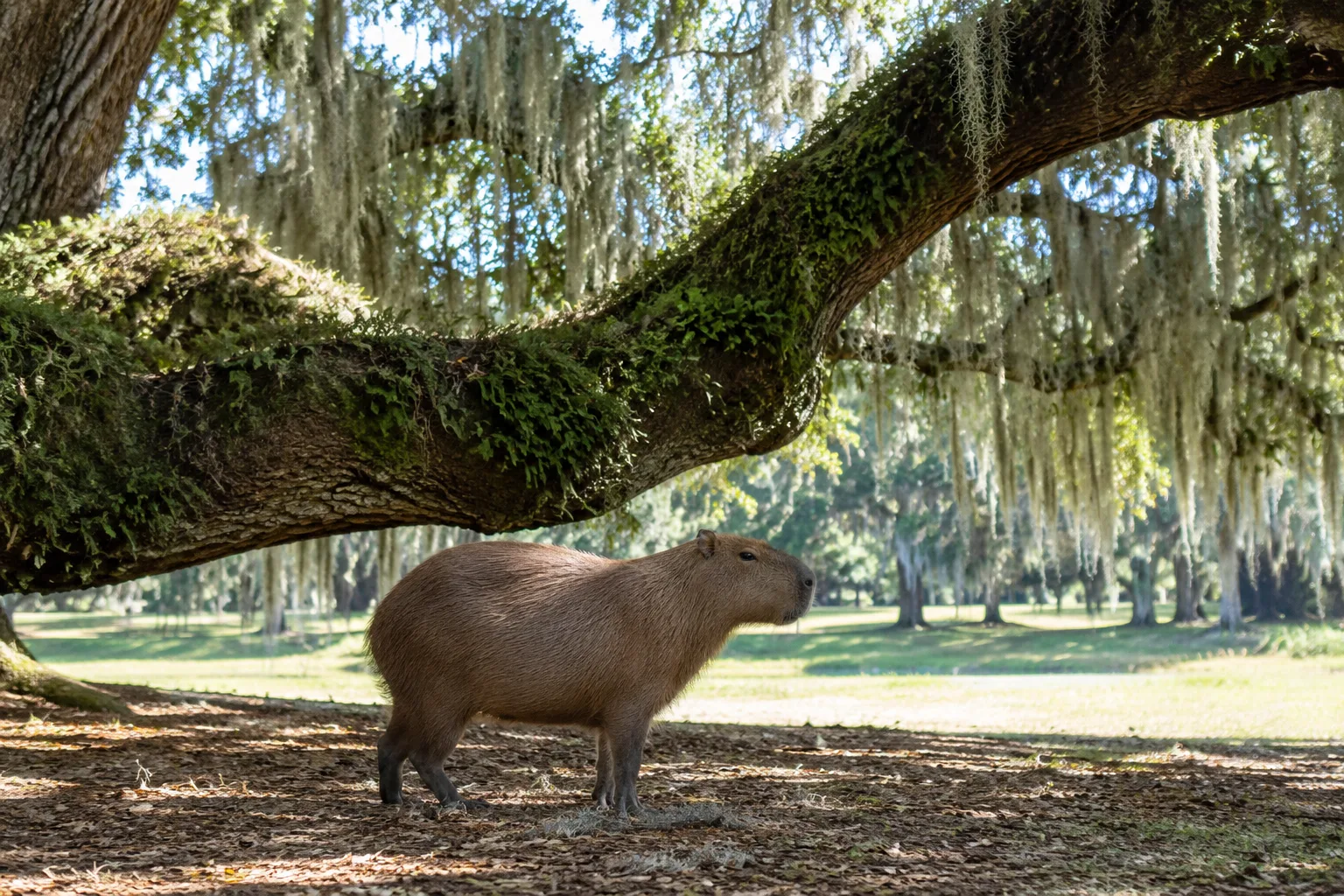
The Florida-Specific Risks People Skip
Florida has actual capybara weather for about 11 months of the year. The 12th is the part owners underplan for. Hurricane season runs June 1 through November 30, with the peak in August and September, and NOAA forecasts increasingly active seasons. A capybara enclosure built for sunny afternoons is not a capybara enclosure built for a Category 3.
| Florida issue | Why it matters for a capybara | What “planned” looks like |
|---|---|---|
| Hurricane season | Storm surge, fence failure, debris, evacuation | Hardened fencing, raised shelter, evacuation transport, vet plan |
| Heat and humidity | Skin issues, water quality, ventilation | Shade, airflow, daily pool turnover, no stagnant water |
| Mosquito control | Standing water draws disease vectors | Treated water that does not harm the animal, screened shelter |
| Flooding and runoff | Stormwater carries waste, debris, pathogens | Drainage plan, raised dry areas, separation from neighbor properties |
| Exotic vet access | Florida has gaps outside major metros | Identify two exotic-animal vets within reach before buying |
The AZA Capybara Care Manual is unromantic about water quality: it has to be managed, not assumed. San Diego Zoo Wildlife Alliance describes capybaras as semi-aquatic animals built around clean water bodies. Florida humidity plus a backyard kiddie pool plus a summer of inattention becomes algae, and algae becomes vet bills, and vet bills become regret.
Misconceptions Floridians Keep Repeating
“Florida doesn’t ban them, so I’m fine.” Florida regulates more than it bans. State silence is not state permission. FWC licensing, USDA rules, and local ordinances can each independently end the plan.
“The climate makes care easy.” Climate solves heating. It does not solve water quality, social housing, fencing, mosquito control, hurricane evacuation, or finding a vet who treats large rodents. The bar is not lower in Florida. It is a different bar.
“I can keep one capybara if it’s friendly.” Capybaras are social group animals. Animal Diversity Web describes wild groups of about 10–20. A single capybara in a backyard is a welfare problem in plain English, regardless of how warm the climate is.
“My HOA can’t stop me, animals are personal property.” HOAs in Florida have meaningful enforcement power written into recorded covenants, and they tend to be strictest in exactly the suburban neighborhoods most likely to attract the “I’ll just build a small pond” energy.
What Florida Charges You for the Permit: Nothing
Florida is the cheapest legal answer in the country, and the reason is a single line on the FWC permit table.
The permit is still a permit. It is applied for in advance, it carries conditions, it names the animal, and it expires. Free does not mean informal, and a lapsed permit is an unpermitted animal in exactly the way a lapsed paid one would be.
Nothing about a free permit makes the animal cheap. Florida's real bill is the enclosure: a large semi-aquatic rodent in a state with a high water table, hurricane fencing standards and a county that may want to see the setup before it agrees with the state.
For the non-government side of the budget — the animal, the water system, the exotic veterinary reserve — see the capybara cost guide. It does not quote a purchase price, because the private exotic market does not publish one worth repeating.
The Florida Owner Checklist
If you are still reading this seriously, do the calls in this order. Each row is a real phone call, not a vibe.
| Who to call | What to ask | Why it matters |
|---|---|---|
| FWC Captive Wildlife | Current licensing path for capybara possession in your county, and exam or experience hours required | State rules are the headline, not the whole answer |
| County animal services | Whether exotic mammals are permitted at your address and under what zoning | County zoning routinely overrides hopes and dreams |
| City code enforcement | Whether your municipality has its own exotic animal or enclosure restrictions | Cities can be stricter than counties |
| HOA / deed restrictions | Whether your covenants restrict animals, ponds, or commercial activity | This is where many Florida plans actually die |
| USDA APHIS (if exhibition) | Whether your plan requires federal AWA licensing | Public encounters trigger a different regulatory world |
| Exotic-animal veterinarian | Whether they treat capybaras and have backup coverage | No backup vet = no real care plan |
If any one of those calls comes back as a no, the answer for that address is no. Capybaras do not care about zip code optimism.
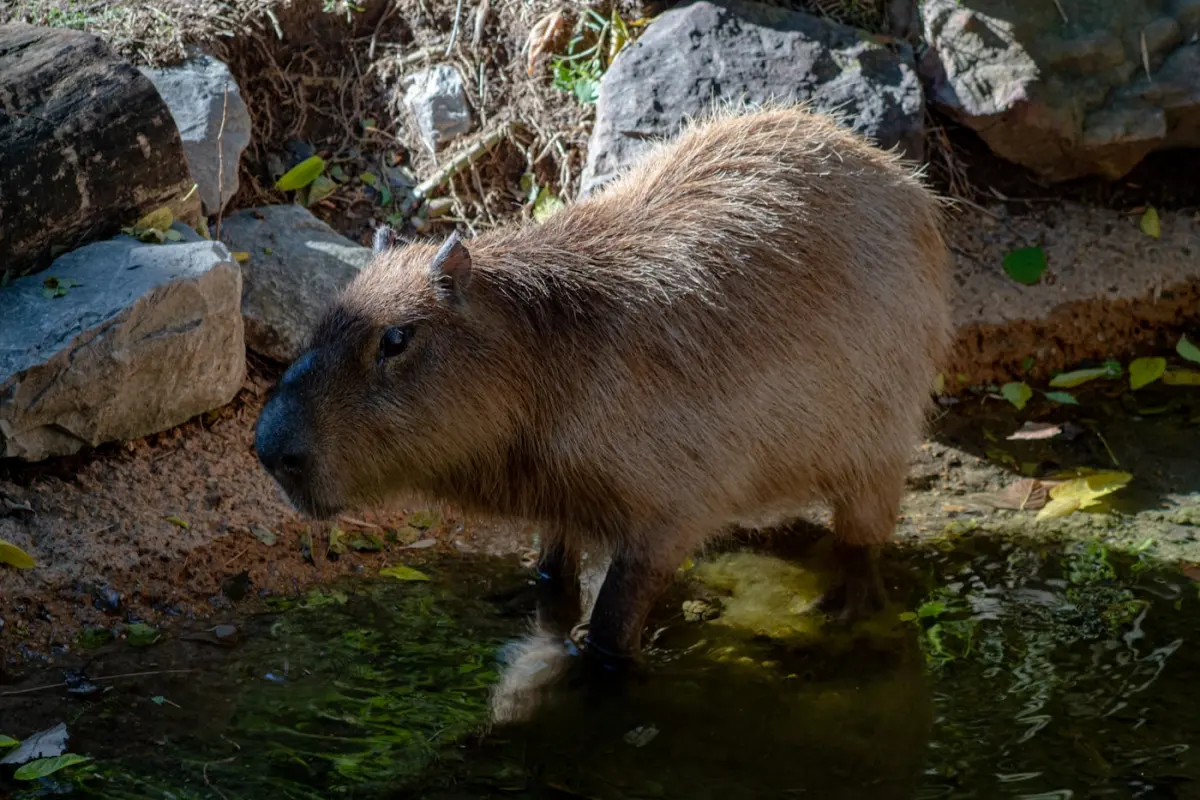
The Florida Bottom Line
If you have land, money, exotic-animal veterinary access within an hour, a hurricane plan that does not start with “we’ll figure it out,” and at least two capybaras planned from day one, you can start a serious conversation with FWC and your county. If any of those pieces is missing, the honest move is to wait or pick a different way to be near capybaras. Florida has good zoo and wildlife park options where the work is already done. See the U.S. zoo viewing guide for the easier path. The overall ownership picture and the full cost reality are also worth reading before doing anything expensive.
FWC updates its captive-wildlife rules, and Florida’s 67 counties and 400-plus municipalities each change their own, so treat this as current to 5 September 2026 and nothing more. Before you act, check with FWC, your county animal services, and city code enforcement. This is a starting point, not legal advice.