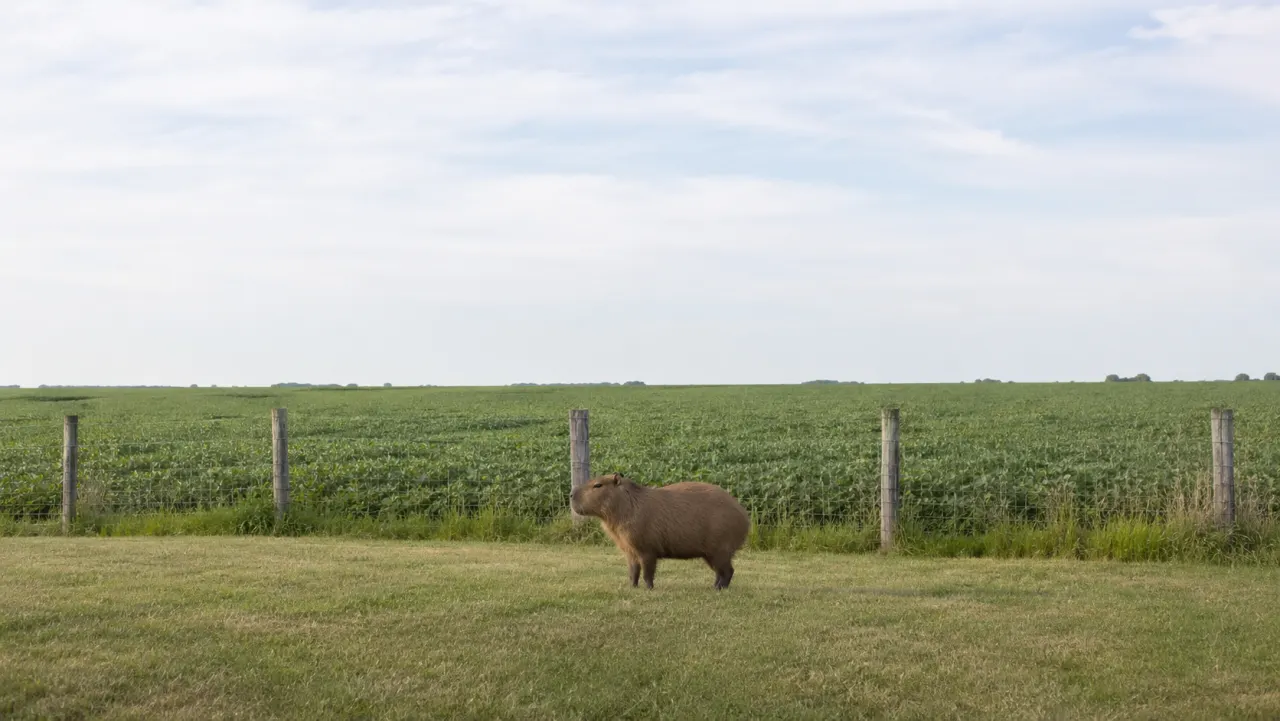

Nevada earned its reputation honestly. There is no statewide dangerous-animal ban here of the sort California or Ohio runs, and the state’s exempt species list is one of the odder documents in American wildlife law. It is also not the list people think it is, and a capybara is not on it.
Allowed, but two permits deep
Nevada requires a license to possess any live wildlife unless the species is exempt under NAC 503.140. Capybaras are not prohibited under NAC 503.110, and they are not exempt either, so the $15 noncommercial possession of live wildlife license applies before you take the animal.
Clark County then requires its own exotic or wild animal permit, per animal, for anywhere in the unincorporated county.
Nevada Calls a Captive-Bred Capybara Wildlife
Start with the definition, because it decides everything downstream. NRS 501.097 says wildlife means “any wild mammal, wild bird, fish, reptile, amphibian, mollusk or crustacean found naturally in a wild state, whether indigenous to Nevada or not and whether raised in captivity or not.”
Read the two clauses at the end again. Not indigenous does not help you. Raised in captivity does not help you. A capybara born in a Missouri barn to a fourth-generation captive line is still, in Nevada’s language, wildlife.
That matters because the department’s rule follows straight from it: a license is required to possess any live wildlife unless a Commission regulation says otherwise, and you have to hold the license before you possess the animal. Not after delivery, not while the paperwork catches up.
The Exempt List Is Where This Gets Strange
The regulation that says otherwise is NAC 503.140, and it is the source of Nevada’s whole reputation. It names the species you can keep without any department license at all.
No state license needed
- Hamsters, gerbils, domesticated rats and mice
- Guinea pigs and domesticated chinchillas
- Monkeys and other primates
- Elephants
- All felines except mountain lions and bobcats
- Zebras, yaks, camels, llamas, alpacas, bison
- African pygmy hedgehogs, European ferrets
Not on the list
- Capybaras
- Everything else not named in NAC 503.140
- Result: license required before possession
- Separate from NAC 503.110, which is the prohibited list
An elephant needs no Nevada possession license. A tiger needs no Nevada possession license. A guinea pig, obviously, needs no Nevada possession license. The capybara, which is a guinea pig’s close relative in the same family and roughly the size of a large dog, needs one. The family resemblance is real and Nevada’s list does not care about it.
None of that is a drafting error, exactly. NAC 503.140 grew by addition over decades as particular trades and hobbies asked to be carved out, and nobody has ever been in the room lobbying on behalf of capybara keepers. The list reflects who showed up.

Worth being clear about the other list too. NAC 503.110 is the prohibited column, and it covers coyotes, mongooses, multimammate rats, piranhas and a handful of others. Capybaras are absent from that one as well, which is the good news and the reason this is a licensing conversation rather than a no.
What Fifteen Dollars Actually Signs You Up For
The fee is the least interesting part. NRS 502.240 puts the noncommercial license for possession of live wildlife at $15 and the commercial version at $500, and at that price the money is not the point. The conditions are.
The department’s own instruction sheet spells out what comes attached:
- The license is not transferable, and it must be in hand before you possess the animal.
- Sourcing is restricted. Wildlife may only be obtained from a licensed breeder or dealer in that wildlife, from collections lawfully made in another state or country, or from the department. A Craigslist rehome is not automatically any of those.
- Importation may need its own step. If the animal has to come into Nevada, the department may require a Wildlife Importation Investigation completed and submitted first.
- Inspection access is a condition of the license. A licensee shall allow, at reasonable times, any person authorized to enforce wildlife regulations free and unrestricted access to inspect the wildlife and the holding facilities.
- No selling, bartering or trading under a noncommercial license, and no public display.
- Records are mandatory, on a form the department supplies when the license is issued.
- Disease exposure must be reported immediately, to both the Department of Wildlife and the Department of Agriculture.
Both licenses expire on June 30 every year, whenever they were issued. Miss the renewal and the department's language is unambiguous: live wildlife possessed under the expired license "shall be deemed to be possessed unlawfully and may be seized."
Fifteen dollars a year, one calendar reminder, and the animal is the collateral. Processing takes up to thirty days, so June 29 is not the day to start.

Clark County Runs a Second Permit
Roughly three quarters of Nevadans live in Clark County, and the county does not defer to the state’s answer.
Clark County Animal Protection Services requires that no exotic or wild animal be transported, exhibited in public or private, or kept anywhere in the unincorporated areas of the county unless the owner has first obtained an exotic or wild animal permit, and the permit is issued for each animal rather than for the household.
The application itself tells you how seriously the county takes this. It asks for a Clark County approved zoning use permit, an activity permit, a named veterinarian with a phone number, an emergency contact, the purpose of keeping the animals, and a per-animal table covering species, age, health and aggression history. It is filed in person on West Russell Road, with payment to the county treasurer.
Picture assembling that file. You are not filling in a pet form. You are producing an approved zoning use permit for the parcel, which means the enclosure and the pool have already been described to the county and approved as a use of the land. You are naming a veterinarian who has agreed, in advance, to be the vet of record for a species most Las Vegas practices have never handled. You are writing an aggression history for an animal you do not own yet, on a line the form gives you about an inch for. Then you drive it to West Russell Road, in person, with a check. None of that is unreasonable for a county that has spent decades dealing with the exotic-animal end of the entertainment industry. It is just several months of work standing between a $15 state license and an animal, and it is the part nobody budgets time for.
Two animals means two permits, and the zoning use permit sitting upstream of it is the part that takes months rather than days. The city of Las Vegas, Henderson, North Las Vegas and Boulder City are separate incorporated jurisdictions with their own codes, so a county answer is not a city answer.
Washoe County, around Reno, runs its own animal provisions. The rural counties, Nye and Lincoln and Elko and Esmeralda, mostly have less local coverage, but “no local ordinance” is a gap in the local layer, not a replacement for the state license. NDOW still wants its form wherever you live.
The Half of This No Permit Covers
Southern Nevada is a hard place to keep a wetland animal, and neither the state nor the county will tell you so.
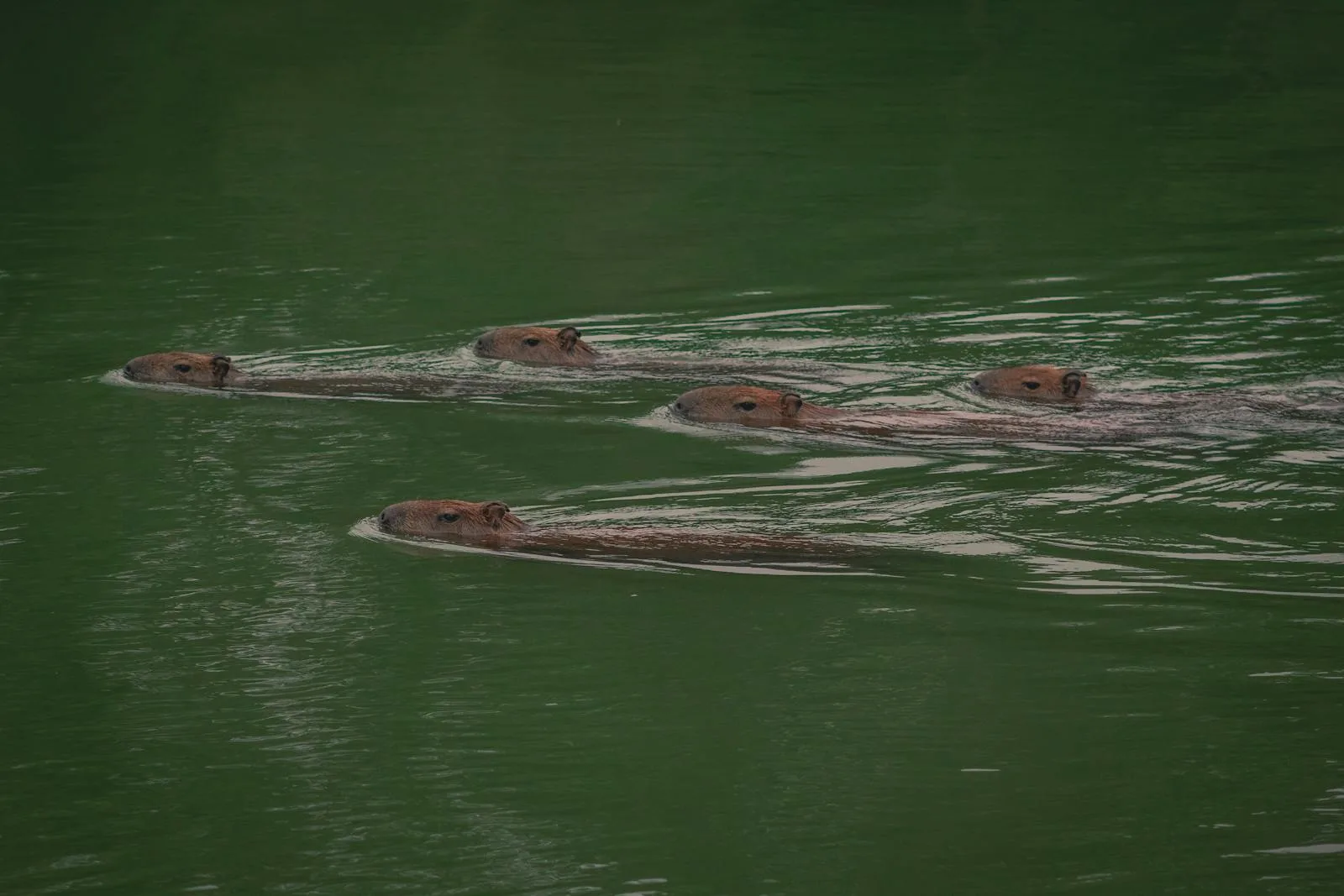
Animal Diversity Web notes that capybaras are susceptible to heat stress because of their size and spend the hottest part of the day in water. San Diego Zoo describes them wallowing in shallow water and mud to stay cool. Neither of those behaviours is optional, and neither survives a plastic pool sitting in full Las Vegas sun in July, which will be warmer than the animal by midday and half empty by Thursday.
What a workable southern Nevada setup looks like is shade structure, real water volume, filtration, and a refill system that keeps pace with evaporation, maintained for two animals because one is a welfare failure. Northern Nevada trades the cooling problem for a heating one; Elko winters need heated shelter and a pool that does not freeze. There is no Nevada latitude where this is cheap, and the cost guide is where that becomes a number.
Fifteen Dollars to the State, and the Part That Is Not Cheap
Nevada’s state-level price is almost comically low next to the animal it covers.
Fifteen dollars buys the state’s position and nothing else. It does not buy Clark County’s, it does not buy your city’s, and it does not answer whether the address is zoned for the enclosure the animal actually needs.
Most of Nevada's population lives in one county, and that county writes its own exotic animal permit with its own application, its own conditions and its own view of your parcel. Treat the NDOW licence as the easy half.
The non-government costs — the animal, the enclosure, shade and water in a desert climate, the exotic veterinary reserve — sit in the capybara cost guide, which does not quote a purchase price because the private exotic market does not publish an honest one.
Nevada Half-Truths Worth Dropping
| What gets repeated | What the rules actually say |
|---|---|
| ”Nevada has no exotic pet permit” | Nevada requires a license to possess any live wildlife unless the species is exempt under NAC 503.140. Capybaras are not exempt. |
| ”Capybaras are not banned, so nothing applies” | Correct on the ban and wrong on the conclusion. Not prohibited and not exempt lands you in the licensing category, not outside the scheme. |
| ”Captive-bred animals are not wildlife” | NRS 501.097 says wildlife counts whether indigenous or not and whether raised in captivity or not. The definition was written to close exactly that gap. |
| ”The state is permissive and the county is the only obstacle” | Both apply. The state license is $15 and the county permit is per animal, and the county wants an approved zoning use permit first. |
| ”I can buy from anyone and sort the license out after” | The license must be held before possession, and wildlife may only be sourced from a licensed breeder or dealer, a lawful out-of-state collection, or the department. |
| ”Nevada exempts big animals, so a capybara is fine” | Nevada exempts elephants, primates and most cats by name. Naming is the mechanism. Absence from the list is not a smaller version of being on it. |
The Calls, in the Order They Matter
| Who to contact | What to ask | Why it matters | What changes the answer |
|---|---|---|---|
| Nevada Department of Wildlife | Whether Hydrochoerus hydrochaeris requires the noncommercial possession of live wildlife license, and whether a Wildlife Importation Investigation is needed | The license must exist before the animal does, and processing runs up to 30 days | Commercial intent, breeding, exhibition, importing vs buying in state |
| County animal control | Whether an exotic or wild animal permit is required at your address, and what precedes it | Clark County issues per animal and wants an approved zoning use permit first | Incorporated city vs unincorporated county, parcel zoning, number of animals |
| County or city planning | Whether the enclosure, pool and shade structure need a use permit or building approval | The zoning step is the long pole, measured in months | Lot size, setbacks, drainage, covenants |
| The seller | Whether they are a licensed breeder or dealer in that species, and what documentation travels with the animal | Nevada restricts where licensed wildlife may lawfully come from | Private rehome, out-of-state collection, broker sale |
| Two exotic veterinarians | Whether they treat capybaras, and what happens at 2am in August | The department also requires immediate disease-exposure reporting, which assumes a vet relationship | Distance, species experience, emergency coverage |
| USDA APHIS, if commercial | Whether paid encounters or exhibition trigger Animal Welfare Act licensing | Federal licensing sits above every state answer here | Public access, paid photos, breeding, sale |
Nevada is still one of the more workable states in this series, and the honest reason is that both gates are open rather than that no gates exist. A $15 annual license and a county permit is a mild ask next to Oregon’s flat no or New Mexico’s default-prohibited posture.
What kills Nevada plans is treating the reputation as the rule. Somebody reads that Nevada is the loosest exotic state in the country, buys the animal, and finds out about NAC 503.140 when a neighbour calls the county. The list is public, the form is fifteen dollars, and both of those are much cheaper than the conversation that follows.
Then read the care requirements, the state-by-state map, and the Arizona rules, where the same desert produces the opposite licensing answer. If the point was really just to see one, the US viewing guide covers where to do that instead.
This guide is current as of September 5, 2026. NAC lists, fees and county ordinances change independently. Treat this as a screening path rather than legal advice, and confirm with the Nevada Department of Wildlife and your county before acting.