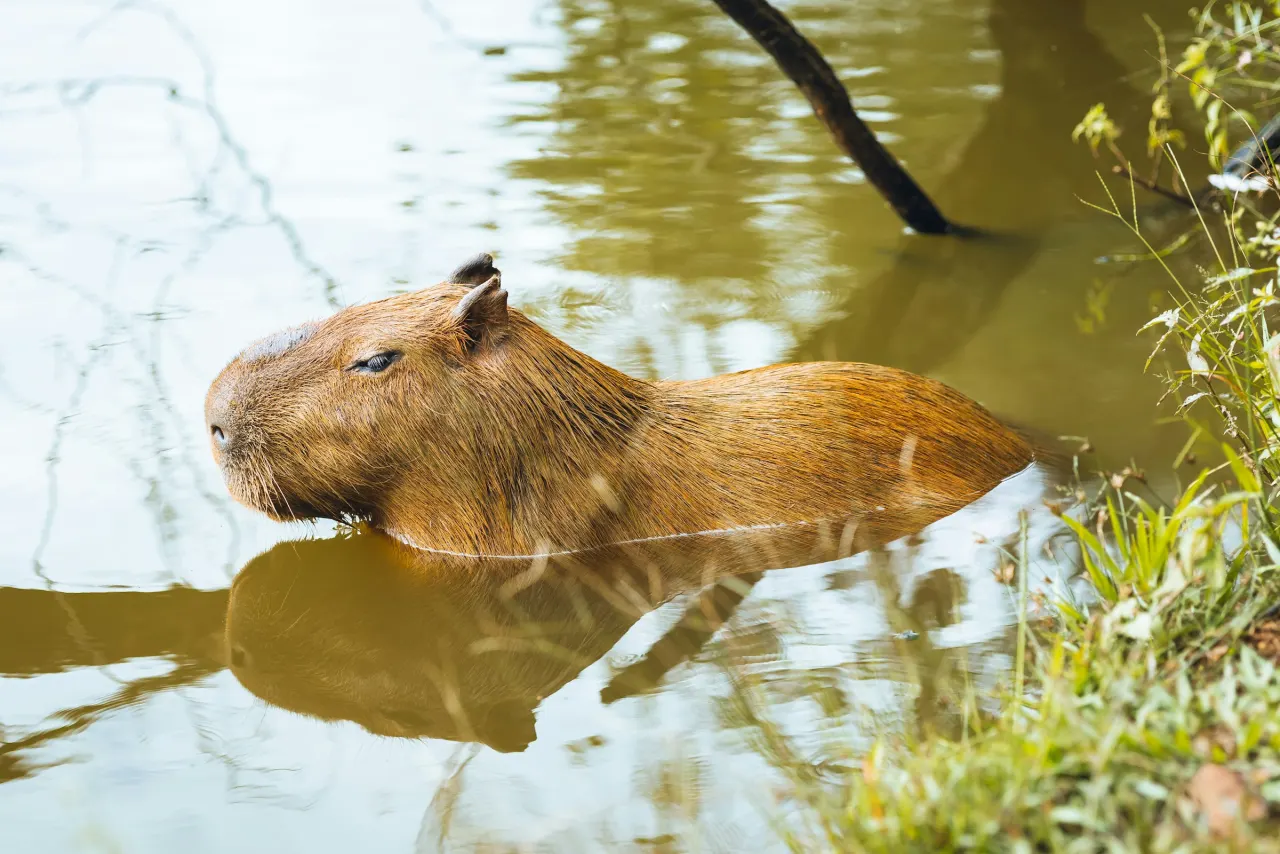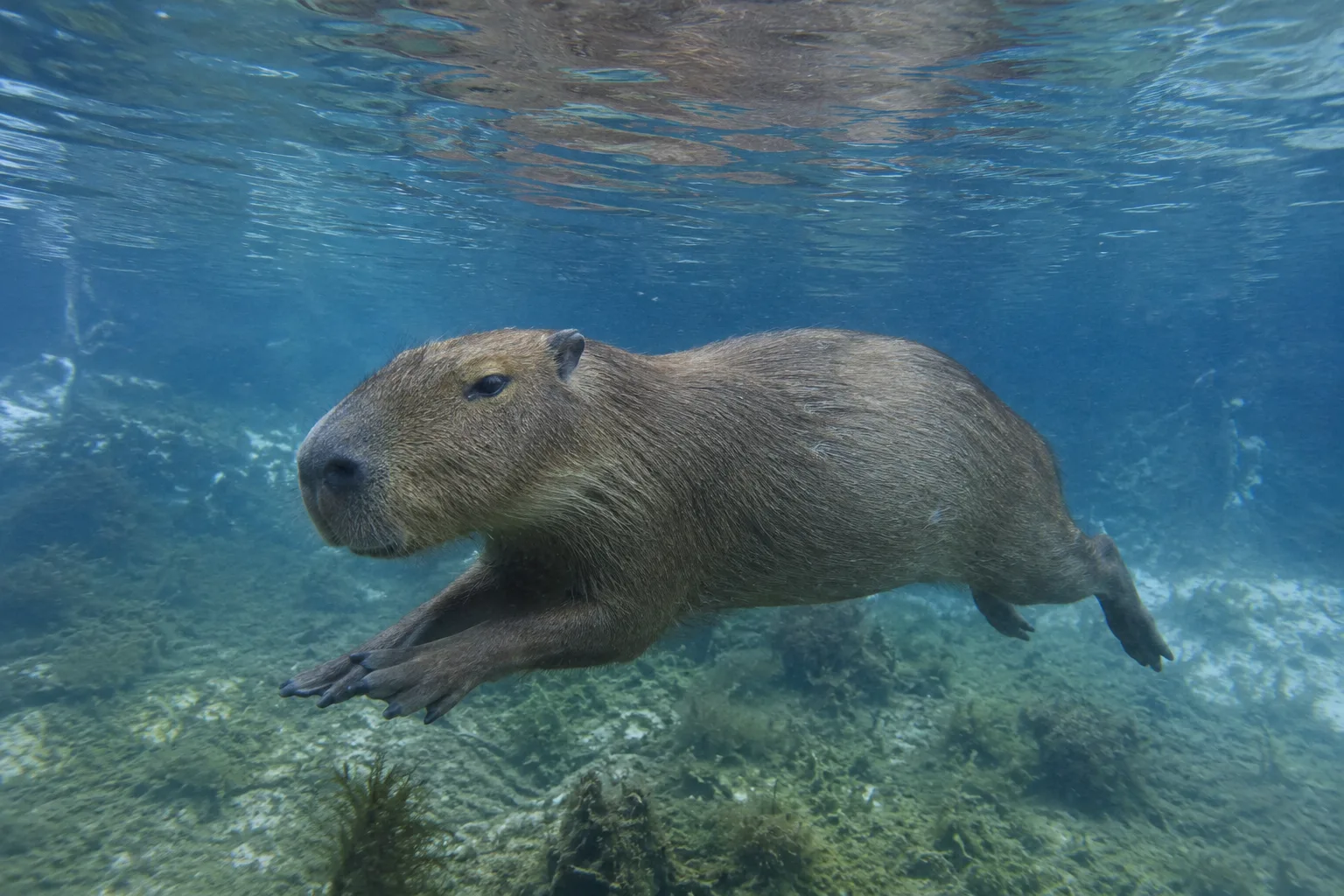

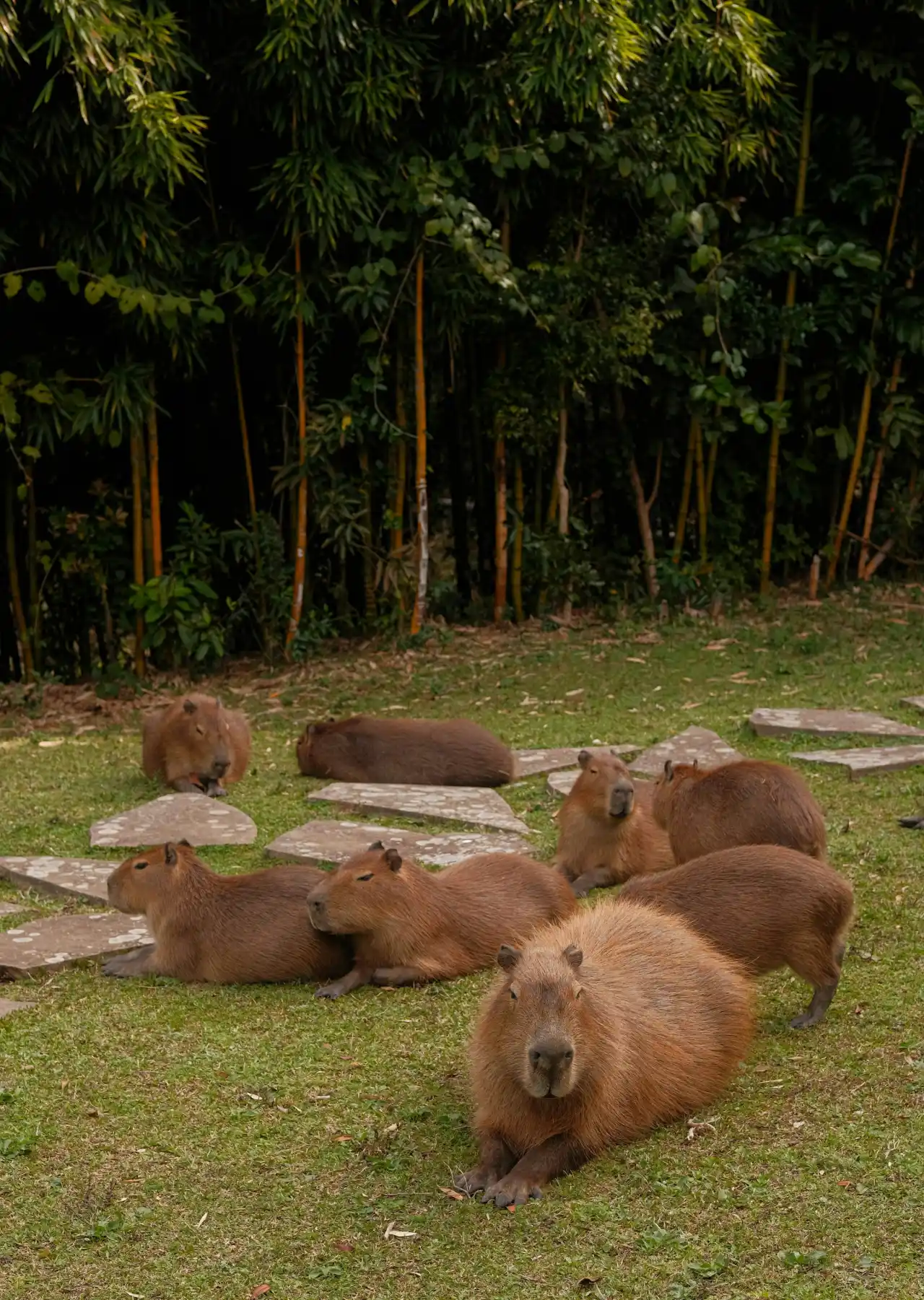
“Too many capybaras” is a phrase that sounds fake until someone has 40 of them on the lawn, three angry gardeners, a road crossing, and a local government meeting with no snacks.
Capybara overpopulation is rarely just an animal problem. It is usually a land-use receipt: humans changed the habitat, then acted wounded when wildlife used the new version.
Too Many According To Whom
The first question is not “how many capybaras are too many?” It is “too many for what?” Too many for a wetland? Too many for a gated lawn? Too many for traffic? Too many for disease management? Too many for a neighbor who does not like droppings near the hedge?
Those are different questions. Some are ecological. Some are social. Some are political with fur attached.
| Complaint | What it may really mean |
|---|---|
| Too many on lawns | Easy food and access to water |
| Too many near roads | Movement corridors cut by streets |
| Too many near dogs | Human recreation overlapping wildlife |
| Too many ticks or disease worries | Public-health management concern |
Lawns And Wetlands Change The Math
Nordelta, the Argentine luxury development that keeps appearing in capybara coverage, is the cleanest example for internet readers. TIME linked the conflict to development in wetland habitat. The Guardian and El Pais have covered later debates over population control, including sterilization proposals.
The pattern is not mysterious. Capybaras need water and graze on plants. Put manicured grass beside canals in a former wetland landscape, reduce some natural pressures, and you may have built a buffet with property values.
Traffic, Dogs, Gardens, And Disease Worries
The “too many” label usually arrives when friction becomes visible. Capybaras cross roads. Dogs chase them. Residents complain about gardens. Officials worry about ticks or disease. People feed them, which pulls animals closer and makes the next problem more likely.
The open-access “Capybaras in the City” paper is useful because it treats urban capybaras as a coexistence problem, not a meme. Public attitudes matter. So do practical risks.
Cute animals do not get exempt from management. They just make everyone argue louder.
Sterilization, Relocation, And Corridors
Management choices can include public education, fencing, habitat restoration, movement corridors, traffic measures, no-feeding rules, fertility control, or relocation. Each has tradeoffs. Relocation can stress animals and move the problem. Sterilization requires expertise, cost, and follow-up. Fences can protect one lawn while shifting animals elsewhere.
There is no clean fan answer from 5,000 miles away. Anyone pretending there is may be writing with more confidence than information.
Why The Biology Makes Concentration Likely
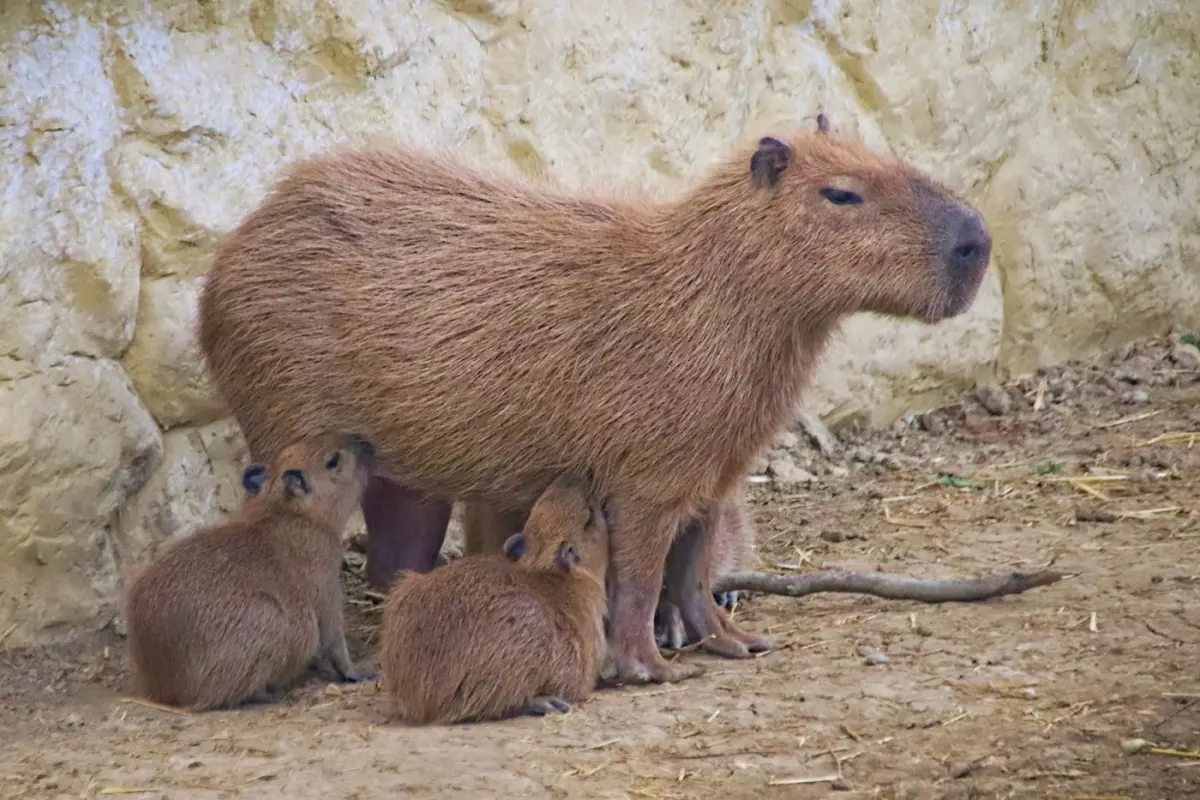
It helps to know what kind of animal you are crowding. Capybaras are the world’s largest rodent, with adults running roughly 35 to 66 kg. They are semi-aquatic grazers, native to South America, that live on grasses and aquatic plants and rarely stray far from water. Animal Diversity Web describes them as highly social herd animals, which matters here: where one settles comfortably, more tend to follow.
So the ingredients for a local pile-up are not exotic. A capybara wants water it can slip into, soft grass it can eat without much effort, and other capybaras to sit next to. A landscaped canal community supplies all three at once. The animal is not breaking any rule of its own nature. It is doing exactly what a semi-aquatic herd grazer is built to do, in a place that happens to be priced like a golf membership.
Their feeding biology also quietly rewards good grass. Capybaras are hindgut fermenters that re-ingest soft morning feces to pull more nutrition out of plant matter, and, like guinea pigs, they cannot make their own vitamin C, so a steady supply of fresh greens is genuinely valuable to them. A fertilized lawn that stays green year-round is, from the rodent’s point of view, an upgrade over a seasonal wetland. None of this is the capybara’s idea. It is just the math of putting reliable food beside reliable water.
Sorting The Myths From The Management Problem
A lot of the heat in these debates comes from claims that sound confident and turn out to be shaky. A few worth correcting plainly.
| Myth | Better answer |
|---|---|
| The herd “exploded” out of nowhere | Numbers usually build slowly as habitat and food improve; people notice only once conflict is visible |
| They are invasive pests | They are native South American wildlife living in remade native habitat, not a foreign introduction |
| Removing them solves it | Relocation can stress animals and reopen the same empty niche for the next group |
| Feeding them is harmless kindness | Feeding pulls animals closer to roads and people and tends to make the next conflict worse |
| One tidy policy will fix it | Realistic management stacks several modest measures and accepts tradeoffs |
My honest opinion, after reading the coverage: most “too many capybaras” stories are really stories about people wanting wildlife benefits and wildlife costs to land on someone else’s lawn. The animal is the visible part. The land-use decision is the cause, and it is usually the part nobody wants on the meeting agenda.
What A Sensible Neighbor Actually Does
If you live near a herd rather than reading about one, the useful moves are unglamorous. Stop feeding them, including the indirect feeding of leaving fallen fruit and open compost. Slow down on roads near water at dawn and dusk, when capybaras move most. Keep dogs leashed near canals, both for the dogs and the capybaras. Push local officials toward habitat corridors and traffic measures rather than dramatic removals, because the corridor outlasts the removal. Treat any tick or disease worry as a question for local public-health authorities, not for a comment section.
| Move | Why it helps |
|---|---|
| No feeding, direct or accidental | Keeps animals from clustering near people and roads |
| Slow driving near water at dawn and dusk | Cuts the most common collision risk |
| Leashed dogs near canals | Reduces stressful, sometimes injurious encounters |
| Backing corridors over removals | Addresses the cause instead of moving the symptom |
Cute Animals Still Need Management
The best capybara overpopulation conversation starts by admitting two things at once: capybaras are wonderful, and unmanaged conflict can be real.
The fix is not to hate the animal. The fix is to look at water, grass, movement, feeding, roads, dogs, public health, and the human decisions that created the pressure. The capybara did not write the zoning code. It just ate what the zoning code grew.