Utah gives capybara people a more nuanced answer than Oregon and a less comfortable answer than the internet wants.
Capybaras are listed as controlled mammals under Utah’s current bird and mammal rule. That means you need a certificate of registration before collecting, importing, transporting, possessing, or propagating them. It is not a casual pet yes.
In other words: maybe is not enough. In Utah, the useful word is “authorized.”
More nuanced than Oregon, less comfortable than the internet wants
Utah sits between the states that name the animal outright and the states that never mention it. That middle position is where most of the bad advice about Utah comes from.
Utah Lists Capybaras As Controlled
Utah DWR’s R657-3b rule incorporates a bird and mammal classification table. In that table, “Capybaras” are listed under controlled mammals, with Hydrochoerus hydrochaeris and Hydrochoerus isthmus named.
That is clearer than states that never mention the animal. It also means the answer is not “unregulated.” Controlled species sit in the middle: not automatically banned like prohibited species, but not free to possess like noncontrolled species.
| Utah classification | What it means for a capybara |
|---|---|
| Noncontrolled | No certificate needed under this rule |
| Controlled | Certificate of registration required before action |
| Prohibited | Personal possession will not be authorized in listed cases |
| Capybaras | Listed as controlled mammals |
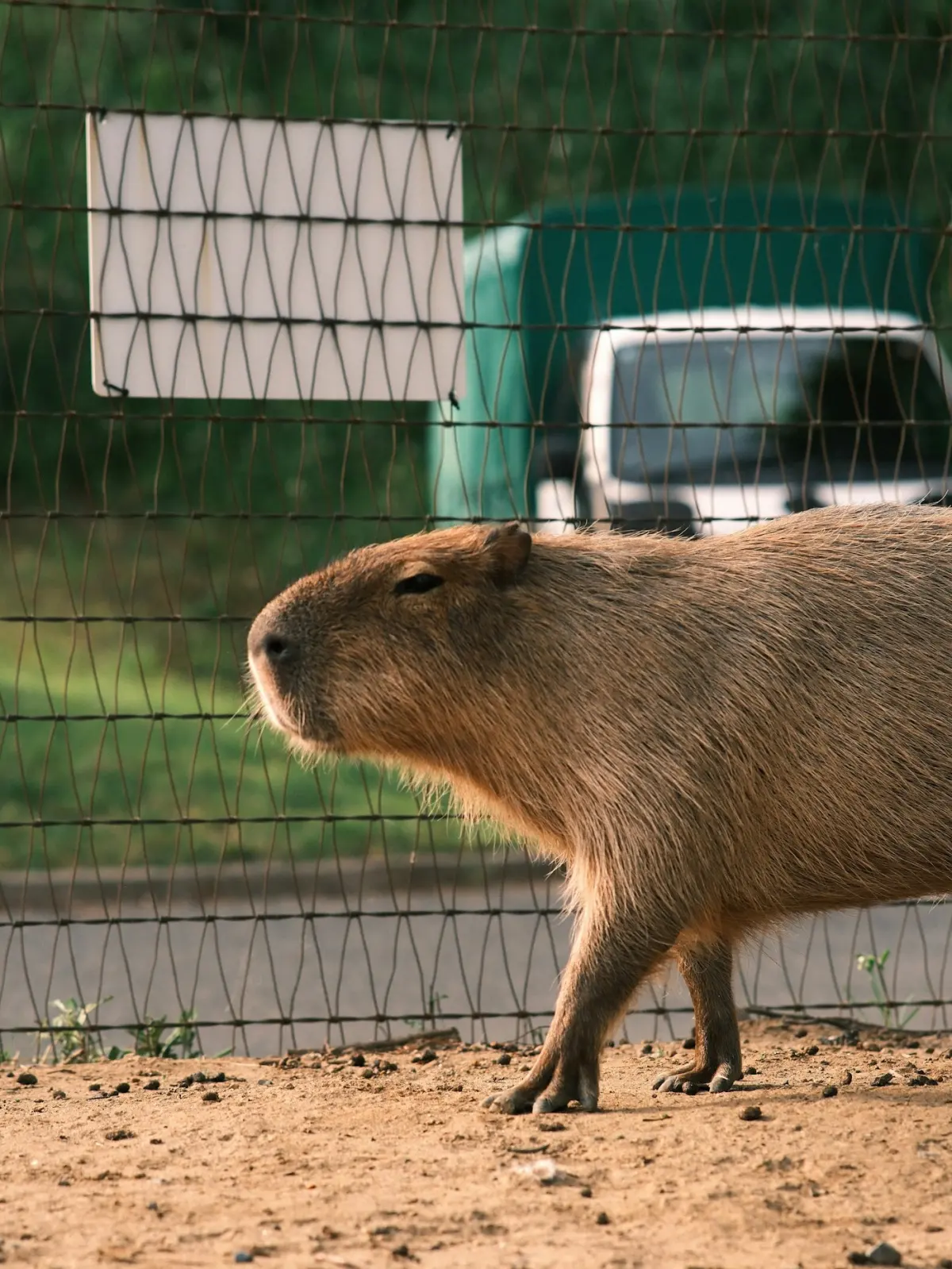
Controlled Means Certificate Before Action
Utah’s rule says a person must obtain a certificate of registration before collecting, importing, transporting, possessing, or propagating bird and mammal species classified as prohibited or controlled, except where otherwise provided. For possession, it also says animals held under a certificate must be maintained under humane and healthy conditions, and that the division may impose requirements for veterinary care, cage or pen sizes, feeding, social grouping, and other care needs.
That last part matters. Utah is not just asking whether the animal exists in your yard. It can ask whether the animal can be safely and humanely kept.
If importing from outside Utah, the Utah Department of Agriculture and Food layer may also matter. Utah Admin. Code R58-1-13 says animals requiring a DWR certificate for possession must be accompanied by a certificate of veterinary inspection and receive an import permit from the department.
What People Get Wrong About Utah
Most of the confusion here is not about the law. It is about the assumptions people bring to it. Capybaras photograph as serene, vaguely exotic, vaguely legal-feeling, and the internet fills the gaps with optimism. The actual rule is narrower and more procedural than the vibe suggests.
| Myth | Better answer |
|---|---|
| Controlled means basically legal | Controlled means authorized only after a certificate, not before |
| If a breeder ships to Utah, Utah allows it | A seller’s shipping policy is not Utah’s classification or your permit |
| One permit covers pet, breeding, and display | Different uses can trigger different state and federal requirements |
| A desert climate is fine for a hardy rodent | Capybaras are semi-aquatic and need water, shade, and heat management |
| Exotic pet ownership is mostly a state question | Local code, zoning, and HOA rules can override the whole plan |
Here is the honest opinion, since the brief asks for one: for the vast majority of people typing “are capybaras legal in Utah,” the answer that actually serves them is no, not as a household pet, even though the rule technically leaves a door open. The controlled pathway exists for facilities and operations that can meet husbandry and inspection standards, not for someone who wants a large, social, water-dependent rodent in a backyard. The paperwork is the easy part. The animal is the hard part.
Local Utah Rules Can Still Stop The Plan
State authorization does not erase local law. Salt Lake City, Provo, Ogden, St. George, county governments, zoning boards, and HOAs can restrict exotic animals, outdoor enclosures, water features, nuisance conditions, and land use.
This is especially important in Utah because capybara welfare collides with the landscape people imagine. A capybara is not a desert pet. It needs water, shade, forage, social housing, and heat management. A drought-conscious neighborhood may not love a permanent capybara water feature, no matter how spiritually calm the animal looks.
| Local question | Why it matters |
|---|---|
| Does city or county code allow exotic mammals? | Local rules can be stricter |
| Can the property host a water feature and drainage? | Capybara care requires water infrastructure |
| Are outdoor enclosures allowed? | Zoning and HOA rules may restrict them |
| Is the vet plan local and real? | Emergency care cannot be improvised from a search tab |
The Utah Verification Checklist
Current as of June 2026: this is an editorial starting point, not legal advice. Recheck Utah DWR, Utah agriculture import rules, and local code in writing before acting near the scheduled November 2026 publish date.
Before possession, import, transport, breeding, sale, or public display, collect written answers.
| Who to contact | What to ask |
|---|---|
| Utah DWR Certificates of Registration | What certificate is required for Hydrochoerus hydrochaeris and this exact intended use? |
| Utah Department of Agriculture and Food | What CVI, import permit, disease, or movement rules apply? |
| Local animal control | Does local code allow a controlled exotic mammal at this address? |
| Zoning office | Are fencing, shelter, pool or pond, drainage, and outdoor animal housing allowed? |
| USDA APHIS | Does public exhibition, paid encounters, breeding, sale, or transport require licensing? |
| Exotic veterinarian | Will you treat capybaras and provide emergency coverage? |
Ask before contacting sellers. A seller’s confidence is not a Utah certificate of registration.
Build The Paper Trail, Not Just A Phone Call
A verbal “should be fine” from anyone does not survive an inspection or a neighbor complaint. Get answers in writing, dated, tied to your exact address, source, animal count, and intended use. The reason matters as much as the rule, because the reason tells you what would flip the answer later.
| Agency / document | What to ask | Why it matters | What changes the answer |
|---|---|---|---|
| Utah DWR certificate of registration | Which certificate applies to Hydrochoerus hydrochaeris and my use? | It is the first state gate for controlled mammals | Classification updates, or a different intended use |
| Certificate of veterinary inspection | What CVI do I need to bring the animal into Utah? | Import without it can be a movement violation | Source state, animal health status, or carrier rules |
| Utah agriculture import permit | Is an import permit issued for this animal and route? | It runs parallel to the DWR layer, not instead of it | Origin, disease findings, or updated import rules |
| Local code and zoning letter | Does this address allow a controlled exotic mammal and its enclosure? | Local law can say no after the state says maybe | A move, a rezoning, or an HOA rule change |
| USDA APHIS license | Does exhibition, breeding, sale, or paid contact require a license? | Federal rules sit on top of state ones for these uses | Switching from private keeping to any public use |
A capybara plan that lives only in your call history is a plan that has not happened yet.
The Care Bill Behind The Permit
Even with every signature in hand, the recurring reality is the part that ends most plans. A capybara is the world’s largest rodent, with adults running roughly 35 to 66 kg, and it does not scale down to fit a spare room. The species is semi-aquatic, so a real enclosure means water deep enough to submerge in, plus drainage and a way to keep it clean, which is a meaningful problem in a dry, water-conscious state. They are herd animals, and solitary housing is a welfare stressor, so the honest version is at least two, not one. Like guinea pigs, capybaras cannot make their own vitamin C and need it supplied through diet, so the feeding plan is not just “grass.” Their teeth grow continuously, they graze for most of the day, and they live well past a decade in good care. On top of all that, an exotic vet who will actually treat a capybara, on a normal day and in an emergency, is not a given everywhere in Utah. Sort that out before, not after.
The practical takeaway: treat this as a permit question and a husbandry question at the same time, and let either one be a clean no. If you cannot get the certificate in writing, stop. If you can get the certificate but cannot honestly build the water, the company, the diet, and the vet coverage, also stop. Both gates have to open.
Desert State Does Not Mean Dry Animal
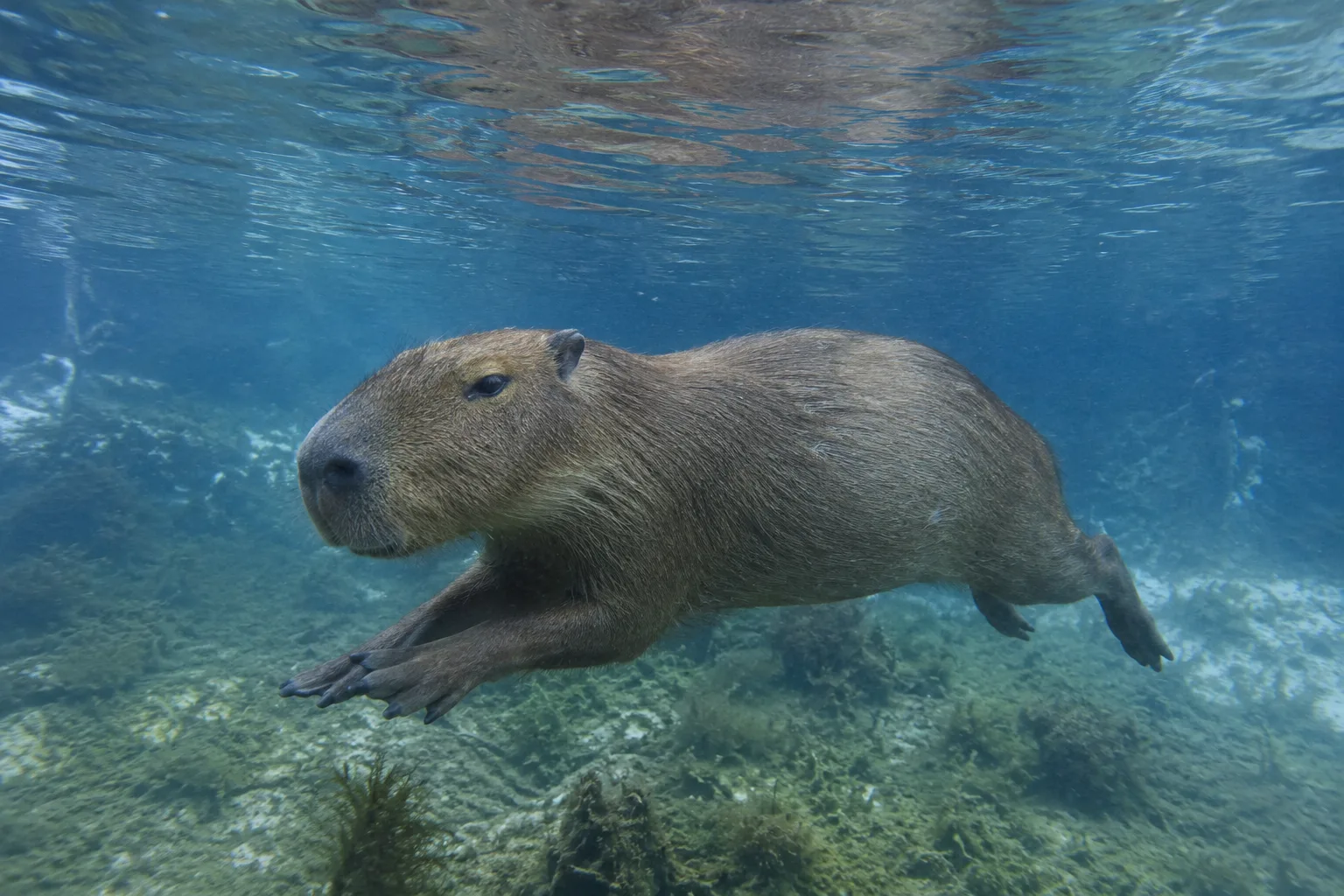
Capybaras are semi-aquatic grazers. Animal Diversity Web describes them as water-linked group animals. The AZA manual treats water access, social housing, diet, containment, and veterinary management as husbandry basics. Utah’s climate makes the water and heat questions sharper, not softer.
For most Utah capybara fans, the better plan is to visit a facility that already has authorization and habitat. Start with where to see capybaras in the US, then read do capybaras make good pets and the legal states map for context.
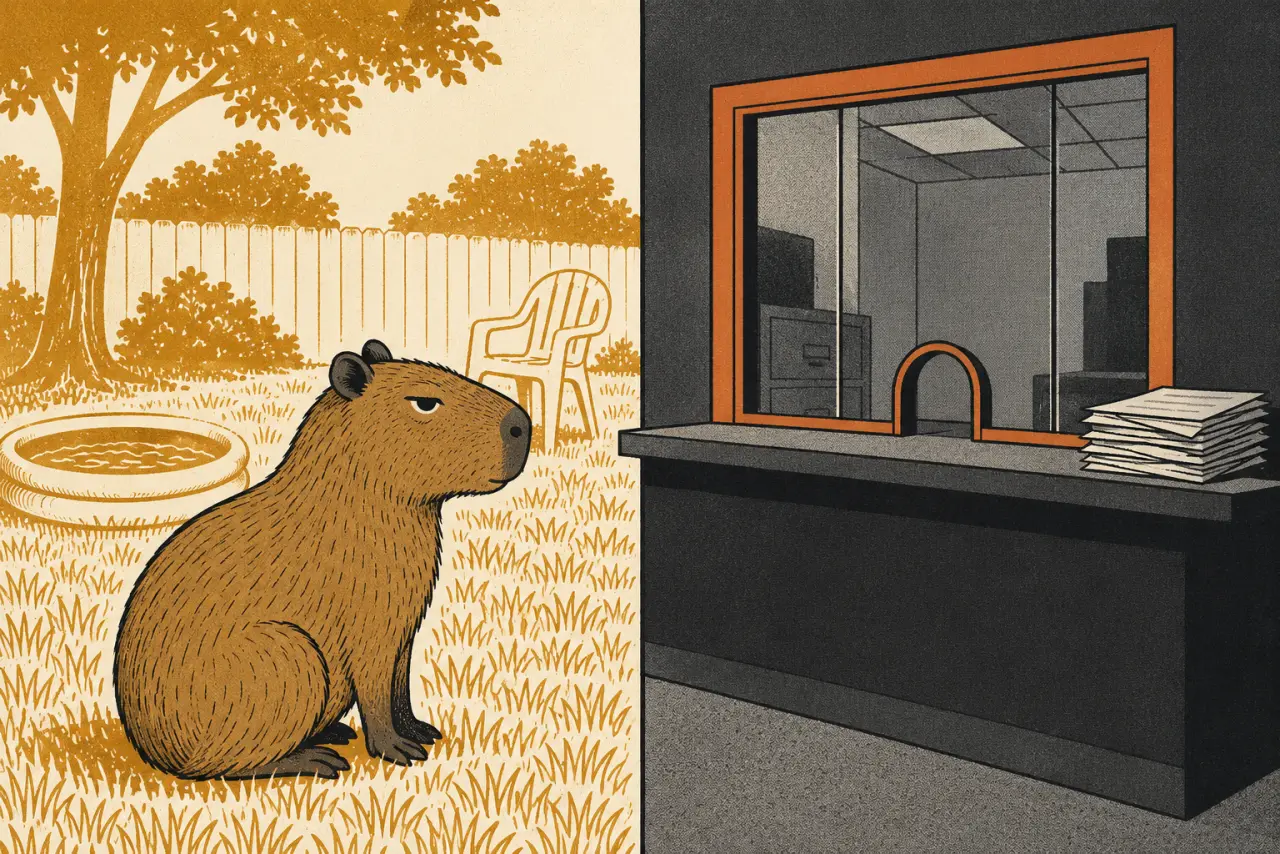
Utah’s answer is not “never” in the same way Oregon’s is. It is also not “sure.” Controlled means the capybara dream has to pass through the front office before it gets anywhere near a yard.
One last thing, said plainly. This is general information, not legal advice, and it reflects what is on the books as of June 2026. Rules and classification tables change, and they change without telling you. Before you act, confirm the current requirements directly with the Utah Division of Wildlife Resources, the Utah Department of Agriculture and Food, and your city or county animal control and zoning office, and run anything ambiguous past a qualified attorney who knows Utah exotic-animal law. The cost of asking first is a few emails. The cost of guessing wrong is the animal.