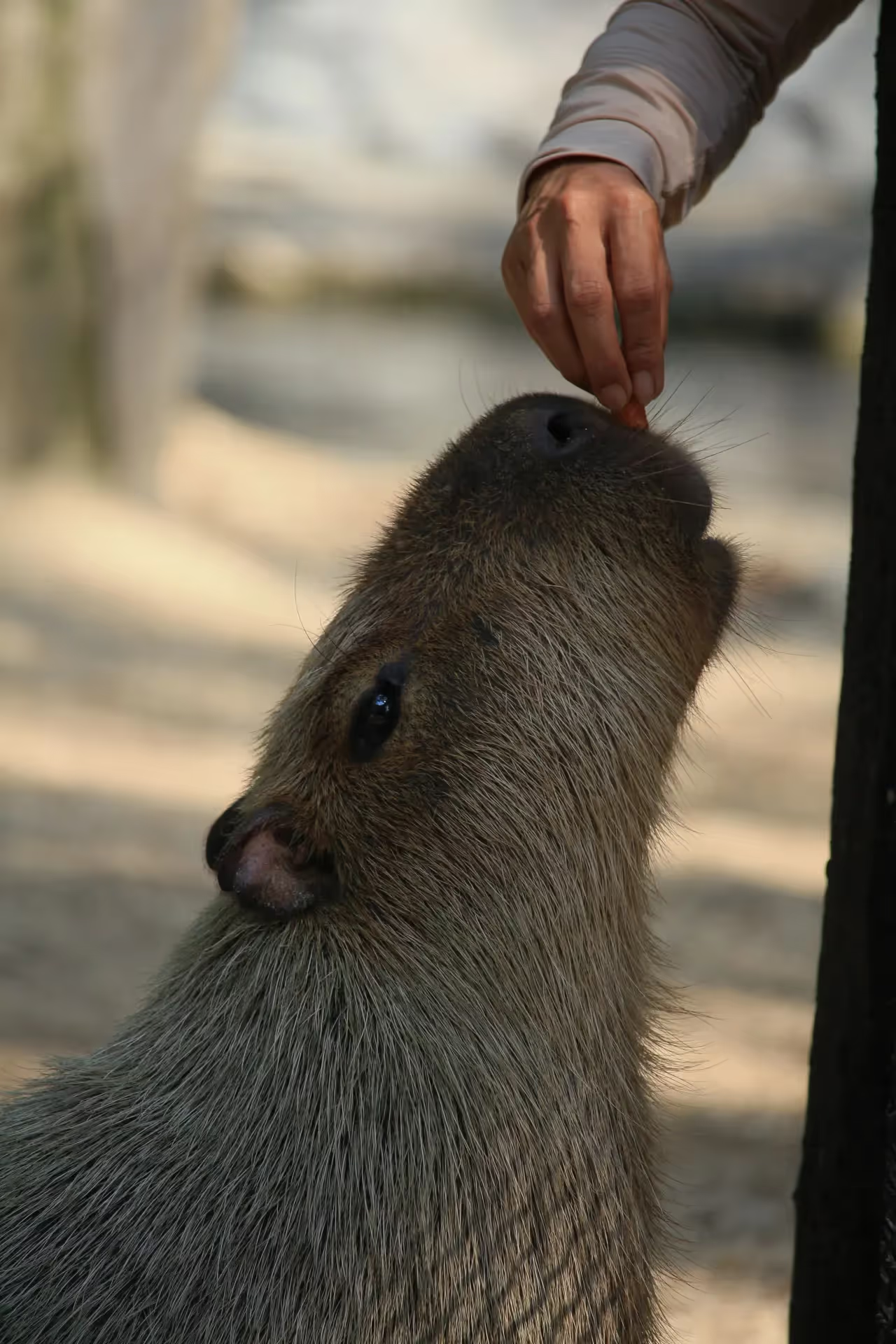
Somewhere in late November, a zookeeper is arranging vegetables on a tray with more care than most people give their own holiday table, and the guest of honor is a large, calm rodent that will not be making a toast.
Animal Thanksgiving feasts are a real and well-documented zoo tradition. Keepers build species-appropriate spreads, stage them for visitors, and use the holiday as cover for what is really enrichment plus a winter-prep checkup. For a capybara, the plate is almost aggressively wholesome.
Here’s the honest summary: the capybara Thanksgiving plate is healthier than yours, and nobody at the capybara table is arguing about politics.
Yes, Zoos Really Do This
This isn’t a cute marketing invention. It’s a recurring November event at zoos across the country.
Point Defiance Zoo & Aquarium and its sister park Northwest Trek Wildlife Park both run a “Thanksgiving Feast for the Animals,” where keepers prepare themed meals and visitors watch the animals dig in. Utah’s Hogle Zoo runs “Feast with the Beast,” opening limited hours on Thanksgiving Day so guests can see animals “stomp, roll, and chomp” their holiday enrichment before staff head home to their own families.
To be clear, these are all-species events — the trays go to big cats, bears, primates, and whoever else is on exhibit, not a capybara-specific spread. The clearest documented capybara example comes from the Columbus Zoo, whose keepers have talked about what their capybaras actually eat around the holidays. The rest of this piece builds the capybara plate from their diet and general zoo husbandry.
The format repeats because it works on every front: animals get enrichment, visitors get a reason to come in November, and keepers get a teaching moment about what these animals actually eat.

What’s Actually On A Capybara Feast Plate
Strip away the holiday staging and a capybara feast is just their normal diet, dressed up and served generously.
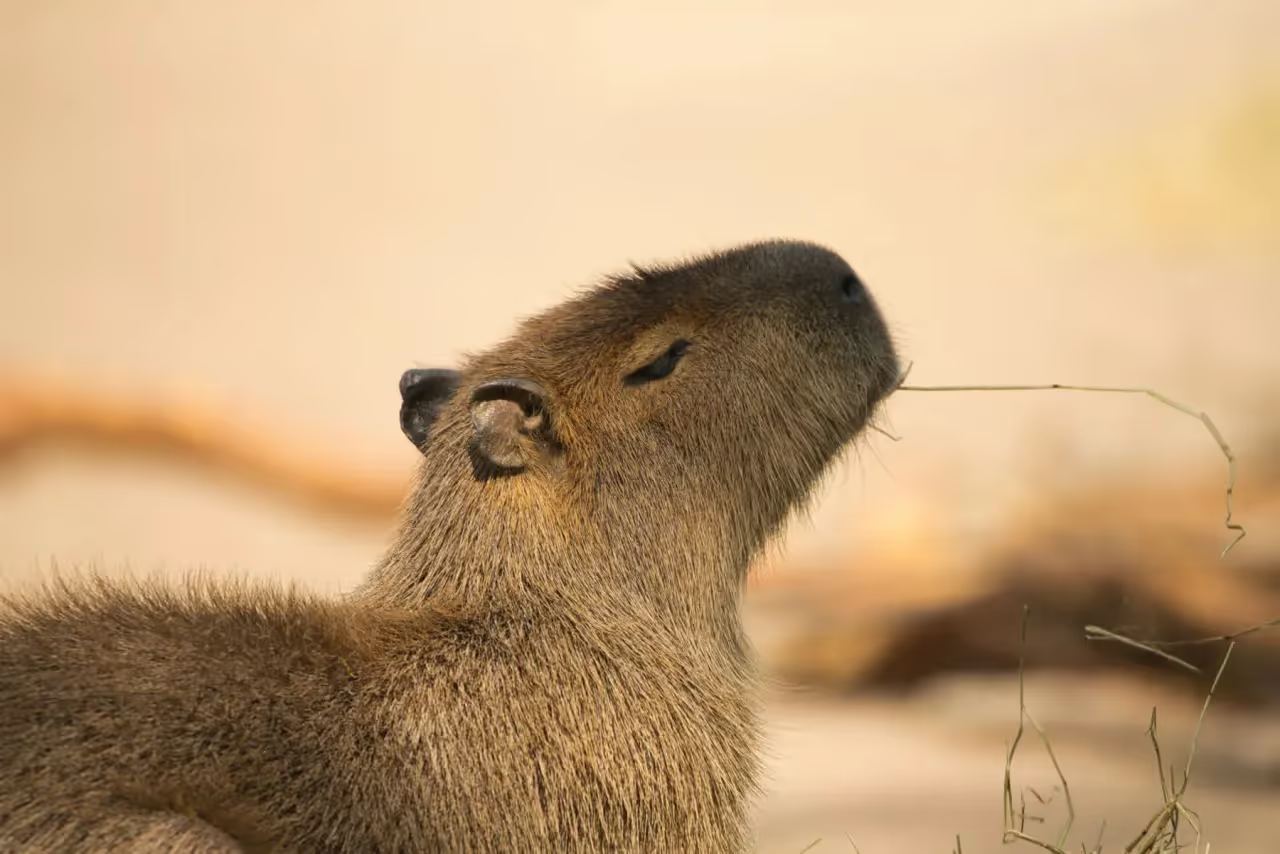
The base is grass and hay, always. An adult capybara eats roughly 6 to 8 pounds of grass a day, and at the San Diego Zoo the standard menu is low-starch, high-fiber biscuits, assorted greens, and Bermuda grass hay. The “feast” part is what gets piled on top: leafy greens, then seasonal squash, pumpkin, or sweet potato as the festive flourish. The Columbus Zoo has said its capybaras genuinely favor pumpkin and sweet potato, which makes them easy to please in November.
| Feast item | Why it’s on the plate |
|---|---|
| Grass and hay | The dietary base; the bulk of what a capybara should eat daily |
| Leafy greens (kale, romaine) | Safe, hydrating produce that adds variety |
| Squash and pumpkin | Seasonal, well-liked, fits the high-fiber profile; a topping, not the main event |
| Sweet potato | A documented capybara favorite, served as a holiday extra |
| Vitamin C source | Capybaras can’t make enough and risk scurvy without it |
That last row matters more than it looks. Capybaras can’t produce adequate vitamin C and can develop scurvy without it, which is why keepers care about the whole diet, not just the photogenic squash. If you want the full picture of what capybaras eat, the holiday plate is basically the everyday plate with better lighting.
Why Keepers Actually Bother
Three reasons, and only one is the camera.
Enrichment is the real driver. A novel, varied spread encourages foraging, investigation, and natural feeding behavior, the same logic behind the pumpkins zoos hand out in fall. For an animal that grazes most of its waking hours, novelty in the food is genuine mental stimulation, not decoration.
There’s a seasonal angle too. Late November is when keepers are dialing in winter routines, and a feast is a low-stress way to check appetite and condition heading into the cold months. A capybara that eats well at the holiday spread is a capybara that’s going into winter in good shape, which is exactly the kind of thing keepers want to confirm.
And there’s education, the part visitors don’t notice. Watching a keeper explain why a capybara eats hay instead of stuffing does more for public understanding than any sign on a fence. The AZA Capybara Care Manual treats diet, enrichment, and seasonal management as core husbandry, not garnish, and a public feast quietly puts that work on display.
The Calmest Thanksgiving Table In America
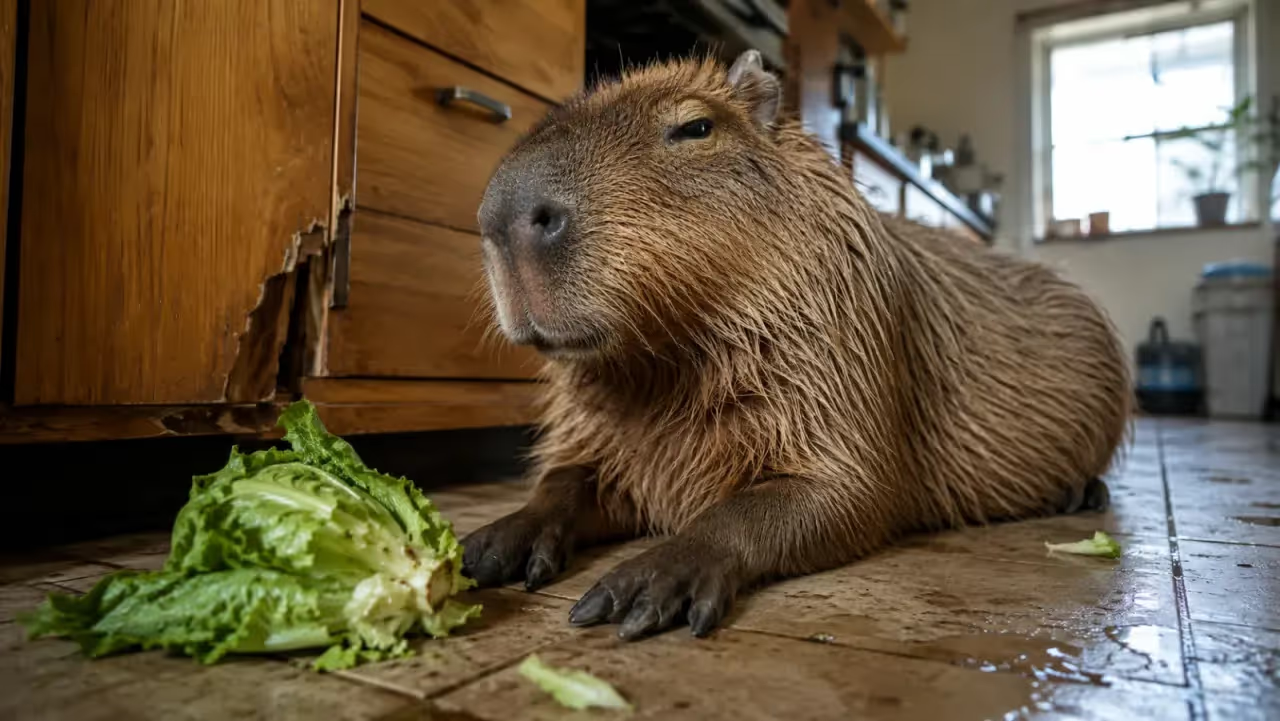
Here’s the thing the photos quietly get right. Capybaras eat together, on purpose.
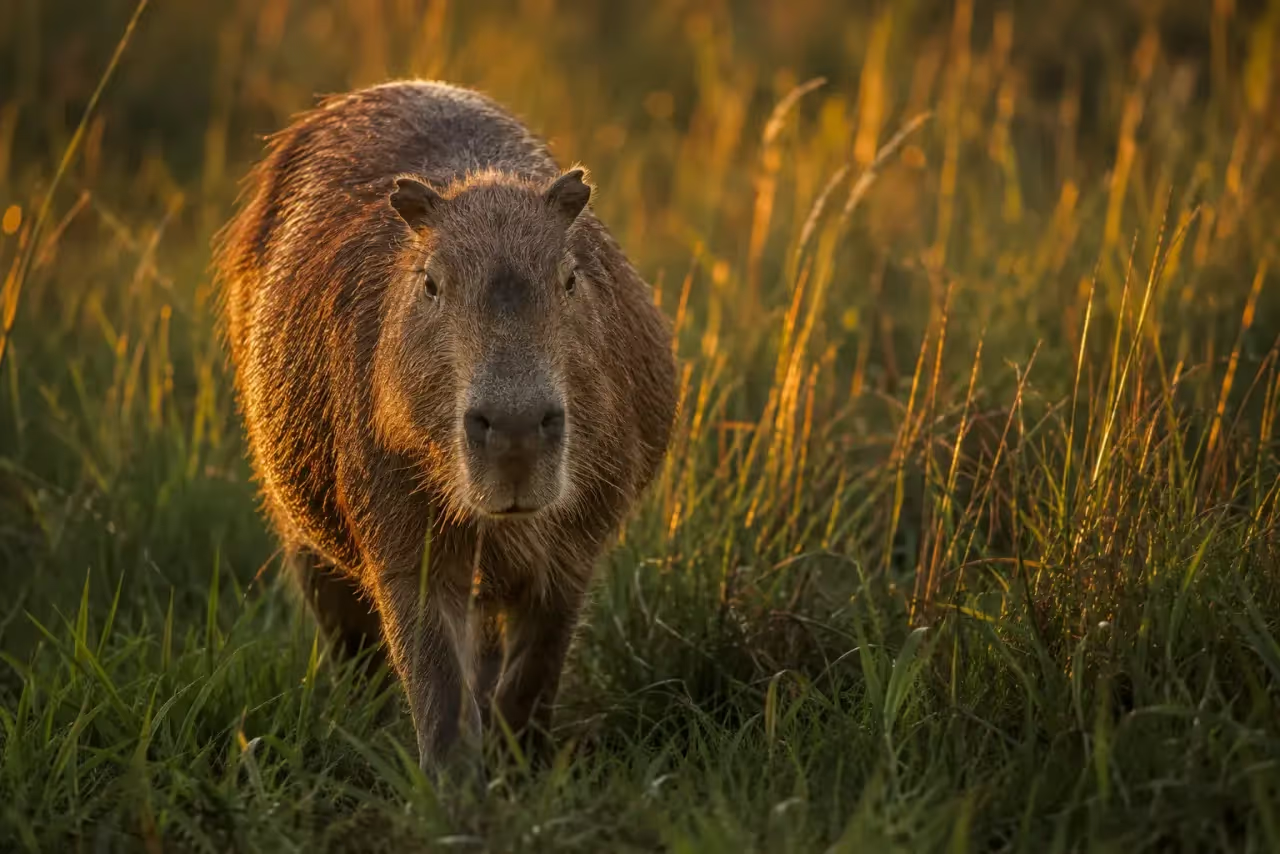
Capybaras live in groups, often ten or more, and communal grazing is simply how they operate. So a capybara Thanksgiving isn’t a forced gathering of relatives who tolerate each other for one afternoon. It’s the normal arrangement, just with squash. Honestly, that’s the part I find genuinely better than the human version: no seating drama, no one re-litigating an argument from 2019, no uncle theory about the economy.
A keeper sets down the tray, the herd assembles, and everyone eats the same wholesome plate in companionable silence. Healthier food, lower stress, better company. The capybaras have, once again, quietly solved a holiday the rest of us keep getting wrong.