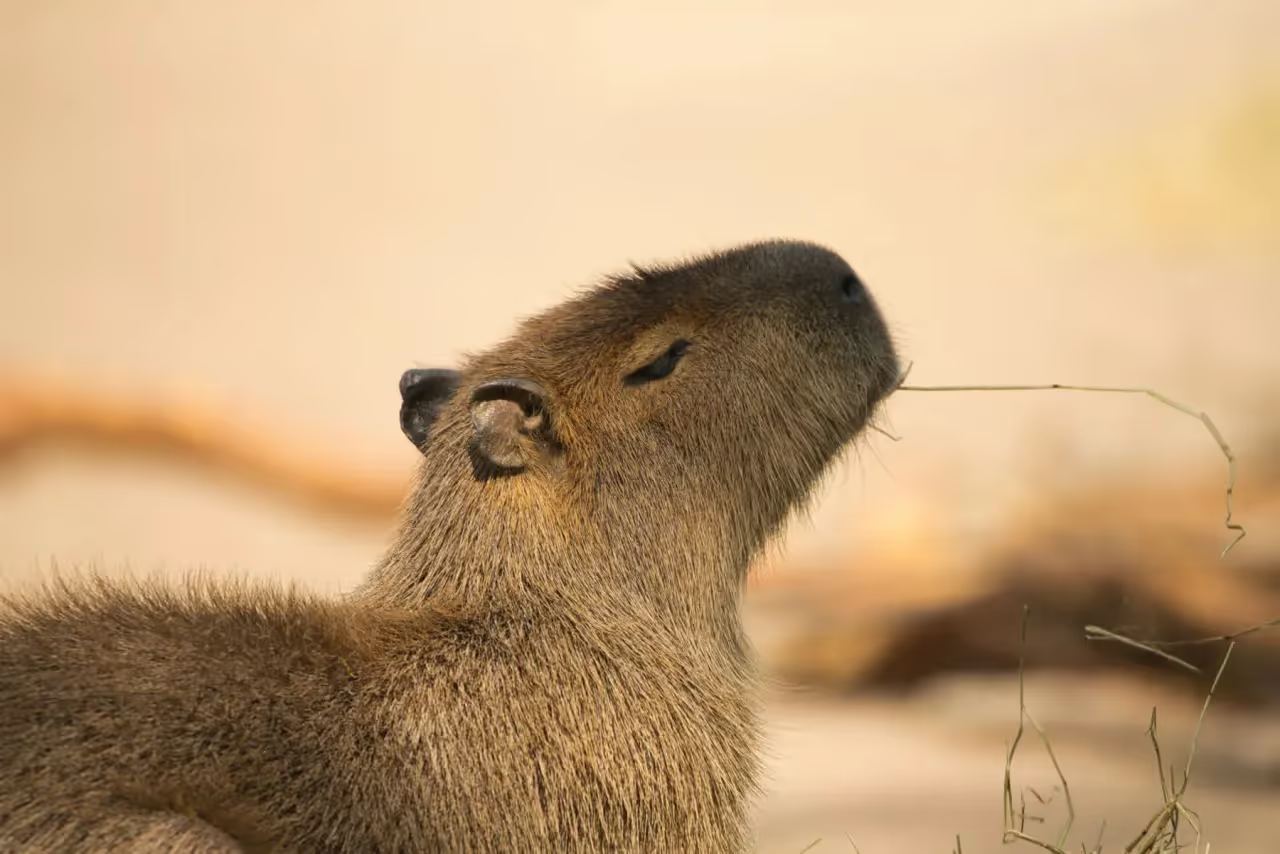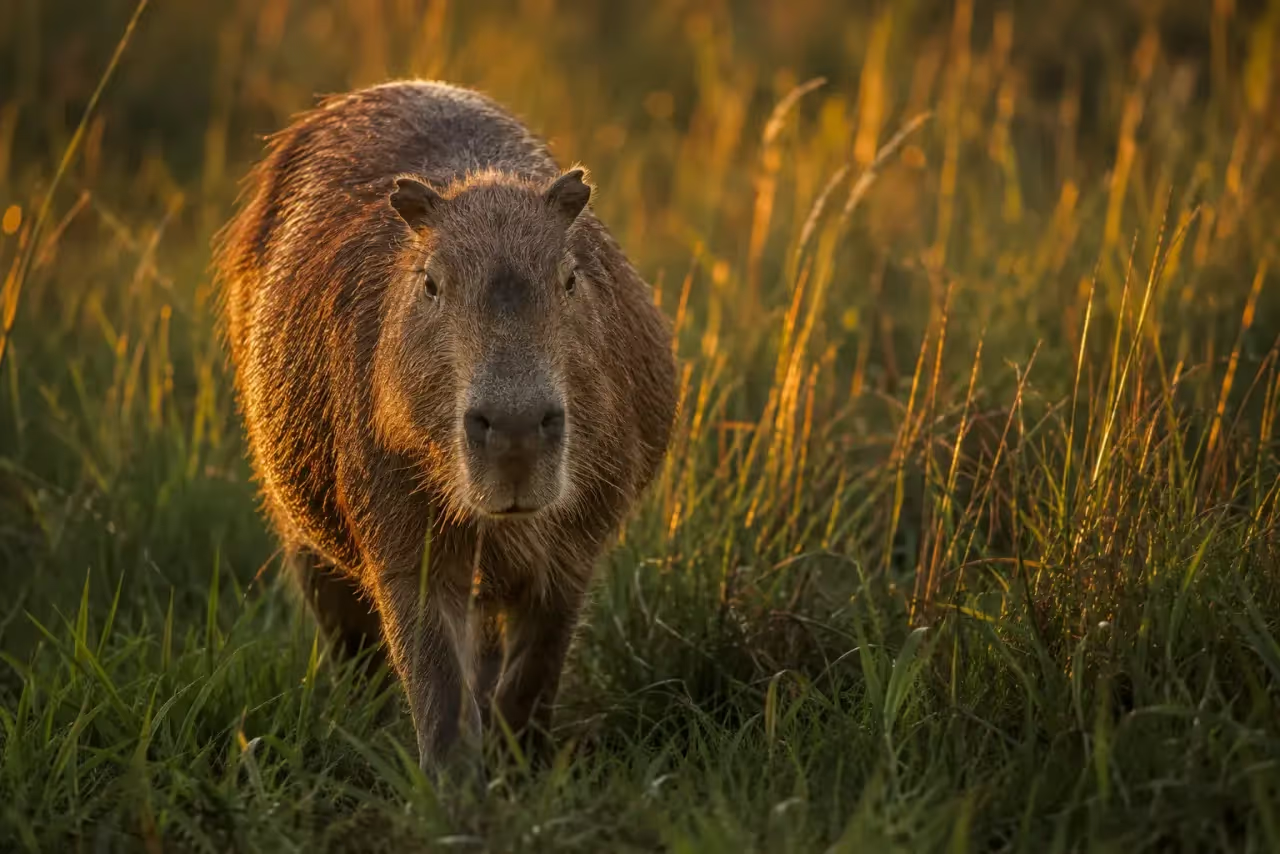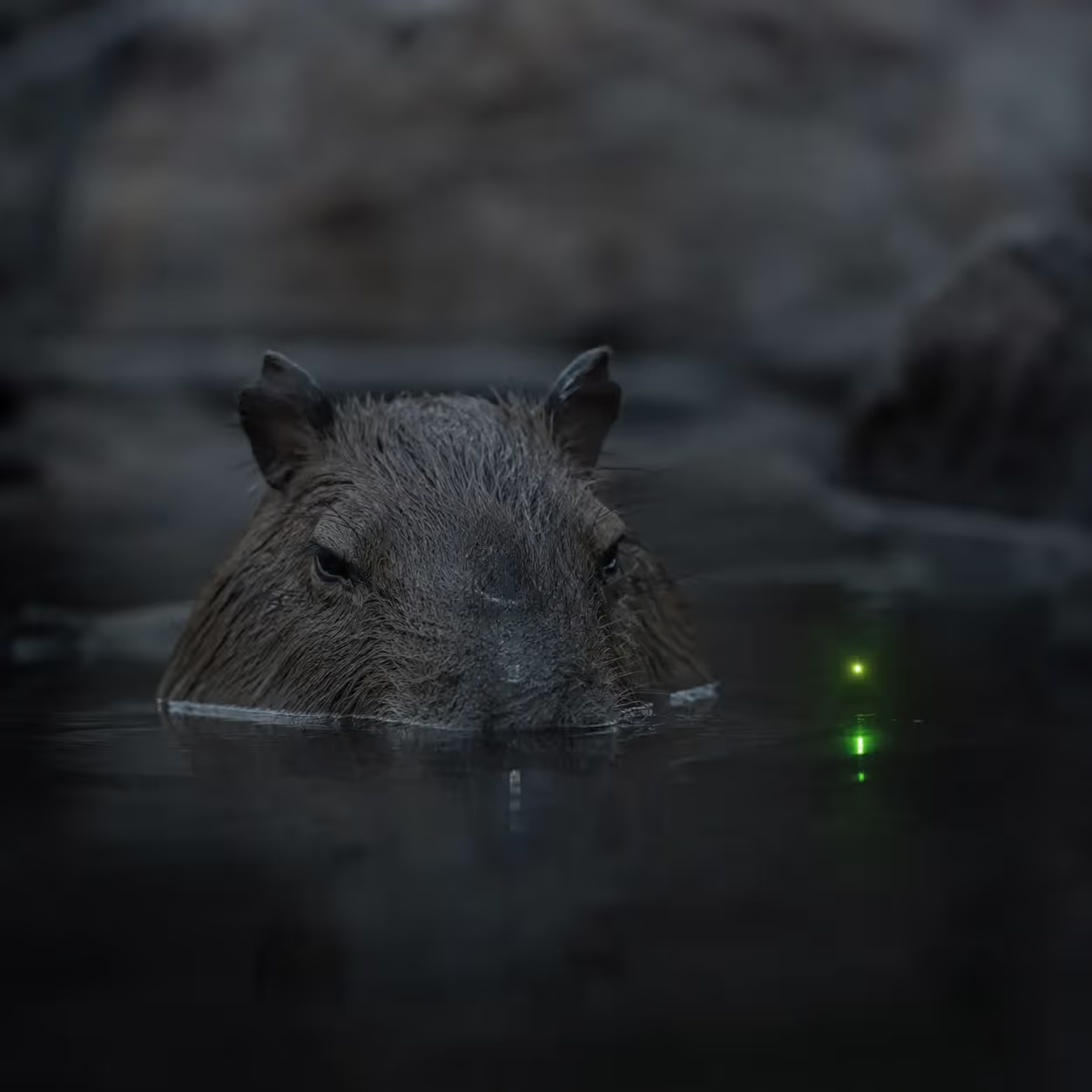
A capybara that is comfortable usually looks loose, socially normal, and free to move. A capybara that is stressed may look tense, frozen, crowded, avoidant, noisy, or suddenly defensive.
The annoying part is that both can look “calm” in a photo. That is why you read the whole scene, not just the face.
Read The Whole Scene, Not Just The Cute Face
The best quick test is this: can the capybara choose what happens next? A relaxed capybara has room, water, companions, and retreat. A stressed capybara is often being cornered by attention, noise, hands, phones, or a setup that makes leaving difficult.
| What you see | Better read |
|---|---|
| Loose body, normal grazing | Probably comfortable |
| Resting near other capybaras | Often comfortable |
| Frozen while people crowd in | Possible stress |
| Repeatedly walking away | Respect the exit |
| Teeth, chattering, lunging | Back off now |
This is the part where the internet gets inconvenient. “But it looked chill” is not an animal-welfare assessment. It is a caption.
One quick note that helps parents and first-time encounter visitors: a capybara does not owe you a reaction. The animal may be perfectly comfortable and still uninterested in hands, baby talk, or your front-facing camera. That is not rejection. That is a 100-pound wetland rodent making a normal choice.
What A Comfortable Capybara Usually Looks Like
Comfort is boring in the best way. A comfortable capybara may graze, sit, soak, groom, vocalize softly, follow another capybara, or rest with a body that does not look braced for impact. It may ignore you with the confidence of a creature that has already solved its afternoon.
The AZA care manual puts a lot of emphasis on habitat basics: water access, shade, social housing, space, and experienced care. Those are not background details. They are the conditions that make relaxed behavior more likely.

Relaxed does not mean floppy for your entertainment. It may mean the capybara chooses not to interact with you at all. If that feels disappointing, congratulations, you have met the concept of boundaries with fur.
Capybara Stress Signs That Should End The Bit
Stress does not always arrive with a warning siren. A capybara may freeze, tuck into a corner, keep trying to leave, avoid hands, huddle away from people, vocalize sharply, or shift from stillness into a defensive bite faster than the group chat can process it.
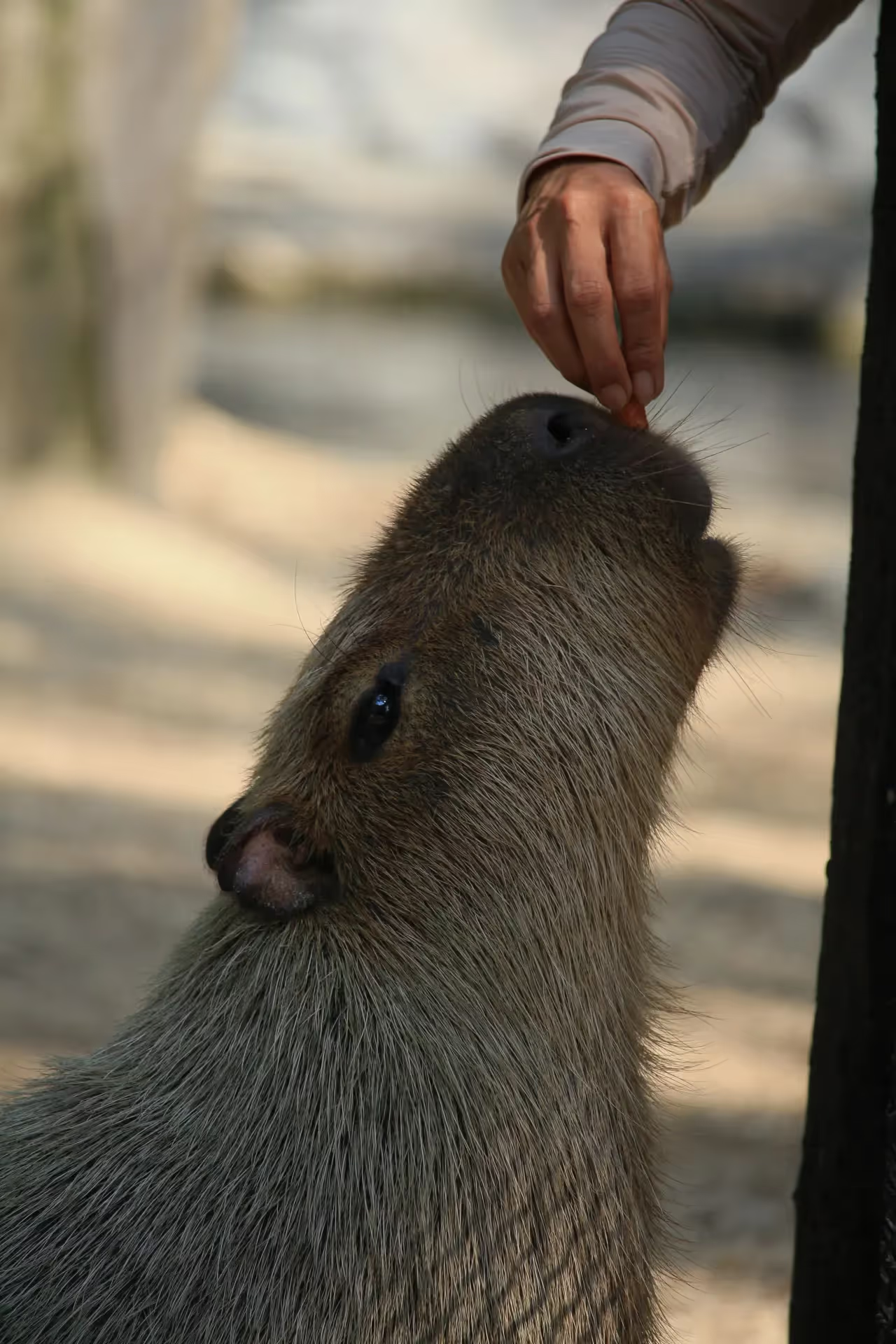
Crowding matters. Children matter. Food matters. Phones matter. A capybara surrounded by ten people reaching down at once is not participating in a wholesome woodland scene. It is managing a situation created by mammals who bought tickets.
| Stress clue | What humans should do |
|---|---|
| Animal moves away | Do not follow |
| Animal hides or turns away | Give space |
| Staff redirect guests | Listen immediately |
| Mouth open, teeth visible, lunge | Stop contact |
| No retreat area visible | Question the setup |
Our body-language guide goes deeper on sounds and posture, but the visitor rule is simple: if you need to argue that the capybara is fine, step back.
The Visitor Test Before You Take The Photo
Here is the scene: your kid loves capybaras, the animal is five feet away, and the phone is already open. This is exactly when judgment gets wobbly. The cute thing is right there. The memory is right there. The adult brain quietly turns into a souvenir machine.
Before the photo, ask four questions. Can the capybara leave? Is staff supervising? Are guests following the rules? Is the animal choosing contact, or merely tolerating it because the layout gives it no better option?
Good venues make those answers obvious. They separate food from animal areas, enforce handwashing, limit sessions, keep water available, and stop contact before the animal has to do the stopping itself. The CDC’s animal-exhibit guidance is mostly about human hygiene, but the same basic seriousness helps everyone: wash hands, supervise kids, and do not turn the encounter into chaos with snacks.
For parents, the simplest script is: we watch first, then we ask. That gives a child something concrete to do instead of turning excitement into grabby hands. It also makes the adult less likely to negotiate with a rule because the child is disappointed. The capybara is not responsible for managing a family emotion spiral next to a fence.
For photographers, the rule is similar. A zoom lens is more ethical than a close approach. If the animal keeps moving away, the photo session is over. You did not lose the shot. You received an answer.
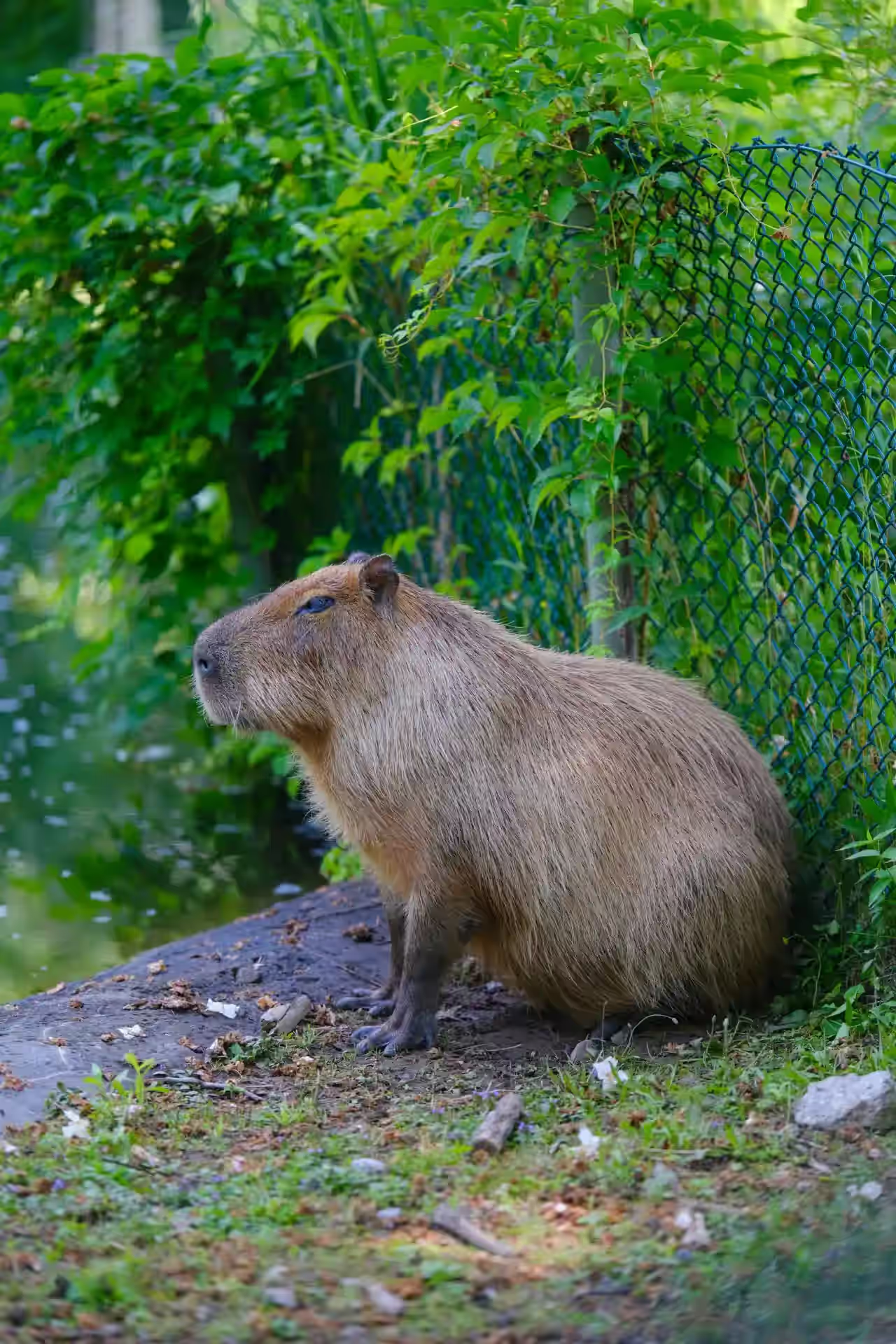
Cute Capybara Moment Or Welfare Red Flag?
The difference is usually not one gesture. It is the pattern around the gesture.
| Internet read | Better welfare read |
|---|---|
| It let everyone pet it | Did it have a retreat path and staff protection? |
| It sat completely still | Was it resting, or frozen by crowding and noise? |
| It came close to the fence | Was it choosing contact, food-motivated, or blocked by layout? |
| It looked sleepy | Was the setting calm, shaded, and socially normal? |
| It made a sharp sound | Treat that as information, not a funny audio clip |
This one threw me at first when I started looking at encounter photos closely. The same still body can read as peaceful in a cropped image and cornered in the full frame. If the full frame has hands coming from three directions, the cropped version is not telling the truth.
The Visitor Rule That Saves The Moment
To tell if a capybara is comfortable or stressed, read the whole scene: posture, movement, social setting, crowding, water access, retreat space, and staff behavior. One cute face is not enough evidence.
For visitors, the best move is humble. Watch before reaching. Ask staff before touching. Let the capybara leave without turning it into a chase sequence. A good capybara moment should feel like the animal had options and chose calm, not like everyone agreed to pretend stress was adorable.