Can you pet a capybara? Sometimes, yes. Should you treat every capybara like a walk-up emotional support ottoman? Absolutely not.
The useful answer is this: pet a capybara only in a supervised setting where staff allow contact, explain the rules, and give the animal a way to opt out. A capybara is not a beanbag with legs. It is a social, semi-aquatic rodent with teeth, preferences, and a schedule it did not ask you to interrupt.
The Short Human Answer
If you are at a normal zoo exhibit, assume no touching. Barriers exist because humans are spectacular at turning “look at the animal” into “what if I offered my fingers to the animal.” If you are at a formal capybara encounter, staff should tell you exactly what contact is allowed, when to stop, where to sit, and how the animal can leave.
AZA’s ambassador-animal resources point to formal policies for public contact and animal wellbeing. That is the grown-up part behind the cute photo: contact is not just “will the capybara tolerate this?” It is staff training, hygiene, animal choice, visitor safety, and whether the interaction teaches anything beyond “I purchased proximity.”
Permission Is The Whole Point
Capybara consent is not verbal, which is inconsiderate but understandable. You read it through body language. Does the animal approach? Does it stay loose? Can it move away? Is it eating calmly, resting, or leaning into familiar keeper contact? Or is it stiff, leaving, freezing, bunching with the group, or looking for the nearest water?
| Capybara response | Better interpretation | Human response |
|---|---|---|
| Approaches slowly in a staff-led setting | Maybe open to contact | Stay still and wait |
| Walks away | No thanks | Let it go |
| Freezes under your hand | Unclear or stressed | Stop touching |
| Keeps eating calmly while staff supervise | Possible tolerance | Follow staff timing |
| Turns, barks, or shows teeth | Warning | Back up immediately |
How To Touch Without Being Weird
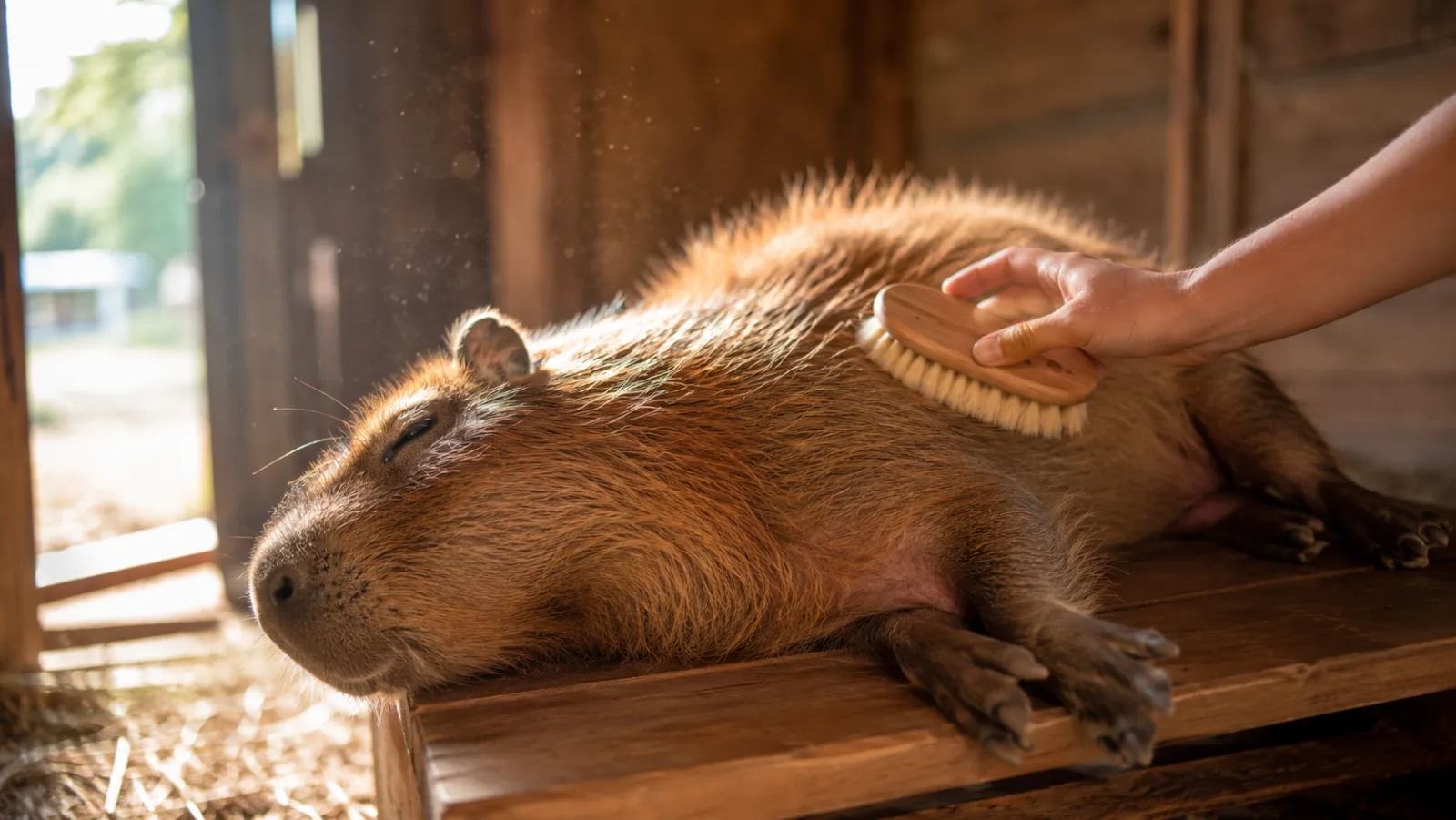
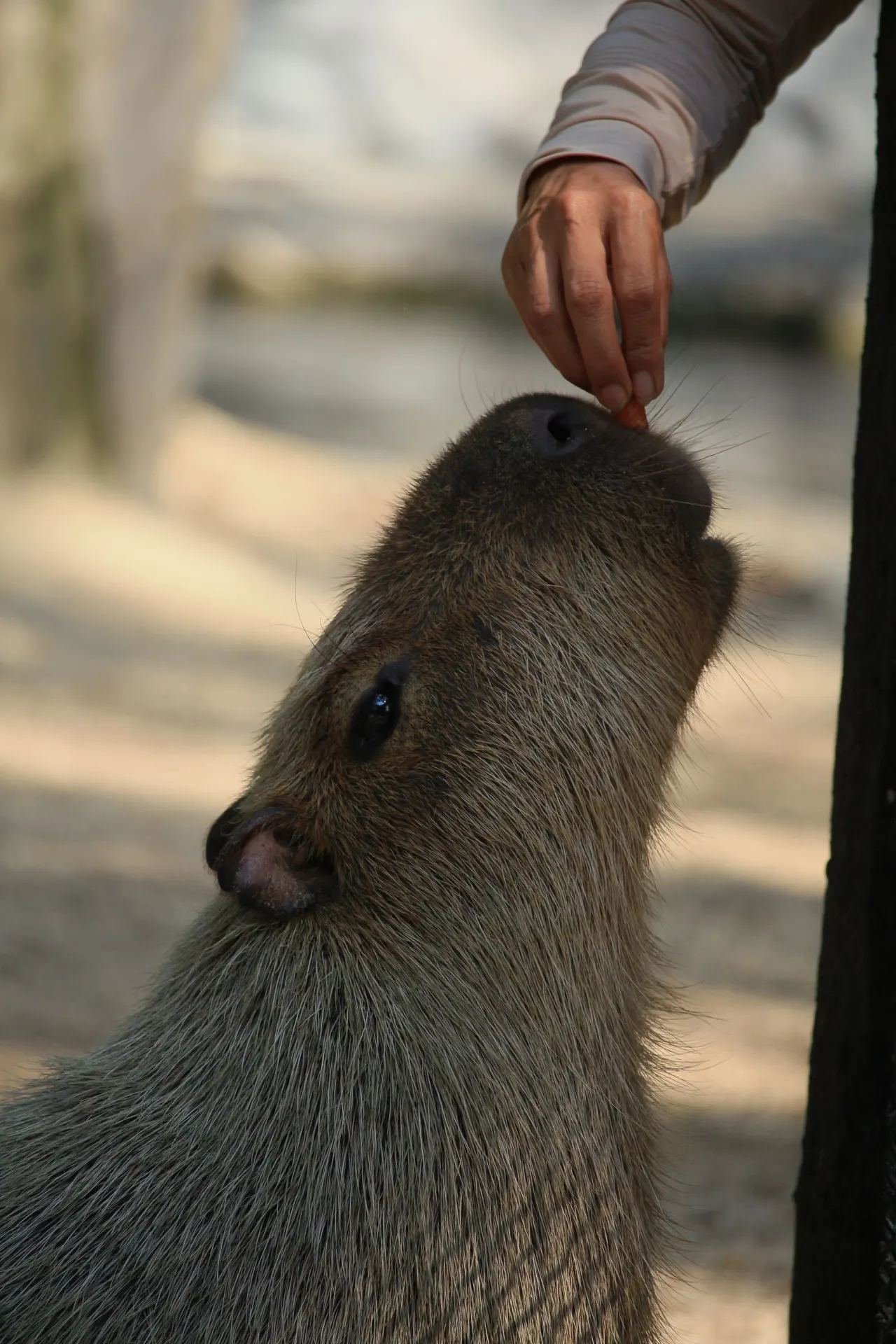
If staff allow petting, keep it slow, low, and boring. Sit where told. Let the capybara come into range. Use gentle scratching or flat-hand contact only where staff say it is okay. Do not grab, hug, lift, chase, crowd, block, squeal into the animal’s ear, or treat the face like a user interface.
The best capybara encounters look almost underwhelming on purpose. The animal has space. The group has retreat options. The rules arrive before the photo. Nobody is trying to turn a 30-minute session into a cuddle audition.
That little pause before touching matters. It is the difference between “the capybara stayed” and “the capybara endured.”
When To Keep Your Hands To Yourself
Keep your hands back if the animal is sleeping, eating away from guests, retreating, tending young, crowded by other visitors, or already being touched by someone else. Also keep them back if there is no staff member actively supervising the contact.
San Diego Zoo Wildlife Alliance notes that adult capybaras can weigh 60 to 174 pounds and have long, sharp rodent teeth for grazing. Those facts do not make them dangerous monsters. They do make them animals, which is apparently a necessary reminder.

The Better Fan Move
The best capybara fan does not measure success by whether they touched the animal. They measure it by whether the animal had options.
Ask better questions before booking: Is the facility USDA licensed if it exhibits animals for the public? Does it describe water access and rest periods? Are guests briefed before contact? Can the capybaras leave the interaction area? Are young children supervised closely? Are visitors allowed to pick animals up? That last one should make your eyebrows file a complaint.
Petting a capybara can be lovely when the setup is right. But the real flex is knowing when not to. The capybara will not thank you out loud. It may simply continue existing near you, unbothered, which is about as warm as the performance review gets.
Why The Animal On Screen Acts So Calm
Most viral capybara clips are filmed at sanctuaries, farms, or onsen-style attractions where the animals have been around people for years. That habituation is real, and it is also specific to those animals, those handlers, and that environment. A capybara that ignores a tourist’s hand has usually decided, over many repeated low-pressure encounters, that humans are background furniture. It did not arrive that way, and it does not transfer that calm to a stranger leaning over a fence somewhere else.
There is also a biology reason the calm reads as deeper than it is. According to Animal Diversity Web, capybaras are highly social herd animals, native to South America, that spend their days grazing grasses and aquatic plants near water and resting in groups. A relaxed body in a herd is the default state, not a sign of affection for you specifically. The animal is calm because its needs are met, not because it has appraised your vibe.
My honest opinion: the “capybaras love everyone” framing is the part of the trend that ages worst. It quietly trains people to read tolerance as enthusiasm, and that misread is exactly how a gentle animal ends up cornered by someone who thought they had a green light.
Myths Worth Retiring
A lot of capybara petting confidence comes from half-true internet lore. Here is the cleaner version.
| Myth | Better answer |
|---|---|
| Capybaras are basically friendly dogs | They are social herd rodents (family Caviidae), not domesticated companions. Calm around their own group, not obligated to bond with you. |
| If it sits near me, it wants petting | Proximity is not consent. It may simply be where the food, shade, or water is. |
| They are too chill to bite | Per San Diego Zoo Wildlife Alliance, adults are the world’s largest rodent with continuously growing teeth. A startled one can and will bite. |
| Petting is harmless if the animal allows it | Even tolerated handling adds stress and hygiene risk. Supervised, briefed contact exists for a reason. |
| One good encounter means any capybara is safe to touch | Each animal, setting, and day is different. Habituation does not generalize to strangers. |
What A Good Facility Looks Like, Concretely
The setup matters more than the animal’s mood on the day you visit. Capybaras are semi-aquatic grazers, and the AZA Capybara Care Manual treats water access, social housing, and species-appropriate diet as baseline welfare, not extras. A place that gets contact right is usually getting the boring fundamentals right first.
A few things that should be visibly true before you let anyone talk you into a “petting session”:
- Standing water the animals can actually enter, not a decorative trough. Capybaras have semi-webbed feet and use water to thermoregulate, rest, and escape pressure.
- More than one capybara. Solitary housing is a recognized welfare stressor for a herd species, so a lone “petting capybara” is a small red flag, not a feature.
- Real rest periods built into the schedule, with the animals able to leave the contact zone whenever they want.
- Staff who brief you before contact and who narrate the animal’s signals while you are in there.
If a venue is fuzzy on water, company, or exits, the question stops being “can I pet it” and becomes “should this animal be doing public contact at all.” That is the less fun question, which is usually a sign it is the right one to ask.