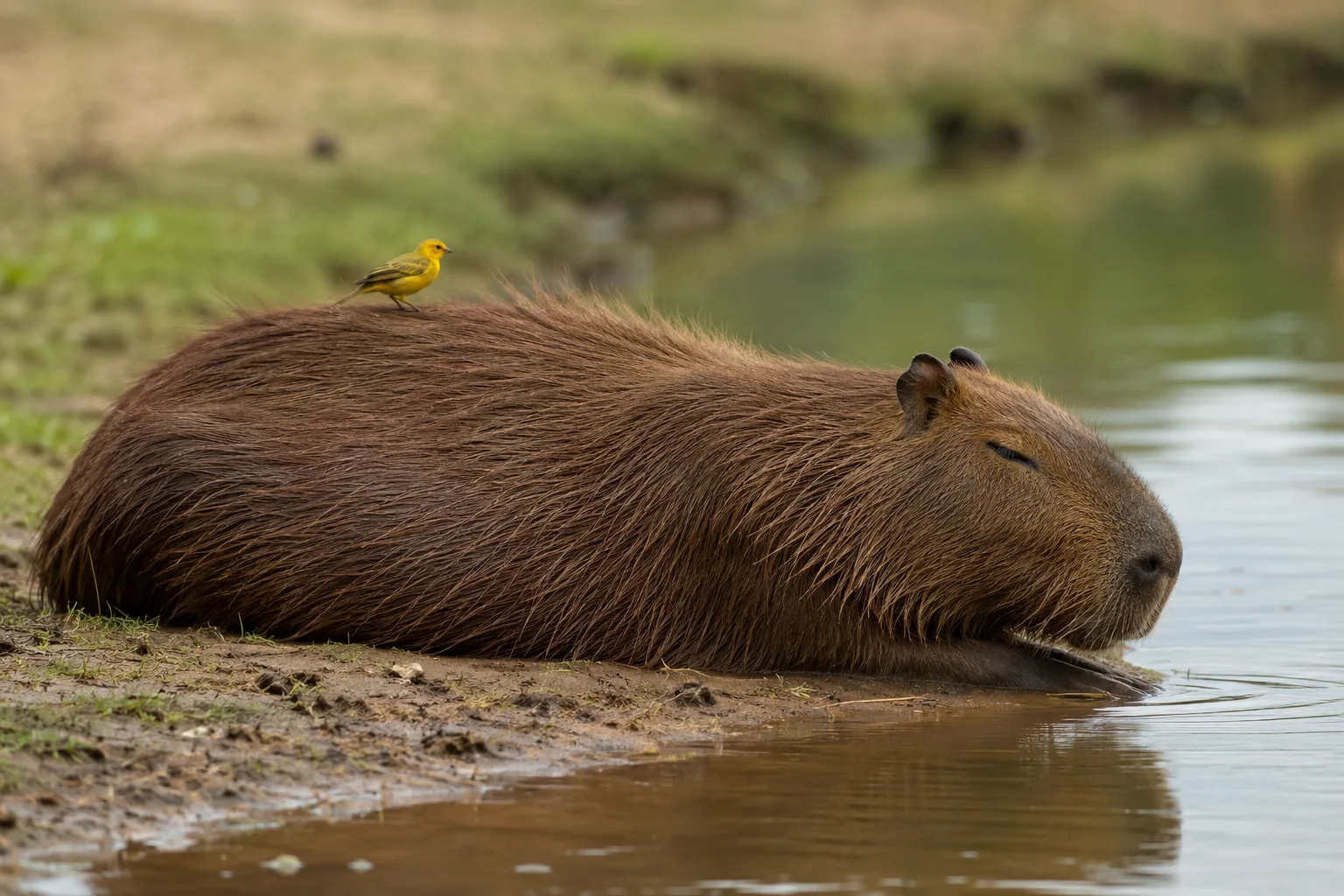
Capybaras can sometimes appear calm around dogs, cats, birds, monkeys, turtles, and half the internet. That does not mean a capybara should live with your dog or cat because everyone “seems chill.”
Start here: dogs and cats are not automatic capybara friends. A careful, supervised, professionally managed introduction might be possible in some captive settings, but routine shared living is risky. Dogs can chase or bite. Cats can scratch or stress an animal. Capybaras are large prey animals with real teeth, real fear responses, and a strong preference for not becoming your content strategy.
The Real Answer Is Not The Viral One
Capybaras are famous for tolerating other animals, but tolerance is not consent and a clip is not a care plan. Animal Diversity Web describes capybaras as social, group-living herbivores that use water to escape danger. San Diego Zoo Wildlife Alliance notes they bark warnings and move as a group when threatened.
That matters because a dog running “playfully” can still read as danger. A cat swatting can still land on an eye. A capybara standing there quietly may be calm, confused, stuck, or deciding whether the pool is reachable.

The Dog Problem Is Prey Drive, Not Vibes
Dogs vary wildly. Some are gentle around livestock. Some chase anything that moves. Some are wonderful family dogs and still unsafe around a prey animal that runs, squeaks, or smells unfamiliar.
The American Veterinary Medical Association treats dog-bite prevention as a real public-safety issue, and that is with humans, who generally do not bolt toward a pond when startled. A capybara has different body language, different escape instincts, and no interest in explaining itself to a retriever named Waffles.
| Risk | Why it matters | Safer rule |
|---|---|---|
| Chasing | Can trigger panic or injury | Keep barriers and leashes |
| Bite risk | Dog bites can be severe | No unsupervised access |
| Stress | A quiet capybara may still be pressured | Watch escape attempts |
| Food conflict | Treats make animals pushy | Separate feeding |
| Size mismatch | Small dogs can still provoke; large dogs can injure | Do not rely on size alone |
Cats Are Smaller, But Not Irrelevant
Cats are less likely to overpower an adult capybara, but “smaller” is not the same as “safe.” Scratches, parasites, stalking behavior, and sudden movement can still matter. A capybara does not know your cat is “just curious.” It knows an unpredictable carnivore is doing jazz near its face.
The CDC’s Healthy Pets guidance is a useful reminder that animal contact also carries hygiene and disease considerations. Species mixing is not just a cuteness puzzle. It is a management question.
What A Safer Introduction Would Need
A safer setup starts with no direct contact. Let animals see and smell from a secure barrier. Keep dogs leashed. Keep cats controlled. Make sure the capybara can retreat to water, shelter, or its group. Stop at the first sign of stress. Do not force proximity for photos.
In a professional setting, staff would consider animal history, enclosure design, health status, training, and emergency separation. At home, people often consider whether the video would be funny. That is not the same department.
Why The Prey-Animal Wiring Never Switches Off
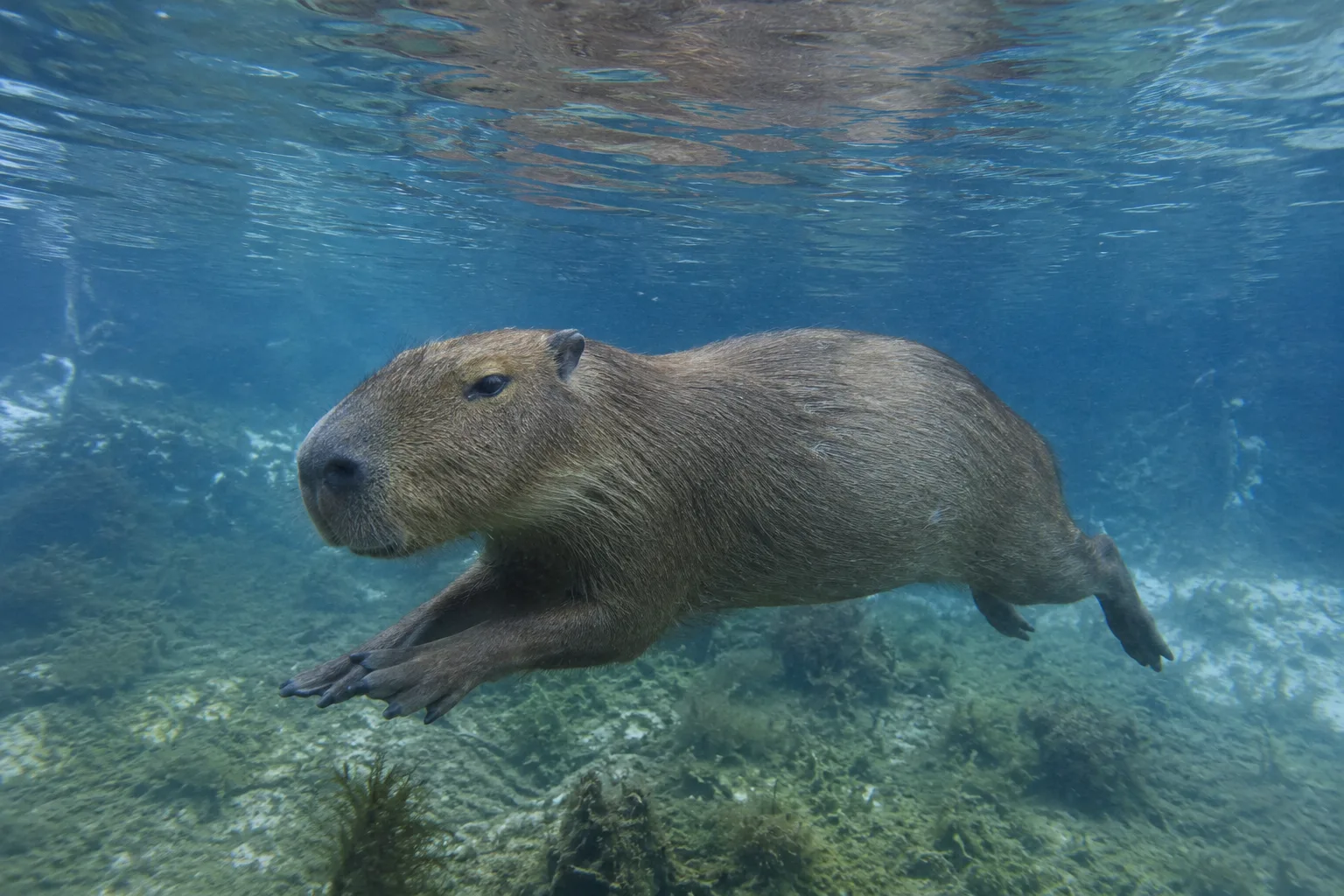
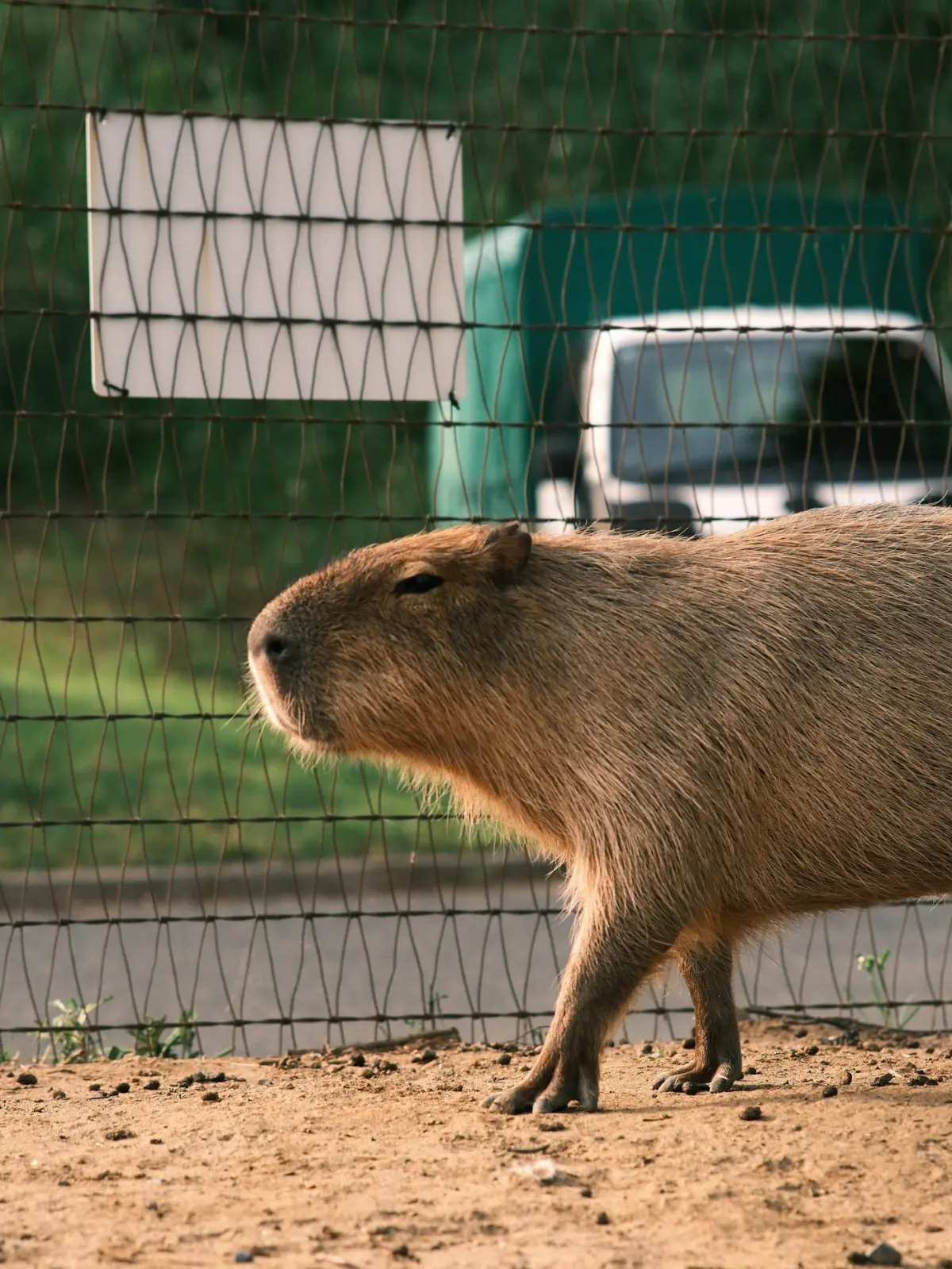
It helps to remember what a capybara actually is before deciding what it can live with. They are the world’s largest rodent, in family Caviidae alongside guinea pigs and maras, native to South America, and semi-aquatic by design. Animal Diversity Web describes them as herd animals that graze grasses and aquatic plants and head for water when alarmed. That water-as-escape instinct is not a quirk. It is the whole survival strategy.
A dog or cat does not register any of that. To the capybara, an unfamiliar carnivore moving fast is a predator first and a housemate never. Even a capybara raised around a specific dog is reading body language moment to moment, and a single chase, lunge, or cornering can undo months of calm. The San Diego Zoo Wildlife Alliance notes capybaras bark and bolt as a group when threatened. A lone pet capybara has no group to bolt with, which removes one of its main coping tools.
Honestly, this is the part I think most “they’re best friends” content gets backwards. The calm you see on camera is usually the animal managing a situation it can’t leave, not enjoying a friendship. A relaxed capybara has options. A stuck one just looks relaxed.
Sorting The Myths From The Management
A lot of the dogs-and-cats confusion comes from treating one good outcome as a rule. Here is where the common assumptions tend to fall apart.
| Myth | Better answer |
|---|---|
| ”Capybaras are friends with every animal.” | They tolerate animals in managed settings. Tolerance under supervision is not the same as safe cohabitation. |
| ”My dog is gentle, so it’s fine.” | Temperament helps, but prey drive is reflexive. A gentle dog can still chase a fleeing animal on instinct. |
| ”A cat is too small to be a danger.” | Size lowers the overpowering risk, not the stress, scratch, or parasite risk. Eyes and stress responses still matter. |
| ”They grew up together, so they’re bonded.” | Early exposure reduces novelty, not the prey-predator dynamic. One bad incident can reset the whole relationship. |
| ”The capybara looks calm, so it’s happy.” | Stillness can mean calm, or freezing, or being trapped. Look for whether it can choose to leave. |
The Welfare Costs People Skip Past
Before anyone weighs a dog or cat into the picture, the capybara’s own baseline needs come first, and they are heavy. The AZA Capybara Care Manual frames these as social, water-dependent grazers with specific husbandry demands, not a flexible exotic pet. Skipping the basics to chase a cross-species friendship clip gets the priorities exactly backwards.
| Need | What it actually requires | Why it’s non-negotiable |
|---|---|---|
| Water access | A pool deep enough to submerge, not a kiddie splash | Water is their escape, thermoregulation, and comfort all at once |
| Social housing | Their own kind, not a dog standing in for a herd | Solitary housing is a documented welfare stressor for a herd species |
| Vitamin C | Dietary source, like guinea pigs | They cannot synthesize it; deficiency causes real disease |
| Specialist vet | An exotic vet who knows large rodents | Few clinics can treat them; emergencies get expensive fast |
| Space and grazing | Room to roam and graze, plus continuous chewing material | Teeth grow continuously and they are built to move and forage |
None of that gets easier by adding a predator to the household. A capybara missing water, a herd, or proper diet is already under stress. A dog or cat on top of that is not a friend, it is one more thing the animal has to monitor.
Cute Clips Are Not A Safety Plan
Could a capybara and a dog or cat coexist in a carefully managed setting? Sometimes. Should people treat viral friendship clips as permission? Absolutely not.
The capybara does not need a dog best friend. It needs water, space, social housing with its own kind, safe routines, and humans who understand that cute videos are the highlight reel, not the manual.