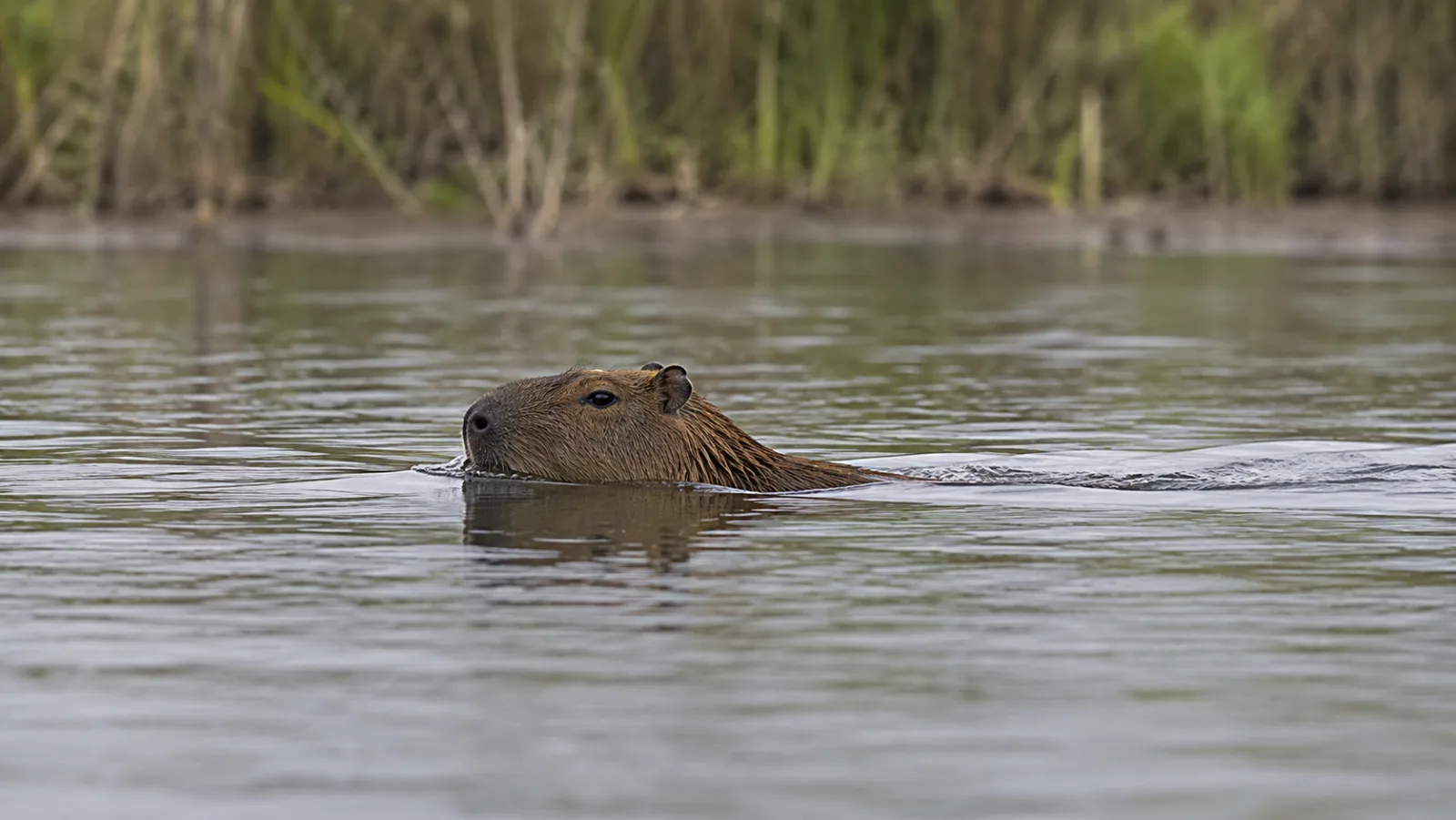
Do capybaras need a pool? Yes. And not a little plastic dish of regret from the seasonal aisle.
The direct answer is that capybaras need serious, reliable water access. San Diego Zoo Wildlife Alliance says a swimming hole is part of a healthy capybara lifestyle. The AZA Capybara Care Manual goes further: feeding, mating, escape, and hiding revolve around water. That is not enrichment sprinkles. That is the operating system.
Why Water Matters So Much
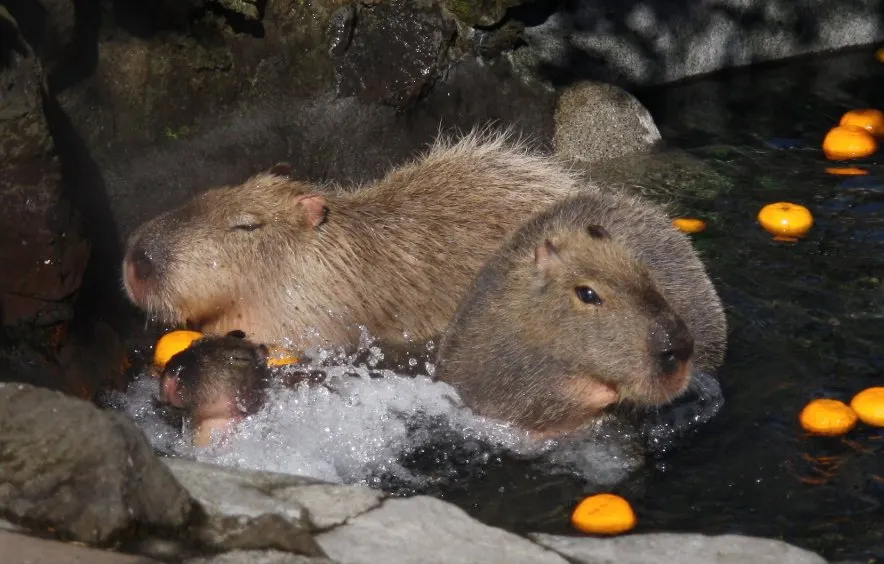
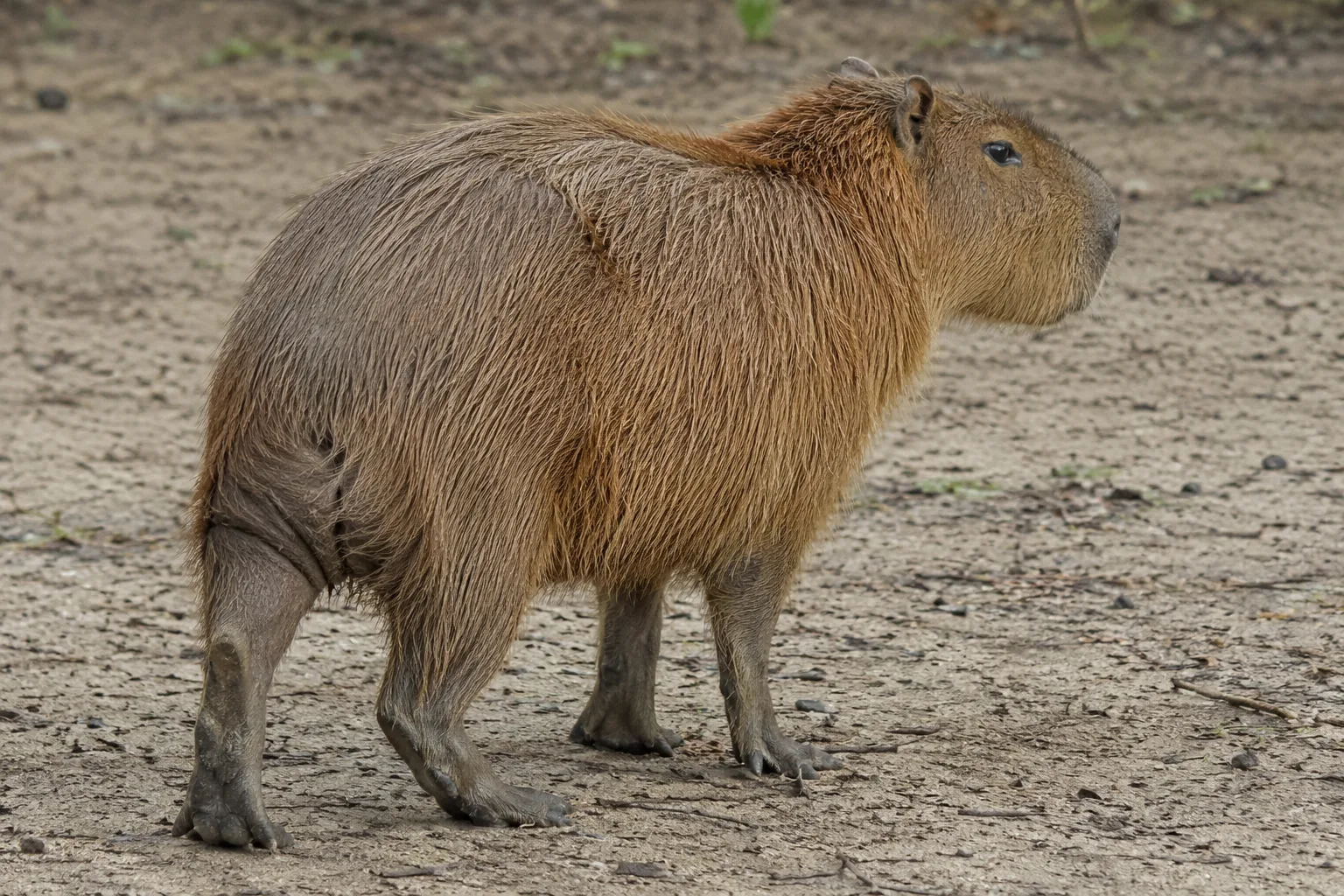
Capybaras are built for the wet edge between land and water. Their eyes, ears, and nostrils sit high on the head, and their feet are partly webbed. San Diego Zoo Wildlife Alliance says they can stay underwater for up to five minutes and use water to hide from predators.
Animal Diversity Web describes them as strong swimmers and notes that the hottest part of the day is often spent in water. A capybara without adequate water is not a minimalist version of a capybara. It is an animal missing a basic part of its world.
What Counts As Real Water Access
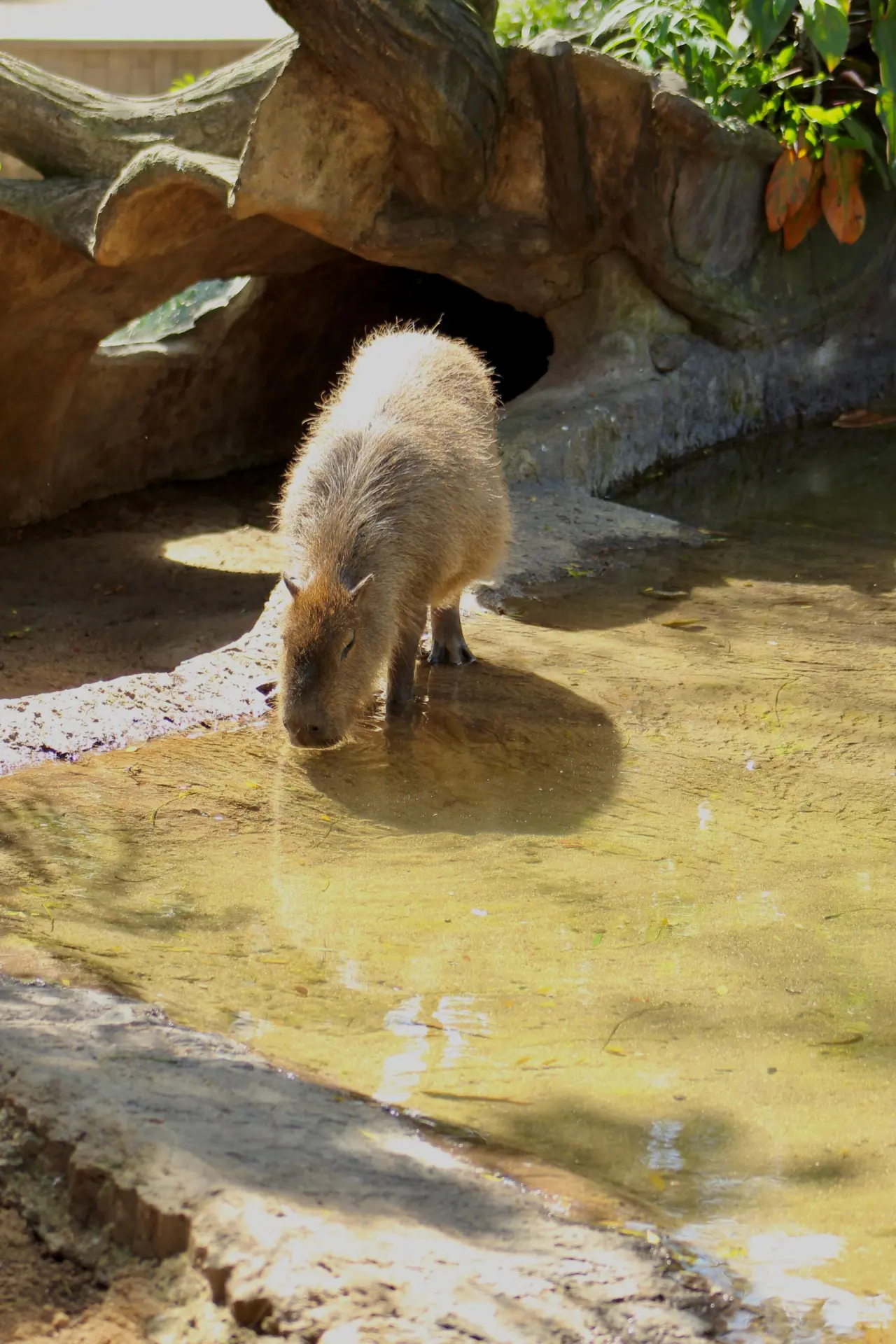
The AZA manual reports that the median pool size in AZA capybara exhibits is 88 square meters, about 950 square feet. The reported minimum is 14 square meters, about 150 square feet, and pools may be as shallow as 3.5 feet, although the norm is at least 6 feet. It also notes that the water feature can be a pool, pond, river, or lagoon.
Those numbers do not mean every private setup should copy a zoo exhibit exactly. They do mean the bar is nowhere near “large bin from the garage.”
Why Kiddie Pools Fall Short
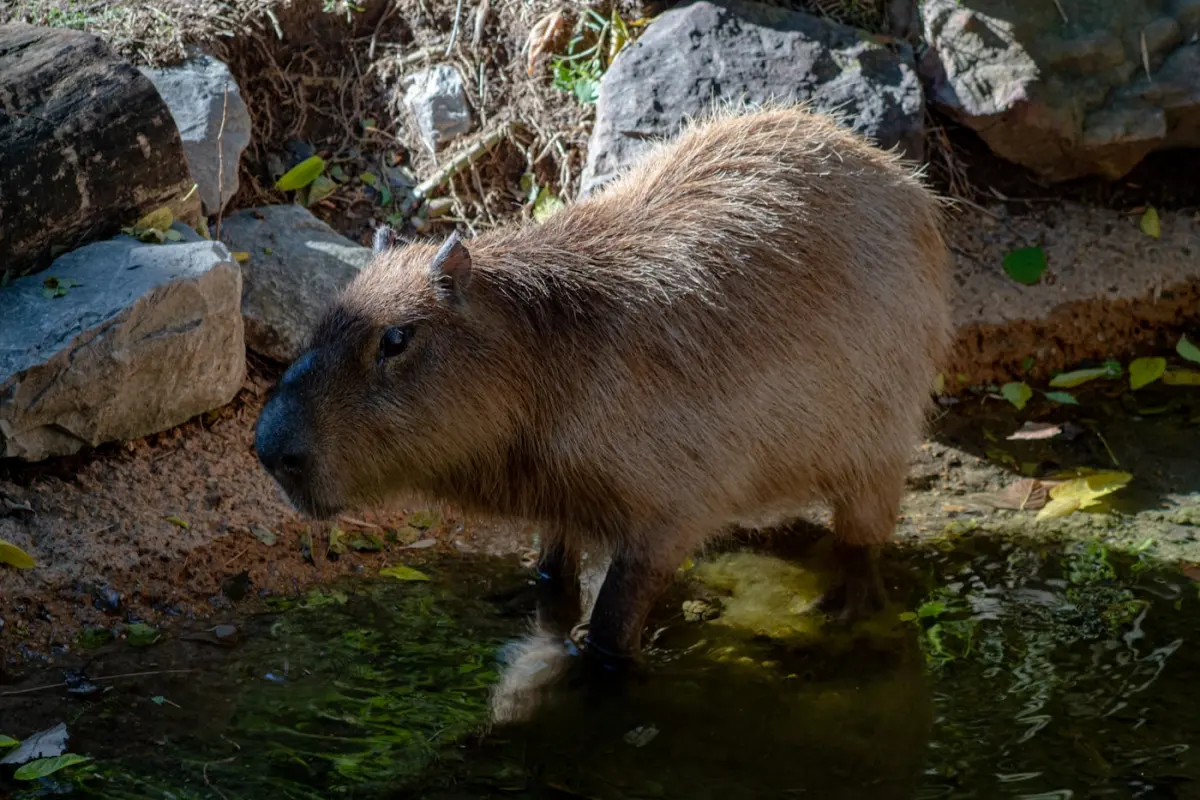
A kiddie pool can let a capybara splash, cool its feet, or get brief enrichment. It cannot replace water deep enough for swimming, safe entry and exit, clean circulation, and regular use by a large social animal.
The problem is not snobbery. It is physics. Adult capybaras can weigh more than many large dogs. A flimsy pool tips, fouls quickly, warms fast, and does not provide real swimming room. If the pool looks sad, the capybara knows.
Capybara Pool Reality Check
| Feature | Kiddie-pool fantasy | Real care question |
|---|---|---|
| Depth | Shallow splash | Can the animal soak and swim safely? |
| Entry and exit | Step over the side | Is there a gradual slope or safe ramp? |
| Cleanliness | Dump it sometimes | Is there filtration, drainage, and waste control? |
| Size | One animal turns around | Can a social group use it without crowding? |
| Weather | Fine on a warm day | What happens in cold, heat, storms, and algae blooms? |
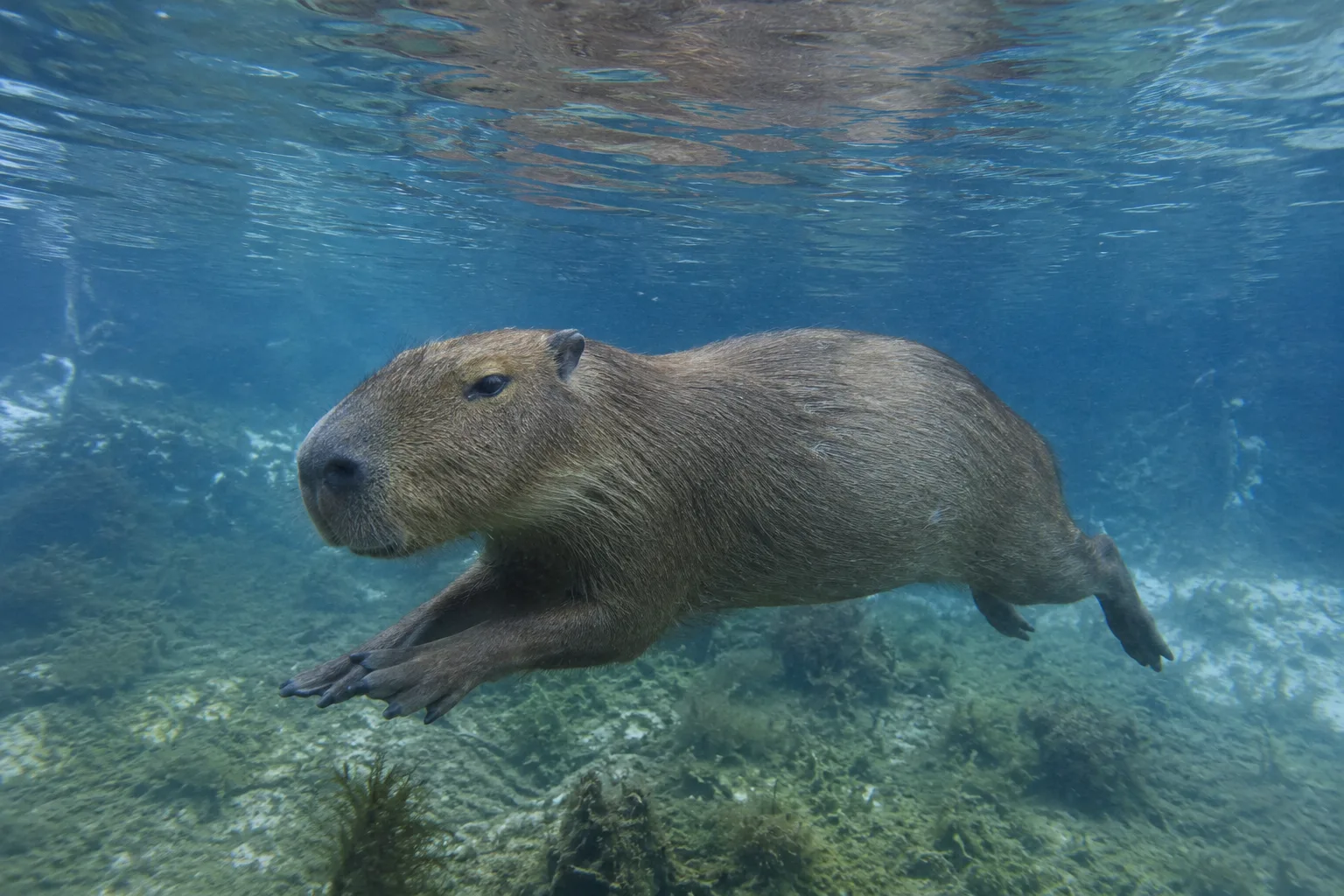
Water Does More Than Cool Them Off
It is easy to treat the pool as a hot-day comfort and stop there. The biology is wider than that. Capybaras are hindgut fermenters that practice coprophagy, re-ingesting soft morning feces to pull out nutrients their first pass missed, and they graze grasses and aquatic plants near the waterline. They also cannot make their own vitamin C, the same quirk guinea pigs have, so diet has to carry it. None of that is the pool’s job directly, but it tells you the same thing the pool does: this is a specialized grazer wired to a specific habitat, not a flexible companion animal that adapts to whatever you offer.
Water touches the social side too. Capybaras are herd animals, and the AZA Capybara Care Manual treats solitary housing as a welfare problem, not a lifestyle choice. A water feature is shared territory: animals soak together, rest near it, and use it as the group’s common escape route. One capybara in one small tub is missing both the water and the herd, which is two failures stacked on top of each other.
My honest read, having looked at what the zoo sources actually require: the pool question is not the hard part of capybara ownership, it is the easy part that makes all the other hard parts visible. If the pool already feels like too much, everything behind it is worse.
Sorting the Pool Myths
The internet is full of confident, wrong takes about capybara water. A few worth correcting.
| Myth | Better answer |
|---|---|
| A capybara just needs water to drink | It needs water to swim, cool, hide, and move; drinking is the smallest part |
| Any tub works if you change it often | Depth, safe entry and exit, and circulation matter as much as cleanliness |
| They only want the pool when it is hot | Animal Diversity Web notes water use through the hottest hours, but water is core habitat year-round |
| One capybara with a pool is a complete setup | Most welfare-minded housing wants a compatible companion; solitary housing is a stressor |
| Webbed feet mean they handle any water easily | Semi-webbed feet help them swim, but they still need safe footing and a way out |
What This Means For Pet Dreams
This is where a lot of pet-capybara daydreams go quiet. A real pool means space, construction, drainage, water quality, winterization, fencing, sanitation, and veterinary planning. It also means at least one other compatible capybara in many welfare-minded setups, which turns “my backyard friend” into “small managed facility with moods.”
If you want capybaras in your life, visit a reputable facility. If you want one as a pet, the pool is not a detail to solve later. It is the first adult conversation, and it arrives carrying a tape measure.