If the plan depends on both animals “being chill,” the plan has already failed.
Dogs and capybaras can appear together in viral clips. That does not make the meeting safe, repeatable, or kind. A dog is still a predator-shaped companion animal with teeth and speed. A capybara is still a large prey animal with a water-based exit strategy and very little interest in your montage.
Friendly Dog Is Not A Safety Plan
Friendly to you is not the same as safe around a capybara. Dogs chase. Dogs bark. Dogs play with their mouths. Dogs get excited by movement. A dog that has never hurt anybody may still make a capybara bolt, freeze, bark, or try to reach water.
The AZA care manual tells handlers to avoid sudden movements around capybaras and notes that prey animals are alert to danger. That alone should make “let them meet and see what happens” sound like a bad plan wearing sneakers.
Why Capybaras Read Dogs Differently
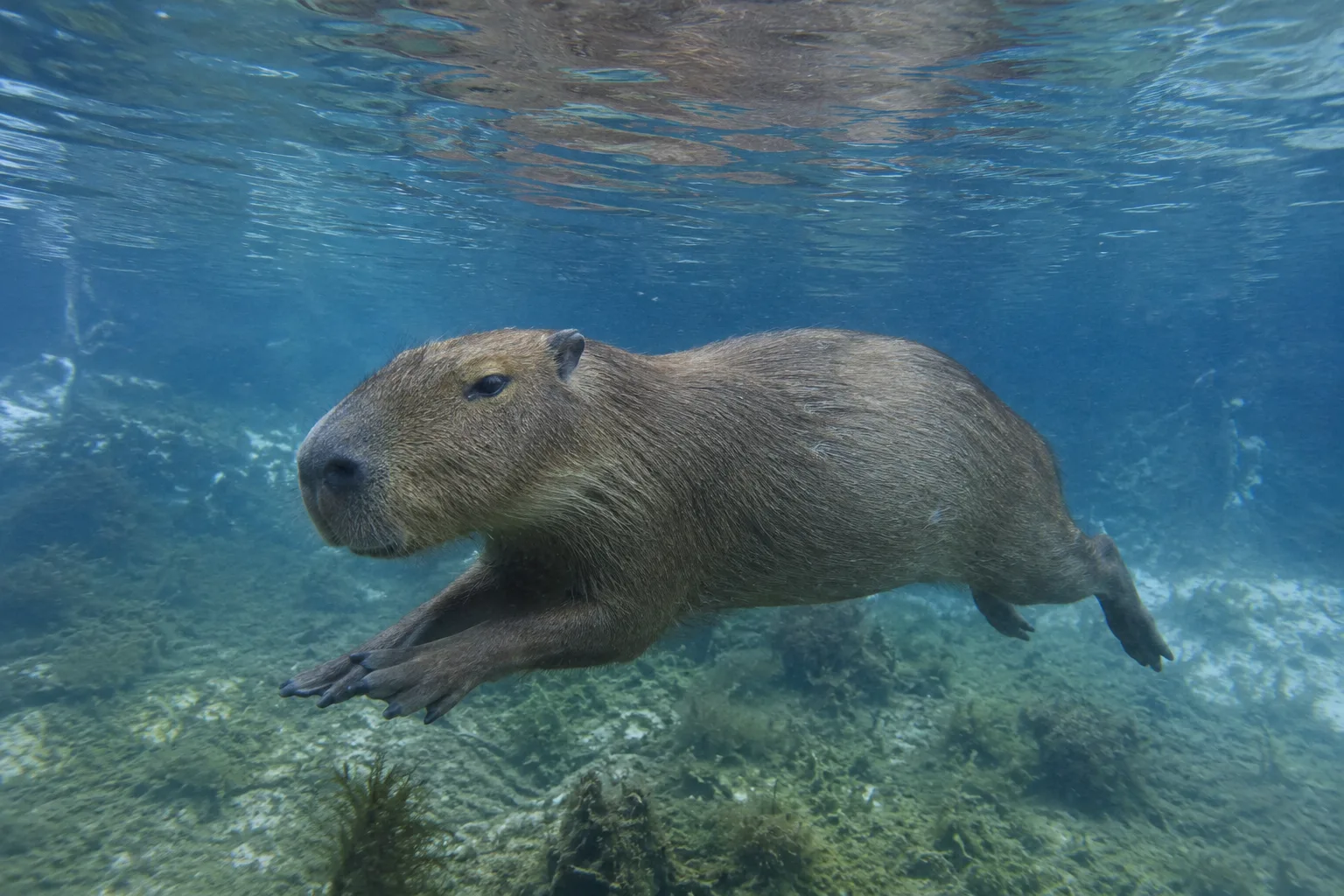
Animal Diversity Web describes capybaras as watchful grazers that use alarm calls and water escape when predators are spotted. A dog does not have to intend harm to trigger that system.
| Dog behavior | Capybara-side risk |
|---|---|
| Barking | Startle, stress, or flight response |
| Chasing | Predator-like pressure |
| Nose-to-face contact | Bite, scratch, or panic risk |
| Play bow and bounce | Cute to humans, sudden to prey animals |
| Off-leash freedom | No reliable stop point if something changes |
A Quick Reality Check On Who These Two Animals Are
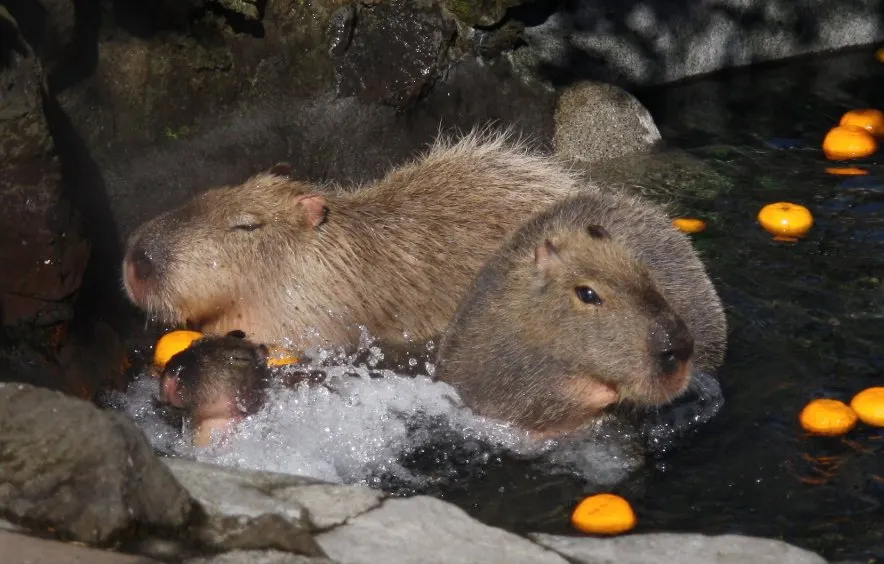
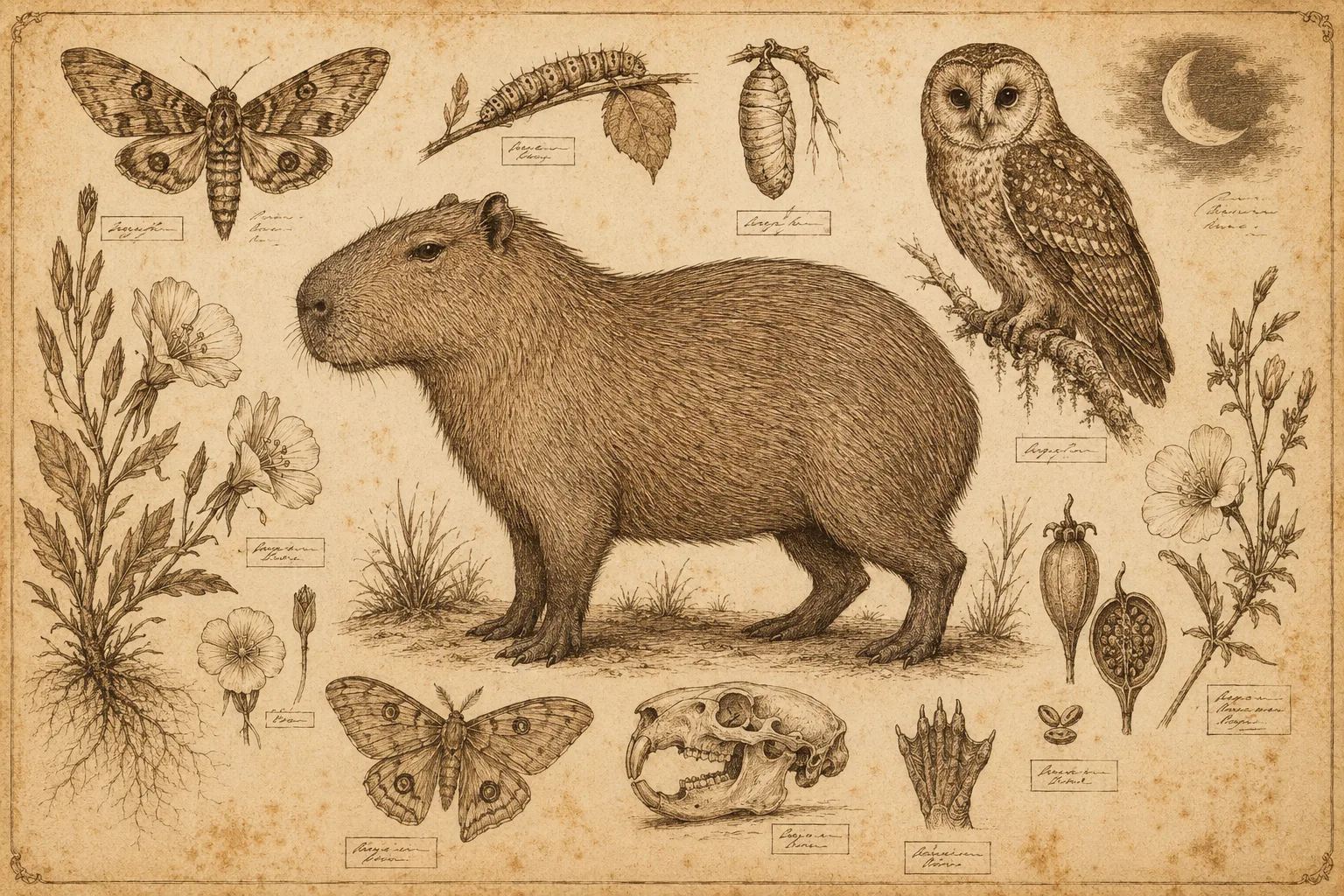
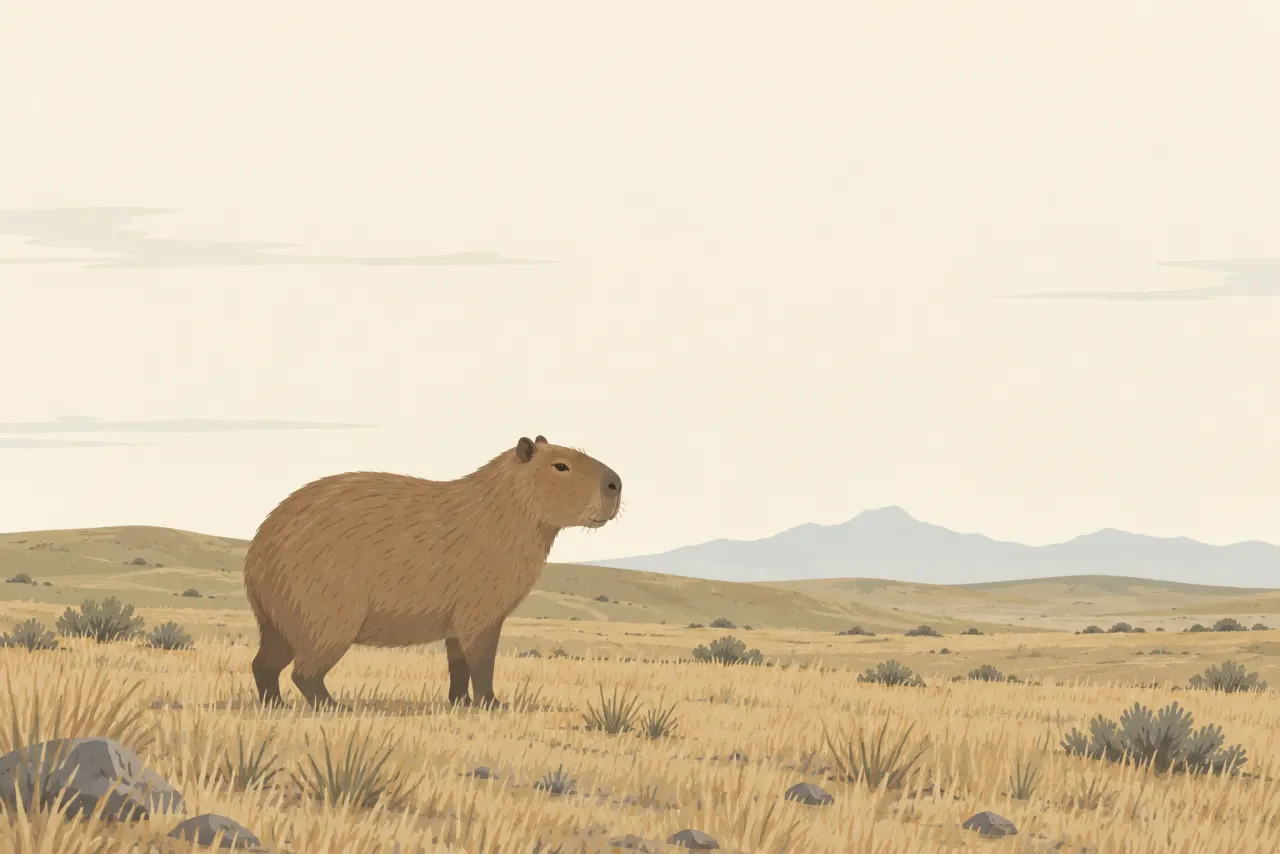
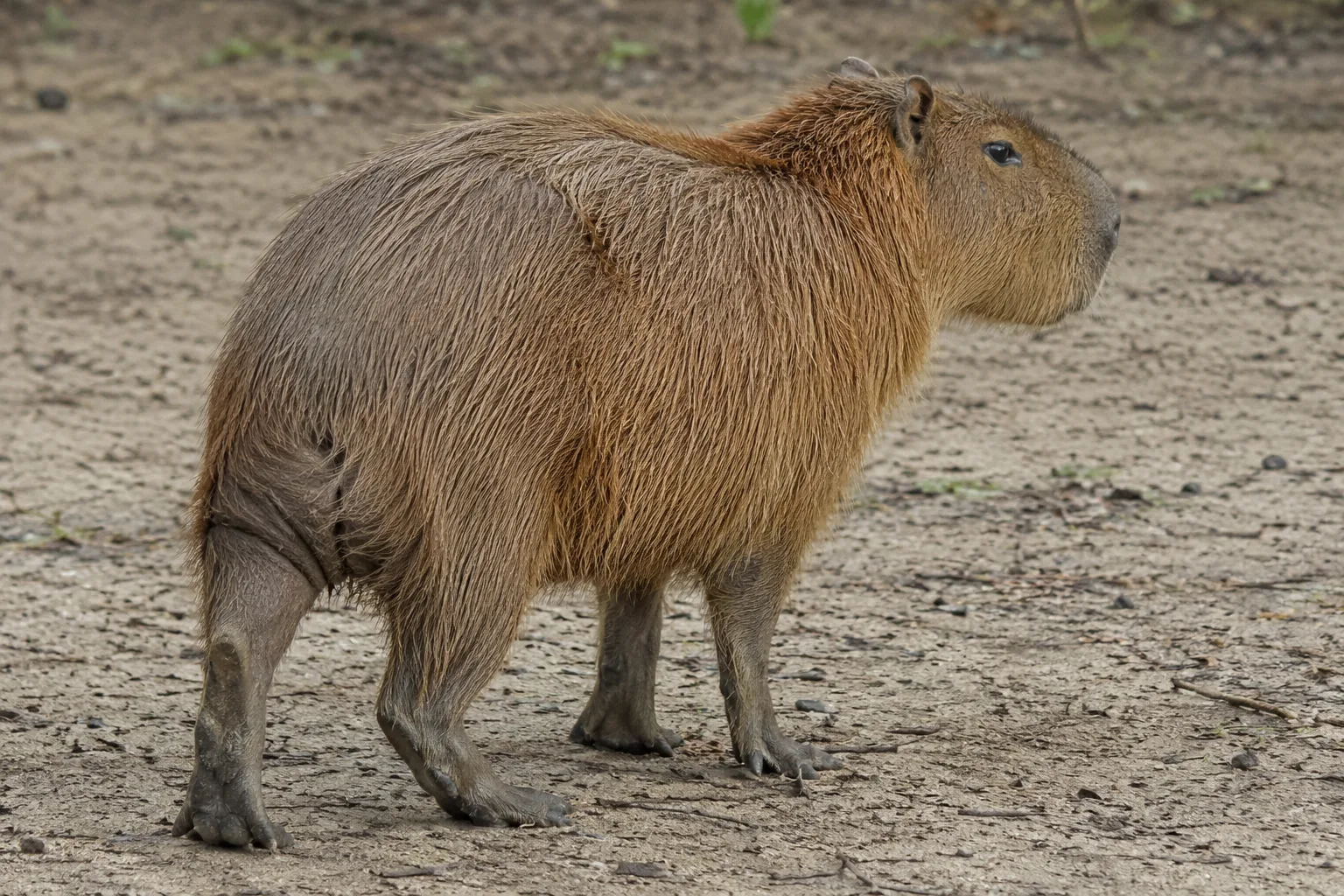
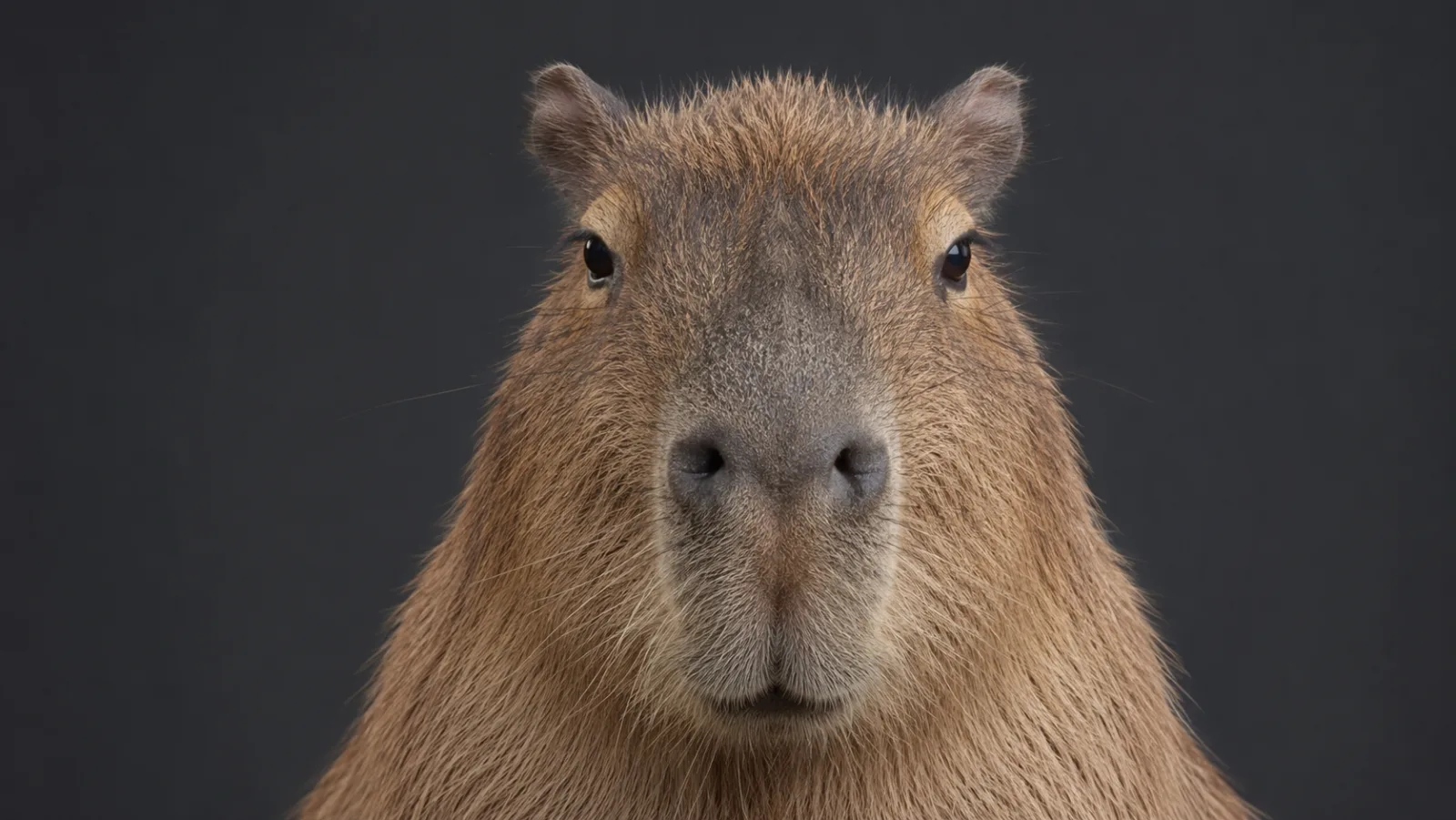
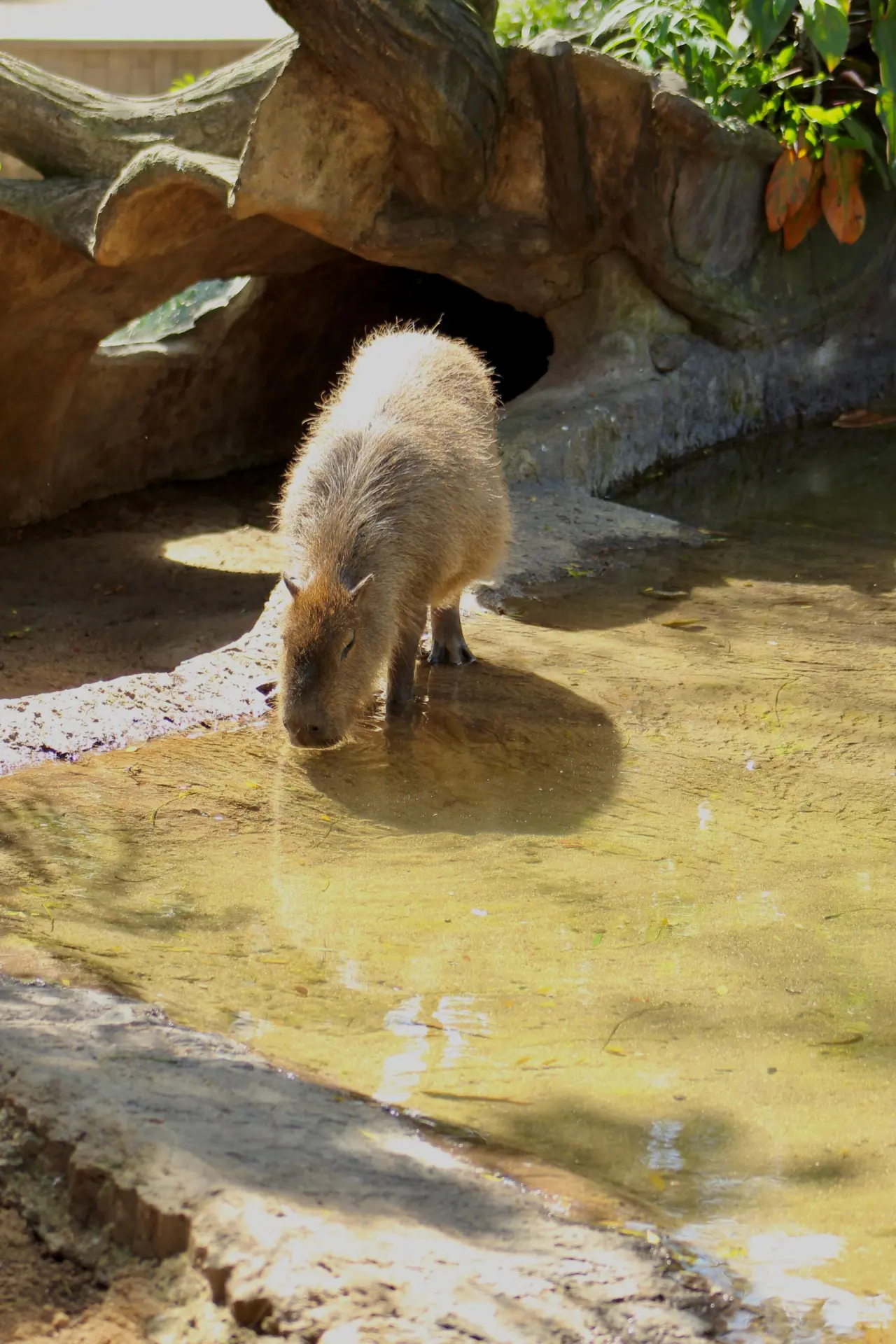
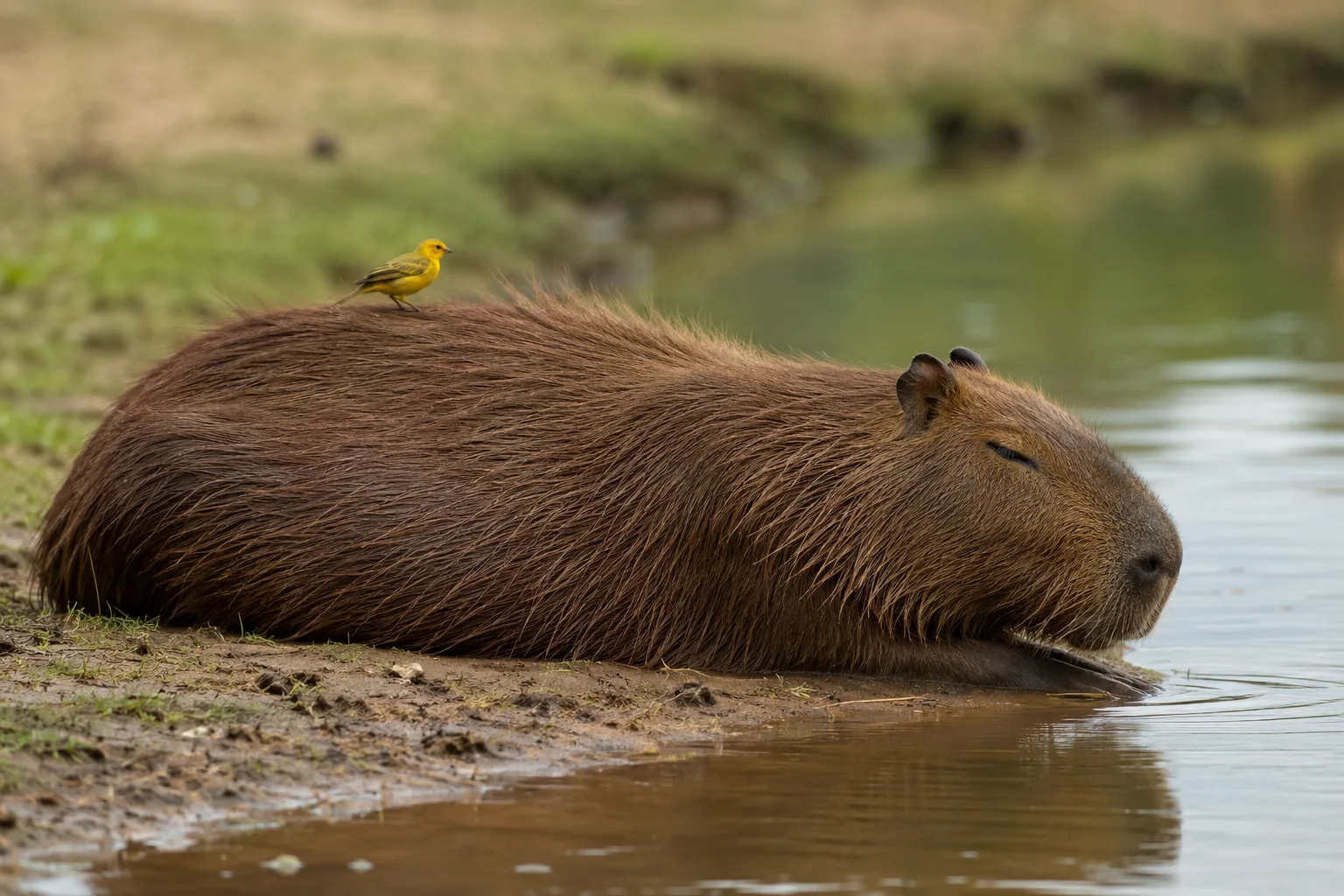
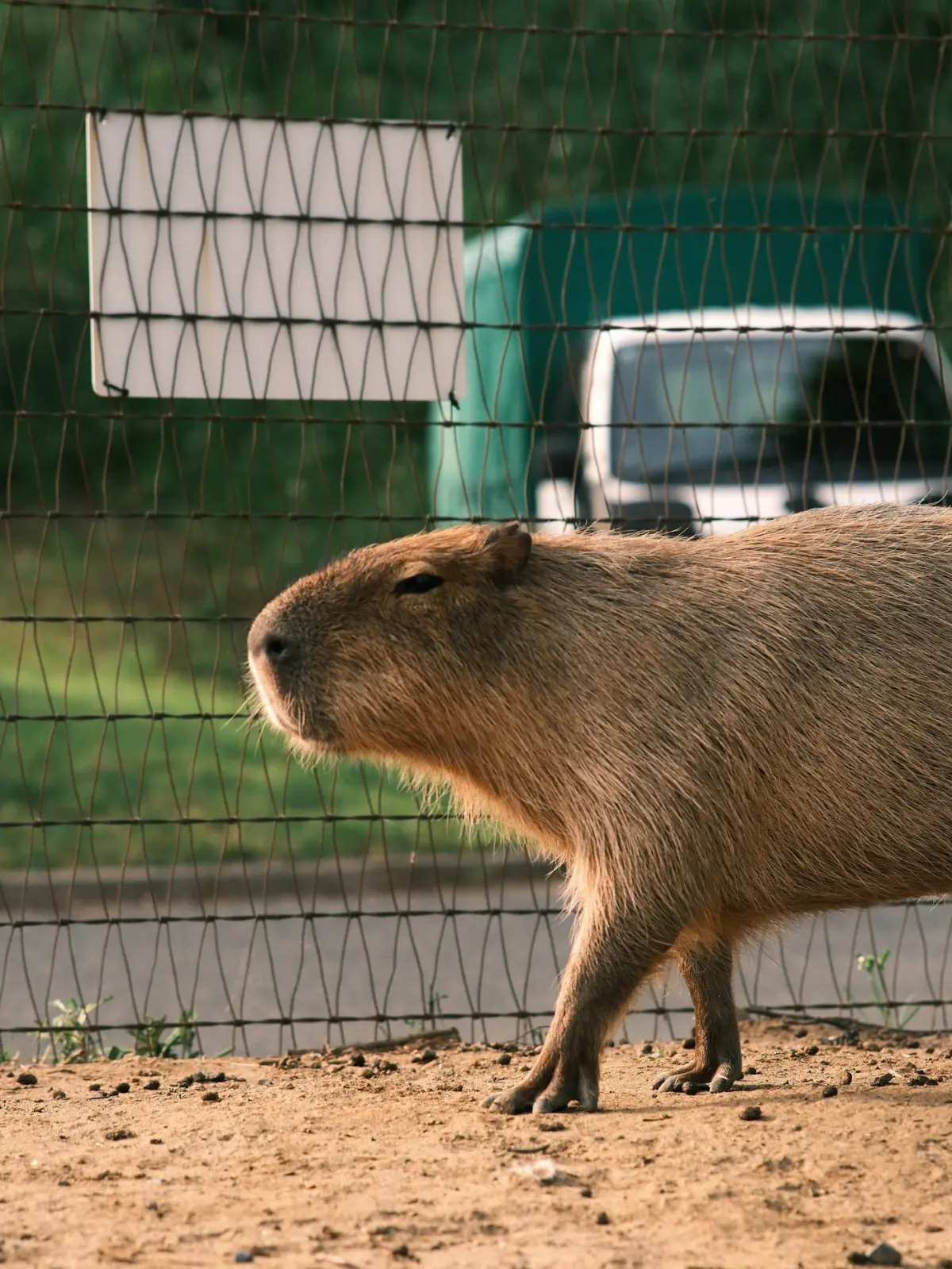
It helps to remember what you are actually putting in the same space. A capybara is the world’s largest rodent, with adults running roughly 35 to 66 kg, depending on the source and the individual. They are semi-aquatic grazers from South America, built to eat grass and aquatic plants and to slide into water when something feels wrong. San Diego Zoo Wildlife Alliance and Animal Diversity Web both describe them as herd animals, which is part of why they read as easygoing on camera. They are used to bodies around them. They are not used to a predator’s body language.
A dog brings the opposite wiring. Even a couch-soft family dog carries chase instincts, a play style that runs through the mouth, and a nervous system that lights up at fast movement. None of that is a character flaw. It is just a different animal doing exactly what its ancestry trained it to do. The problem is not that one of them is bad. The problem is that the two scripts do not match, and the capybara is the one with more to lose.
My honest opinion: most of the “they’re best friends” framing online is people projecting a friendship onto two animals that are mostly just tolerating proximity under controlled conditions. Tolerance is not friendship, and it is definitely not a safety guarantee.
Sorting The Myths From The Boring Truth
A lot of the confusion comes from clips that flatten a managed setup into a feel-good moment. Here is where the common assumptions tend to fall apart.
| Myth | Better answer |
|---|---|
| ”Capybaras get along with everything” | They tolerate company because they are herd animals, but tolerance has limits and depends heavily on the setting |
| ”A calm video means it’s safe to copy” | The calm moment is often the only usable take out of many, with handlers and barriers cropped out |
| ”My dog is gentle, so it’s fine” | Gentle with people is not the same as safe around prey animals; chase and mouth-play can switch on fast |
| ”If nothing went wrong, nothing was risky” | A meeting can be high-risk and still end fine through luck; one good outcome is not a pattern |
| ”Animals will sort it out themselves” | Prey animals under pressure freeze, bolt, or panic; leaving it to chance puts the burden on the capybara |
Fence-Line Meetings Are Still Meetings
A fence does not erase stress. It can reduce contact risk, but barking at a barrier or pushing noses through wire can still create pressure. The capybara may be unable to leave. The dog may escalate because the fence makes everything more exciting.
If a professional facility permits any controlled proximity, it should have trained staff, distance, escape routes, and the ability to end the session immediately. It should not depend on someone’s cousin saying, “He’s friendly.”
The Video Is Missing The Boring Parts
The internet edits out the boring parts because boring parts ruin the magic. You do not see the handler just out of frame, the barrier, the prior training, the animal history, the failed attempts, the choice to stop, or the 200 clips where nothing usable happened.
You also do not see the risk assessment, because risk assessments are famously bad at going viral.
The Boring Answer Protects Everyone
For normal people, the answer is simple: do not introduce dogs and capybaras for content, curiosity, or “just one photo.” If you are visiting a facility, follow staff rules. If the facility says no dogs near the habitat, that is not anti-fun. It is animal management.
What A Genuinely Careful Setup Would Look Like
If you ever do see a controlled interaction at a real facility, it is not improvised. The boring infrastructure is the whole point, and most of it never makes the cut in a 12-second clip.
- A barrier or generous distance that the capybara cannot be cornered against, with a clear path to water or shelter.
- Trained staff watching both animals, not filming them, ready to read early stress signals.
- A leashed, settled, predictable dog, never an off-leash unknown running on excitement.
- A hard stop rule: if either animal escalates, the session ends, no second attempt for the camera.
- Awareness of germ transfer in both directions, which is why the CDC’s animal-exhibit guidance leans hard on caution and separation.
None of that translates to a backyard or a parking lot. The facility version works because professionals removed almost all of the chance from it. Your version would be mostly chance.
For everyone who is not running a managed habitat, the takeaway is short. Do not arrange a dog-capybara meeting for content, curiosity, or one photo. If a facility says no dogs near the enclosure, that rule is doing its job. The safest viral idea is the one you do not try to recreate.