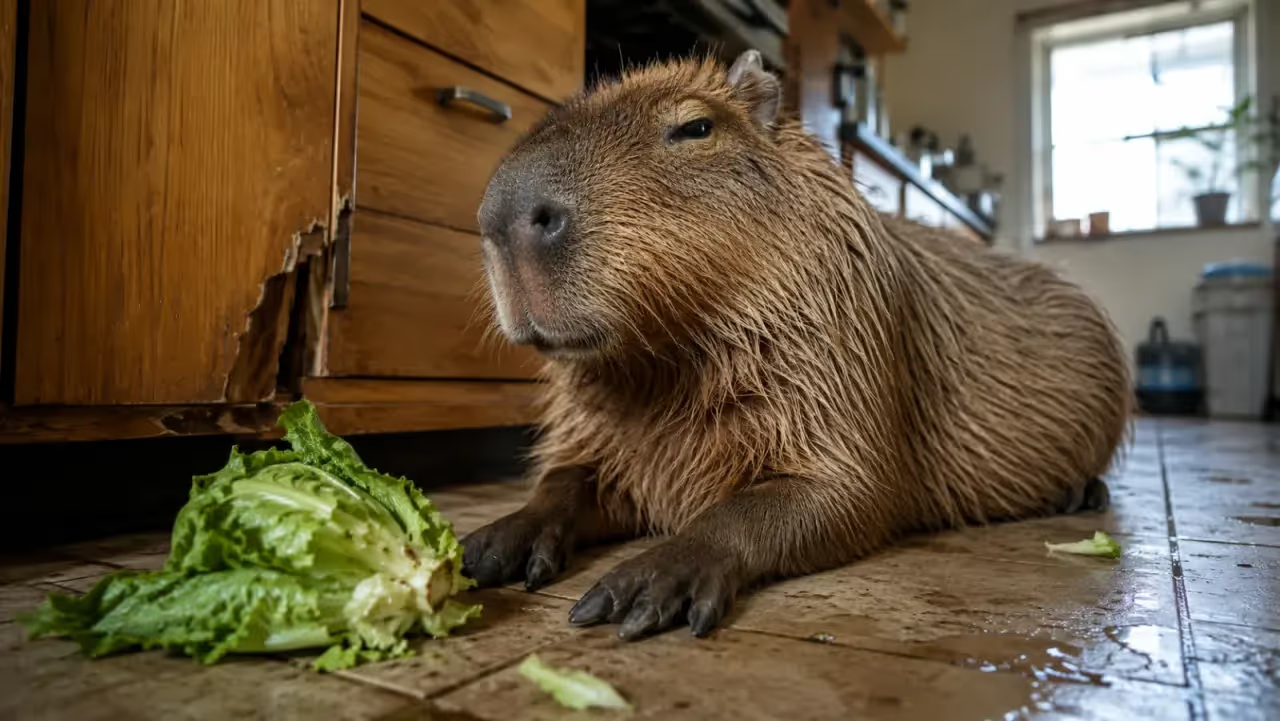

World Kindness Day found the capybara and immediately overworked it.
The animal sits there, neutral-faced, surrounded by birds, ducks, monkeys, turtles, children in comment sections, and adults projecting emotional stability onto its forehead. The internet calls it friend-shaped. Fair. But the better capybara lesson is not “let everyone climb on you.” Please do not make that your life philosophy unless you enjoy burnout with garnish.
Why Capybaras Look Friend-Shaped To The Internet
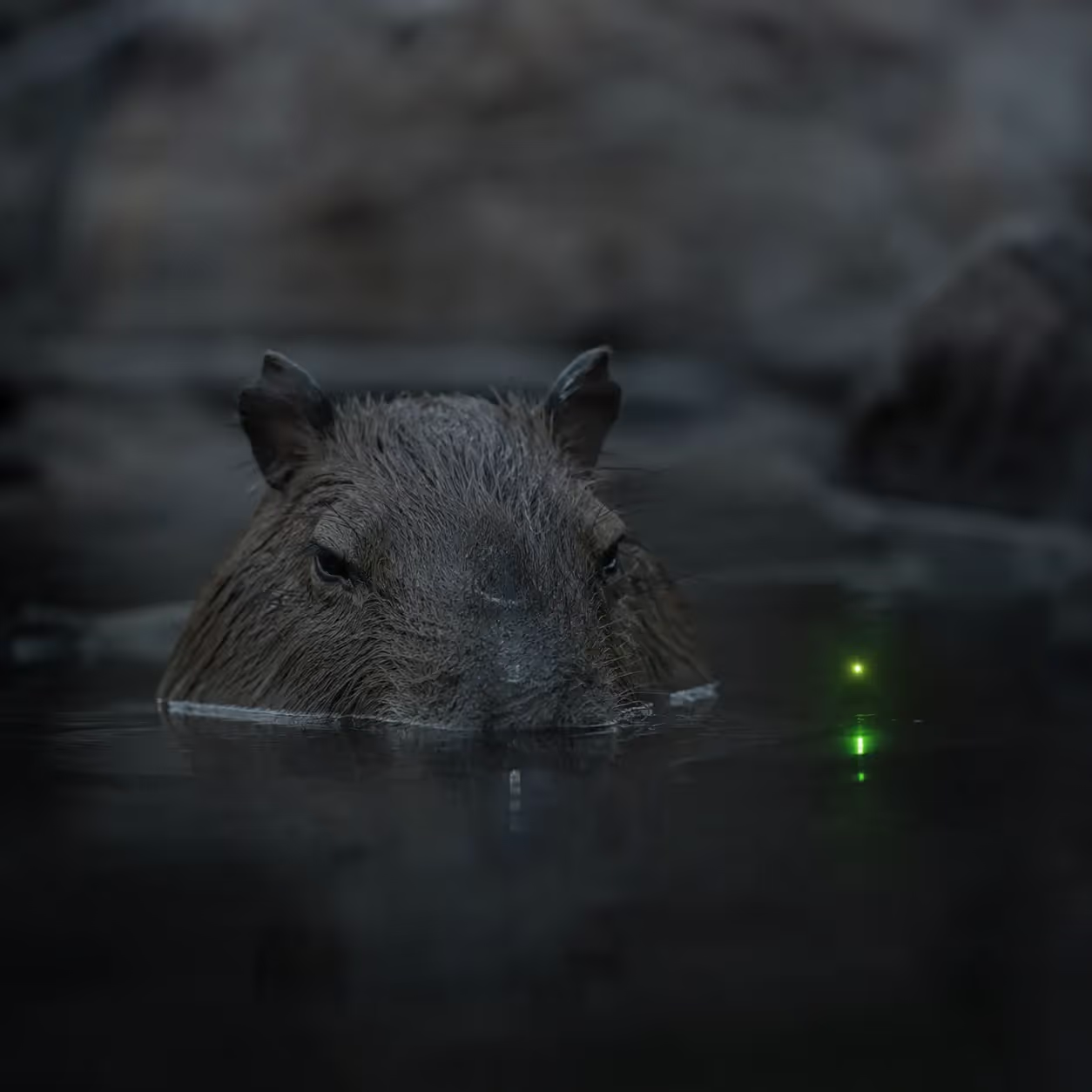
Capybaras are social animals. Animal Diversity Web describes them living in groups, and San Diego Zoo emphasizes their semi-aquatic, grazing, social nature. That real sociality is part of why the meme works. A capybara often looks settled near other bodies.
The friendship image also works because capybaras are large enough to be furniture-adjacent in photos, calm-looking enough to seem wise, and weird enough that every scene feels slightly invented.
That is the attention hook, and it is a good one. A child sees the animal with a bird on its back and gets the joke before anyone explains ecology. An adult sees the same image and thinks, with suspicious sincerity, “I would like to become less available to nonsense.” Both readers have entered the building. Now the article has to tell them the truth.
| Internet read | Real behavior underneath |
|---|---|
| Friend to everyone | Social tolerance in the right context |
| Calm no matter what | Low-drama body language until stress rises |
| Living pillow | Large body and patient posture |
| Kindness icon | Human projection plus real group life |

Kindness Does Not Mean Being A Doormat With Whiskers
The AZA Capybara Care Manual is a useful corrective because it turns the meme back into an animal. Capybaras need social housing, water, space, diet management, and staff who understand behavior. They also have warning signs. A stiff body, retreat, alarm call, tooth display, or group bunching changes the story.
That is the line people miss. Tolerant does not mean endlessly available. Gentle does not mean blank. Calm does not mean nothing is happening.
Our body-language guide is the practical version: watch the whole animal, not just the cute still frame. If the capybara can leave, has companions, has water, and is not being crowded, the scene reads very differently from an animal trapped in a photo setup.
The Human Version Is Useful, Even If It Is Not Sparkly
The human lesson is less decorative and more useful: be easy to be near, but keep an exit. Share the space, but do not donate your nervous system to every loud person in the room. Sit with the group, but know when the pond is calling.
| Capybara-ish move | Human translation |
|---|---|
| Rest near the group | Be present without performing |
| Use water as retreat | Know what actually calms you |
| Stay loose until needed | Do not pre-panic for sport |
| Move away from pressure | Leave before resentment grows teeth |
| Communicate early | Small no beats dramatic collapse |
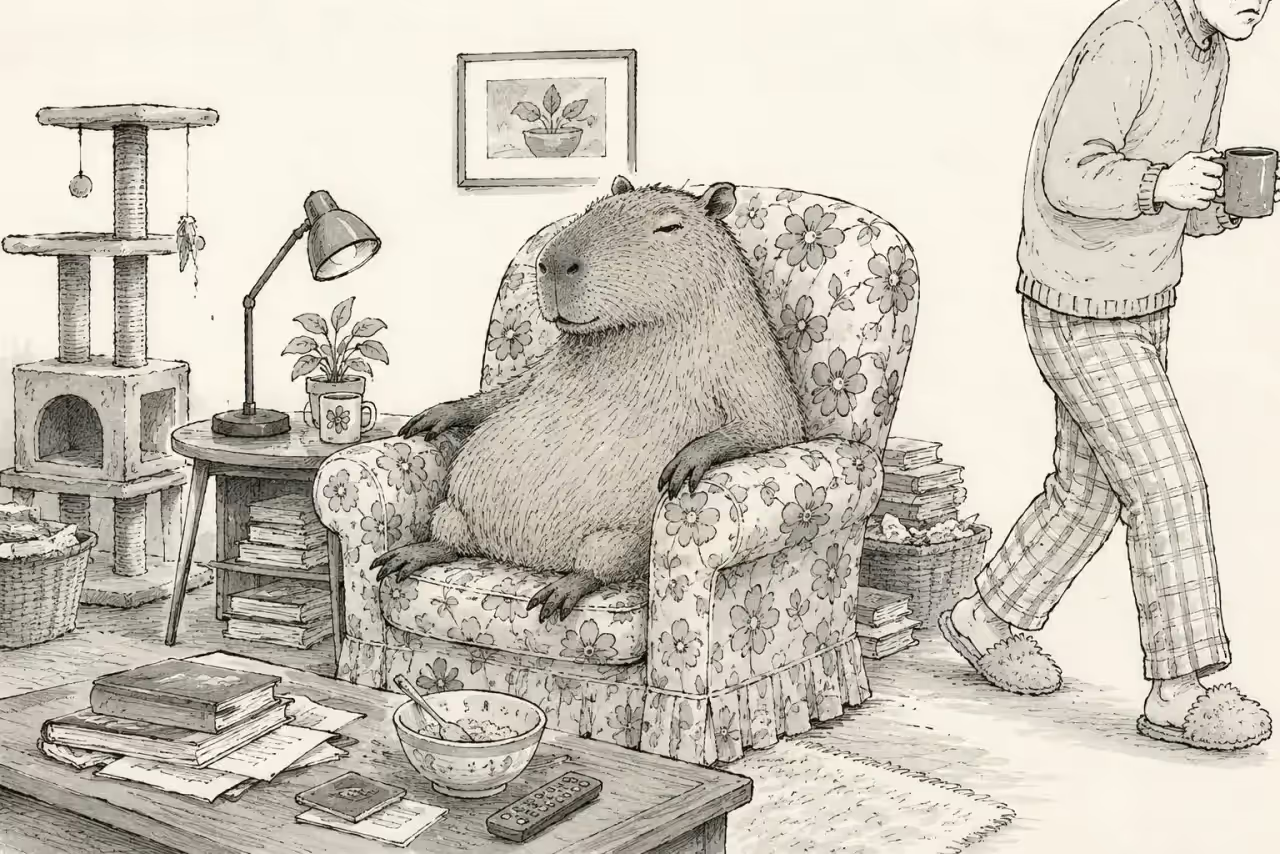
This is where I think the capybara is a better kindness mascot than the usual glittery quote graphic. It is not cheerful. It is not available to everyone forever. It is kind in the shape of coexistence, not customer service. That is the part a tired parent, overbooked student, or office group-chat survivor can actually use.

The Respect Test For Cute Kindness Content
Before you share a capybara kindness clip, ask the small annoying questions. Was the interaction staged? Can the capybara leave? Are people feeding, grabbing, dressing, or crowding it? Is the caption teaching the animal or just using it as a prop? A kind post should not require the animal to be trapped in the bit.
World Kindness Day should apply to the capybara too. The animal should not become a symbol of boundaries while humans ignore all of its boundaries. That is a bit on the nose, even for the internet.
The guide to animals sitting on capybaras has the deeper version. Some interactions are natural or professionally managed. Some are content mills with better lighting. Learn the difference.
There is also a good human filter here. If the clip makes you want to be softer, great. If it makes you want to be endlessly available because the capybara looks endlessly available, slow down. The animal has water, companions, and escape routes in the best versions of those scenes. Build the same idea into your day before you start calling it kindness. A boundary is not the opposite of kindness. It is the part that keeps kindness from curdling into resentment.
Being Easy To Be Around
Capybaras make good World Kindness Day mascots only if we keep the whole lesson. Yes, they are social. Yes, they can be tolerant. Yes, the photos are absurdly good.
But the real lesson is not “be nice until you disappear.” It is “be gentle, stay grounded, keep companions nearby, and leave when the room stops respecting your waterline.”