
Capybara body language is not mystical. It is a large social rodent asking the same three questions over and over: is this safe, is there water nearby, and why is that person moving like a vending machine with anxiety?
The direct answer: a relaxed capybara looks loose, steady, and unhurried. A stressed capybara may stiffen, retreat, bark, show teeth, chase, freeze, or move toward water. Do not treat one cute pose as a full emotional transcript. That is how people become the problem.
The Relaxed Capybara Look
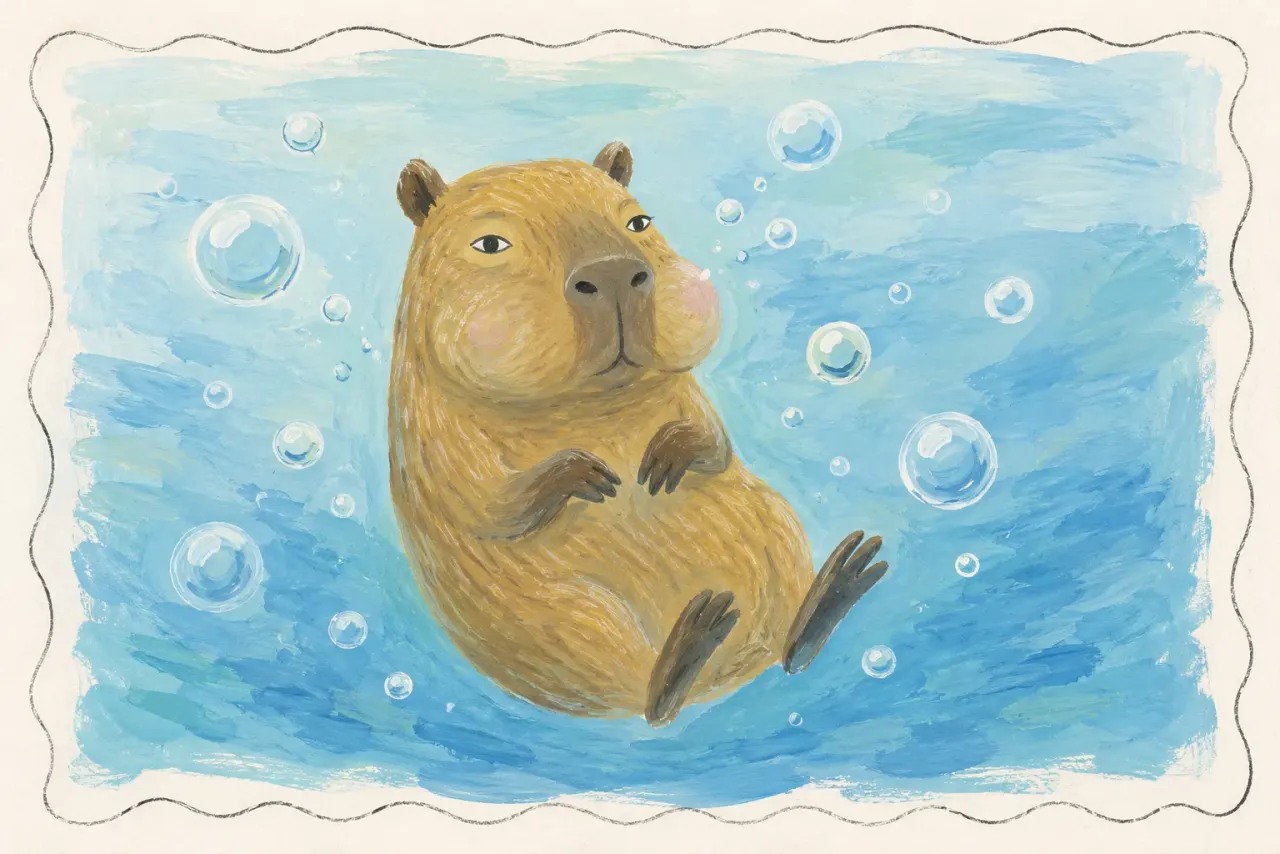
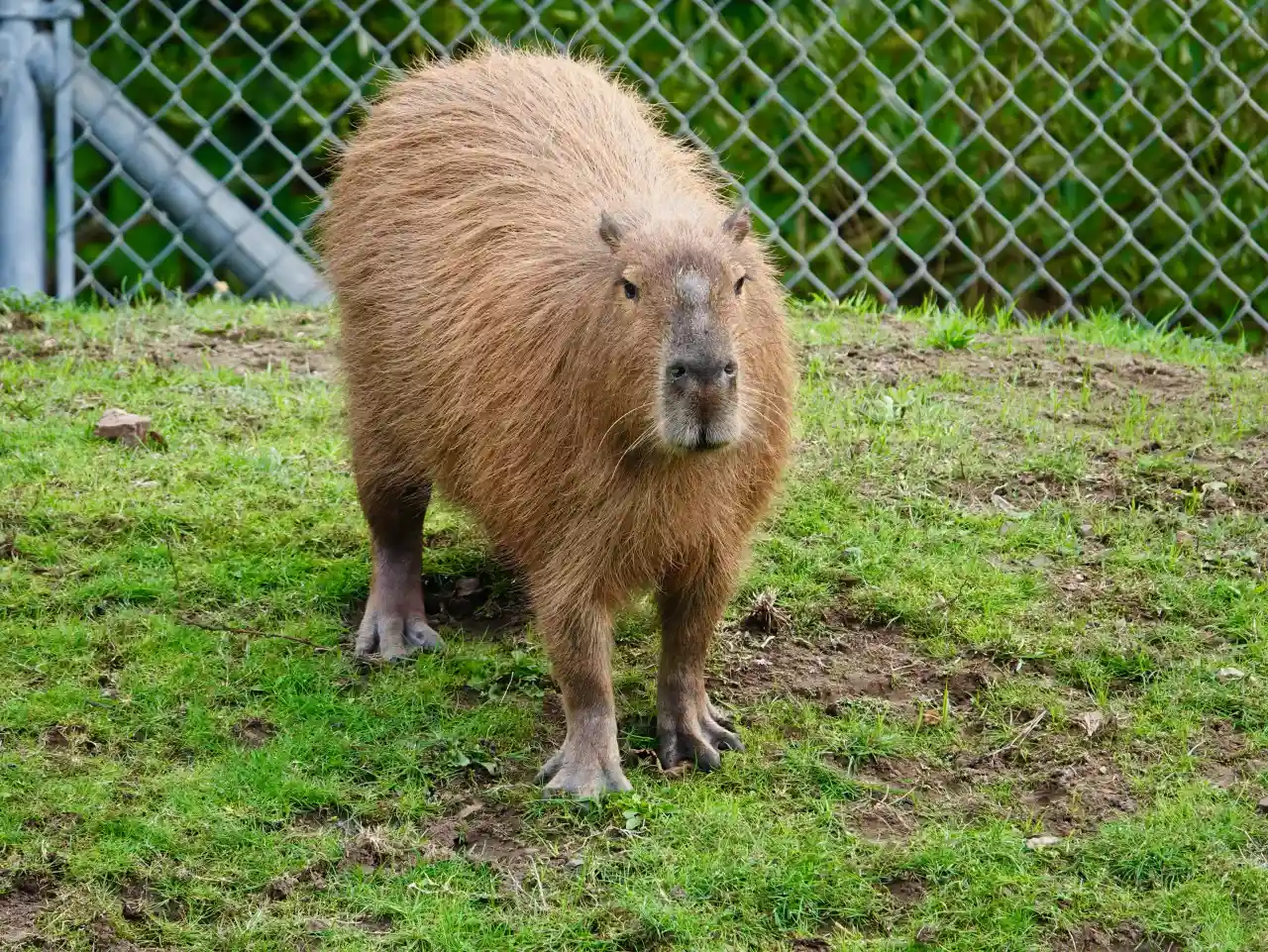
Relaxed capybaras tend to look boring in the best possible way. They graze, rest low, sit near their group, soak, blink slowly, and move without the sudden little corrections you see when an animal is deciding whether to leave.
San Diego Zoo Wildlife Alliance describes capybaras as semi-aquatic animals that use water for feeding, cooling, and escape. That matters because a calm capybara is often calm partly because the exit exists. Put the same animal in a noisy room with strangers and no retreat, and the face may stay cute while the situation becomes less cute by the second.
| Signal | Better read | Human move |
|---|---|---|
| Lying low near the group | Likely resting, especially during warm parts of the day | Watch quietly |
| Slow grazing | Normal comfort behavior if the animal is not being crowded | Keep distance |
| Soaking with only the head up | Normal water use and cooling | Do not call it lazy |
| Loose ears and steady breathing | Often low concern | Let it stay low concern |
Curious Capybara Or Low-Grade Concern?
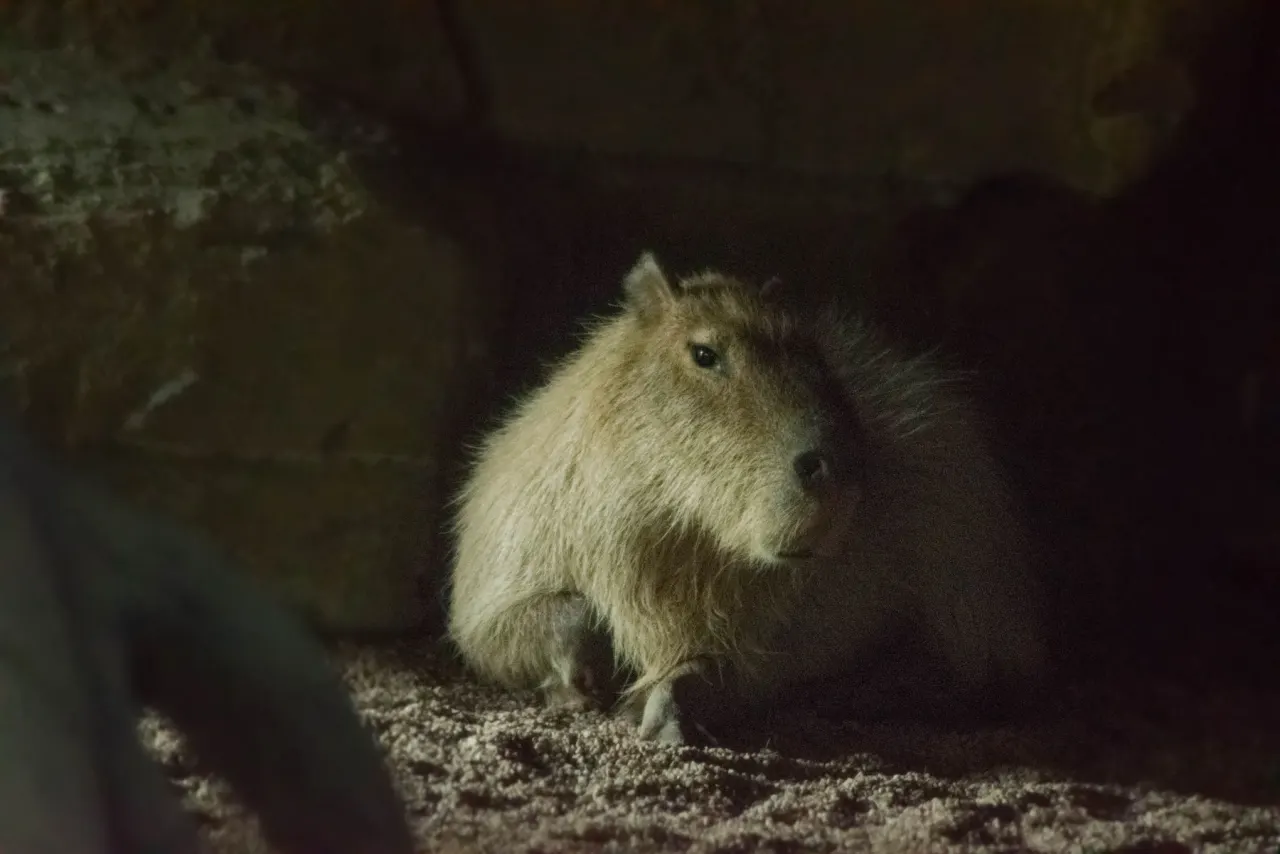
A curious capybara may raise its head, angle its ears, sniff, turn toward a sound, or pause mid-graze. That does not mean it wants a friendship arc. It means the animal noticed something and is gathering data.
Animal Diversity Web notes that capybaras live in groups, use vocal signals, and rely on water as a safety route. So the first read is not “does it like me?” The first read is “does it have room to make its own choice?” If the animal can step back, rejoin the group, or get into water, the whole encounter is less loaded.
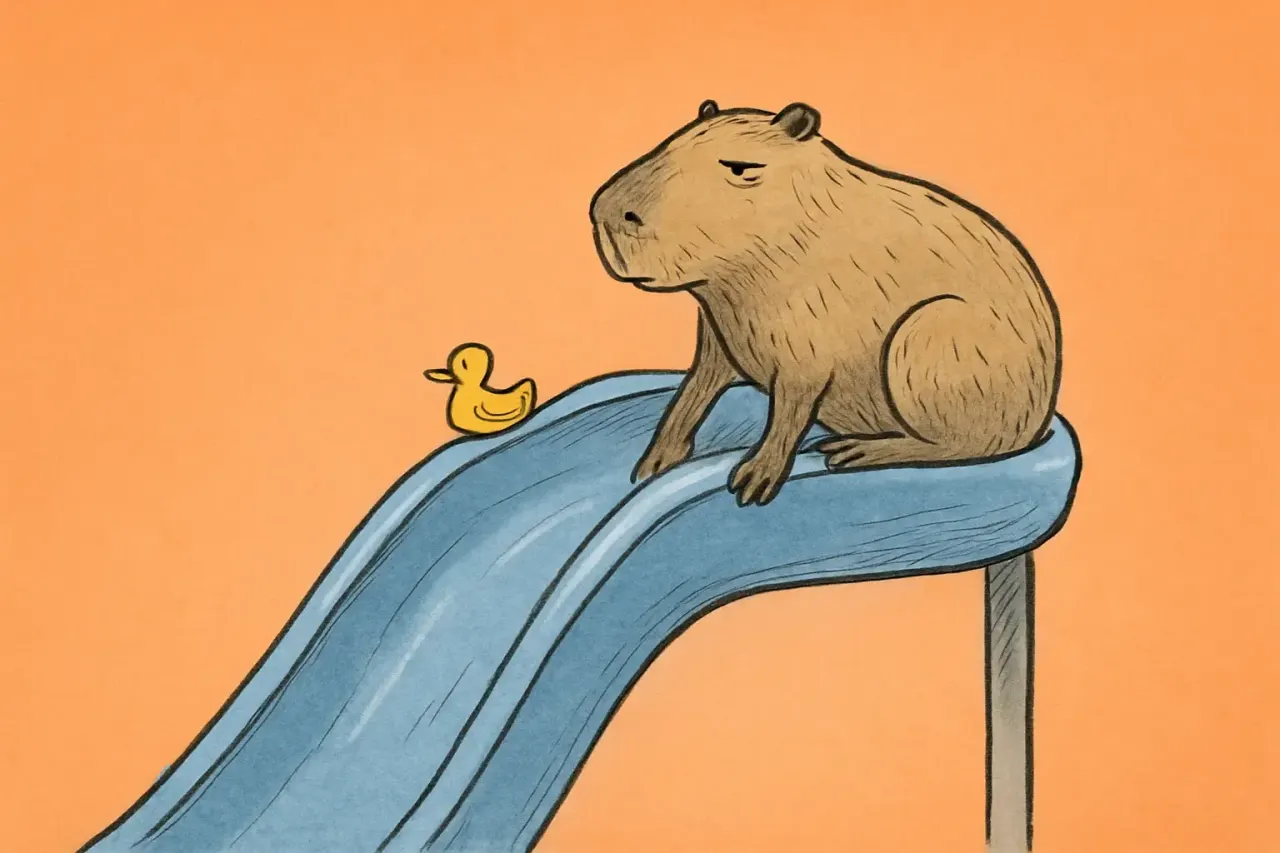
The slightly annoying truth: the capybara does not owe you a clear answer. It can be curious and still not want to be touched. Very relatable, frankly.
Signs You Are Too Close
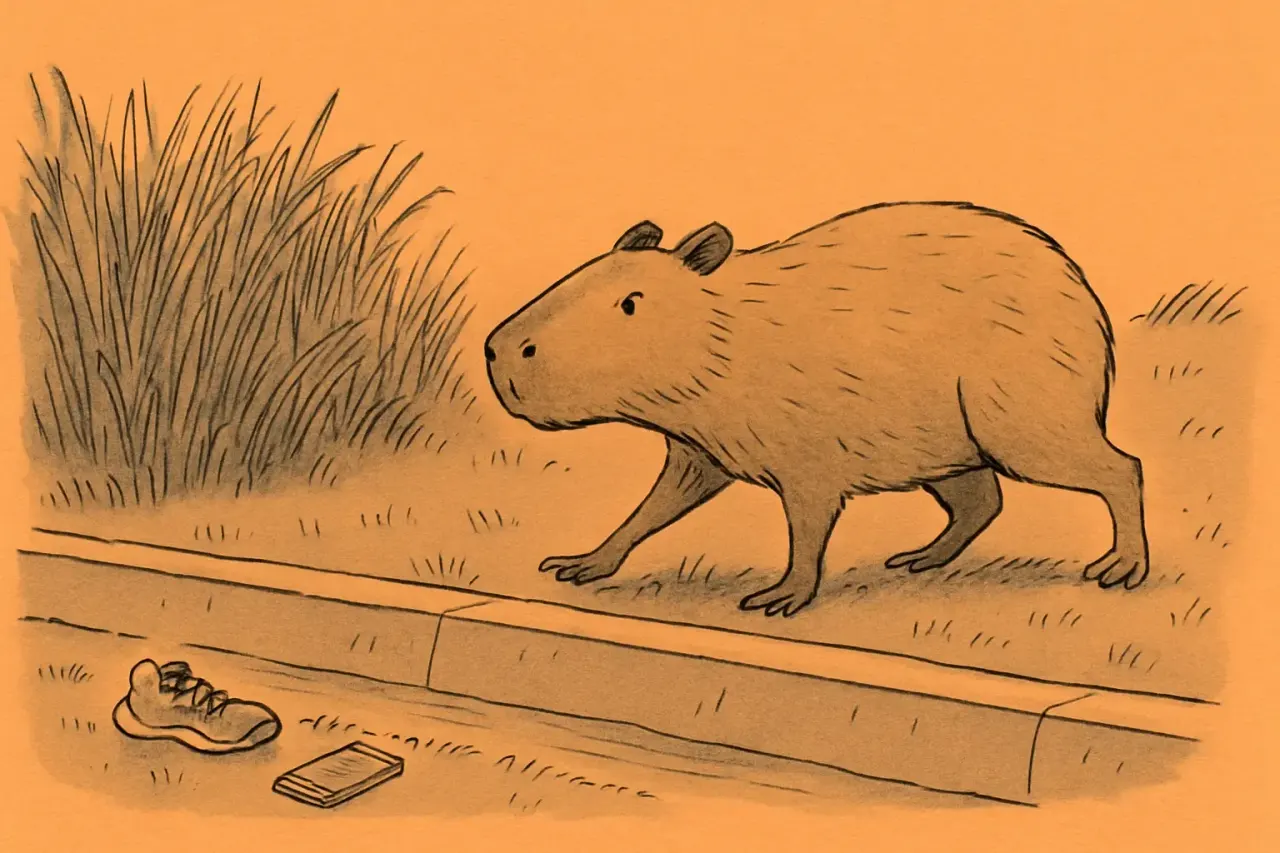
The easiest sign is also the most ignored one: the capybara leaves. If the capybara walks away, that was the review.
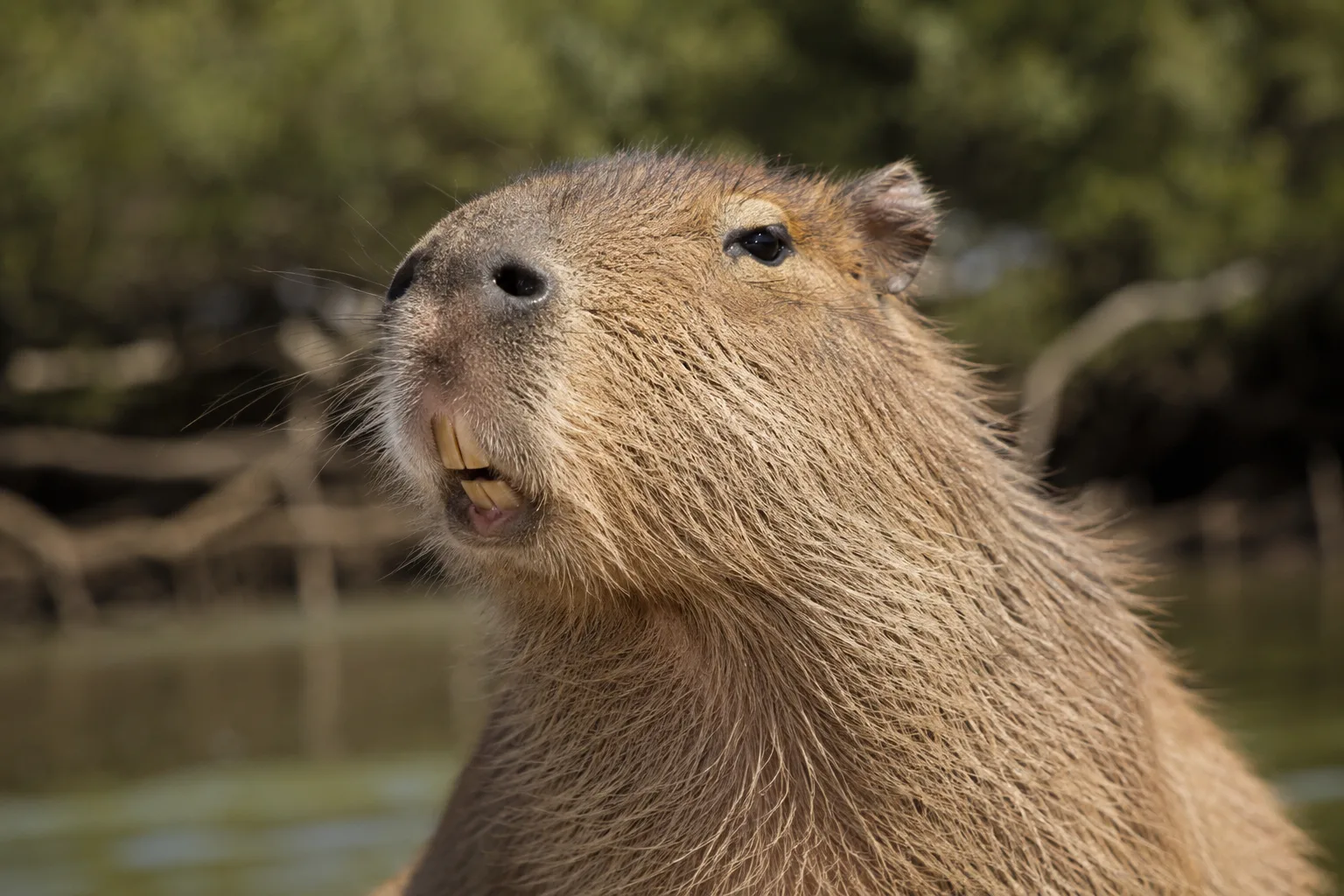
Other signs are more subtle. Watch for stiff posture, a sudden pause, head raised high, repeated glancing toward water or the group, pushing through other animals, a sharp bark, tooth display, or chasing. Capybaras are usually described as calm, but calm animals can still defend space. They also have long incisors built for plants, which is not comforting when the plant is your finger-shaped bad decision.
| You see | It may mean | Stop doing this |
|---|---|---|
| Freezing | The animal is assessing pressure | Moving closer |
| Backing away | It wants distance | Following with a phone |
| Sharp bark | Alarm or warning | Laughing and leaning in |
| Teeth visible, stiff body | Escalation risk | Touching, feeding, blocking exits |
Sounds Change The Whole Read
Capybaras are not silent furniture. Animal Diversity Web says vocal communication is important in capybara groups, including alarm barks that can send animals rushing into water. Young capybaras vocalize often, and adults use sound too, even if humans are usually too busy narrating the loaf to listen.
That means a pose can shift meaning when sound enters. A capybara sitting still beside a pool is one thing. A capybara sitting still after a sharp bark, while the group bunches and faces the same direction, is another. The body is only one tab open in the browser.
Why The Same Pose Reads Differently
A single capybara behavior does not carry one fixed meaning. Age, group, setting, and recent events all shift the read, which is why species-level patterns are a starting point, not a verdict. Animal Diversity Web and San Diego Zoo Wildlife Alliance both describe capybaras as highly social herd animals, so a lot of what looks like a reaction to you is actually the animal tracking its group.
A pup that vocalizes a lot is not necessarily distressed; young capybaras are simply noisier. An adult that freezes during a feeding session might be guarding food rather than fearing you. The weather is a quiet variable people skip. These are semi-aquatic grazers built for warm South American wetlands, so a flat, motionless capybara on a hot afternoon is often just thermoregulating near water, not sulking.
| Same behavior | Reads one way when… | Reads another way when… |
|---|---|---|
| Lying flat and still | It is hot and water is nearby (cooling) | The group just barked and bunched (alarm) |
| Frequent vocalizing | It is a young animal near its mother (normal) | An adult does it while stiff and facing you (pressure) |
| Standing very still | Mid-graze, ears loose (assessing a sound) | Head high, eyes locked, body tense (deciding to leave) |
| Moving toward water | Routine soak in warm weather (comfort) | Sudden, after a sharp call (escape route) |
The honest take: most “the capybara was being affectionate” stories are really “the capybara tolerated me and had nowhere better to be.” Tolerance is not the same as enjoyment, and pretending otherwise is how a calm animal ends up cornered by someone who thinks they have a bond.
A Quick Field Checklist
Before you decide what a capybara is feeling, run the context first, then the body. The setting usually answers half the question before you even look at the face.
- Where is the group? A capybara reading its herd is not reading you.
- Is there water, and can the animal reach it? An exit lowers stress.
- How hot is it? Heat explains a lot of horizontal capybaras.
- Did feeding just happen? Food changes tolerance and space rules.
- Are people loud or crowding? That alone can tip curious into done.
- Can the animal leave whenever it wants? If yes, the encounter is fair.
Run that list and the body language stops being a mystery you decode and starts being a status update you respect.
How To Watch Without Making It Weird
The best capybara watcher is calm, still, and not trying to turn every second into content. Let the animal approach if the setting allows it. Never chase, corner, crowd, pick up, block water access, or reach over a barrier. At a zoo or encounter, the keeper rules are not mood-killers. They are the reason you get to stand near a large rodent with teeth and everyone goes home with their dignity.
For a deeper read, pair body language with setting. Is the capybara near its group? Is it hot? Is water available? Are guests loud? Did feeding just happen? A capybara at 2 p.m. in summer may look horizontal because physics won.
The fan-friendly rule is simple: if the animal chooses space, let it have space. The capybara has spoken. It used its feet.