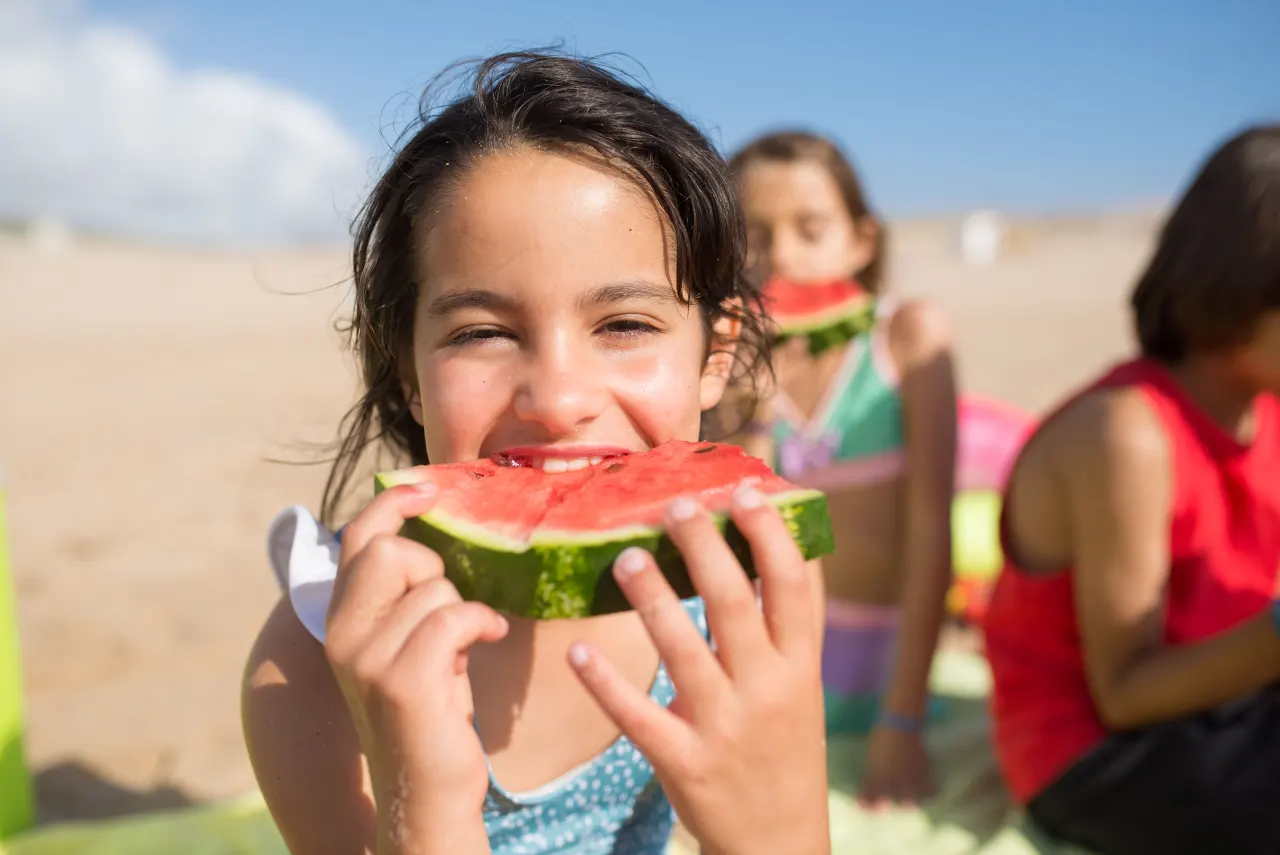
National Watermelon Day is August 3, which is useful because it gives humans a formal excuse to stand over the sink eating fruit like they have no furniture. It also gives capybara people the same question every summer: do capybaras actually love watermelon?
Yes, many capybaras will eat watermelon. No, watermelon is not what makes a capybara diet work. That distinction is the whole article, and frankly most of the internet needs to write it on a napkin.
Can Capybaras Eat Watermelon On National Watermelon Day?
Watermelon is a treat food for capybaras, not a staple. The AZA Capybara Care Manual frames capybara nutrition around hay, grass, browse, pellets where appropriate, water access, and careful produce management. San Diego Zoo describes capybaras as grazers that feed on grasses and aquatic plants in the wild.
That is the part the cute videos flatten. A capybara eating watermelon is not revealing its secret dietary destiny. It is eating a sweet, wet treat because sweet wet treats are persuasive. Humans understand this. We made slushies.
National Day Calendar notes that watermelon is about 92 percent water. USDA FoodData Central also lists raw watermelon as high in water and relatively low in fiber compared with forage. That makes it refreshing, but not structurally useful in the way hay and grass are useful to a large hindgut-fermenting rodent.
| Question | Reality check |
|---|---|
| Can capybaras eat watermelon? | Usually yes, as a controlled treat |
| Should it be daily? | No, not as a default routine |
| Is it more important than hay? | Absolutely not |
| Can visitors bring it? | No, use only staff-approved food |
| Why is it so popular online? | It is colorful, loud, messy, and readable in one second |
What Capybaras Eat When The Camera Is Off
The boring diet is the real diet. Capybaras are grazing animals. They evolved around wetlands, grasses, aquatic vegetation, and group feeding. That does not make every leafy thing safe, and it does not mean pet owners can freestyle a salad bar in the yard, but it does tell you where the diet’s center of gravity sits.
Our full capybara diet guide gets into the daily picture: grass, hay, browse, water, and professional husbandry planning. Fruit is a side note. A juicy side note, yes, but still a side note. The feed may love the red triangle. The gut still wants fiber.
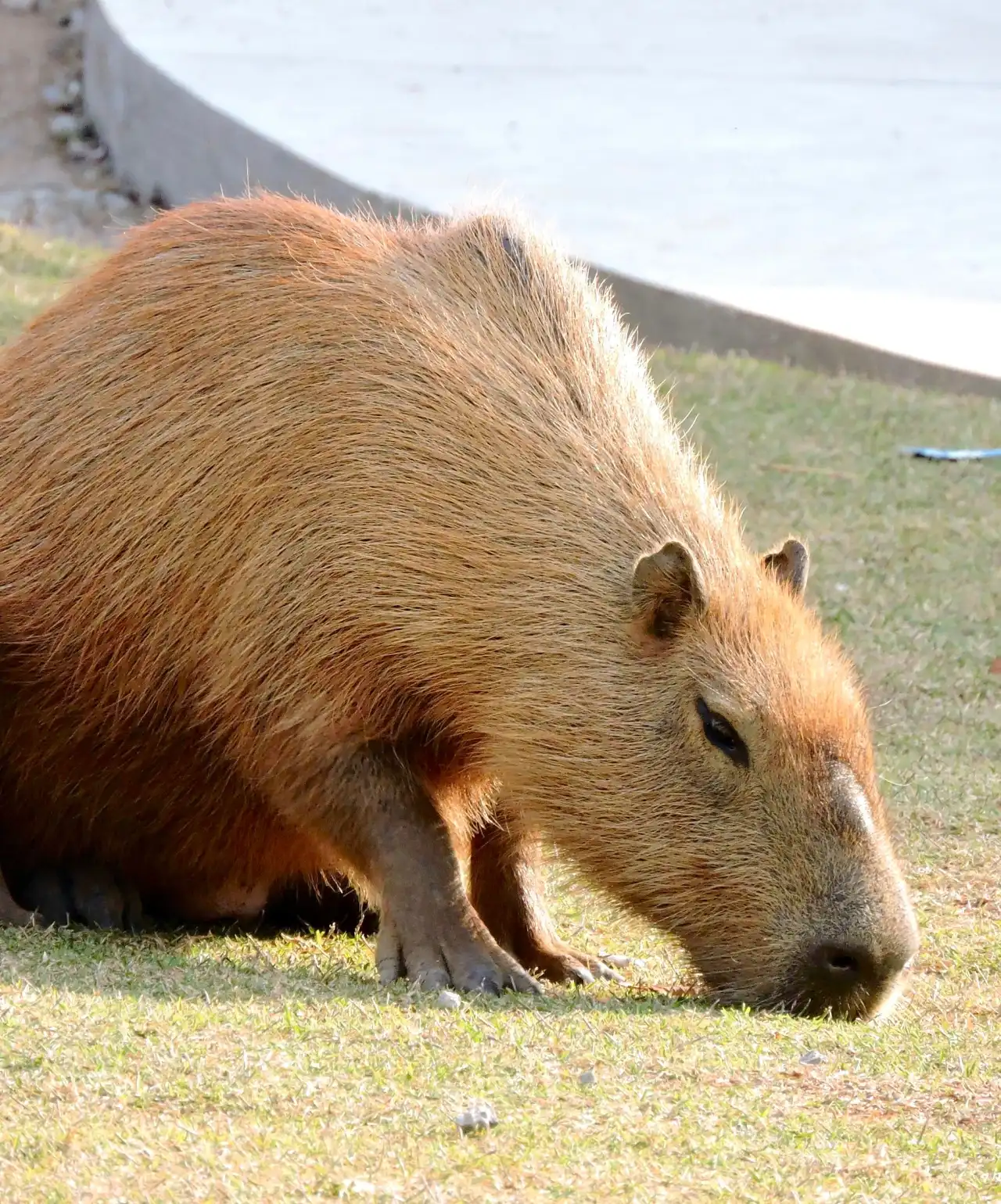
The one thing I wish every watermelon clip included is five seconds of hay. Not because hay is exciting. It is not. Hay has the charisma of a receipt. But for the animal, that high-fiber baseline matters more than the bright fruit moment.
The Watermelon Treat Rules Keepers Actually Care About
If a zoo offers watermelon, it is usually doing so in a managed context: amount, timing, social dynamics, diet plan, and cleanup all matter. Keepers are not just dumping fruit because the internet requested hydration cinema.
At a reputable facility, a treat can also be enrichment. It gives animals something to investigate, mouth, share, ignore, or argue about mildly. The important word is “managed.” Too much fruit can displace the fiber-heavy foods capybaras actually need, and sugary treats are not a personality.
| Treat rule | Why it matters |
|---|---|
| Small portions | Fruit should not crowd out forage |
| Staff-approved only | Outside food can be unsafe or contaminated |
| Watch group behavior | Food can create jostling or stress |
| Clean up leftovers | Sticky fruit attracts pests and spoils fast |
| Keep rind decisions professional | Hard rinds can be enrichment or a problem depending on setup |
That last row is why copying a video at home is a bad plan. A keeper knows the animals, the enclosure, the diet, and the cleanup routine. A visitor knows that the slice looked cute on TikTok. These are not equivalent knowledge systems.
The Watermelon Mistakes That Make Keepers Tired
The internet makes a few predictable mistakes with capybara food, and every one of them starts with confusing “will eat” for “should get often.”
| Myth | Better answer |
|---|---|
| If a capybara likes watermelon, it must be good for them | Animals can like foods that should still be limited |
| Watermelon hydrates capybaras, so more is better | Capybaras need clean water access; fruit is not a water system |
| Zoo feeding videos prove I can feed one too | Zoo treats happen under staff rules, not audience improvisation |
| Fruit is natural, so it is automatically safe | Dose, species, preparation, and diet context still matter |
The CDC’s animal-exhibit guidance is a useful human-side reminder: do not bring food into animal areas, wash hands after contact, and follow staff instructions. That advice is not glamorous either. It is also how you avoid turning a cute outing into a stomach bug with souvenirs.

Why The Videos Work Anyway
Watermelon content works because it has everything: color contrast, chewing, summer, mild mess, and an animal whose face suggests it has accepted the terms. You do not need a biology degree to understand “large calm animal eats enormous fruit.” The image lands before your brain can be annoying about it.
That is fine. Enjoy the clip. Send it to the group chat. Whisper “same” at the capybara with a level of sincerity that would concern a Victorian doctor.
Just do not turn the clip into husbandry advice. The respectful fan move is to let the treat be a treat and remember the grass behind it.
The Practical Takeaway
For National Watermelon Day, the capybara answer is simple: yes, watermelon can be okay as an occasional managed treat, but the real diet is high-fiber, plant-heavy, and professionally planned. If you are at a zoo, do not bring your own fruit. If staff offers a feeding program, follow the rules exactly, even if your child is holding the slice with unbearable optimism.
The capybara can have a little watermelon, as a treat. The internet can have the video. Everyone else can please stop pretending a picnic fruit is a care manual.