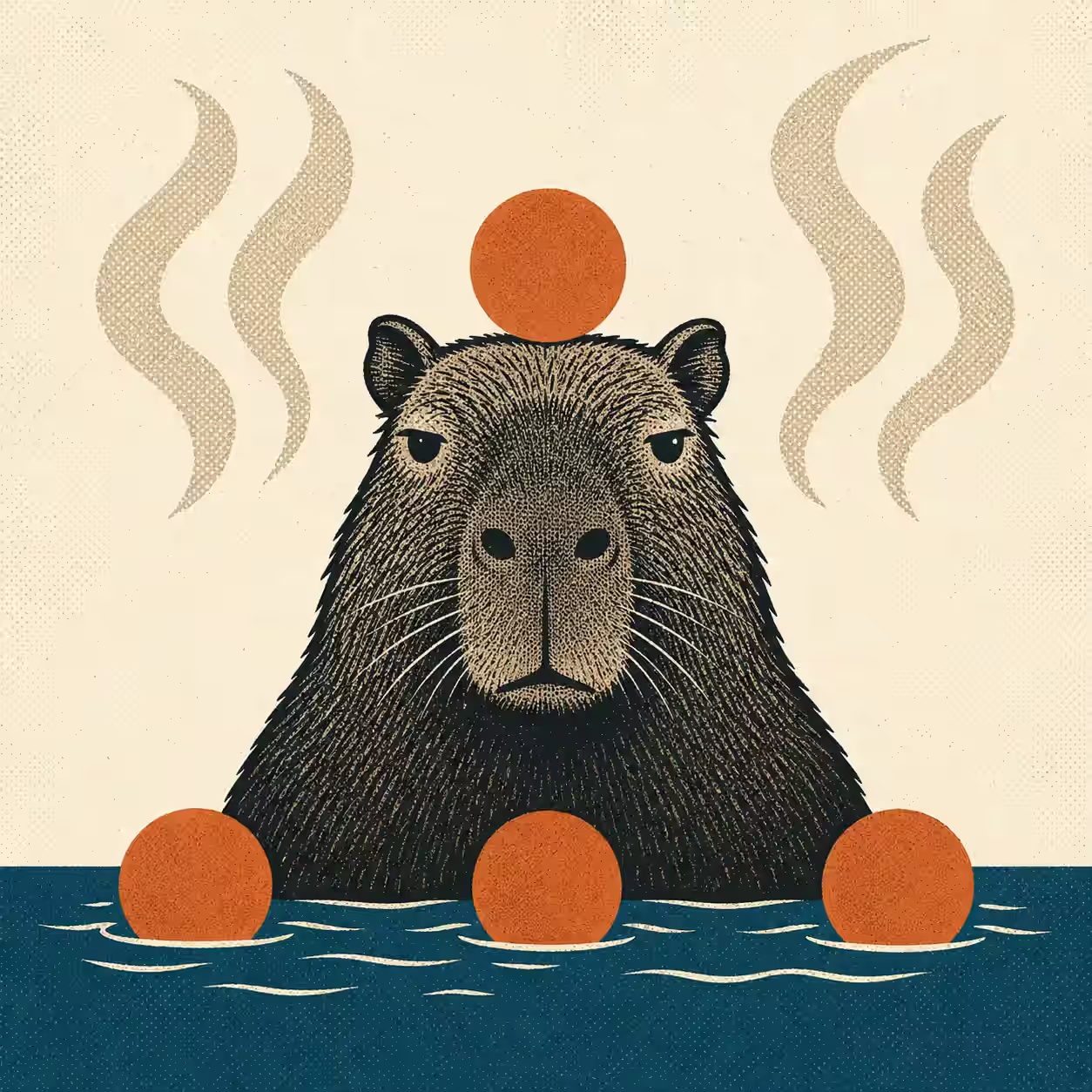
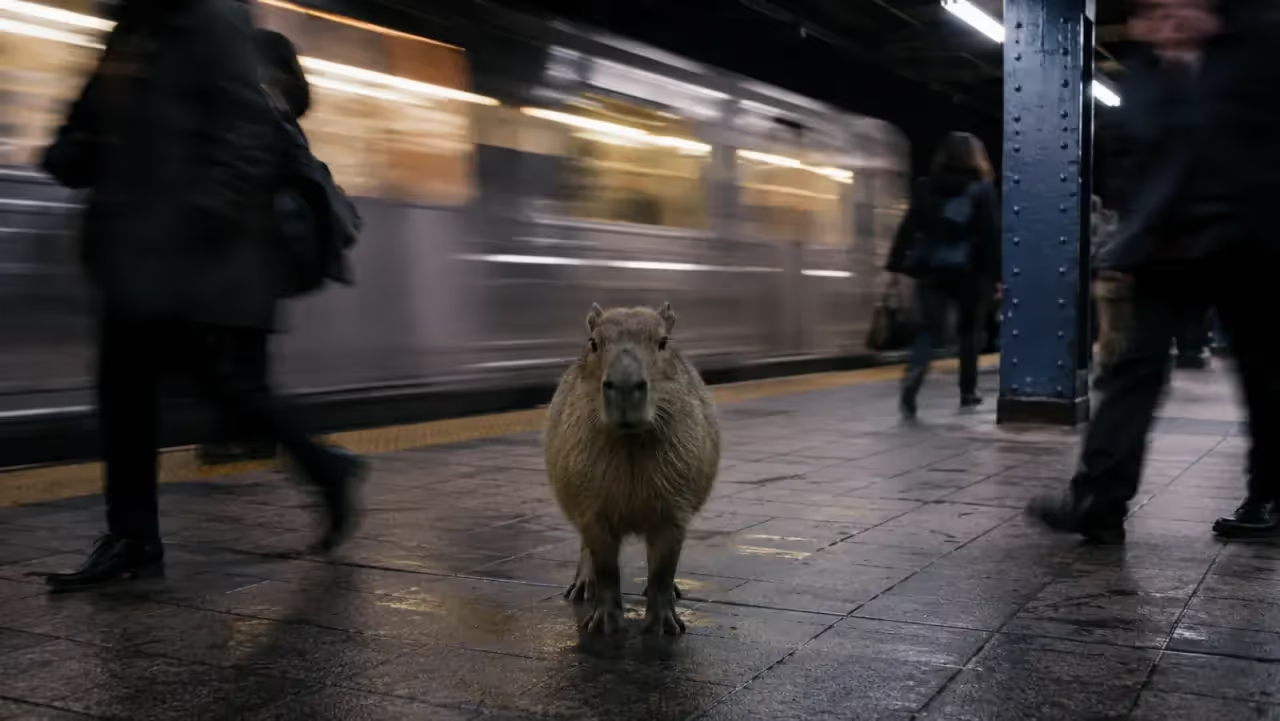
There is no capybara emoji in the standard Unicode emoji set as of June 2026. That is the direct answer, and yes, it feels rude.
You can find capybara stickers, custom emotes, Discord images, and reaction GIFs. Those are not the same thing as a universal emoji that works across iPhone, Android, Windows, Slack, and whatever app your aunt uses to send blurry soup photos.
The Short Answer on the Capybara Emoji
A capybara emoji does not exist because Unicode has not encoded one. Unicode’s v17.0 recently added list includes an orca, hairy creature, trombone, treasure chest, landslide, fight cloud, and other additions, but not a capybara.
That does not mean nobody has asked. Capybara fans have asked repeatedly in app forums and fan spaces. The problem is that emoji are not added because a species is beloved this month. The proposal needs to make a broader case: expected frequency, multiple use cases, distinct visual identity, and evidence that it is not just a sticker request wearing a tiny administrative hat.
| Option | Works everywhere? | How capybara it feels |
|---|---|---|
| Standard capybara emoji | No | Perfect, if it existed. |
| Sticker or GIF | No | High, but app-dependent. |
| Custom Discord/Slack emote | No | Excellent inside one community. |
| Beaver or hamster emoji | Yes | Spiritually unacceptable, but available. |
| Typing “capybara” | Yes | Low-tech, dignified, faintly tragic. |

Why Unicode Does Not Work Like a Suggestion Box
Unicode’s official proposal guidelines say submitters should check whether an emoji has already been approved or requested, and that declined emoji within the last four years are not eligible for re-review. The same page makes the real mood clear: complete proposals matter, and only a small percentage advance.
So “everyone loves capybaras” is not enough. A proposal has to show why a capybara emoji would be used beyond one fandom burst. It needs search evidence, multiple meanings, visual clarity at tiny size, and a reason it is not covered by existing animal emoji.
Annoyingly, that last part is where fans have a case. A capybara is not a hamster, beaver, mouse, rat, guinea pig, otter, or hippo. The whole internet keeps needing this correction.
If You Actually Want To Try
The process is open to the public, which surprises people who assume Unicode is a sealed room. It runs on a window: submissions reopened on 2 April 2026 and closed on 31 July 2026, submitters hear back by 30 November 2026, and submissions re-open in 2027. So there is a door, it is shut right now, and it has a published list of what gets through it.
Unicode’s named inclusion factors, and how a capybara actually scores against them:
| The factor | The capybara case |
|---|---|
| Has a high usage level — evidenced with Google Search, Trends and Books Ngram data | The strongest card by a distance. This is the one thing the demand genuinely proves |
| Completes an incomplete category | Decent. There is no large South American rodent in the set at all |
| Expresses multiple concepts — metaphorical or symbolic reach | Arguable, and the internet has done the work: calm, unbothered, friend-shaped |
| Breaks new ground | Weakest. A brown quadruped at 16 pixels is not new ground |
| Is legible and visually distinctive at emoji size | The real problem. See below |
And the exclusion factors, which is where this actually dies:
- “Already representable.” A proposal is declined if existing emoji or sequences cover it. 🦫 beaver, 🐹 hamster, 🐀 rat and 🐭 mouse are all in the set, and a committee that does not already care about the distinction will say the gap is covered. Fans know a capybara is none of those. The form does not.
- “Overly specific.” A variant of something already present is declined on its face, and from outside the fandom that is exactly what this looks like.
- “Transient.” Concepts unlikely to hold their usage get declined, and “it blew up on TikTok” is the argument against you, not for you. Search evidence sustained over years is the counter.
A capybara proposal passes the popularity test more easily than almost anything else in the queue, and then runs straight into "already representable" — because the whole reason people want the emoji is a distinction the existing rodent emoji are assumed to cover. The winning proposal is not the one with the most enthusiasm. It is the one that shows, with data, that people are reaching for 🦫 and meaning something else.
What To Use Instead of a Capybara Emoji
For now, capybara fans use a messy kit: stickers, GIFs, custom emotes, animal emoji stand-ins, and typed captions. Stickers are best for fan communities. Standard emoji are best for quick texts. The missing capybara emoji hurts because capybaras sit right in the modern emoji sweet spot: animal, mood, meme, and oddly wholesome.
My practical stack:
| Situation | Best substitute | Why |
|---|---|---|
| Texting a friend | ”capybara” + water/leaf emoji | Clearer than pretending a beaver is involved. |
| Discord or Slack | Custom capybara emote | Best fan accuracy. |
| Social post | Sticker or GIF | Better visual payoff. |
| Product listing | Plain word “capybara” | Search engines understand words better than vibes. |

Why the Demand Is Real but Not Enough
Capybara demand is not imaginary. Know Your Meme tracks capybaras as an internet subculture, and emoji request threads keep appearing because fans notice the gap. The animal has become shorthand for calm, social weirdness, soft refusal, and “I am arriving, but at my own pace.”
That is a solid semantic case. The missing piece is the formal one: someone has to make the Unicode proposal with evidence strong enough to survive review.
Do Not Let The Hamster Emoji Win
The capybara emoji situation is simple and irritating: there is not one yet. Use stickers where you can, custom emotes where your community allows it, and the word “capybara” where clarity matters.
Do not let the hamster emoji win. It has had enough.