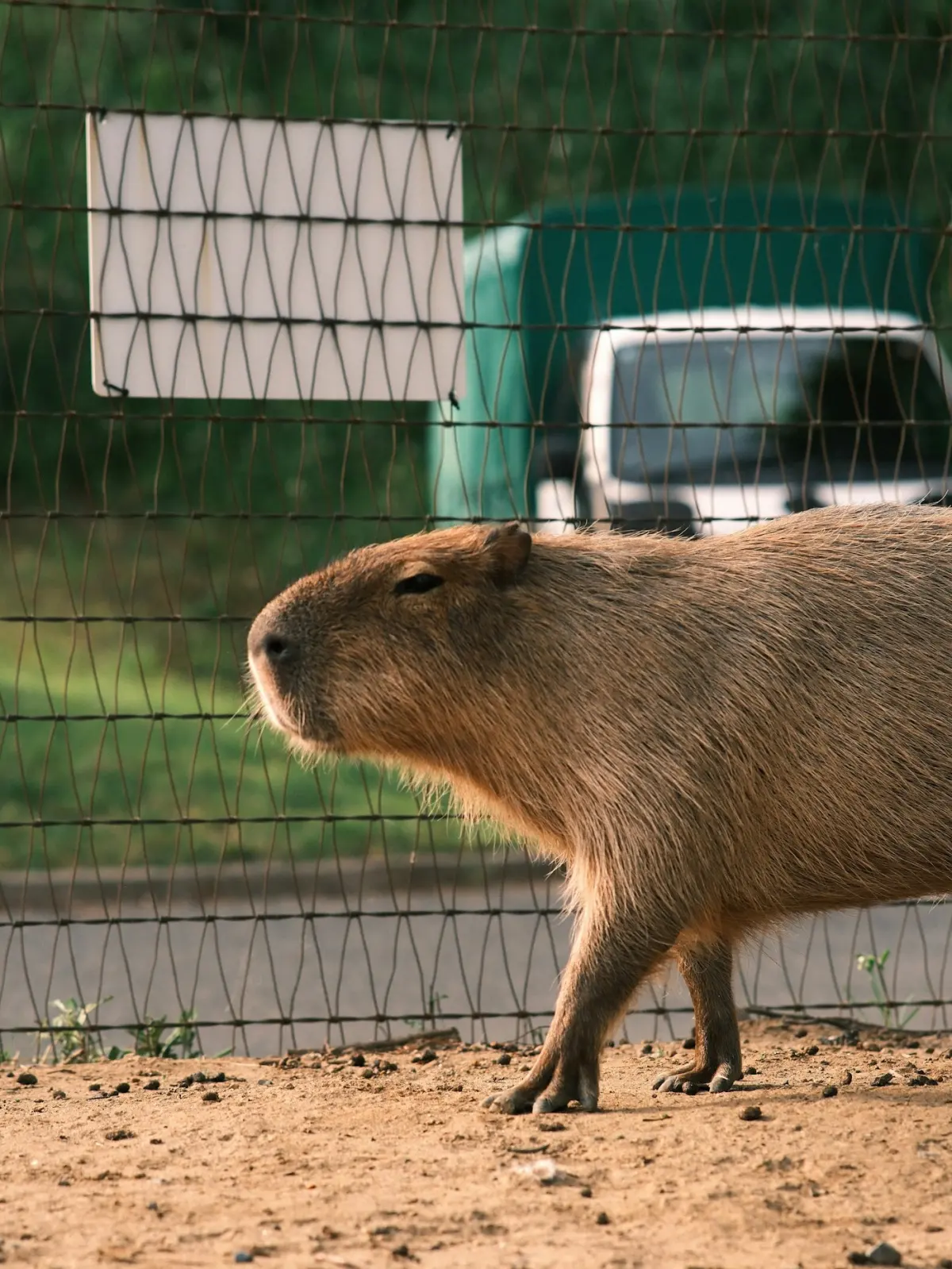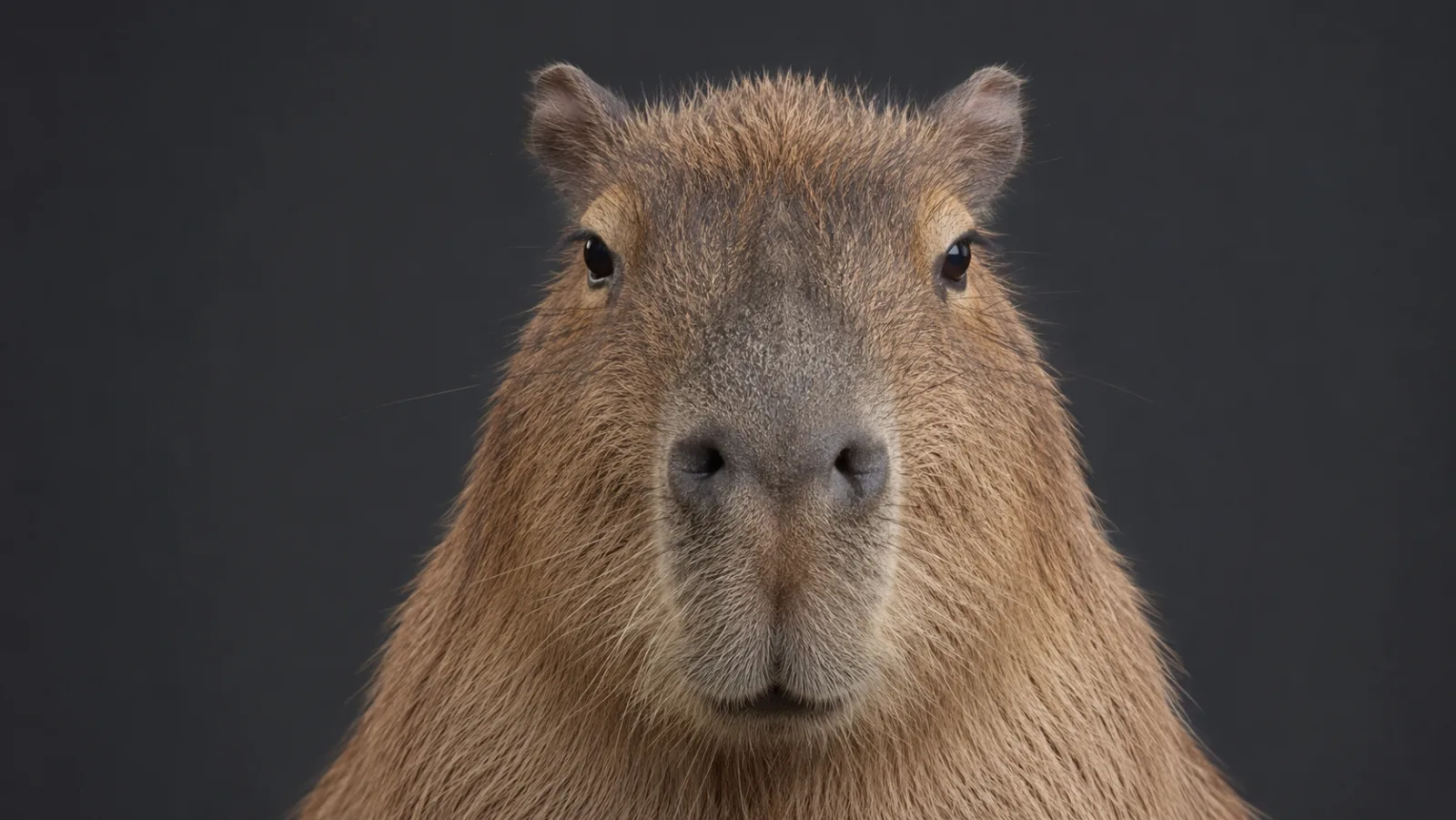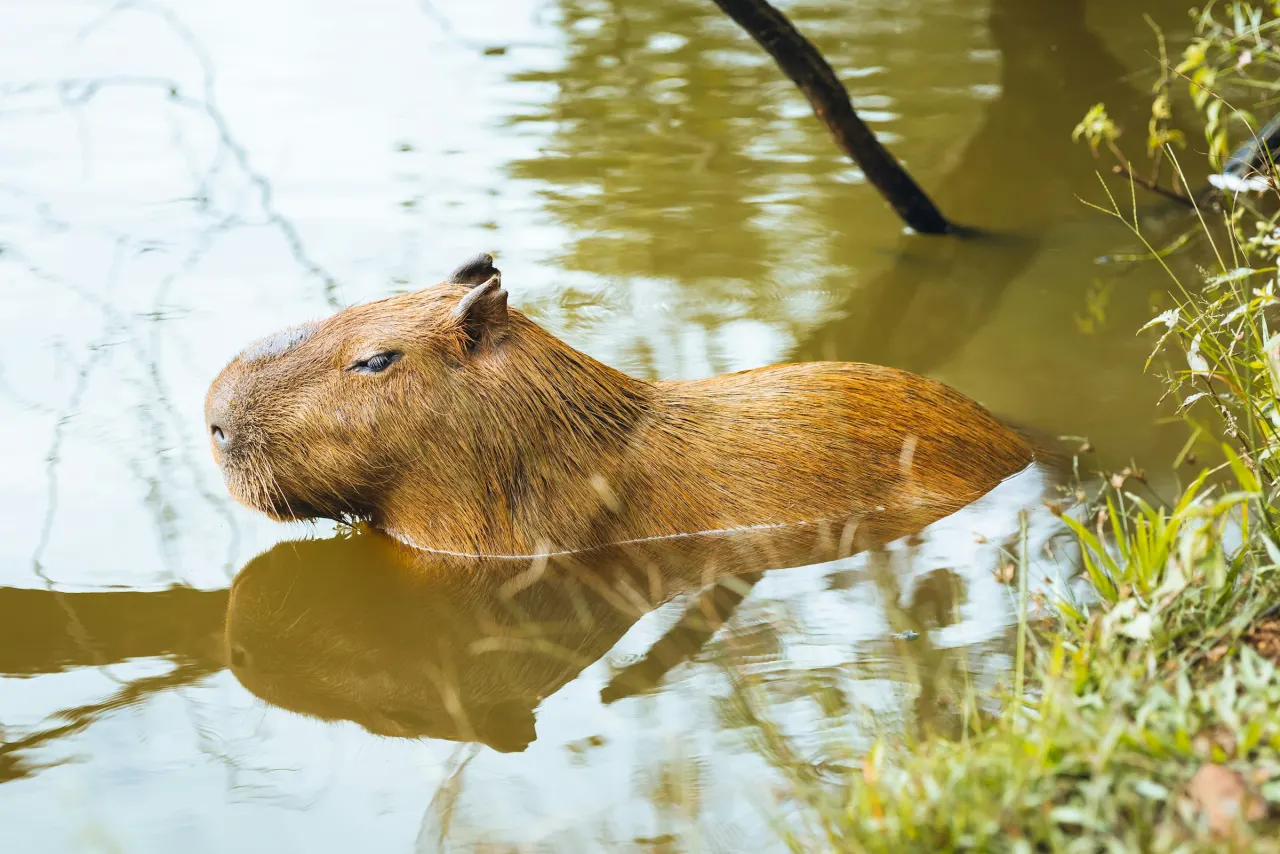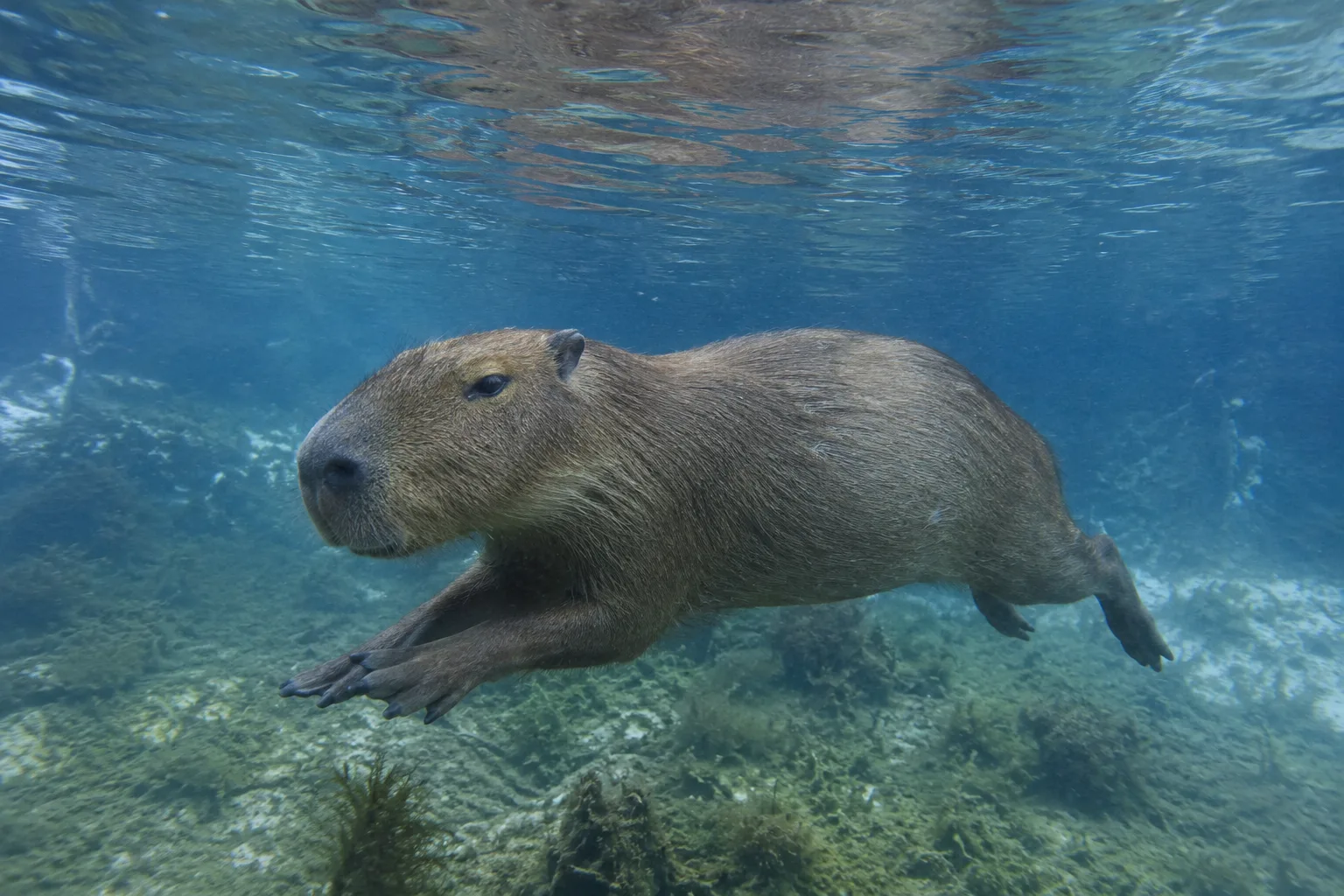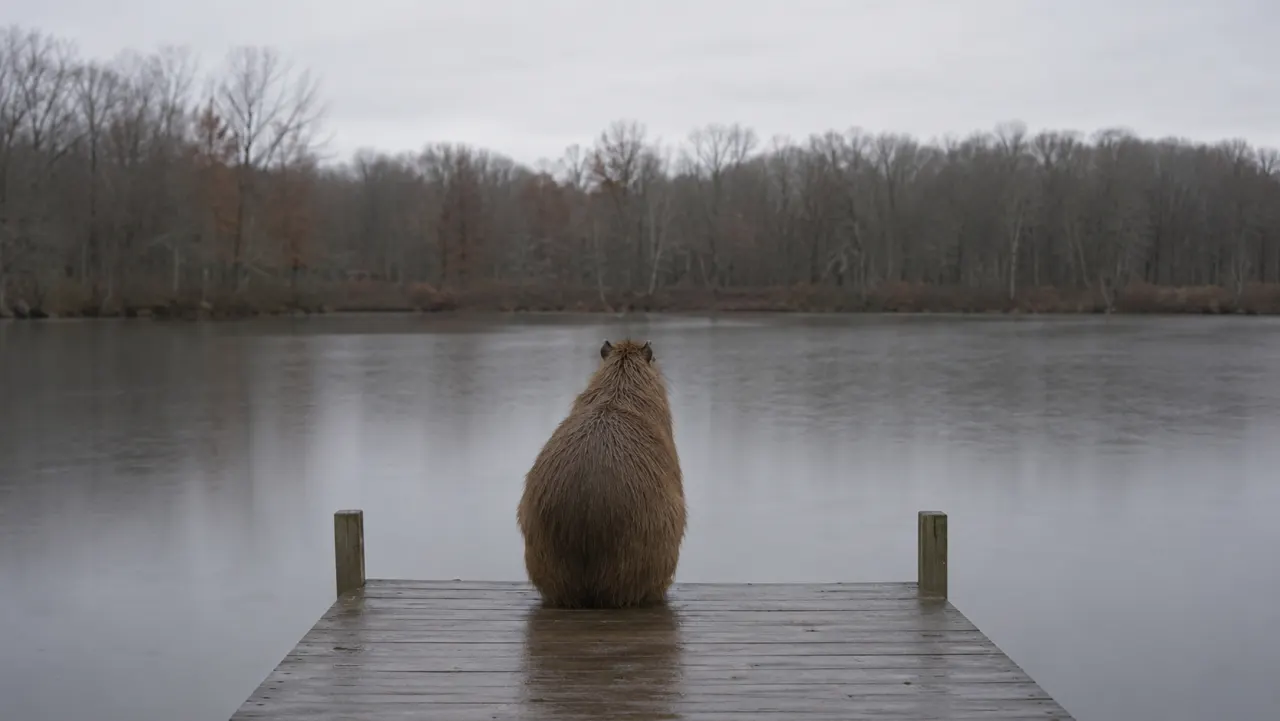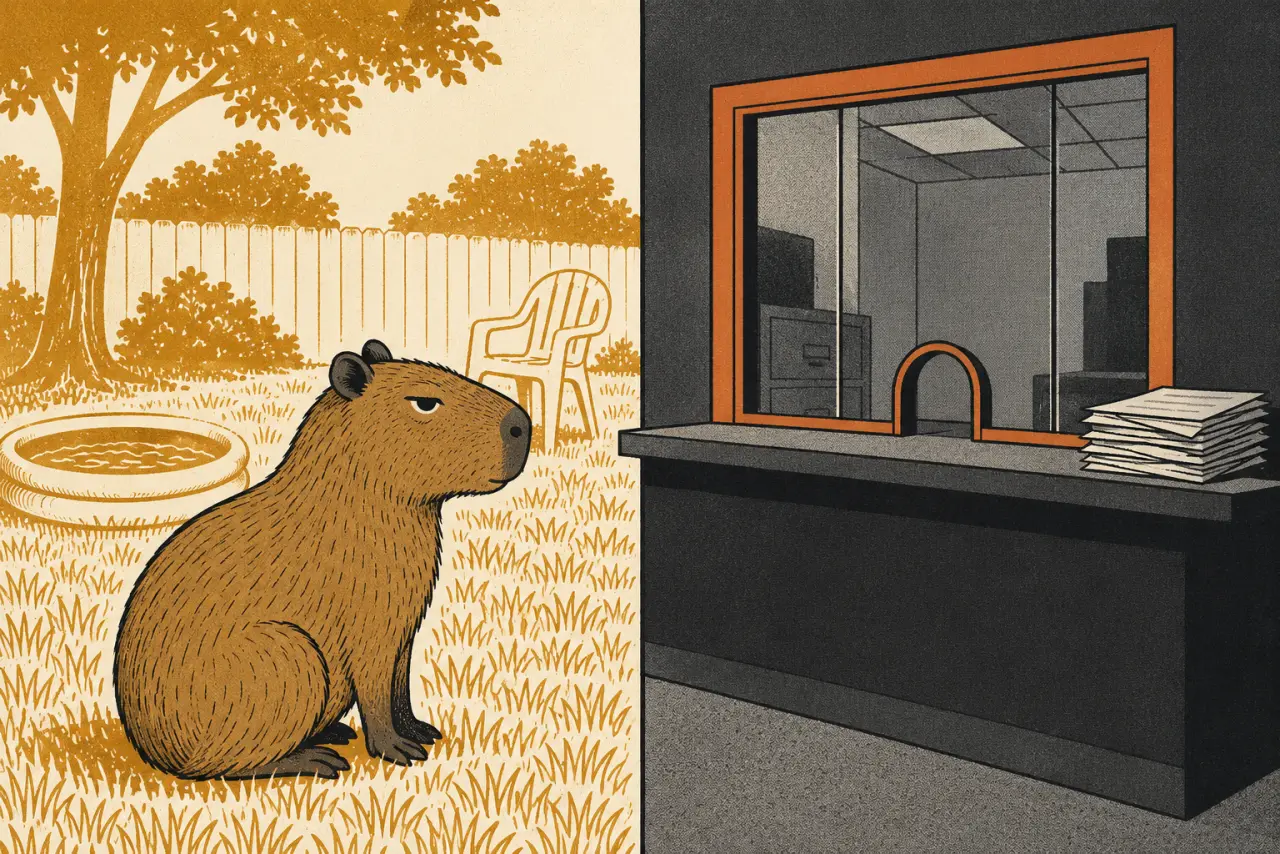
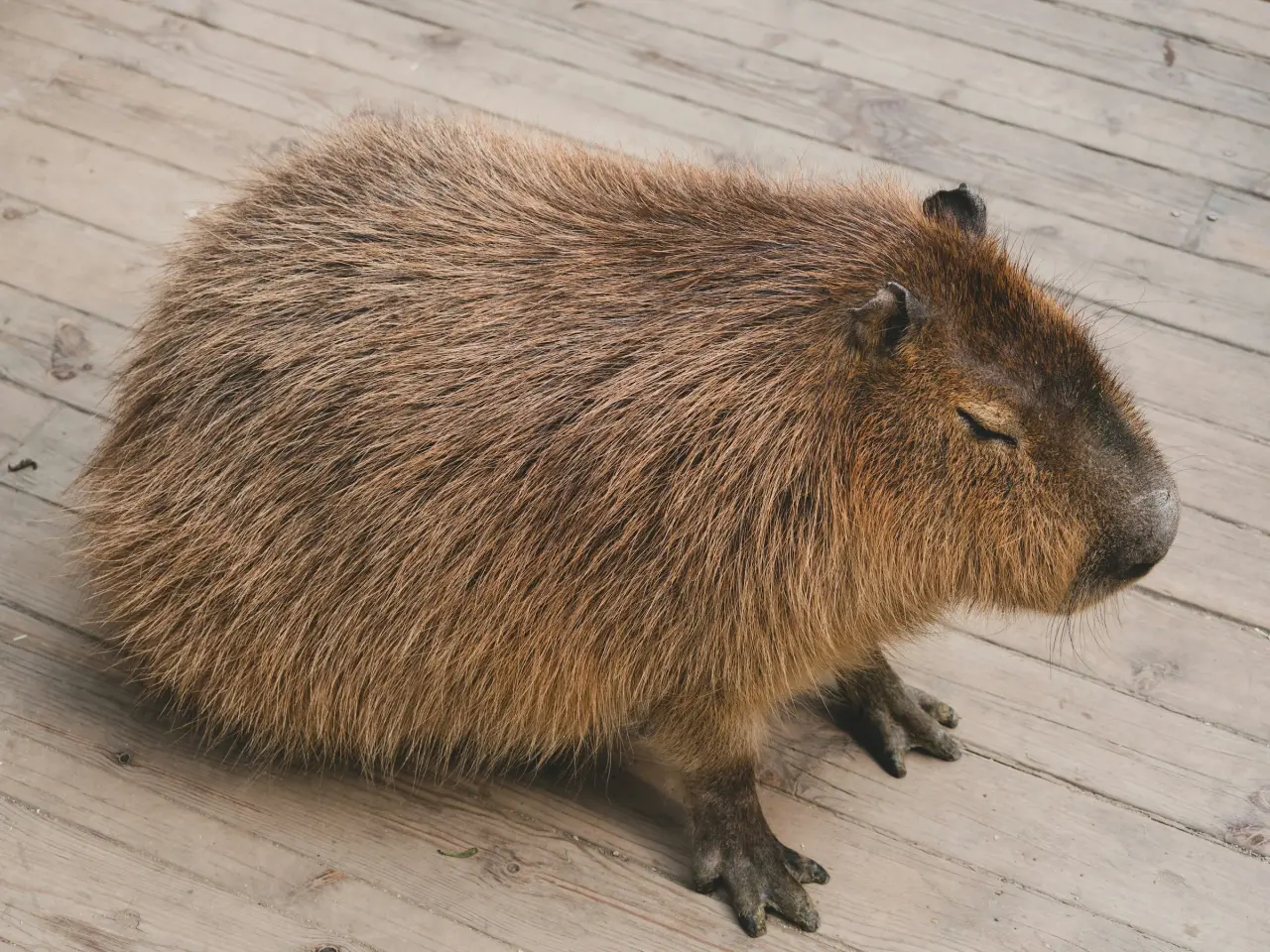
Cats and capybaras have the kind of visual contrast the internet loves: one animal looks like a damp ottoman, the other looks like it is deciding whether the ottoman is beneath it socially.
Can capybaras get along with cats? Sometimes they can tolerate each other in controlled settings, but cats are not automatically safe around capybaras. Scratches, stalking, germs, food conflict, stress, and forced proximity can all turn a cozy clip into bad animal management.
The Short Answer Is Maybe, But Do Not Force It
Capybaras are social, but their social world is built around other capybaras. Animal Diversity Web describes them as group-living herbivores that rely on vigilance and water escape. A cat is not as physically powerful as most dogs, but it is still a small predator with claws, quick movement, and a talent for making every room legally its own.
Some capybaras may ignore a calm cat. Some may be curious. Some may freeze. Some may leave. The important point is that the capybara should always be able to choose distance.
| Interaction | Risk | Better rule |
|---|---|---|
| Cat watching from outside a barrier | Low to moderate | Keep it short and optional |
| Cat walking near a resting capybara | Moderate | Supervise and preserve escape routes |
| Cat on capybara’s back | Cute but risky | Do not stage or encourage it |
| Shared food bowl | Bad idea | Feed separately |
| Unsupervised access | High | Do not allow it |
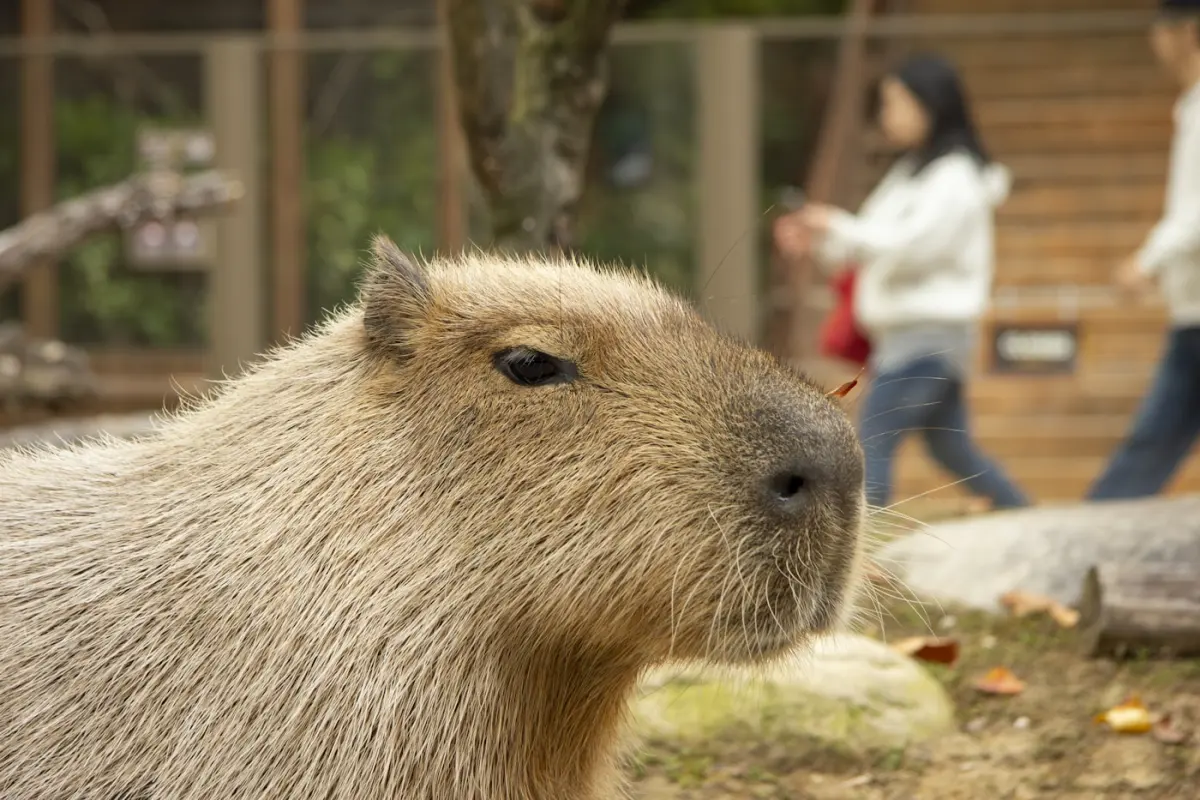
Cats Are Small, But They Are Still Predators
The cat problem is not brute force. It is claws, speed, surprise, and persistence. A cat swipe near the face can injure an eye. A stalking cat can create low-grade pressure that humans miss because nobody is barking or lunging. A capybara that keeps shifting away is already giving you the answer.
The CDC’s Healthy Pets guidance is also relevant here. Species mixing carries hygiene questions: parasites, bites, scratches, litter-box contamination, and normal animal germs. Nobody wants the world’s calmest rodent involved in a medical footnote because someone wanted a cute couch photo.
Cats are also excellent at ignoring rules written for other animals. That is charming in a kitchen. Around a capybara enclosure, it is a management problem.
What A Safer Capybara-Cat Setup Looks Like
A safer setup starts with separation. Let the animals see each other through a secure barrier. Keep sessions short. Do not trap the capybara in a corner. Do not hold the cat up to the capybara. Do not let either animal share food, water, bedding, or resting space until a qualified handler or veterinarian has helped assess the risk.
The AZA Capybara Care Manual frames capybara care around social housing, water access, low-stress handling, and species-appropriate management. A cat is not part of the core plan. At best, it is an occasional neighbor.
| Safety element | Why it matters |
|---|---|
| Barrier-first meetings | Prevents sudden swipes or forced contact |
| Capybara retreat route | Lets the capybara leave instead of freeze |
| Separate feeding | Prevents guarding and pesty cat behavior |
| Cat nail and health care | Reduces scratch and parasite risk |
| Short sessions | Stops stress from stacking |
| No staged contact | Keeps humans from making the worst decisions |
Reading The Capybara, Not The Cat
Most people watching these meetings stare at the cat. The cat is the expressive one, so that is where the drama seems to live. The animal you should actually be watching is the capybara, and capybaras are quiet about discomfort.
A capybara that is genuinely fine will keep grazing, keep grooming, or keep dozing while the cat does cat things nearby. A capybara that is not fine often does very little. It goes still. It stops chewing. It points its body away from the cat while keeping an eye on it. Animal Diversity Web describes capybaras as vigilant herd animals whose first instinct under pressure is to move toward water or open space, not to confront. So freezing in a living room, with no water and no exit, is not a sign of trust. It is a sign the animal has run out of options.
This is the part I think the cute-video genre gets most wrong. Stillness reads as comfort on camera, and it is often the opposite. If you cannot tell the difference between calm and shutdown, the safe assumption is shutdown, and you end the session.
| What you see | What it might actually mean | What to do |
|---|---|---|
| Capybara keeps eating near the cat | Probably relaxed | Fine to continue, stay nearby |
| Capybara goes still and stops chewing | Possible freeze or stress | End it, restore distance |
| Capybara turns away but watches | Wary, not settled | Give a clear exit, shorten the session |
| Cat crouched, tail flicking, locked on | Stalking posture | Separate them now |
| Either animal cornered | No retreat available | Stop, redesign the space |
Myths That Make Cat Meetings Look Too Easy
There is a quiet logic behind the “cats are fine” assumption, and it is worth naming because it is wrong in a specific way. A cat is small, so people read it as low-stakes. But risk here is not about size, it is about claws near eyes, persistence, and the germs that come with mixing two species that never share a habitat in the wild.
The hygiene angle is the one most owners underestimate. The CDC’s Healthy Pets guidance and Cornell’s Feline Health Center both note that cats carry zoonotic and cross-species concerns through scratches, bites, and litter contamination. A capybara is a hindgut fermenter that re-ingests its own soft morning feces to pull nutrients back out, which means its gut is already doing delicate work. You do not want a curious cat, a shared resting spot, or a contaminated bowl adding new variables to that system.
Then there is the simple fact that cats ignore rules. A barrier you set up on Tuesday is a personal challenge to the cat by Wednesday. That is funny in most homes and a genuine management problem around a large prey animal that cannot lock a door.
The honest take, if you want one: I think the cat-and-capybara pairing is mostly a content format pretending to be a friendship. The viral clip exists because the meeting was unusual enough to film. The thousands of dull, separate, uneventful afternoons never get posted, and those are the normal case.
The Capybara Does Not Need A Cat Friend
The safest answer for normal homes is: do not make capybara-cat contact a goal. If both species happen to live near each other in a managed setting, use barriers, supervision, separate resources, and easy retreat. Stop early.
If the question is part of an ownership plan, step back to can capybaras live with dogs and cats, then read do capybaras make good pets. A capybara needs water, space, its own kind, and a stable routine. It does not need the cat’s approval, which is fortunate because nobody has ever reliably obtained it.