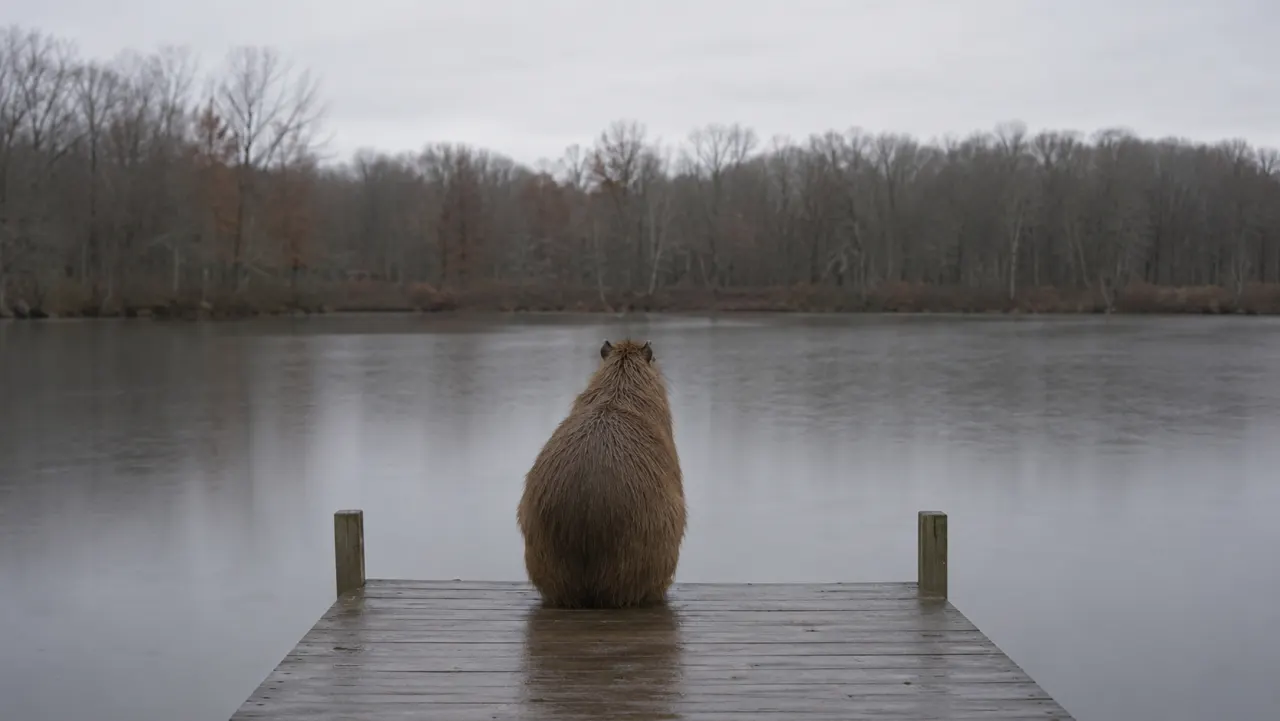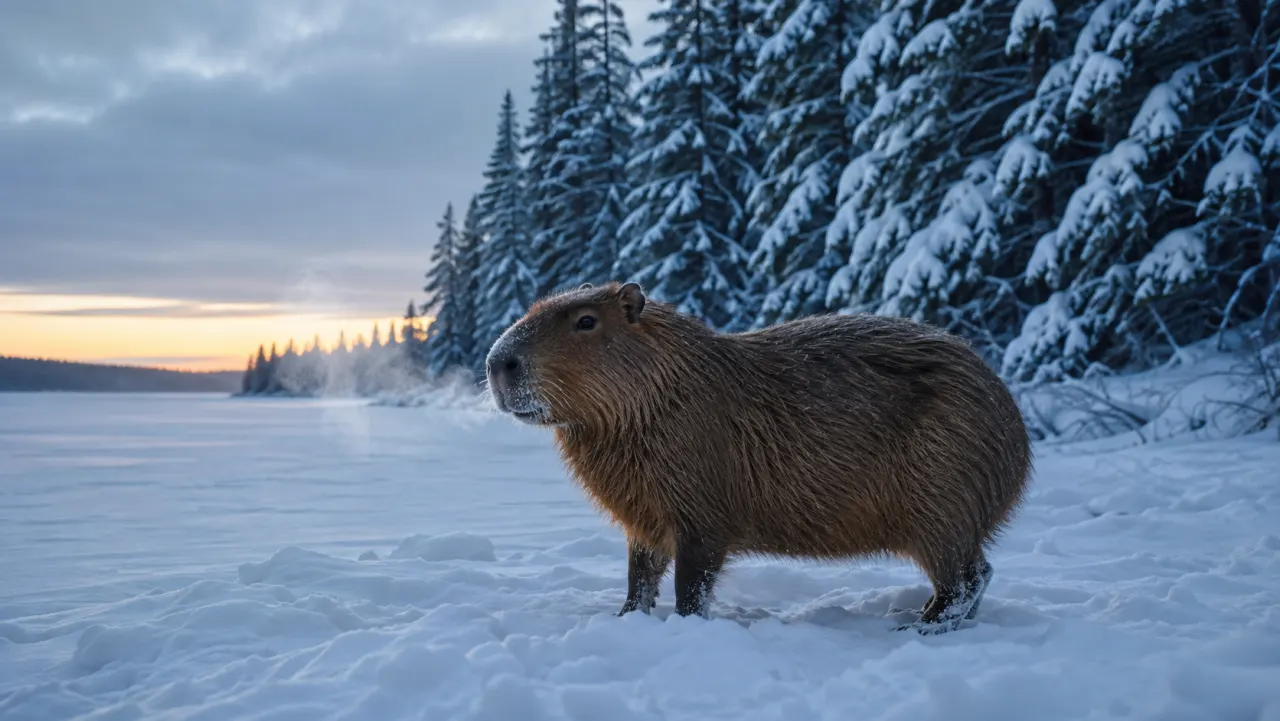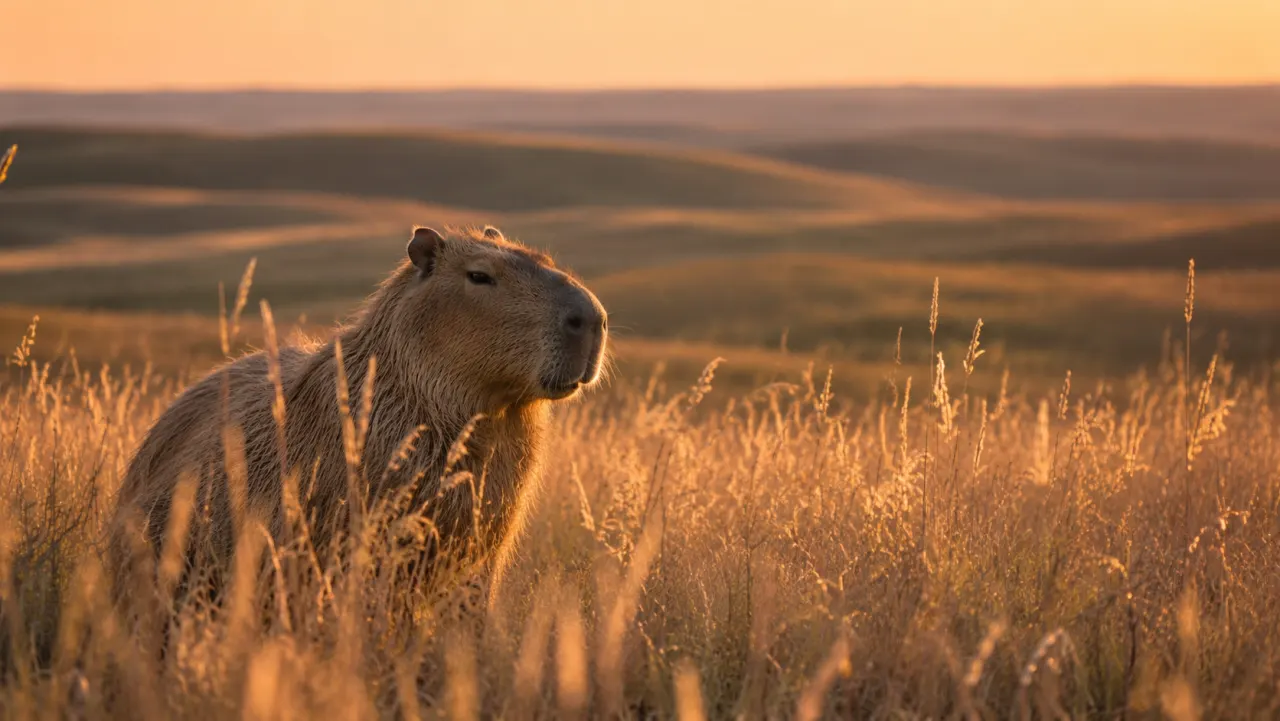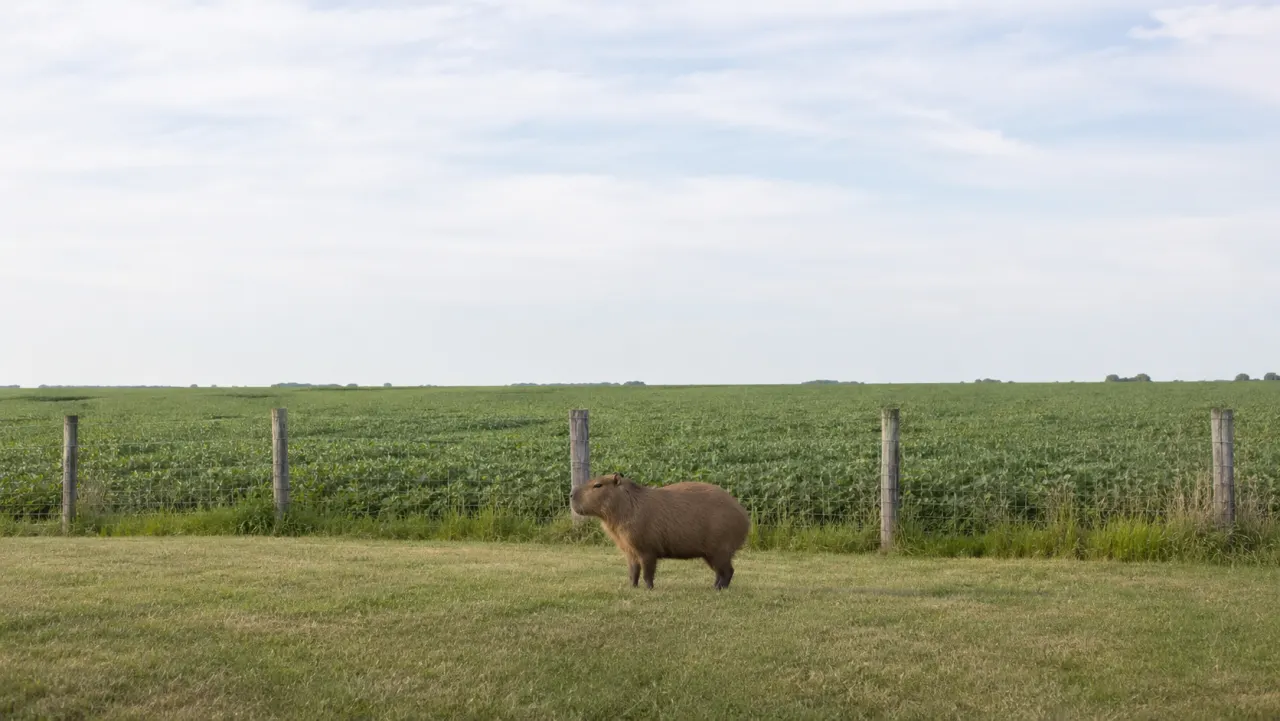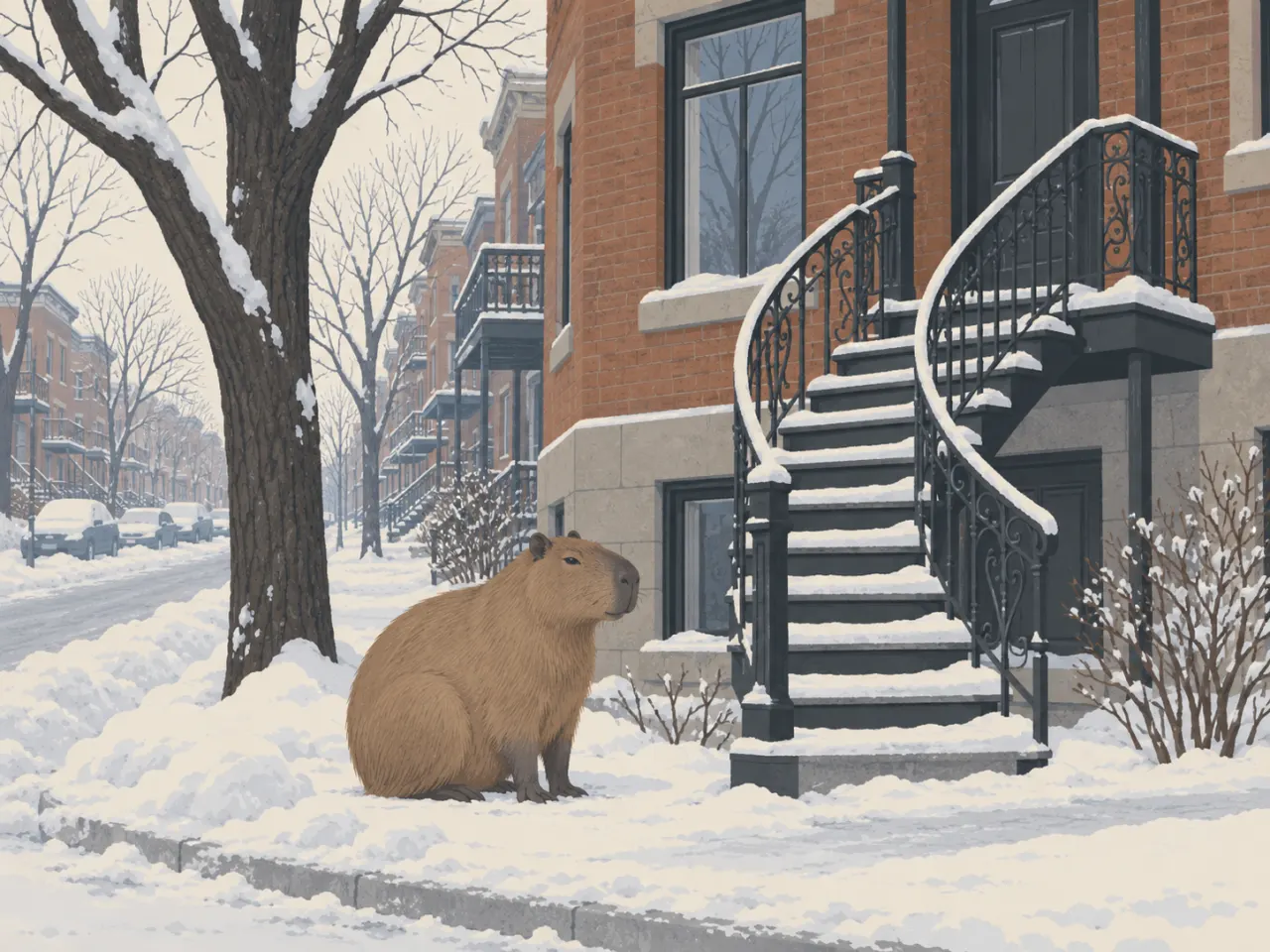
Capybaras and otters both belong near water, which is just enough similarity for the internet to start making eye contact with nonsense. After that, the animals split hard.
A capybara is a huge herbivorous rodent built for grazing, group life, and calm wetland logistics. An otter is a carnivorous mustelid built for swimming, hunting, twisting, diving, and making fish nervous.
Both wet. Not remotely the same.
The fastest way to tell them apart at a glance: look at the body. A capybara is a big, blunt, barrel-shaped grazer standing or resting near the water’s edge. An otter is a long, low, sleek hunter that looks like it was designed in a wind tunnel. If the animal is calmly eating grass, it’s a capybara. If it’s chasing something underwater, it’s an otter.
The Main Difference: Rodent Vs Carnivore
Capybaras are rodents. Otters are carnivores in the family Mustelidae, the same broader family as weasels, badgers, minks, and martens.
That one line explains a lot. Capybaras have ever-growing incisors, graze heavily, and spend much of their lives near water and grass. Otters have predator teeth, streamlined bodies, and diets built around animal prey.
| Feature | Capybara | Otter |
|---|---|---|
| Order | Rodentia | Carnivora |
| Family style | Giant cavy relative | Mustelid |
| Diet | Grasses, aquatic plants, bark, crops in some areas | Fish, crustaceans, amphibians, invertebrates, small vertebrates |
| Social vibe | Often group-based grazers | Varies by species, often active and territorial |
| Internet role | Calm wetland philosopher | Wet noodle predator with confidence |
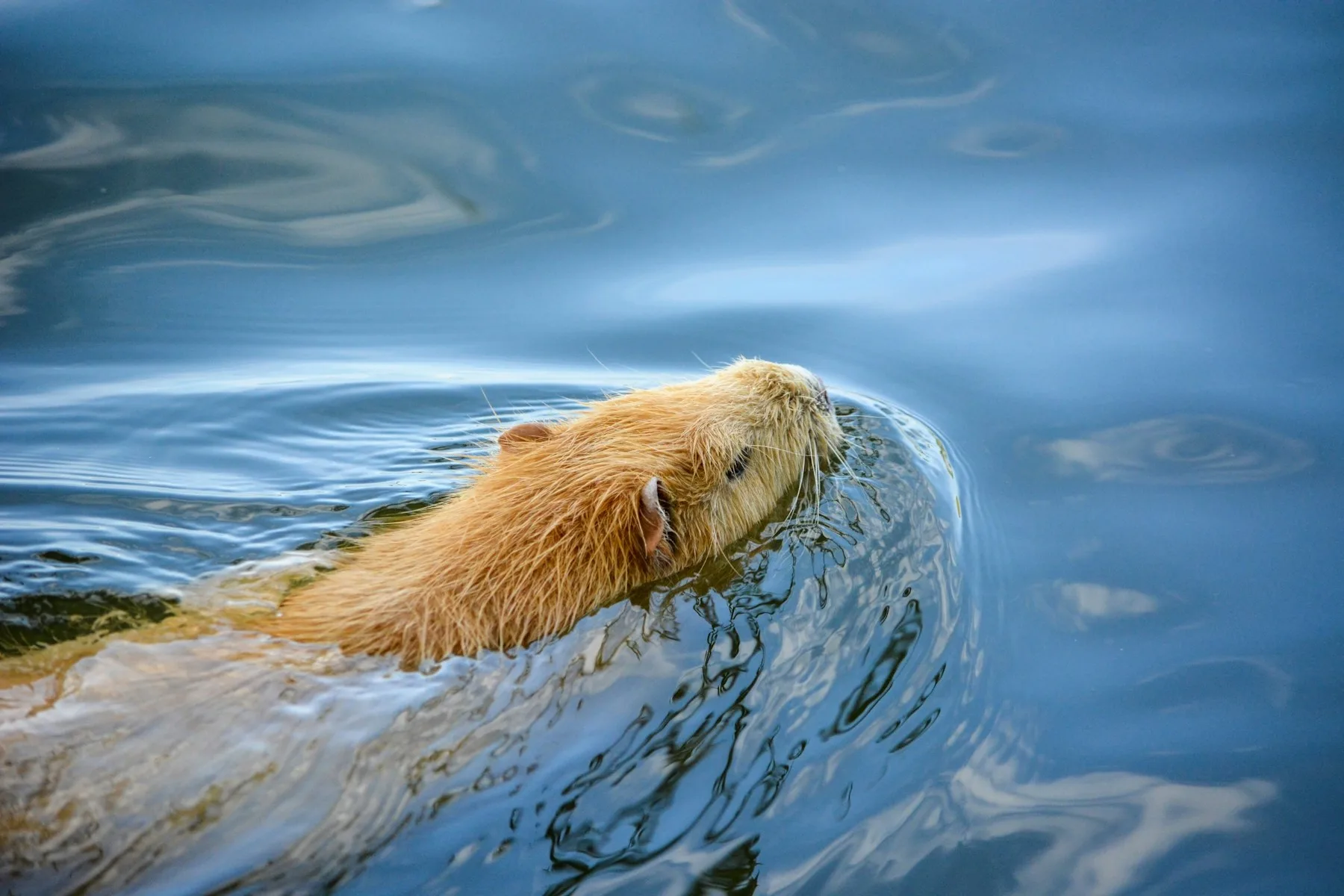
Size, Shape, And The Whole Body Plan
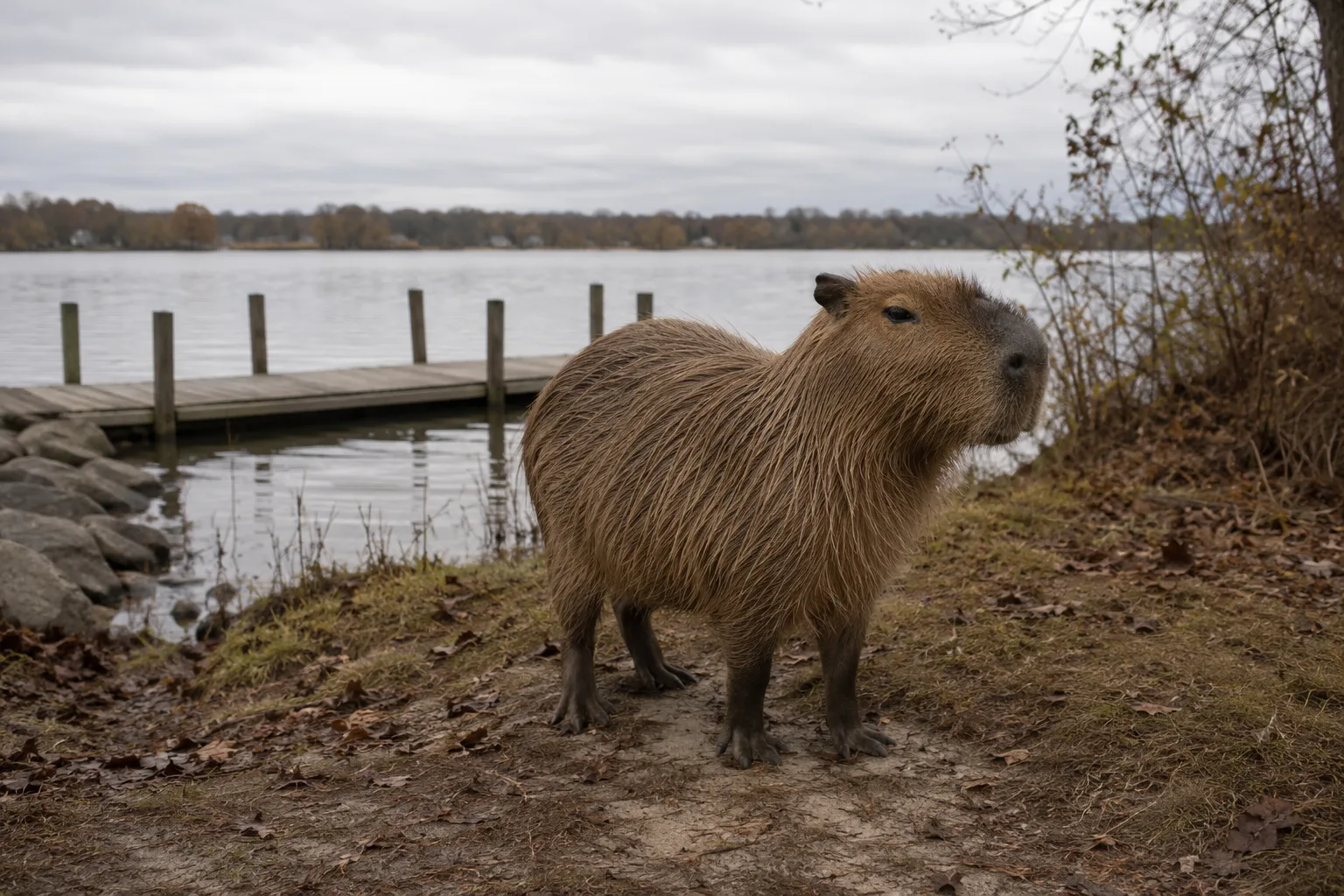
Capybaras are heavy, barrel-shaped animals. Their bodies are built close to the ground, with a blunt head, small ears, and partially webbed feet. They can look compact in photos, but adult capybaras often overlap with large dogs in weight.
Otters are long, flexible, and streamlined. Smithsonian’s National Zoo describes North American river otters as strong swimmers with long bodies, webbed feet, and powerful tails. The body plan is different because the job is different.
Capybaras move between grazing land and water. Otters hunt in water.
| Visual clue | What it tells you |
|---|---|
| Barrel body, blunt head, tiny ears | Capybara. Built for grazing and water-edge life. |
| Long flexible body, thick tail, predator face | Otter. Built for swimming and hunting. |
| Grazing calmly in a group | Very capybara. |
| Diving after prey | Very otter. |
Both Swim, But For Different Reasons
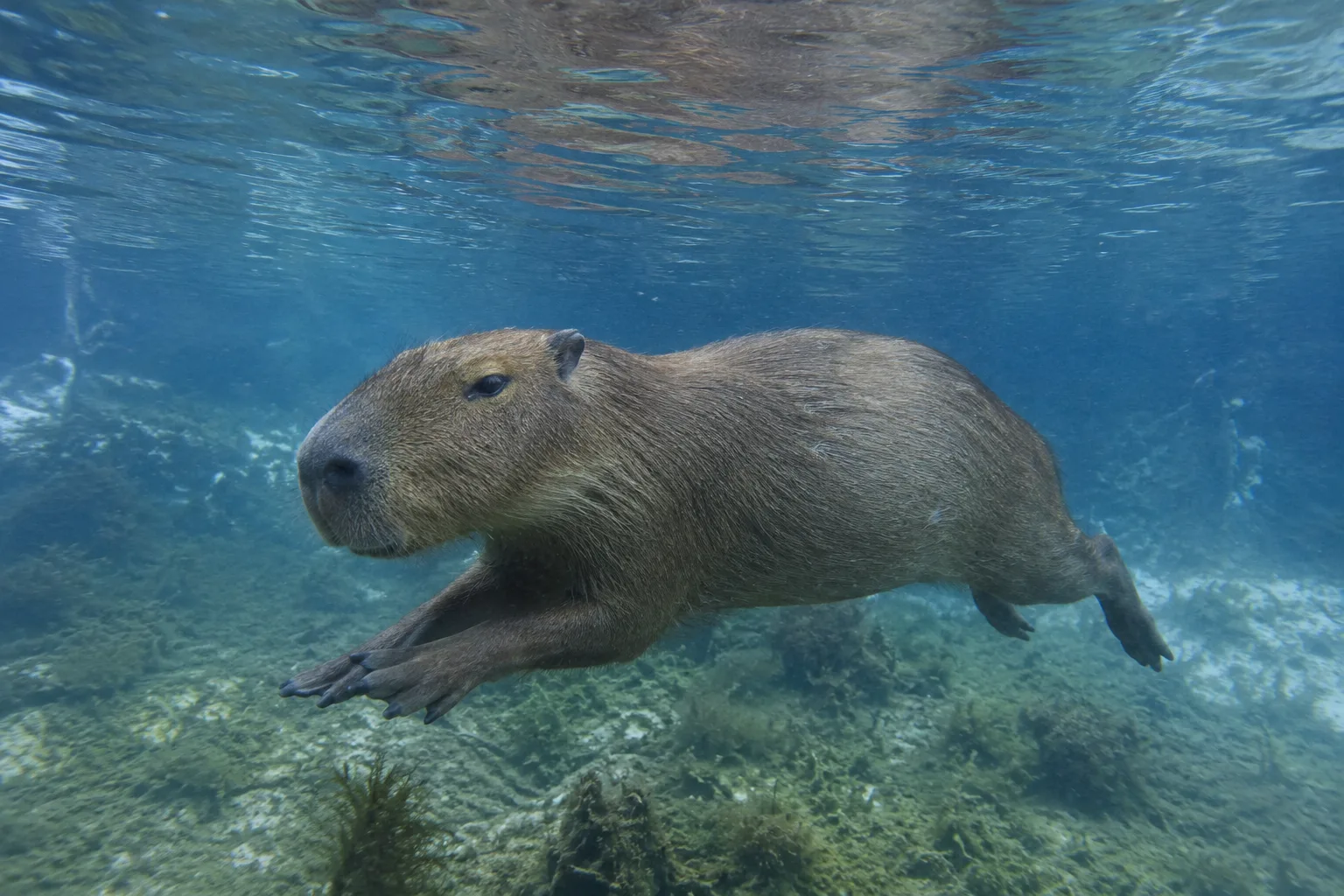
Capybaras use water for cooling, travel, safety, and social life. They can swim, wade, rest in water, and submerge with their eyes, ears, and nostrils positioned high on the head.
Otters use water as a hunting arena. River otters dive, twist, pursue prey, and move with a level of athletic energy that would make a capybara file a noise complaint.
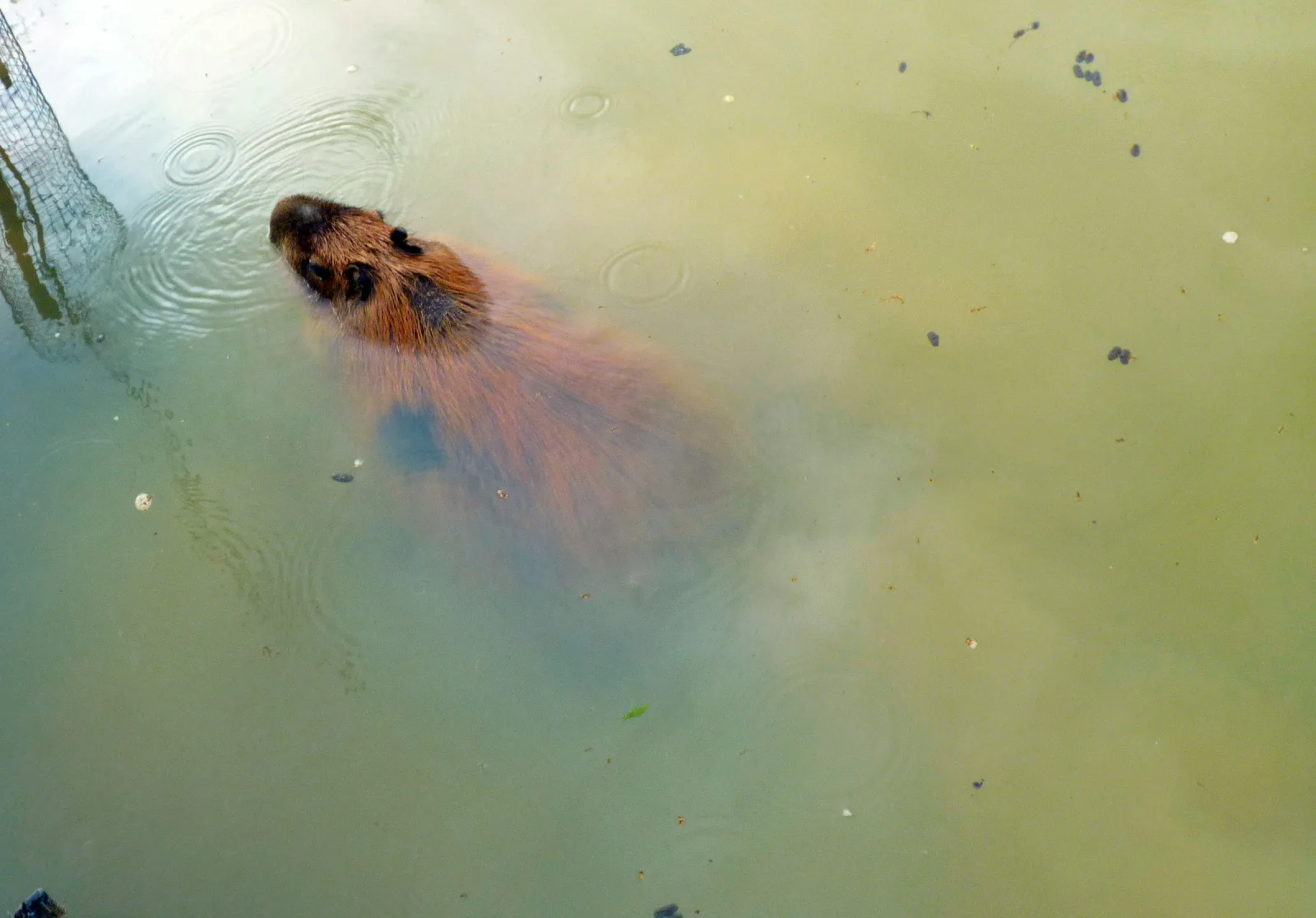
The shared habitat can fool people. Wetlands often hold many mammals with water skills. That does not make them close relatives. A beaver, otter, muskrat, nutria, and capybara can all be “water animals” in casual speech while belonging to very different branches.
Inside The Mouth: Two Completely Different Diets
The teeth give the whole game away. Capybaras are hindgut-fermenting herbivores with hypsodont incisors that never stop growing, the same continuous-growth dental setup you find across rodents. Animal Diversity Web describes them as grazers of grasses and aquatic vegetation, and like their guinea pig relatives in the family Caviidae, they can’t make their own vitamin C, so it has to come from what they eat.
Their digestion is built for plant matter that does not give up its nutrients easily. Capybaras practice coprophagy, re-ingesting soft morning feces to pull a second round of nutrition out of fibrous food. It is not glamorous. It is efficient, and it is very rodent.
Otters run on the opposite plan. They are carnivores, and their teeth are shaped for gripping and shearing prey rather than clipping grass. Diet varies by species, but North American river otters, per Smithsonian’s National Zoo, lean heavily on fish, with crayfish, amphibians, and other small prey filling in. No grazing, no fermentation vats, no morning recycling. Catch, kill, eat, move on.
This is the cleanest reason the two animals are not close relatives. You can share a riverbank with something for a thousand years and still be in a different mammalian order if your jaws are doing entirely different jobs.
Same River, Different Job Description
Misreading “lives in water” as “is basically the same animal” is the most common mistake people make here. A quick correction table:
| Myth | Better answer |
|---|---|
| Capybaras and otters are related because both love water | Convergent habitat, not shared ancestry. Capybaras are rodents; otters are carnivores in the weasel family. |
| The capybara is just a bigger, chubbier otter | Different order, different teeth, different diet. Size is the least of the differences. |
| If they share a wetland, they must behave alike | One grazes in herds at the water’s edge; the other hunts, often alone or in family groups, in the water itself. |
| Both are good “exotic pets,” so they’re interchangeable | Neither is a casual pet. Capybaras are highly social herd animals, and solitary housing alone is a real welfare stressor. |
Honest opinion, since the brief asks for one: the otter usually wins the charisma contest, and the internet knows it. Otters are loud, fast, photogenic chaos. But the capybara is the better-engineered wetland citizen. It does less, stresses less, and outlasts most of the drama around it. Calm is an underrated trait, and the capybara has cornered the market on it.
If They Share A Wetland
Across parts of South America, capybaras and certain otter species do overlap in the same broad wetlands and river systems. Sharing a map is not the same as sharing a life. The capybara is grazing the bank and lounging in the shallows for temperature control and safety; the otter is working the water column for food. Their schedules, motives, and risk profiles barely intersect.
This overlap also means a photo of “two water animals together” proves nothing about kinship. It proves the wetland is doing its job and hosting a lot of unrelated tenants at once.
The Capybara Fan Verdict
If you are choosing one sentence:
A capybara is a large semi-aquatic rodent; an otter is a semi-aquatic carnivore in the weasel family.
That sentence keeps the water similarity without flattening the biology. It also saves you from calling every charming wet mammal “basically a capybara,” which is how taxonomic standards quietly leave the room.
For more identity cleanup, read is a capybara a rat?, capybara vs hippo, and capybara feet. The capybara is happy to share water with other animals. It is less happy about being misfiled.