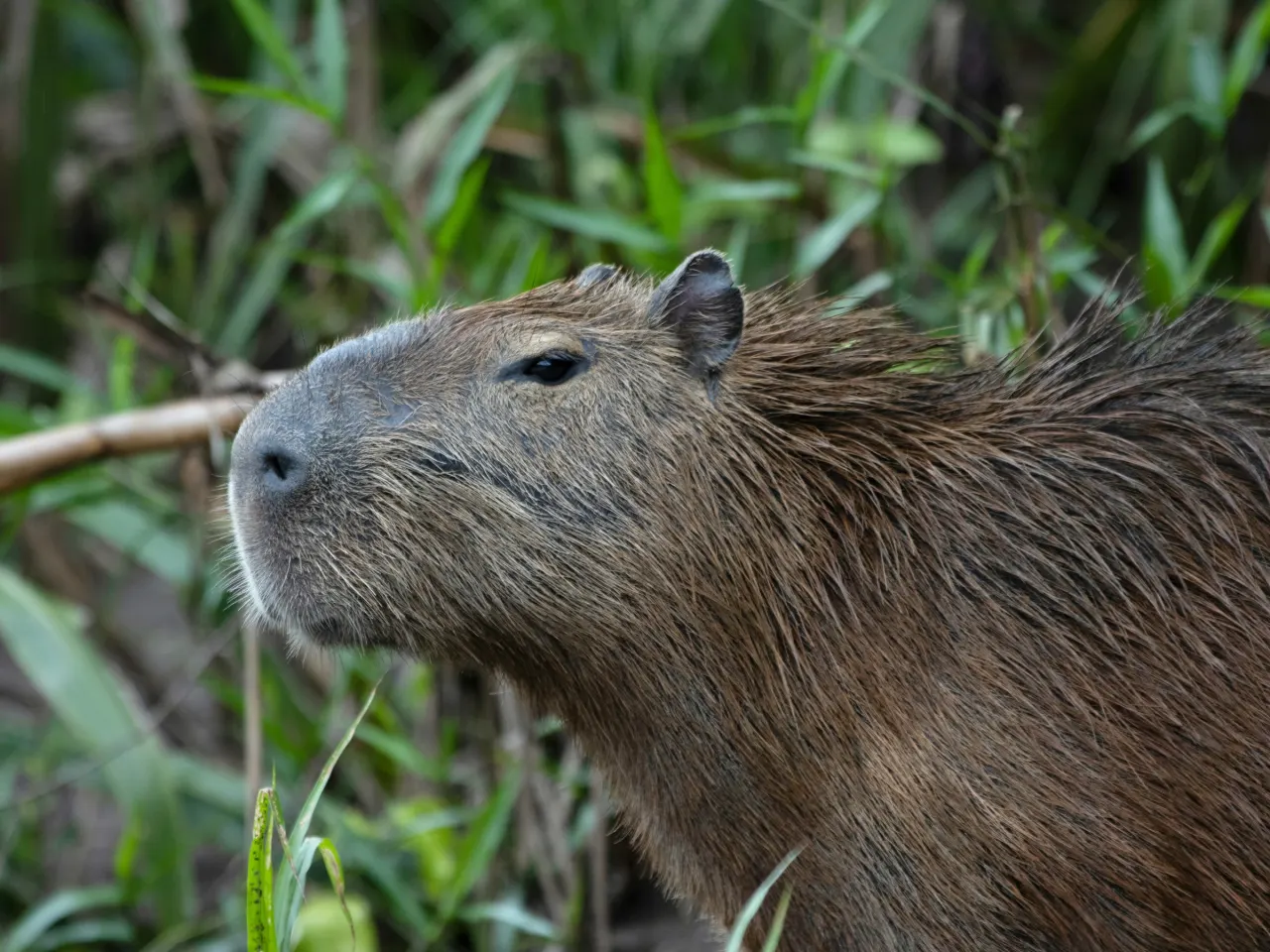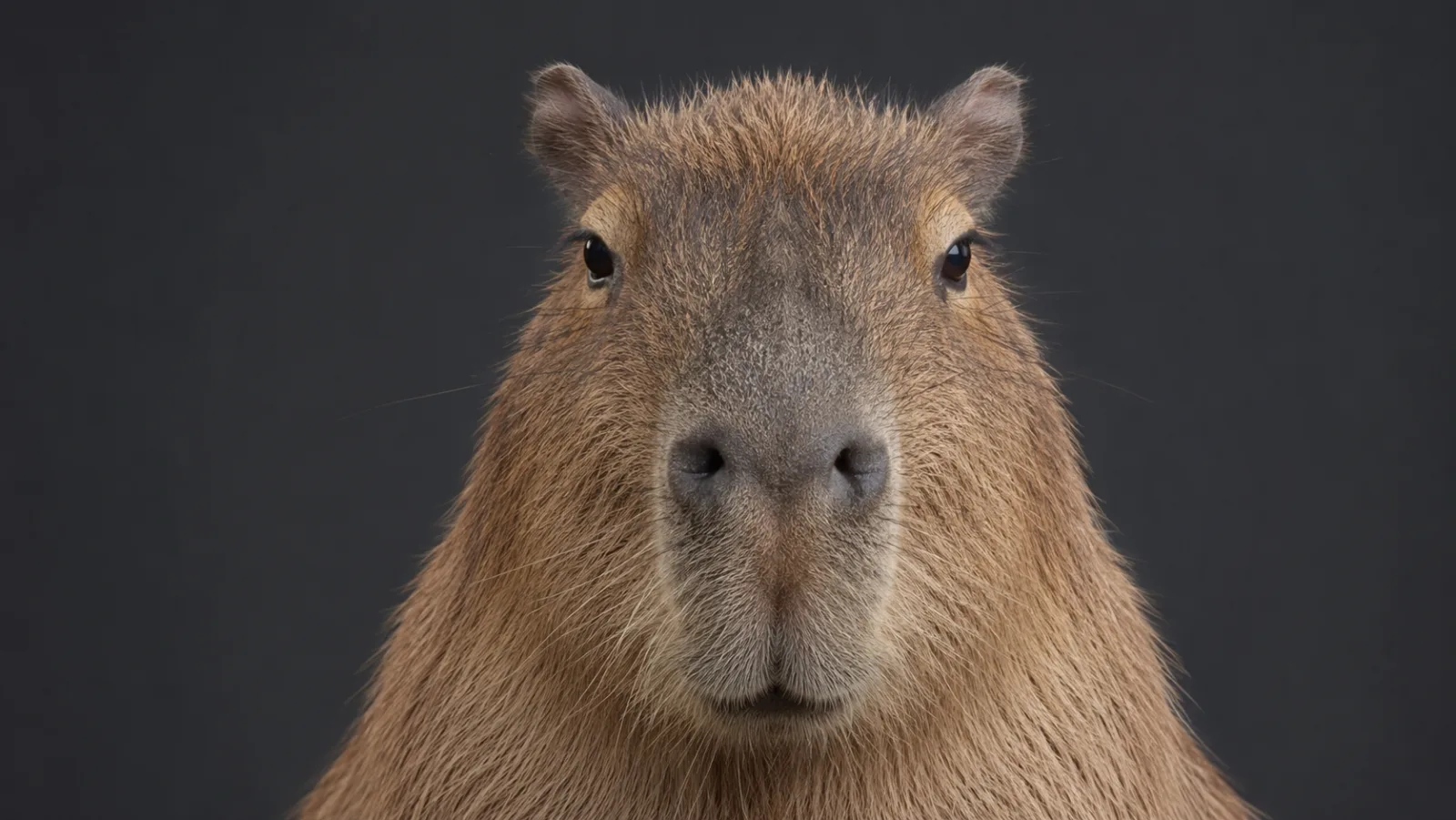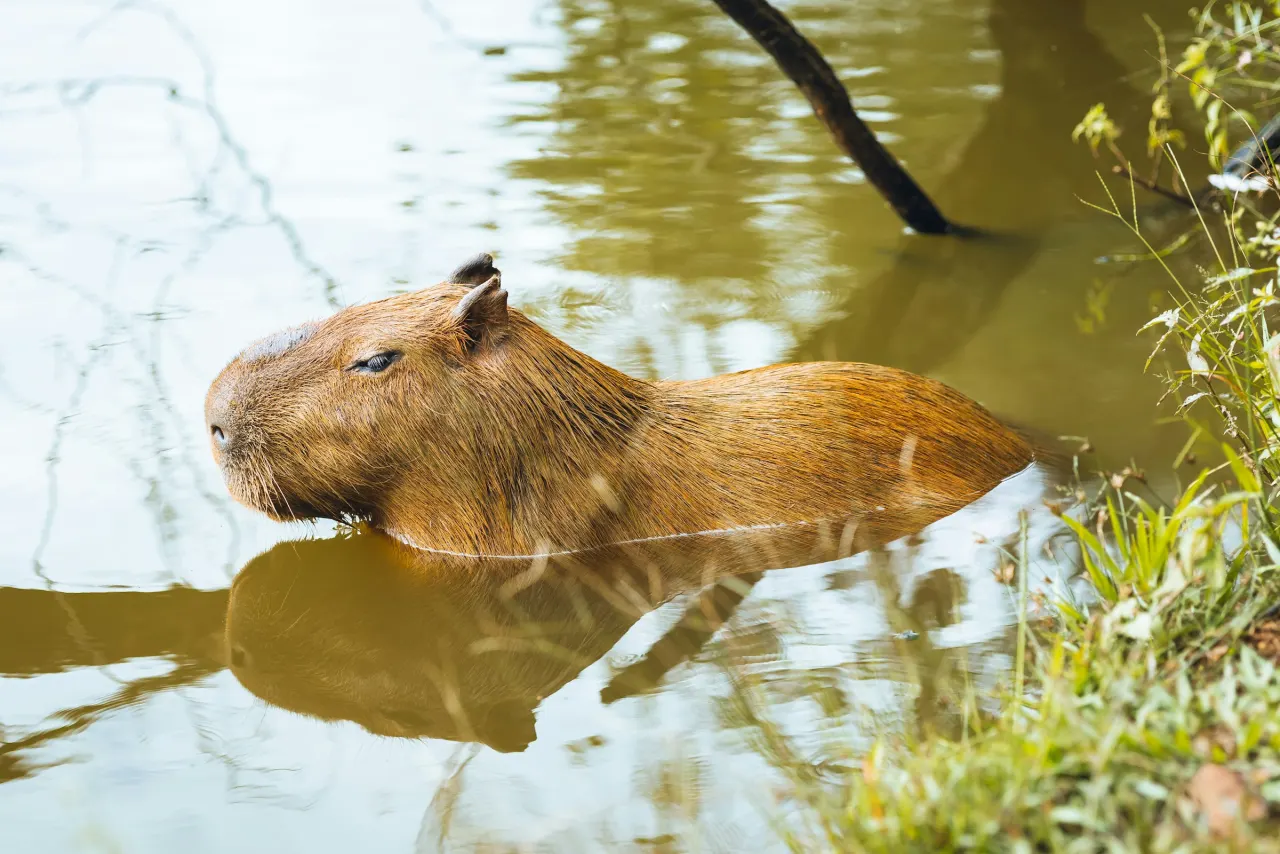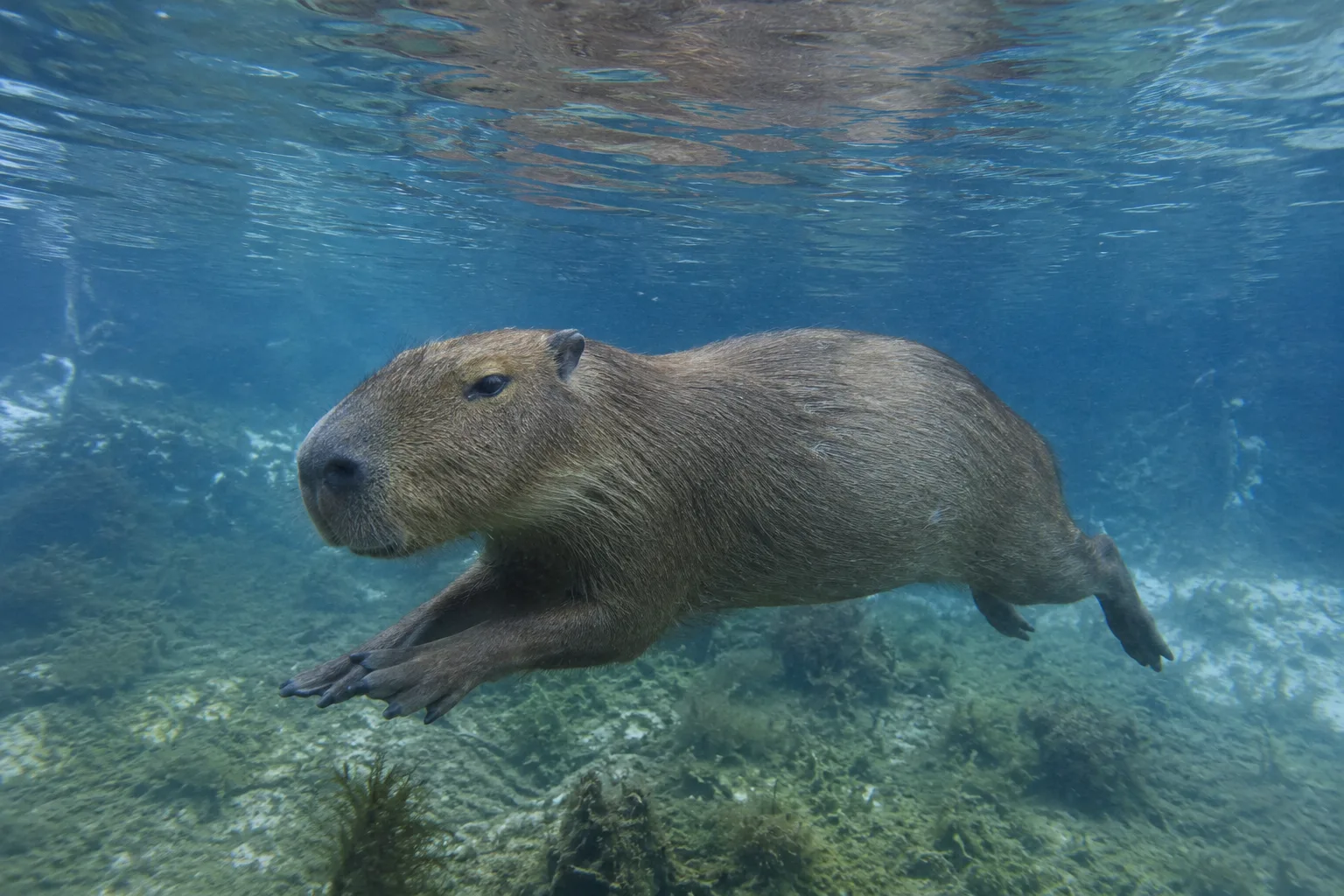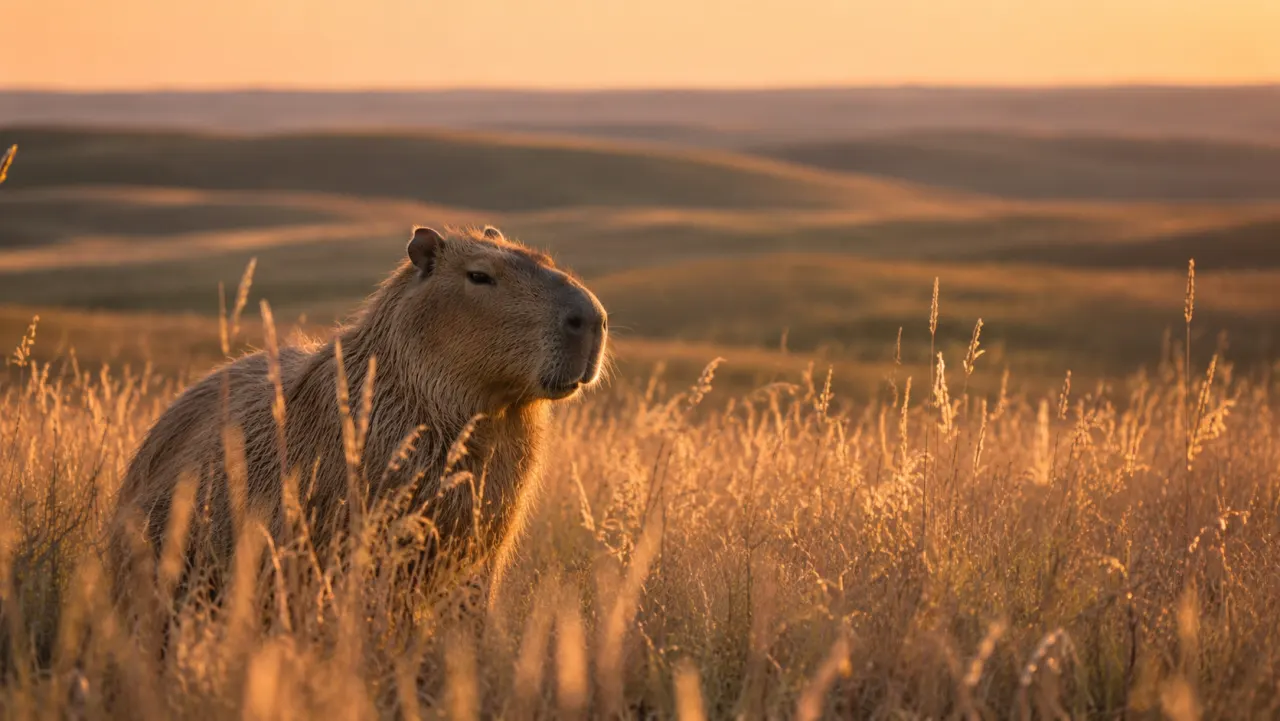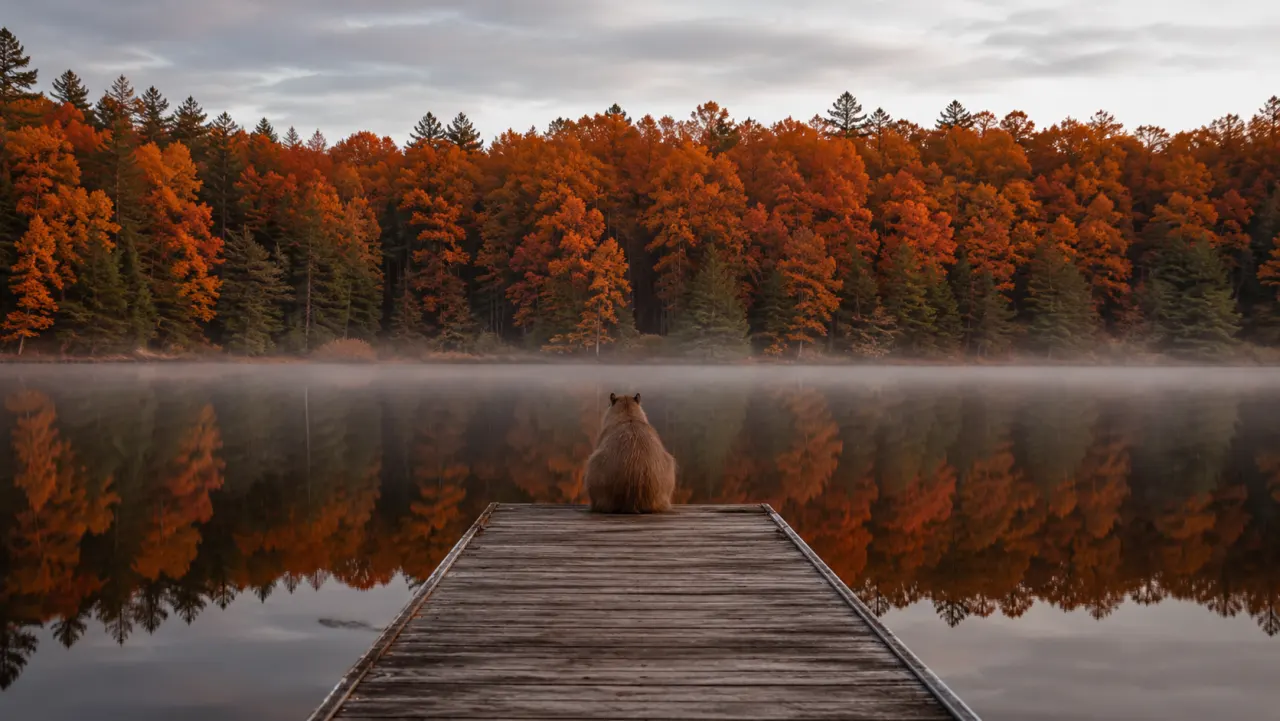
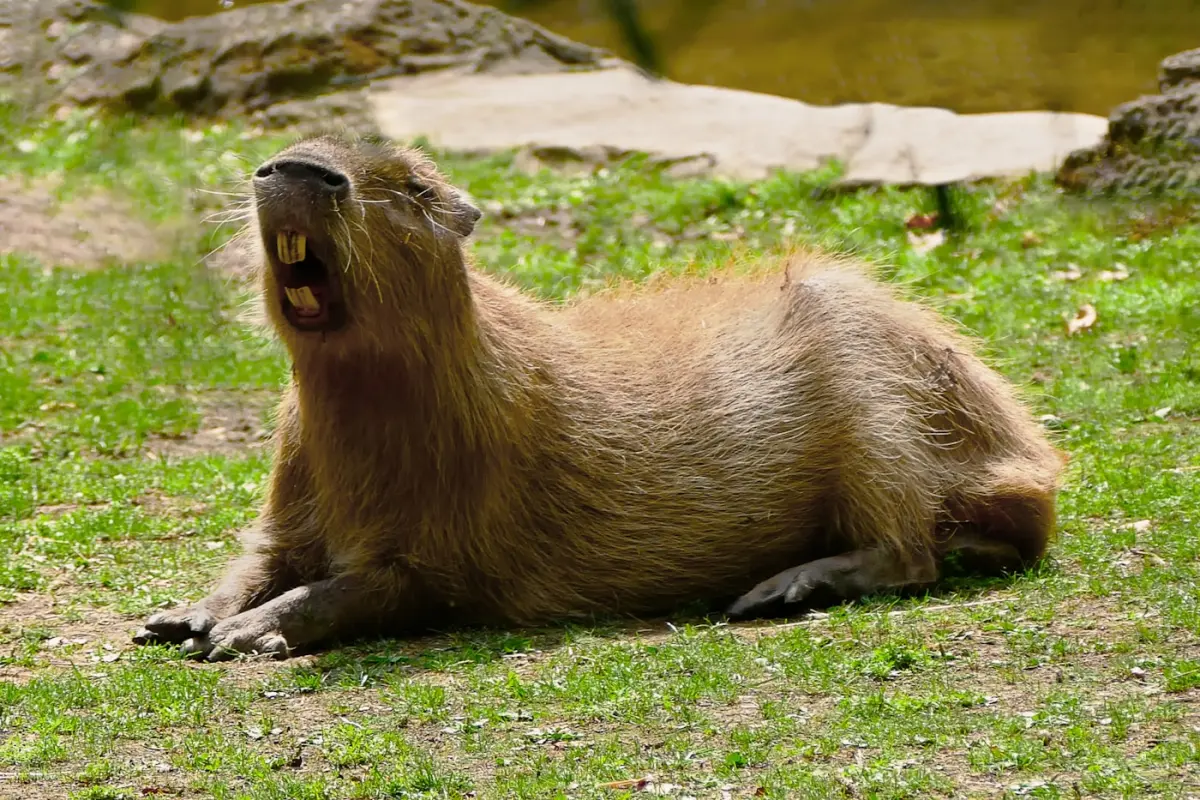
Capybara vs groundhog sounds like a meeting of two round employees from different departments. One predicts spring once a year through no fault of its own. The other stands in water and looks like it has rejected email as a concept.
The quick difference: capybaras are huge, social, semi-aquatic South American rodents. Groundhogs are smaller North American marmots built for digging and seasonal burrow life.
Size Is The Obvious Giveaway
San Diego Zoo identifies capybaras as the world’s largest living rodents. Animal Diversity Web’s groundhog account covers a much smaller marmot. If you put the two side by side, the capybara is not a slightly different groundhog. It is a different logistical event.
| Feature | Capybara | Groundhog |
|---|---|---|
| Main range | South America | North America |
| Lifestyle | Semi-aquatic grazer | Burrowing marmot |
| Social style | Often group-living | Often solitary outside breeding context |
| Visual cue | Huge, blunt, water-ready | Stockier small body, digging claws |
Water Animal Vs Burrow Animal
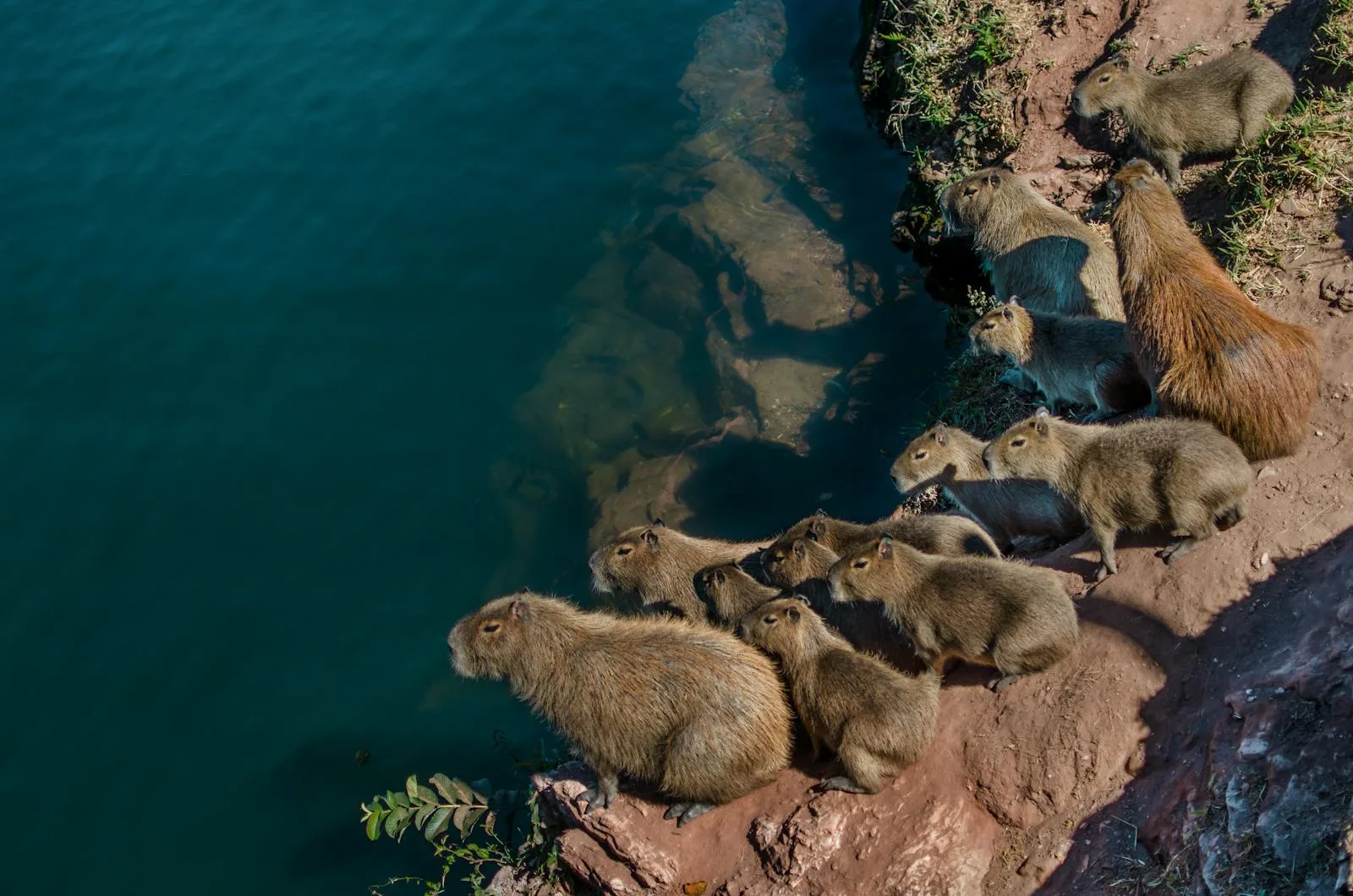
Capybaras are tied to water. They graze near it, rest near it, swim through it, cool off in it, and use it as an escape route. A capybara with no serious water access is a welfare problem, not a quirky pet setup.
Groundhogs are built around burrows. BioKIDS describes groundhog specimens in the context of a North American mammal adapted to digging and seasonal life. The burrow is shelter, nursery, winter refuge, and the whole job site.
A groundhog predicts spring. A capybara predicts you need a larger pool.
Social Herd Vs Groundhog Solitude
Capybaras often live in groups. Their social behavior includes vocal communication, shared vigilance, and group movement near water. Groundhogs are more solitary for much of the year, though breeding and young change the picture.
This is one of the best comparison points for fans. Two animals can both look chunky and calm while running completely different social software.
Diet, Range, And Daily Life
Both animals eat plants, but the setting changes everything. A capybara may graze grasses and aquatic plants around wetlands. A groundhog feeds in fields, meadows, yards, and edges near burrows.
For US readers, the groundhog is familiar because it shares human space: lawns, gardens, roadsides, farms. Capybaras feel stranger because wild ones belong to South American wetland systems.
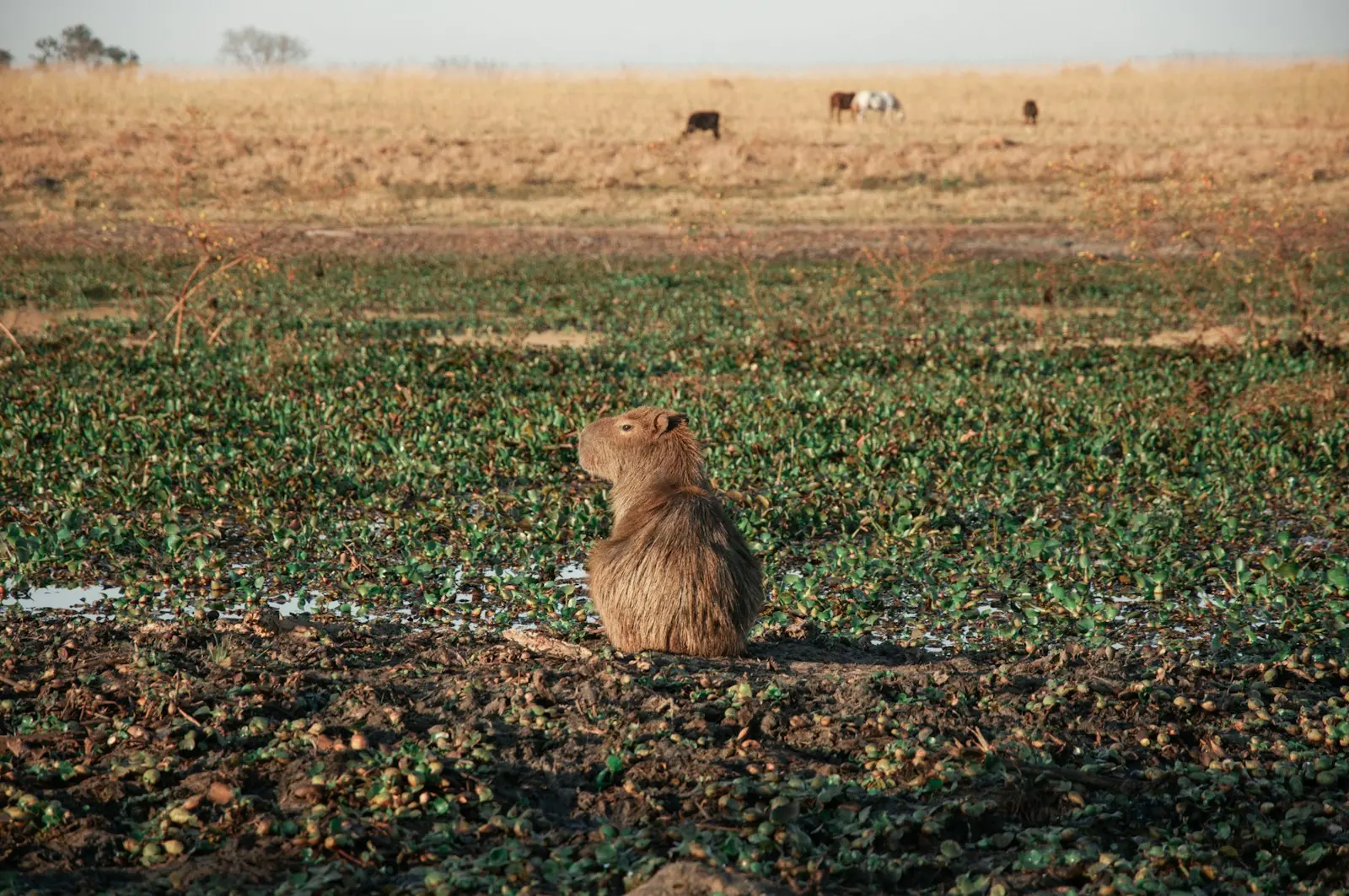
Why Both Became Meme Material
Groundhogs got a holiday. Capybaras got TikTok. Neither animal asked for this career path.
The shared appeal is shape plus attitude. They are not sleek. They are not trying to impress you. They look as if they have a small, private schedule and you are interrupting it. The difference is that the groundhog’s schedule involves a burrow, and the capybara’s involves water, grass, and group logistics.
How To Tell Them Apart In One Look
If you only remember one thing, remember scale. A groundhog is a lawn-sized animal you could imagine picking up, awkwardly, if it let you. A capybara is the size of a medium dog and then some. San Diego Zoo Wildlife Alliance lists the capybara as the world’s largest living rodent, with adults running roughly 35 to 66 kg (about 77 to 145 lb). A groundhog is a fraction of that. You are not comparing two sizes of the same thing. You are comparing a marmot to a wetland animal that happens to share the rodent label.
The second tell is setting. A capybara photographed in water, surrounded by other capybaras, is doing exactly what its body is for. A groundhog standing at the mouth of a hole in someone’s yard is also doing exactly what its body is for. Background tells you almost as much as the animal.
Where The Family Tree Splits
Both animals are rodents, and that is where the resemblance ends. Groundhogs (Marmota monax) are marmots, a group of large ground squirrels. Capybaras belong to family Caviidae, the same broad branch as guinea pigs and maras. So a capybara is closer, taxonomically, to the guinea pig in a classroom than to the groundhog in a field. Animal Diversity Web keeps separate accounts for each, which is the cleanest signal that these are not near relatives wearing different coats.
The convergence is real but shallow. Two rodents got round and sturdy because round and sturdy works for a grazing animal that does not need to be fast. That is it. It is not evidence of a close relationship, the same way two unrelated people can both be tired on a Monday.
Bodies Built For Different Jobs
A few traits make the split obvious once you know to look for them.
| Trait | Capybara | Groundhog |
|---|---|---|
| Adult size | Roughly 35 to 66 kg | Much smaller, a few kilograms |
| Feet | Slightly webbed, water-ready | Strong digging claws |
| Default habitat | Wetlands, rivers, flooded grassland | Fields, meadows, burrow networks |
| Winter strategy | Active year-round in warm range | True hibernator in cold months |
| Group life | Herd animal, group is the norm | Largely solitary much of the year |
The winter line is the one people miss. A groundhog genuinely shuts down for the cold season, which is the whole reason it ended up with a weather holiday in the first place. A capybara has no such off switch. Its range is warm, its life is built around water, and the idea of it disappearing underground for months is not in the script.
Both are hindgut fermenters that re-ingest soft morning feces to pull more nutrients out of plant matter, which is unglamorous and completely normal for grazing rodents. And both have continuously growing teeth, so the chewing never really stops. These are rodent baseline traits, shared, but they do not make the two animals interchangeable.
What People Get Wrong
The comparison invites a few lazy assumptions. Here are the ones worth correcting.
| Common assumption | Better answer |
|---|---|
| They are basically the same animal at different sizes | Different families, different habitats, different daily jobs |
| Capybaras burrow like groundhogs | Capybaras are water-oriented grazers, not burrow specialists |
| Groundhogs are aquatic too | They can swim if forced, but they are diggers, not swimmers |
| A capybara would do fine in a North American yard | Wild capybaras need warm wetlands and a herd; a yard is not that |
Honest opinion, since the brief asked for one: the groundhog gets undersold in this matchup. People treat it as the budget capybara, the chunky stand-in, the one that only matters one morning in February. But a groundhog is a genuinely good piece of engineering. It digs a multi-room burrow, hibernates hard, and survives North American winters on its own terms. The capybara is the more photogenic animal and the bigger one, but the groundhog is arguably the more self-sufficient. It does not need a herd or a pond. It needs a hole and to be left alone, which, frankly, is relatable.