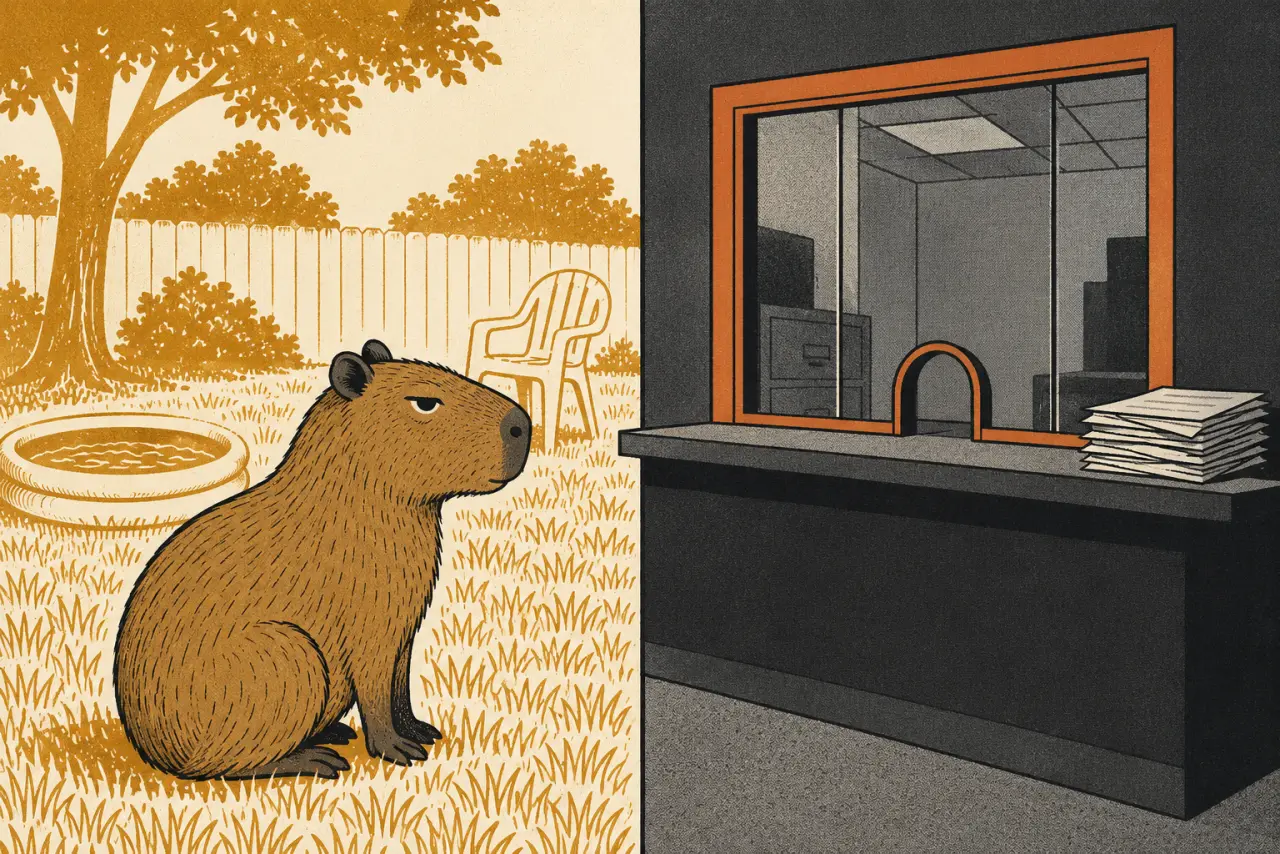
You may need a license or permit to own a capybara, but the answer depends on where you live and what you plan to do with the animal. State wildlife rules, local ordinances, zoning, animal-control rules, and USDA requirements can all matter.
The safest answer is: check before you shop. If the animal arrives before the paperwork, the paperwork is now an emergency with feet.
You may need a licence or permit to own a capybara, and the answer depends on where you live and what you plan to do with the animal. State wildlife rules, local ordinances, zoning, animal-control rules and USDA requirements can each apply independently — clearing one says nothing about the others.
Do You Need A License To Own A Capybara? The Short Answer
Sometimes yes, sometimes no, sometimes “not allowed at all,” and sometimes “allowed only under conditions that make casual ownership unrealistic.” That is why a single national answer is useless.
| Rule layer | What it can decide |
|---|---|
| State wildlife agency | Whether capybaras are allowed or permit-only |
| County or city | Local bans, nuisance rules, zoning |
| Zoning office | Whether your property can house livestock/exotics |
| Animal control | Enclosure, complaints, local enforcement |
| USDA APHIS | Exhibitor/dealer/business licensing |
This is not a vibe check. It is a paper trail.
The Permit Types People Confuse
The biggest confusion is USDA licensing versus pet permission. USDA APHIS administers Animal Welfare Act rules for certain dealers, exhibitors, transporters, and research facilities. That can matter if you display animals publicly, sell regulated animals, or run encounters. It does not automatically make a capybara legal as a private pet where state or local rules say no.
State permits are different. A state may regulate exotic, wild, or restricted animals through wildlife or agriculture agencies. Local zoning is different again. Your state might not ban capybaras, while your city quietly refuses the whole idea before breakfast.
How To Check Capybara Permits Without Guessing
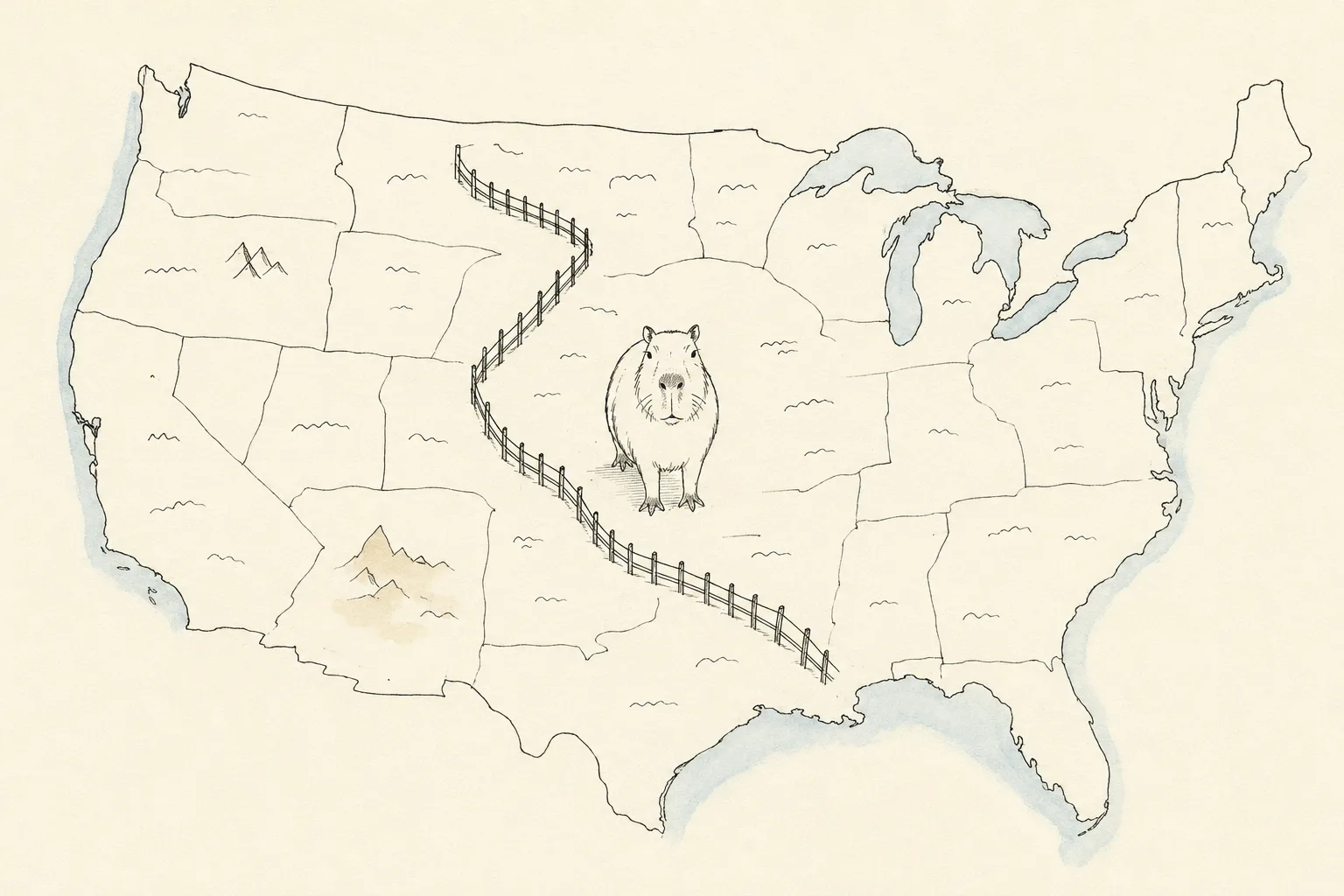
Start with the state legality map, then verify directly. Contact the state wildlife agency. Ask whether capybaras are prohibited, permit-only, exempt, or handled under another category. Then check county, city, zoning, and animal-control rules.
Ask for written confirmation or a link to the rule. Phone calls are useful, but a person saying “I think it’s fine” does not survive a complaint, inspection, or neighbor dispute.
| Step | Ask this |
|---|---|
| State | Are capybaras legal, restricted, or prohibited? |
| County | Are exotic mammals allowed on this property? |
| City | Are there local animal limits or bans? |
| Zoning | Does my land use allow this enclosure? |
| Vet | Can anyone qualified treat the animal? |

Permit Red Flags Before You Buy
Red flag one: a seller says “no one checks.” That is not permission. Red flag two: a permit seems possible only after you already own the animal. Red flag three: you cannot find an exotic vet. Red flag four: zoning requires land, fencing, drainage, or setbacks you do not have.
Permits also do not solve welfare. A legal capybara can still be a bad idea if you lack space, water, companions, money, and daily care capacity. The permit is the front door, not the whole house.

The Paper Trail You Want Before Money Changes Hands
Do the dull part in writing. Keep emails, screenshots of ordinances, permit forms, agency names, dates, and the exact property address you asked about. “Capybaras are legal in my state” is too vague to help if the question later becomes your fenced backyard, your city limits, your HOA, or your plan to let neighborhood kids visit.
| Proof to collect | Why it matters |
|---|---|
| State wildlife response | Establishes the top-level rule |
| County or city ordinance link | Catches local bans and limits |
| Zoning confirmation for your address | Connects the answer to your property |
| Animal-control notes | Shows likely enforcement concerns |
| Exotic-vet confirmation | Proves care access before purchase |
| Seller records | Documents source, transport, and age |
The call script is simple: “I am asking before purchasing. Does this address allow private possession of a capybara, and are there permits, enclosure standards, inspections, or animal limits?” Then stop talking and let the official answer. If they transfer you three times, write down all three names. Exotic animal rules often live in the least obvious office, naturally, because paperwork enjoys a little cardio.
This is the part pet-curious people want to skip because it ruins the fantasy early. Good. That is its job. A capybara plan that cannot survive email is not ready for a 100-pound social rodent with pool needs.
One more unromantic detail: ask what happens if the rule changes, you move, the animal escapes, or a neighbor complains. Those are not paranoid questions. They are the normal places where exotic pet ownership stops being an aesthetic and becomes a file folder. If the agency cannot answer, that uncertainty belongs in your decision, not hidden behind a cute breeder photo.
What The Paperwork Actually Costs You
You may need a capybara license or permit, and you may also discover that ownership is locally prohibited or practically impossible. Check state, county, city, zoning, animal-control, and USDA context before contacting sellers.
Do not buy first and investigate later. A capybara is a social, semi-aquatic, expensive animal, not a paperwork experiment with ears.