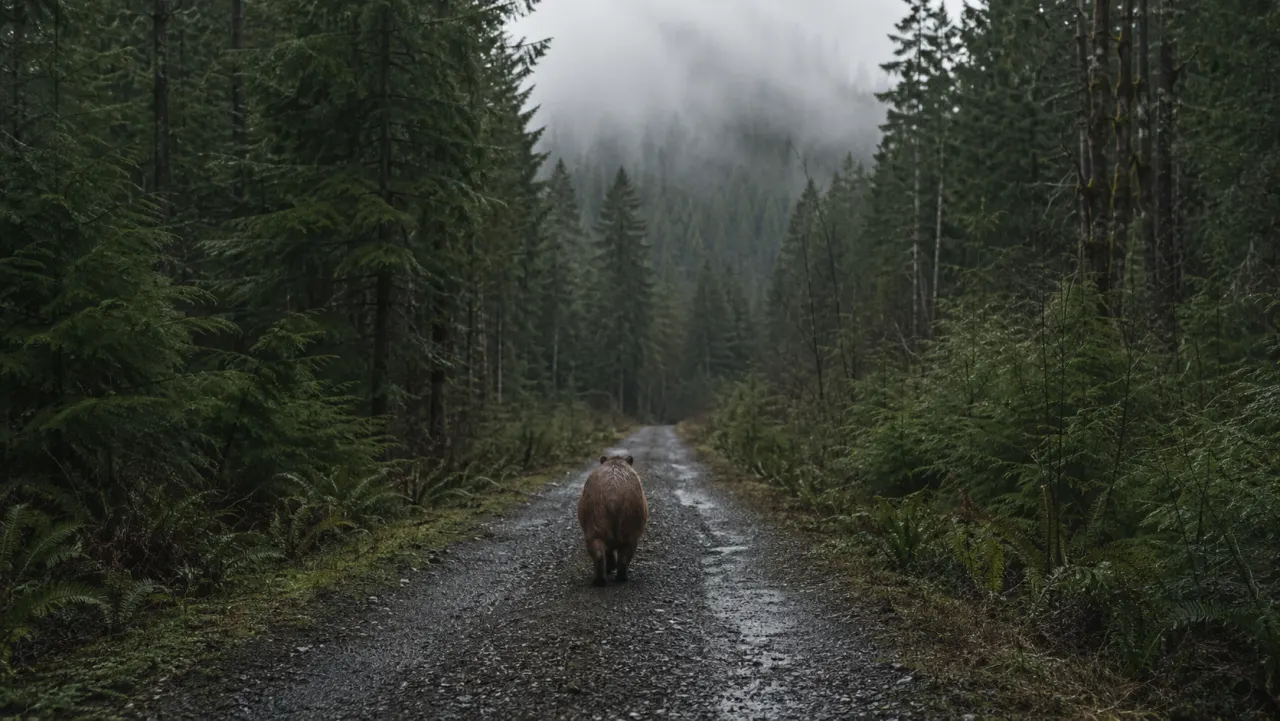

West Virginia passed a dangerous wild animals law in 2014, which puts it among the more recently legislated states on this question. Recent usually means broader. Here it does not.
Outside the Act — no rodent is named
WV Code Article 19-34, the Dangerous Wild Animals Act, names bears, big cats, canids, primates, constrictor snakes over six feet, venomous snakes, and alligators and caimans. The capybara is not mentioned and no rodent appears.
One caveat that matters: the list is maintained by a state board and reviewed annually, so confirm the current version rather than trusting any page — including this one.
The Short Answer: Outside the Act
The 2014 Act is West Virginia’s whole exotic-animal framework for dangerous species, and it is built around animals that can injure a person. A capybara is a large grazing rodent that has no place in that category and did not end up in it.
That resolves the state dangerous-animal layer. It leaves importation and local ordinances entirely untouched, which is where West Virginia plans actually run into difficulty.
What Article 19-34 Actually Covers
The Act prohibits possessing a dangerous wild animal, with a grandfather route for animals owned before June 2015.
The statutory definition is deliberately wide: a mammal, bird, reptile, amphibian or aquatic animal, including a hybrid, that is dangerous to humans, other animals or the environment due to its inherent nature and capability to do significant harm.
The taxa actually named are narrower:
Named in the Act
- Bears
- Big cats
- Canids
- Primates
- Constrictor snakes over six feet
- Venomous snakes
- Alligators and caimans
Not named
- Any rodent, of any size
- The capybara, by common or scientific name
- Any South American mammal group
Read the list and the intent is obvious. This is a public-safety statute about animals that can kill or maim, written in the era when several states tightened exotic-animal rules after high-profile escapes. It was never aimed at grazers.
The Board Is the Part That Matters
Here is what separates West Virginia from Iowa or Mississippi, where a legislature fixed a list in statute and it stays fixed until amended.
Under WV Code 19-34-5, the Dangerous Wild Animal Board develops the comprehensive list under the Act’s rule-making authority. The board has three members:
The board annually reviews the list to determine whether animals should be added or subtracted.
A statutory list changes when the legislature acts, which is rare and public. A board-maintained list can change on an annual review cycle with far less visibility. "Capybaras aren't on West Virginia's list" is true as written and has a shelf life, and the composition of that board — agriculture, health, natural resources — means environmental risk is squarely within its remit.
That is not a prediction that capybaras will be added. It is a reason to make one phone call rather than trust a webpage, and it is the single most useful thing this page can tell you.
The June 2015 Cutoff and Why It Exists
The Act prohibits possessing a dangerous wild animal unless the animal was owned before 1 June 2015 and the owner obtained a permit.
That is a grandfather clause for people who already had listed animals when the 2014 Act commenced. It is not a route a new buyer can use, and it does not apply to capybaras at all, since they are not listed. It is worth understanding only because it explains why West Virginia has permitted owners of animals that a new buyer cannot acquire.
Why Local Rules Do the Real Deciding
With the state dangerous-animal layer clear, West Virginia comes down to two things: getting the animal into the state, and being allowed to keep it where you live.
Importation. The West Virginia Department of Agriculture’s Animal Health Division handles entry requirements — certificates of veterinary inspection, testing, documentation — for animals coming from out of state. That is a separate clearance and nothing about Article 19-34 speaks to it.
Local code. Charleston, Huntington, Morgantown and the counties each restrict exotic animals, livestock in residential zones, enclosures, standing water, setbacks and fencing under their own authority. A state statute that does not mention your animal is not permission from your city.
West Virginia’s terrain adds a wrinkle other states do not have. Steep ground, hollows and floodplain make fencing and enclosure siting genuinely harder, and a graded, drained enclosure with a pool on a slope is an engineering question before it is a zoning one.
Ask Agriculture for the Current List First
-
WV Department of Agriculture — the current list
Ask whether Hydrochoerus hydrochaeris appears on the current Dangerous Wild Animal Board list, and when the list was last reviewed. The Commissioner of Agriculture chairs the board, so this is the right door.
-
WV Department of Agriculture, Animal Health — import
Entry requirements from the origin state: certificate of veterinary inspection, testing, documentation.
-
City or county animal control
Address-specific and in writing. Ask about exotic animals and large non-domestic mammals by name.
-
Zoning or planning
Enclosure siting on slope, fencing, pool, drainage and floodplain. In West Virginia this is a bigger question than in flat states.
-
An exotic veterinarian
Before the deposit. Ask how far the nearest practice that treats capybaras is, and what the drive looks like in winter.
-
USDA APHIS — only if commercial
Exhibition, paid interaction or breeding brings federal licensing into scope.
The Care Reality Appalachian Terrain Adds
The AZA Capybara Care Manual describes an animal built around water, continuous grazing, group life and secure space. West Virginia supplies rainfall and vegetation generously. What it does not supply is flat, drained ground — and a capybara pool that overflows down a hollow after a storm becomes a neighbour’s problem quickly.
Winter is milder here than in the plains states but wet, and persistently wet ground without dry lying-up space is a skin and foot problem for capybaras rather than a cold one.
No Fee Today, and a List That Is Reviewed Every Year
West Virginia’s cost answer comes with an expiry date, which is unusual enough to plan around.
Most states in this position fixed their list in the statute, which means changing it takes a legislature. West Virginia gave a three-member board the power to revisit it every year. That is a much shorter path from “not listed” to “listed”, and it is the reason the free answer here should be re-checked rather than filed away.
The Act's grandfathering ran to animals owned before 1 June 2015. If the board ever added the capybara, an animal acquired today would sit outside that date. Confirm the current list before acting, including against this page.
Entry requirements from the origin state still apply: certificate of veterinary inspection, testing, documentation. Those are veterinary bills rather than state fees. The rest is county code and the capybara cost guide, which Appalachian terrain does not simplify.
The List Changes, and That Cuts Both Ways
| What West Virginia buyers believe | What is actually true |
|---|---|
| ”There’s a Dangerous Wild Animals Act, so exotics are banned” | The Act reaches named taxa — bears, big cats, canids, primates, large constrictors, venomous snakes, crocodilians. No rodent is on it. |
| ”The list is fixed in the statute” | A three-member board develops it by rule and reviews it annually. It can change without a legislative act. |
| ”The 2015 date might let me grandfather in” | That clause is for animals already owned when the Act commenced. It is not available to a new buyer, and it does not apply to unlisted animals anyway. |
| ”Rural West Virginia means no rules” | County zoning, floodplain rules, covenants and import requirements all still apply, and the terrain makes enclosure siting harder rather than easier. |
| ”One capybara is easier” | One capybara is a welfare failure. They are herd animals. |
The West Virginia Verdict
West Virginia gives you a clean state-level answer and one genuine caveat worth acting on.
The Act does not reach capybaras. That is well supported by the named taxa and by the plain purpose of a public-safety statute. But the list belongs to a board that revisits it every year, and that board includes agriculture and natural resources — the two departments most likely to take an interest in a large, fast-breeding, semi-aquatic grazer.
So make the call, ask when the list was last reviewed, and write down the date of the answer. Then go and solve the harder problem, which is a level, drained enclosure with water on Appalachian ground, for two animals rather than one.
Then read the capybara cost guide, the care guide, and the state-by-state map.
This guide is current as of September 5, 2026. The board’s list is reviewed annually, so treat this as a screening path rather than legal advice, and confirm the current list before acting.