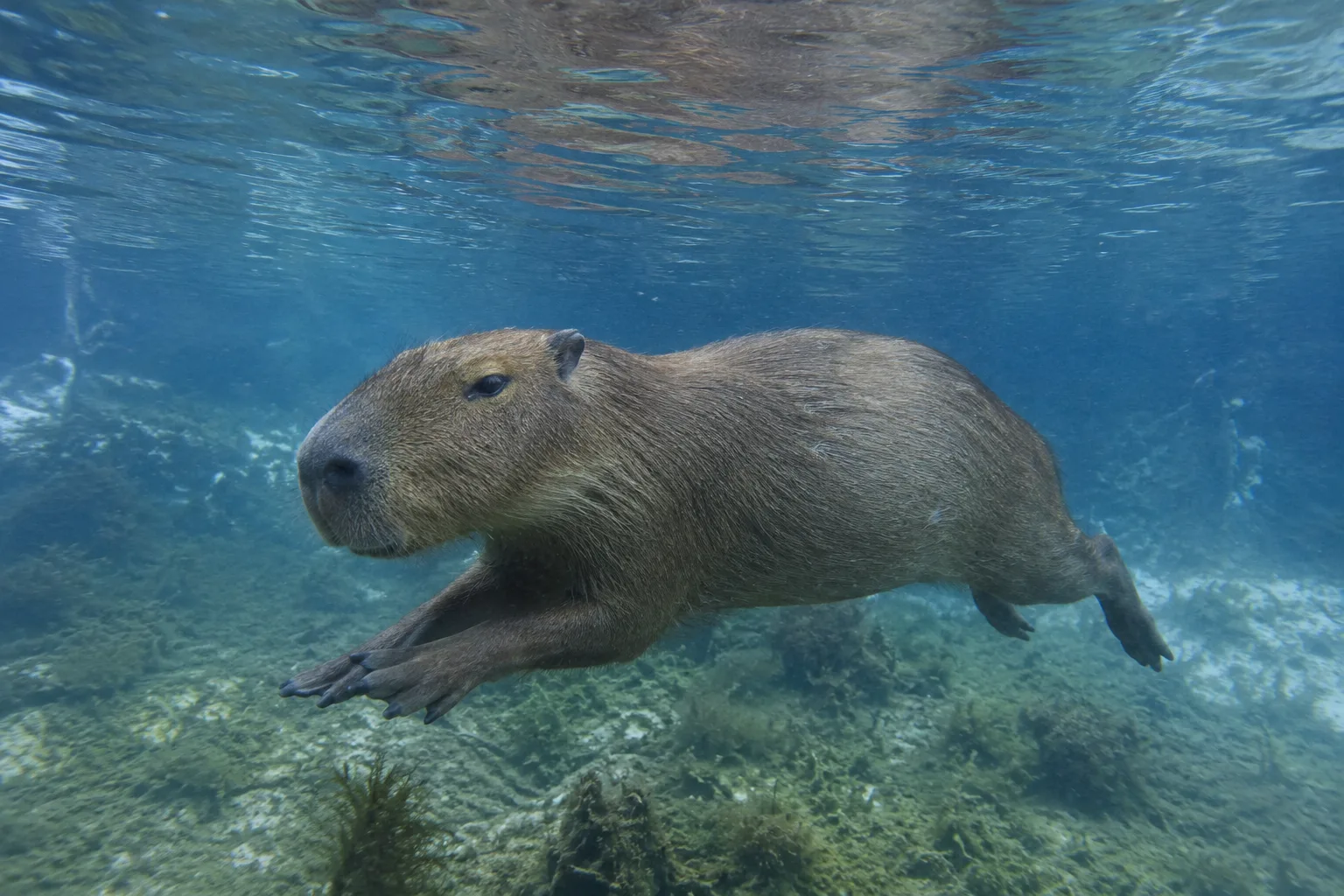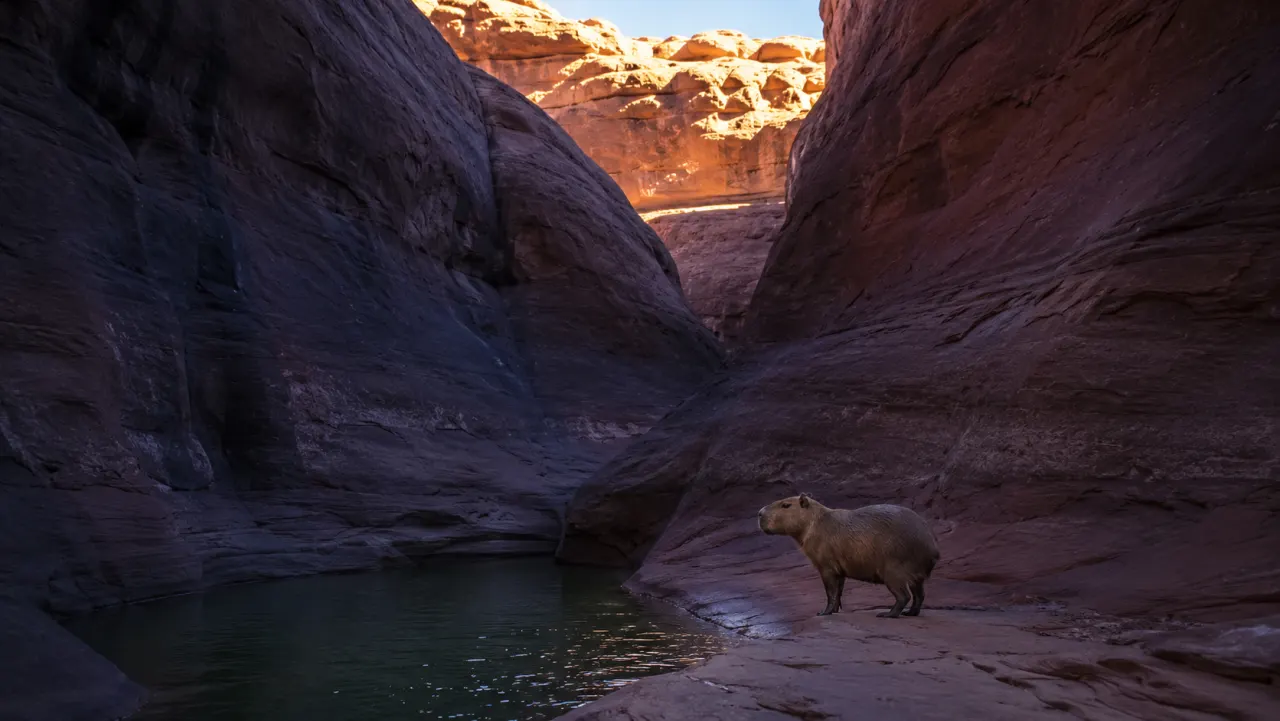

Every other province in this series answers the capybara question by accident. Ontario never listed it. Alberta listed two other cavies and moved on. British Columbia built a list about animals that can kill you and never reached rodents. Quebec is the exception: somebody sat down, found the genus, and wrote it into a schedule.
Legal with a ministry permit, and closed in Montreal by a weight rule
Schedule 1 of the captivity regulation restricts Caviidae, genus Hydrochoerus, all species. Listed means a permit is required, not that the animal is banned.
Montreal permits pet rodents under 1.5 kg. Adult capybaras are 27-79 kg, so inside the city the provincial permit never becomes the question.
The Short Answer for Quebec
Provincially: yes, with a keeping permit from the ministry. Quebec’s own species list is unambiguous about it.
In Montreal: no, because the city’s pet rules cap rodents at 1.5 kg and nothing about a capybara survives contact with that number.
How Quebec’s Captivity Regulation Works
The instrument is the Regulation respecting animals in captivity, CQLR c. C-61.1, r. 5.1, made under the Act respecting the conservation and development of wildlife. It replaced an earlier regulation in 2018, and the replacement matters. A great deal of what is written online about capybaras in Quebec is still working from the old text.
The structure is an open regime with a restricted list. Section 5 provides that no licence to keep animals in captivity is required for capturing, keeping or disposing of an animal that is not listed in Schedule 1. Schedule 1 is headed “species or subspecies the keeping of which is restricted.”
So the question for any species is a single lookup: is it in Schedule 1 or not.
Not in Schedule 1
- No wildlife keeping permit required
- Municipal rules and general animal-welfare law still apply
In Schedule 1, where the capybara sits
- A ministry keeping permit is required
- Written notice to the Minister before importing a rodent into Québec
- Municipal rules still apply on top, and Montreal's is decisive
The regulation also fixes its own taxonomy, which forecloses the argument people reach for. Species, genera and families are classified according to the Catalogue of Life: 2017 Annual Checklist, and the regulation states that scientific nomenclature prevails over common names. There is no arguing that a capybara is “really a guinea pig” and therefore covered by a friendlier entry. The schedule works from genus.
The Entry That Names the Animal
In Schedule 1’s Rodentia block, the relevant row reads:
Rodentia · Caviidae · Hydrochoerus · all species · capybara
“All species” catches both Hydrochoerus hydrochaeris and the lesser capybara Hydrochoerus isthmius. There is no weight threshold, no captive-bred exception and no size test. The genus is listed, and that is the whole mechanism.
Quebec’s own published species list, which the ministry maintains for applying the regulation, is blunter still. Against Hydrochoerus hydrochaeris it records:
Nécessite un permis émis par le MFFP (Gén. C2 à C6, Pro.)
A permit issued by the ministry, general classes 2 through 6, or a professional permit.
The Line Quebec Drew Inside One Family
Here is the part no other province in Canada offers, and it is visible in a single screenful of that ministry list.
| Species | Family | Quebec’s treatment |
|---|---|---|
| Cavia porcellus (domestic guinea pig) | Caviidae | Domesticated species, under the agriculture ministry |
| Galea spixii (Spix’s yellow-toothed cavy) | Caviidae | Autorisée sans permis du MFFP |
| Kerodon rupestris (rock cavy) | Caviidae | Autorisée sans permis du MFFP |
| Hydrochoerus hydrochaeris (capybara) | Caviidae | Nécessite un permis émis par le MFFP |
| Hydrochoerus isthmius (lesser capybara) | Caviidae | Nécessite un permis émis par le MFFP |
Four caviid genera, three different regulatory treatments, and the split runs straight through the family. The guinea pig is the agriculture ministry’s problem. The small wild cavies are nobody’s problem. The two capybaras need a permit.
That is not a schedule that forgot about rodents or got caught out by a taxonomy change. Somebody looked at Caviidae, worked out which members are a 60-kilogram semi-aquatic grazer and which are a hamster-sized animal from the Caatinga, and regulated accordingly. Compare Alberta, which named two Dolichotis cavies and the nutria and left the capybara off entirely, and the difference in drafting care is the whole story.
The regulation in force before 2018 worked the other way round. It listed species that could be kept without a licence, and the capybara was not on it. Pages written from that text reach a similar-sounding conclusion by the opposite route, and some still quote schedules that no longer exist. Check that anything you read about Quebec is working from r. 5.1.
What the Permit Actually Is

A restricted species is not a forbidden one, and this is where Quebec is more open than its reputation.
The ministry’s general animal-keeping permit is available to private individuals, not only to zoos and institutions. Québec’s own guidance describes the regime as excluding high-risk species, and the examples it gives are big cats and venomous snakes, rather than excluding private keepers as a class. The capybara sits in the ordinary permitted band, at classes Gén. C2 to C6.
What that means practically is that Quebec is one of the few places in Canada where “can a private person keep one” has a documented process attached rather than a shrug. It also means the province has a view about husbandry it can enforce through permit conditions, which is more than a silent province can do.
Two things it does not mean. It does not mean the permit is easy, quick, or granted on request. That is a conversation with the ministry, and this page cannot have it for you. And it does not touch the municipal layer at all.
Montreal Answers It Before the Province Does

For most Quebecers the permit analysis is academic, because Montreal’s rules on authorised pets permit rabbits, ferrets and other rodents weighing less than 1.5 kg.
Toronto, Hamilton and Mississauga use the same 1,500 gram number in Ontario. Canada’s two largest cities have landed in the same place, which is worth knowing but is not a rule about the country. Ottawa uses a category test instead, and Brampton, Calgary and Edmonton each do something different again.
Outside Montreal, Quebec municipalities set their own animal by-laws and are not uniform. The provincial permit and the municipal by-law both have to say yes, and either can end it alone.
The Paper Trail, and What Moves Each Answer
| Ask this | Ask them for | Why it matters | What changes the answer |
|---|---|---|---|
| Ministère (wildlife permits) | Which keeping-permit class applies, what conditions attach, and the current import-notice period | Schedule 1 makes this mandatory, not optional | Schedule 1 amendments; permit conditions set case by case |
| Your municipality | The by-law text and any weight limit on pet rodents | In Montreal this ends the question before the permit matters | Council amending the authorised-species rules |
| Landlord or co-ownership syndicate | Written permission naming the species | Quebec’s rental-heavy housing makes this common | A lease renewal, a syndicate by-law change |
| CFIA import office | Requirements for a live non-traditional pet entering Canada | Federal, and separate from the provincial permit | Origin-country status, health certification rules |
| An exotics vet | Written confirmation they will accept the species, in your language of care | A 50 kg rodent is not a routine patient anywhere | The practice’s caseload, or the vet leaving |
Misconceptions Quebec Readers Keep Repeating
“Capybaras aren’t banned in Quebec, so no paperwork is needed.” Not banned and not restricted are different states. The capybara is restricted, which is the middle option, and the middle option comes with a permit.
“It’s a caviid, so it’s covered by the guinea pig rules.” Quebec’s list treats Cavia porcellus as a domesticated species under the agriculture ministry and Hydrochoerus as a restricted wildlife species. Same family, different regime, and the regulation says scientific nomenclature governs.
“The regulation only lists what you can keep freely, so anything unlisted needs a licence.” That was the pre-2018 structure. The current regulation lists what is restricted, and unlisted species need no wildlife permit. If a page tells you otherwise, check which text it is reading.
“I’ll just live outside Montreal.” That solves the municipal rule and leaves the provincial permit, another municipality’s by-law and a Quebec winter untouched.
“Zoos have them, so it must be a zoo-only permit.” The permit classes recorded against this species include general classes available to individuals, not only professional ones. Institutional permission is not the only route here, which is unusual in Canada.
The Quebec Bottom Line
Quebec is the only province in Canada that looked directly at this animal and decided something about it. Everywhere else the answer is assembled from silence, adjacency, and municipal weight limits written for hamsters.
The decision it made is a permit, not a prohibition, which makes Quebec simultaneously the most regulated province on this question and, outside Montreal, one of the few with a documented route to yes. Those two facts sit together more comfortably than people expect.
Montreal still says no. The winter says no more loudly than the ministry does. And what the care load actually looks like is the page that changes more minds than any schedule.
For the rest of the country and the federal import layer, start with the Canada overview. If the goal is to be near one rather than keep one, Café Capybara in Montreal is the province’s own answer to that.
Current as of October 10, 2026. Quebec’s captivity regulation was substantially replaced in 2018 and its schedules are amended, so confirm the current Schedule 1 entry and permit class with the ministère, and your by-law with your municipality, before money changes hands or an animal moves. This is a screening path, not legal advice.