There is no Canadian answer to this. There are provincial answers, and then a municipal answer that usually overrides them. No federal law bans owning a capybara here. What Ottawa controls is getting one across the border. What most provinces have done is simply not name the species at all, which readers keep misreading as a green light. And what your city controls, in the two largest cities in the country, is a hard weight cap on pet rodents that an adult capybara clears roughly eighteen times over.
No federal ban, thin provincial rules, and a city by-law that usually says no
Most provincial controlled-species lists do not name Hydrochoerus hydrochaeris at all. That silence is the thing people get wrong: it means the province has not decided, not that the province has said yes.
Toronto prohibits rodents over 1,500 grams. Montreal permits pet rodents under 1.5 kg. The AZA puts adult capybaras at 27-79 kg. Start with your municipality, not your province.
Where Canada’s Answer Actually Comes From
Three layers decide this, and they are not stacked the way most people assume.
The federal layer is narrower than it sounds. The Canada Border Services Agency states plainly that the Canadian Food Inspection Agency “is responsible for establishing import requirements for all animals, including domestic pets and non-traditional pets,” and that its officers can refuse entry, confiscate, or detain an animal that arrives without the right documents. That is a border question. Nothing in it speaks to whether you may keep the animal in a yard in Sudbury once it is through.
What the federal layer decides
- Whether a live animal may cross the border at all
- Import permits, health documentation, inspection
- Whether an officer detains or refuses the animal
What it does not decide
- Whether you may own one
- Whether your province requires a licence
- Whether your city's by-law permits it
- Any welfare or enclosure standard for a private home
The provincial layer is where research usually stalls, because in most provinces the capybara is simply not on the list. Provincial controlled-species schedules were drafted around public safety and invasive risk: big carnivores, primates, venomous reptiles. A grazing South American rodent was not the animal anyone had in mind.
Then the municipal layer, which is the one that actually binds you, and the one almost nobody calls first.
Ontario is the clearest case of the split. Ontario Regulation 668/98 under the Fish and Wildlife Conservation Act governs “wildlife in captivity,” but it runs entirely on the categories of “game wildlife” and “specially protected wildlife,” which are Ontario species defined by the Act’s own schedules. A capybara is neither, so the province is not the body you need. Meanwhile a private member’s bill, the Captive Wildlife Protection Act, 2025, sits at first reading proposing a provincial licensing scheme for zoos, which tells you how settled this area of Ontario law is.
Province by Province, With the Sourcing Shown
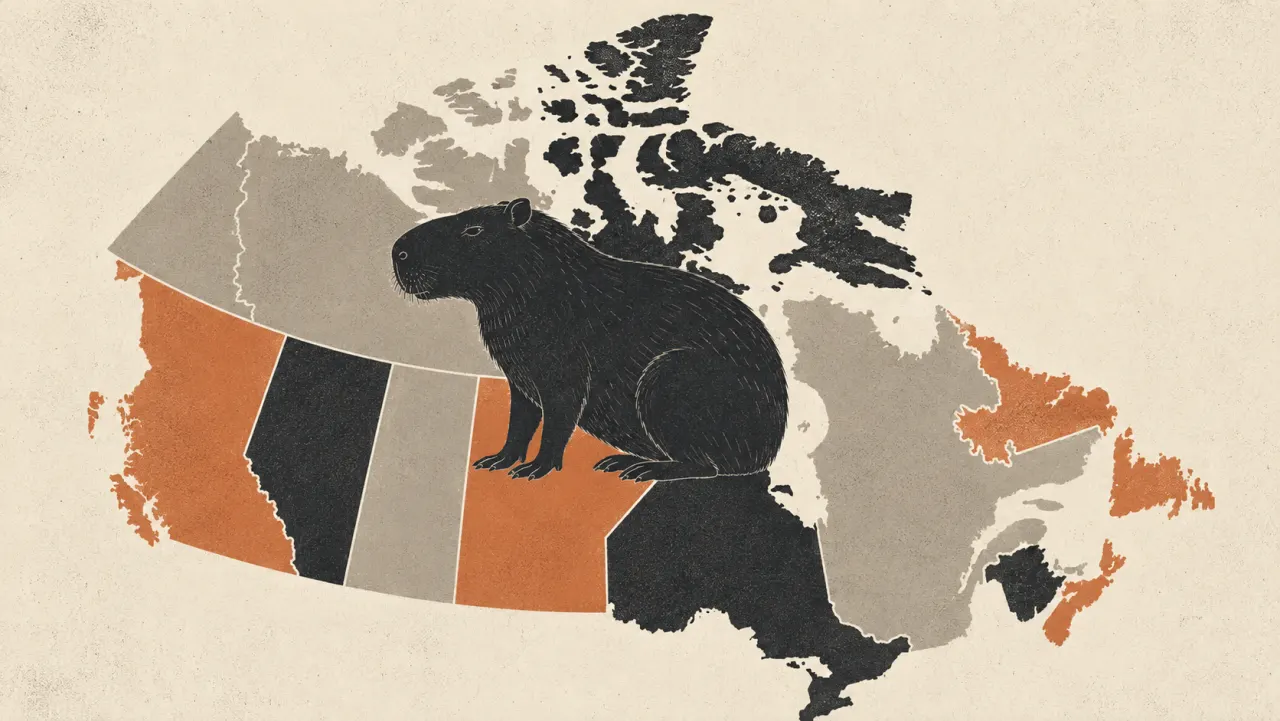
Four provinces below have an answer I could check against an official source. In three of them, that answer is that the province has never named the capybara. The remaining rows are research prompts, and they are labelled that way on purpose rather than dressed up as findings. The same rows, alongside the US states and thirteen countries, are in the capybara legality checker.
| Province | Where the rule sits | What that means for a capybara | Verify with |
|---|---|---|---|
| Ontario | Municipal. Reg. 668/98 licences only game and specially protected wildlife | Not a provincial licence question. Toronto prohibits it outright; other cities vary | Your municipality’s animal services |
| British Columbia | Controlled Alien Species Regulation, Schedule 1 lists no rodents | Not a controlled alien species. That is absence, not permission | BC CAS program, then your municipality |
| Alberta | Wildlife Regulation Schedule 5. The Caviidae entry names only two Dolichotis species | Not named on the current consolidated schedule. Nutria is named one item below | Alberta Fish and Wildlife, then your municipality |
| Quebec | Regulation respecting animals in captivity, r. 5.1, Schedule 1 restricts Hydrochoerus by genus | Named. A ministry keeping permit is required, and Montreal’s 1.5 kg rule closes the city | Ministère (permit classes), then your city |
| Manitoba, Saskatchewan | Not source-checked here | Verify before action. Do not read this row as a yes | Provincial wildlife branch and your municipality |
| Atlantic provinces, territories | Not source-checked here | Verify before action. Do not read this row as a yes | Provincial or territorial wildlife authority |
Two of those rows are worth a second look.
Alberta’s controlled-animals schedule is organised by family, and item 26 reads “CAVIES (Family Caviidae)” followed by exactly two entries: the Patagonian hare and the mara. The schedule’s own opening note says that where common and scientific names conflict, the scientific name in the right-hand column governs. Two entries down, item 27 lists nutria, Myocastor coypus, as controlled. So Alberta named one large South American rodent and not the other. Nutria and capybaras get mistaken for each other constantly, and only one of them made the schedule.
Can you pick the capybara out of a lineup?
Seven photo lineups: capybara, wombat, beaver, nutria, guinea pig. Alberta's Schedule 5 got it right. Most people do not.
Quebec is the one province that names the animal. The Regulation respecting animals in captivity (CQLR c. C-61.1, r. 5.1) puts Caviidae, genus Hydrochoerus, all species, in Schedule 1 — the list of species whose keeping is restricted — so a ministry permit is required rather than assumed. Quebec’s own published species list is blunter still: Hydrochoerus hydrochaeris is marked “Nécessite un permis émis par le MFFP”, while the other cavies a few rows above it, Galea and Kerodon, are marked “Autorisée sans permis”. The province drew the line inside the guinea pig’s own family, and the capybara is on the far side of it.
"Not on the prohibited list" and "legal" are different sentences. A province that has never named the capybara has not permitted it either. It has just never been asked, and the answer you get when you finally ask can be no.
The Weight Limit That Ends Most Canadian Plans
Toronto settles this in one line. Chapter 349 of the Toronto Municipal Code prohibits keeping any prohibited animal in the city, temporarily or permanently, and Schedule A defines the class as “Rodentia (such as porcupines and prairie dogs) except rodents which do not exceed 1,500 grams and are derived from self-sustaining captive populations.”
Montreal lands in the same place by a different route. The city’s own guidance on authorised pets permits “rabbits, ferrets and other rodents that weigh less than 1.5 kg.” Same number, in kilograms.
The smallest adult in the AZA’s range is eighteen times Toronto’s ceiling. The managed-care average runs thirty to forty times over it.
Sit with Schedule A for a minute and something slightly funny surfaces. It is a long, tidy list of orders and families, most of it about animals that could hurt someone: bears, hyenas, elephants, big cats, venomous snakes. The rodent line is not like that. It is a threshold written for the pet-shop end of the problem, and its exceptions are the animals a Toronto family already keeps in a cage in the basement. Nobody drafting that clause was picturing a fifty-kilo grazer from the Pantanal. The capybara’s status in Canada’s largest city got settled sideways, by a number chosen to sort hamsters from prairie dogs. Then, a few sections earlier, Chapter 349 quietly names “Toronto Zoo Animals” as an exception to its own prohibition, which is how one document manages to ban your capybara and authorise the one you can go look at.
Every Ontario city writes its own version of that schedule, so a Toronto answer is not an Ottawa or Thunder Bay answer. It is a good indication of how these by-laws tend to be built.
Winter Is the Constraint Nobody Puts on a Form
Here is the honest read: the legal argument against a Canadian capybara is negotiable in the right municipality, and the climate argument is not.
The AZA Capybara Care Manual is not squeamish about cold. It says capybaras “can withstand great temperature extremes and may be kept outdoors in areas with lows of 4°C (40°F) as long as a heated shelter with bedding such as straw, hay, or mulch is provided.” That is more permissive than most pet-blog framing of the species. It is also the bottom of the endorsed range rather than a comfortable middle, and the heated shelter arrives attached to it as a condition, not an upgrade.
Four degrees is the number to hold onto. Across most of the country several months a year sit well below it, and the low itself is not the interesting part. What matters is that the heated shelter stops being a night option and becomes the animal’s entire world for a third of the year, along with whatever water system you built, which now has to stay liquid through all of it.

Capybaras also do not do winter alone. The AZA manual is direct that they are social animals to be kept in groups spanning ages, so the honest Canadian build is heated housing and heated water for two or more animals, not one. Everything in the cost guide roughly doubles there, and heating a building sized for animals this large through a prairie winter is not a rounding error.
How Zoos Handle It, and What That Tells You
The AZA manual describes two facilities that keep ambassador capybaras, and the comparison between them is the most useful thing in this whole article.
The first keeps its enclosure at 26.6°C (80°F), and when the outside temperature drops below 15.6°C (60°F), the capybaras lose access to the outdoor space. The second has a heated pool held at 22.2°C (72°F), and because of that pool its outdoor-access threshold drops all the way to 7.2°C (45°F).
That is how anyone runs capybaras in a cold climate, and the answer is not insulation. It is heated water. The pool buys the animals a usable outdoors on a cold day, because a capybara warming itself in 22°C water is in a different situation than one standing in 8°C air. Every serious Canadian setup is a version of that trade, and it is a permanent operating cost rather than a one-time build.
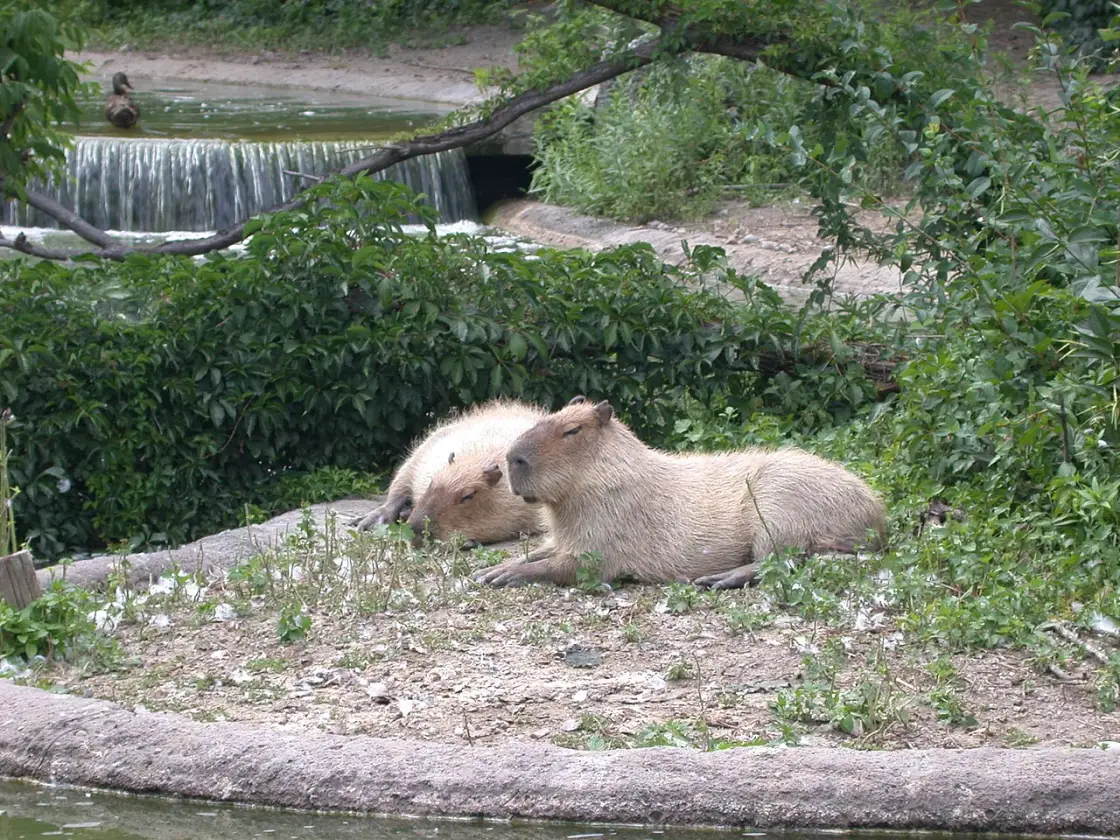
For scale on what “solving it properly” looks like, the manual’s 2014 survey of AZA facilities put the median capybara exhibit at 523 square metres, about 5,630 square feet. That is the median, not the maximum, and it is the benchmark a Canadian enclosure plan is being measured against, with a heated building inside it.
The Paper Trail, and the Order to Work It
Work it in this order. The city can end the project in one phone call, which makes it the cheapest question to ask first.
| Who to contact | What to ask | What proof looks like |
|---|---|---|
| Municipal animal services | Is a rodent over 1.5 kg permitted at a private residence under the animal by-law? | The by-law and schedule number in writing, or a written refusal |
| Provincial wildlife authority | Is Hydrochoerus hydrochaeris named on the controlled or prohibited species schedule, and does keeping it require a licence? | A dated email naming the species and the current schedule |
| CFIA import office | What are the import requirements for a live capybara, and is a permit needed? | An import permit, or a written no-permit-required answer |
| Zoning or planning office | Is a heated outbuilding and livestock-scale enclosure a permitted use at this address? | The zoning designation and its permitted-use list |
| An exotic-animal vet | Do you treat capybaras, and what is the nearest after-hours option? | A named clinic that says yes before you buy anything |
| Insurer, landlord, or condo board | Is an exotic mammal excluded from the policy or the lease? | The exclusion clause, in writing |
Use the scientific name in every one of those conversations. “Can I own a capybara” gets you a callback and no record. “Is Hydrochoerus hydrochaeris named on the current schedule” gets you something you can file, and a date on it, which matters because these schedules are amended.
Misconceptions Canadian Readers Keep Repeating
| Myth | Better answer |
|---|---|
| ”It’s not on the banned list, so it’s legal.” | Absence means the province has not named the species. Your city by-law is a separate document and it is usually the one that says no. |
| ”Toronto has capybaras at the zoo, so they’re allowed here.” | Chapter 349 names “Toronto Zoo Animals” as an explicit exception to its own prohibition. The exception is the zoo, not the species. |
| ”Vancouver is mild, so it’s the easy option.” | Mild by Canadian standards is still a winter, and the AZA’s outdoor guidance already assumes a heated shelter at 4°C. BC cities also write their own animal by-laws, regardless of climate. |
| ”Canada has endless space, so land is the easy part.” | Wilderness is habitat, not enclosure. What the plan needs is rural land with power, water, and a heated building, which is a much shorter list of addresses. |
| ”Clear the province first, then sort out the city.” | Backwards almost everywhere in Canada. The municipality is the binding layer and the cheapest call to make first. |
The Canada Bottom Line
Canada is possible in a narrow band of addresses: rural, outside a restrictive municipal by-law, in a province that has not named the species, with a heated building and a heated pool already budgeted for at least two animals. Everything else in this article is a way of finding out whether you are in that band, and most people are not.
Make three calls in this order. Your municipality, because it can end this for free. Your provincial wildlife authority, by scientific name, in writing. A CFIA import office, before any money moves. If the first call comes back with a weight limit, you are done, and the whole exercise cost you an afternoon rather than a deposit and a transport booking.
If what you actually want is to be near a capybara in Canada, the Toronto Zoo runs a paid encounter with its animals, and that route is at least bookable. Ownership is not, for almost anyone, and the deeper question of whether capybaras make good pets at all is one the by-laws have quietly answered on your behalf.
This guide is current as of September 1, 2026. Provincial schedules and municipal by-laws are amended, and some rows in the province table above are explicitly unverified. Treat all of it as a screening path rather than legal advice, and confirm the current text with your municipality, your provincial wildlife authority, and a qualified professional before acting.