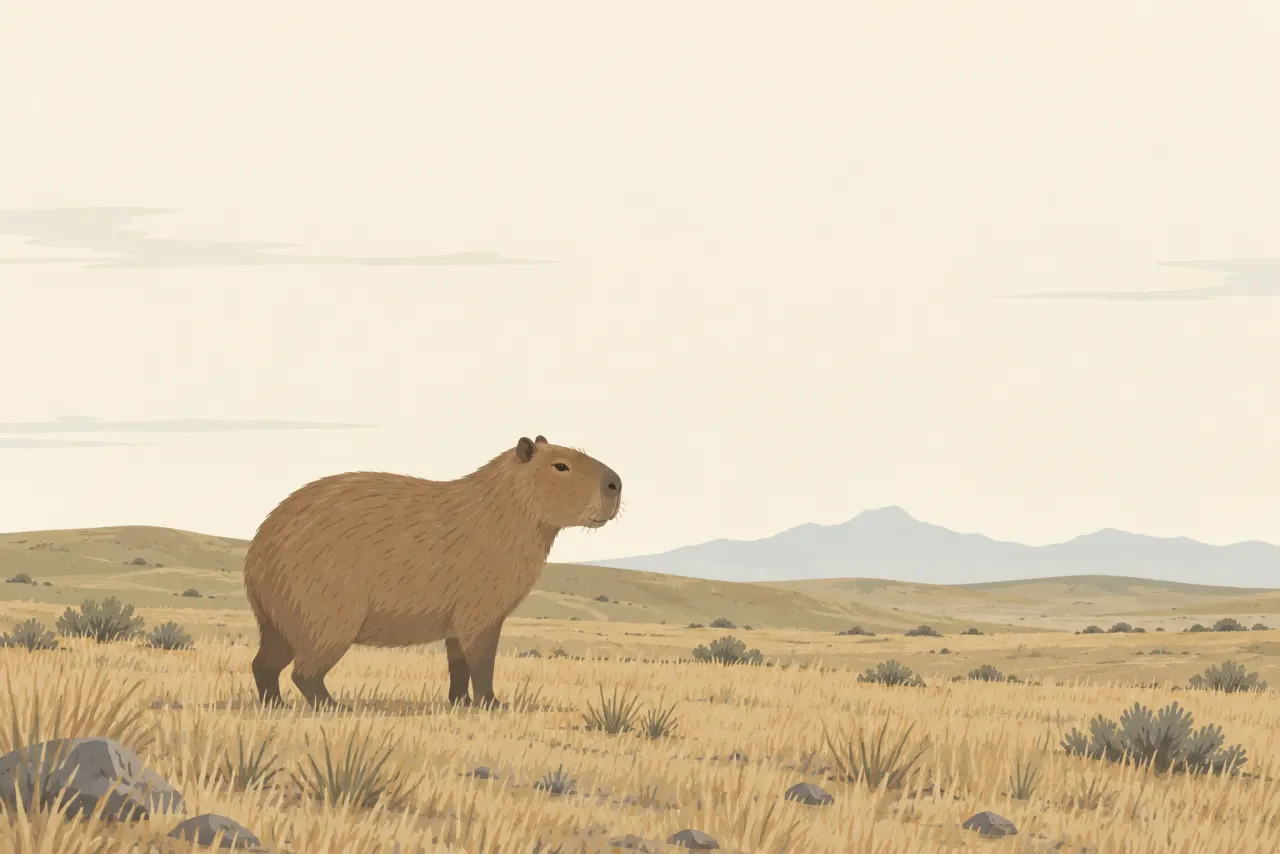
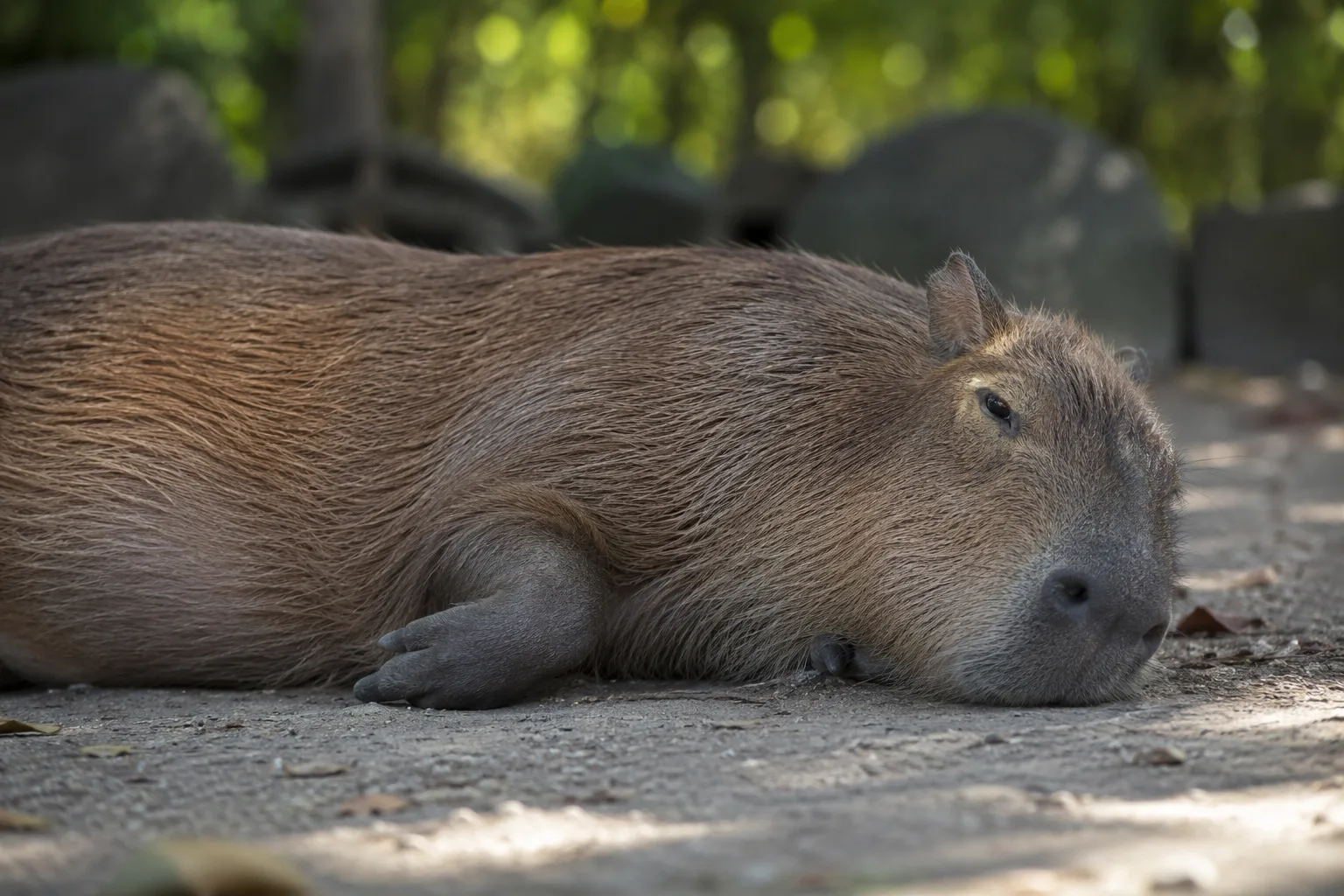
Capybara poses are the internet’s favorite wildlife taxonomy: loaf, sploot, pancake, pool potato, judgment. Useful? Sometimes. Scientific? Please lower your voice.
The real answer: capybara poses can hint at rest, comfort, cooling, alertness, or stress, but context matters more than the nickname. A capybara lying flat near its group in shade is not the same as a capybara frozen stiff while visitors lean in.
The Classic Loaf
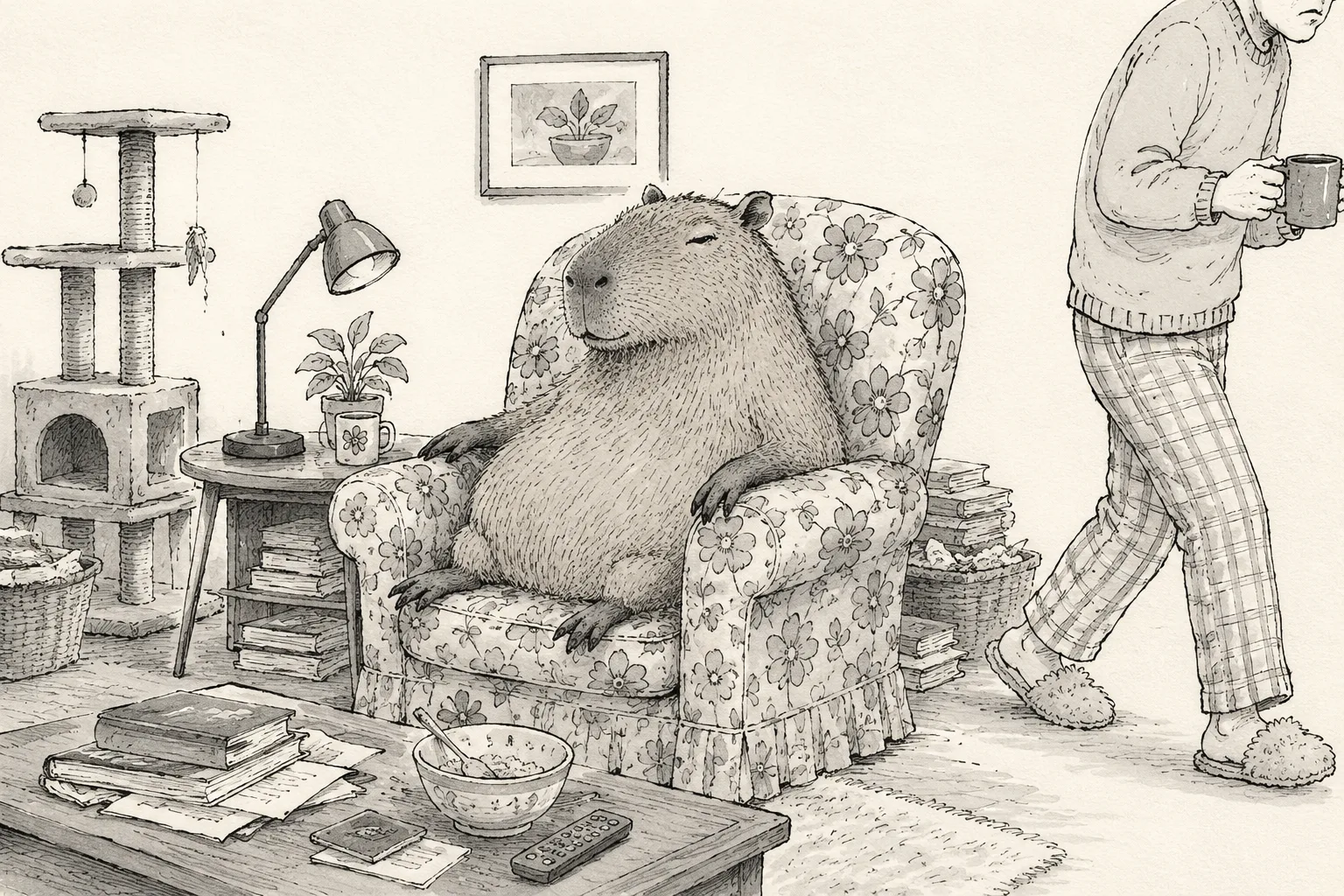
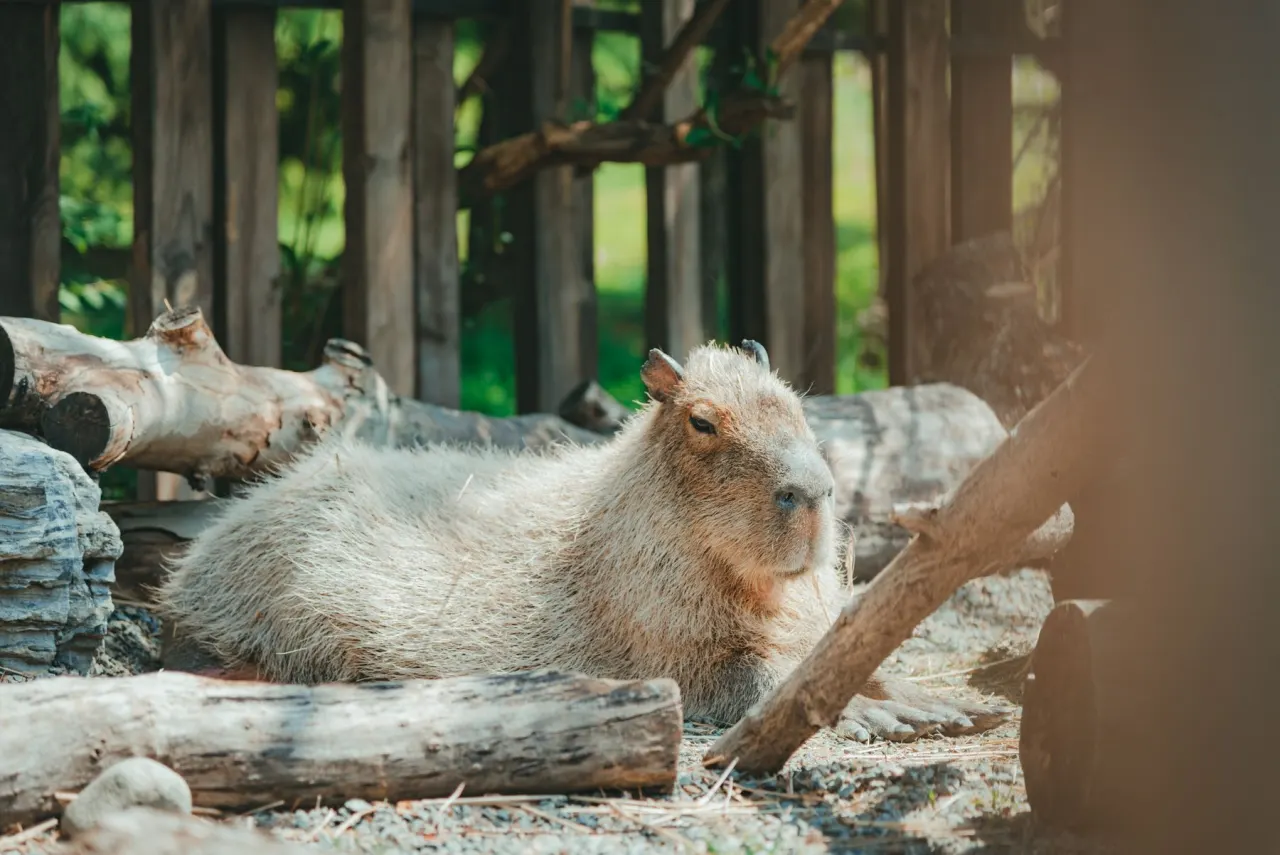
The loaf is the compact resting shape: legs tucked or hidden, body low, face neutral, animal apparently deciding that movement has been oversold. In a calm group setting, loafing often reads as rest.
Animal Diversity Web describes capybaras as social animals that spend hot periods in water and live around resources such as feeding and wallowing sites. So the loaf is not laziness. It is architecture with fur.
| Pose | Could suggest | Check before deciding |
|---|---|---|
| Loaf | Rest or comfort | Is the body loose? Is the group calm? |
| Flat pancake | Cooling or deep rest | Is it hot? Is water nearby? |
| Sploot-like stretch | Relaxation or heat relief | Is the animal free to move? |
| Head-up stillness | Alertness | Any sounds, crowding, or group movement? |
| Stiff freeze | Stress or uncertainty | Back up and stop filming close |
The Full Pancake
The pancake is the more dramatic flat pose, usually body spread lower against the ground. It is meme-ready because it looks like the capybara has become a rug with ears.
It can be normal rest. It can also be heat management, especially if the animal is using shade, cool ground, or water-adjacent spots. The read changes if the body is tense, the eyes are wide, or the animal is pinned by people with no clear exit.
The Sploot Situation
Capybaras do not need our internet names for their limbs, but here we are. A sploot-like stretch can happen when an animal is resting, cooling, or shifting weight. It is cute because legs appear where the mind was not prepared to process legs.
Do not overread it. A stretch is not a personality profile. If the animal looks loose, has space, and is not being crowded, enjoy the pose. If the animal is stiff or trying to leave, stop calling it a sploot and start giving it room.
Pool Potato Mode
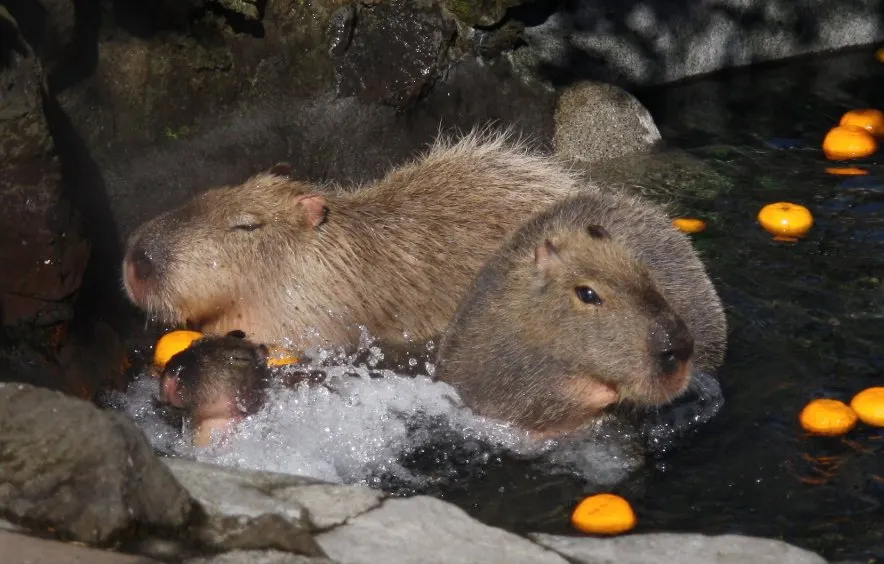
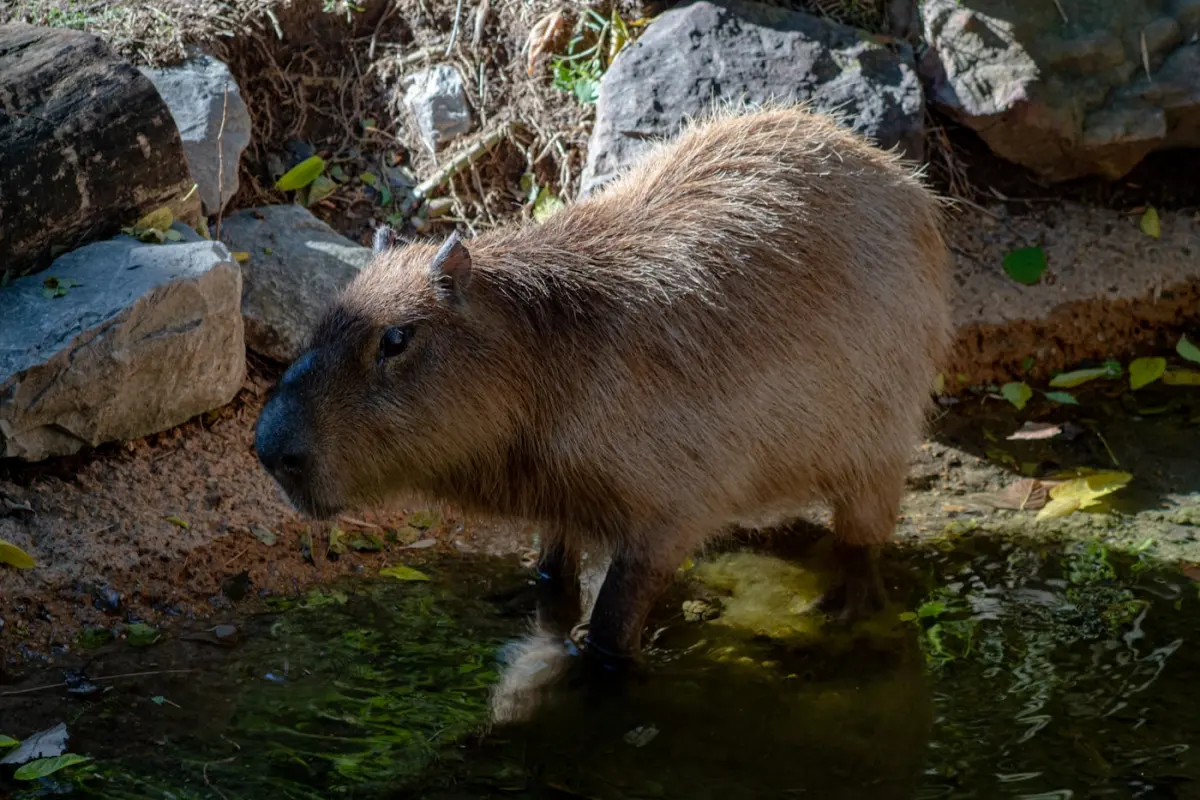
Pool potato is peak capybara: body in water, head up, expression neutral, everything about the animal suggesting it has outsourced its concerns to buoyancy.
San Diego Zoo Wildlife Alliance says capybaras use water for cooling, food, and escape, and can stay underwater for several minutes. Water poses are not just cute soaking. They are core behavior.
Why The Body, Not The Pose, Carries The Meaning
A pose is a freeze-frame. Behavior is the film. The reason a single posture cannot tell you much is that capybaras are built around a few non-negotiable needs, and most of what they do with their bodies is them servicing those needs rather than performing for a camera.
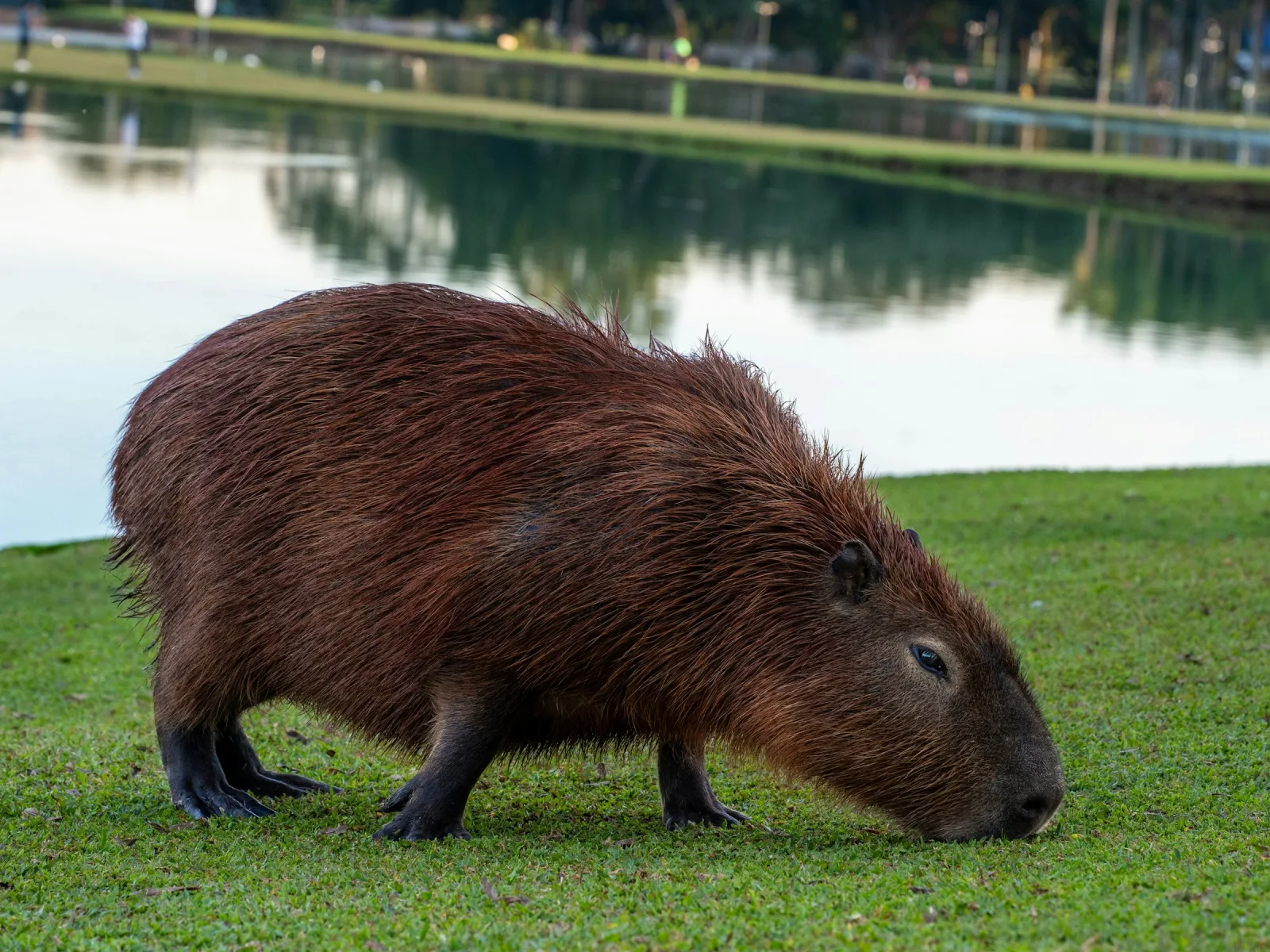
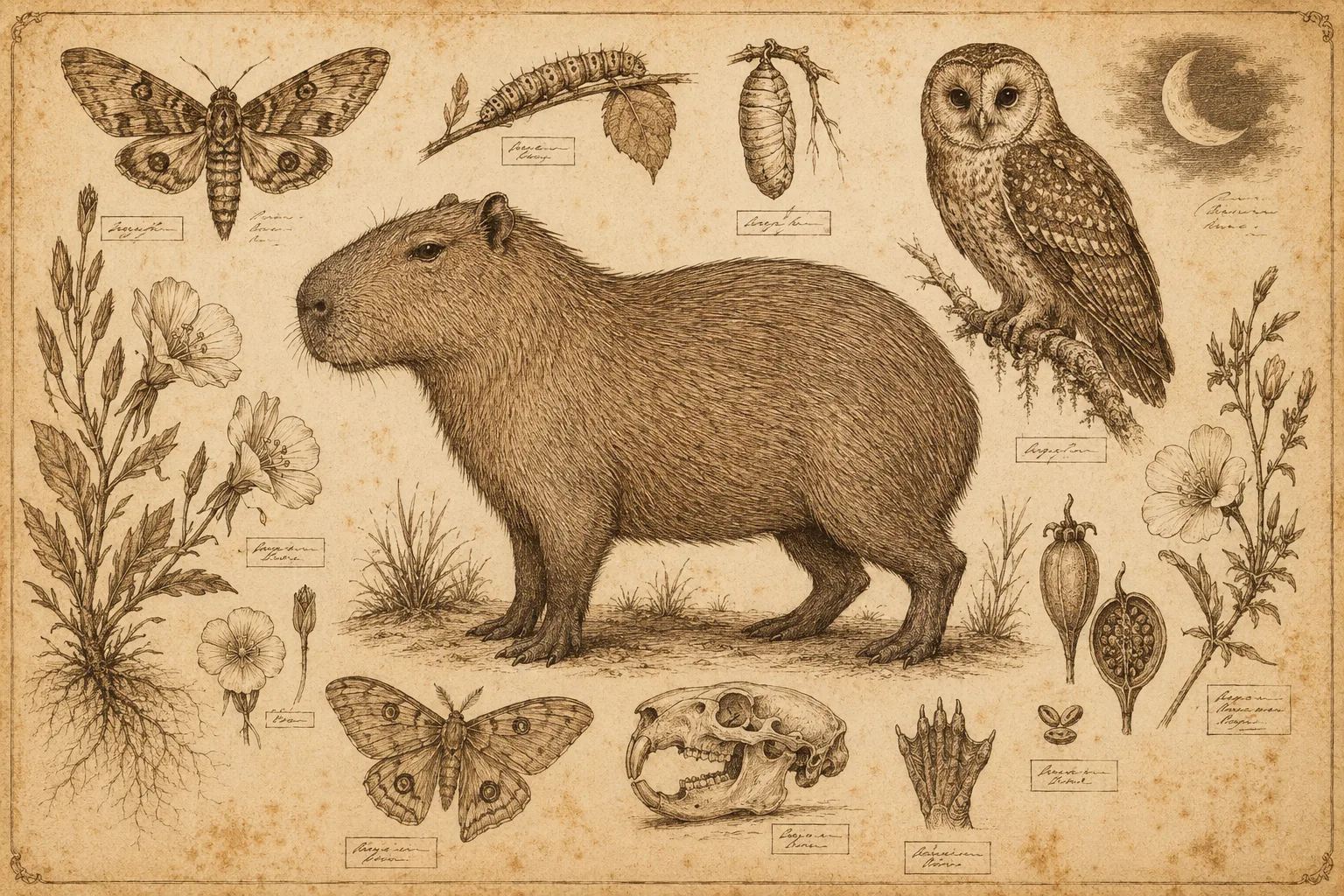
They are the largest rodent alive, with adults running roughly 35 to 66 kg, and they are semi-aquatic grazers native to South America. Their bodies overheat easily, so a lot of “lazy” looking flatness is heat management. They are hindgut fermenters, which means a settled, low resting posture is also digestion in progress. And they are intensely social herd animals, so where an individual sits relative to the group is part of the message. A capybara loafing in the middle of a calm group is reading very differently from one loafing alone with its head locked toward an exit.
This is the one place i’ll stop hedging: the meme labels are mostly harmless fun, but treating them as a mood dictionary is where people go wrong. The pose is the noun. The context is the verb. You need both, and the verb is doing more work.
Reading The Whole Animal
If you want a quick field method instead of a vibe, run through a short checklist before you decide what a pose “means.” None of these require expertise, just attention.
| Signal to check | Calmer read | More concerning read |
|---|---|---|
| Muscle tone | Loose, sagging, settled | Stiff, braced, coiled |
| Eyes and ears | Soft, half-closed, drifting | Wide, fixed, ears swiveled toward you |
| Group | Spread out, mixed activity | Bunched, all facing one way |
| Exit | Clear path, free to move | Cornered, no room to leave |
| Sound | Quiet, the odd purr or click | Alarm bark, then a scramble |
If the left column wins, the cute label is probably fine. If the right column starts filling in, the pose stops being content and becomes a request.
Common Misreads, Corrected
Most of the confusion online comes from a handful of repeated assumptions. A few are worth setting straight.
| Common assumption | Better answer |
|---|---|
| Lying flat means the capybara is sad or sick | Usually it is rest or cooling; flatness against cool ground is a heat strategy |
| A sploot is a happy emotion | It is a body position, not a feeling; check whether the animal is loose and free to move |
| Soaking in water means it is just being lazy | Water is core capybara biology, used for cooling, feeding, and escape |
| A still, head-up capybara is relaxed | Stillness can be alertness; watch the ears, the group, and whether it is tracking something |
| Tooth display is the capybara smiling | A tooth display paired with stiffness is a warning, not a grin |
The San Diego Zoo Wildlife Alliance and Animal Diversity Web both frame these animals around water, grazing, and group life rather than around facial expressions, which is a useful corrective when the internet wants every posture to be a personality.
When A Pose Means Back Off
The warning version is less adorable: stiff body, head high, quick freeze, sudden retreat, tooth display, alarm bark, or group bunching. In those moments, the pose is no longer content. It is information.
The practical move is small and unglamorous. Lower your voice, stop closing the distance, drop the phone from the animal’s face, and let it choose to stay or leave. A capybara that wanted space and got it will often settle back into the exact loaf you were trying to photograph in the first place. A capybara that gets crowded through its warning learns that people do not listen, which is worse for everyone, including the next visitor.
Good capybara fans can enjoy the loaf and still respect the warning. Both are part of the same animal. The capybara contains multitudes, most of them horizontal.