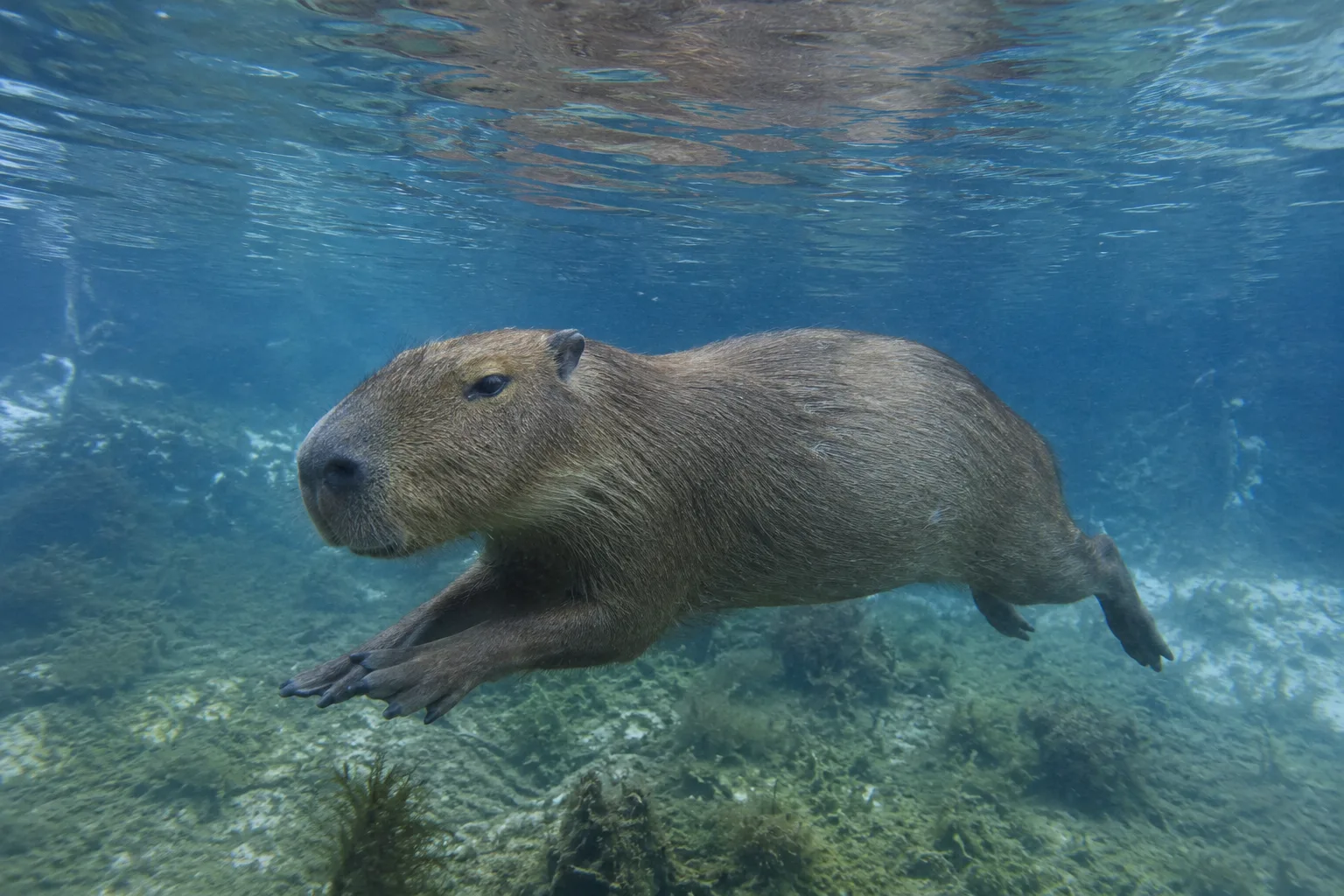
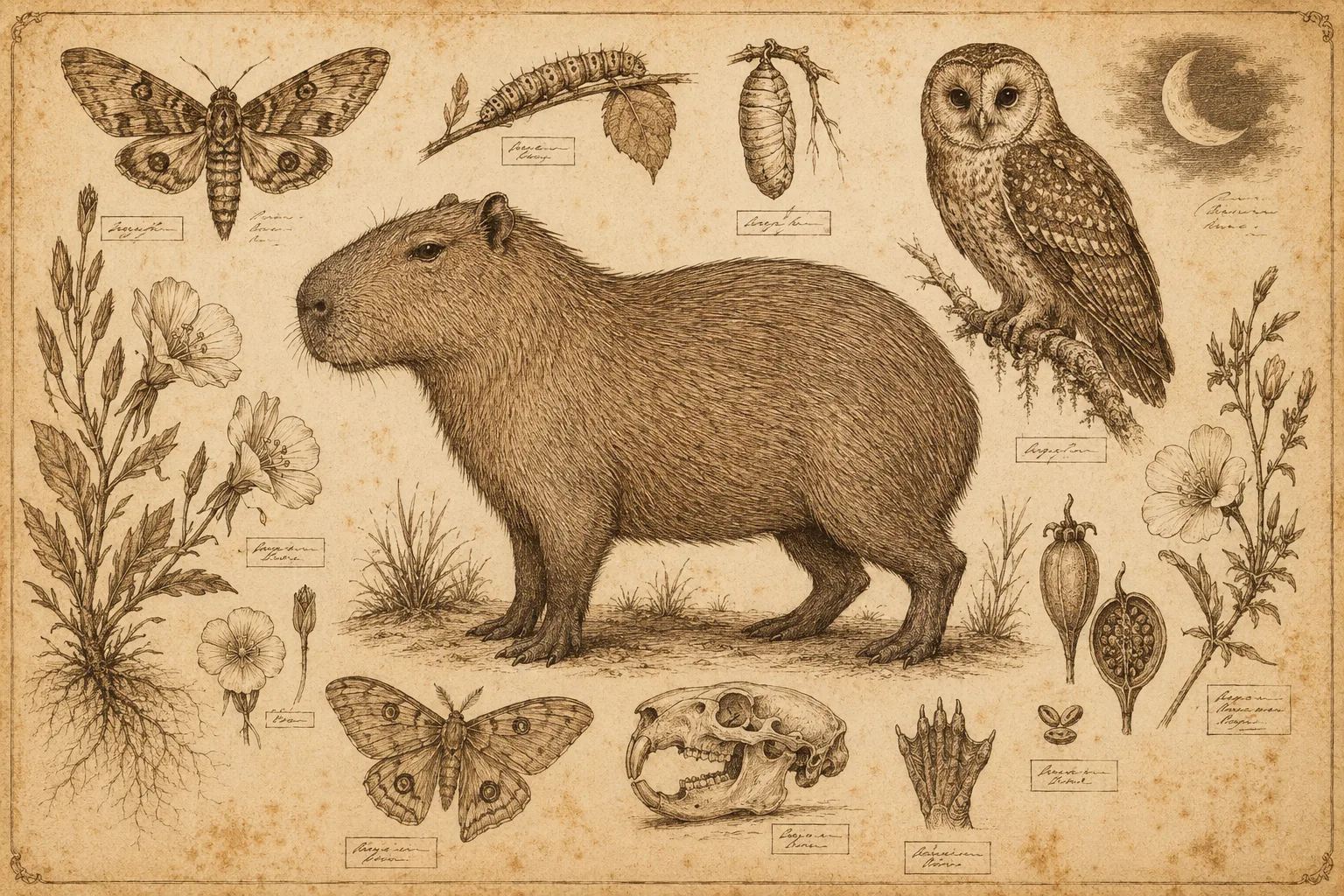
A capybara is the world’s largest living rodent. That is the clean answer. The less clean answer is that a capybara looks like a guinea pig got promoted to regional manager, moved near a river, and started handling stress better than most adults with calendars.
Capybaras are large, semi-aquatic mammals native to South America. They graze, swim, live in groups, communicate with more sounds than their face suggests, and stay close to water because water is dining room, escape route, cooling system, and social infrastructure. The internet sees calm. Biology sees a wetland specialist doing exactly what it was built to do.
If you came here asking “what is a capybara?” because one appeared in your feed sitting in a bath like a tiny landlord, start here: capybaras are wild social rodents, not novelty pets with better public relations.
What Is A Capybara, Actually?
A capybara is Hydrochoerus hydrochaeris, a South American cavy and the largest rodent alive today. San Diego Zoo Wildlife Alliance lists adult capybaras at about 77 to 146 pounds. Animal Diversity Web describes them as semi-aquatic grazers tied to dense vegetation near water.
That combination is the whole animal in one sentence: large rodent, plant eater, water edge, group life. The face is just branding.
| Basic capybara fact | Normal-human translation |
|---|---|
| Scientific name | Hydrochoerus hydrochaeris |
| Animal type | Mammal, rodent, cavy family |
| Native range | South America |
| Usual habitat | Wetlands, marshes, rivers, ponds, flooded grasslands |
| Main diet | Grasses and aquatic plants |
| Social style | Group-living, vocal, watchful |
| Pet reality | Usually a terrible idea for normal homes |
The “giant guinea pig” line is useful only as a doorway. Capybaras and guinea pigs are related, yes. But a capybara is not domesticated like a guinea pig, not sized like a guinea pig, and not interested in validating an apartment lease.
Yes, A Capybara Is A Rodent
The rodent label throws people because most rodents in the human imagination are tiny, frantic, and somewhere behind a refrigerator. Capybaras are rodents too. They simply chose the premium wetland package.
Rodents share continuously growing incisors, which is why chewing is not a character flaw. It is maintenance. A capybara may look like it is quietly judging the weather, but the mouth is running a lifelong hardware program.
Britannica and Animal Diversity Web both place capybaras with the cavies, which explains the guinea pig comparison. The family resemblance is real: compact body, blunt face, no useful visible tail, plant-heavy diet. The scale is where the joke leaves the room. A capybara is not a guinea pig with ambition. It is a different animal with different legal, welfare, and habitat needs.
What A Capybara Is Not
A capybara is not a beaver, not a nutria, not a muskrat, not a hippo starter kit, and not a guinea pig that hacked the growth chart. The mix-up is understandable. Most people see brown fur, water, blunt face, and the brain files it under “large damp mammal, possibly guilty.”
Here is the quick field read.
| Animal | The giveaway | Why people confuse it |
|---|---|---|
| Capybara | Huge blunt-headed cavy with almost no visible tail | It sits near water and looks suspiciously calm. |
| Nutria | Smaller body, long round tail, orange incisors | Nutria also live around water and graze. |
| Beaver | Flat paddle tail and heavy engineering habits | Beavers are the other famous chunky aquatic rodent. |
| Guinea pig | Domestic, tiny by comparison, no wetland career | Capybaras and guinea pigs are both cavies. |
If you are staring at a brown animal near a canal in the U.S., do not automatically declare capybara. Nutria are far more likely in many places, and beavers bring their own tail-shaped confession. For the full police lineup, use the capybara vs nutria vs beaver vs guinea pig comparison.
The little story here is that capybaras became internet-famous before most people learned what they were. So now the animal arrives with vibes before facts. Funny, yes. Also how a wetland rodent ends up being called a “mini hippo” by someone holding a phone over a zoo rail.
How Big Is A Capybara, Really?
Capybaras are big enough that “rodent” suddenly sounds underinsured. San Diego Zoo Wildlife Alliance gives the common adult range as 77 to 146 pounds, while other sources describe heavier individuals. They stand low, with barrel-shaped bodies, short legs, small rounded ears, and eyes and nostrils positioned high on the head.
That head design is not accidental. Capybaras can sit low in water while keeping the important surveillance equipment above the surface. It is practical, not mystical. Still, one must admit: the animal has presence.

For scale, a capybara can weigh more than many dogs, toddlers, or poorly considered online purchases. If you want the full size comparison, read how big capybaras get. The short version: big enough to make pet assumptions look silly fast.
Where Capybaras Live And Why Water Runs The Show
Capybaras live in South America, especially around rivers, marshes, swamps, ponds, forested edges, and seasonally flooded grasslands. Animal Diversity Web describes them as animals of dense vegetation near water. The AZA Capybara Care Manual treats water access as central in managed care because capybaras use water for normal behavior, not vibes.
Water helps capybaras cool down, hide from predators, move through habitat, mate, feed, and generally avoid the nonsense happening on land. Take away the water and you do not just remove the pretty background. You remove a major part of the animal’s life.
This is why so many capybara photos look like the same meeting in different wetlands. Grass. Water. Several capybaras. One expression that says the entire human project could be managed better.
For the broader habitat picture, the where capybaras live guide gets into native range, wetlands, and why the animal keeps acting like water is non-negotiable. It is.
What Capybaras Eat When Nobody Is Filming
Capybaras are herbivores. In the wild, they eat mostly grasses and aquatic plants, with seasonal extras such as reeds, bark, fruit, roots, squash, melons, grains, and crop plants where farms overlap with habitat. San Diego Zoo Wildlife Alliance says an adult capybara can eat about 6 to 8 pounds of grass per day.
That is the diet headline: not oranges, not novelty snacks, not a spa menu. Grass and wetland plants are the main event. The orange has received too much credit. Very on-brand for fruit.
Capybaras also practice coprophagy, meaning they may re-ingest some fecal material to recover nutrients and support gut microbes. It sounds like a fact that should be behind a velvet rope, but it is normal digestive strategy for them. The animal is not embarrassed. You are doing that for both of you.
For a deeper diet breakdown, including the orange myth and zoo diets, see what capybaras eat.
Why Capybaras Seem So Chill
Capybaras are social animals, and a lot of their “chill” is really group life, predator awareness, water access, and body language humans read badly. Animal Diversity Web describes groups commonly built around adult males, females, young, and subordinate males, with group size shifting by habitat and season.
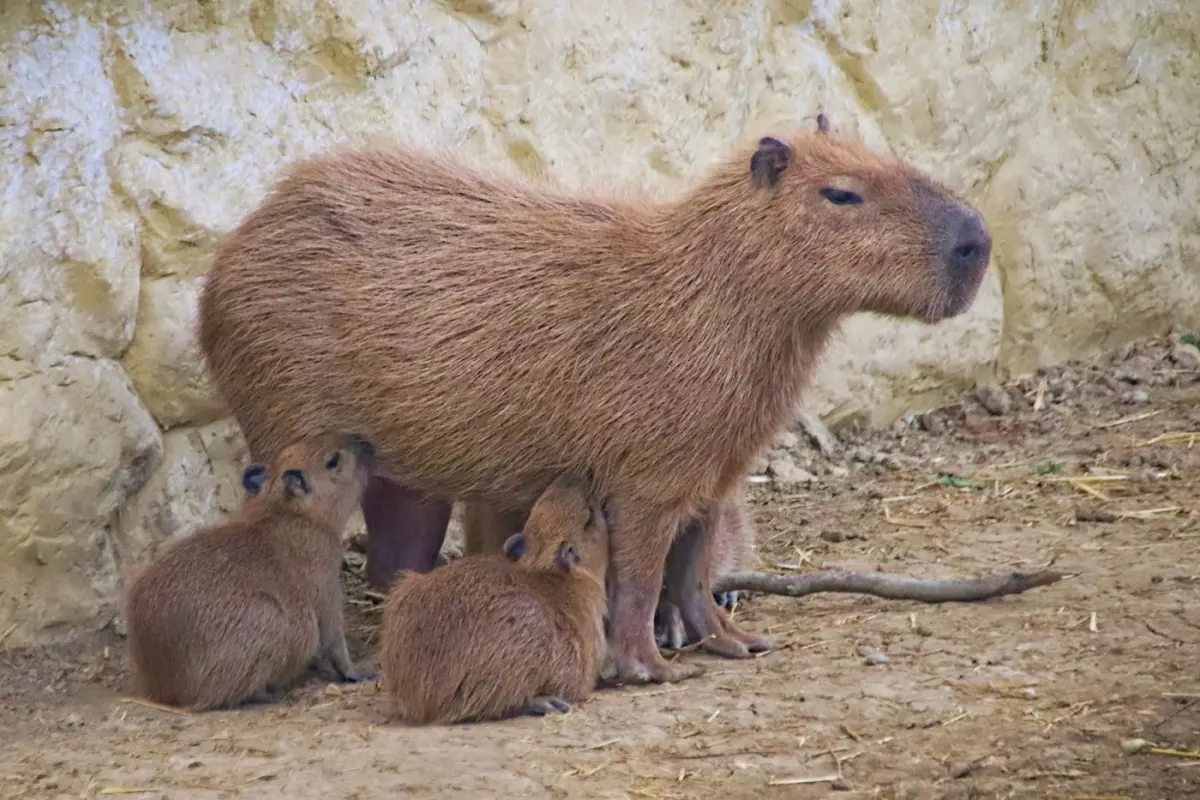
They can bark, whistle, purr, click, and alarm-call. They groom, graze, rest, soak, and keep track of each other. The face looks neutral because the capybara has not chosen to explain its inner life to your algorithm.
This is also why the “animals sitting on capybaras” genre gets overread. Birds may perch on them. Other animals may tolerate them. Capybaras can be socially tolerant. That does not make them spiritual furniture. It makes them big, social mammals in settings where other animals notice an available surface.
Why The Internet Adopted The Capybara
The internet chose capybaras because they look calm in a way humans desperately want to become. They soak in water. They sit still. They appear to have opted out of urgency. Put one in a warm bath with citrus and the whole timeline starts behaving like it discovered a new religion.
The joke works because the animal’s face is deadpan. The danger is that the joke flattens the animal into a mood. A capybara is not a wellness mascot. It is a wetland rodent with sharp incisors, social needs, water needs, and a care burden that would make a suburban backyard quietly file for retirement.
The Grumpy Capy read: admire the calm, but respect the machinery behind it. Biology did the work. The meme is just the souvenir.
Are Capybaras Pets Or Just Pet-Shaped Clickbait?
For most people, capybaras do not make good pets. They need water, space, compatible companions, secure outdoor housing, warm shelter in cold climates, a high-fiber diet, and exotic veterinary care. They are also banned, restricted, or permit-controlled in many places.
If you are thinking “but I have a yard,” read can you own a capybara as a pet and do capybaras make good pets before buying anything with hooves and a plumbing requirement. The correct question is not “can I get one?” It is “can I build a legal, sanitary, social, water-rich life for more than one capybara for years?”
Most people cannot. That is not an insult. Most people also cannot keep a small wetland operating behind the garage while staying on speaking terms with neighbors, vets, zoning, and their own bank account.
Capybara Facts For Normal Humans
| Capybara fact | Why it matters |
|---|---|
| World’s largest living rodent | The “giant guinea pig” joke undersells the size fast. |
| Semi-aquatic | Water is habitat, cooling, escape cover, and routine. |
| Native to South America | U.S. capybaras are usually in zoos, facilities, or private ownership situations. |
| Mostly herbivorous grazer | Grass and aquatic vegetation beat fruit-bowl fantasies. |
| Social animal | A lone capybara is not the easy version; it is a welfare concern. |
| Continuously growing incisors | Chewing and dental health are part of the animal, not a bad habit. |
| Not a normal pet | Law, welfare, cost, water, and veterinary care all get involved. |
The Body, In Stats And Quick Answers
The questions people Google most about capybara biology, with the actual numbers and one-paragraph answers. Anchor links so you can deep-link directly.
Are capybaras nocturnal?
No, capybaras are crepuscular — most active at dawn and dusk. In areas with heavy hunting pressure or human disturbance, they shift toward more nocturnal activity as a safety response. In undisturbed wild populations (large Pantanal reserves, parts of the Iberá), the dawn-and-dusk pattern is consistent: graze in cool low-light hours, water-loaf through the hot midday, second graze at golden hour, social and digestive overnight. So they are not strictly nocturnal, but if you see one moving around at 3am it’s probably because something is bothering them.
How fast can a capybara run?
About 35 km/h (22 mph) in short bursts — roughly the same top speed as a horse. They don’t sustain it. The reason capybaras can sprint surprisingly fast on land is that water is their actual escape strategy: they break for a body of water, dive, and either swim out underwater or stay submerged with only nostrils above the surface. A capybara that’s running on land is a capybara whose first option (water) wasn’t close enough. Once in the water, they’re functionally uncatchable by most terrestrial predators.
How long can capybaras hold their breath underwater?
Up to ~5 minutes, documented. Most dives are far shorter — 30 seconds to 2 minutes is typical. The 5-minute figure is from observed escape behavior, where capybaras submerge fully to evade a predator (jaguar, caiman). They can also sleep partially submerged with nostrils above water, which is a real thing they do, not a meme. The eyes, ears, and nostrils sitting high on the skull are the adaptation that makes mostly-submerged living routine.
How many teeth do capybaras have?
Twenty. Four incisors (the giant front teeth, two upper and two lower), no canines, sixteen molariform teeth in the back for grinding. The incisors grow continuously throughout life — the technical term is hypselodont — and are worn down by constant chewing. If a captive capybara’s incisors aren’t getting enough wear (soft diet, no browse, no wood to chew), they overgrow and become a medical problem. Bite force is substantial — measured around 1,300-2,000 newtons in adults — but capybaras almost never bite humans defensively. The teeth are for plants, not violence.
Do capybaras have tails?
Functionally no. They have a vestigial nub — roughly 1-2 cm — that you essentially can’t see in any photo or video. The lack of tail is one of the fastest visual IDs separating capybaras from every animal they get confused with (nutria, beaver, otter all have prominent tails). The evolutionary reasoning is straightforward: tails are useful for terrestrial mammals for balance, signaling, and insect-swatting. A semi-aquatic grazer that does most of its locomotion in water and most of its social signaling via scent (the morrillo gland) doesn’t need a tail enough for one to be preserved.
Do capybaras hibernate?
No. Capybaras don’t hibernate. They evolved in tropical and subtropical South America where the seasonal pressure is wet vs dry, not cold vs warm. In their native range, the seasonal adaptation is to congregate near permanent water in the dry season (when smaller water bodies vanish) and disperse more widely in the wet season. Captive capybaras in cold-climate facilities (Tama Zoo in Japan, certain US zoos) get heated barns and warm water during winter — they tolerate cold poorly and would not survive a real winter without infrastructure. The “yuzu bath” tradition at Izu Shaboten is partly genuine welfare (heating for animals that don’t handle cold) and partly photo opportunity.
Bottom Line
A capybara is a large South American semi-aquatic rodent that became internet-famous because it looks like it has achieved inner peace by ignoring notifications. Under the calm face is a specific animal: social, water-dependent, grass-powered, legally complicated, and much more interesting than the meme version.
Respect the biology. Enjoy the face. Let the capybara remain a capybara, not a lifestyle accessory with a pond filter.