
Approximately 150 days — five months. This is one of the most consistent numbers across capybara references: Animal Diversity Web, San Diego Zoo Wildlife Alliance, Smithsonian National Zoo, and Britannica all converge on the approximately 150-day figure for capybara gestation. That number is the starting point for understanding why capybara pups are so extraordinarily developed at birth.
The 150-Day Number In Context
150 days is five months of pregnancy. For reference: human pregnancy is approximately 280 days (9 months). A 150-day gestation for a 60-70 kg animal is notably long relative to other mammals of similar body mass, and extraordinarily long compared to other rodents.
The biological reason is the birth strategy. Capybaras follow the precocial developmental path — pups are born with eyes open, fully furred, and capable of walking and beginning to graze within hours. The 150 days is the time required to produce that level of development in the uterus. Altricial rodents (rats, mice, rabbits) trade off the gestation investment for post-birth care — their pups are born helpless but with a very short pregnancy.
Animal Diversity Web explicitly notes the gestation period as approximately 150 days and the precocial character of the young. Britannica confirms the 150-day figure and notes the young as well-developed at birth.
Why So Long For A Rodent
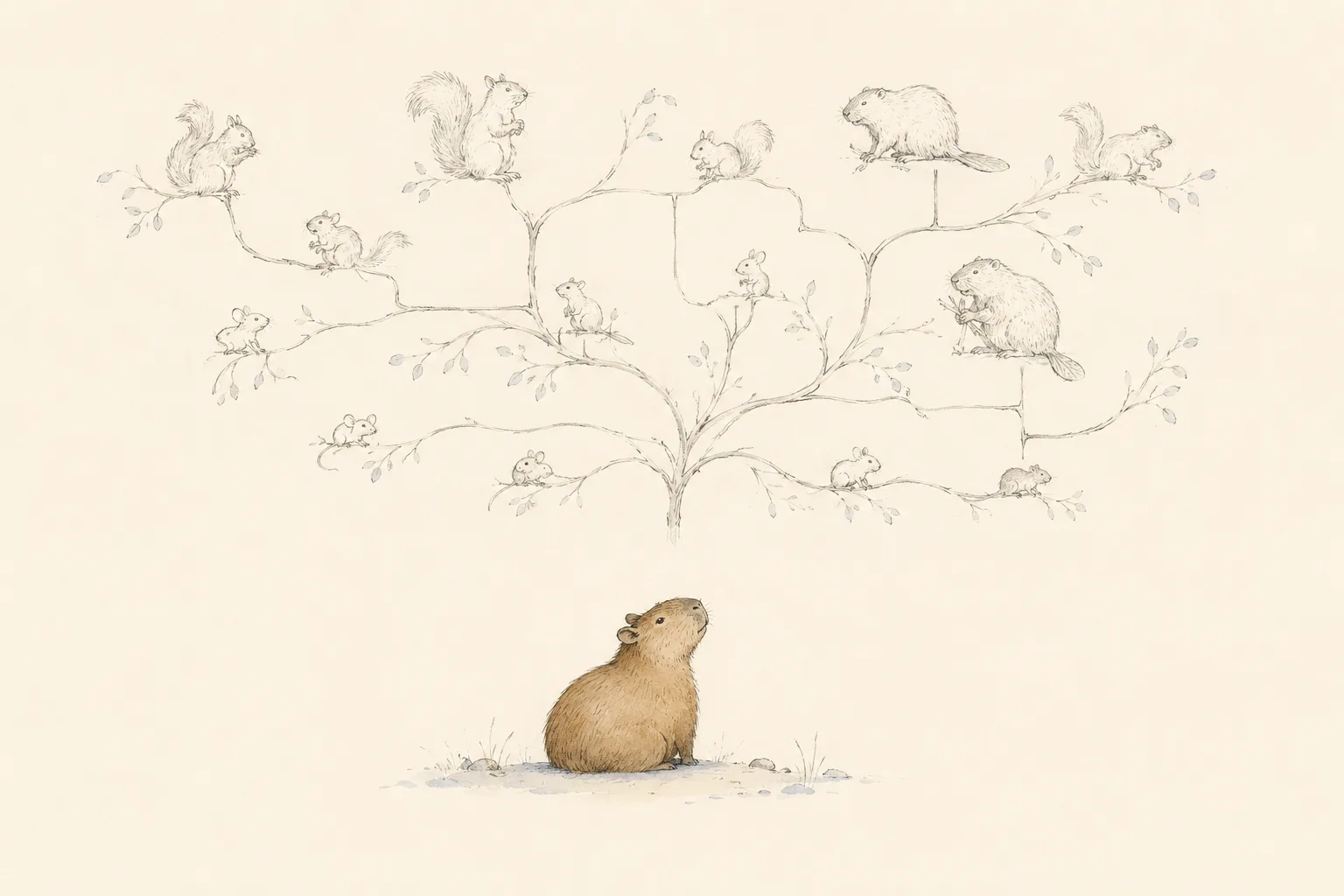
The rodent order has a huge spread in reproductive strategies. Most people associate rodents with extremely fast reproduction — mice gestate for 21 days and produce multiple litters per year. The capybara’s 150-day gestation sits at the far opposite end of this distribution.
The Caviidae family (guinea pigs, capybaras, maras) as a whole trends toward longer gestation and more precocial young compared to Muridae (mice, rats) or Cricetidae (hamsters, voles). Guinea pig gestation is 59-72 days — much longer than mice, much shorter than capybaras. Mara (Patagonian hare-like cavy) gestation is approximately 90 days. Capybaras are the extreme within their family.
The evolutionary driver: predation risk in open, wetland habitats favors born-ready young that can flee immediately and join the group’s protection system from day one. A helpless capybara pup in a nest would be an easy target for jaguars, caimans, and anacondas. A walking, group-integrated pup is a harder target.
Comparative Gestation Context
Knowing how 150 days compares across mammals puts the number in useful perspective:
| Species | Gestation | Birth type |
|---|---|---|
| House mouse | 21 days | Altricial (blind, helpless) |
| Guinea pig | 59-72 days | Precocial |
| Domestic rabbit | 30-33 days | Altricial |
| Mara (Caviidae) | ~90 days | Precocial |
| Capybara | ~150 days | Precocial |
| Leopard | ~97 days | Altricial |
| Puma / cougar | ~92 days | Altricial |
| Human | ~280 days | Altricial (relative to other mammals) |
| Horse | ~340 days | Precocial |
Capybara gestation is longer than many large carnivores, despite being much smaller in body mass. The horse comparison is instructive: horses also produce precocial young (foals stand within hours) with a very long gestation (~340 days). The pattern holds: precocial birth requires extended uterine development.

Captive Pregnancy: What To Watch For
For anyone managing captive capybaras and anticipating or suspecting pregnancy, the signs and management considerations:
Mid-to-late pregnancy signs:
- Visible abdominal swelling (more obvious in the final month than in mid-gestation)
- Behavioral changes: the pregnant female may become more solitary, seek quieter areas of the enclosure, and reduce her participation in group activity
- Diet changes: some individuals eat more; others show variable appetite
- Reduced mobility and less water time in the final weeks
Management:
- Exotic veterinary monitoring is strongly recommended — ultrasound can confirm pregnancy and estimate litter size from mid-gestation
- The AZA Capybara Care Manual should be consulted for facility adjustments during the peri-parturient period
- Do not separate the pregnant female from her social group unless medically indicated — isolation stress is harmful
- Ensure adequate calm space within the enclosure for birth without isolation
Birth typically occurs on land. The female may seek a quiet corner of the enclosure. The pups should be nursing within hours and mobile from birth.
Misconceptions About Capybara Gestation
“Capybaras are rodents, so pregnancy is fast.” This is the mouse-to-capybara category error. Capybaras are at the opposite end of the rodent reproductive spectrum.
“A pregnant capybara needs to be separated.” Isolation is stressful for a social animal and is not recommended unless there is a specific medical reason. The social group provides behavioral support during and after birth.
“If you can’t see swelling, the capybara isn’t pregnant.” Abdominal swelling is more obvious late in gestation. Early pregnancy is not visually apparent, and confirmation requires veterinary examination.
“Capybaras have huge litters like rabbits.” Average litter size is 4 pups. That is not small, but it is not the large litters of true high-reproductive-rate rodents either. The long gestation and precocial birth strategy are associated with smaller litters than altricial rodents.
For the full picture on capybara young — how many are born, how fast they develop, and what communal care looks like — how many babies do capybaras have covers the birth-to-juvenile story in detail.