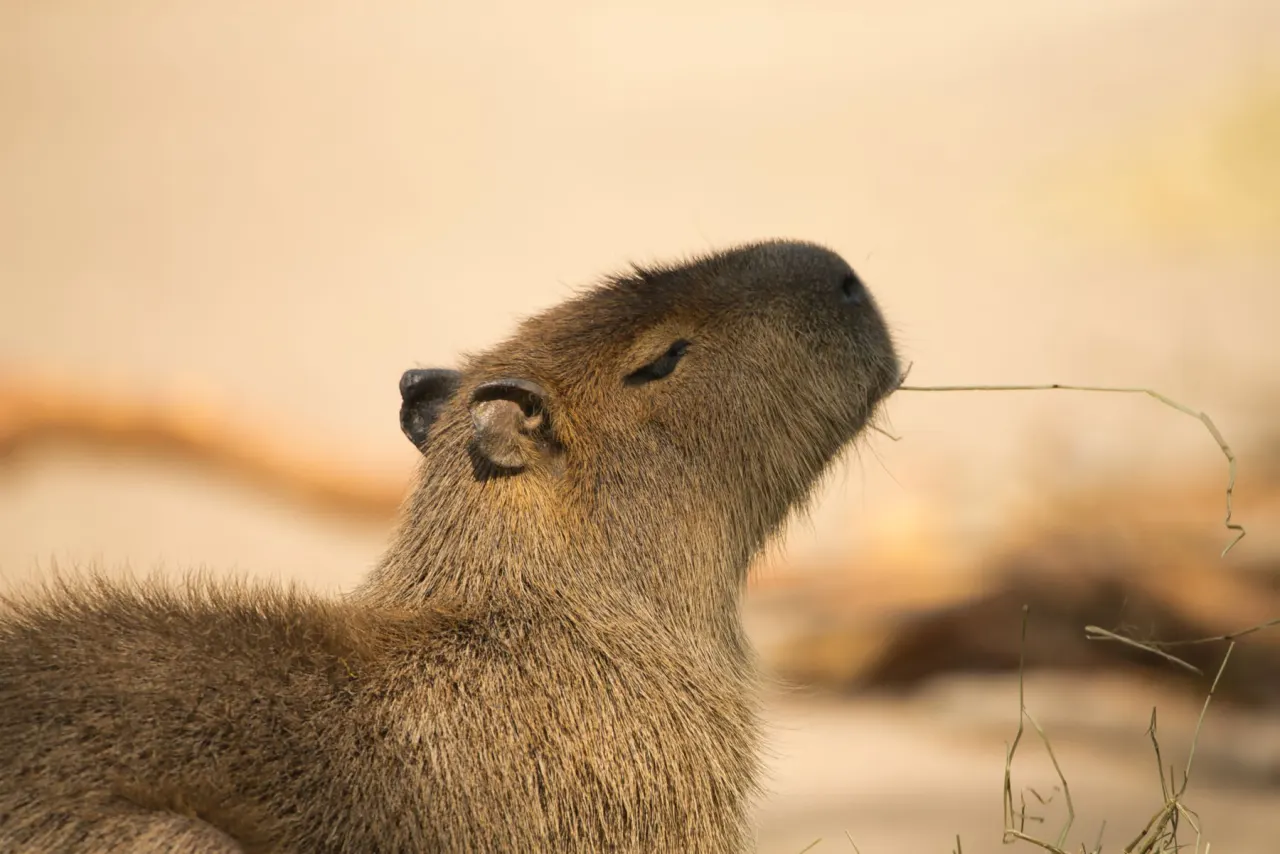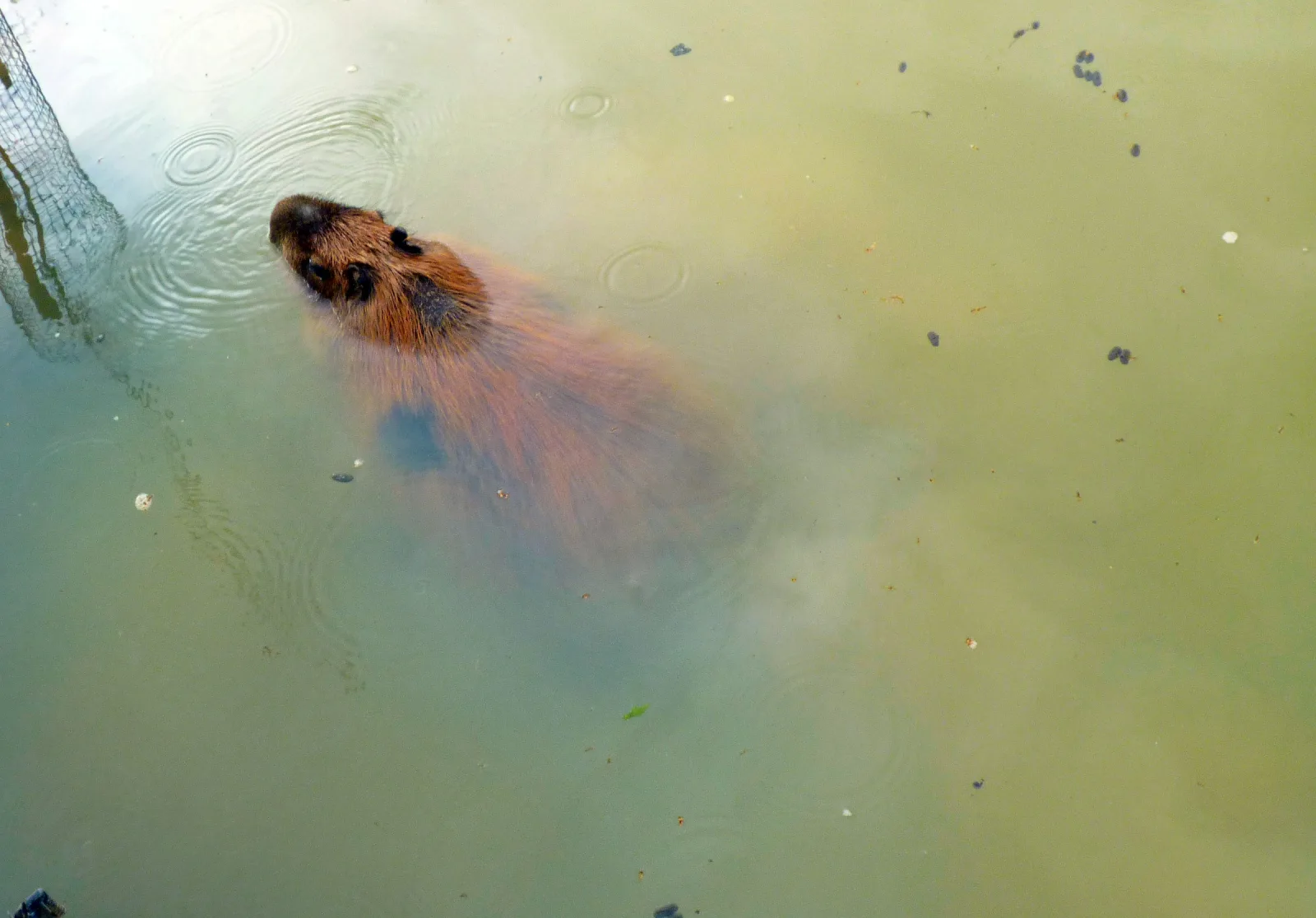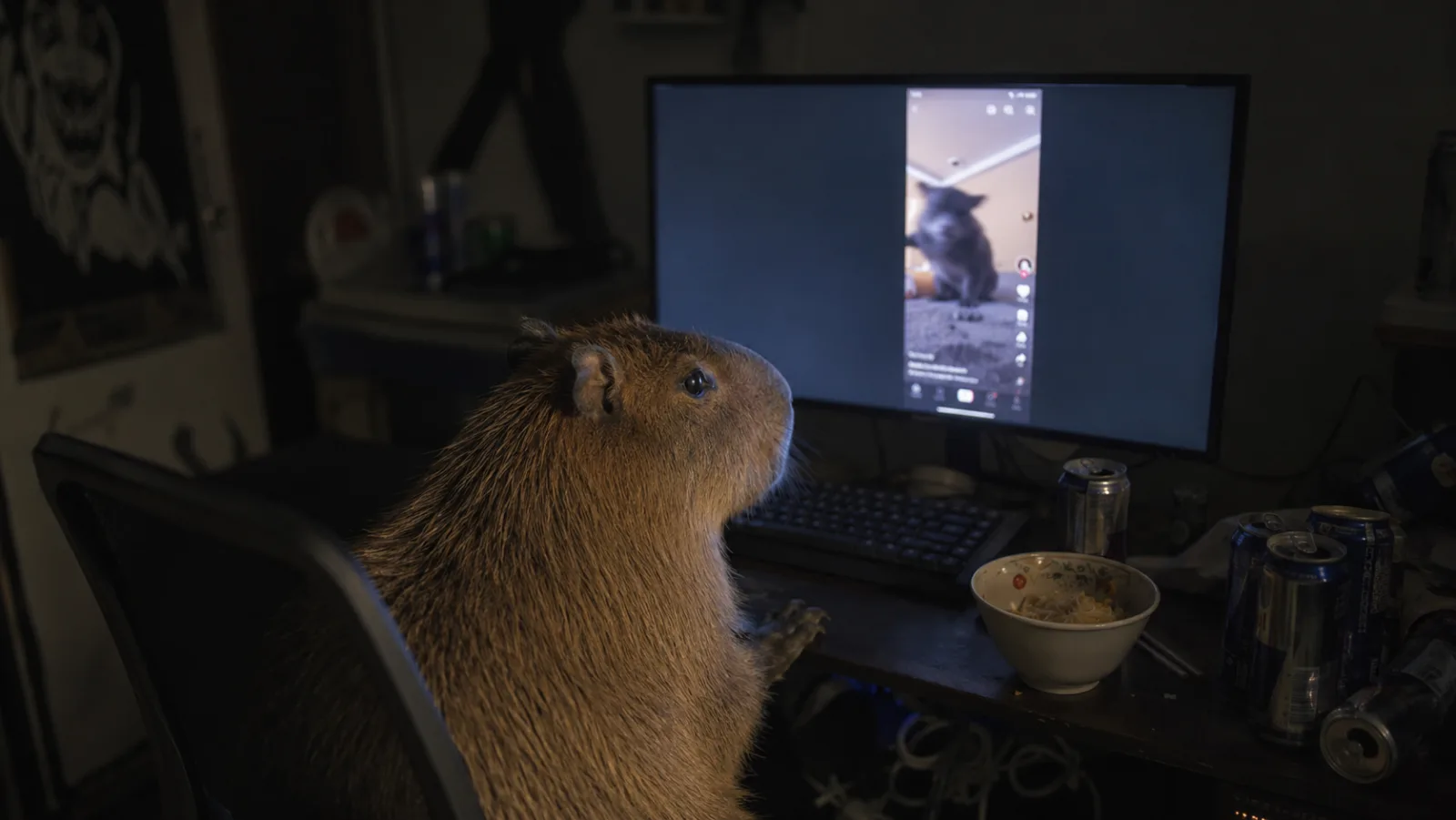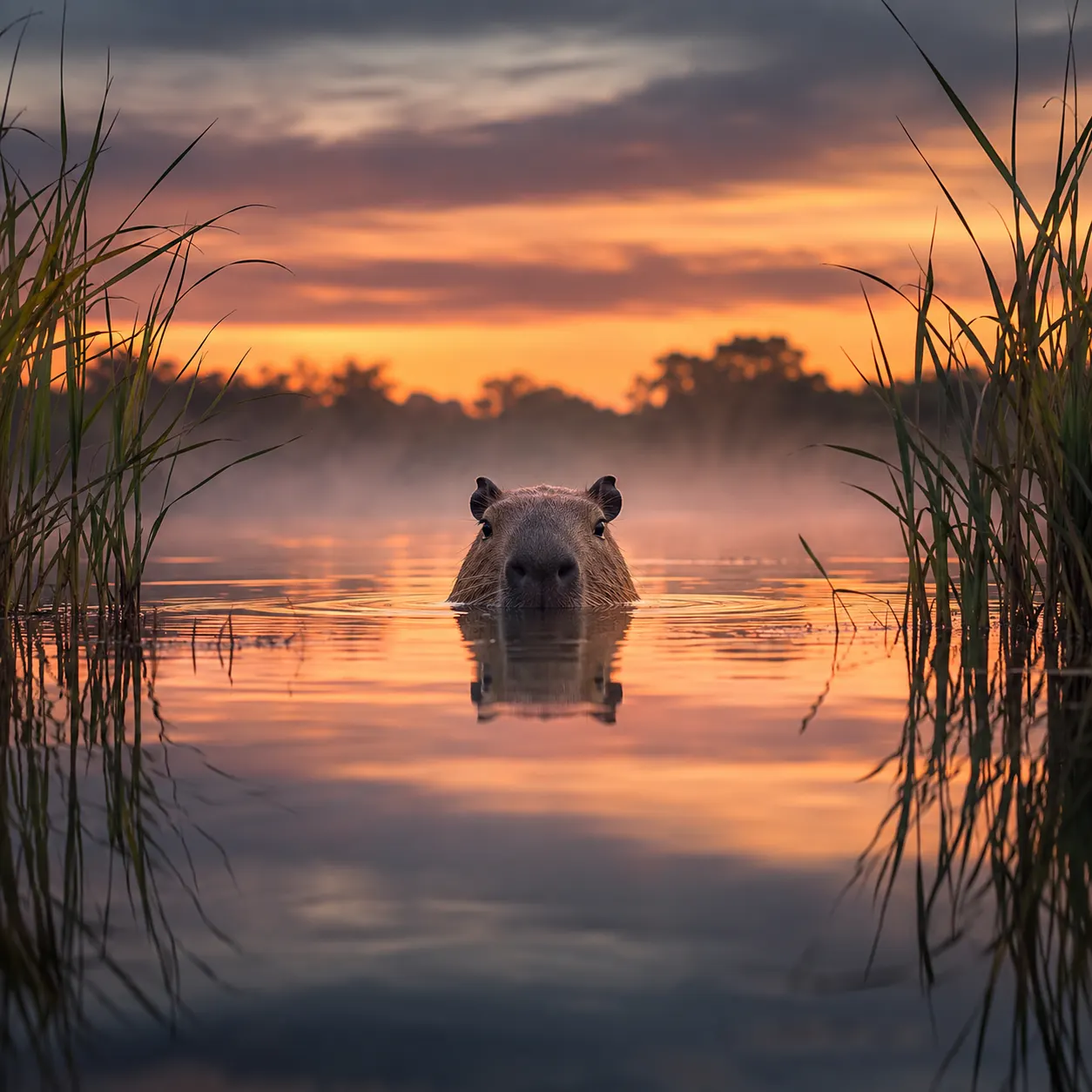
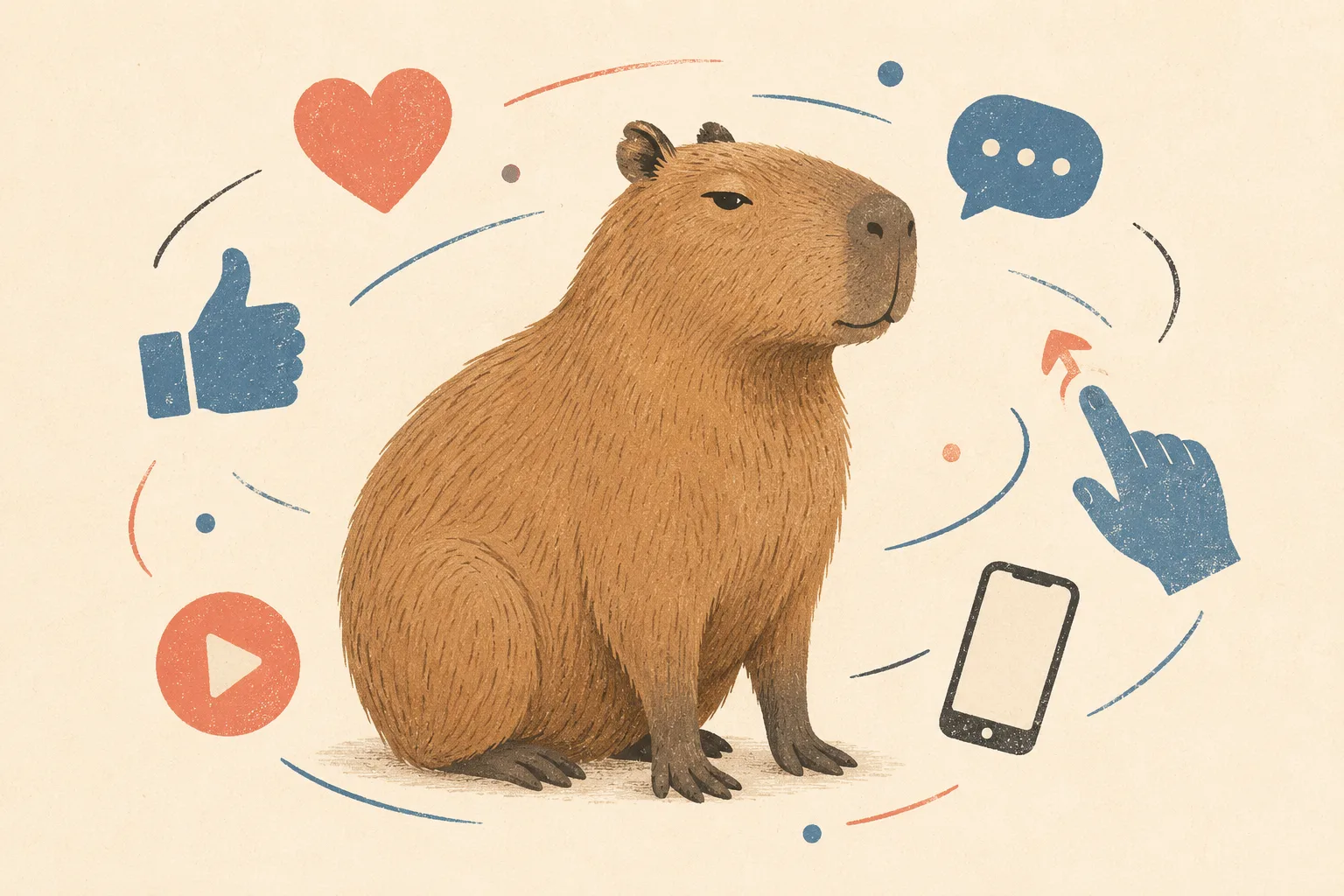
Capybaras became internet famous by doing almost nothing better than anyone else: sitting, soaking, tolerating, staring, and looking like they had already rejected hustle culture in writing.
The capybara fit the internet perfectly. It is large but gentle-looking, social but deadpan, exotic to many US viewers but easy to emotionally understand. Then came hot springs, animal-friend clips, “OK I Pull Up,” plush merch, cafes, and a thousand captions about being unbothered.
The Internet Found The Posture
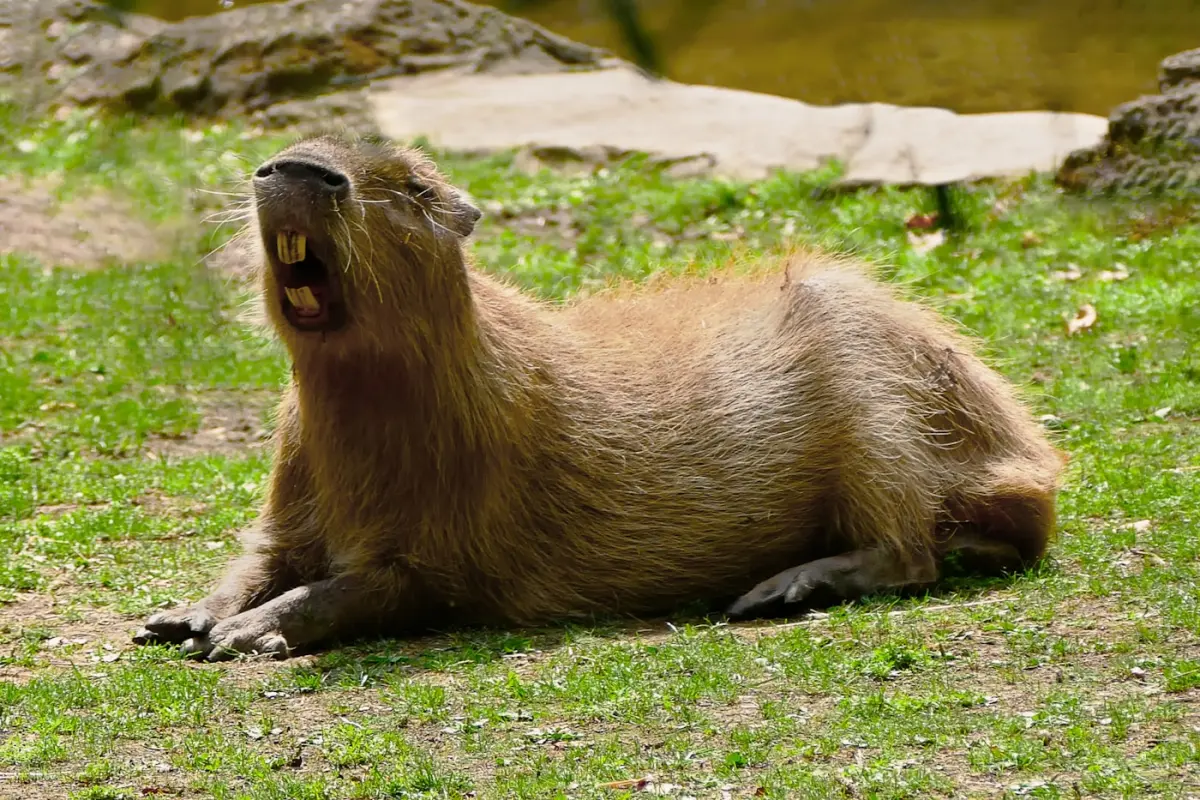
Every viral animal has a readable shape. Capybaras have one of the best. They look like a sofa got a heartbeat and decided not to answer emails.
San Diego Zoo describes the real animal as the world’s largest rodent, semi-aquatic, social, and vocal. That biology gives the internet plenty to work with: group naps, water soaks, calm faces, birds on backs, orange baths, and the sense that every capybara is quietly supervising a wellness retreat.
OK I Pull Up, Hot Springs, And Friend-Shaped Content
Know Your Meme tracks both the broader capybara subculture and the “OK I Pull Up” meme, where capybara footage and audio turned the animal into a symbol of relaxed arrival. The joke is not complicated. That is the point. A capybara pulls up. Nobody panics. Somehow civilization continues.
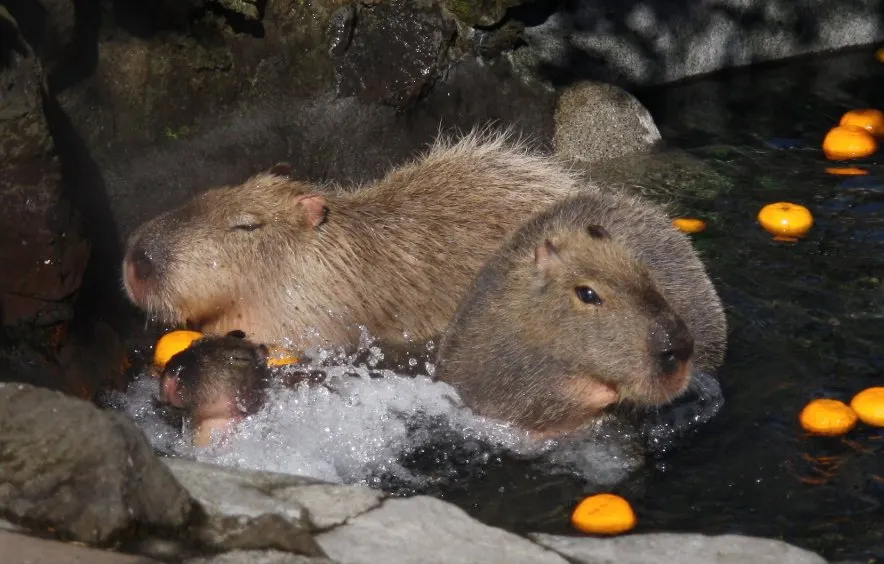
Hot-spring imagery added another layer. Izu Shaboten Zoo’s capybara bath tradition gave the internet a perfect visual: large rodents soaking with citrus in warm water, looking like they had work-life balance before LinkedIn ruined the phrase.
Then came friend-shaped content: capybaras near birds, monkeys, dogs, turtles, and everything else humans wanted to call friendship. Some of those clips are lovely. Some are context-free. All of them helped make the animal feel socially magic.
| Fame driver | Why it worked | Reality check |
|---|---|---|
| OK I Pull Up | Simple audio plus calm visual | Meme origin can be messy |
| Hot springs | Cozy, weird, highly shareable | A managed zoo tradition |
| Animal friendships | Makes capybaras look universally accepted | Context and welfare matter |
| Cafes and encounters | Turns online desire into a place to visit | Contact ethics vary |
| Plush and merch | Easy offline identity | The animal is not just a logo |
Why The Capybara Fits The Algorithm
Capybara content is visually simple. The animal reads quickly on a small screen. Brown loaf, calm eyes, water, group, caption. Done.
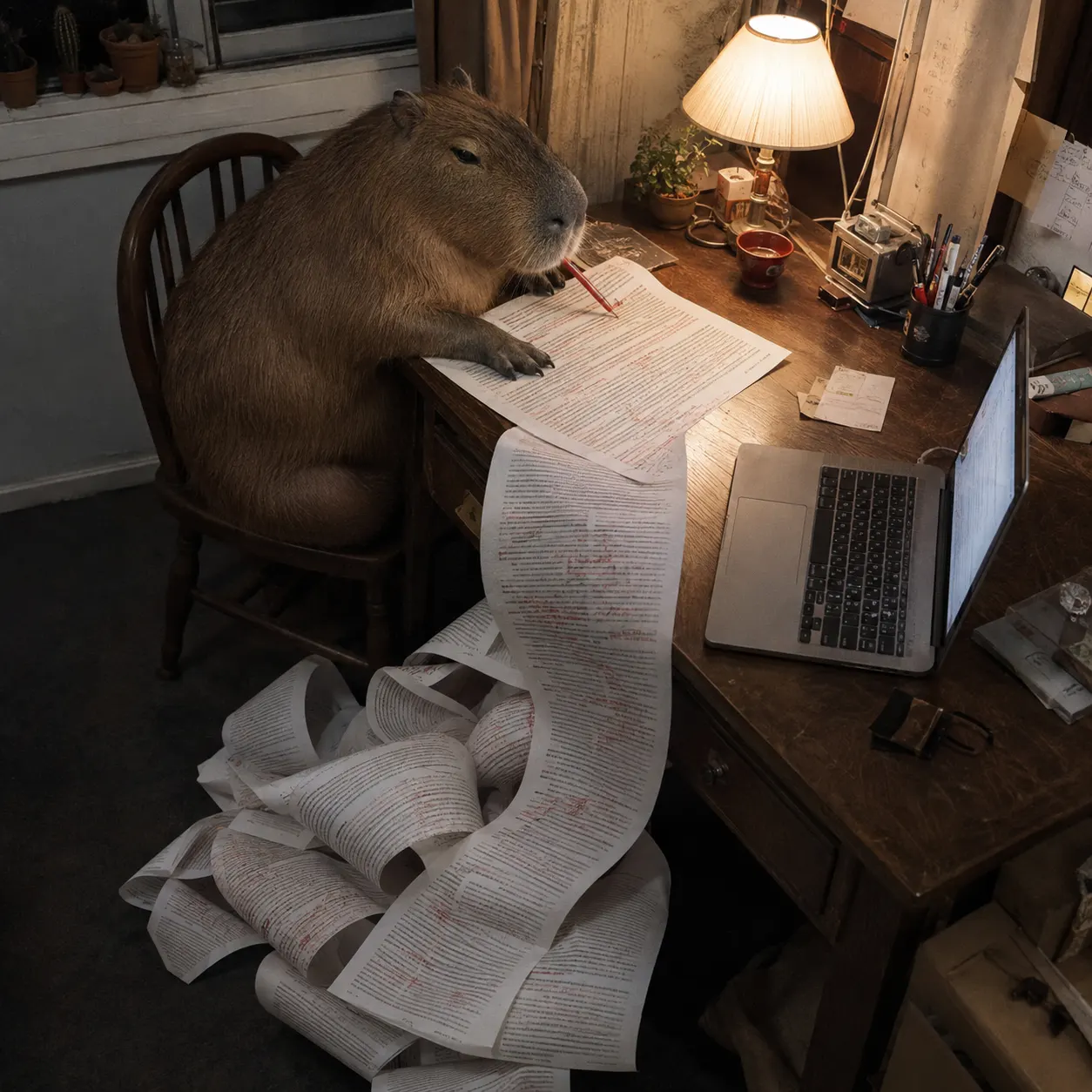
It also gives people a safe identity. Being “capybara-coded” means calm, social, soft, unbothered, and lightly absurd. It is self-description without having to say “I am exhausted by everything,” though that is often the subtext wearing a little hat.
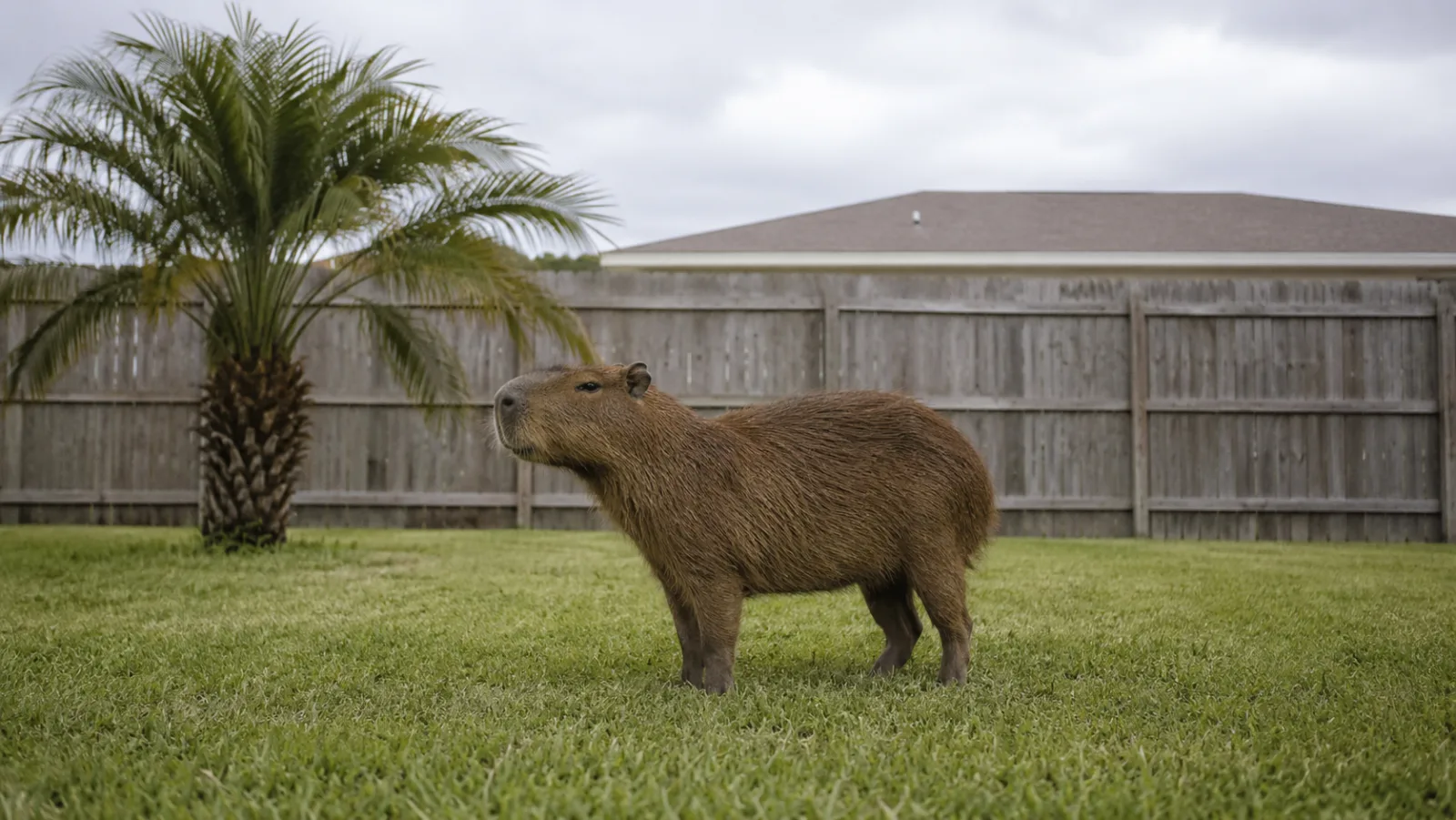
The AP’s coverage of a Florida capybara cafe shows how online affection turned into real-world demand. People wanted to meet the meme. That is powerful and a little risky, because animal welfare has to survive the fan pipeline.
The Real Animal Under The Meme
Animal Diversity Web describes capybaras as South American, group-living herbivores that use water and vocalizations. They are not passive plush mascots. They have social structure, stress responses, warning calls, teeth, diet needs, and habitat needs.
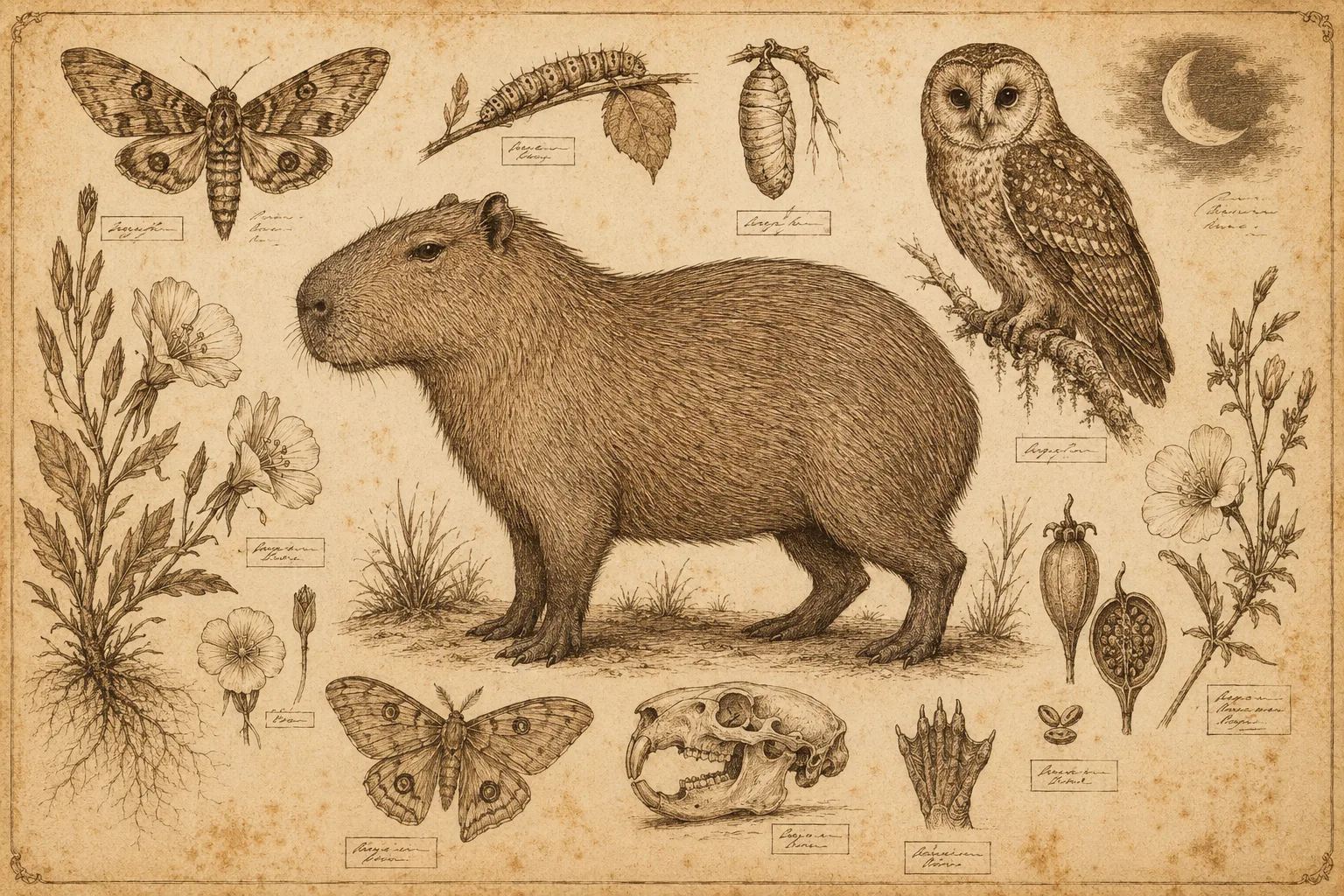
A few specifics the meme tends to skip. The capybara is the world’s largest rodent, with adults landing somewhere in the rough range of 35 to 66 kg. It is a semi-aquatic grazer of grasses and aquatic plants, with semi-webbed feet for the water and continuously growing teeth that need constant wear. Like guinea pigs, capybaras cannot make their own vitamin C and have to get it from diet. They are hindgut fermenters that re-ingest soft morning feces to pull more nutrients out of their food, which is the kind of detail that does not survive a TikTok caption but is doing a lot of the work behind the calm face.
The water part matters most for understanding the soak content everyone loves. San Diego Zoo Wildlife Alliance describes the species as genuinely semi-aquatic. Water is where capybaras cool off, escape predators, and regulate themselves. The hot-spring photos are charming, but the underlying behavior is a prey animal using water the way it always has. The relaxation is real. The reason for it is not spa culture.
None of this ruins the meme. It improves it. The best capybara fandom can laugh at the loaf and still respect the animal under the caption.
Where The Meme Drifts From The Animal
If you spend enough time in capybara content, the same few overstatements keep circulating. Most are harmless. A couple quietly mislead people who later want a capybara of their own, which is where the gap stops being funny.
| Meme version | Better answer |
|---|---|
| Capybaras are universally chill with every animal | They are social herd animals, but they are also prey-aware, with warning calls and stress signals. The friendship clips are curated moments, not a personality rule. |
| One capybara living its best solo life | Solitary housing is a welfare stressor. They are built for herds, and a lone capybara is usually a sad capybara. |
| They are basically large, mellow guinea pigs you can keep anywhere | Same family, Caviidae, but capybaras need water, space, a specialized diet, and company. The “easy” framing is the dangerous part. |
| They are calm because they have transcended stress | They are calm-looking because stillness is a prey strategy and water does the regulating. Calm face, working nervous system underneath. |
The honest take: the friendship genre is the one I trust least. A capybara holding still next to a duck is not consent, and a lot of those clips are staged contact dressed up as harmony. The animal can look serene while having very little say in the situation. That is worth remembering before you share the next one.
What Good Capybara Content Actually Does
You do not have to turn into a zoologist to post a capybara. The bar is lower than that. Keep the joke, keep one fact in mind, and the content gets better instead of worse.
- Caption the mood, not a diagnosis. “Unbothered” is fine. “Capybaras feel no stress” is just wrong.
- If you reshare a friendship clip, notice whether the animal can leave. Choice is the difference between cute and grim.
- Credit the source when you can. The hot-spring tradition has a real home at Izu Shaboten Zoo, not the internet at large.
- Resist the pet pipeline. Admiring a capybara online and housing one are very different projects, and the second one is hard, expensive, and easy to do badly.
The Smithsonian National Zoo and the AZA Capybara Care Manual both treat capybaras as animals with real housing, social, and diet requirements, not as relaxation symbols. That framing is the quiet correction the meme needs, and it costs the joke nothing.
The Fame Makes More Sense Than It Should
Capybaras became famous because they gave the internet a rare combination: funny shape, calm mood, social scenes, water rituals, and endless caption space.
They went viral by doing what the internet cannot do: sitting there.