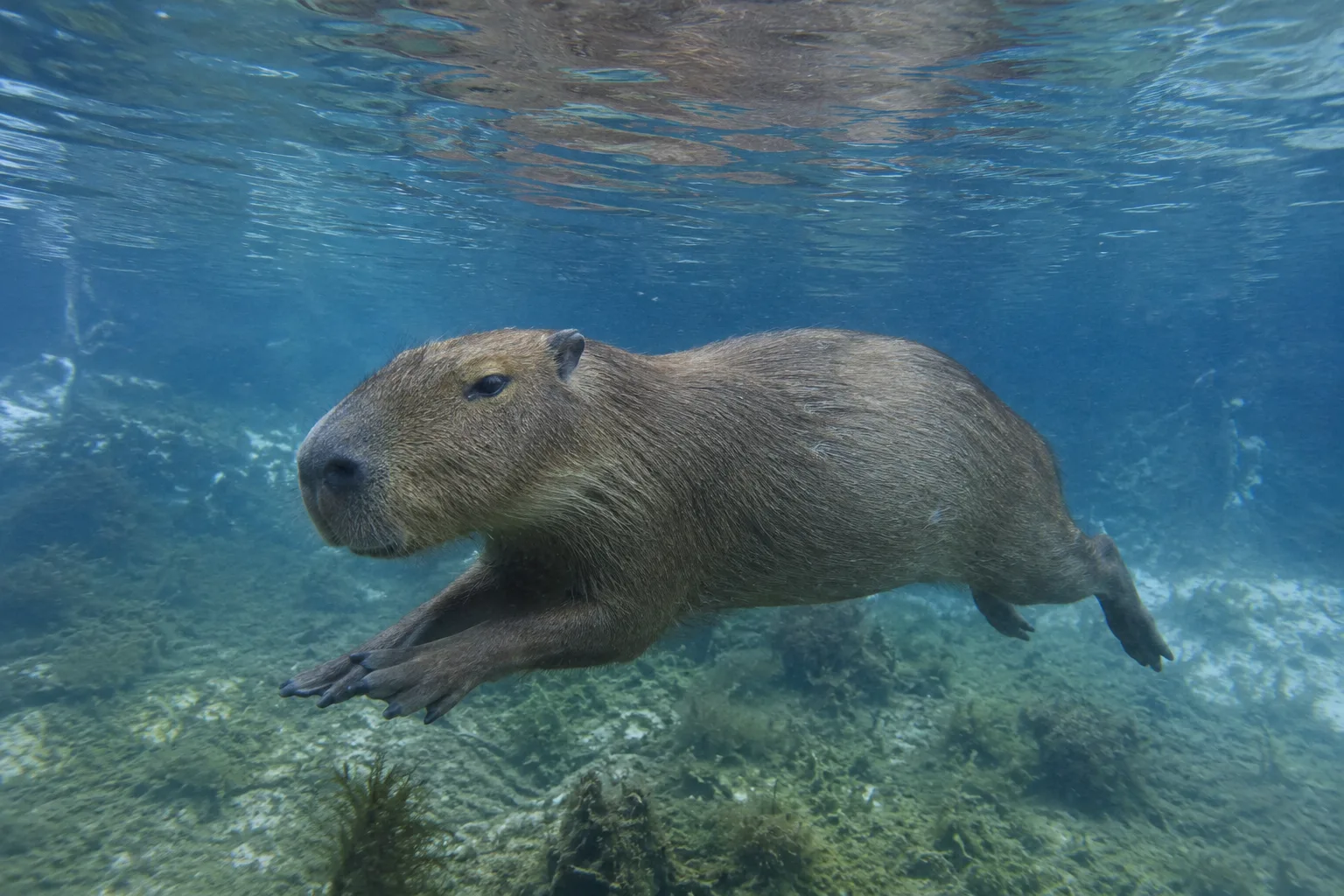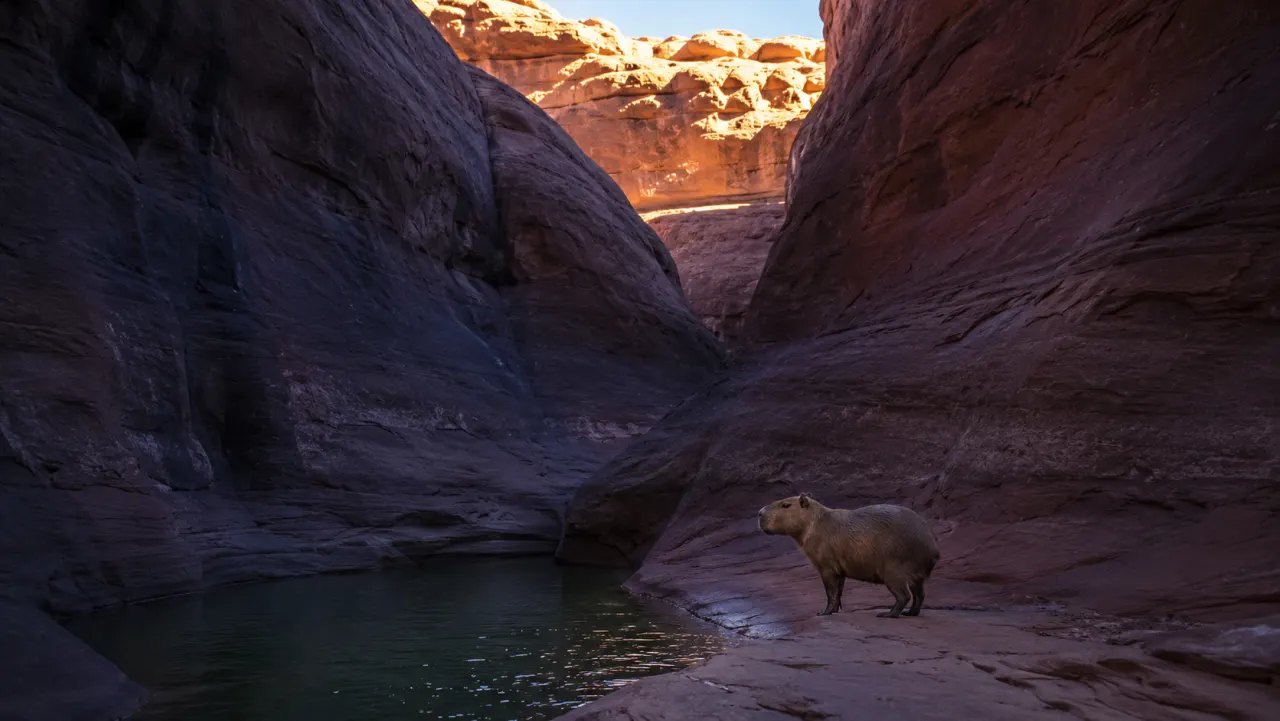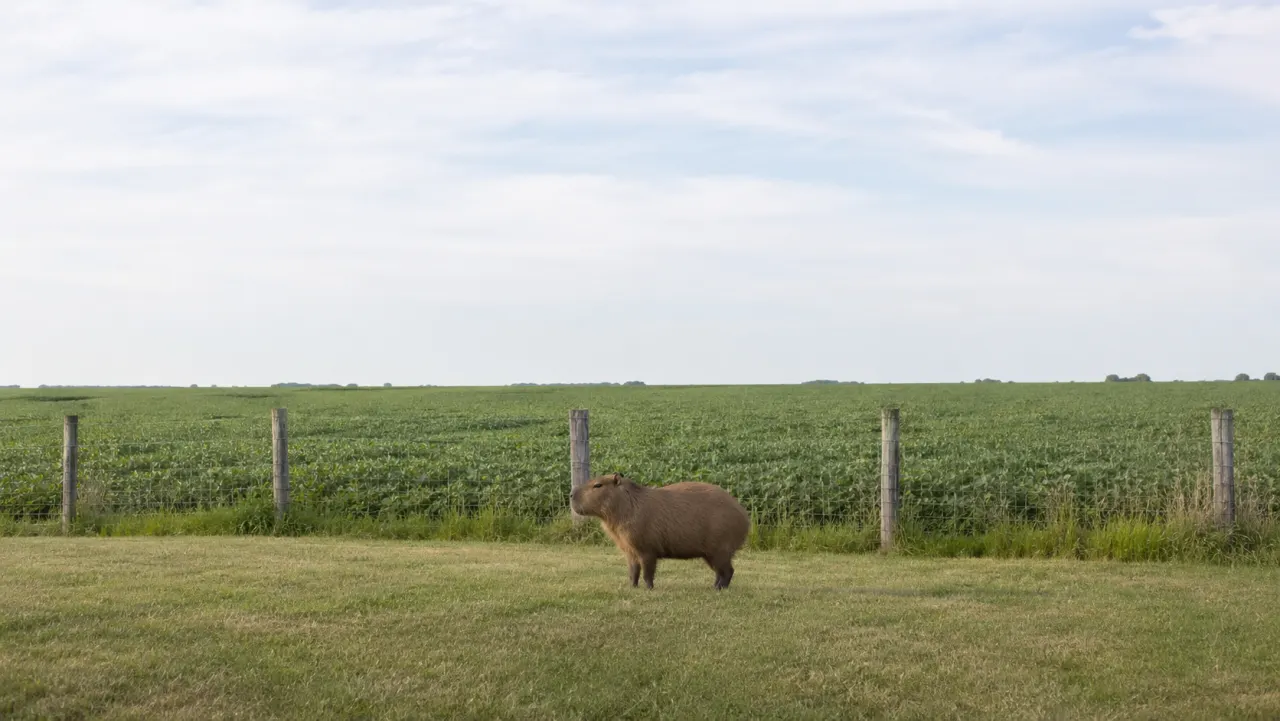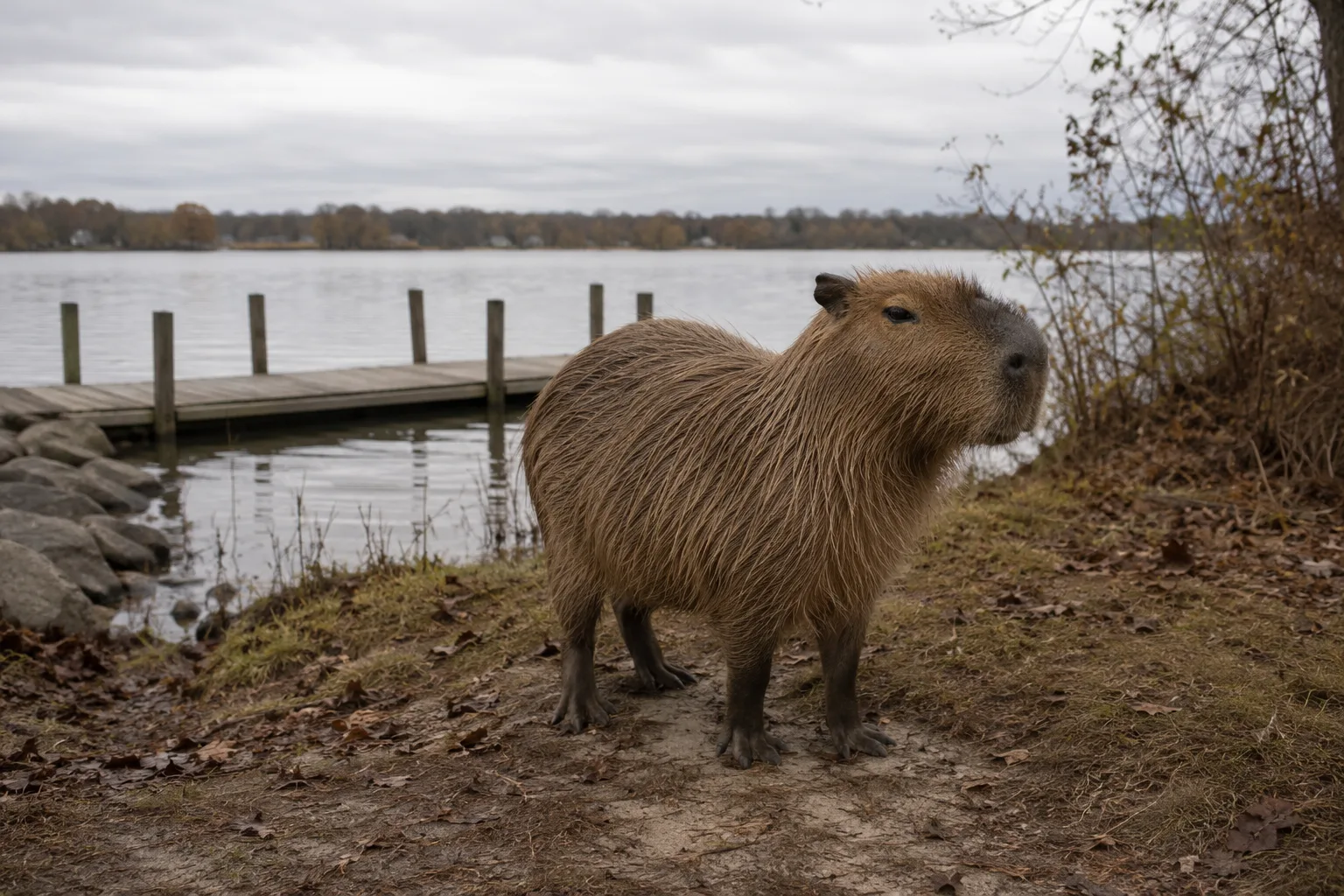

Capybara care is not scaled-up guinea pig care. It is managing a social, semi-aquatic, hindgut-fermenting grazer that reaches 27-79 kg (60-174 lb), defecates in the water it lives in, and gets sick in specific, documented ways when any one of four things is missing: company, water, forage, and a gram of vitamin C a day.
Those numbers are not internet folklore. They come from the AZA Capybara Care Manual, the husbandry document accredited North American facilities work from, and it is the authority behind every requirement on this page.
The honest headline: most people should not keep capybaras. Not because the animal is difficult to like, but because the care standard is a managed-wildlife standard, and it does not get smaller when you move it into a backyard.
This is not veterinary or legal advice. If you already care for a capybara, work with a qualified exotic-animal vet. If you are daydreaming, carry on. Daydreams are legal, quiet, and do not clog a filter.
The Three Gates That Decide Whether This Continues
Before housing, diet or enrichment, three things have to be true at the same time. Any one of them failing ends the conversation.
| Gate | What has to be true | Who confirms it |
|---|---|---|
| Legal | State, county, city, zoning, HOA and import rules all permit possession at this address, for this use. | State wildlife or agriculture office, county animal services, city code, zoning, landlord or HOA. |
| Veterinary | A qualified exotic-animal vet will treat capybaras near you, including after hours. | The clinic, in writing, before anything is purchased. |
| Welfare | You can house at least two compatible capybaras with water, land, shelter, shade, forage and daily care. | An exotic vet or an experienced facility, not a breeder’s sales page. |
The internet asks whether capybaras are friendly. Care asks whether your property can support normal capybara behaviour for fifteen years. Second question, much worse party conversation.
Start the legal work with the capybara legality map, because a permit answer changes what everything else is even for.
What the AZA Care Manual Actually Requires
Here is the part most care articles skip: the manual publishes figures, and the figures are larger than the fantasy.
Set against those, every common shortcut has a specific consequence rather than a vague one.
| Requirement | What it actually means | What happens if you skip it |
|---|---|---|
| Water access | Pools in indoor and outdoor space. Median AZA pool is 88 m² (950 ft²); depth norm is 1.8 m (6 ft) with a gradual incline. | Thermoregulation and skin condition go first. Feeding, mating, escape and hiding all key off water. |
| Company | Groups spanning young to geriatric. Never one animal. Never two adult males, especially near females. | Isolation is a documented welfare problem, and separated capybaras are very hard to reintroduce. |
| Forage | At least 50% of intake by weight from fresh browse, grass or hay. Mixed hay with at least 50% alfalfa. | Diet-related pathology in managed capybaras includes dental caries and gastritis. |
| Vitamin C | About 1 g of ascorbic acid daily, as powder, liquid or high-C vegetables such as broccoli. | Scurvy. It is the classic nutritional failure in captive capybaras, and it is preventable. |
| Heated shelter | Required wherever lows reach 4°C (40°F), bedded with straw, hay or mulch. | A hardy animal becomes a sick one faster than owners expect, because “they tolerate cold” was only ever half the sentence. |
| Shade and water in heat | 32-38°C (90-100°F) is tolerable only with shade and water: pool, mister or mud wallow. | Overheating. Sufficient shade is an accreditation requirement, not a landscaping preference. |
| Soft resting substrate | Localised soft spots of mulch, sod, straw, sand or leaf litter, replaced daily when soiled. | Joint and footpad problems, particularly in older animals. |
One line to keep, because it defuses a lot of bad advice: the manual notes that the AZA Rodent, Insectivore and Lagomorph TAG has not set minimum space guidelines for capybaras. The dimensions above come from a survey of what accredited facilities actually built. Anyone quoting a “legal minimum square footage” for a capybara is quoting something that does not exist.
Why One Capybara Is Always the Wrong Number
A single capybara is easier for the human and worse for the animal, and that trade is the entire argument.
The manual is direct about the shape of a healthy group: capybaras should be kept in groups spanning neonate to geriatric individuals, and wild herds average around ten. Males should not be housed together, especially with females nearby, because fighting probability climbs. Introductions have to be handled carefully, since bonded adults may attack or kill an unfamiliar adult.
The manual warns that it is very difficult to reintroduce capybaras once they have been separated. A temporary split for medical or behavioural reasons can become permanent, which means you now need two enclosures to the same standard, not one. Separation is a decision, not a pause.
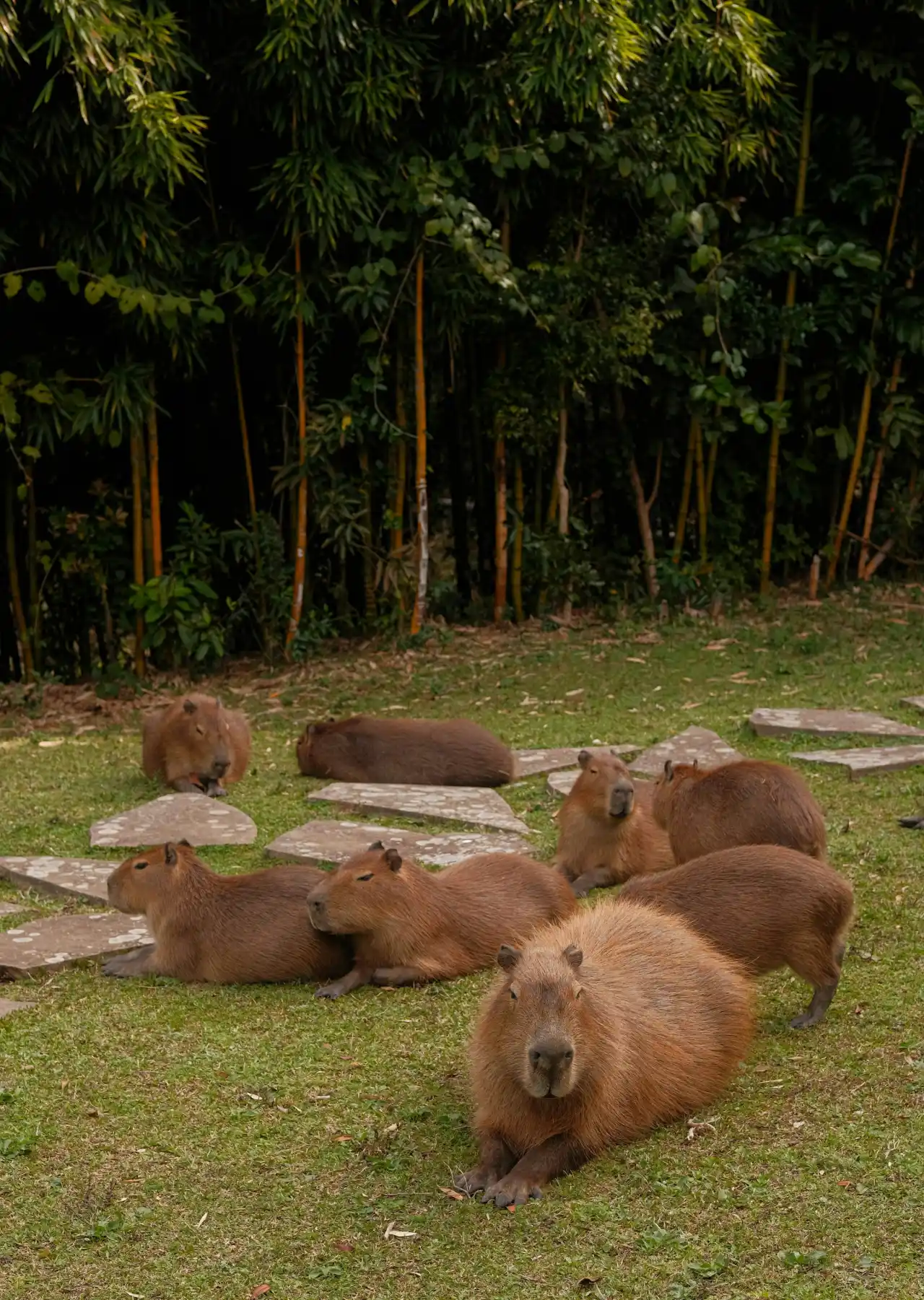
Two animals is the honest floor, and it changes the money more than people expect: two of everything consumable, a holding area for separations, sex-ratio planning, reproductive control, and someone competent watching for the moment one animal starts getting excluded from food or water. The welfare answer rarely gives the cheaper quote.
The Water Job Nobody Budgets For
Water is not the fun part of capybara care. It is the maintenance contract.
The manual says a significant amount of capybara behaviour revolves around water, feeding, mating, escape and hiding included, and that pools belong in both indoor and outdoor enclosures. Across surveyed AZA exhibits the median pool runs 88 m² (950 ft²), the smallest recorded 14 m² (150 ft²), the largest 1,214 m² (13,068 ft²). Pools can be as shallow as 1.1 m (3.5 ft), but the norm is at least 1.8 m (6 ft) with a gradual incline.
Then there is the sentence that ends the kiddie-pool conversation permanently: capybaras defecate in water. An artificial pool without recirculating, filtered water has to be cleaned and disinfected at least once a week, and a natural pool still needs filtration for solid waste.
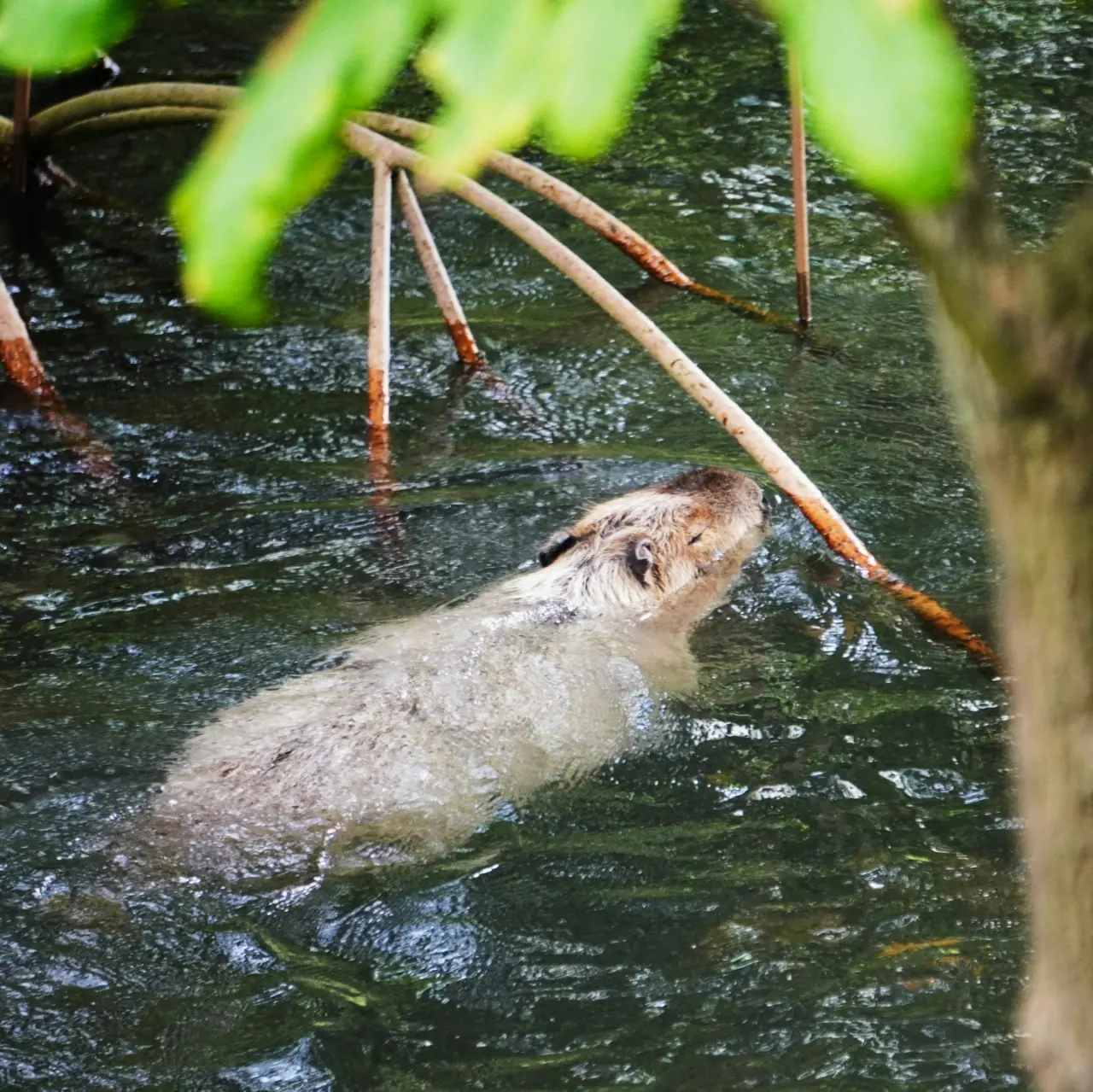
The build side of this, the drainage sequence, the filtration sizing, the winter problem, the depth-to-slope ratio, is its own project. That is covered in the capybara enclosure setup guide, which is where the numbers turn into a construction order.
Feeding a Grazer Without Giving It Scurvy
Capybaras are hindgut fermenters that selectively eat vegetation high in protein and energy, which makes them technically browsers living a grazer’s life. In managed care the diet is forage-first and the proportions are specified.
At least 50% of the diet by weight should be fresh browse, grass or hay, with mixed hay ideally at least half alfalfa. Pelleted feed is capped at 50% by weight, should be alfalfa-based, and should stay under 5% sugar and 5% starch with no grain. Fruits and vegetables together stay under 5% of the diet, vegetables preferred over fruit. Enrichment foods never exceed 5%. San Diego Zoo Wildlife Alliance puts adult intake at roughly 6 to 8 pounds of grass per day, which is what half a diet by weight looks like when you have to actually store it.
Vitamin C is the one people get wrong in an interesting way. Capybaras need a dietary source and the manual cites about one gram of ascorbic acid daily, but it also warns off the obvious solution: cultivated fruit is high in sugar, and using it as the vitamin delivery system trades scurvy for a metabolic problem. Powder, liquid supplement, or high-C vegetables such as broccoli do the job without the sugar. Scurvy in captive capybaras is documented in the veterinary literature, which is why this reads as a requirement rather than a suggestion.

Willingness to eat something is not evidence it belongs in the diet. Humans enjoy fries and have not become nutritionists. For the wild diet, the zoo diet, and the orange business, read what capybaras eat.
Heat, Cold, and the Week Care Usually Breaks
Climate is where a plan that looked fine in May quietly fails in January, and the manual gives usable thresholds for both ends.
Capybaras can be kept outdoors in areas with lows of 4°C (40°F) provided a heated shelter with straw, hay or mulch bedding is available. They tolerate 32-38°C (90-100°F) provided they have water and shade, and the manual lists pool, mister or mud wallow as acceptable water forms and trees, shelters, shade cloth or indoor access as acceptable shade. Indoor humidity should sit between 30% and 70% relative humidity, though they cope with 15-20% in dry climates.
Read those as paired conditions, not as a hardiness rating. “Capybaras tolerate 100°F” is true and useless on its own. The provision is the point.
Meets the standard
- Heated, bedded shelter available below 40°F
- Shade the animal can reach without crossing open sun
- Pool, mister or wallow through heat waves
- More than one hide, since they are flight animals
- Soiled bedding replaced daily
Looks fine in photographs
- An unheated barn stall and a heat lamp
- Shade that moves off the resting spot by noon
- A hose, used when someone remembers
- One open field with nowhere to withdraw to
- Bedding changed when it smells
Capybaras are naturally crepuscular and shift nocturnal around human activity, which means the animal you see at 2pm is not doing much and the animal doing things is out at dawn. Care schedules that only run at human-convenient hours miss the half of the day where problems show up first.
The Vet Call That Should Happen Before the Animal Does
This is the gate that fails most often, and it fails quietly.
There are no mandatory regulations for capybara health exams. The manual reports that most managed-care facilities run full health exams at intervals ranging from once every six months to once every other year, and that typical quarantine for an incoming capybara is a minimum of 30 days. Chemical restraint for a full exam uses protocols the manual lists explicitly, which tells you something useful on its own: this is an animal that generally has to be sedated to be properly examined, by someone who has done it before.
Make the call before you need it, and make it specific. “Do you see exotics” gets a yes from a clinic that means two bearded dragons and a rabbit. The question that actually sorts clinics is closer to: do you treat capybaras, do you have an anaesthetic protocol for a 70 kg rodent, will you take an after-hours emergency, and who covers you when you are away? The answer arrives in the pause. A clinic that treats capybaras answers immediately. A clinic that does not goes quiet, then offers to refer you, and the referral is often four hours away. That drive is the real answer to whether the plan works, and it is worth finding out on a Tuesday afternoon rather than at 11pm with an injured animal in the back of a car.
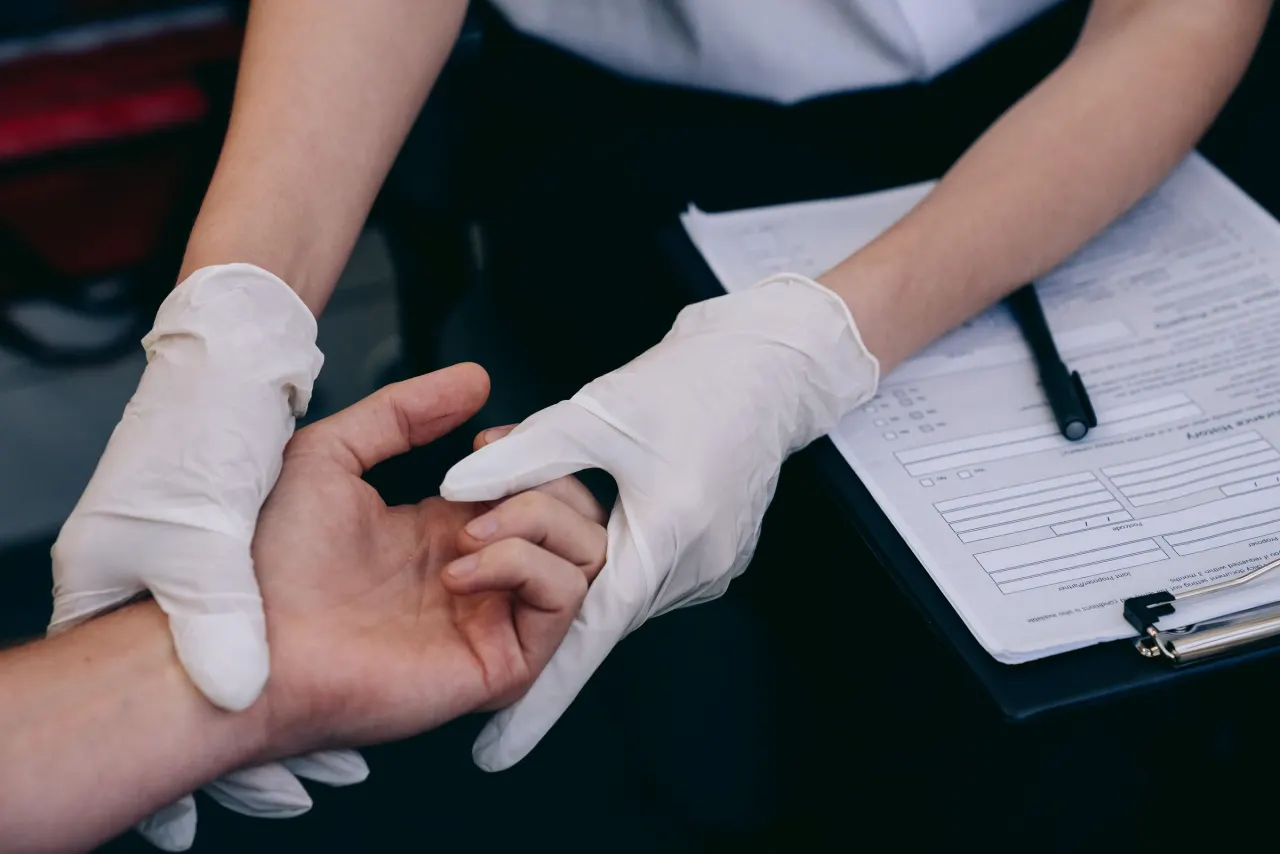
Teeth, feet, skin, parasites, reproduction and anaesthesia are all routine capybara management areas, and dental caries is a documented diet-related problem. If the nearest clinic that will take the case is hours away, that is not a detail to solve later. It is the answer.
Two practical follow-ups: finding an exotic vet for a capybara covers how to search properly, and capybara health and common medical issues covers what you are watching for between visits.
What Capybara Care Looks Like on an Ordinary Tuesday
Strip out the drama and daily care is repetitive, physical, and mostly about noticing things early.
Daily: feed the forage first, check water quality and level, remove waste, replace wet or soiled bedding, walk the perimeter, refresh a hide or a browse pile, and watch the group eat. Weekly: disinfect an unfiltered pool, deeper clean, check body condition, rotate browse, inspect gates and latches. Seasonally: swap heating and shade provision, plan for storms and freezes, review the diet against what the animals are actually eating.
The observation is the care. Chores are just what your hands do while you find out whether one animal is standing slightly apart from the others today.
| What people believe | What the husbandry sources say |
|---|---|
| ”One capybara is easier to manage” | Capybaras are group animals, and reintroducing a separated individual is very difficult. One is the harder version, not the simpler one. |
| ”There’s a legal minimum enclosure size” | The AZA TAG has not set minimum space guidelines. The published dimensions come from a survey of what facilities built, not a standard. |
| ”Fruit covers their vitamin C” | They need about a gram of ascorbic acid daily, and the manual specifically warns that cultivated fruit is too high in sugar to be the delivery system. |
| ”They’re hardy, cold is fine” | Outdoor lows of 40°F are acceptable with a heated, bedded shelter. The provision is the whole claim. |
| ”A big pond means no maintenance” | Capybaras defecate in water. Unfiltered pools need cleaning and disinfecting at least weekly; natural pools still need solid-waste filtration. |
Here is my honest read, for whatever it is worth: the diet and the vet are solvable with money and effort, but the group requirement is the one that quietly disqualifies almost every private setup, because it doubles a burden most people were already underestimating by half.
So the practical takeaway is not a checklist. It is an order of operations. Settle the legal answer, get a named vet who says yes on the phone, price a two-animal water system before a single animal, and only then decide. If you want the full number, the capybara cost guide is the next stop.
And if the answer comes back no, that is a good outcome, not a failed one. Visit them somewhere that already has the pool, the filtration, the vet on staff and the group that has been together for years. Sit there for twenty minutes and watch a herd doze in a row with their chins on each other. That is what the whole husbandry document is trying to protect, and it looks better in person than it does in any backyard.