Capybara health problems in captivity follow a predictable pattern: the problems that are most common are also the most preventable. Vitamin C deficiency, dental malocclusion, and skin issues are not mysterious conditions — they each have clear causes that good husbandry directly addresses. The difficulty is that they are also the problems that develop slowly enough to be missed until they are serious.
This is a guide to recognizing and preventing them, not a substitute for exotic veterinary care. When you see the signs described here, the next step is an appointment, not a home remedy.
Vitamin C Deficiency: The Most Preventable Problem
Capybaras, like guinea pigs and humans, cannot synthesize vitamin C (ascorbic acid) internally. They must obtain it through diet. This is a Caviidae family characteristic — the enzyme L-gulonolactone oxidase that most mammals use to synthesize vitamin C is non-functional in this lineage.
The AZA Capybara Care Manual notes vitamin C deficiency as a documented health risk in captive capybaras. The clinical syndrome mirrors scurvy in humans:
Early signs:
- Mild lethargy or reduced activity
- Subtle changes in gait (joint discomfort starting)
- Reduced appetite
Moderate-to-severe signs:
- Visible joint swelling, particularly in the legs and spine
- Difficulty walking or reluctance to move
- Weight loss
- Poor wound healing
- Rough coat condition
- Bleeding from gums or around teeth
Prevention: Fresh vegetables with adequate vitamin C content, guinea pig or capybara pellets formulated with vitamin C supplementation, and fresh hay with some green vegetation. The AZA manual notes that vitamin C is heat-sensitive and degrades in stored feed — fresh sources are more reliable than pellets stored for months.
Key vitamin C sources appropriate for capybara diets: bell peppers (especially red, very high vitamin C), leafy greens (kale, romaine), fresh herbs. The vitamin C content of fresh grass and hay contributes when fresh, but stored hay has minimal remaining vitamin C.
Dosing supplemental vitamin C (for animals at risk or with early deficiency): consult your exotic vet for appropriate supplemental dosing rather than guessing.
Dental Disease: The Most Insidious Problem
Capybara molars (and to some extent incisors) grow continuously throughout life. Normal wear requires continuous abrasion from fibrous material — primarily hay and tough grasses. A diet insufficient in fibrous roughage produces uneven wear, leading to sharp points (hooks and spurs) on the molar surfaces that cause pain, tongue or cheek lacerations, and difficulty eating.
The AZA Capybara Care Manual explicitly identifies dental disease as a risk factor in captive management and treats hay as a non-negotiable dietary component specifically for this reason.
Signs of dental disease:
- Dropping food while trying to eat
- Excessive drooling or wetness around the mouth
- Selective eating (avoiding hard or fibrous foods)
- Weight loss
- Abnormal jaw movement or asymmetry
- Pawing at the mouth
- Sudden dietary preferences for soft foods
Dental disease in capybaras is harder to treat than to prevent. Correcting maloccluded molars in a 100-pound rodent requires sedation, specialized dental tools, and a veterinarian experienced with large rodent dentistry. The treatment may need to be repeated. Prevention — providing adequate hay and fibrous roughage from the start — costs nothing extra beyond doing the diet correctly.
| Prevention approach | Mechanism |
|---|---|
| Unlimited hay (timothy, orchard grass) | Continuous molar abrasion maintains correct occlusion |
| Fresh grass and roughage | Same mechanism; adds variety |
| Branches and bark for gnawing | Incisor maintenance and behavioral outlet |
| Minimizing soft food excess | Prevents high-soft-food diets that skip fibrous intake |
Skin Parasites And Fungal Issues
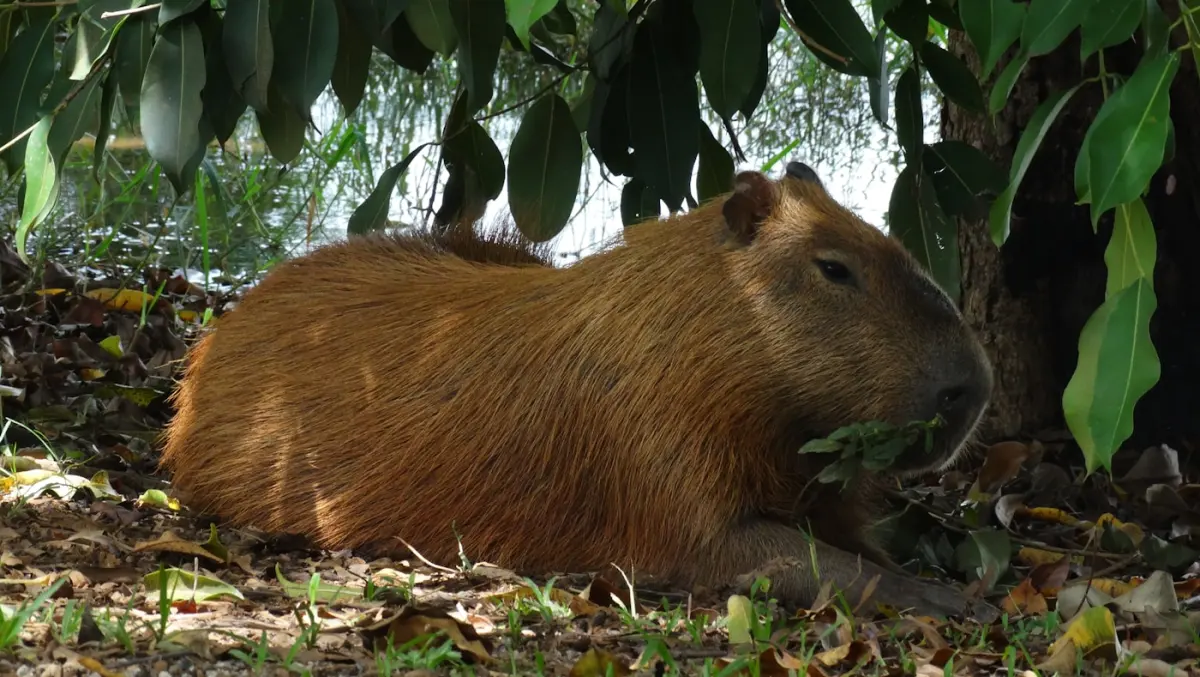
Capybaras are built around water, and water quality management directly affects skin health. The main skin problems in captive capybaras:
Mange (mite infestation): Demodex and Sarcoptes mite infestations cause hair loss, crusty skin, and itching. Mange in capybaras can become severe if untreated. Treatment involves veterinary-prescribed antiparasitic medications; home treatments are not appropriate without diagnosis.
Ticks: capybaras naturally carry tick loads in the wild. Captive animals can acquire ticks from the environment, other animals, or wildlife contact. Regular inspection, especially around ears, axillae, and groin, and appropriate tick prevention (veterinarian-guided) are the management tools.
Fungal skin infections: high-humidity environments, warm water, and limited airflow create conditions for fungal skin problems. Dermatophytes (ringworm) can affect capybaras and are transmissible to humans. Signs include hair loss, flaky skin, and irritated patches. Veterinary diagnosis is required because the presentation overlaps with mite-caused conditions.
Water-associated skin issues: poor water quality — algae, bacterial growth, contaminated water — causes skin irritation and secondary infections. Regular water turnover, filtration, and cleaning are the prevention. The AZA manual’s water quality guidance exists specifically because this is a documented problem.
Other Conditions To Know About
Heat stress and hypothermia: capybaras in extreme temperatures without appropriate shelter or water access develop thermoregulatory crises. These can be fatal if not addressed promptly.
Gastrointestinal problems: incorrect diet, stress, or rapid dietary changes can disrupt the cecal bacterial balance, causing GI upset, bloating, and diarrhea. The hindgut fermentation system is sensitive to dietary disruption.
Salmonella and other zoonoses: capybaras can carry Salmonella and are associated with Rickettsia transmission through ticks. Basic hygiene — handwashing after contact, protective gloves for enclosure cleaning — reduces transmission risk.
Reproductive complications: females that breed repeatedly without rest periods, or that have single pregnancies with large litters, can experience complications. Veterinary monitoring during pregnancy is recommended for managed breeding.
Preventive Care: The Whole Game
The AZA Capybara Care Manual treats preventive care as the foundation of capybara health management. The key elements:
- Annual exam and dental check: at minimum yearly, with tooth examination under adequate lighting or sedation if indicated
- Parasite screening: fecal examination annually; skin examination regularly
- Weight monitoring: regular weight recording detects gradual weight loss before it is visually obvious on a large animal
- Diet audit: periodic review of whether hay consumption is adequate and whether treats are staying within appropriate limits
- Water quality monitoring: regular testing and documentation of water turnover, cleaning, and filtration performance
The capybara owner’s manual for preventing the common problems is simple in principle: provide unlimited high-quality hay, ensure vitamin C sources, manage water quality, identify two vets before problems arise, and weigh the animal regularly. Most common health problems announce themselves slowly enough that a watchful owner can catch them early — if the owner knows what to look for and has a vet to call.
For finding that vet, the exotic vet guide covers the search in full. For the full care picture, the capybara care guide covers the daily management framework.