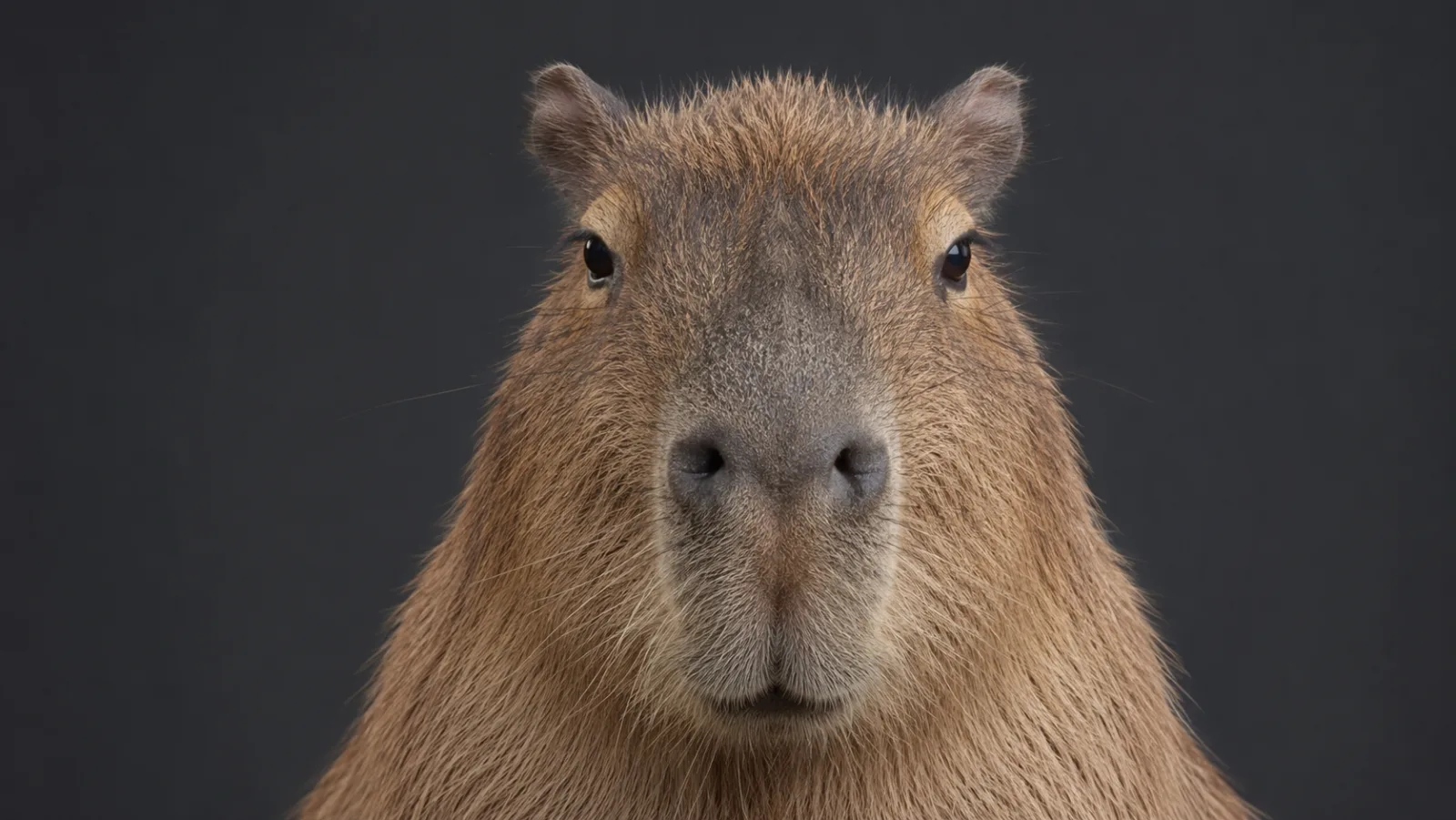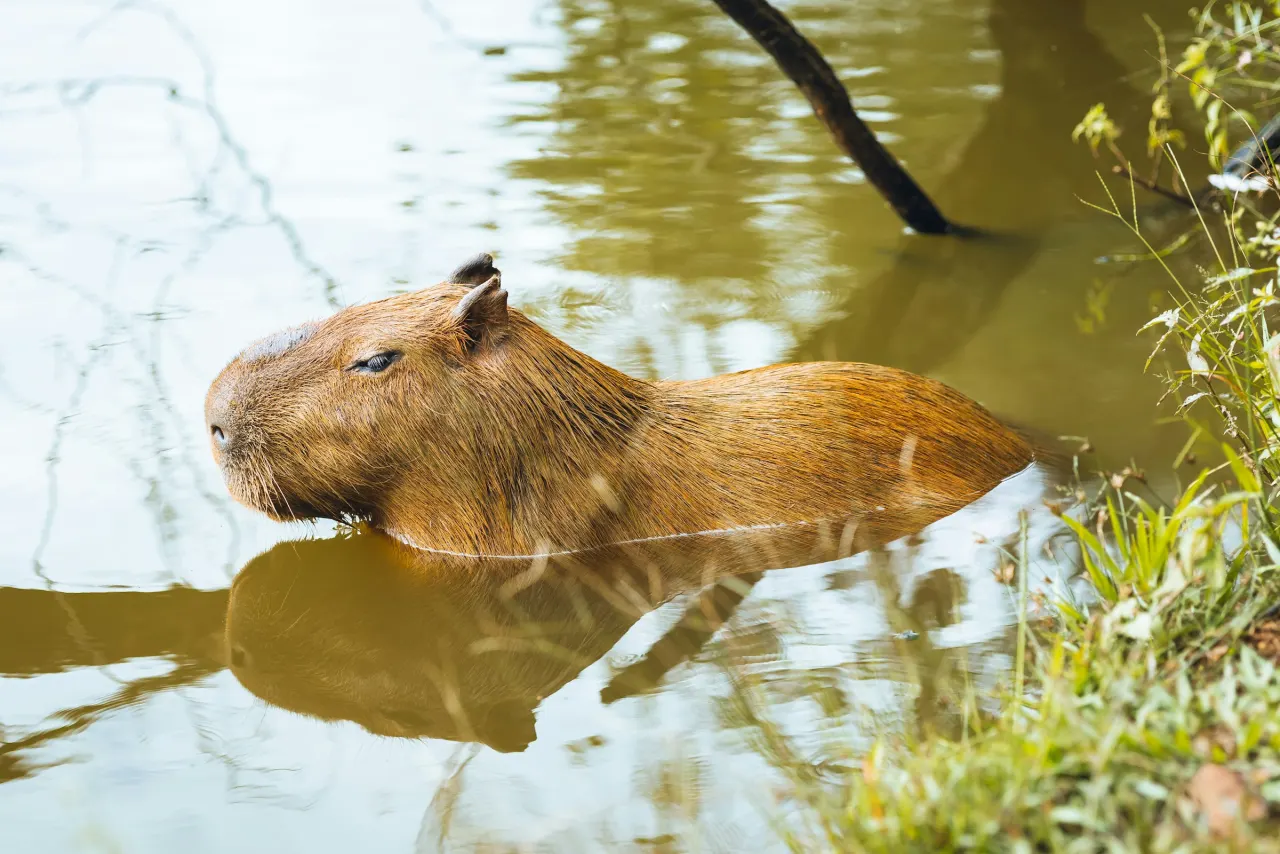
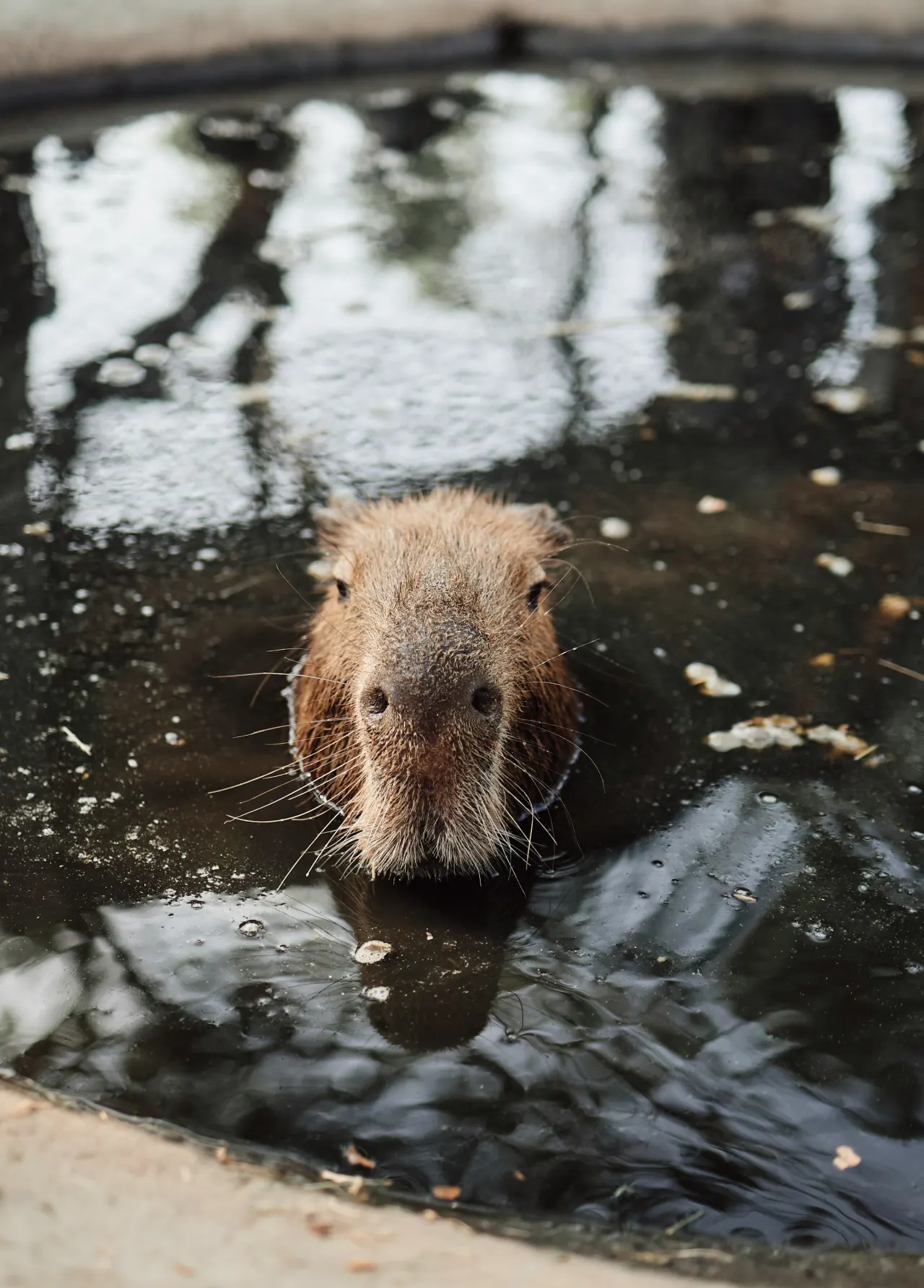
Capybara eyes, ears, and nostrils sit high on the head because capybaras are built for waterline life. They need to see, hear, and breathe while the rest of the body stays low in water, reeds, or grass.
That high-up face is practical semi-aquatic anatomy. It lets a capybara soak, swim, hide, scan, and breathe without presenting the whole loaf to the world.
The High-Up Face Is The Whole Trick
San Diego Zoo Wildlife Alliance describes capybaras as animals of riverbanks, ponds, marshes, and standing water. Water is food source, cooling system, travel path, and escape route. The face fits that life.
If a capybara’s nose, eyes, and ears sat low like a house pet’s, waterline living would be much more annoying. Instead, the important sensors ride high. The animal can keep most of its body hidden or cooled while the head remains useful.
Eyes That Scan While The Body Stays Low
Capybaras are prey animals, so watching matters. Animal Diversity Web describes warning barks and group movement toward water when danger appears. A high eye position helps a capybara monitor movement while sitting in grass or soaking at the edge.
That is why the capybara stare feels so specific. The animal may look like it is judging your calendar, but the basic function is awareness. It is scanning the world from a damp command center.
| Feature | Waterline job | Fan translation |
|---|---|---|
| High eyes | Scan while low in water | Serious pond surveillance |
| Small ears | Hear without huge exposed flaps | Tiny but employed |
| High nostrils | Breathe near the surface | Snorkel energy without gear |
| Webbed feet | Swim and walk through mud | Swamp commute hardware |
Ears And Nostrils Built For Waterline Living
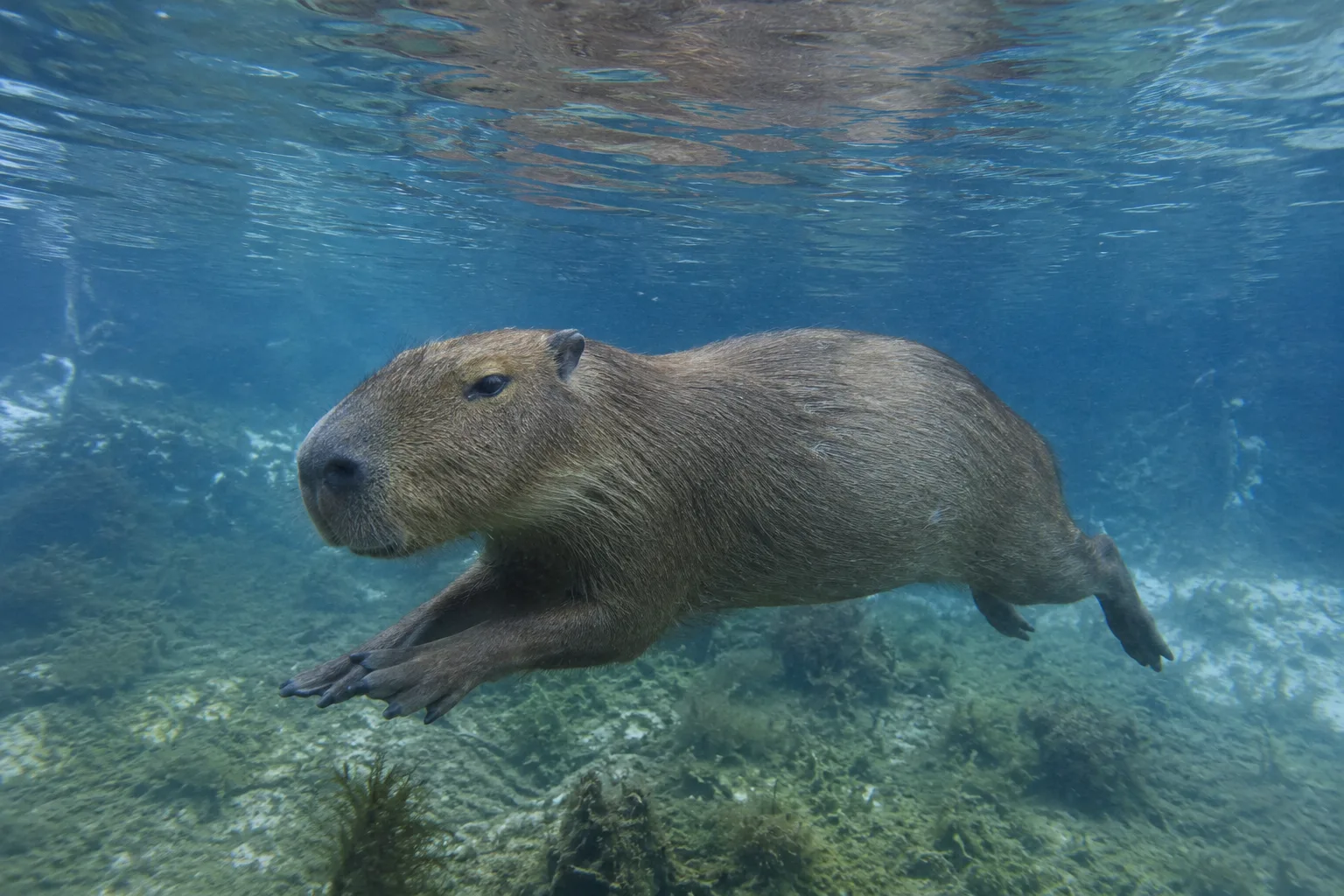
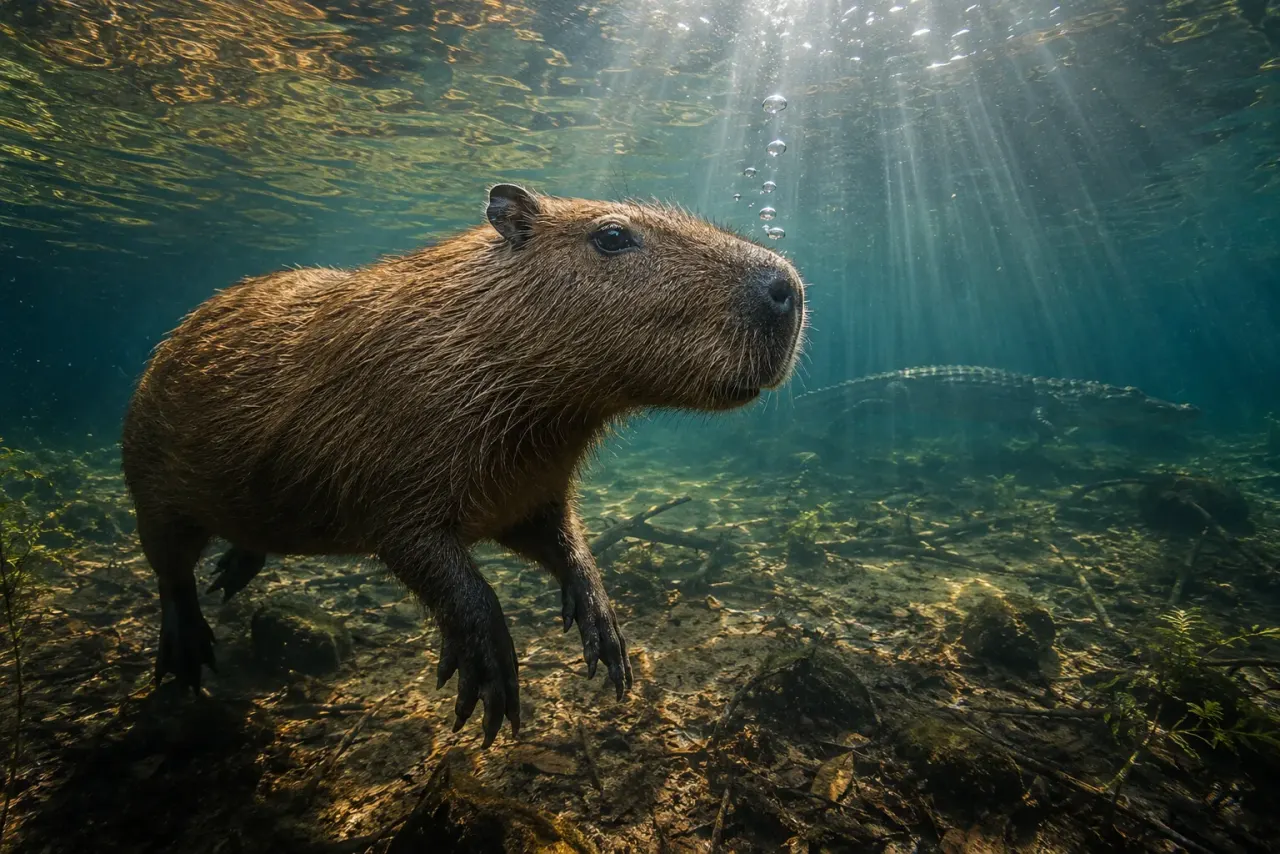
San Diego Zoo says capybaras can stay underwater for up to five minutes and use webbed feet to swim and walk. The nostrils matter because breathing at the surface is easier when the nose is already up there. No one wants to redesign the whole head mid-swim.
The ears are small and high too. They do not turn capybaras into sonar equipment, but they keep hearing available while the animal is in a low, watchful posture.
Why The Layout Beats A Snout-Down Face
Most rodents you have met carry their senses low. A house mouse, a hamster, a guinea pig, all of them work with the nose near the ground because their world is the ground. The capybara’s world is the edge between land and water, and that edge changes the math.
Picture a capybara resting in shallow water on a hot afternoon, which is a normal thing for them to do. The body needs to stay cool and mostly hidden. The senses still need to work. If the eyes, ears, and nostrils sat low, the animal would have to lift the whole head clear of the water every time it wanted to check the bank or take a breath. That is a lot of effort, repeated all day, and it also makes the animal more obvious to anything watching.
Stack the three sensors high on the skull instead, and the head can stay almost flat at the surface. Only a thin strip breaks the water. The capybara sees, hears, and breathes from that strip. This is the same trick crocodiles and hippos use, and none of those animals are related. When unrelated species land on the same body plan, it usually means the plan works. That is the honest read here: this is not a quirky design choice, it is the obvious answer to a hard problem, arrived at more than once.
Coprophagy is a side note that fits the same theme of practical, slightly unglamorous biology. Capybaras are hindgut fermenters and re-ingest soft morning droppings to pull more nutrition from tough grasses, the way guinea pigs do. The high face and the recycled breakfast come from the same place: an animal optimized for its real life, not for looking dignified.
Sorting The Common Mix-Ups
A few ideas about the capybara face get repeated more than they should. Here is the cleaner version.
| Myth | Better answer |
|---|---|
| The eyes are high because capybaras have bad eyesight | Position is about angle, not weakness. High eyes let a low, half-submerged body keep watch without lifting the head. |
| Capybaras can breathe underwater | No. They surface to breathe. The high nostrils just make surfacing minimal, and San Diego Zoo notes they can hold a dive up to five minutes. |
| The big head is mostly for show | The skull layout is functional. Eyes, ears, and nostrils are arranged for waterline awareness, not decoration. |
| They are basically small hippos | Not related. Both keep senses near the surface, but capybaras are giant cavies, family Caviidae, cousins of guinea pigs and maras. |
How This Compares With Beavers And Nutrias
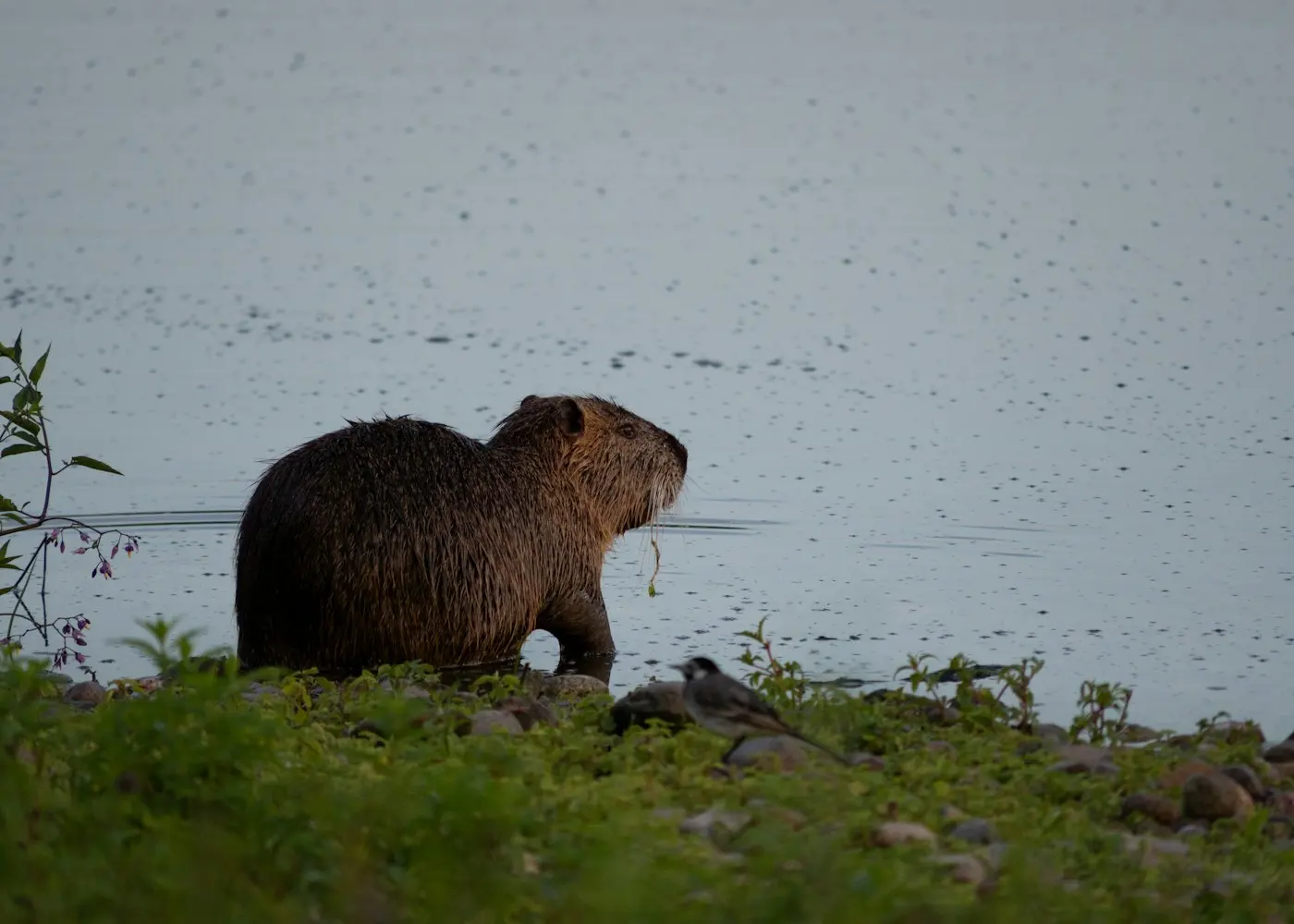
Beavers and nutrias also live around water, but they solve the problem differently. Beavers are engineering animals with paddle tails and powerful swimming bodies. Nutrias are smaller, with long round tails and very obvious whiskers. Capybaras are giant cavies with no visible tail, a blunt head, and a high face that makes them look permanently briefed.
The common thread is water shaping the body. The details are the field marks. If you can see the tail, body size, and head shape, you are halfway to not embarrassing yourself near a pond.
The Face Is Built For The Waterline
Capybara faces are high because capybara lives are wet. Eyes, ears, nostrils, feet, and group behavior all point in the same direction: stay near water, stay aware, stay ready.
The capybara is not built like a couch. It is built like a surveillance buoy with opinions.