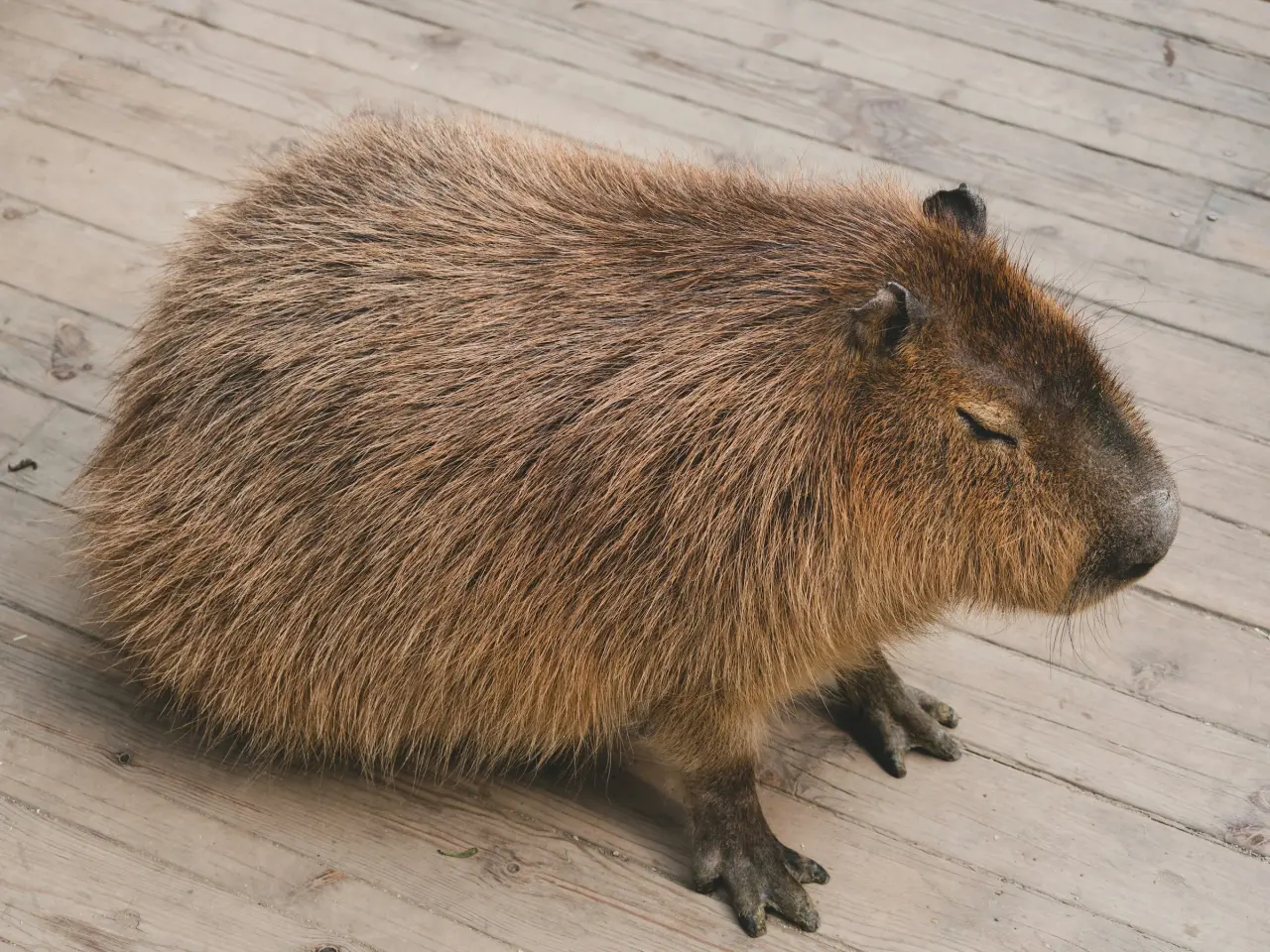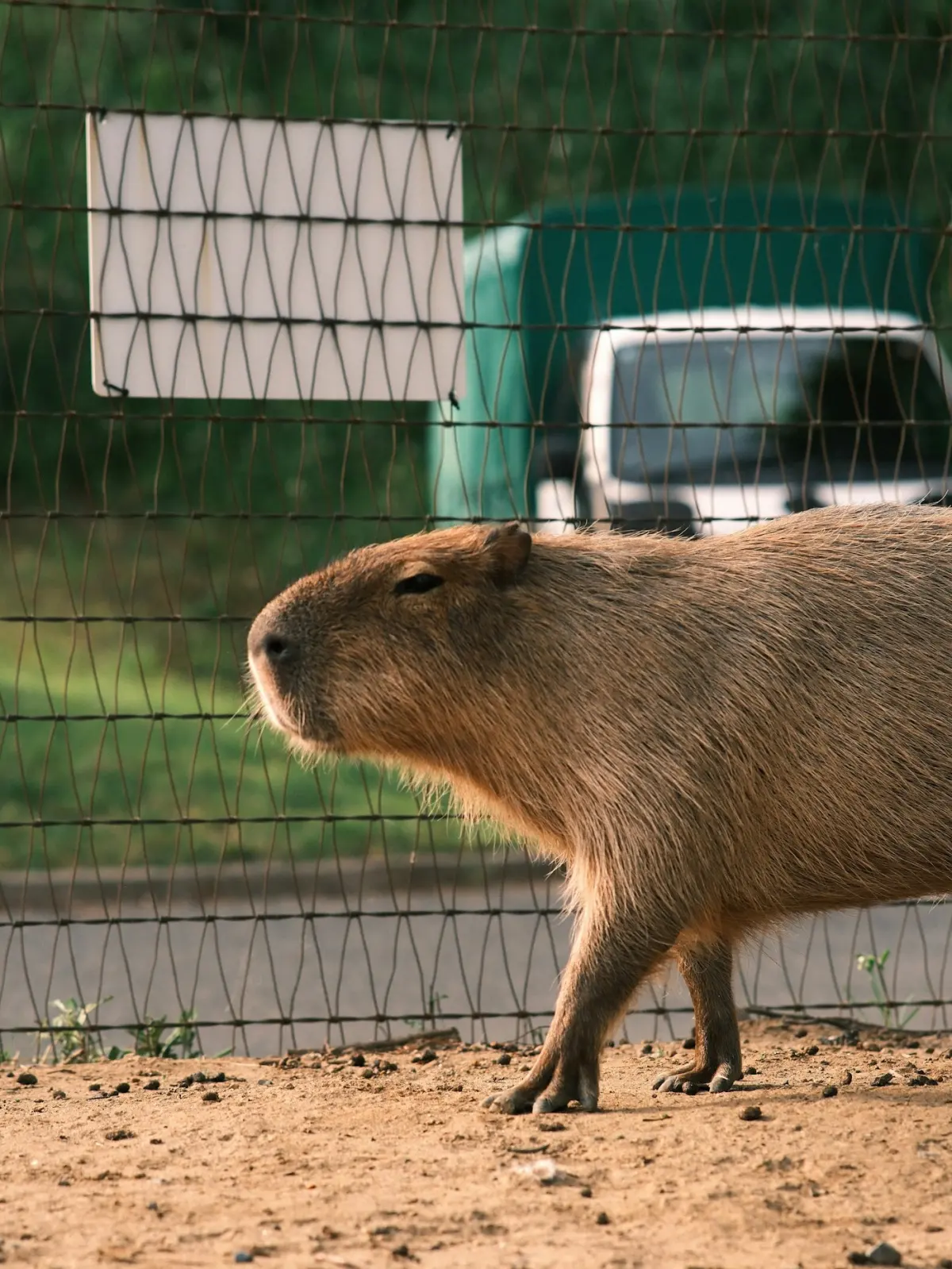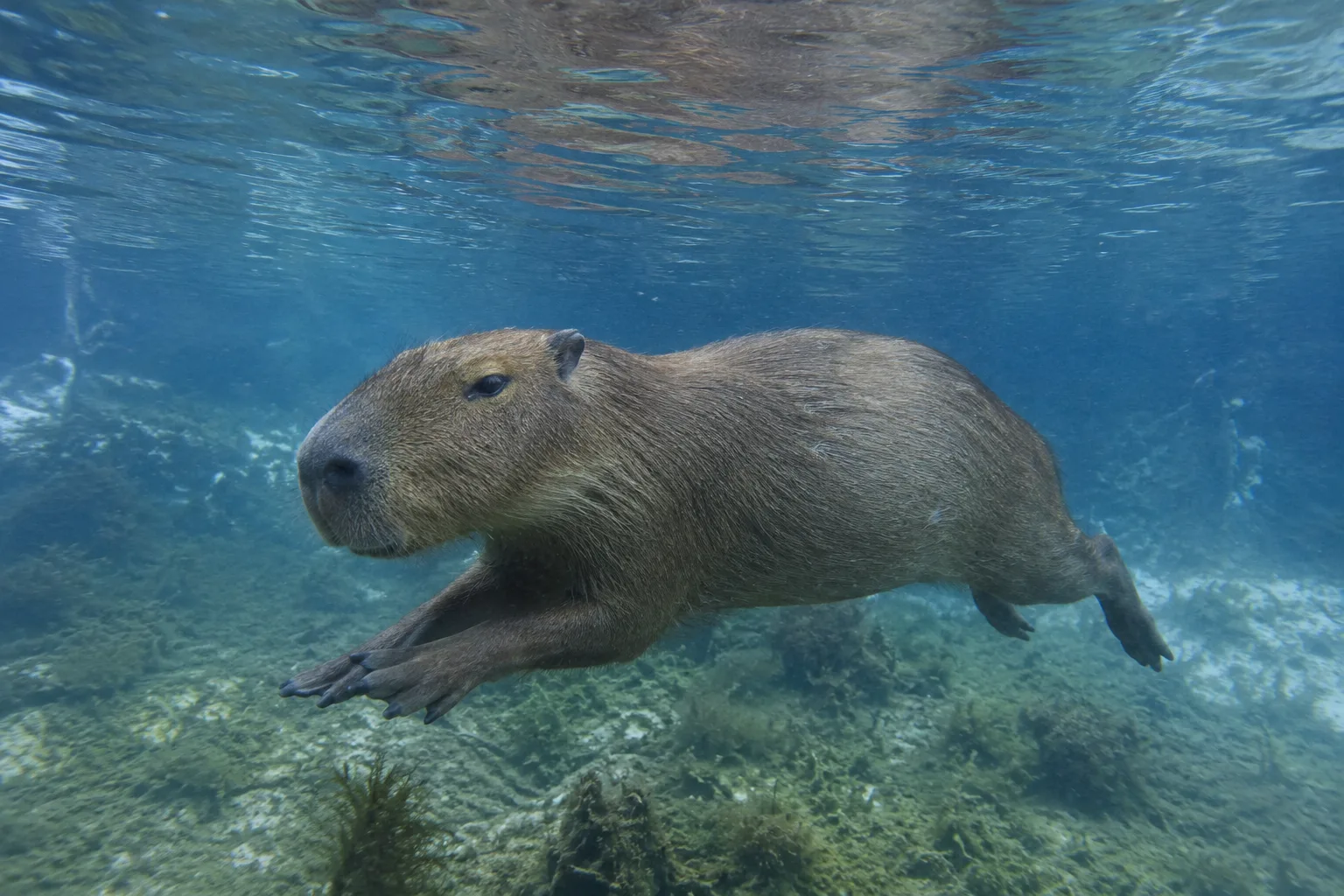
Yes, capybaras have webbed feet, but the word “webbed” needs a little restraint. They are not wearing duck flippers. Their feet are partially webbed, which is exactly what you want if your day includes grass, mud, banks, shallow water, and the occasional dignified swim.
The feet are a compromise: enough webbing for water, enough structure for land.
Yes, Capybaras Have Slightly Webbed Feet
San Diego Zoo Wildlife Alliance describes capybaras as having slightly webbed feet. That small detail fits their whole lifestyle. Capybaras are semi-aquatic mammals that spend much of their lives near water, not animals that merely enjoy a decorative pond.
Partial webbing helps them push water when swimming and gives extra support in soft mud. It also keeps the foot from becoming too specialized. A capybara still has to walk, graze, stand, turn, climb banks, and move with the group.

The Toe Count Is Part Of The Story
The toe arrangement is wonderfully uneven. San Diego Zoo Wildlife Alliance gives capybaras four toes on each front foot and three toes on each back foot.
| Foot detail | What it means |
|---|---|
| Front feet | Four toes each. |
| Back feet | Three toes each. |
| Webbing | Partial, useful in water and mud. |
| Claws | Help with traction and ground contact. |
| Overall job | Walk, swim, wade, graze, and climb muddy banks. |
That last row is the important one. Feet are not trivia. They are habitat equipment.
What “Partial Webbing” Actually Looks Like
People hear “webbed” and picture a duck or an otter, with skin stretched all the way to the toe tips. Capybara feet do not work like that. The webbing sits closer to the base of the toes, more like a connecting membrane than a paddle. The toes themselves stay separate enough to splay on soft ground and grip on firm ground.
That difference matters more than it sounds. A duck foot is built around one job: moving water. A capybara foot has to do several jobs that pull in different directions, so it lands somewhere in the middle and refuses to fully commit to any of them. Honestly, that is the most capybara thing about the whole design. The animal is famously unbothered, and its feet are a quiet version of the same attitude: good enough at everything, specialized in nothing.
A few common mix-ups are worth clearing up directly.
| Myth | Better answer |
|---|---|
| Capybaras have full duck-style flippers. | The webbing is partial and sits near the toe base, per San Diego Zoo Wildlife Alliance. |
| Webbed feet are what make them swim. | Webbing helps, but body shape, buoyancy, and strong legs do most of the work. |
| Front and back feet are the same. | Front feet have four toes, back feet have three. |
| Webbing means they are clumsy on land. | They are confident land walkers and grazers; the feet handle both surfaces. |
| Cute feet mean they make easy indoor pets. | The feet expect mud, banks, and water, not a tiled floor. |
How Capybara Feet Compare
It helps to set the capybara foot next to two animals people reach for as references. Capybaras belong to the family Caviidae, which makes guinea pigs and maras their relatives, but the foot tells a more specific story about where the animal lives.
| Animal | Foot style | Built mainly for |
|---|---|---|
| Capybara | Partly webbed, four front toes, three back toes | Mixed wetland edge: land and water |
| Duck | Fully webbed paddle | Swimming and steering in water |
| Guinea pig | No meaningful webbing | Dry-land movement and foraging |
The capybara sits in the middle on purpose. It is the world’s largest rodent, native to South America, and it spends its life along the boundary between water and land. A foot that worked only in water, or only on dry ground, would fight that lifestyle instead of supporting it.
Why Webbing Helps Without Turning Them Into Ducks
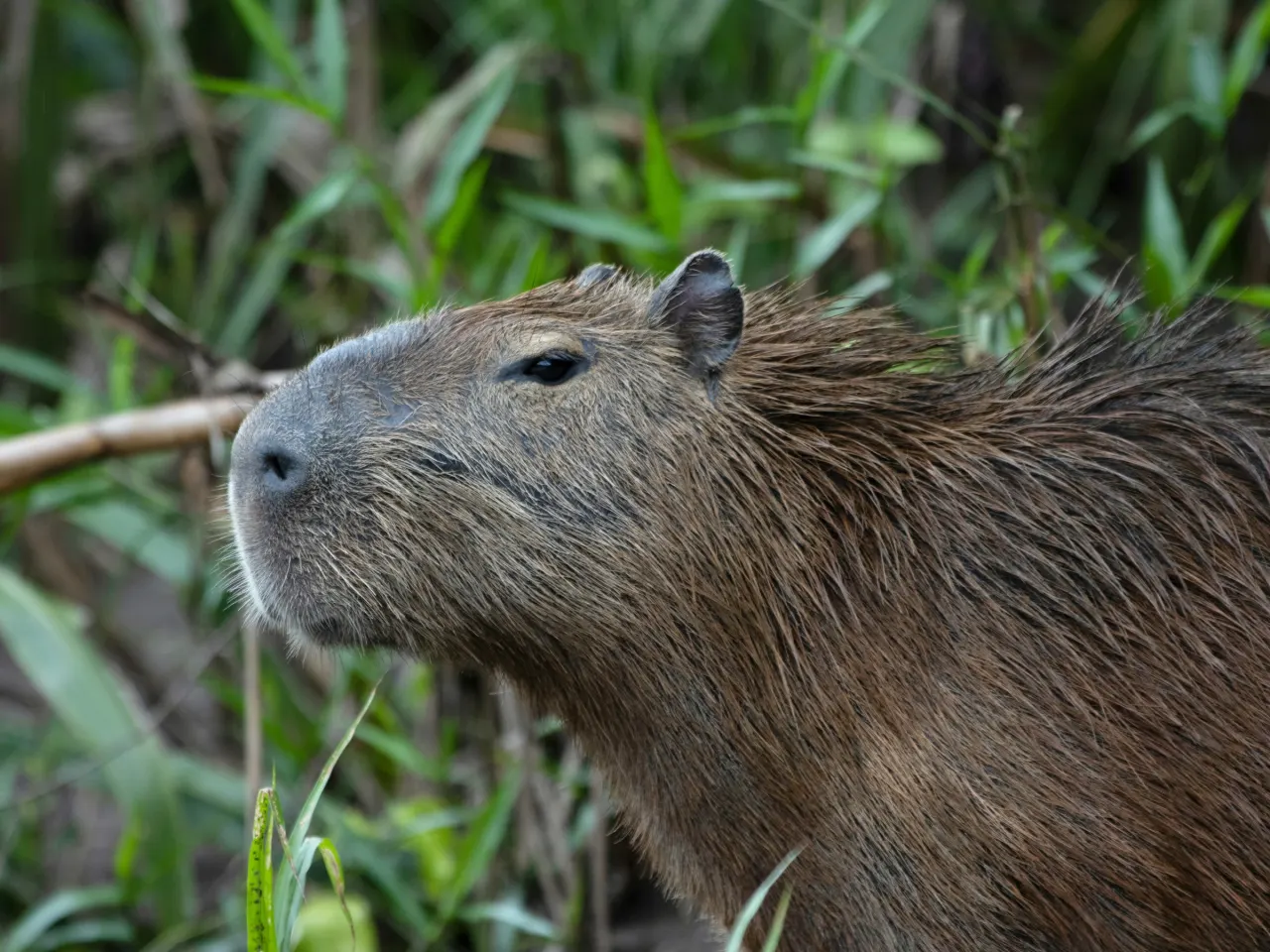
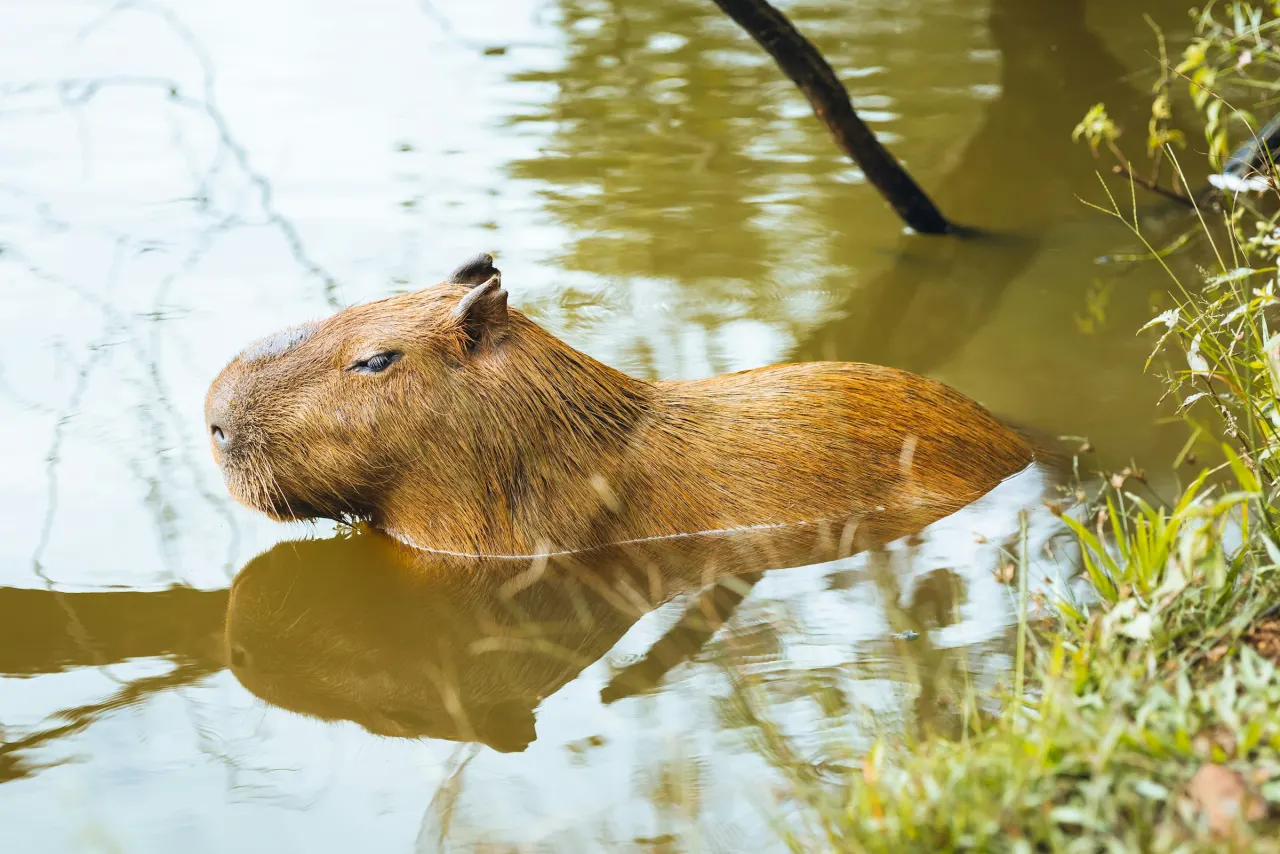
Capybaras need water for more than cute photos. Animal Diversity Web describes them as strong swimmers and water-linked grazers. They use water for escape, cooling, movement, and resting. Their eyes, ears, and nostrils sit high enough on the head to make waterline life easier.
Webbed feet are part of that package. They help the body move through water without making the animal useless on shore. A fully aquatic foot would be a problem for a grazer. A fully dry-land foot would be less useful in marsh and riverbank habitat.
The Feet Are One Piece Of A Bigger Body Plan
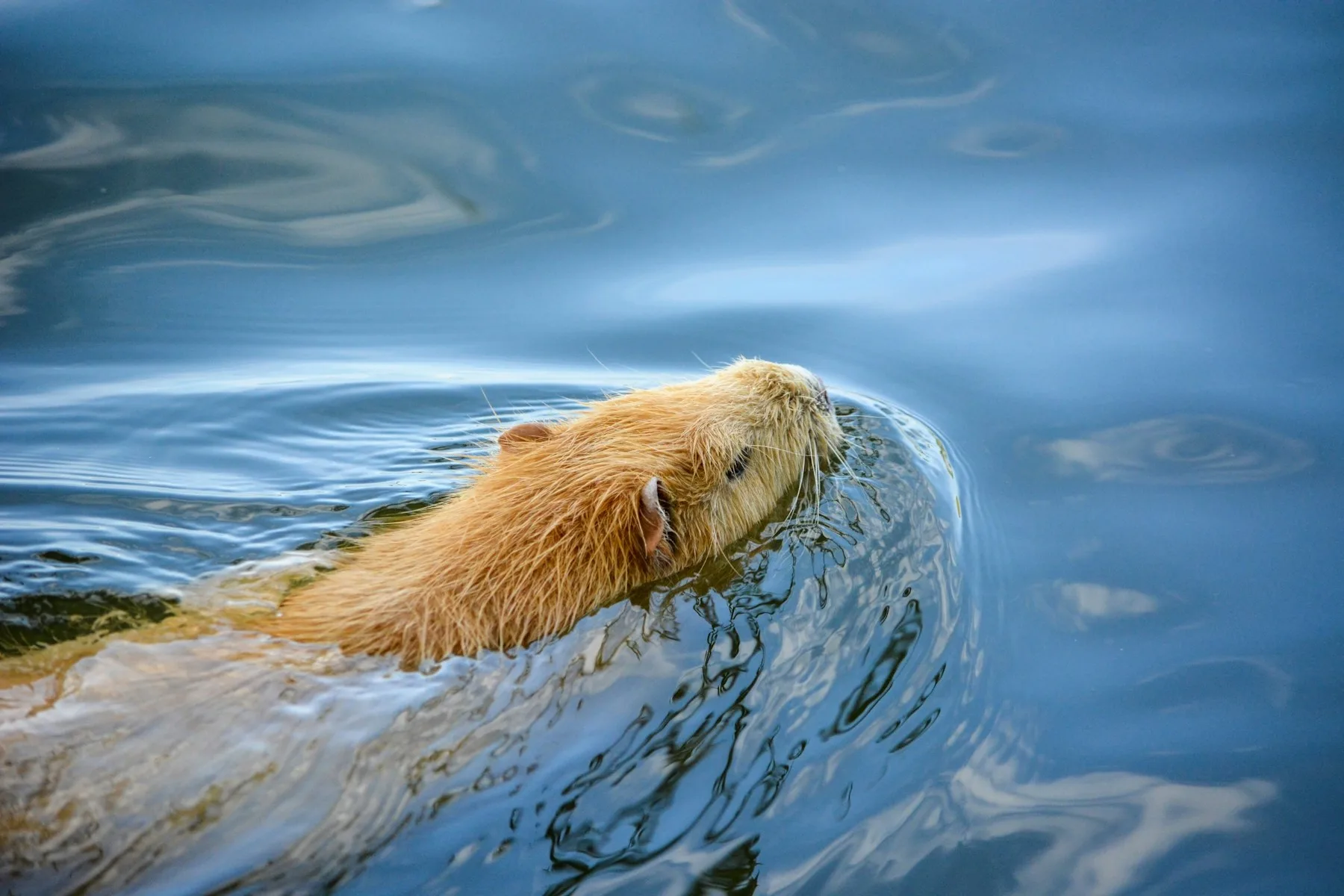
Webbed feet alone do not make a swimmer. They are one part of a body that has been arranged around water for a long time. Animal Diversity Web describes capybaras as strong swimmers, and the rest of the body backs that up. The eyes, ears, and nostrils sit high on the head, so a capybara can rest at the waterline with most of itself submerged and still see, hear, and breathe. The barrel-shaped torso carries enough buoyancy to float without effort.
Set the feet inside that whole picture and the partial webbing makes sense. It adds a little push in water and a little support in mud without taking anything away from walking. Capybaras are also herd animals that move together, graze together, and rest together, so a foot that worked in only one habitat would constantly hold the group back at the water’s edge. The design has to keep up on land and in water at once.
This is also where the indoor-pet fantasy quietly falls apart. A capybara is a hindgut fermenter that re-ingests soft morning feces to pull more nutrients from grass, and it cannot make its own vitamin C, so its diet and digestion are already demanding. Add a body built for mud, banks, shade, and open water, plus the social need to live in a group, and you are describing a wetland animal, not a houseguest. The feet are just the easiest part of that to see.
The Fan Takeaway
The clean answer is: capybaras have slightly webbed feet, with four toes on the front feet and three on the back. The webbing helps them swim and cross wet ground, but their feet are still built for a mixed land-and-water life.
That is why indoor pet fantasies miss the point. A capybara body expects surfaces: mud, grass, water, bank, shade, and solid ground. A tiny tub and a slippery floor do not make a habitat because the feet look cute.
For more anatomy, read capybara feet. For the whole water story, do capybaras swim explains why the animal seems so relaxed while the rest of us are doing pool math.