The cattle tyrant flycatcher is not sitting on the capybara because it wants to be friends. It is sitting on the capybara because the capybara is warm, elevated, moving through tall grass, and covered in ticks. The bird’s perspective is entirely practical. The capybara’s perspective is that the bird is not worth the energy of removing.
This is the ecological reality behind one of the internet’s most beloved capybara images. It is still a good image. It is just a different story than the “universal friend” framing suggests.
The Cattle Tyrant: The Main Bird In The Story
Machetornis rixosa — the cattle tyrant flycatcher — is a small, yellow-bellied bird from South America that specializes in following large mammals and foraging for parasites. Animal Diversity Web’s account of the species notes its common association with cattle, horses, capybaras, and other large grazers in open wetland and grassland habitats.
The cattle tyrant’s strategy is opportunistic mobility: follow a large mammal that is walking through grass, perch on or near it, and catch the ticks, flies, and other insects that are disturbed by the mammal’s movement or living on its skin. The mammal functions as both a moving beater (flushing insects from grass) and a food source (ticks and skin parasites).
Capybaras are ideal cattle tyrant hosts because they:
- Move through tick-rich wetland and grassland habitat
- Are large enough to carry a meaningful parasite load
- Do not displace the birds
- Move slowly enough for the birds to stay aboard
- Have a coat dense enough to harbor ticks but not so thick the birds cannot access them
The relationship has been observed in wild capybara populations across South America, and field documentation including photographs and behavioral observation supports the cattle tyrant as the primary capybara-bird participant.
What The Birds Are Actually Eating
The primary food source is ticks — specifically the various Amblyomma and Rhipicephalus tick species that parasitize large mammals in South American wetlands. Capybaras carry tick loads as part of their normal biology; the ticks are real, and in large numbers they affect skin health and can transmit pathogens.
The birds also catch flies, gnats, and other insects that are attracted to the capybara’s body or disturbed by its movement. The movement flushing is actually the more significant foraging strategy for the cattle tyrant — walking behind and beside a large moving mammal in tall grass creates a reliable stream of disturbed insects regardless of the mammal’s parasite load.
The diet of the bird in this context:
- Ticks and skin parasites directly from the capybara
- Insects flushed from vegetation by the capybara’s movement
- Opportunistic captures of anything flying or crawling near the capybara’s wake
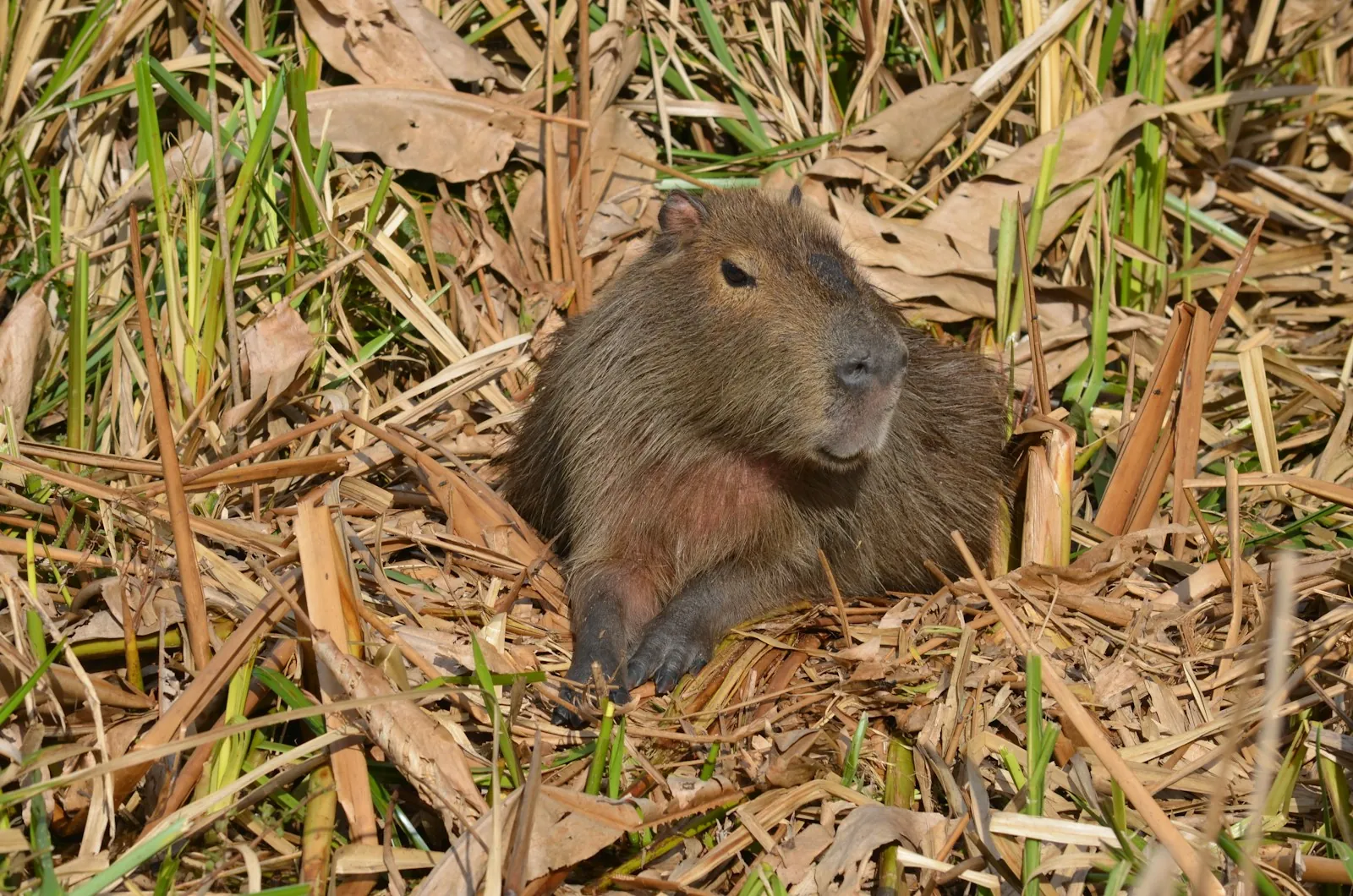
What Capybaras Actually Get From The Relationship
This is the ecologically debated part. The cattle tyrant benefits clearly — reliable food source. What the capybara gets is less definitively established.
The most plausible benefit: some reduction in tick load, which could reduce the transmission of tick-borne diseases and reduce skin irritation. This is the argument for calling the relationship mutualism (both parties benefit).
The counter-argument: capybaras do not appear to seek out the birds, do not display behaviors that would attract them, and are not meaningfully disturbed by their absence. If the benefit were significant, you would expect more active facilitation behavior from capybaras. The capybara’s indifference suggests the benefit is real but not major — which is the definition of commensalism (one party benefits, the other is unaffected).
The practical ecological position: the relationship is best described as commensalism with possible mutualistic components — the bird benefits clearly, the capybara benefits somewhat (parasite reduction), and neither depends on the other for survival.
Other Birds That Use Capybaras
The cattle tyrant is the most documented and photographed species, but it is not alone:
Yellow-headed caracara (Milvago chimachima): a small falcon-relative that engages in tick-picking on cattle and capybaras across South America. Less commonly photographed on capybaras than the cattle tyrant but documented in the behavioral literature.
Common gallinule (Gallinula galeata): documented perching on capybaras in wetland settings, though the interaction is less systematically studied than the cattle tyrant relationship.
Various flycatchers and passerines: in specific habitats and conditions, multiple species of small insectivorous birds will use capybaras opportunistically as perches and insect sources.
The pattern across all these species: birds that forage for insects on or near large mammals, capybaras that tolerate rather than facilitate, and relationships driven by food access rather than inter-species social bonding.
Misconceptions About Capybara-Bird Relationships
“Birds love capybaras because capybaras are friendly.” Birds interact with capybaras because capybaras are full of ticks and surrounded by insects. The capybara’s low-aggression temperament is relevant — aggressive animals drive birds off — but the motivation is nutritional, not relational.
“Capybaras invite birds to sit on them.” No behavioral evidence supports this. Capybaras do not change their behavior to attract birds. They simply do not waste energy chasing them away.
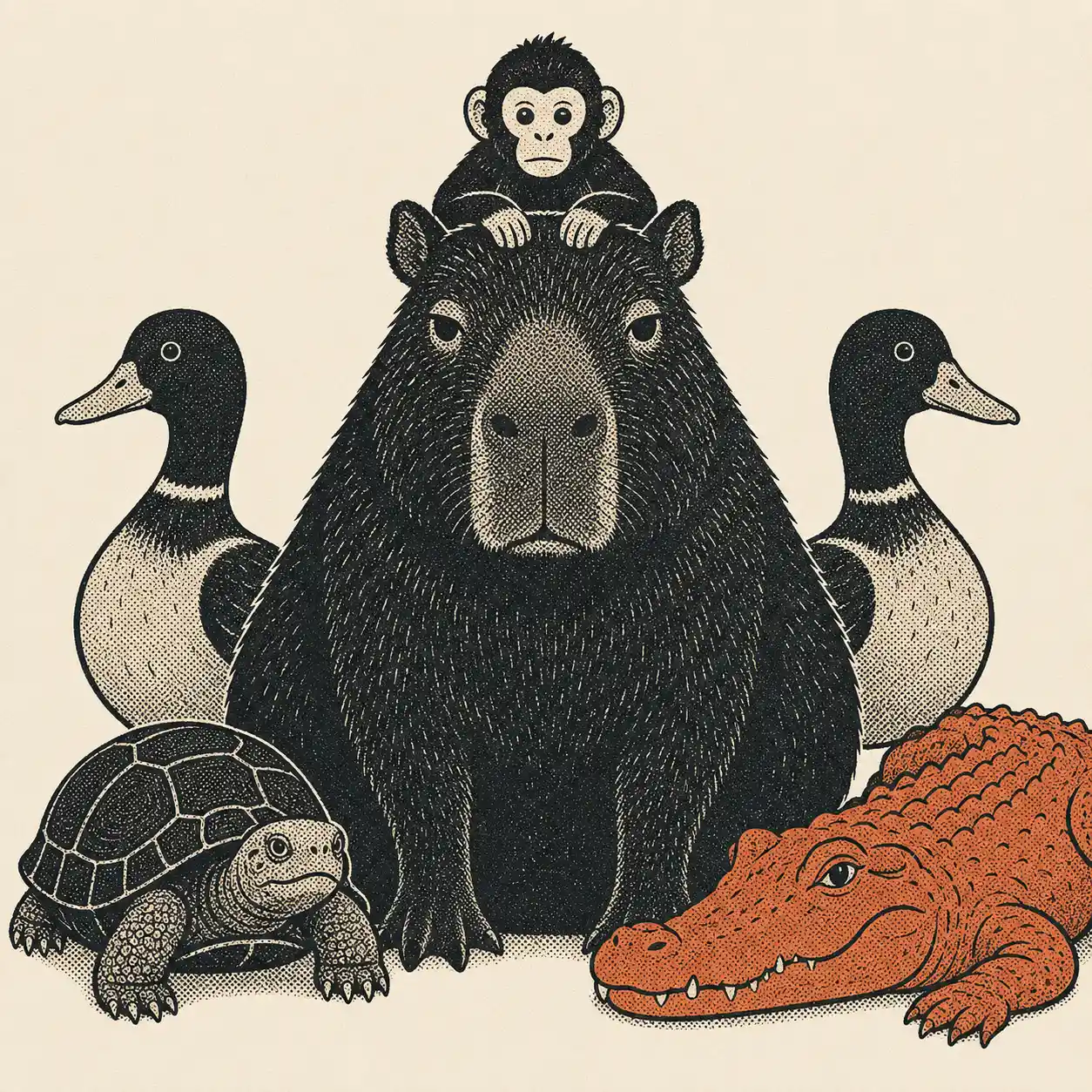
“This is why capybaras are the universal friend.” The “universal friend” narrative includes everything from monkeys grooming capybaras to birds, dogs, rabbits, and ducks coexisting peacefully with them. The bird relationship is the most functionally clear of these — it is commensalism with a documented mechanism. The broader “universal friend” phenomenon is about the capybara’s low aggression threshold across contexts, covered in why animals sit on capybaras.
“The birds protect capybaras from predators.” Birds sometimes alarm-call at threats — this could provide some early warning benefit. But no evidence suggests the birds are functioning as a deliberate capybara warning system. Any alarm benefit is incidental to their foraging behavior.
The birds sit on capybaras because capybaras are a good restaurant. The capybaras tolerate the birds because they are not a threat and removal is energy not worth spending. What the internet reads as friendship is evolutionary pragmatism wearing a photogenic face. Which, is more interesting than friendship.