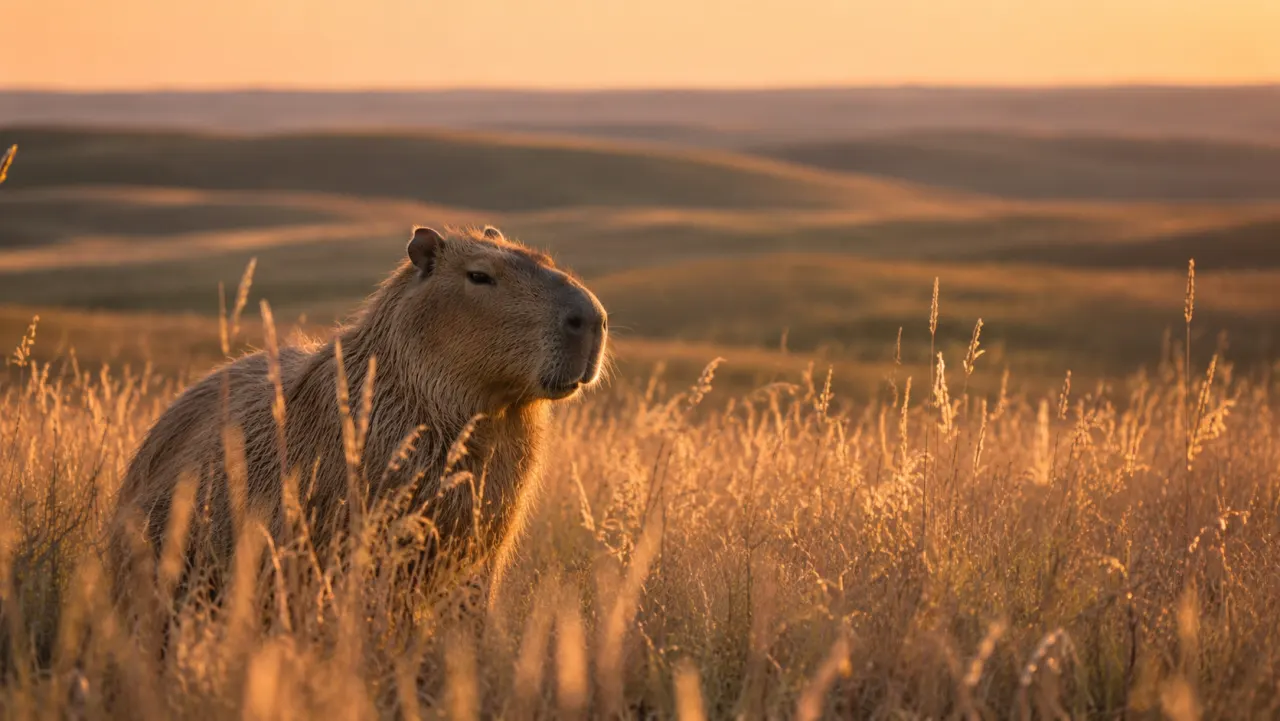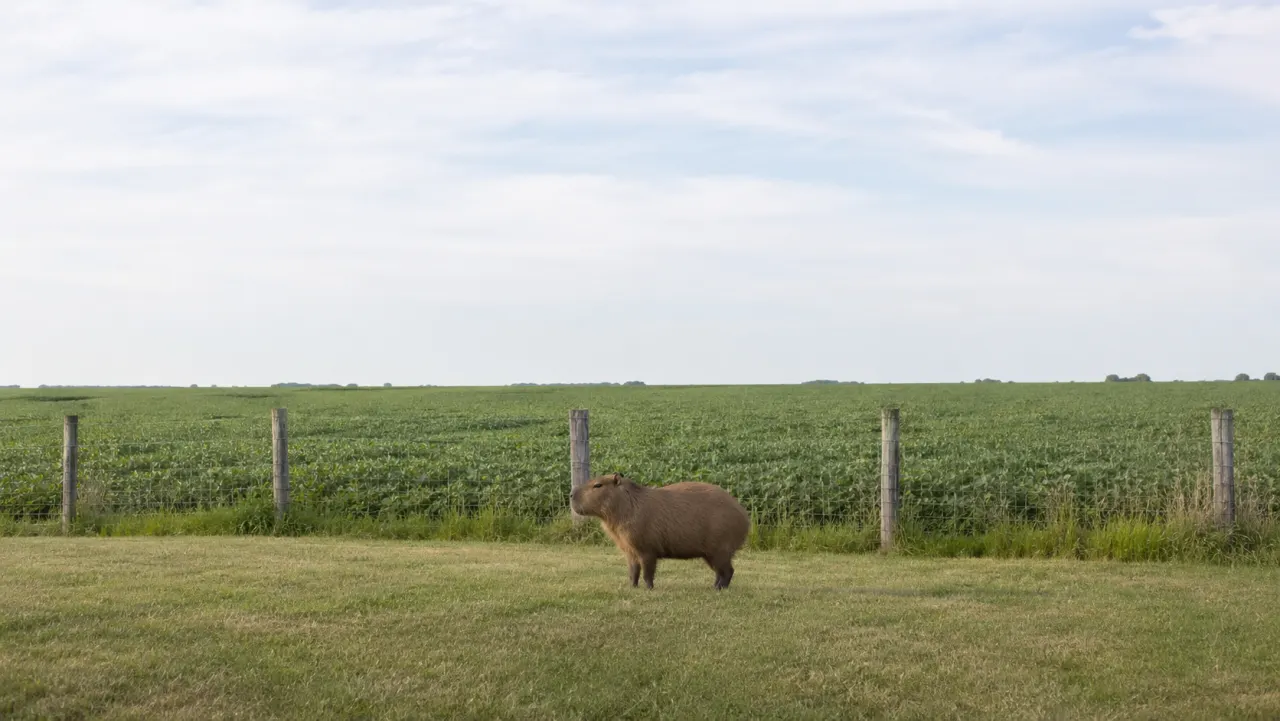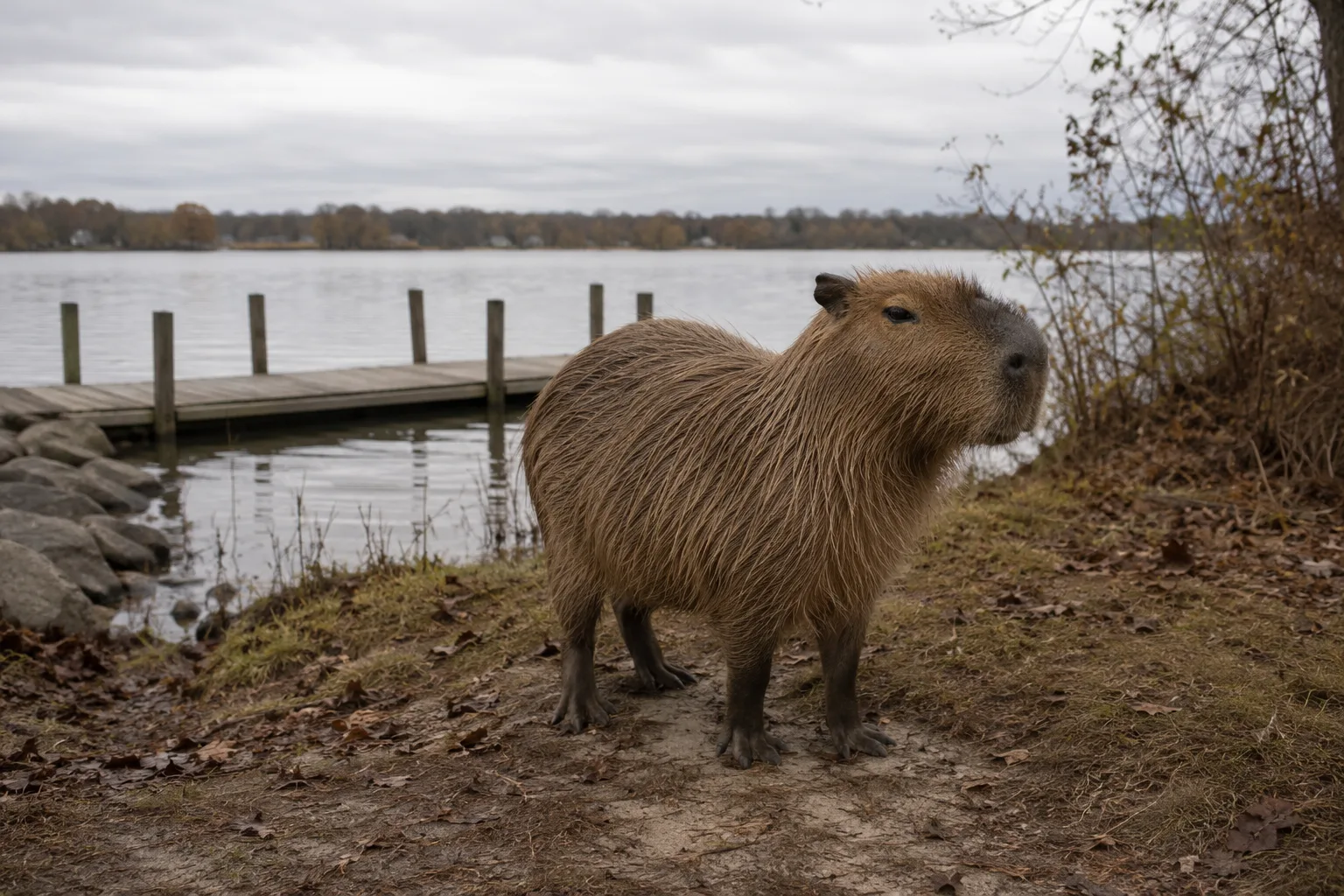
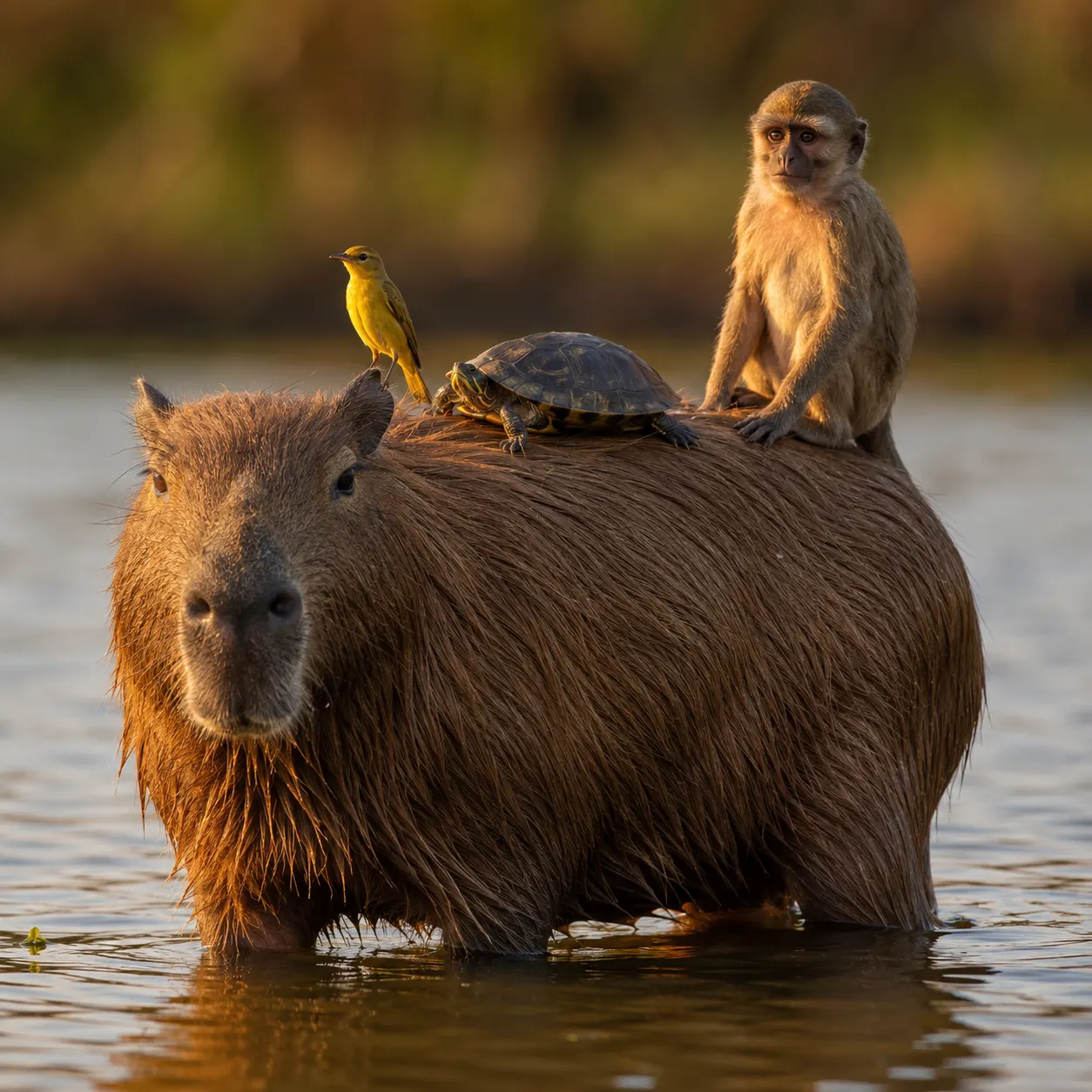
Animals sit on or near capybaras because capybaras are large, calm, social herbivores who often tolerate company. That is the real biology. The “friends with everyone” version is an internet edit that flatters everyone, including the bird, the turtle, the monkey, and the people watching the video.
Capybaras occupy a low-drama space in many scenes. They graze. They rest. They do not hunt anything that fits on their back. Other animals notice. Sometimes one of them sees a warm, stable platform and says, tragically, “chair.” None of this is universal friendship — it is biology that happens to look adorable from any reasonable camera angle.
The tabloid headline is “bird befriends giant rodent.” The actual field note is less sparkly and better: a calm herbivore with water nearby decides the cost of moving is higher than the cost of being mildly used as infrastructure. Relatable, frankly.
Why The Meme Actually Works
The “capybara is friends with everyone” content works because it stacks two real things on top of each other and adds an unfair filter. The two real things: capybaras tolerate other species more than most large mammals, and they live in mixed wetland habitats that bring lots of species into the same frame. The filter: human storytelling, which prefers “friendship” to “low-key shared real estate.”
Animal Diversity Web describes capybaras as gregarious, group-living mammals. San Diego Zoo Wildlife Alliance notes the same. The Herrera and Macdonald work on capybara group stability puts numbers on it — capybara groups are sociable, with high tolerance internally, and capybaras tend not to escalate aggressively over small intrusions. That tolerance does not stop at species boundaries. It extends, partially and conditionally, outward.
The honest read: the meme is real biology with a marketing layer. The animal is doing something noteworthy. The internet is just dressing it up.
Watch the best clips again and you will notice how much depends on the capybara doing almost nothing. The bird performs the visible action. The monkey climbs. The turtle parks itself like a poorly managed backpack. The capybara contributes stillness, size, and a refusal to make this everyone’s problem. That is why humans keep turning the scene into a personality trait.
Tolerance Is Not The Same As Friendship
Tolerance is a specific behavior. It means the animal calculates the cost of moving against the cost of being mildly bothered, and chooses to stay. Friendship implies preference, recognition, and active maintenance over time. Most cross-species capybara content is the first thing, not the second.
| Internet version | More careful explanation |
|---|---|
| Capybaras love every animal | Tolerant of many in low-stakes settings; not affectionate in a directed sense |
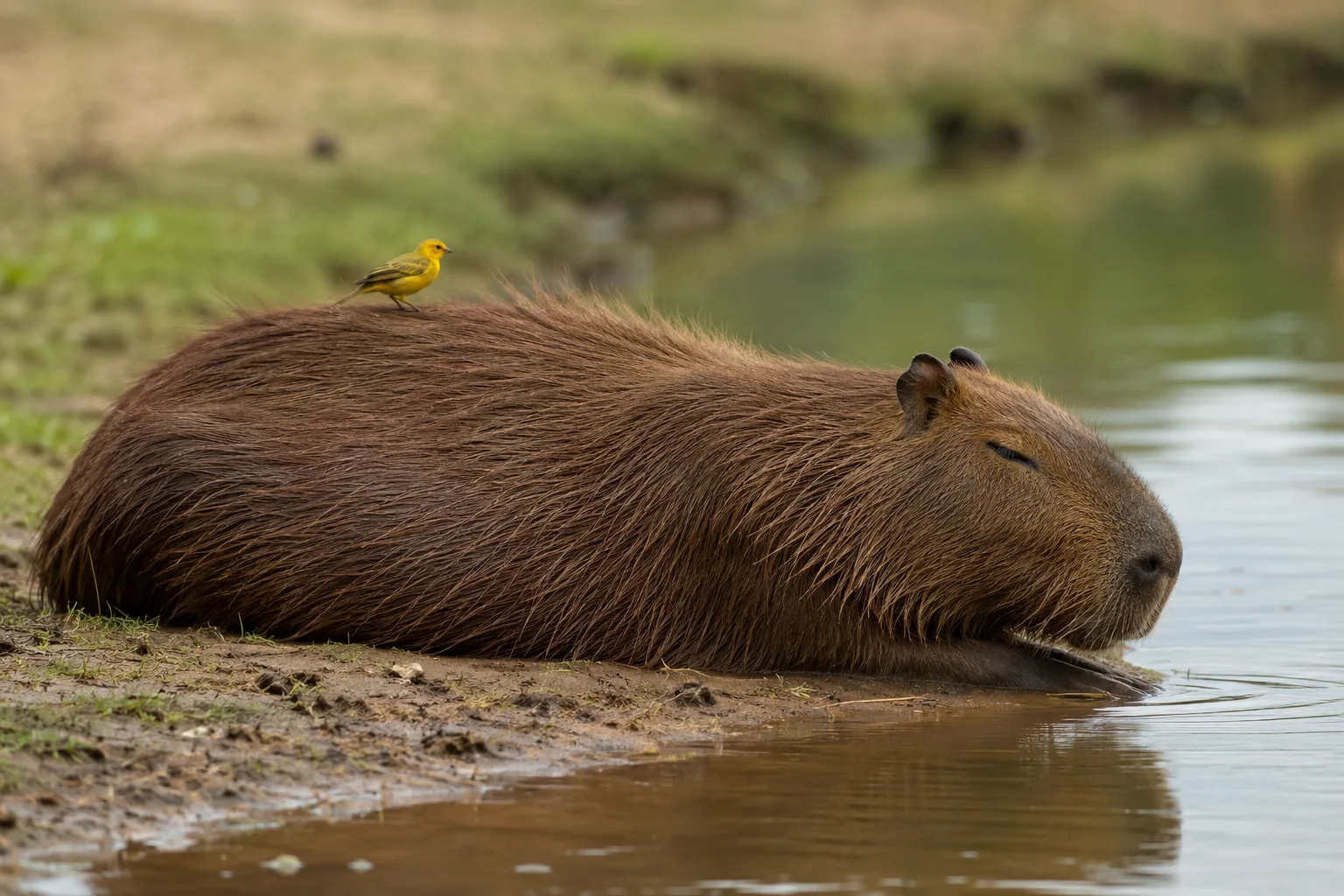
| Birds are cuddling them | Birds perch, forage for insects on or near them, or use them as height |
| They are never aggressive | They are non-predatory but can defend themselves with size, teeth, and water exit |
| They have a special bond with turtles | They share basking spots and water access; the turtle is also doing its own thing |
| They are basically domesticated | Captive comfort is habituation, not domestication |
You see this most clearly when something actually stresses them. A capybara who tolerates a bird on its back for an hour will leave that bird in the dust if a real threat shows up at the bank. The friendship was conditional. The exit plan was the constant.
Who Sits On Them And Why
Different species have different reasons. The friendship narrative collapses them all into the same story. The biology is more interesting when you keep them separate.
| Animal | What they get | What the capybara gets |
|---|---|---|
| Small birds | Perch, view, sometimes insect foraging | Possible parasite reduction, mostly nothing |
| Larger waterbirds (jacanas etc.) | Floating platform on a swimming animal | Nothing measurable; mild inconvenience |
| Turtles | Warm basking spot nearby or on the body | Nothing; might shift position eventually |
| Monkeys | Height, curiosity, occasional climbing target | Nothing; sometimes mild irritation |
| Other capybaras | Group warmth, social comfort | Group warmth, social comfort, watchfulness |
| Domestic dogs (captive settings) | Companionship in mixed-species enclosures | Companionship if introduced carefully; risk if not |
The Barros vocal-repertoire work helps here. Capybaras have a real range of contact, alarm, and tension calls. When other species push the limit, the capybara has audible options before it has physical ones. A growl-like vocalization, a sharp purr-like sound, a clear movement away — those are all “I am done with this.”
How Capybaras Say Enough Without Making A Scene
A capybara boundary is often quiet before it is obvious. The animal lifts its head. The ears change angle. The body shifts under the passenger. It stands, steps away, vocalizes, or moves toward water. By the time a human says “oh, it left,” the capybara has usually been sending tiny resignation letters for a while.
That matters because viral clips reward the wrong moment. They reward the pile-on, the perch, the little animal treating the capybara like a hotel lobby chair. The respectful viewer watches for the exit. Does the capybara have space? Does the other animal keep re-approaching after the capybara moves? Are humans blocking the route to water? Those details tell you whether you are seeing tolerance or pressure.
| Boundary signal | What it can mean | Viewer response |
|---|---|---|
| Head lift and stillness | Monitoring the intruder or a new sound | Stop escalating, watch quietly. |
| Ears orienting sharply | Attention has shifted to possible stress | Give space, lower noise. |
| Walking away | Tolerance is over for now | Let the animal leave. That was the sentence. |
| Entering water | Exit route activated | Do not follow, call, crowd, or narrate louder. |
| Bark, squeal, or growl-like sound | Alarm, stress, or social tension | Back off and let staff handle the scene. |
Once you know the boundary language, the clips change. The capybara stops being furniture and becomes the main character again, which is inconvenient for the meme but excellent for the animal.
For fans in the U.S. seeing this at a zoo, the right response is boring and correct: do not encourage pile-ons, do not throw food to create a moment, and do not narrate a stressed animal as “so chill.” If the capybara walks away, the story is over. The respectful viewer lets the credits roll.
Misconceptions The Internet Keeps Repeating
“Capybaras are friends with predators too.” No. Jaguars, caimans, and green anacondas hunt capybaras in their native range. The friendship narrative does not survive a real apex predator. A capybara with a caiman nearby is a capybara that is leaving.
“They are emotionally supporting other animals.” There is no good evidence for directed emotional support across species. There is evidence for tolerance, habitat sharing, and opportunistic mutualism. Those are not the same thing.
“They get along with my dog because they get along with everything.” Capybaras can be tolerant of dogs in carefully managed settings, but every dog and every capybara is different, and the risk of injury (to either side) is real. Habituation is not a free pass.
“This means they would be easy pets.” It does not. Tolerance in a stable wetland environment with companions and water is not the same as tolerance in a suburban backyard with strangers, noise, and no exit to water. Read the full pet ownership picture first.
How To Read The Scene Without Getting It Wrong
When you watch capybara content, the better question is not “are they friends?” It is “what is each animal getting from this moment, and what is the capybara’s exit?” That reframing usually makes the clip more interesting, not less. The bird is gambling on a calm host. The turtle is using shared warmth. The monkey is doing monkey things. The capybara is choosing economy of motion.
| What you see | Better interpretation |
|---|---|
| Bird standing on a capybara | Perching, scanning, or foraging near a tolerant large mammal |
| Other animals resting nearby | Shared safe space, warmth, or habitat overlap |
| Capybara staying still | Comfort, tolerance, or “moving is not worth it right now” |
| Capybara walking away | The boundary has been clearly stated in capybara |
| Capybara entering water | Tolerance has ended; exit plan has activated |
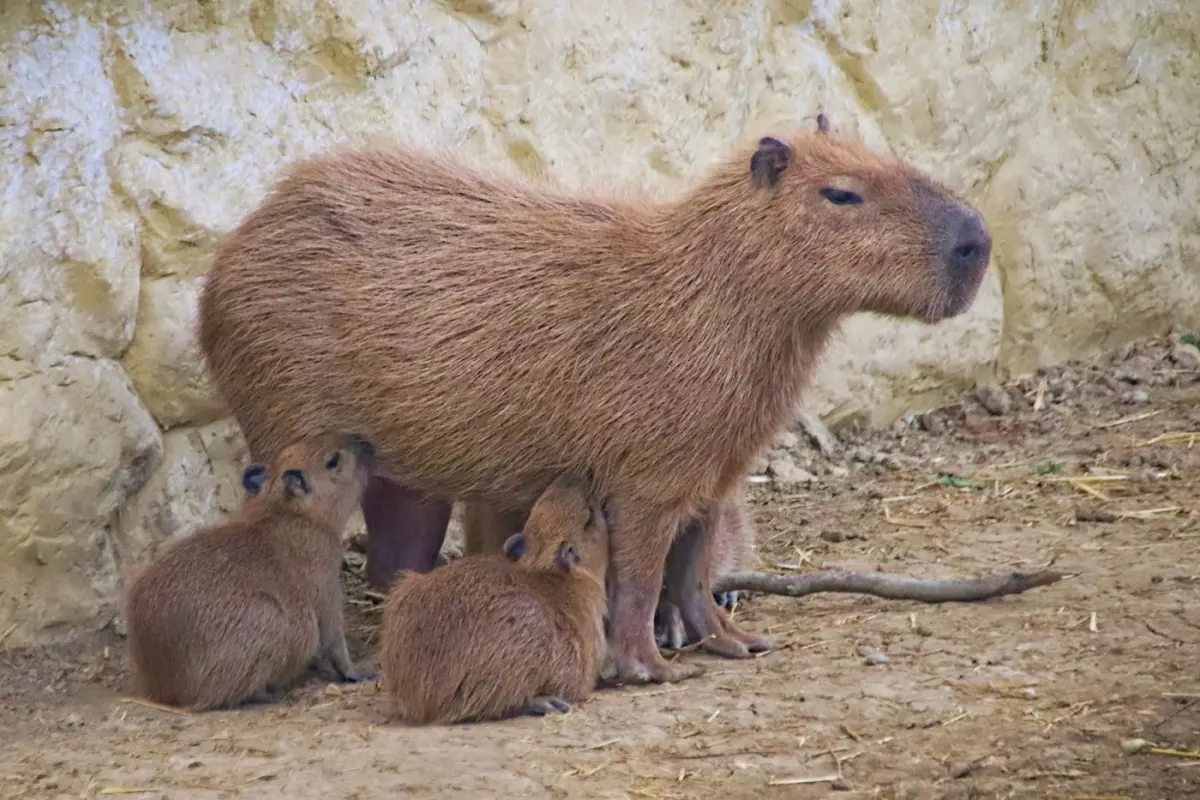
The capybara friendship meme works because there is real tolerance underneath it. The respectful version is to admire that tolerance without asking the animal to perform it forever. That tolerance is also why other animals so often pile around them in the first place, and why the vocal toolkit matters — the capybara has ways to say no long before it has to use teeth.
The meme lasts because it tells a story we want to be true. The biology is narrower and, more interesting: a calm animal so unbothered that the world briefly becomes less annoying around it. Nature gave us that. The internet just gave it a job it never applied for.