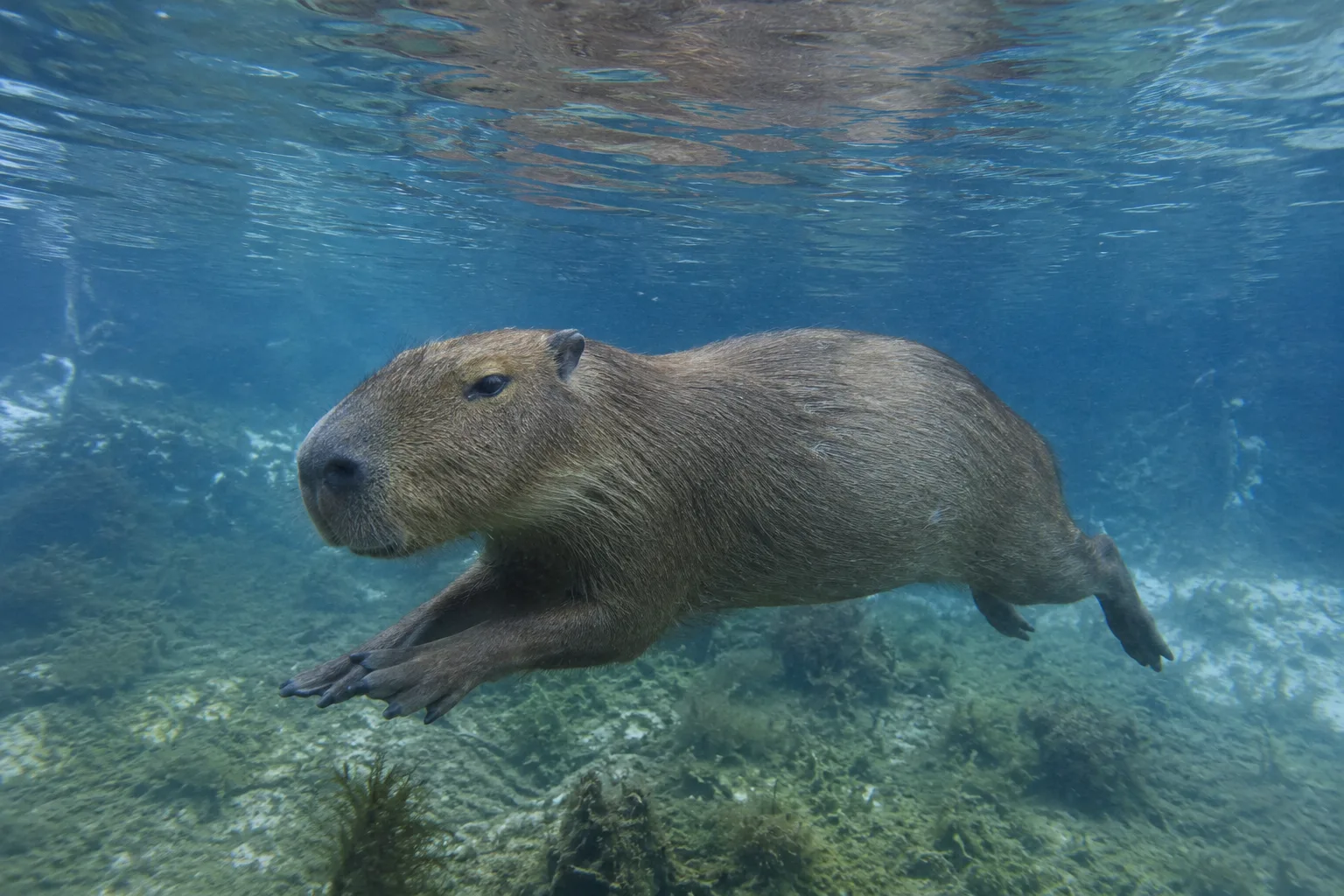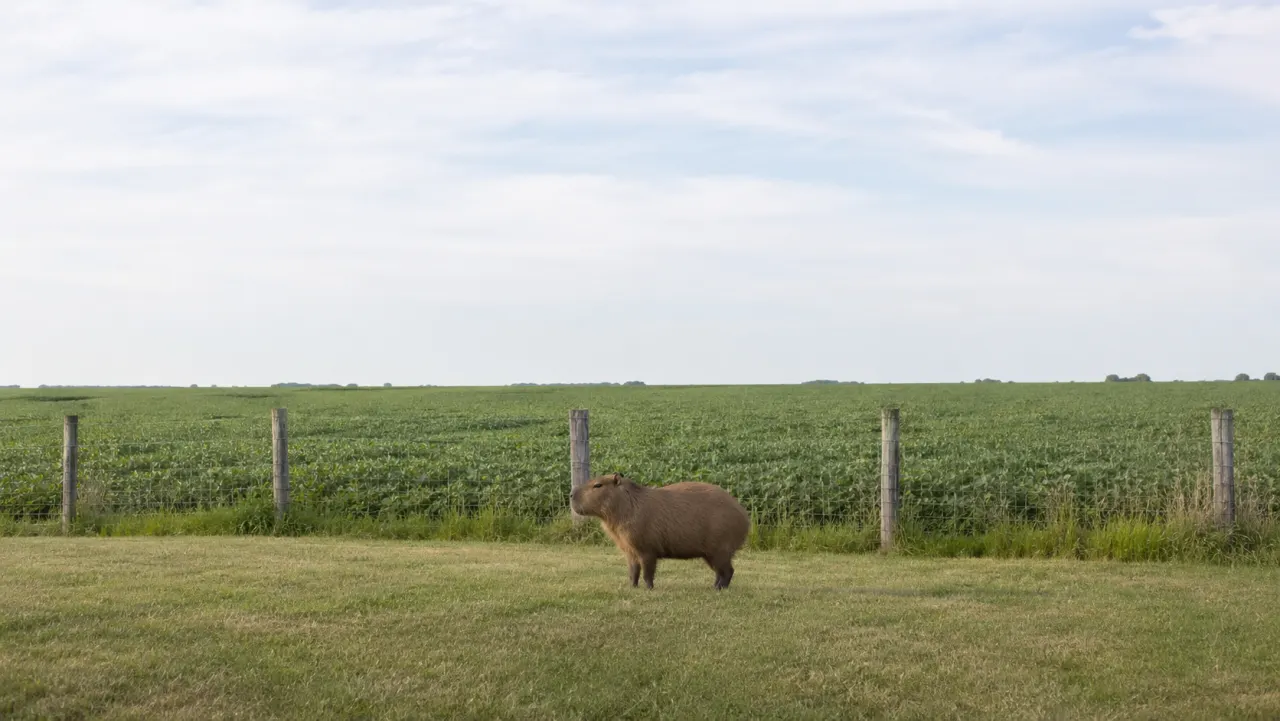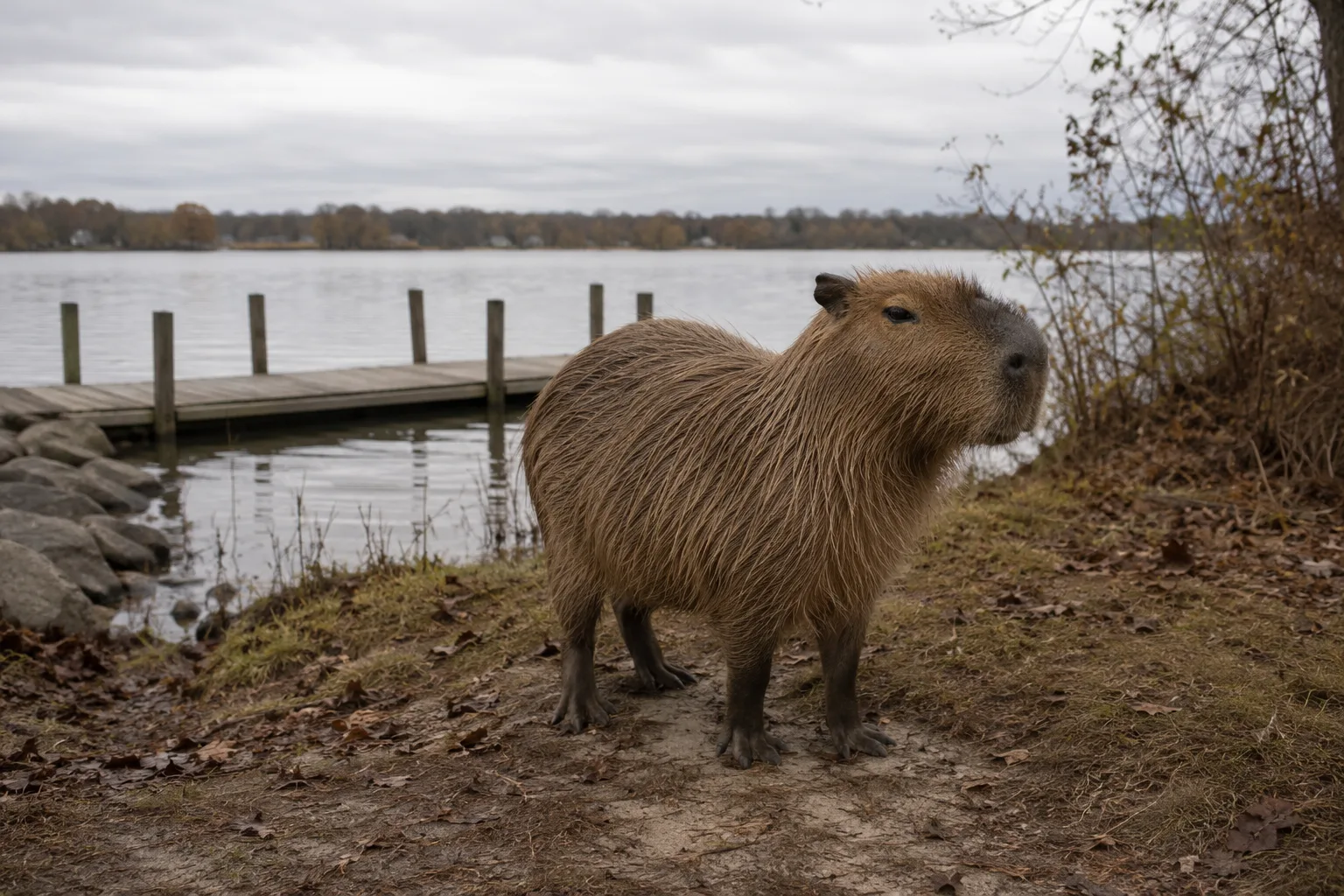
Argentina has wild carpinchos in places that are accessible. Not “accessible if you hire a specialist guide and charter a boat” accessible — train-from-Buenos-Aires accessible. The northeast of the country holds some of the most reliable wild capybara populations on the continent. The IUCN Red List classifies Hydrochoerus hydrochaeris as widespread and locally abundant across South America. In Argentina, that plays out across three very different kinds of trips. The question is which one you’re actually going on.
Esteros del Iberá: The Place You Actually Rearrange Your Trip For
Iberá is the answer most wildlife guides give, and they’re right. The Esteros del Iberá covers 1.3 million hectares of freshwater wetlands in northeastern Corrientes province — one of South America’s largest wetland systems, now protected as Parque Nacional Iberá. Rewilding Argentina (formerly Tompkins Conservation) has been expanding the park’s rewilding program for years, reintroducing jaguars, giant anteaters, pampas deer, and tapirs to a system that was already rich in resident wildlife.
The carpinchos were never missing from Iberá. They were always there in numbers.
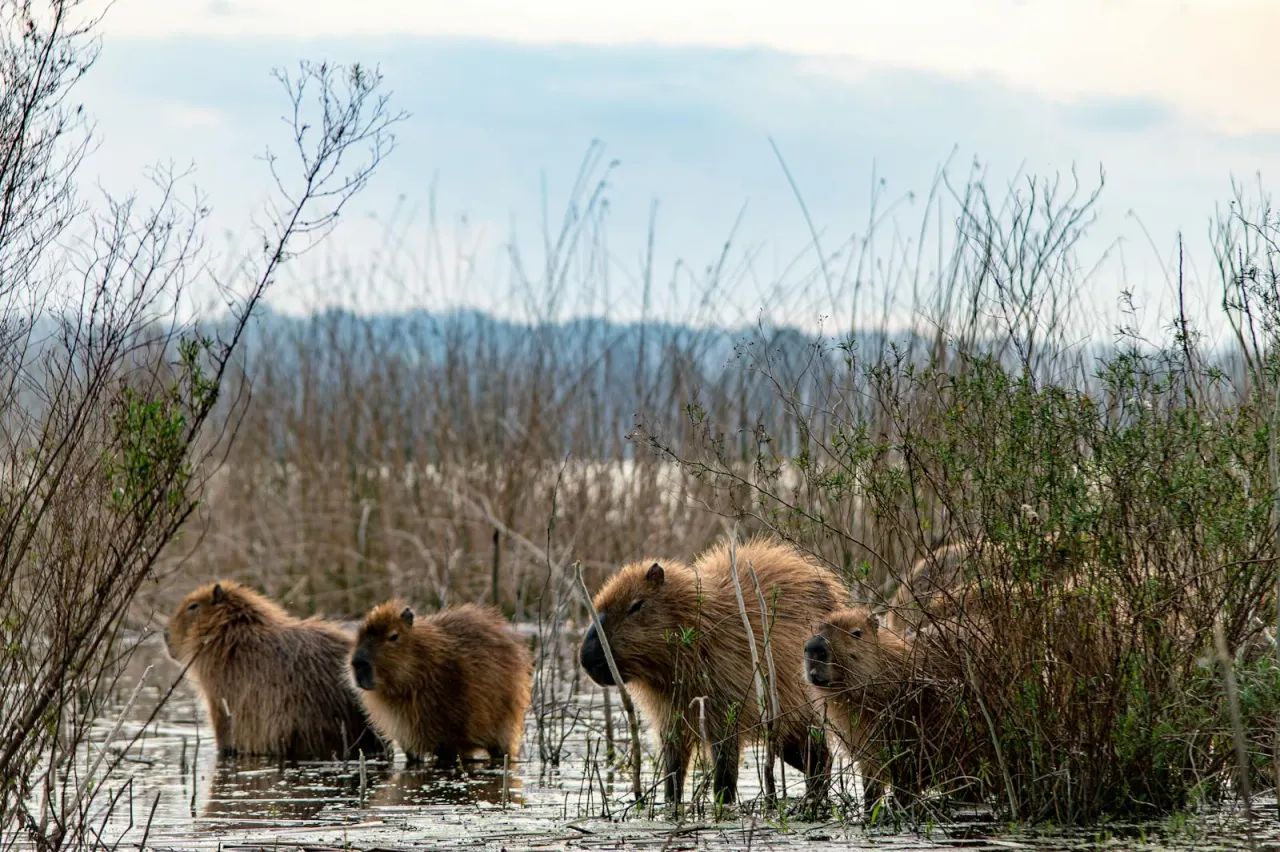
On a standard dawn boat tour out of Colonia Carlos Pellegrini — the small village that sits on the edge of Laguna Iberá and serves as the main base — seeing 30 to 50 capybaras before breakfast is not unusual. They move through the reed beds in groups, drink from the channel margins, and are generally unbothered by a quiet boat at close range. The Animal Diversity Web notes that capybaras are highly social animals that live in groups, typically ranging from 10 to 20 individuals, though larger aggregations around water are common. In Iberá, those aggregations are what you come for.
Getting there: Fly from Buenos Aires Aeroparque (AEP) to Corrientes city — roughly one hour on Aerolíneas Argentinas or LADE, typically $80—150 USD round-trip on domestic pricing. From Corrientes, a three-hour drive or pre-arranged shuttle takes you to Colonia Carlos Pellegrini. There’s also a 12+ hour overland option from Buenos Aires, but most visitors sensibly fly.
Where to stay: Lodge options in Pellegrini range from basic guesthouses around $60 USD/night to Estancia Rincón del Socorro, the flagship Rewilding Argentina property, which operates at the upscale end of the spectrum ($150—200+ USD/night). Tours run from the wharves in the village — dawn and dusk boat tours average $20—50 USD per person. Kayak tours are available for the ones who want a lower, quieter platform.
Beyond capybaras: Iberá now has reintroduced jaguars (a conservation first for Argentina), giant anteaters, maned wolves, marsh deer, caimans, capuchin monkeys, rheas, and several hundred bird species. Carpinchos are the guaranteed sighting. Everything else is what makes the park remarkable.
Paraná Delta / Tigre: One Hour from Buenos Aires, No Flight Required
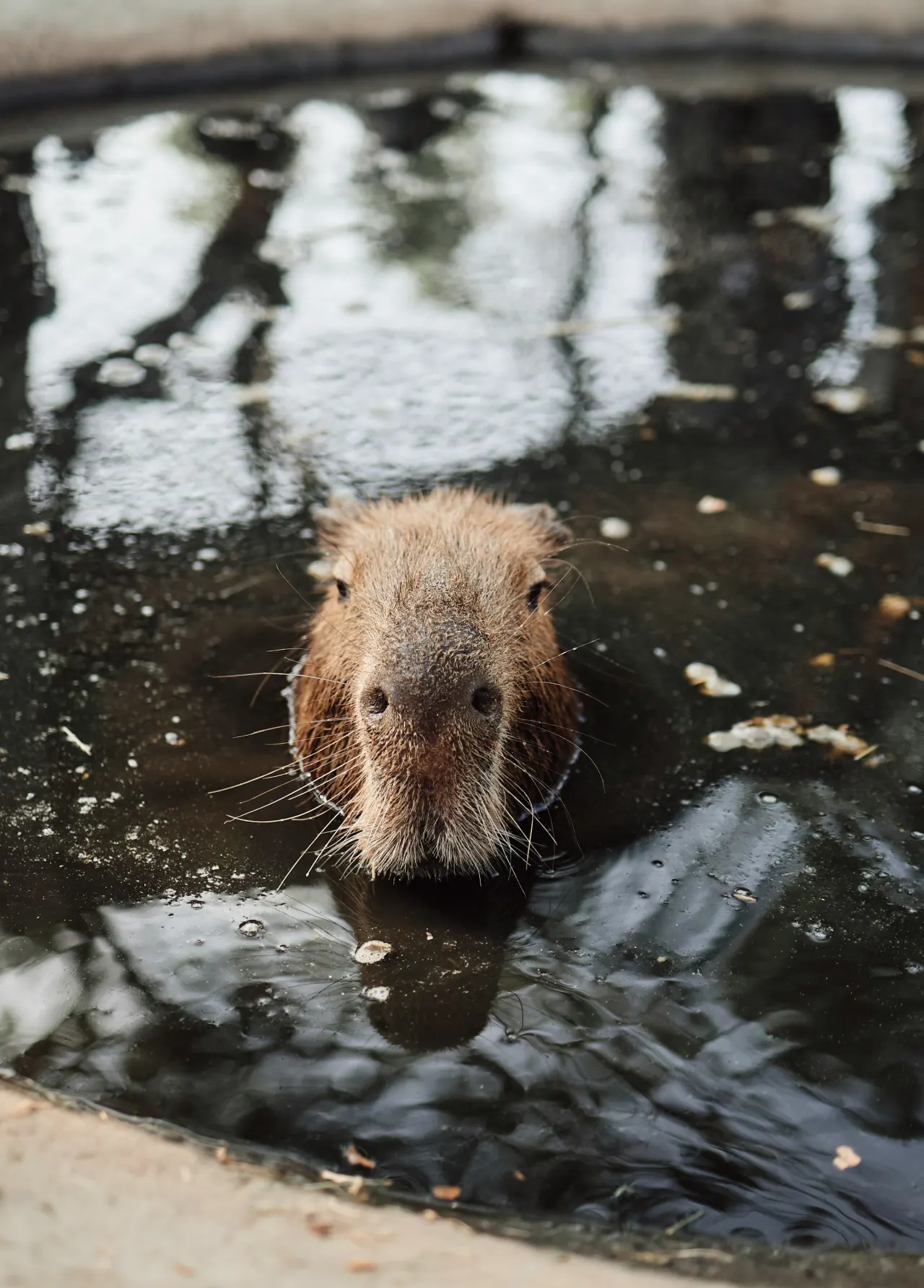
If you’re based in Buenos Aires and not building a dedicated wildlife trip, the Paraná delta near Tigre is the practical answer. It sits about 30 km north of the city, reachable by Mitre train from Retiro station in under an hour, and the channel system in the Segunda Sección and beyond holds a reliable carpincho population.
This is not Iberá. The density is lower, the landscape is less wild, and you’ll share the waterways with weekend houses, rowing clubs, and the occasional jet ski. But the animals are real, the access is easy, and a dawn lancha tour from the Tigre wharves will usually produce sightings within the first 30 minutes.
Side note on Tigre: the 2021 meme — carpinchos on the golf course in Nordelta — was real. They weren’t staging a protest. They were moving through habitat that had been a wetland before someone put a gated community on it. The carpinchos did not appear to care about the symbolism, which is most of what made it funny.
For a reliable Buenos Aires day trip that doesn’t require booking a domestic flight, Tigre delivers.
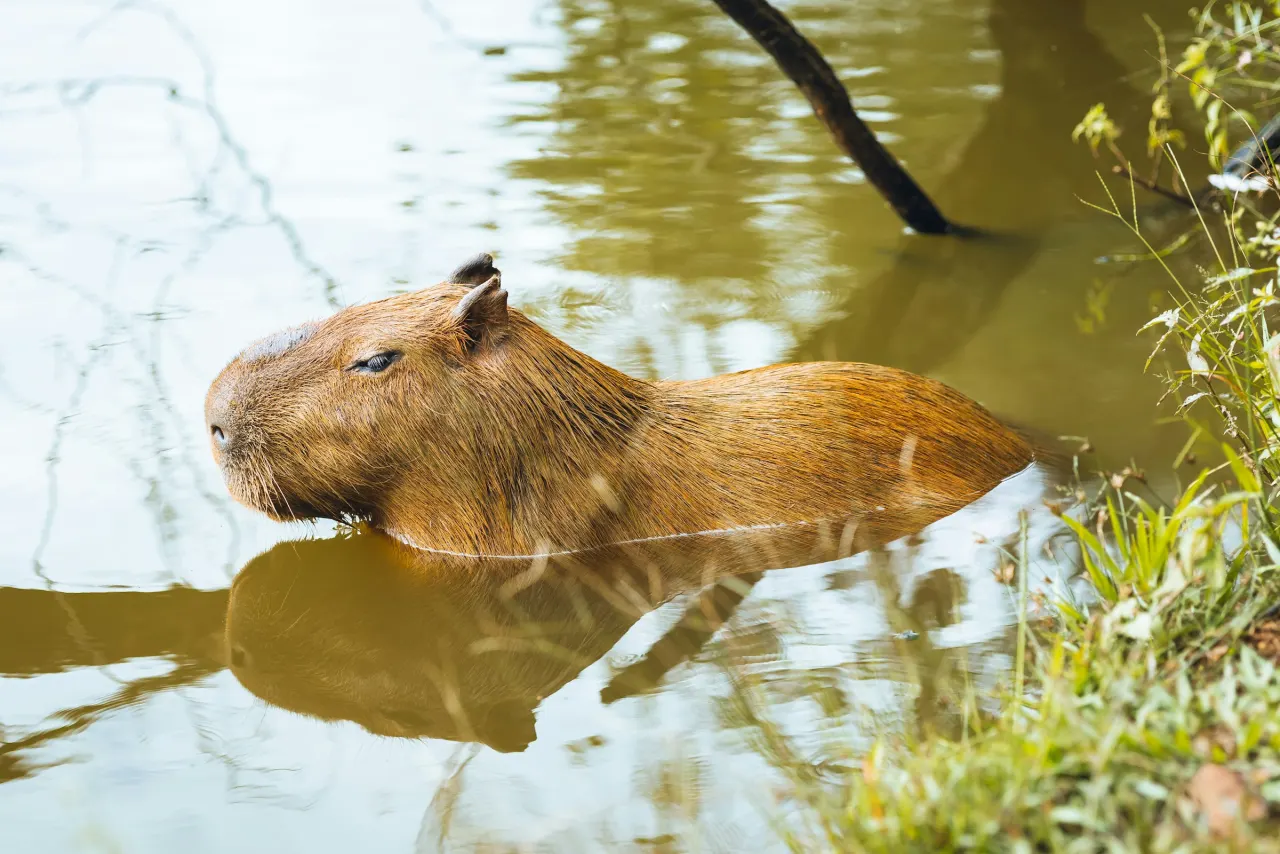
The Rest of Argentina: Iguazú, Chascomús, the Chaco, and What to Actually Expect
Laguna Chascomús (Buenos Aires province). About 120 km south of Buenos Aires, two hours by car or bus. The freshwater lagoon system has wetland margins that hold carpinchos, though density is lower than either Iberá or Tigre. Best for a quick day trip if you’re already doing a road trip south of the capital. Sightings are occasional, not guaranteed.
Iguazú National Park area (Misiones province). Near the waterfalls, in subtropical jungle. Capybaras are present near stream banks and open areas along the park’s walking trails, but sightings are opportunistic rather than reliable. Most visitors notice the coatis (aggressively so), the toucans, and the caimans before they find a carpincho. If you’re going to Iguazú anyway, keep your eyes on the trail margins near the river. If you’re going specifically for capybaras, Iberá is a better use of a plane ticket.
El Impenetrable National Park (Chaco region). Argentina’s most remote option. The Gran Chaco ecosystem has a native capybara population, but access is difficult — this is not a place you wander into casually. Worth flagging for readers planning a serious, long-format Argentina wildlife expedition. Not practical for most travelers.
A practical comparison:
| Destination | Distance from Buenos Aires | Access | Carpincho density | Best for |
|---|---|---|---|---|
| Esteros del Iberá | ~1,000 km N | Flight + 3-hr drive | Exceptional | Dedicated wildlife trip |
| Paraná Delta / Tigre | ~30 km N | Train (1 hour) | Good | Day or weekend trip |
| Laguna Chascomús | ~120 km S | Car or bus (2 hours) | Moderate | Quick day trip |
| Iguazú NP area | ~1,300 km N | Flight (~2 hours) | Low—moderate | Combined waterfall trip |
| Chaco / Impenetrable | ~1,000 km N | Flight + long drive | Moderate | Remote expedition only |
For a more detailed look at the Tigre delta specifically, see the full Tigre delta capybara guide. And if you’re new to the question of where capybaras actually live more broadly, the habitat background guide covers the full South American range.
When to Go — and the Timing Note Most Guides Don’t Mention
Dry season — roughly May through September — is the better call at most Argentine sites. Lower water levels concentrate animals near permanent channels and lagoon margins, which means easier spotting and typically larger group aggregations. The Iberá wetland complex is productive year-round because it holds enough standing water even in dry months, but the access roads into Pellegrini can become difficult during the wet season peak.
Iguazú is the exception: it receives substantial rainfall throughout the year, and the park is accessible in all months. The waterfalls are actually more dramatic in the wet season if that’s part of the draw.
For Tigre, dawn tours in winter (June—August) often have better light and less boat traffic. Summer (December—February) is humid and crowded with day-trippers. Carpinchos don’t particularly care about either.
One honest note on timing: most online resources understate how wet and buggy the Iberá can be in the November—February period. If your travel window is fixed in summer, you’ll still see carpinchos, but come prepared.
What You’ll Actually See at Each Site (Honest Version)
There’s a genuine gap between “capybaras possible here” and “you will definitely see capybaras here.” This table tries to be honest about that gap.
| Location | Typical encounter | Group size visible | Viewing platform |
|---|---|---|---|
| Iberá (Pellegrini) | Routine, multiple groups | 5—30+ animals | Boat + boardwalk |
| Tigre delta | Reliable, scattered | 2—8 animals | Boat (lancha) |
| Chascomús | Occasional | 2—5 animals | Lakeside walking |
| Iguazú trails | Opportunistic | 1—4 animals | Walking trail |
The Iberá row is not exaggerated. The park’s rewilding effort has created a system where large mammals are present in unusual density relative to most South American protected areas. The Smithsonian National Zoo describes capybaras as semi-aquatic animals that are never found far from water — Iberá is essentially an infinite supply of that condition, with very little human pressure compared to most accessible wetland sites.
The scene worth picturing: A boat on Laguna Iberá at 6 AM. The guide cuts the engine. The channel goes quiet enough that you can hear the reeds shifting. Then 15 carpinchos emerge from the reed bed in single file — adults first, juveniles bunched behind — and move to the waterline to drink. Nobody on the boat says anything for a while.
That’s not a once-in-a-trip moment at Iberá. That’s Tuesday morning.
For related context on capybara safety and how to behave during wild encounters, see what to do if you see a capybara in Argentina. And if you’re still asking the basic question of whether they pose any risk, the capybara safety guide covers it directly. For the bigger Buenos Aires picture including city-adjacent sightings, this overview covers the whole BA region.