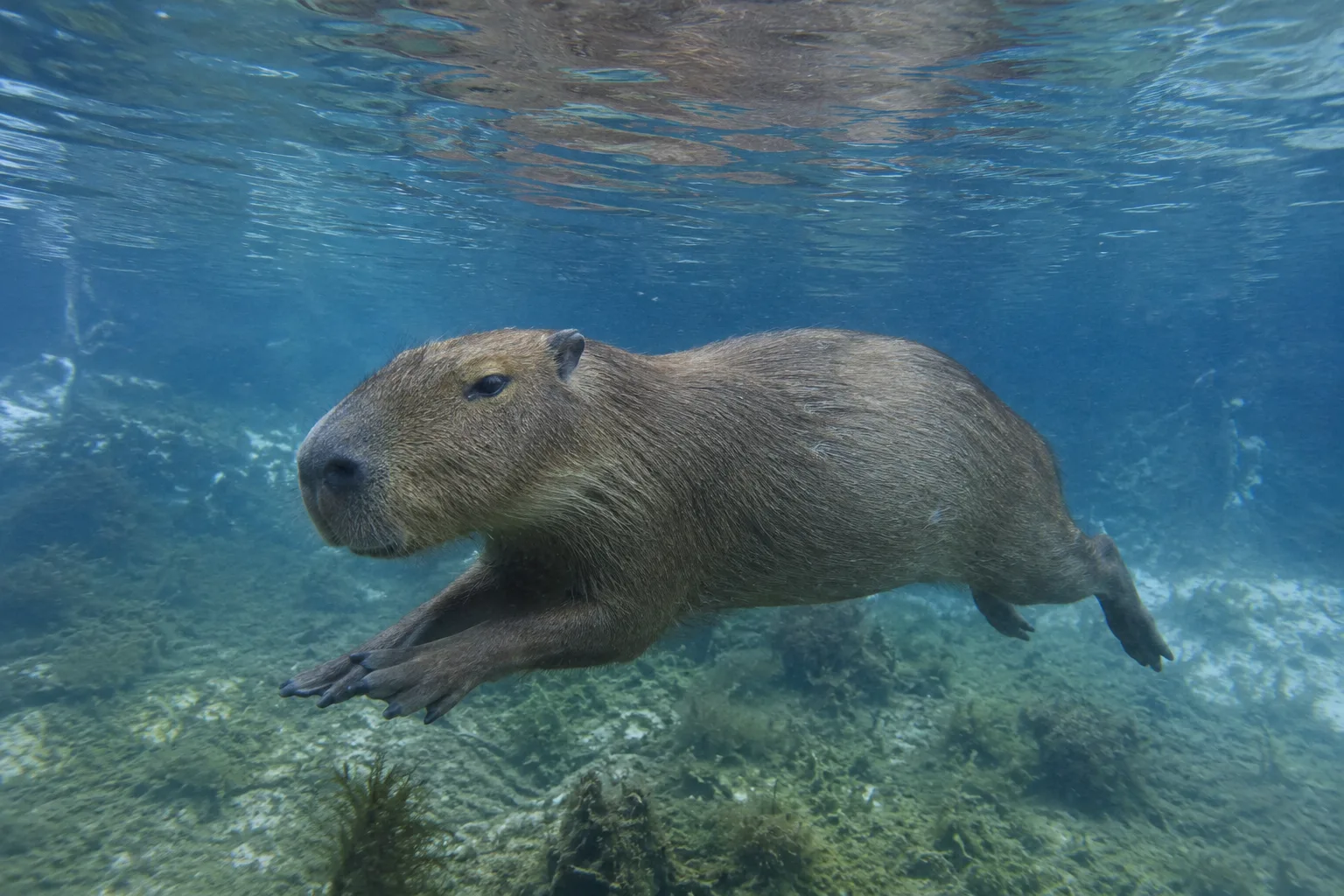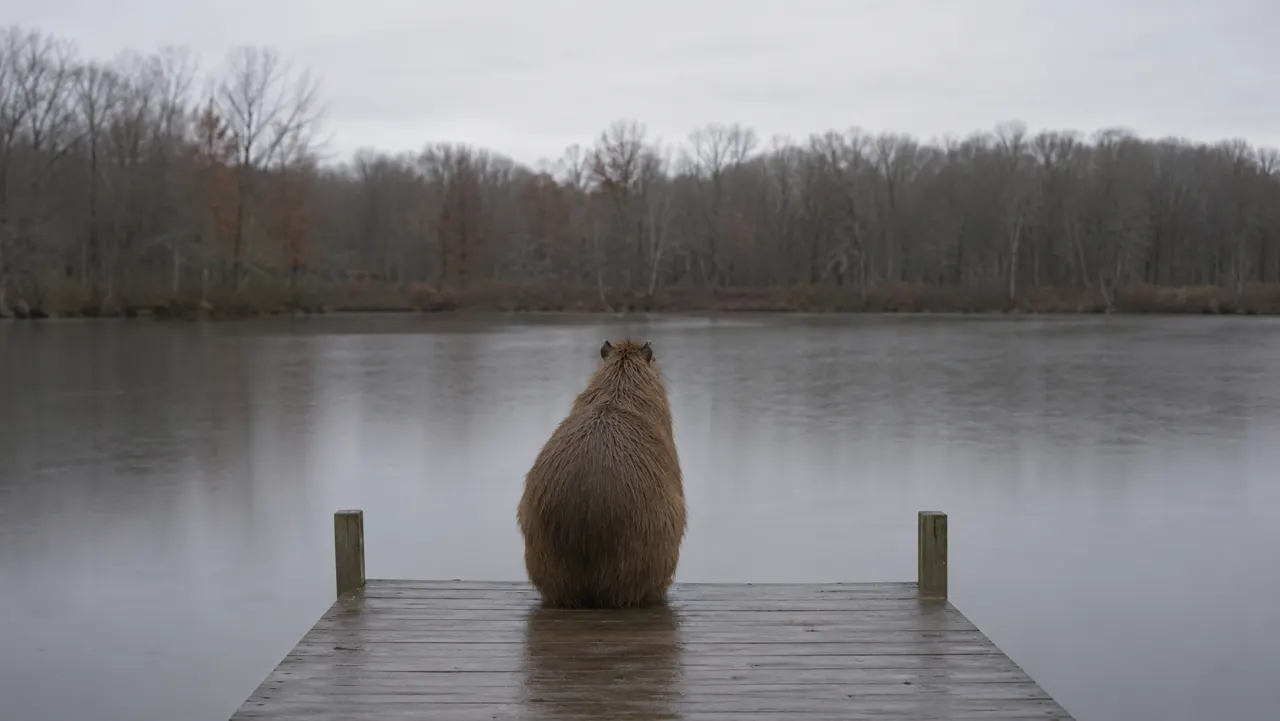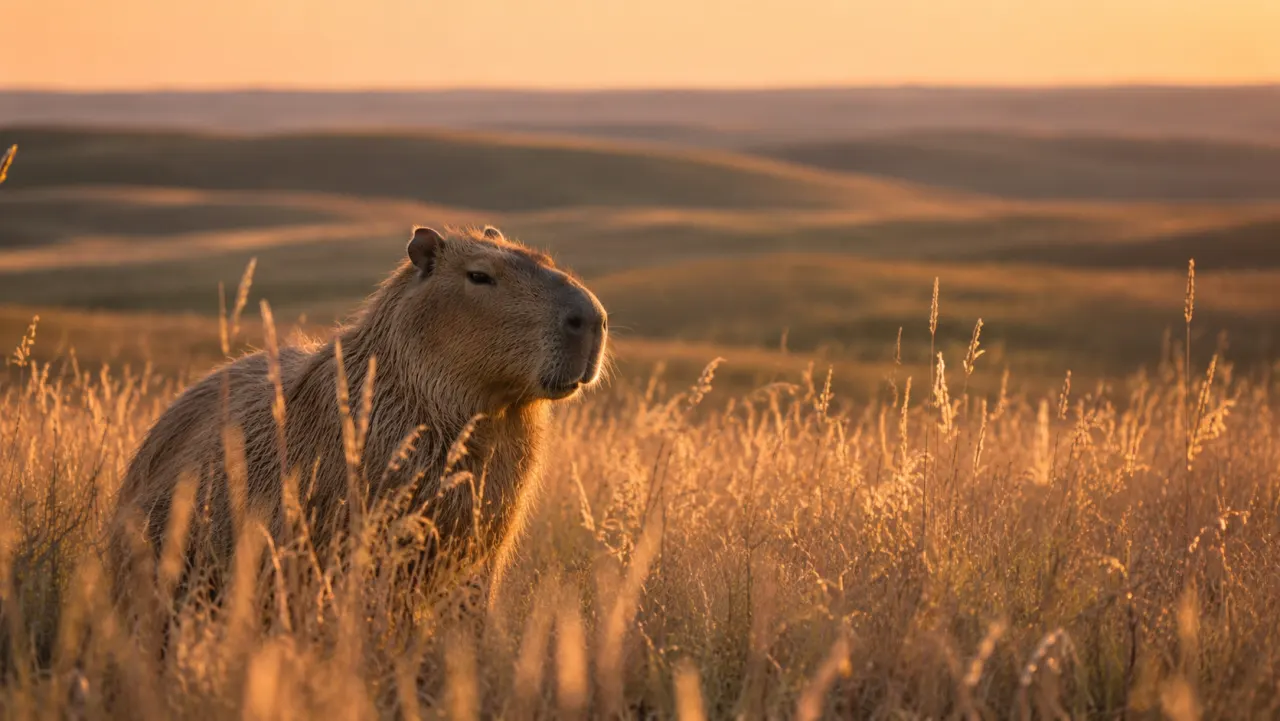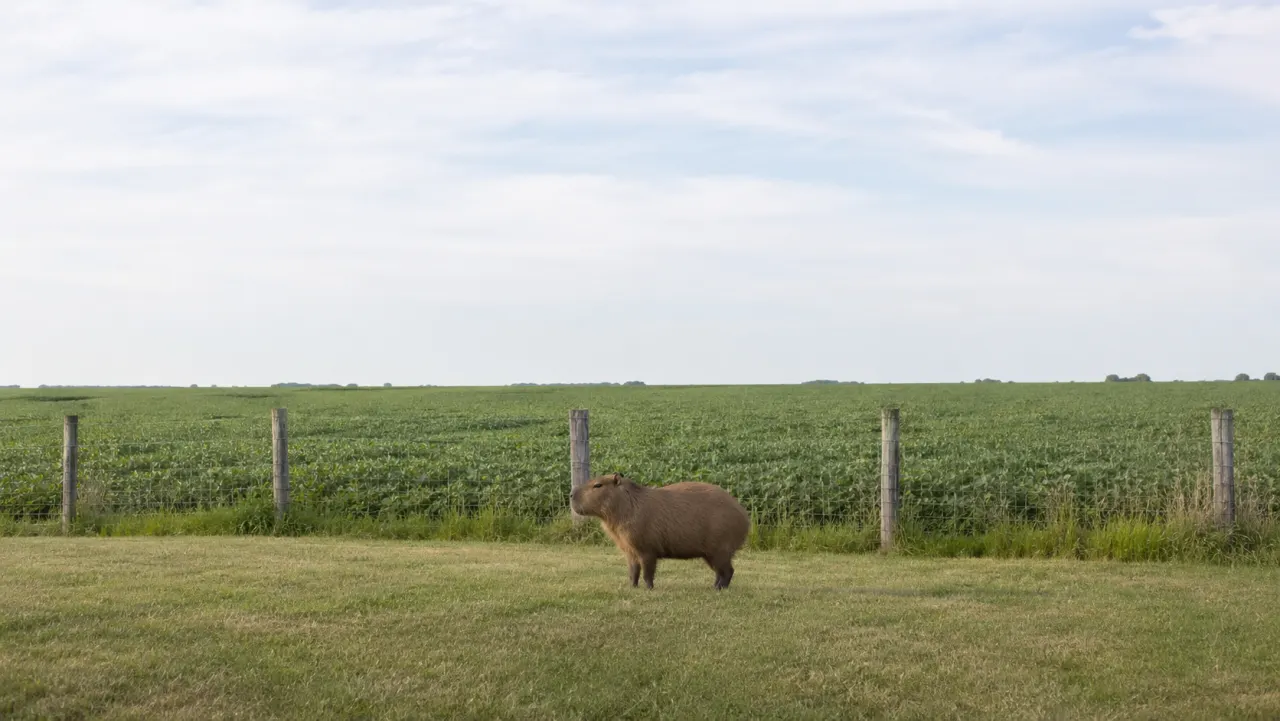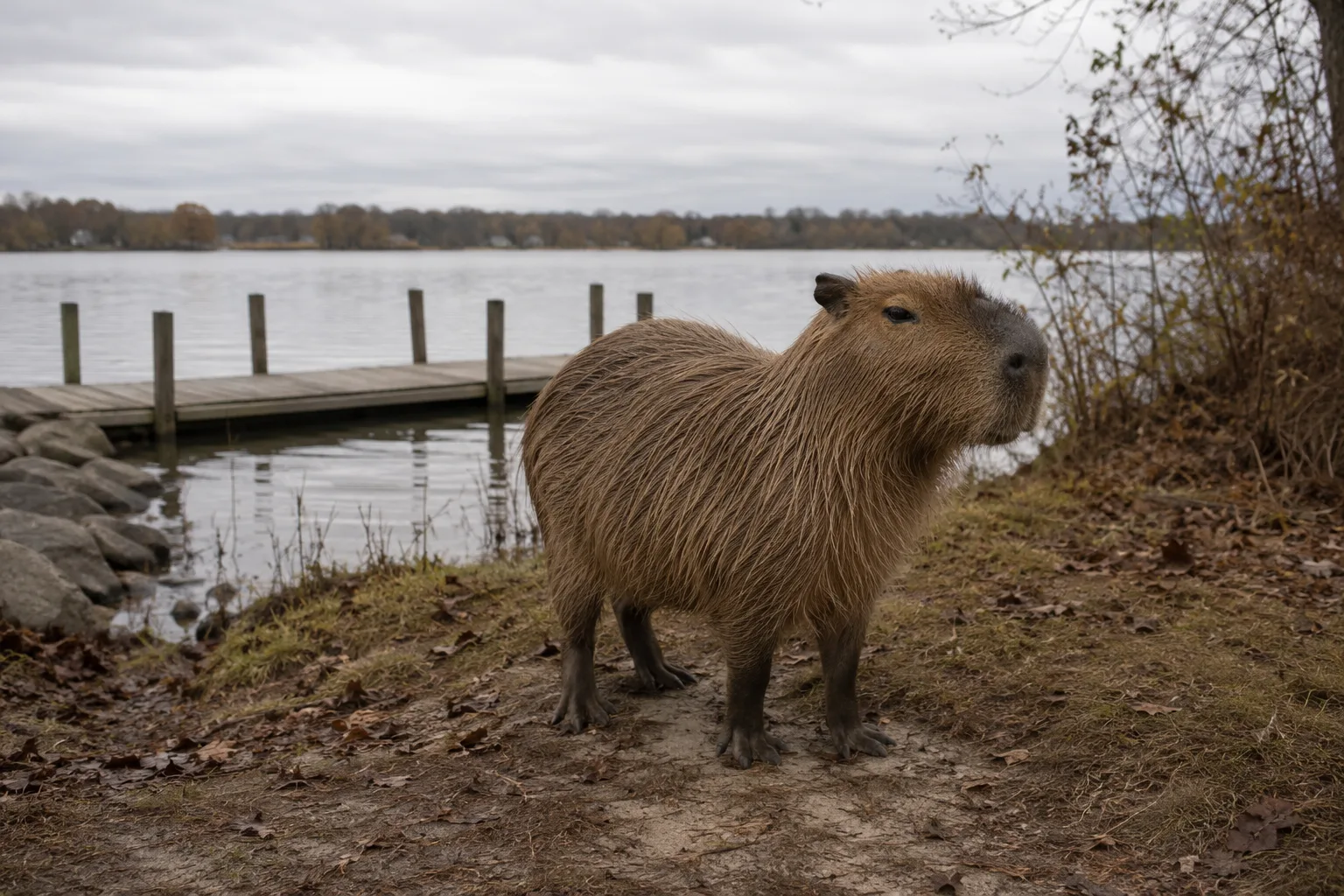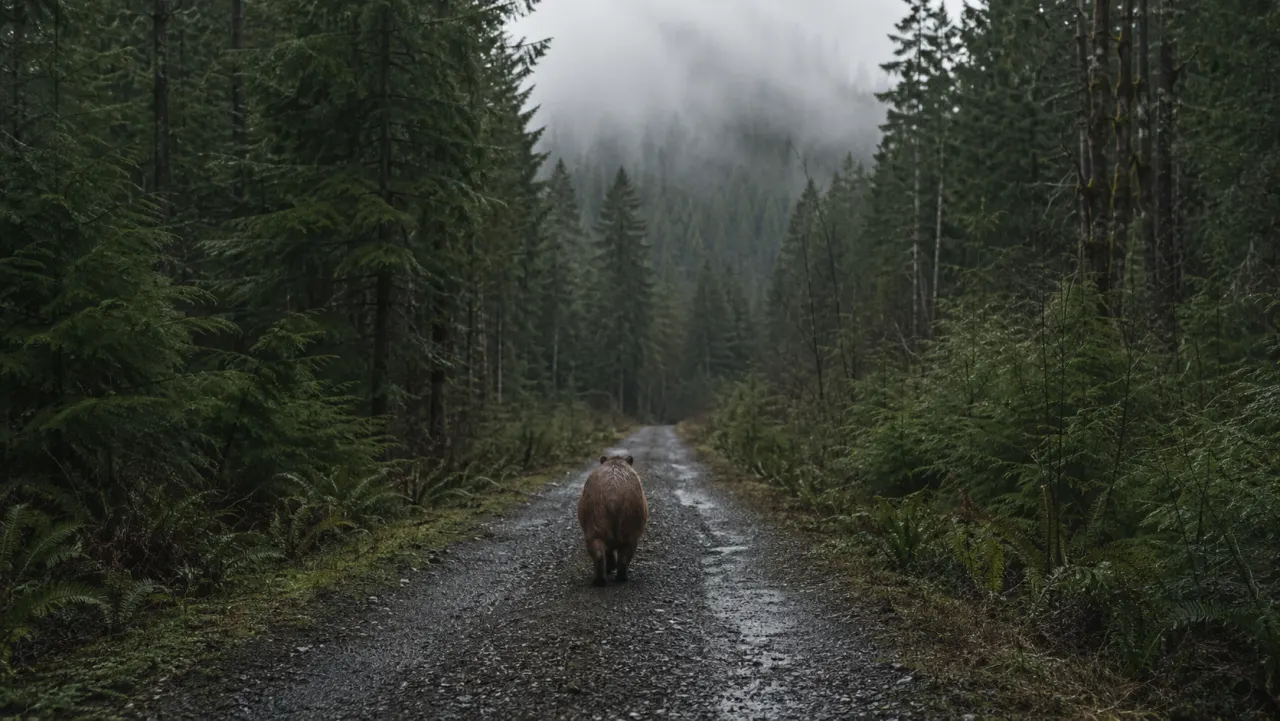
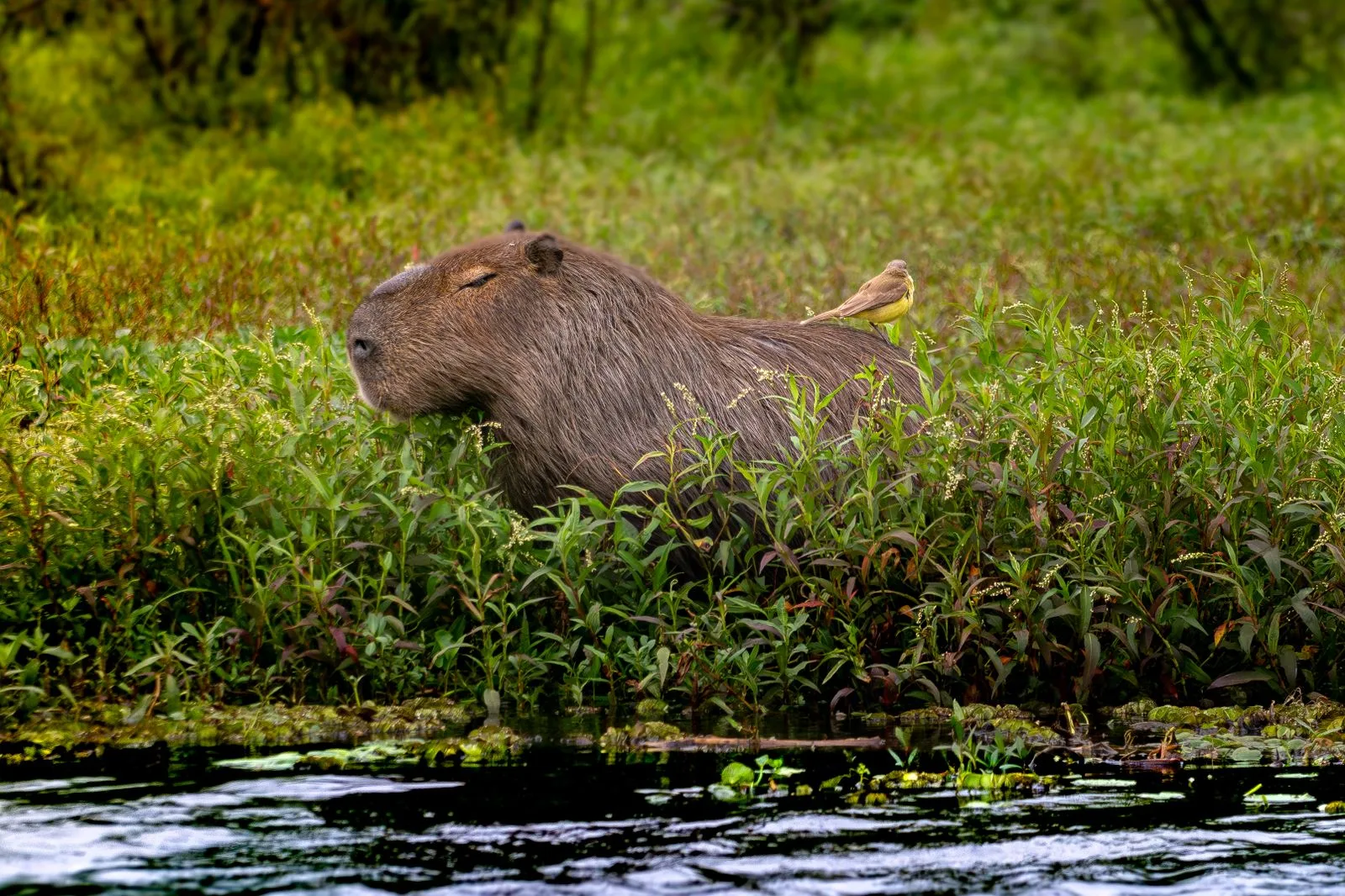
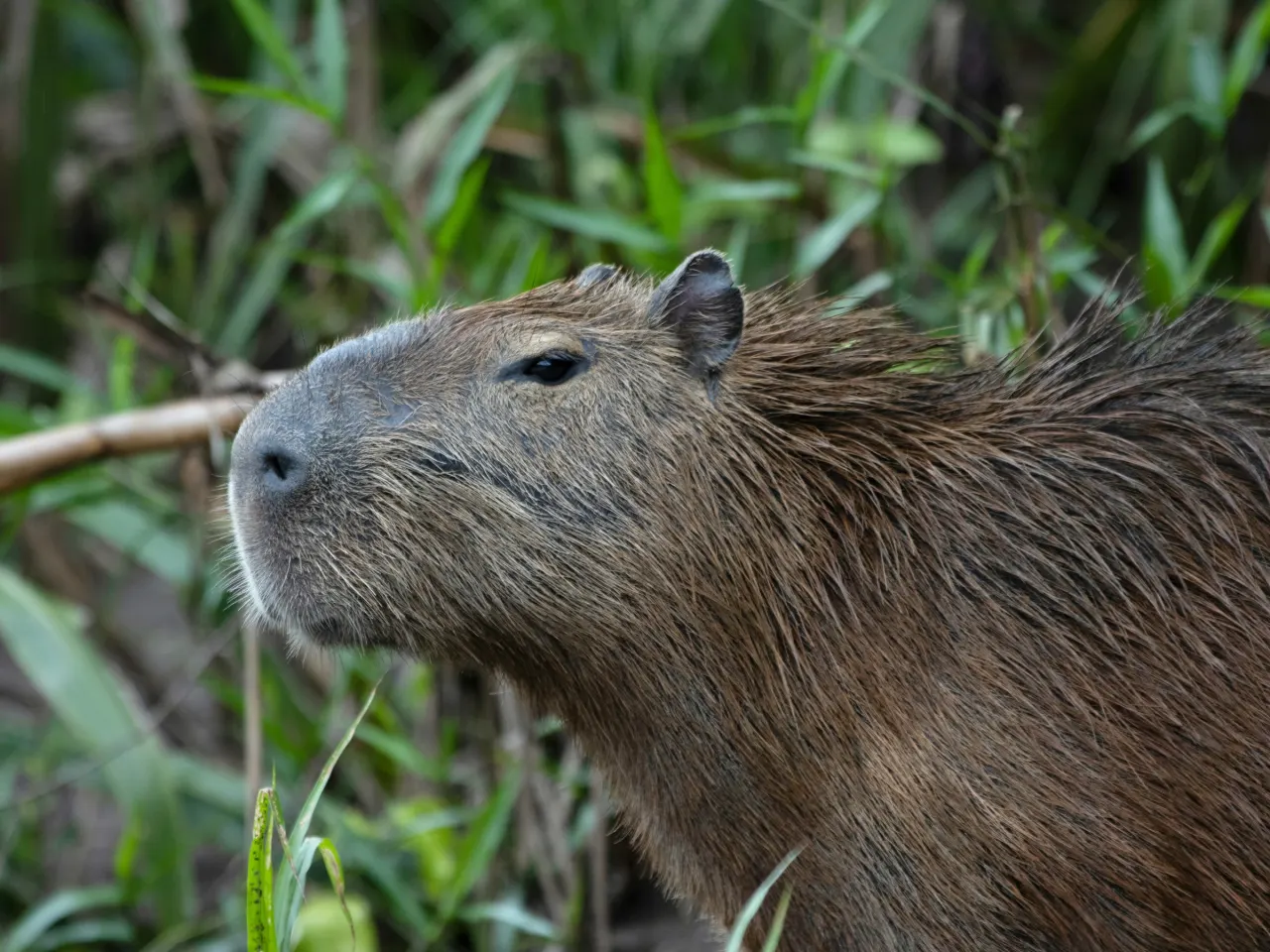
You will encounter carpinchos in Argentina. Not maybe. If you spend any time near water in the Corrientes wetlands, the Tigre delta, the coastal margins around Mar del Plata, or the suburban roads through Nordelta, you will see them. Possibly very close, possibly by surprise.
The Animal Diversity Web records adult capybaras at up to 65 kg (143 lb), roughly the size of a medium Labrador, though stockier. The AZA Capybara Care Manual notes their incisors are self-sharpening and continuously growing — built for cutting aquatic vegetation, not for attacking hikers, but strong enough to cause serious injury if the animal is stressed and cornered. A 2015 case report published in PubMed documents human bite injuries from capybaras; the authors noted the pattern typically involved animals that felt trapped.
The internet version of the carpincho is mostly captive, habituated, or both. The wild Argentine version is different.
How Close Is Too Close? (Closer Than You Think)
Ten to fifteen meters is the minimum. In Argentina’s Esteros del Iberá — the country’s best carpincho habitat, a mosaic of shallow lakes and marsh in Corrientes province — guided rangers at the reserve actively tell visitors not to approach at all. The instruction is to wait and let the animal come toward you if it chooses to.
That’s the key thing. The carpincho sets the distance, not you.
In practice, what changes the tolerance threshold is context. A single adult male resting in an open field at midday is low-stakes. A group of five near a waterway at dusk is more ambiguous. A female with young is a different situation (more on that below).
Reading the signals. A relaxed carpincho moves slowly, grazes calmly, and ignores you. Warning signs: sudden movement toward water, teeth chattering, raised hackles along the spine, or a sharp, bark-like alarm vocalization. If you see any of those, you’re already too close — back away, slowly.
Where you’ll actually encounter them:
| Location | Notes |
|---|---|
| Esteros del Iberá, Corrientes | Best wild sightings; guided access, rangers advise no approach |
| Tigre / Paraná delta, near Buenos Aires | Common; boat and walking encounters; suburban edges in Nordelta |
| Coastal wetlands, Mar del Plata | Seasonal; less dense than northern populations |
| Nordelta roads (Tigre municipality) | Suburban-habituated animals; still wild, still stressed by traffic |
| Rural river margins, Paraná basin | Widespread; most encounters unguided |
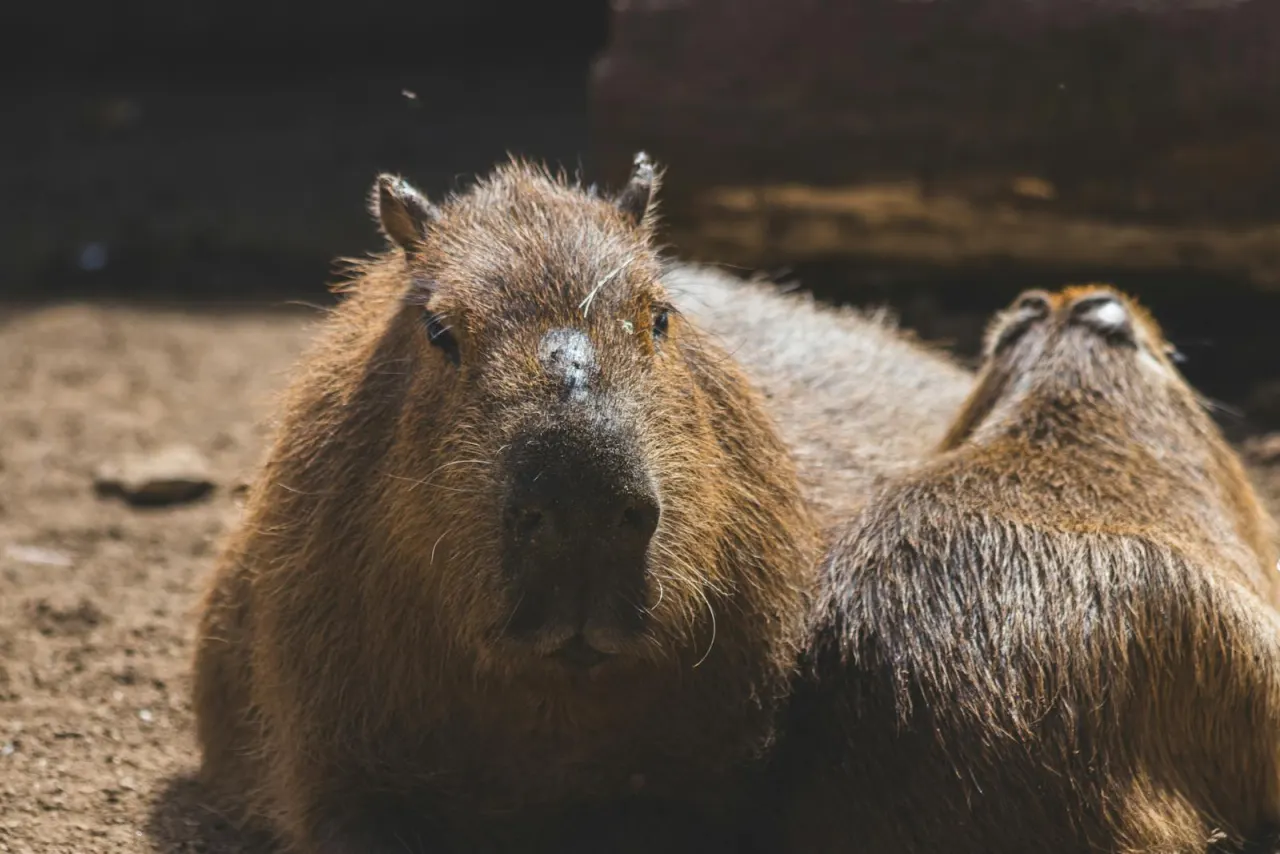
Stop. Don’t Feed Them. Here’s Why That Becomes Everyone’s Problem.
The problem isn’t one carpincho taking a piece of bread from a tourist. The problem is what happens to the animal over weeks of being fed by dozens of tourists.
Fed carpinchos lose their natural wariness toward humans. They start expecting food from anyone who walks by. They crowd paths, roads, and boat landings. This is not a hypothetical — it has already happened in Nordelta, where suburban carpinchos conditioned to human food proximity have created ongoing management headaches for local authorities. Argentina’s Ministerio de Ambiente y Desarrollo Sostenible advises against feeding native wild animals, full stop.
The San Diego Zoo Wildlife Alliance notes that capybaras are grazing herbivores with specialized digestive systems; they also engage in coprophagy to re-process fibrous plant matter. Their nutritional needs are specific. Human food — bread, fruit scraps, whatever a tourist has in a bag — doesn’t help them. It changes their behavior in ways that end badly for the animal and become a management problem that outlasts your visit by years.
Don’t feed them.
If You Have a Dog With You, Keep It Leashed — No Exceptions
If you’re traveling in Argentina with a dog, or if you’re hiking near water in the delta and encounter both, keep the dog leashed. Non-negotiable.
Dogs activate one of two responses in carpinchos: prey-flight (the animal bolts toward water, causing stress and sometimes injury if the terrain is bad) or, occasionally, defensive aggression. Dog-carpincho conflicts have been documented in the Nordelta area and the broader Paraná delta corridor. Even a small, friendly dog can cause a visible stress response in a carpincho — and a large dog can escalate quickly into a genuine welfare incident.
The flight response to water matters. If the animal’s path to the waterway is blocked by a dog on a leash, it becomes a cornered animal. That’s the scenario that precedes bites.
Babies in the Group? Double Your Distance and Move On.
If you see baby carpinchos — small, lighter-colored, grouped close to adults — double whatever distance you were already keeping. Then add a bit more.
Females with young are the highest-risk encounter category in capybara behavioral ecology. The Behavioral Ecology research on capybara social structure notes that adult females are the primary drivers of group cohesion and will respond to perceived threats to young. This doesn’t mean a female will charge unprovoked — it means her stress threshold is lower, her alarm signals are faster, and the group around her will respond collectively.
Don’t linger. Don’t photograph from close range. Give them a wide berth and move on.
Getting a Good Photo Without Making It Weird for the Animal
The best carpincho photos come from patience and distance, not from closing the gap for a better frame.
Use a zoom lens if you have one. If you’re shooting on a phone, stay at 15 meters, stay still, and wait. Carpinchos that feel unobserved will resume normal behavior — grazing, wading, socializing — and those are the shots worth having anyway. A stressed carpincho staring directly at the camera from two meters away is not a good photo. It’s a document of a bad interaction.
Don’t chase the animal for a different angle. Don’t change position rapidly. Don’t try to get between a group and the water they use as a retreat.
A guide in Iberá once put his hand on a tourist’s shoulder as the tourist crouched low and shuffled toward a large male blocking the path — camera already raised. His instruction was quiet: “Stop. Give him the path.” The animal moved in its own time, maybe ninety seconds later. The tourist got a better shot for it.
If It Charges: Don’t Run. Here’s What to Actually Do.
It’s rare, but it happens — usually when an animal is cornered, separated from water, or protecting young.
Back away slowly. Don’t run. Running triggers pursuit behavior in many mammals, and a 65 kg carpincho closing ground quickly is not a situation you want to escalate. Get behind a physical barrier if one is nearby — a vehicle, a dock post, a dense bush. Don’t make sudden movements or loud sounds.
The charge is almost always a bluff. The animal wants you out of its space and access to its escape route. Give it both.
Encounter type reference:
| Encounter type | Risk level | What to do |
|---|---|---|
| Single adult, calm, open area | Low | Stay 10–15m, don’t approach, let it move first |
| Group near water, dawn/dusk | Low-moderate | Stay back, move quietly, no sudden gestures |
| Female with young | Moderate | Double the distance; don’t linger |
| Animal near suburban road (Nordelta-type) | Low-moderate | Don’t block path to water, keep dogs leashed |
| Cornered or blocked from water | High | Retreat and open the escape route |
| Animal charging | High | Back away slowly, get behind barrier, don’t run |
One note on timing: carpinchos are crepuscular — most active at dawn and dusk. If you’re near water at those hours, encounters are more likely, and the animals are typically more nervous than at midday. Give extra space. Move slowly. The light is better for photography anyway.
If the animal is injured or sick: do not touch it. Contact SENASA (Argentina’s Servicio Nacional de Sanidad y Calidad Agroalimentaria) or the provincial wildlife authority for the region. In Corrientes, that’s the Dirección de Fauna de Corrientes. Handling a wild animal you don’t know how to handle adds risk for you and makes the animal’s situation worse.
The internet has done a specific kind of damage here. The meme version of the carpincho — floating in an onsen with a mandarin on its head, being groomed by every other species nearby — is a habituated animal, or one that decided, on its own terms, this wasn’t worth reacting to. That’s not a character trait. That’s a choice the animal made, under specific conditions, that day.
Wild Argentine carpinchos are wild animals. They happen to be unusually calm by the standards of large rodents. That calmness has limits, and the limits are predictable: space, water access, young nearby, dogs, sudden movement. Respect those, and an encounter in the Iberá wetlands is one of the remarkable things Argentina has to offer.