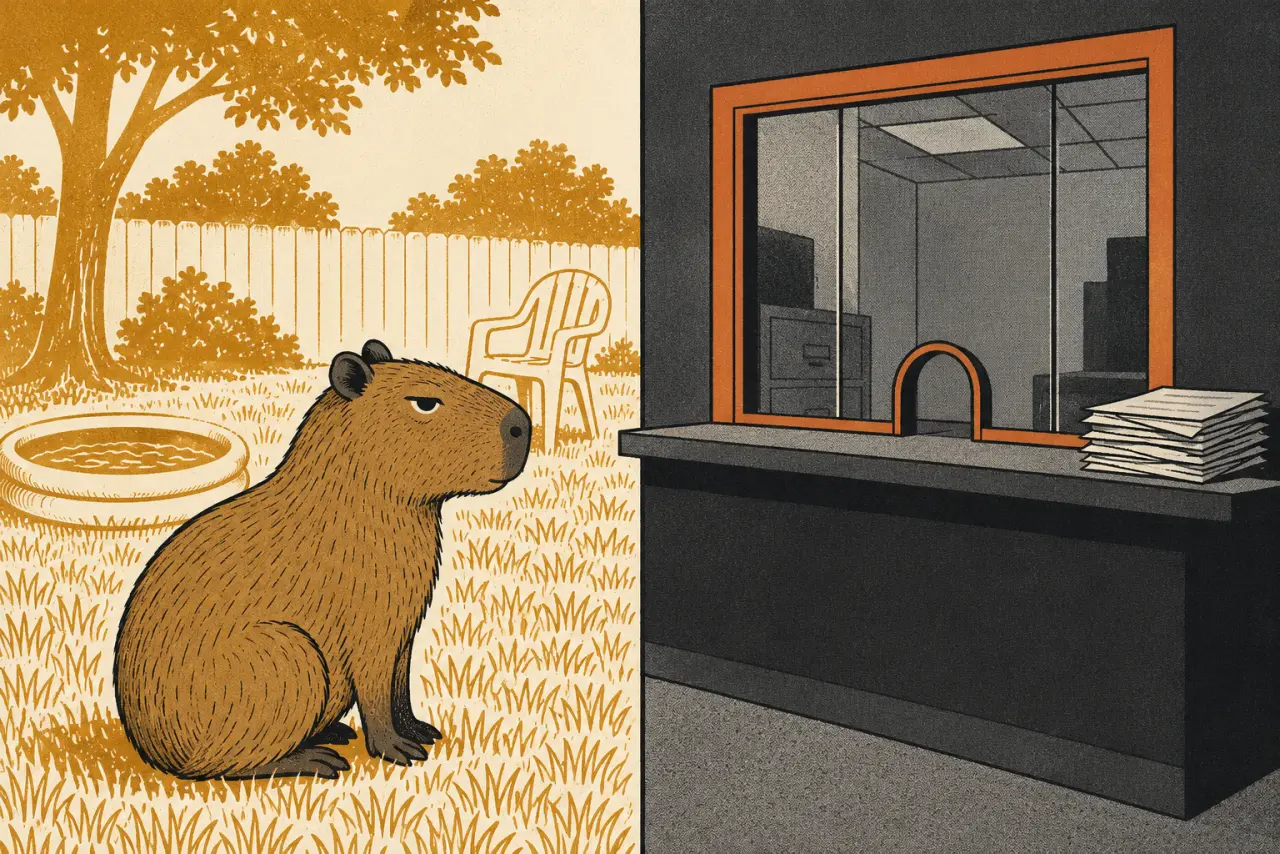
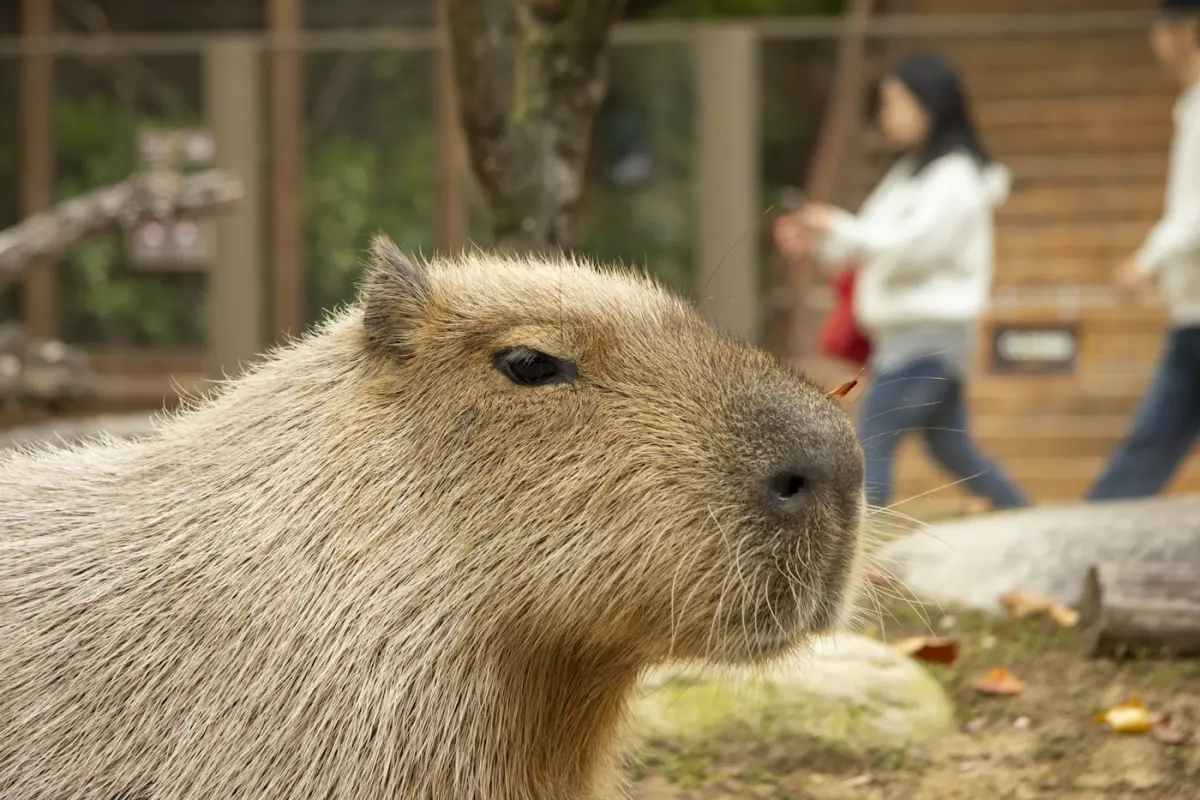
The honest answer requires two different words that online capybara content tends to collapse into one. Tolerant and affectionate are not synonyms, but they get used interchangeably in most capybara coverage. A tolerant animal is one that accepts your presence without distress. An affectionate animal is one that actively seeks your company, shows behavioral indicators of attachment, and experiences something like distress at separation. Capybaras are very much the first. They are not reliably the second.
This matters for two reasons. If you are thinking about capybara ownership, the emotional dynamic is different from what pet ownership with dogs or cats looks like. And if you are just a fan enjoying capybara content, understanding what you’re actually looking at makes it more interesting, not less.
Tolerance vs Affection: The Key Distinction
Capybaras evolved as social group animals — their primary emotional and behavioral bonds are to other capybaras. Animal Diversity Web describes them as highly social animals that live in groups of 10-20, with group cohesion maintained through vocalization, scent communication, grooming, and spatial proximity. Human relationships are not the template the animal’s social system is built around.
When a capybara approaches a familiar human, lets them scratch its ears, and purrs during the contact, that is genuine comfort. The animal is not distressed, it is responding positively to a known stimulus that it associates with pleasant physical sensation. This is real. It is not nothing.
What it is not: evidence that the capybara loves the human in the way the human may feel the situation. The capybara is experiencing physical comfort from a familiar being. It is not tracking the human’s absence, redirecting its social needs onto the human, or prioritizing the human relationship over group membership.
What Socialization Actually Does For Capybara-Human Relationships
Well-socialized capybaras — those raised with consistent, calm, positive human contact from a young age — develop what can reasonably be called recognition and comfort responses to familiar humans. The AZA Capybara Care Manual notes that management-habituated capybaras are more cooperative with keepers and show less stress during veterinary procedures.
What socialization produces:
- Recognition of individual familiar humans (distinguished by sight, scent, and sound)
- Reduced stress response to familiar human approaches
- Approach behavior toward familiar handlers when associated with positive outcomes (food, scratching)
- Purring response during enjoyed physical contact
- Less alarm behavior around familiar people
What socialization does not produce:
- Separation anxiety when humans leave (the distress at isolation is about group, not human)
- Primary social bond transfer to a human
- Active solicitation of human interaction as a social need (rather than a reward-associated behavior)
- Reliable obedience to human direction
Signs Of Capybara Comfort With Humans
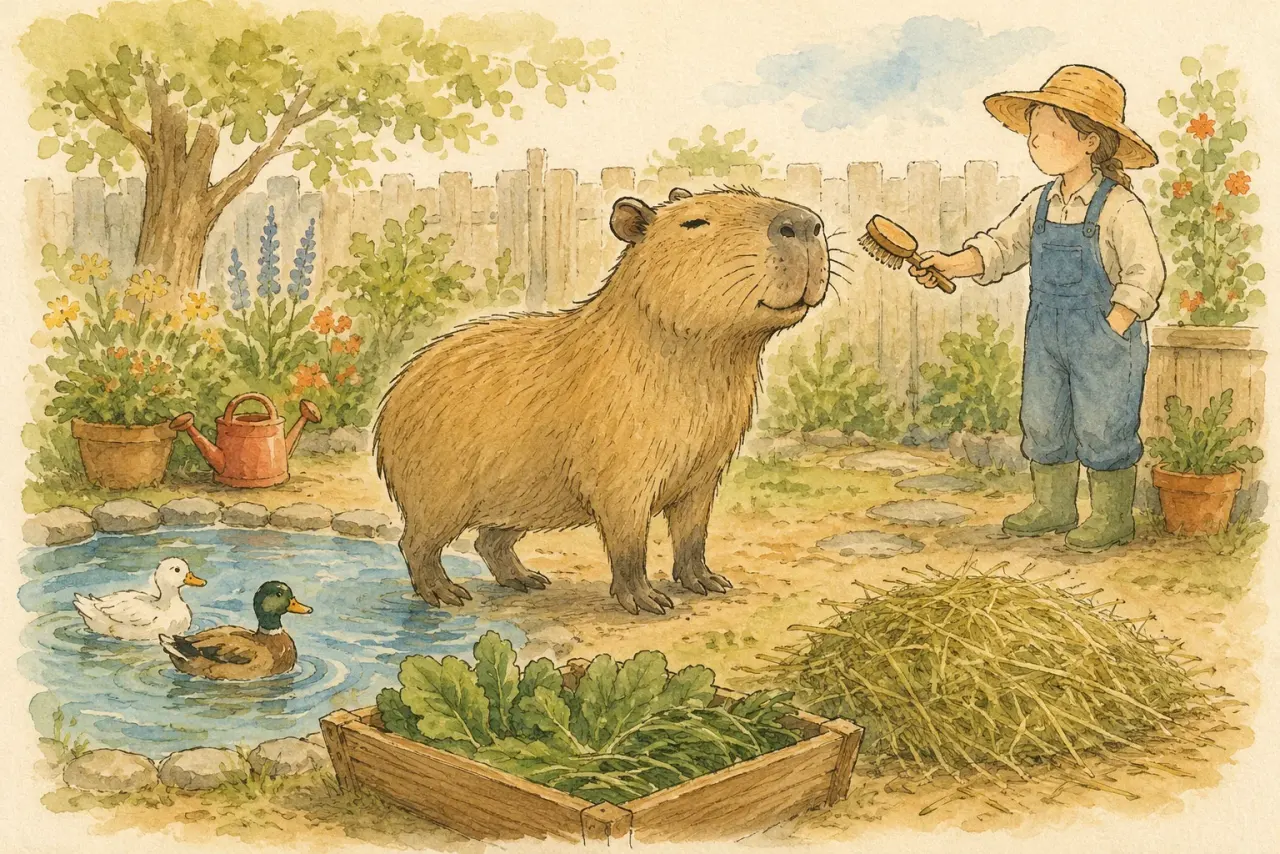
If you have access to a well-managed capybara (zoo, education setting, or a licensed and properly socialized captive), these are accurate signals of comfort with human presence:
Purring: the low continuous rumble that occurs during grooming, relaxed social contact, and physical comfort. A capybara purring while being scratched is in a comfort state.
Approach behavior: a capybara that walks toward a familiar human without hesitation is not stressed by the approach. The movement itself signals acceptance.
Relaxed posture: body weight distributed evenly, head at a natural angle, no tension in the legs. Compare to an alert capybara — head up, body tense, oriented toward a perceived threat. Relaxed is different.
Accepting physical contact at sensitive areas: ears, neck, and the area behind the ears are sensitive spots. A capybara that allows scratching in these areas without moving away is demonstrating comfort with the handler.
Remaining close during rest: a capybara that chooses to rest near a familiar human rather than moving away is comfortable with that person’s proximity.
What Capybaras Are Not: The Honest Limit
They are not going to greet you at the door. They are not going to learn their name and come when called across the yard the way a trained dog does. They are not going to curl up on the couch and watch television with you, and if they do end up on the couch, it is because the couch is warm and comfortable, not because they sought your company.
Capybara owners who report their animals as “incredibly affectionate” are often describing the tolerant, comfort-seeking behavior accurately — an animal that enjoys being scratched, doesn’t avoid them, and has become comfortable with their presence. That is a good thing and a real achievement in the human-capybara relationship. It is just not the same relationship as the one you have with a dog.
The practical consequence: a capybara that is alone with you in a house, without other capybaras, is not having a fulfilling social experience even if you are present. The animal’s primary social need is other capybaras. Your presence supplements but does not substitute.
Misconceptions About Capybara Affection
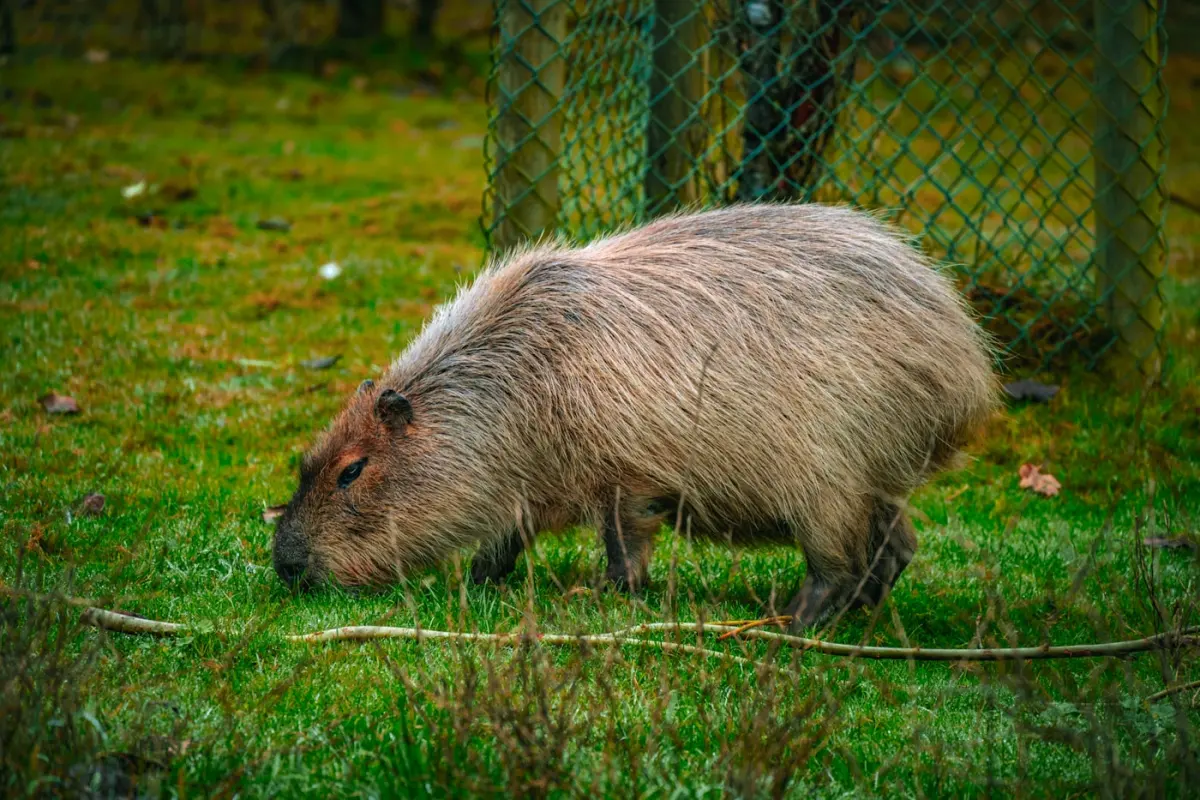
“Capybaras love everyone, which is why every animal sits on them.” The inter-species tolerance that makes other animals comfortable around capybaras is not the same as capybara affection for those animals. Capybaras are generally non-aggressive toward non-threatening stimuli. That is behavioral tolerance, not affective bonding. Why animals sit on capybaras covers the actual mechanism.
“A capybara that sits near you is bonded to you.” A capybara that sits near you has found a position it is comfortable with. The bond reading is a projection. Comfort is real; deep attachment is harder to verify.
“Capybaras are unfriendly compared to dogs.” This is the wrong comparison. Capybaras are not dogs. Their social repertoire, emotional expression, and relationship dynamics are built around a different species’ needs. Why capybaras are friendly covers the actual social temperament more accurately.
Capybaras are good company for what they are: large, calm, socially complex animals that can become comfortable with familiar humans and provide a pleasant experience of inter-species coexistence. That is actually quite a lot. It is not the same as affection, and the distinction is worth keeping clear.