
Capybaras look like they know your secrets because they are still, blunt-faced, high-eyed, and calm in a way humans cannot resist turning into emotional commentary.
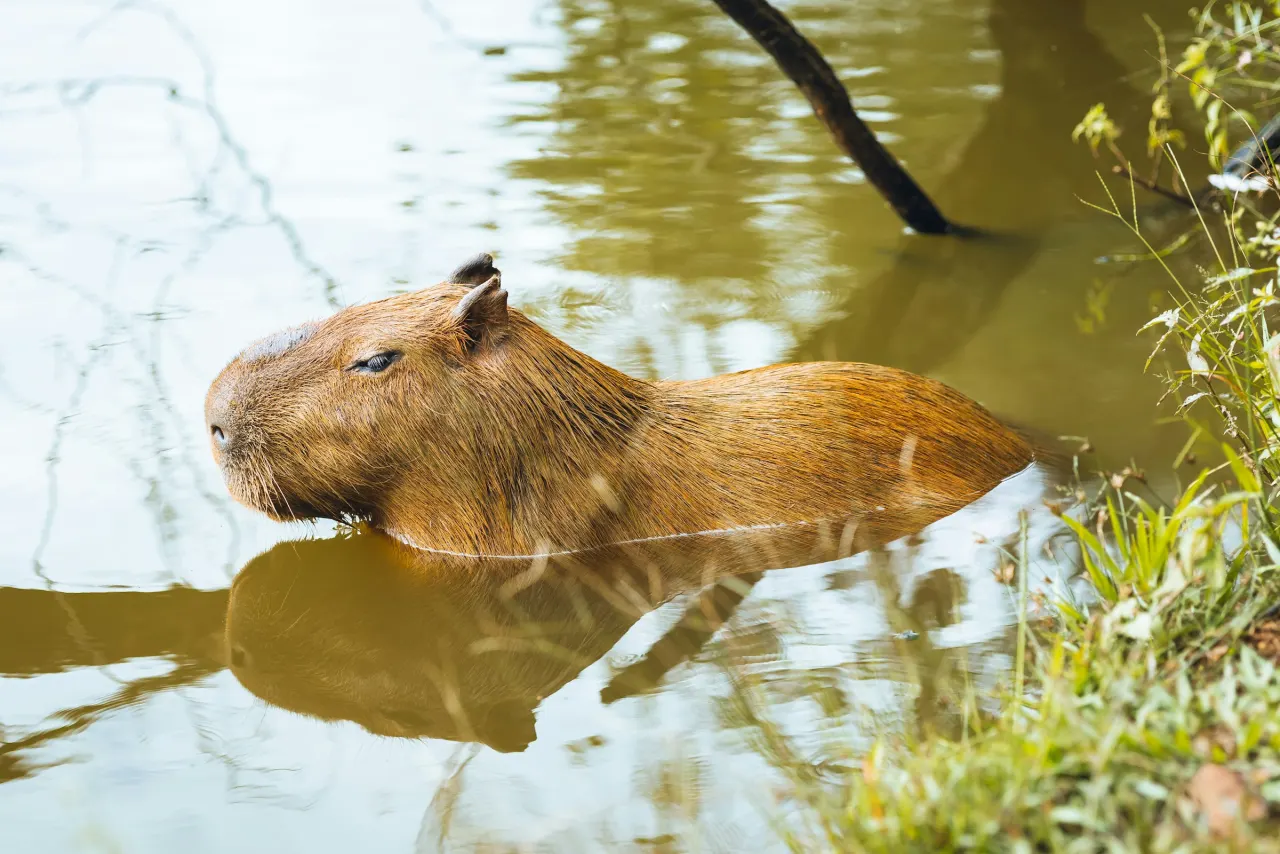
The capybara stare is a mix of anatomy and projection. Their eyes, ears, and nostrils sit high on the head for life around water. Their faces are broad and quiet. They often pause and watch. Humans see that and immediately decide the animal knows about the unread email, the second iced coffee, and the text you should have answered.
The Stare Is Not A Confession Room
A capybara looking at you is not automatically judging you. It may be resting, listening, checking movement, or simply facing your direction while its body handles the larger question of whether it is too warm.
San Diego Zoo notes that water is central to capybara life, and Animal Diversity Web describes capybaras using warning calls and water as part of safety behavior. A watchful face makes sense for a prey animal. It does not need to be psychic. It needs to notice things before the group has a bad afternoon.
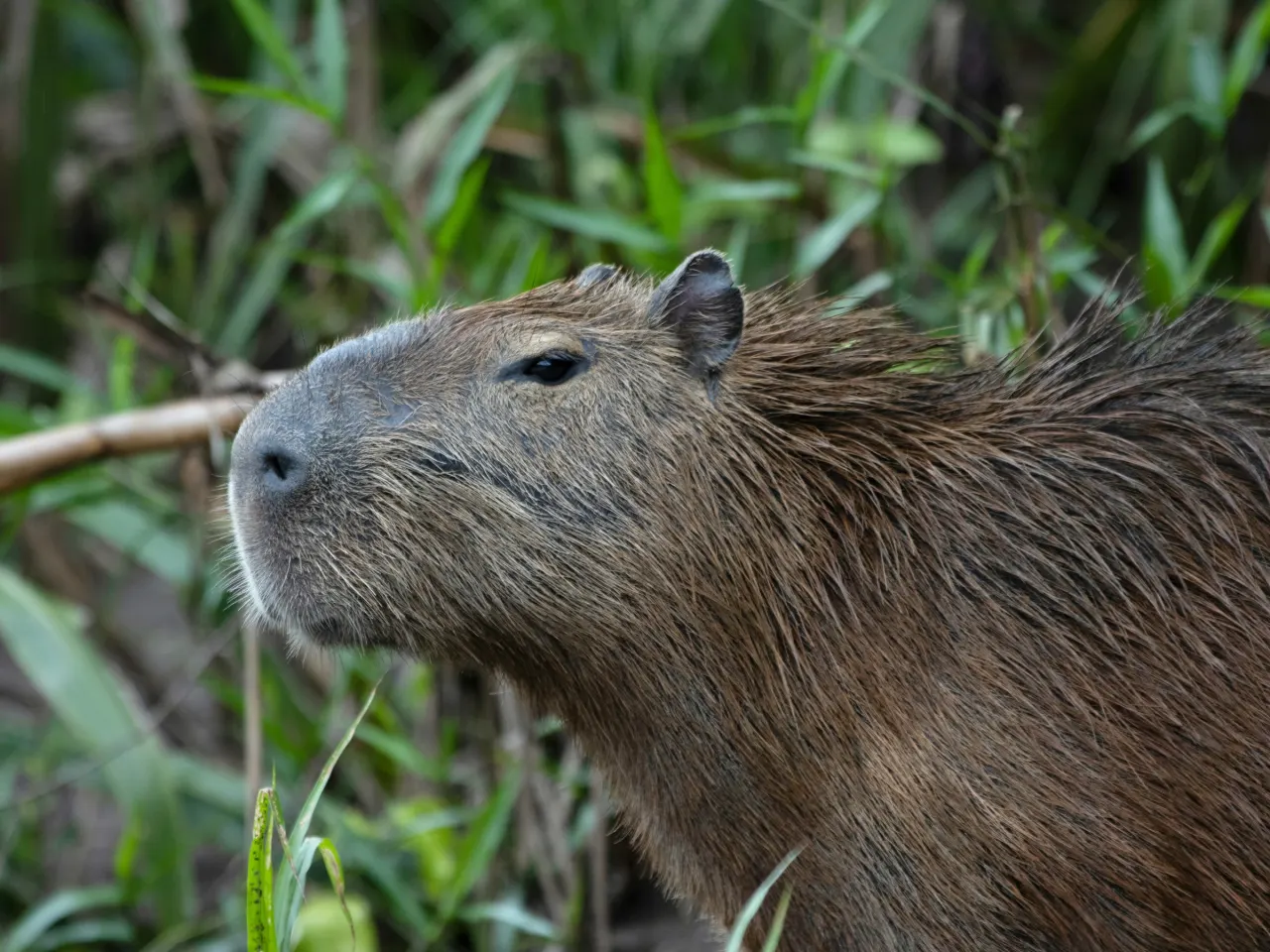
The Face Does A Lot Of The Comedy
Capybaras have a blunt muzzle, small rounded ears, and a heavy face that does not change expression as dramatically as a dog or human face. That stillness reads as deadpan. The internet did not invent the face; it simply gave the face a comment section.
| What you see | Human interpretation | Safer animal read |
|---|---|---|
| Direct stare | Judgment | Watchfulness or curiosity |
| Slow blink | Wisdom | Relaxed state or ordinary blinking |
| Still body | Deep thoughts | Rest, heat, or low concern |
| Side angle | Side-eye | Head position, sound, or attention shift |
This is why capybara memes travel so well. The animal gives just enough face for humans to add the caption themselves.
Stillness Can Be Watchfulness
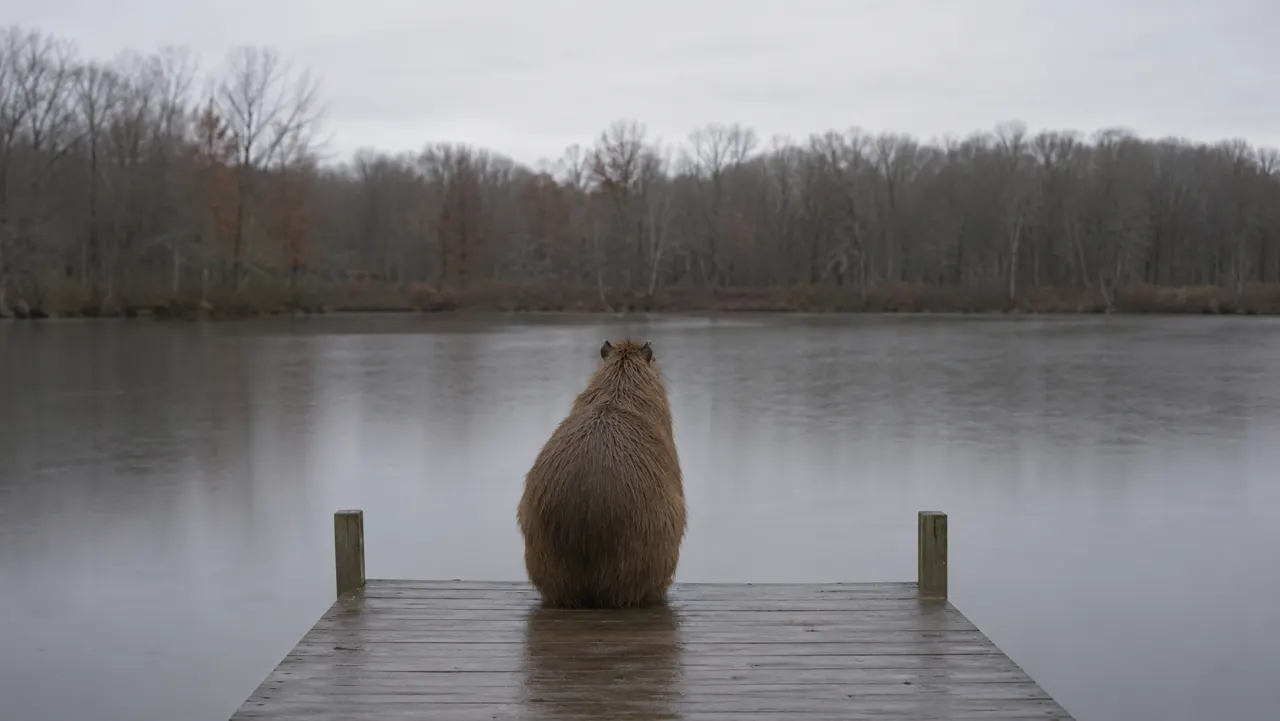
In a zoo, a capybara may stop because a child yelled, a cart rolled by, a keeper moved, or another animal shifted. In the wild, stillness can be part of scanning. In a photo, you lose the before and after, which is where most of the meaning lives.
The San Diego Zoo fact sheet describes vocal communication and group warning behavior. That should make us cautious about turning every stare into a joke. Sometimes the animal is relaxed. Sometimes it is alert. Sometimes it is deciding whether your phone case is a threat to civilization.
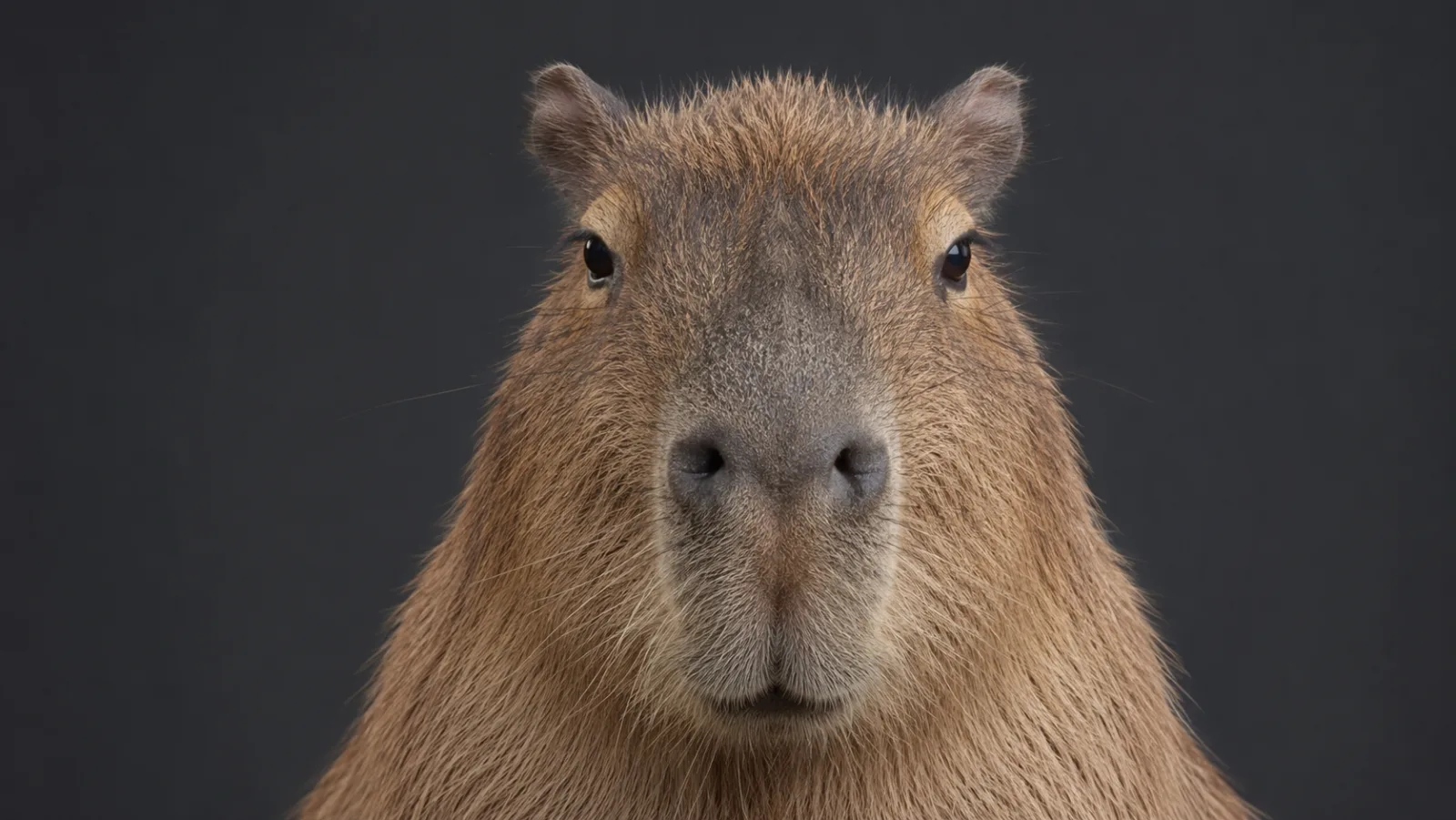
Humans Keep Projecting Office Drama Onto Rodents
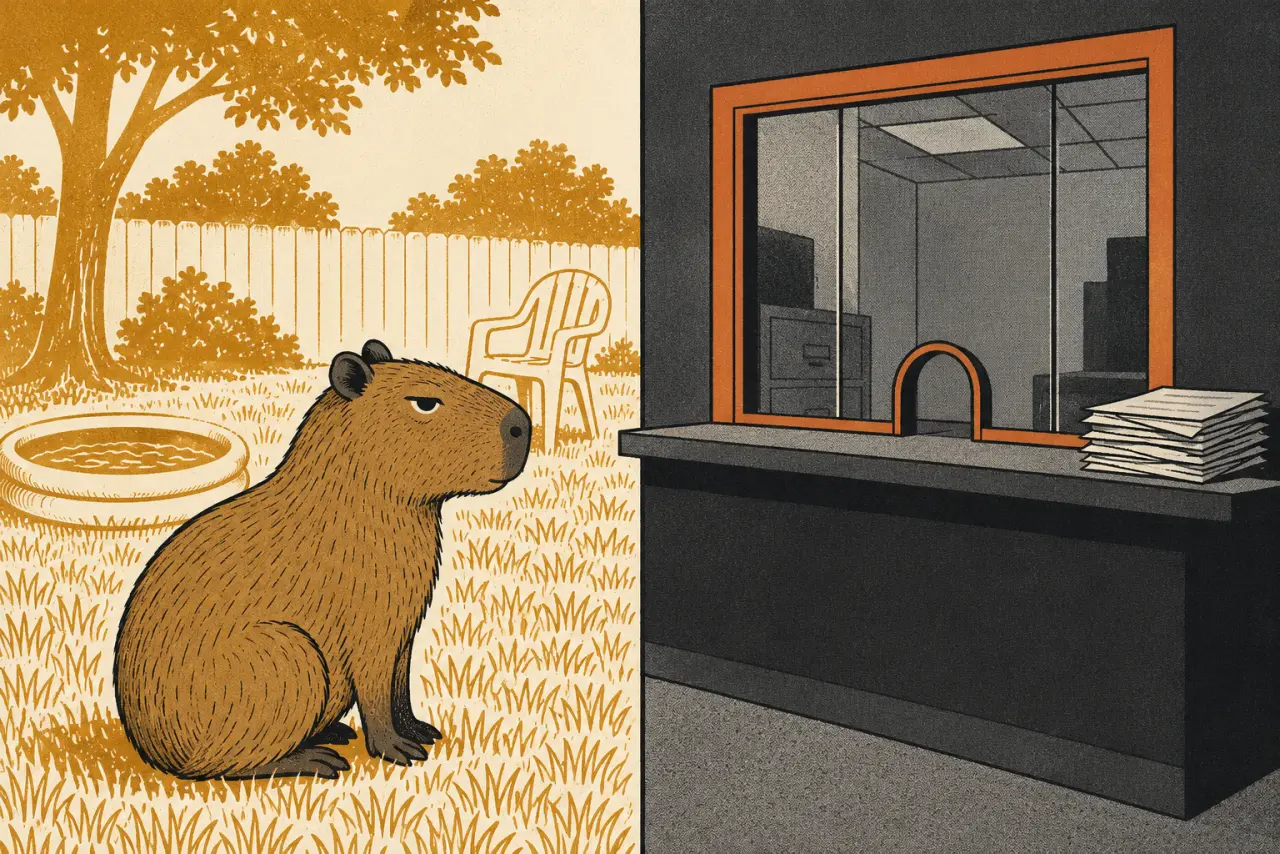
Humans are pattern machines. We see a calm animal and give it a personality. The capybara becomes unbothered, wise, judgmental, tired, enlightened, or “literally me” depending on the week.
That is fine as long as the joke does not replace the animal. Capybaras are social, semi-aquatic rodents, not therapists wearing brown coats. The stare is funny because the real animal is calm-looking and the human brain is messy.
The Body Behind The Face
The face is the part that goes viral, but the rest of the animal explains why it looks so unbothered. Capybaras are the largest rodents alive, with adults running roughly 35 to 66 kilograms, somewhere around 77 to 145 pounds depending on the individual. That is a lot of animal to move, so a capybara is not in a rush to react to every small thing. Slowness reads as confidence even when it is mostly just mass and heat management.
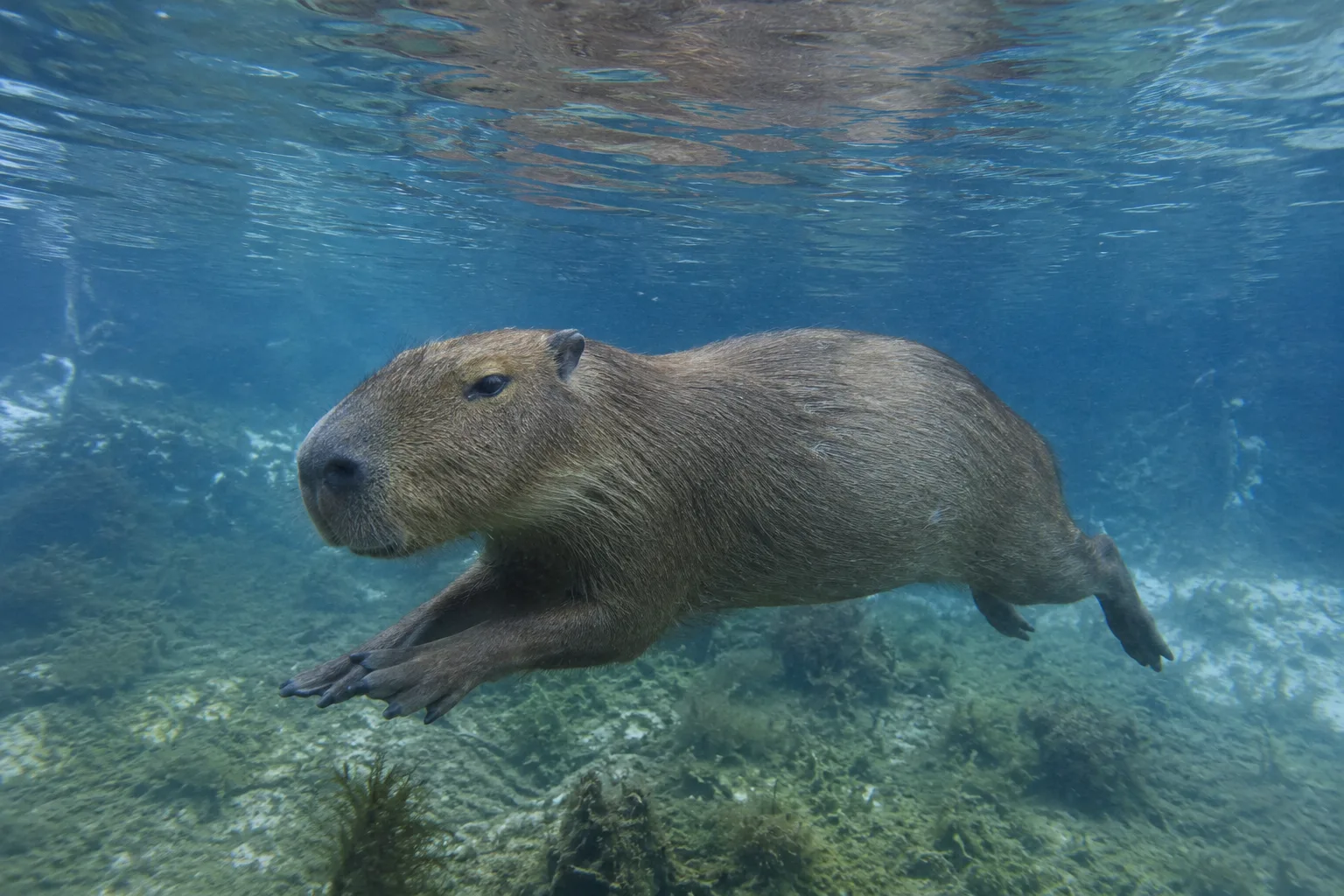
They are built for life around water. Animal Diversity Web describes the high-set eyes, ears, and nostrils that let a capybara keep watch while most of the body sits in a river or pond. The face that looks like it is staring you down is the same face designed to track movement while the animal stays half-submerged and barely visible. Calm and alert are not opposites here. They are the default setting.
There is also the diet, which is unglamorous in a way that quietly kills the “wise elder” reading. Capybaras are grazers. They eat grasses and aquatic plants, ferment that rough material in the hindgut, and re-ingest soft morning feces to pull out nutrients the first pass missed, the same trick guinea pigs and other relatives in the family Caviidae use. The animal staring into your soul spent the early morning eating its own droppings on purpose. I find that genuinely clarifying. It is hard to feel judged by something with that schedule.
What People Get Wrong About The Stare
Most of the bad takes come from treating one frozen face as a full emotional report. A few corrections, with the safer read next to them.
| Common claim | Better answer |
|---|---|
| The stare means the capybara is judging you | The face barely changes shape, so any expression you see is mostly stillness plus your own reading |
| A calm capybara is a wise capybara | Calm usually means warm, resting, or low concern, not insight |
| A direct stare is a sign of stress | On its own it is not; stress shows in stiff posture, retreat, alarm calls, or crowding |
| Capybaras stare because they bond with humans | Capybaras are intensely social with each other; the steady gaze is general awareness, not a personal connection |
| The eyes are weak so the stare is empty | The high-set eyes are part of a wider sensing system built for spotting movement near water |
The pattern across all of these is the same. The animal is doing something practical and physical. The meaning gets added later, usually by whoever is holding the phone.
How To Actually Read A Capybara
If you ever meet one and want to do better than the meme, stop reading the face in isolation and read the whole scene instead.
Watch the body, not just the eyes. A relaxed capybara that happens to be facing you is very different from one that has gone stiff, turned its ears, or started backing toward water. The first is resting. The second is making a decision about you.
Notice what just changed in the room. Capybaras are prey animals, so a sudden stare often follows a sound, a fast movement, or another animal shifting nearby. The stare is the response, not the mood. If you missed the trigger, you will misread the look every time.
Give it an exit. A capybara that does not feel cornered tends to stay calm and, yes, keep staring in that flat unbothered way. Crowding it for a better photo is the fastest route to the only expression that actually matters, which is the one that says it would like to leave now.
The Stare Is Mostly Your Fault
The capybara stare works because anatomy, stillness, and human projection are collaborating without a meeting invite. It can look like judgment. It is usually simpler than that.
Still, if a capybara looks at you and you suddenly feel the need to become a better person, I am not going to tell you to ignore the message.